Travel, Gardens, Food, Photography, Books, Shoes

Archive for ‘2013’

Montepulciano, the First Day

The Pottery shop

The Pottery Shop

The Handmade Leather Shoe Shop

The Handmade Leather Shoe Shop

My Walk to School

My Walk to School

Cats Are Everywhere!

Cats Are Everywhere!

Walk to School

On Walk to School

On My Walk to School

On My Walk to School

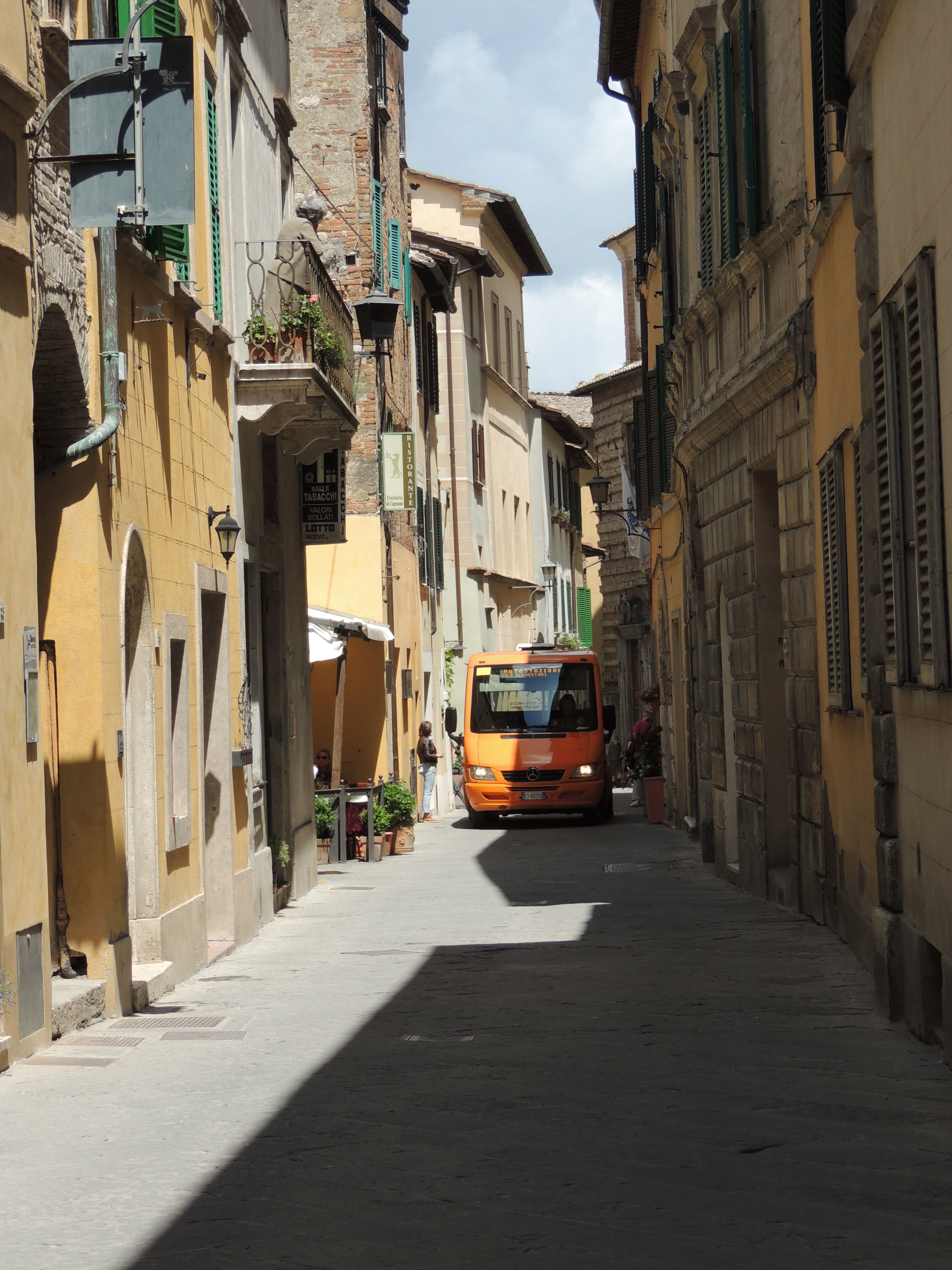
The Town Bus only Stops at the Bottom and the Top

The Town Bus only Stops at the Bottom and the Top

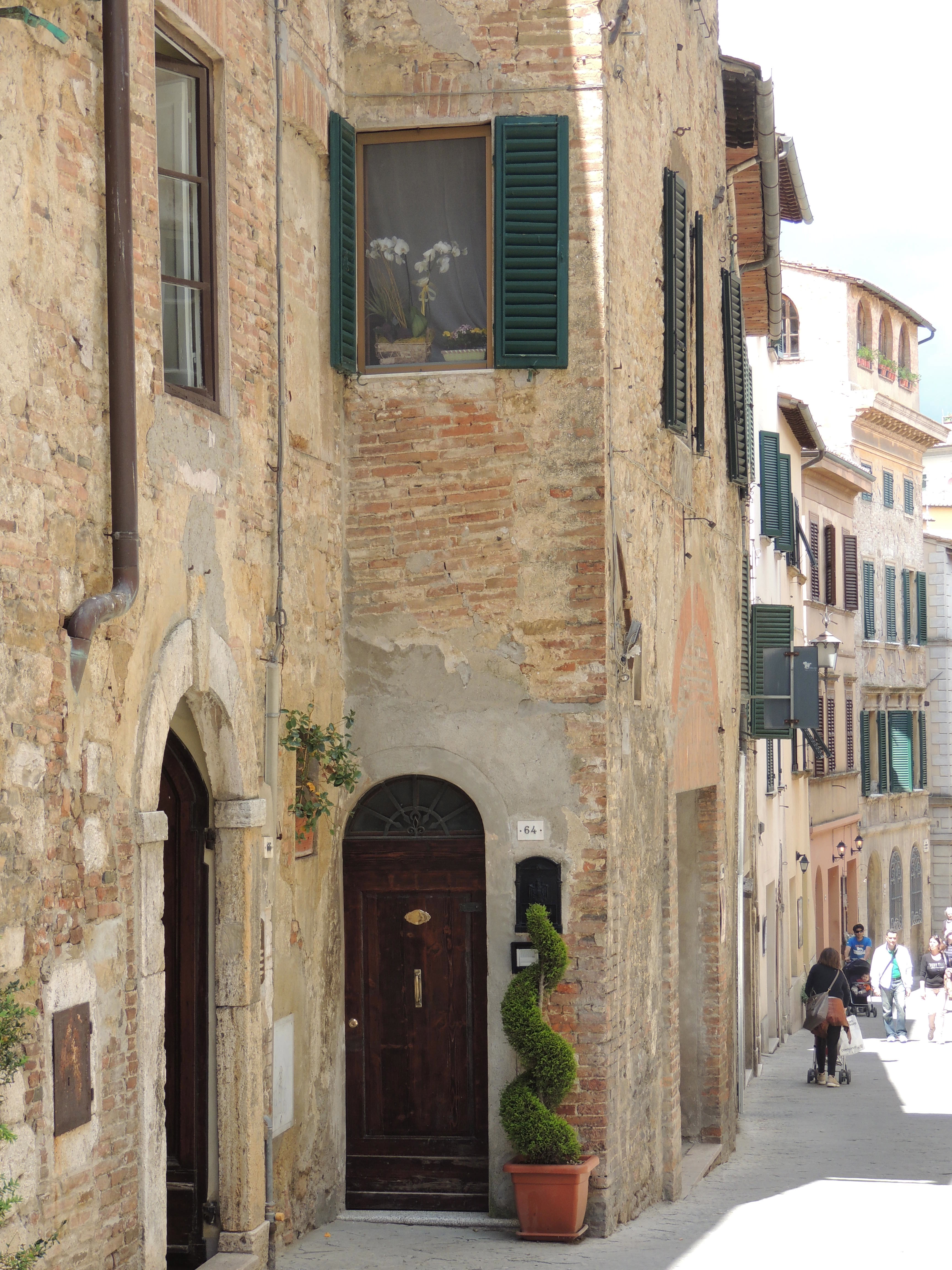
My Favorite House on Hill# 2 #64

My Favorite House on Hill# 2 #64

Not My Walk To School!!!!

Not My Walk To School!!!!

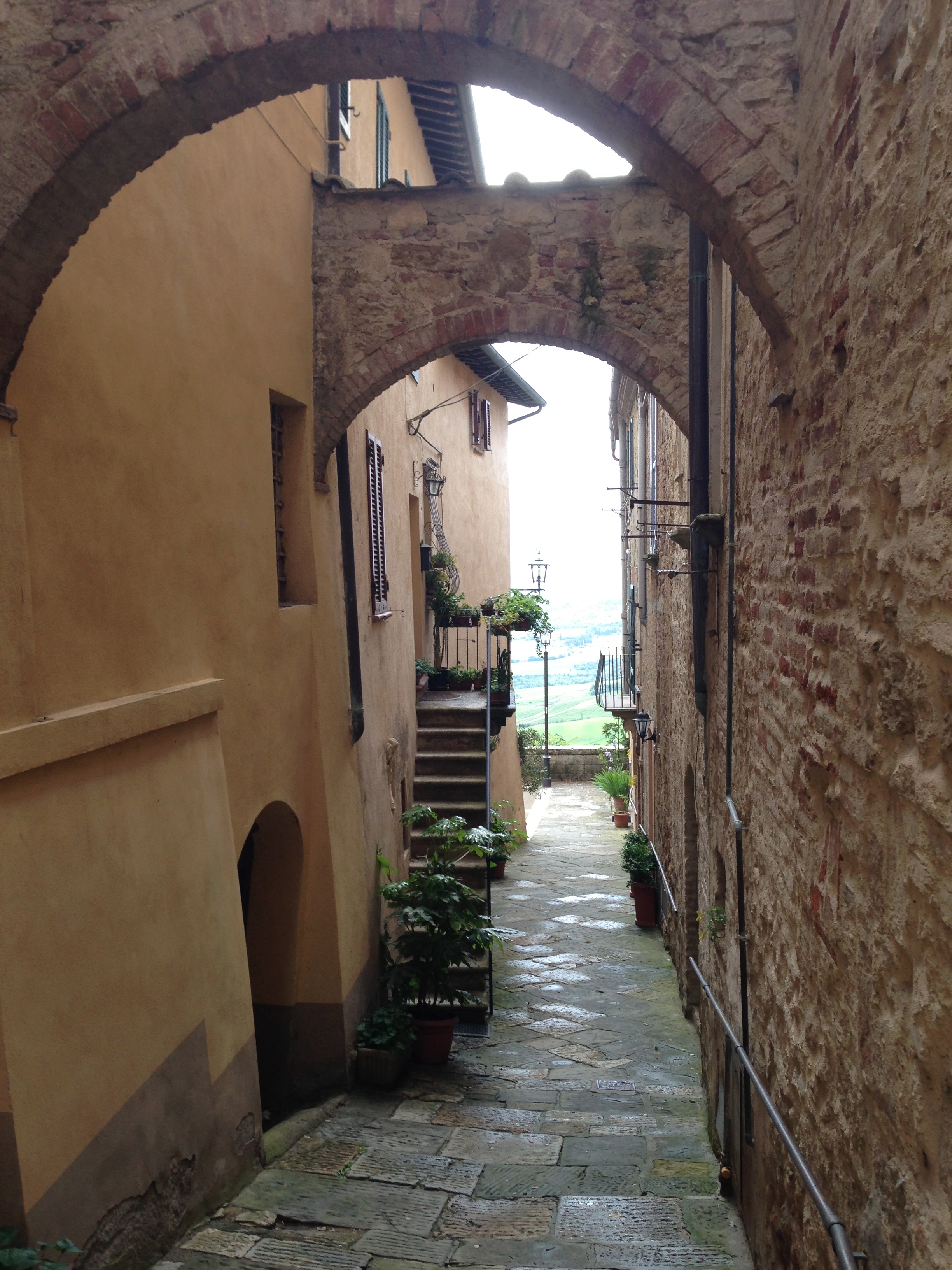
Montepulciano is a hill town in Tuscany in three layers.  There are three hills to walk up.  The first hill is for the tourists, the second hill and plateau is filled with fine craftsmen making pottery, jewelry, mosaics, leather products and woodcarving items all by hand as their ancestors have done for hundreds of years. Dotted between these shops are the clothing shops, great restaurants, wine shops and small grocery stores.  The buildings are huge and people live above the shops. At the end of the second hill is Santa Maria dei Servi Church, one of thirteen Catholic churches in Montepulciano. This is where Politian Palazzo is, on the former grounds of the monastery/church. The crown hill is for the Cathedral, the Fort Museum, the Town Hall, the Duomo Hotel and the Torture Museum. Il Sasso, the Italian Language school, is located between the first and second hill.  I am so glad I don’t have to walk all the way to the bottom of the hill everyday! My first introduction to the school was an evening wine social on the Sunday before school started.  There were forty to fifty students who gathered to have a drink and hors d’oeuvres.  Our hostess was an energetic woman who spoke fast and furious Italian.  Well it sounded like that to me.  The students drifted out to the terrace and I got up the nerve to ask a fellow student if she spoke English.  I think I was in such shock with everyone speaking Italian I must have looked like a deer in the headlights.  What had I gotten myself into? I loved it.  I came home so excited to start school the next day!

The Front Door of Il Sasso, Italian Language School

The Front Door of Il Sasso, Italian Language School

My Favorite House on Hill #3

My Favorite House on Hill #3

Even Cats Go to Mass Here

Even Cats Go to Mass Here

Appetizers

Appetizers

Pear Salad

Pear Salad

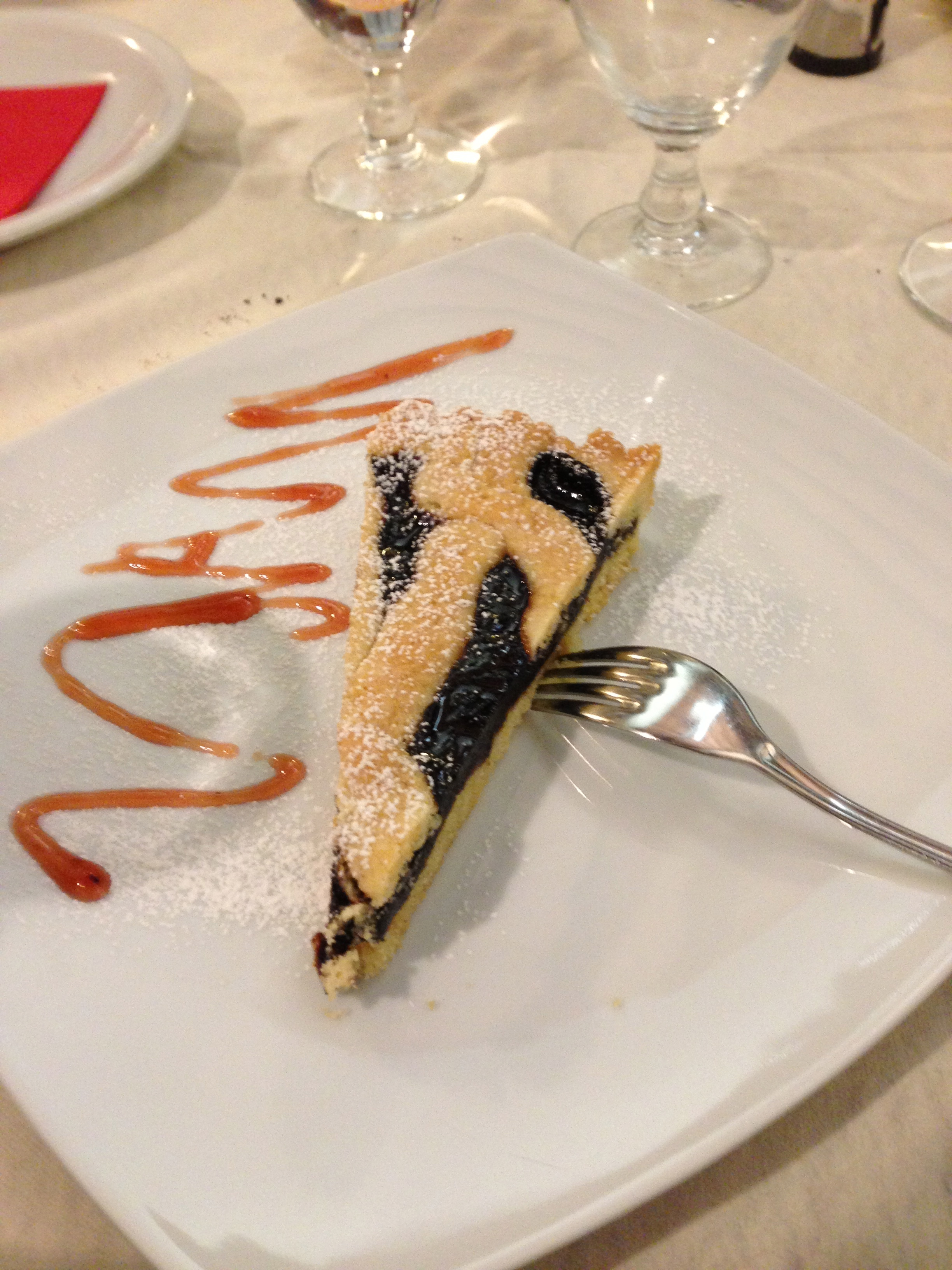
Torte

Torte

Dessert

Chocolate Dessert

Montepulciano

The Entrance to the Politian Palazzo

The Entrance to the Politian Palazzo

My apartment right above the Torture Museum Sign!

My Apartment from the Outside

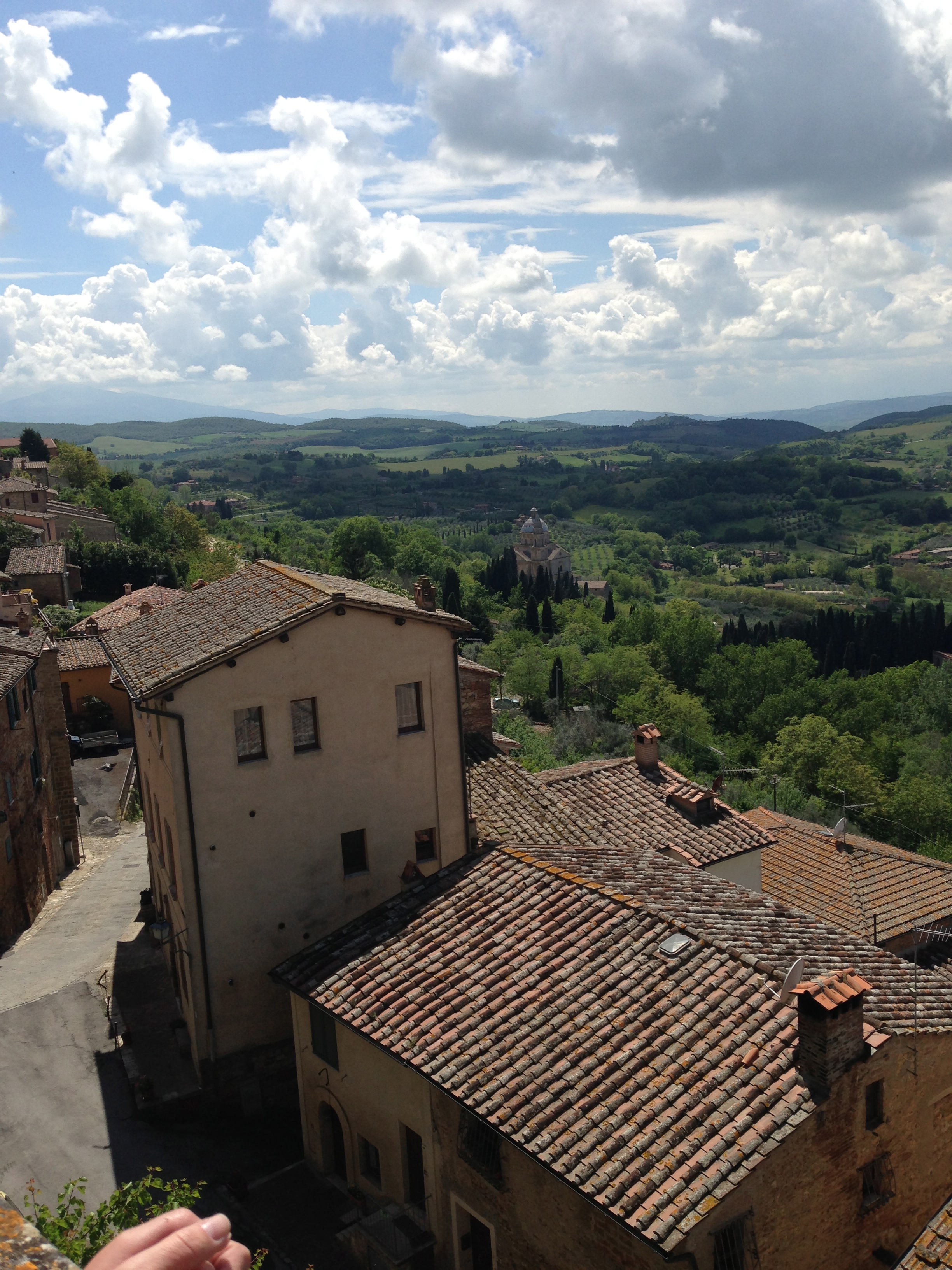
The View from my Apartment

The View from my Apartment

The Casa Right Below my Window, Part of the Fortress Wall

The Casa Right Below my Window, Part of the Fortress Wall

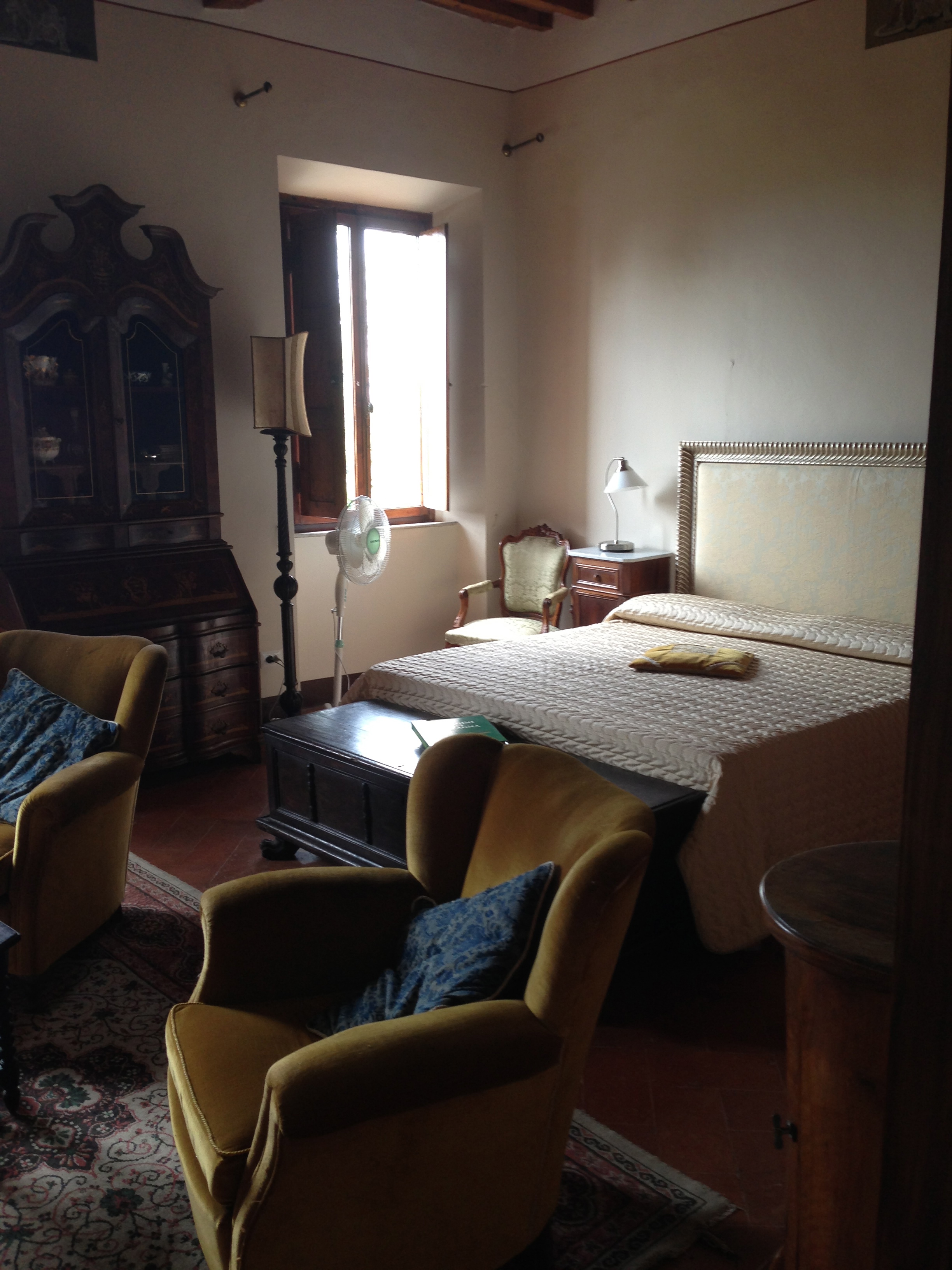
Arrived!!!  Montepulciano is just as I remembered it, only now I am staying at the highest and oldest part of town between the XII century Fortress and the monastery of Santa Maria dei Servi, in the Politian Apartment.  The houses in this part of Via del Poliziano were built in the first half of 1800 on previous settlements belonging to the monastery.  This particular property was bought in 1889 by William Stuart, a British Royal Army Captain and his wife Anna Camp, who left Edinburgh in 1850 and came to live in Tuscany.  They renovated several small houses on the monastery property into a palazzo for the family and servants, including a beautiful garden. The great grandchildren of William Stuart still live in the palazzo and have divided the main building into four large apartments, preserving the original features of the building and adding modern comforts with up to date plumbing and electrical work.  The result is an extraordinary villa that makes you feel like you are living in a palace with a big shower and a fantastic kitchen, difficult things to find in the countryside of Italy.

My Bedroom Ceiling

My Bedroom Ceiling

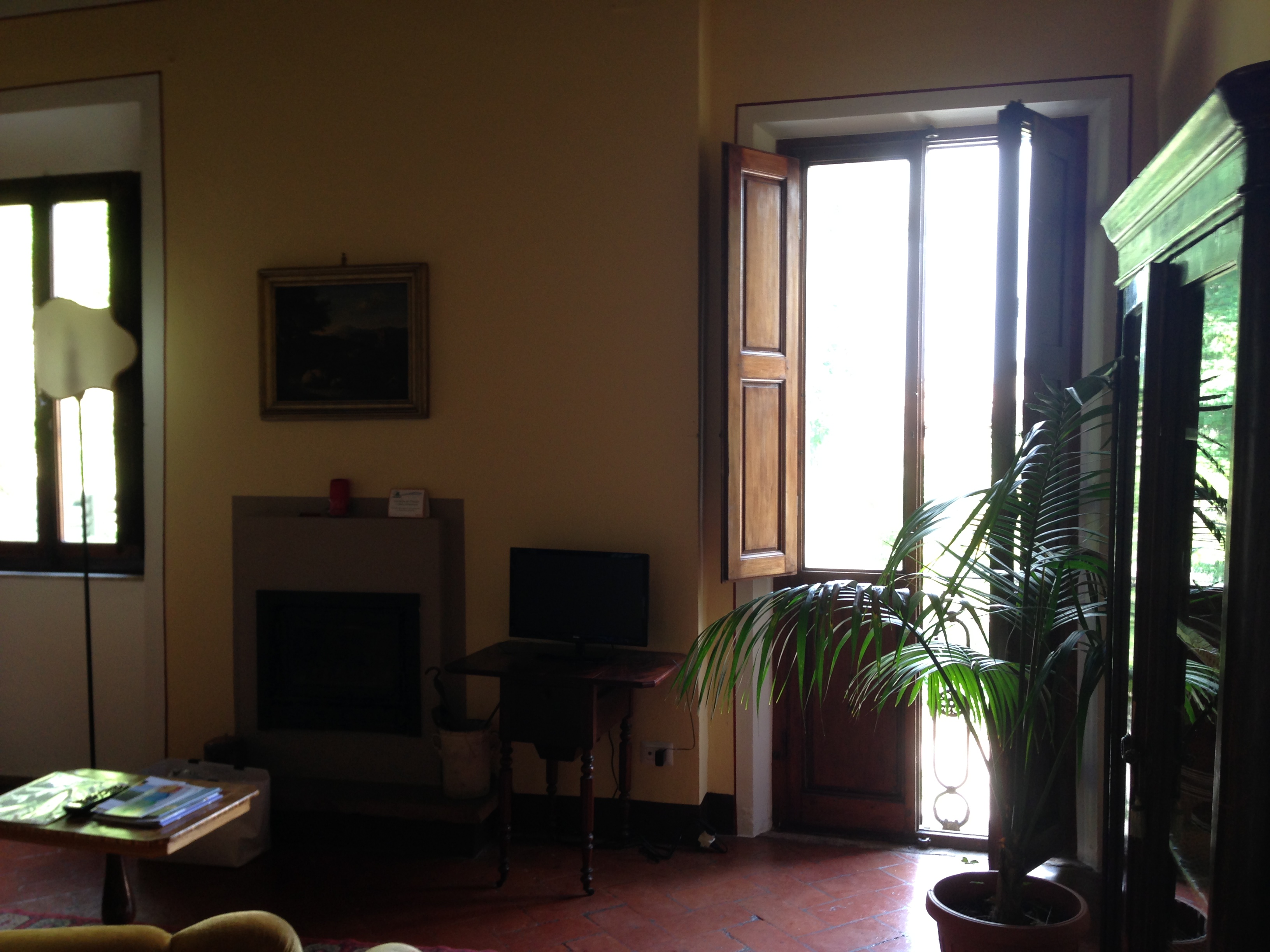
My Bedroom Fireplace

My Bedroom Fireplace

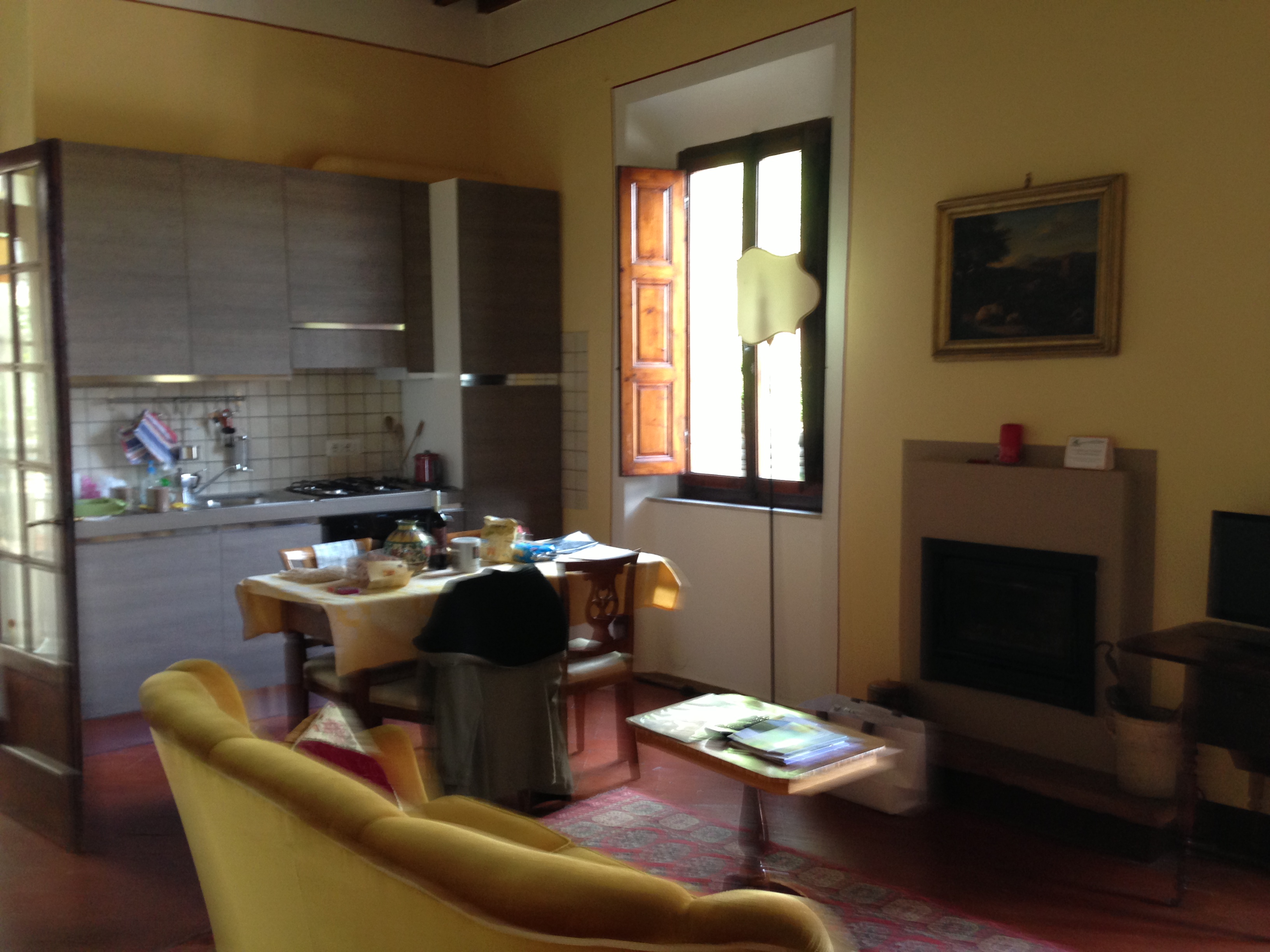
The Sala and Kitchen

The Sala and Kitchen

The Sala Opennig to the Guardino

The Sala Opening to the Guardino

Looking Out the Sala

Looking Out the Sala

La campagna di Montepulciano

La Campagna di Montepulciano

My Giardino

My Giardino

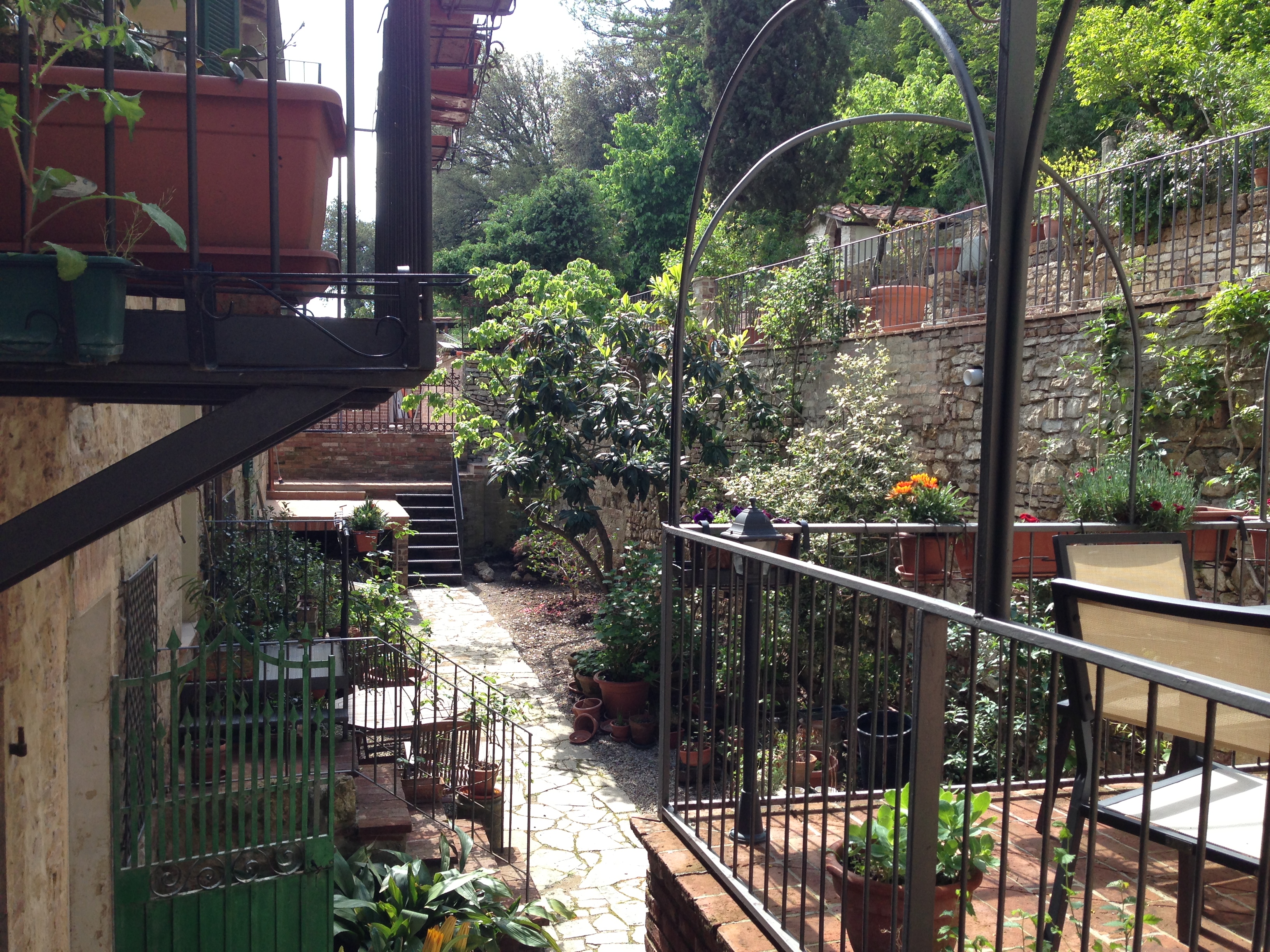
The Guardino Outside My Door

The Guardino Outside My Door

For the decor Giacomo and Maria (sister/brother hosts) have restored the furniture, paintings, cabinets and armoires taken out of storage.  I asked Giacomo about the furnishings and paintings one day and he told me all the furnishings presently in the house were deemed “too good, we must save them,” by his mother and had been in storage for many many years.  When she passed, Giacomo decided the furnishings had stayed in storage long enough and they would be used. They even found his Great Great Grandmother’s trousseaux, tapestries, bedsteads and hand embroidered linens that had never been used. The tapestries and bedspreads were produced on a hand loom in Prato and some in the convents of Siena and Pienza.  All are made of silk, linen, cotton or hemp.  The embroideries were sown by “woman of the family,” mothers, aunts and grandmothers for the bride.  Every Saturday when Maria and Jane (Jane is Romanian and that is what she is called in English, I can’t begin to pronounce it in Romanian) clean and I do mean clean, Maria asks me to pick my sheets for the week from a selection of great great grandmother’s antique linens that are pure white, pressed and starched.  Unbelievable!!!!

Santa Lucia, Her Eyes are in the Cloth

Santa Lucia, Her Eyes are in the Cloth

The Master Bedroom

The Master Bedroom

The Valley Below Montepulciano

The Valley Below Montepulciano

Nearly all the paintings depict rural landscapes of Tuscany or seasides of Scotland. Except, my favorite painting in the large, large bedroom, that of Santa Lucia, painted in the late sixteenth century by Sienese artist, Domenico Beccafumi.  The ceramic vases in the villa came from local workshops (that continue to make fine pottery) and the garden restoration included re-using all the old bricks and tiles made in the late 1800’ s.  All the tiles on the floor in my apartment are original.  They are a rusty red in color, some are squared and some are brick shaped. Giacomo said the garden bricks are the same bricks as the house floor bricks, just with a glaze and fine polishing added for house-use bricks. The ceilings are fourteen feet tall and the windows are five feet tall, narrowed and shuttered.  To open the window there is a long rod/bolt affair from the top of the window to the bottom of the window. There are no screens and no bugs.  The window casings are marble. There are working fireplaces in every room!  I am sending a picture of the ceiling in my bedroom and will continue more tomorrow. Ciao!

If you are interested in the Politian Apartments, your home away from home contact:

http://www.politian.com

Via del Poliziano 34

Montepulciano Siena, Tuscany

Tel. +39 0578 716624

Last Night a Roma

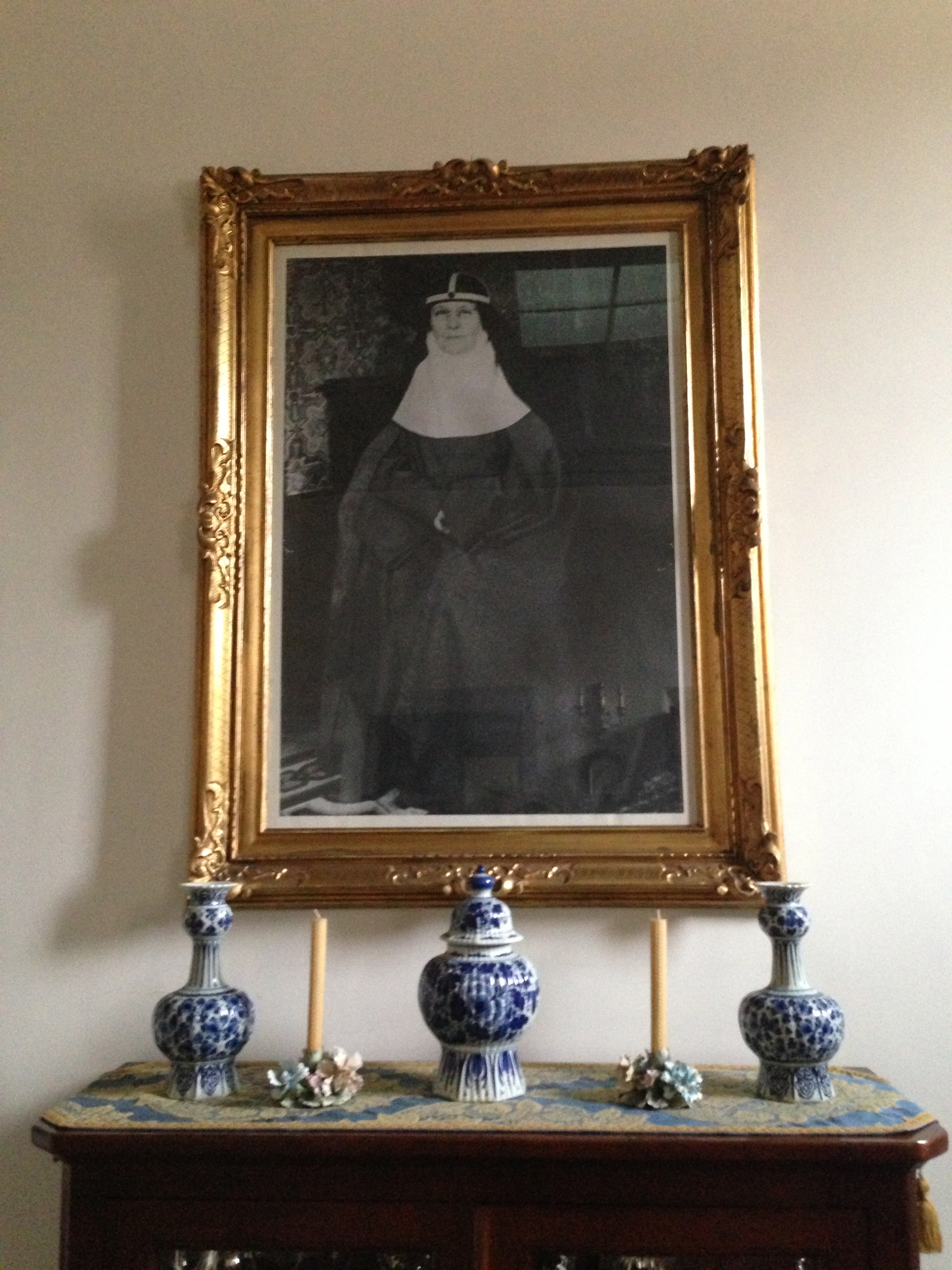
Mother Mary Hasselblad of Santa Brigida Convent

Mother Mary Hasselblad of Santa Brigida Convent

How to do you study a nun’s habit without staring?  That is the question.  I am fascinated with the headpiece.  It looks like a halo held in place with a plus sign on top. Or is it an open air battle ready helmet, but made of hard cardboard like the priests collars? The headpiece the nuns wear is fashioned the same as the headpiece that Mother Mary Hasselblad wore. I saw Mother Hasselblad’s picture in the chapel. Their headpiece must determine their association with Santa Brigida.  In the daytime, outside the convent, the nuns walk in pairs carrying an umbrella between them to block the suns rays. In the Rome heat it would be as hot as a furnace under all that get up. I think your head would be sweating from that halo contraption.

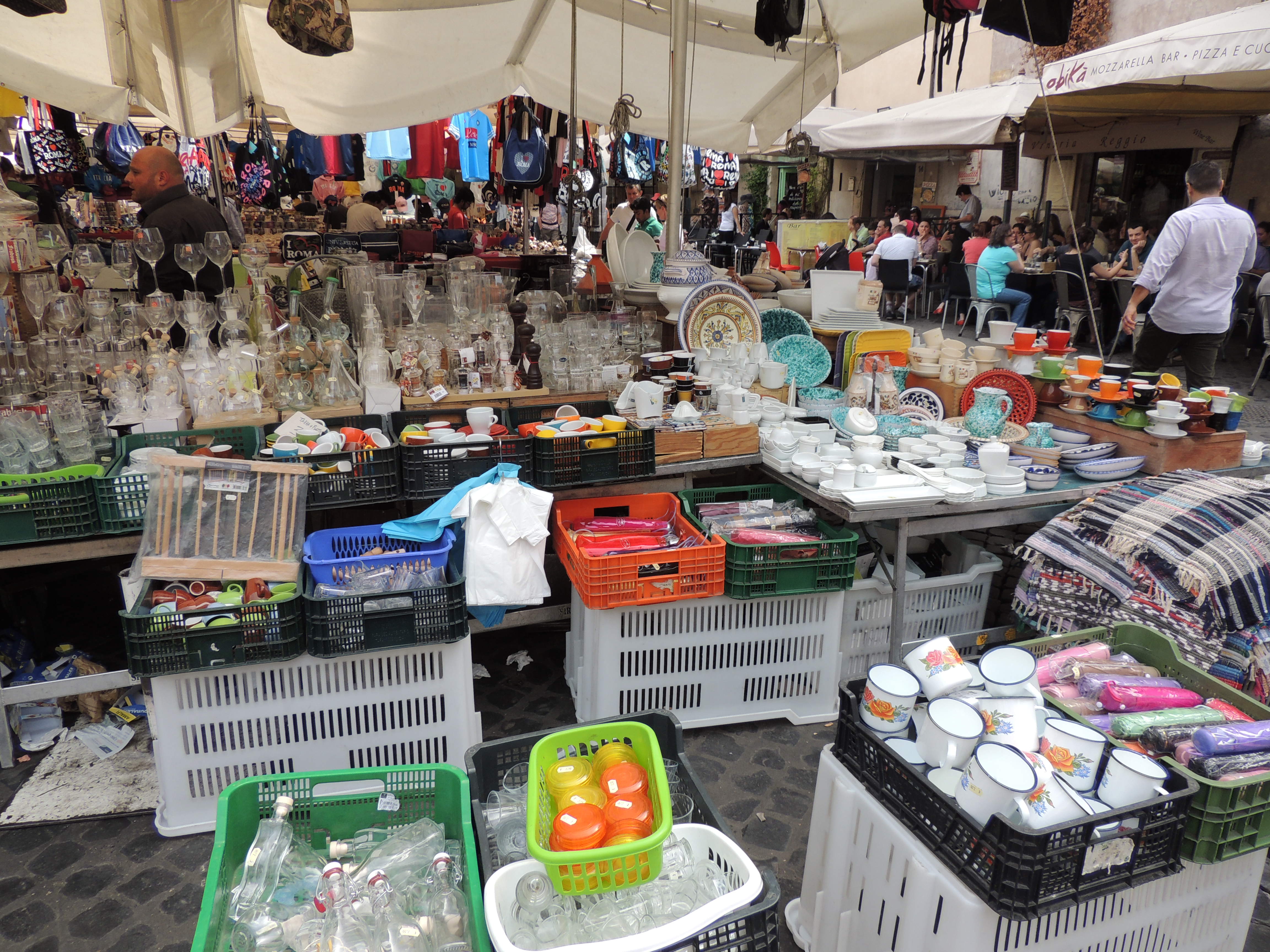
The Market Hardware Stand

The Market Hardware Stand

Small Streets for Dining

Small Streets for Dining

Tonight we are walking to Piazza Navona to eat. There are so many people out and about on this Saturday night, but I wonder if it is always busy with tourists? The markets are still flourishing so I look at the hardware stand. I buy little glass jars to put the Italian spices in that I bought at another stall. I also buy a can of coffee to take to the apartment in Montepulciano.   The espresso coffee is four euro for a pound and the date of use is good until 2014.  I’m good to go. We could look for hours here there is so much to see, but we move on after our purchases. We get to the only street corner that so far has a stoplight, although stoplights here are only a suggestion.  Nobody stops. There is a police woman here tonight and I think that is odd.  The polizia wear big thick white gun holsters that cross over the body like you would wear a purse you didn’t want stolen. They don’t holster around the waist. Suddenly we hear sirens.  Lots of sirens.  Two motorcycle police whiz by like they are going to a fire.  The police woman jumps into action preventing anyone from crossing the street. The man in front of me says, “Holy Papa, Holy Papa.”  And sure enough here comes a black Mercedes and in the back seat is a smiling and waving Pope Francis.  Everyone on the street is waving and shouting.  It was quite the moment.  How lucky we were to be at that place at that time! After the Holy Papa passes by the police woman vanishes into the crowd as more motorcycles zip past.

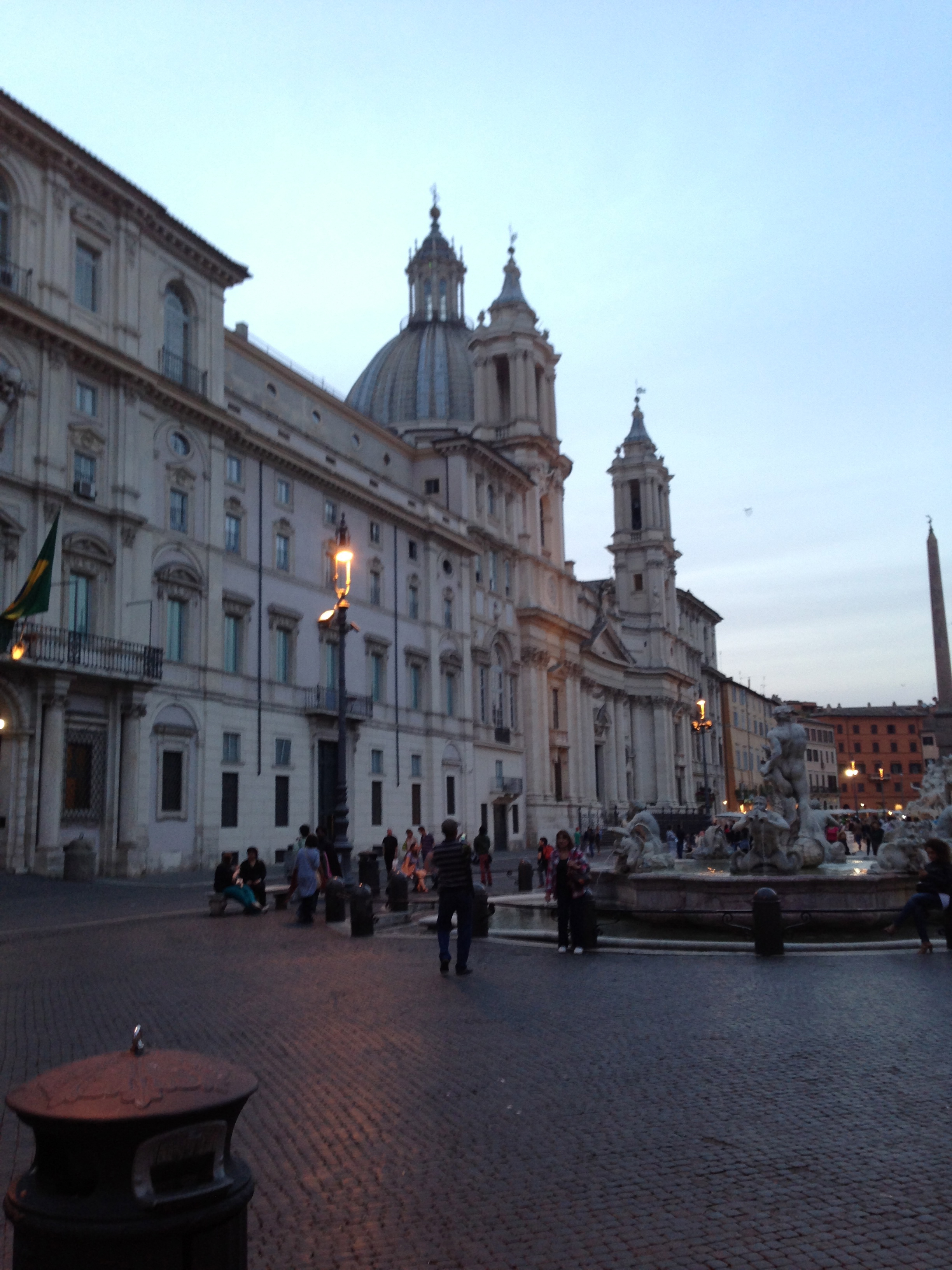
Piazza Navona

Piazza Navona

Piazza Navona

Piazza Navona

In the Piazza Navona tonight there are artists of all kinds. Some painting absentmindedly, with their palettes of beautiful colors, while others watch. There is also a large crowd gathered around a man in a straight jacket and chains. It is like being at the circus. Young good looking men are selling rubber band rockets that shoot high into the sky, then flash bright colors, before falling back to the ground where they run to pick them up and do it all over again. In the background the huge fountain provides a backdrop for the photo takers. We sit at the oldest restaurant on the piazza dating 1836.  The food is so-so, but the people watching is fantastic. We return to the Convent again around midnight and I wonder what is in store for us tonight.

The Angel on the Corner

The Angel on the Corner

We are not disappointed.  We still hear people walking and talking as they return to their  homes, but around 3am there is a blood curdling scream of “aiutarmi, aiutarmi!” Help me!  Help me! I also hear the voices of people trying to quiet the man down.  My first thought is he is on drugs.  He gets quiet only to start up minutes later, “aiutarmi, aiutarmi!”  I then hear the doors of Santa Brigida open and the soft voice of a nun trying to comfort him. Everything gets quiet then and I finally fall asleep. In the morning after breakfast with the priests, the nun calls a cab for us to take to the train station. A very old man, speaking only Italian, pulls up and can hardly lift our suitcases to the trunk. We are off to Montepulciano!

Late Night in Roma

Via Della Concilazione

Via Della Concilazione

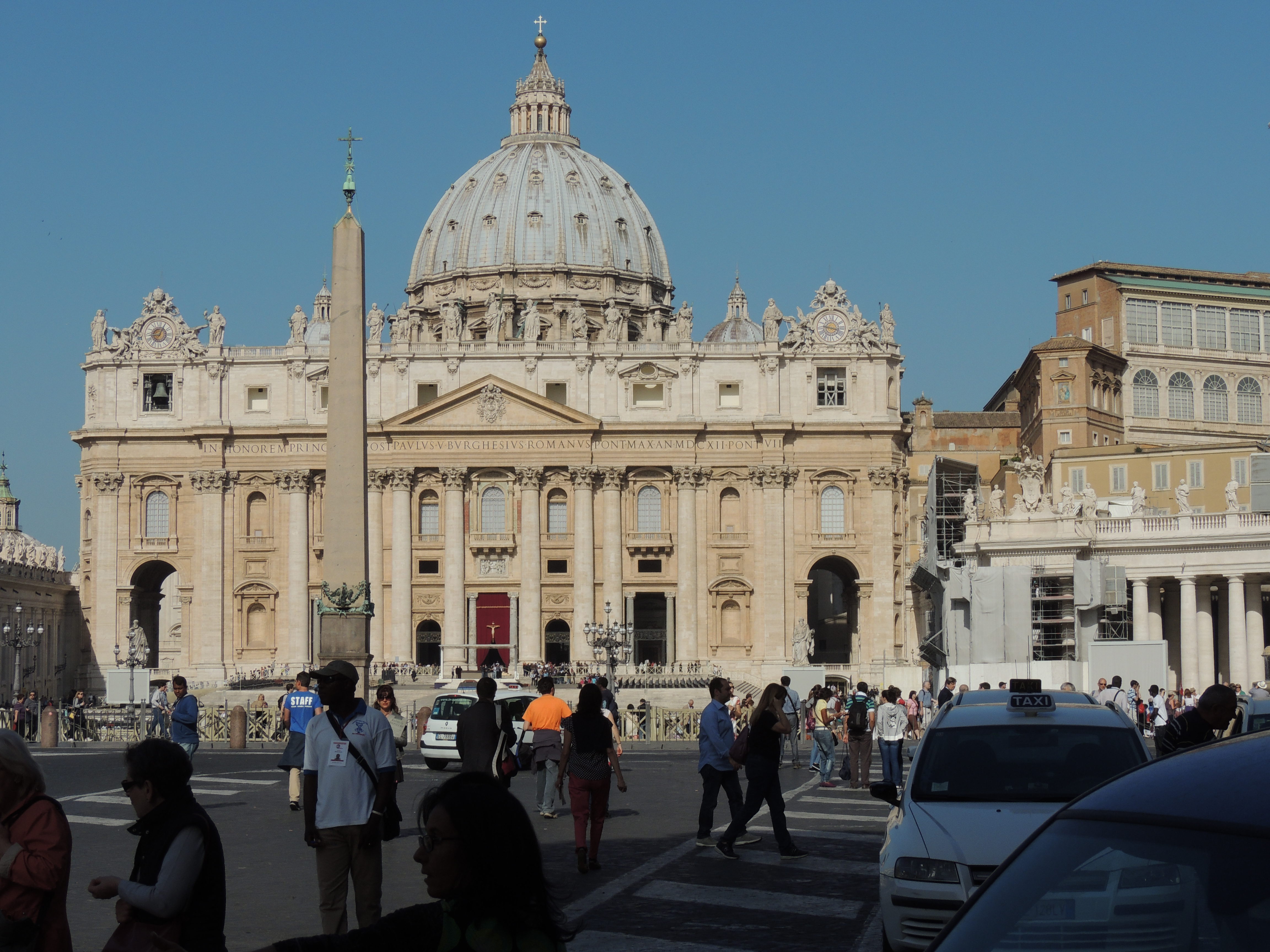
St Peter's

St Peter’s

The wall around St Peters Square

The Wall Around St Peters Square

The front and main entrance to the church at Santa Brigida faces the square of the Piazza Farnese. Looking out from Santa Brigida to the right on the piazza is the Farnese Palazzo, now the French Embassy.  There is a guard house for the armed soldiers, who carry angry looking machine guns.  A utility vehicle painted in camouflage  looks well equipped with anything needed in a crisis.   Armed guards constantly patrol the grounds of the embassy. Two armed soldiers are posted at the vehicle at all times. The piazza is small and quiet with no markets set up during the day and no hawkers shooting off the plastic rockets that glow like firecrackers when propelled into the night sky. During the day tourists sit on the long marble bench in front of the embassy to rest.

Our room at the convent faced the small cobbled side street and as we looked out our tall narrow window of the room we could see the embassy to the left and a small bar in the next block to the right.  We could hear people walking and talking in the street below despite the fact we were up four floors from the ground level of the street.  Sound travels. The serenading began at 1am.  A group of boys, either drunk or just happy sat on the steps of the building across from the convent and sang loudly and with gusto until 3 AM.  Evidently the guards at the embassy like singing and are trained to stay at their posts and keep a look out, never interfering unless there is a disturbance in the piazza or a run on the building. They are not diverted to singing groups on the side street. The side street is off limits. It’s a good thing we got sleep on the flight over.

The next morning broke clear, sunny and very warm. We went to the breakfast room and were greeted by a nun who was serving two priests an early breakfast. We had the choice of frutta, yoghurt, cereali, salami, fromaggio, caffe e spramuta d’ rancia. (I am practicing my Italian) We decided to walk early in the day, while it was cooler, to the Vatican and I am so glad we did. Staying at the convent is so convenient, despite the outdoor noises, because you can walk to all the main attractions. We walked to the Tiber River and crossing a different bridge than yesterday passed Castel Sant’ Angelo and walked on to St Peter’s Square, which is really round.  At this early hour there were few tourists so we could get some good pictures without heads or bodies in the way. The shops and cafes along Via Della Conciliazione were open at this hour too.  The street cleaners were out with witches brooms sweeping away the last bits of dirt on the sidewalks.  The street cleaning machines started up right after the serenading died down. Hey, maybe the singers ARE the street cleaning machine operators!  The Italians clean the streets early every morning with the same gusto as the singers! Cleaning starts in around 4AM.  We walked on to the square and were greeted by hawkers who could get us in the Vatican, no line. I don’t think so.  I know there is always a long line. There is a great deal of construction going on near the Vatican now so there are many detours to get around the  square and up to the museum. When we finally arrived at the museum that entrance was closed off so we retraced our steps back to St Peters Square. When we got there, there were  hundreds of people winding in a line to get into the Vatican.  We passed around the wrought iron fence designating we were now in Vatican City, a country all it’s own.  We stopped to look at the wares of a man selling Vatican novelties.  He told us he was the only merchant allowed to sell inside Vatican City, on church and state property. His family had sold here from 1945 and the license was passed down through the generations.  He was very nice and telling the truth.  We circled St Peters and never saw another vender inside the fencing.  We went back to him and bought rosaries and tiny, tiny bottles of holy water.  He gave us St Francis medals to wear.  He told us business would not be good today since the crowd was expected to be over 200,000 for the dedications of the Confraternity.  There were a bazillion metal chairs set in the square and that is where the lines were winding as they waited to get into the Vatican.  We hi-tailed out of there before the crowds became worse and stopped at more shops along the way.  I was looking for a Nativity scene.  I have a large set with many shepherds, cows and donkeys and of course the Holy Family.  I wanted a little itsy bitsy one and found it.  Made of hand carved wood it is Joseph, Mary, and baby Jesus about one inch tall, all in one tiny piece. Perfetto!  We also bought post cards and posted them in the Vatican City post office.  We then found the stop for the red open air double decker buses, thanks to two Italian girls who overheard us talking and gave us directions. We decided to take a tour of the city.  It was beginning to get HOT so we bought gelato and boarded the bus, climbing to the top.  It is a good way to rest and get a suntan at the same time. After the bus tour we walked back to the Convent passing large groups of people dressed in colorful robes and carrying large banners while praying and walking to the Vatican.  These were the Confraternities.  They were being honored with a mass with the Holy Papa.  Time for a nap to rest up for the evening passegiatta!

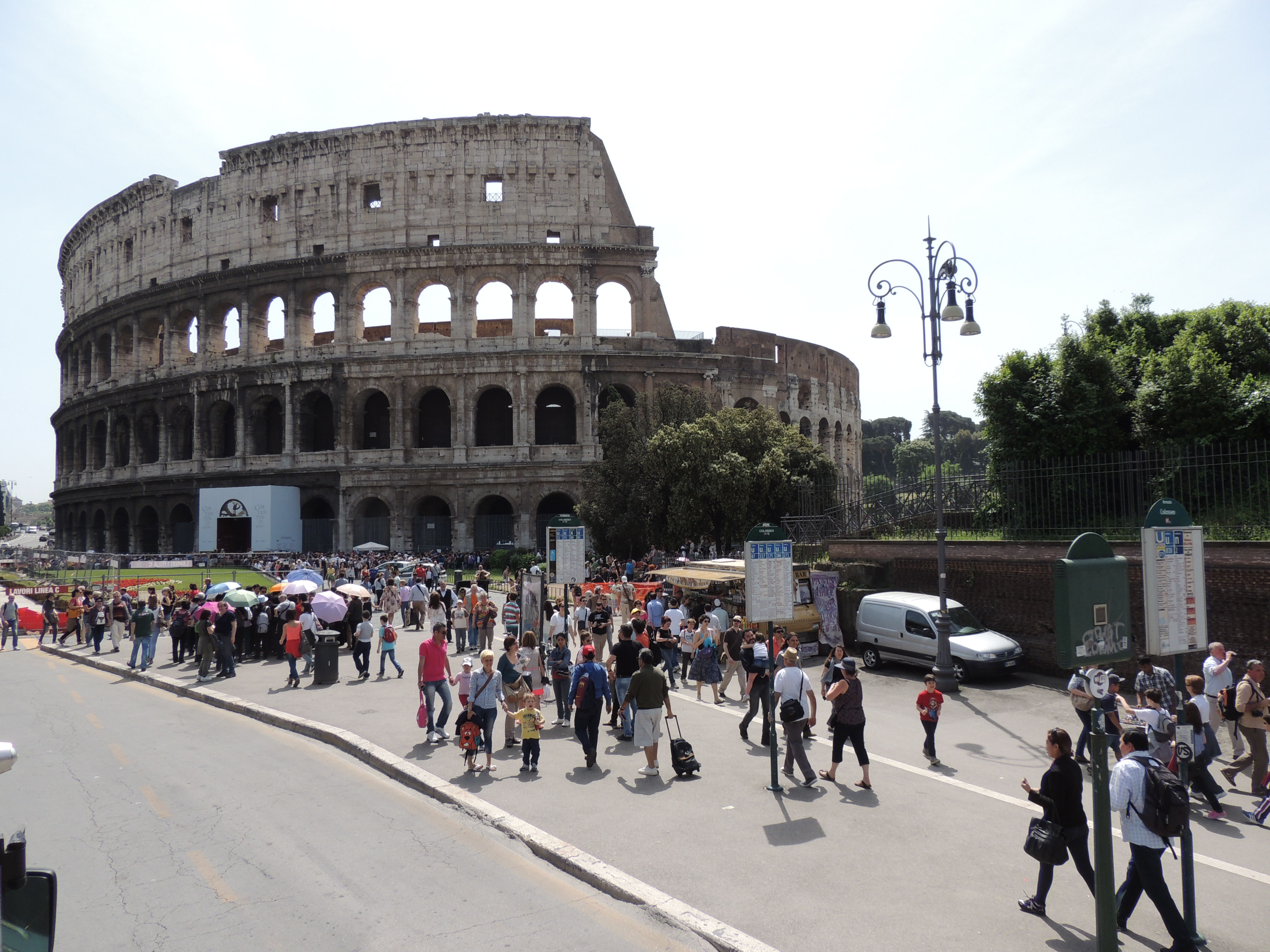
The Colosseum

The Colosseum

From the Tour Bus in Roma

From the Tour Bus in Roma

DSCN0187

Rome at Night

A Bridge Over the Tiber River

A Bridge Over the Tiber River

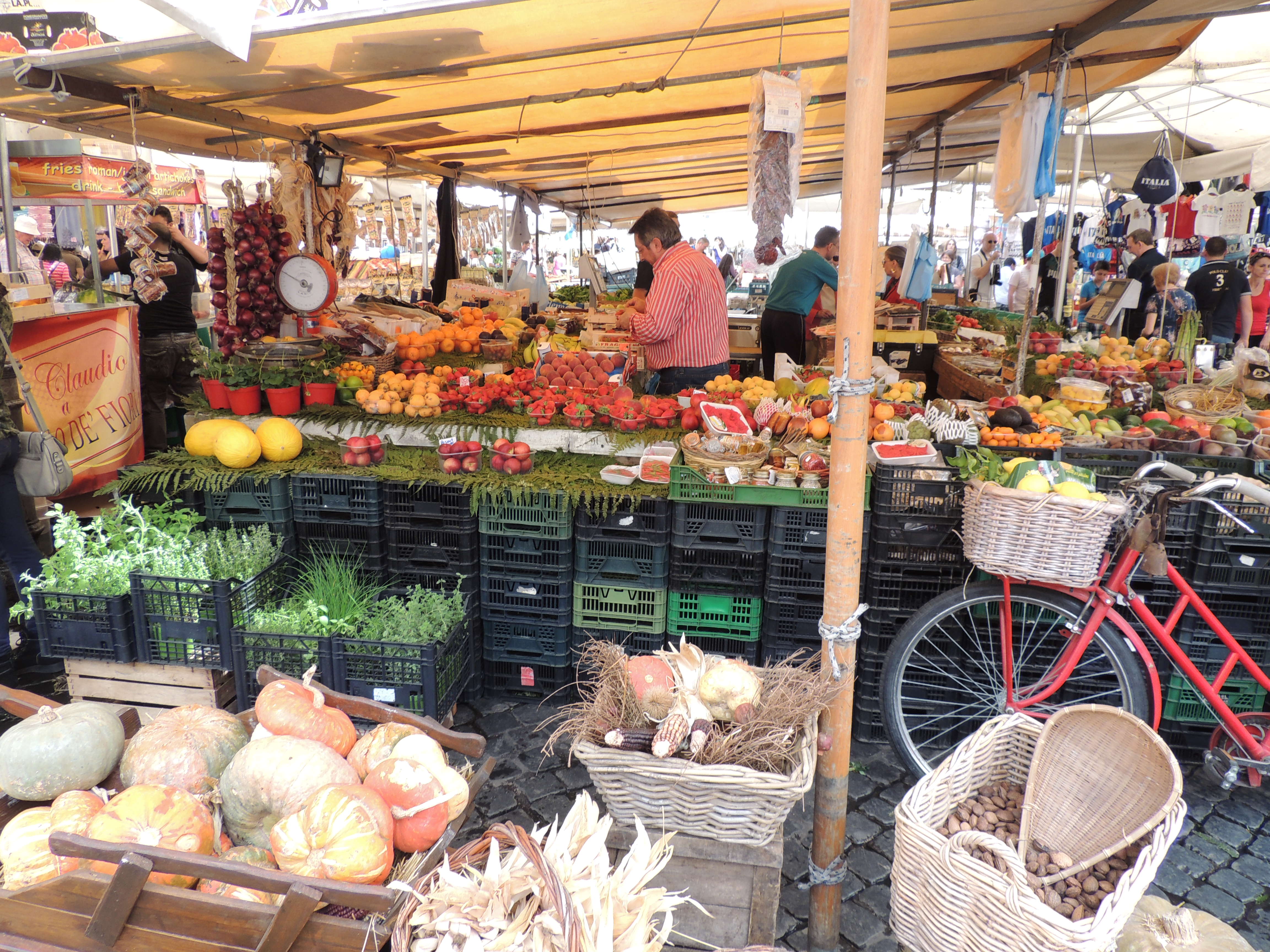
Rome at night Is unbelievable! We headed out to Campo di Fiori (Field of Flowers), just a hop, skip and jump from Piazza Farnese, that was used in times past as a market and hostel area for pilgrims making their way to see the Holy Papa. Today it is filled with stalls of goods, hawkers and outdoor restaurants.  There are people everywhere since this time of evening is known for the passeggiata, when everyone, young and old takes a walk. It is still warm out and the glow of faint street lights on the cobblestones and marble buildings is breathtaking and magical.  Around every corner is another small lane with an enoteca or outdoor restaurant. We choose an establishment with red checkered clothed tables and I order wine, which is cheaper here than bottled water. We soon discover our neighboring table mates are Russian Jews who left Russia thirty years ago and went first to Austria, then Italy while waiting on paperwork to get them into the US. Our government took care of all their bills and living facilities while they waited.  They love Italy and come back often. It was interesting to talk to them especially so close to the Boston bombings and since they too sought asylum in the US. They came with two thousand dollars (all the government of Russia would let them leave with) and left a beautiful large home, careers and their families behind. He owned a mining company in Russia. They had their choice of going to Israel or the US. After arrival in the US he drove a cab in New York for twenty years.  She left Russia with twenty pairs of long yellow plastic gloves prepared to clean toilets if she had too. She never had to.  She became a nail technician instead.  They have two sons, who both graduated from college. They now are retired and split their time between Manhattan and Miami where they own homes. She said they could not totally leave Manhattan because they love the pizza too much!  They looked very well to do, spoke very good English and we had fun chatting with them.

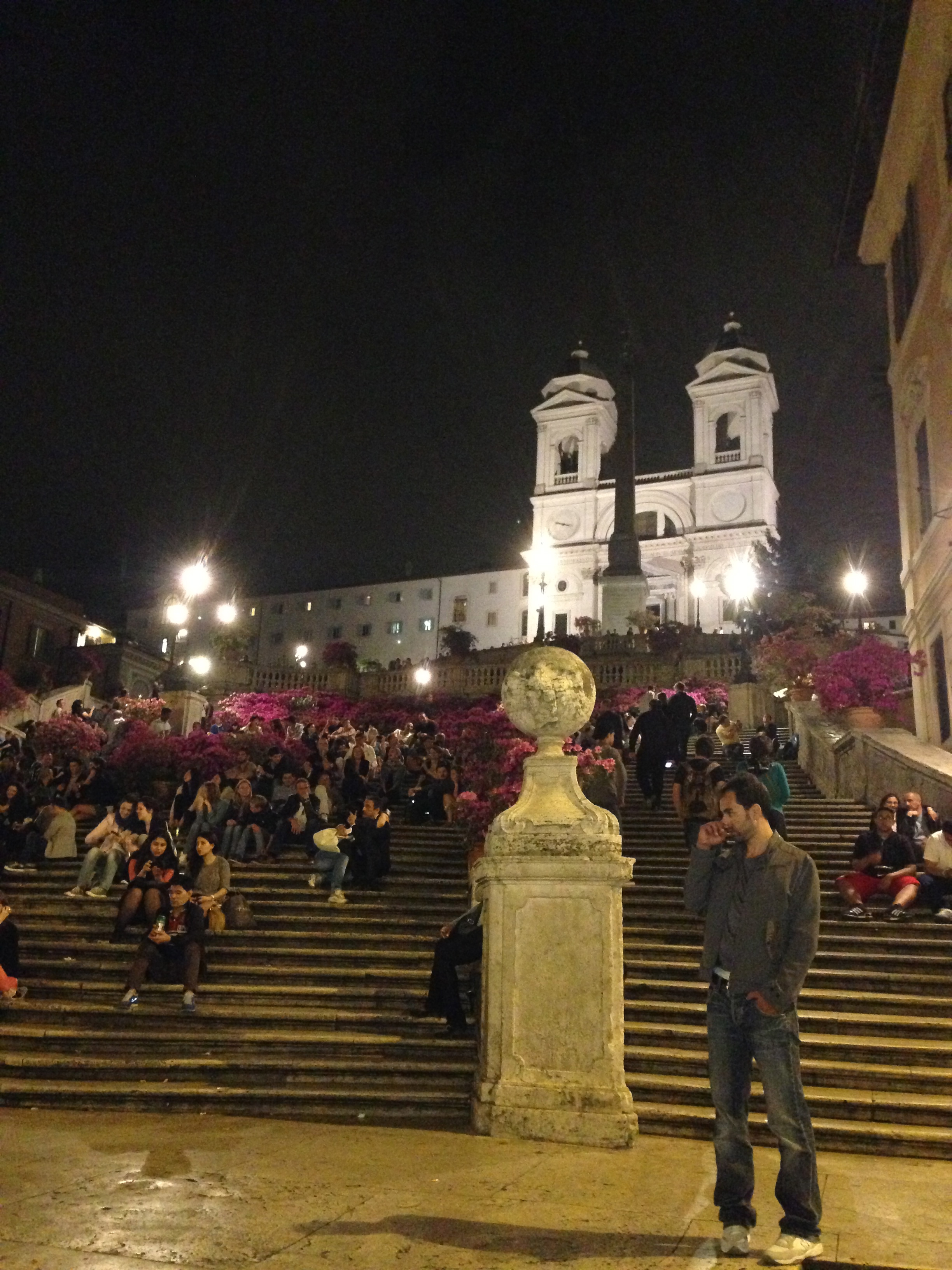
After dinner we decided to do Rick Steve’s Heart of Rome Walk which took us through the major piazzas, winding cobblestone streets and then to the really fancy shopping areas of Gucchi and Pucci, ending at the Spanish Steps. Most shops here open at 10AM, close at 2PM for a couple of hours and then reopen and stay open until 10PM. Except for the restaurants that open early or late deciding if they do breakfast or not, then close around 2PM and reopen for dinner and are still open late into the night.  We rested on the Spanish Steps and then retraced our footsteps and also meandered on some different small streets back to the Convent of Santa Brigida. The Convent is locked at night but there is no curfew.  Inside, at the desk, was our key to the room on a big wooden orange spinning top that designated our room. The key fob looks like a Pinocchio toy. When you leave the Convent the nuns take the key to your room so you don’t lose it. We settled in briefly  around midnight before all the excitement began. Next…… Late night in Rome

The Cobblestone Streets of the Historic Center of Rome

The Cobblestone Streets of the Historic Center of Rome

The Stalls in Campo di Fiori

The Stalls in Campo di Fiori

Food Stalls at Campo di Fiori

Food Stalls at Campo di Fiori

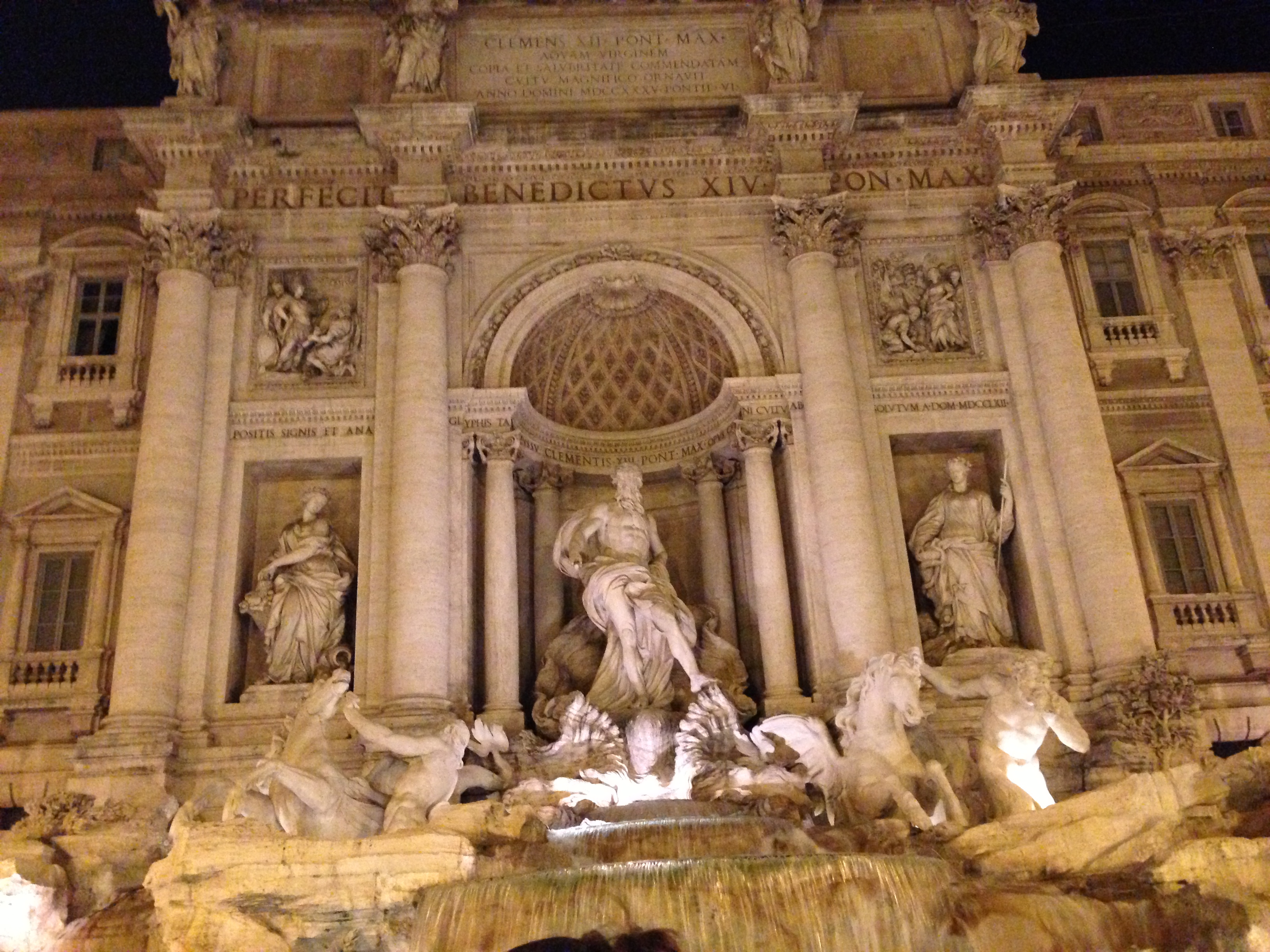
Trevi Fountain

Trevi Fountain at Night

The Streets of Rome

The Streets of Rome

Streets of Rome

Streets of Rome

The Spanish Steps

The Spanish Steps

Rome Is Magical at Night

Rome Is Magical at Night

Rome

Our Room at Santa Brigida

Our Room at Santa Brigida

Day one. Off to Rome. My daughter surprised me with an early Mother’s Day present and updated my ticket to first class!  I WAS IN HEAVEN!!!!!!! Everything is so much nicer in first class.  I could select meals from a menu with several choices and eat delicious food with real forks and spoons.  I ate steak. To sleep I just pushed the button for the seat to maneuver into whatever position was comfortable for me.  I slept great! In no time we were landing in Rome.
We took a cab from the airport to St Brigida Convent in the heart of historic Rome.  The cabbie didn’t fail my expectations by stopping or even slowing down at stop signs.  The signs are only suggestions in Italy. Sister Gertrude met us at the huge oak doors and let us into the convent/hotel located in the Farnese Piazza next door to the Palazzo Farnese, which is now the French Embassy.  In the meeting room we were greeted by an older nun who could not have been over four foot eight and spoke only Italian. Sister Gertrude is the only fluent English speaking nun here at the convent.  Most of the nuns are Indian or Italian. Showing us to our room on the third floor we managed to get our luggage and three people in the elevator meant for one. I was so thankful for that elevator though!  Our room was spotless and the size of most Italian hotel rooms. To get there we passed a small television room and chapel. My daughter and I unpacked and quickly headed out to explore Trastevere, an old neighborhood where the locals live just across the Tiber River. The streets are narrow and the crowds are not here so it is great to explore.  We stopped at a small restaurant with outdoor seating called Gabriels and Gabriella’s right next door to the Church of Santa Maria.  With the bells tolling we dined on fresh pasta and homemade foccaccia with rosemary served in a paper bag.  As it was getting hot we went back to the Convent to rest before going out into the piazza at night.

The Main Entrance Santa Brigida

The Main Entrance Santa Brigida

Flowers in Trastevere

Flowers in Trastevere

Trastevere

Trastevere

Santa Brigida

Santa Brigida

Off To Roma

Rome

Rome

Off to Italy!  First stop Rome and Santa Brigida Church and convent where I will be staying while in Rome. Santa Brigida Church is dedicated to Saint Brigida of Sweden and the Swedish National Church (Lutheran) in Rome. The order of St Brigida is found in many countries and their convents serve as a rest, retreat and educational facility for  people of different faiths.   Birgitta Birgirsdotter was born in 1303 in Vadstena, Sweden into a well-to-do family and married Ulf Gudmarrson, a knight, at the age of 14.  They had eight children and one of the girls Karin, also became a saint, Saint Catherina of Sweden.  Ulf died following a pilgrimage taken by both Brigida and Ulf to Santiago di Compostela in Spain. Following Ulf’s death Brigida joined the Order of St Francis and started a community of both men and women in Vadstena.  The idea of men and women serving and working together in the church was unheard of.  In 1350 she and her daughter traveled to Rome, a strenuous trip during the plague, to seek permission for an official order of Bridgettine Sisters and stayed in the Palatium Magnum, the grand palace. Here she remained and served the poor until her death nineteen years later while waiting for permission to start the order, which was granted in 1370, after her death. St Brigida is also know for her visions that started as a child. Some believe she was epileptic, though I am skeptical of this idea.  To survive in the 1300’ s, have eight living children and live well into middle age, in addition to having epilepsy would be a miracle itself.  She wrote down her visions in her book of revelations, especially of the Nativity of Jesus which influenced the scene to be painted as art. In another vision, she was given a prayer later known as the Fifteen “O’s” because in the original Latin verse each prayer started with the letter “O”.  This prayer honored the wounds of Christ and were prayed over the course of one year. This prayer was later recited throughout Europe.  She also wrote many letters to the Pope, who lived in Avignon, France, encouraging him to bring the Papacy back to Rome.  He did.  Under Catherina and later her granddaughter, Casa di Santa Brigida in Rome served as a pilgrimage stop in Campo di Fiori (Field of Flowers) for Swedes coming to Rome on pilgrimage and then as a refuge for Swedish Catholics fleeing the Reformation in Sweden. The convent in Rome changed hands among many different orders of nuns over the years, including the Sisters in Santa Maria in Trastevere, then to the Congregation of the Holy Cross, a French congregation that restored the rooms of St Brigida and her daughter St Catherina.  Next the convent was given to the Polish branch of the Carmelite Order until 1930 when it was restored to the Brigidine Order and Mother Mary Hasselblad.  Mother M. Hasselblad was a Swedish girl who immigrated to the United States for work to help support her family in the early 1900’ s.  She converted to Catholicism, became a nun, and was sent to Casa di Santa Brigida and worked relentlessly to restore the Brigidine Order in Rome.  Later she returned to Sweden and opened a convent in Vadstena  with a group of Brigidine sisters who were now thriving in Rome under her leadership.  It was the first Catholic Order to be restored to the Lutheran country in 400 years. Later the order would expand into Mexico and India, where many of the nuns living at Casa di Santa Brigida are from.  The relics of St Brigida and St Catherina are here in the church. The rest of St Brigida is buried in Sweden at the convent of Vadstena.
Italy Sep _ Oct 2009 832
Italy Sep _ Oct 2009 683I have never stayed in a convent before or a hotel operated by nuns. This will be a new experience and the location is fantastic. On our previous trip to Rome we stayed in a newly remodeled villa near the US Embassy that had been converted into lovely big rooms with posh furnishings and marble fixtures. It was a bit further out from the major sites and the Vatican. Our room was situated on the top floor with a great view but also up four flights of stairs.  Believe me when I say at the end of the day and after walking miles, I did not look forward to the stairs. Santa Brigida has an elevator, a treasure in any hotel in Europe. The rooms will be smaller, and with no TV. Since I don’t go on vacation to watch TV this is perfect for me. The description given by guests is, “the casa is spotless, a safe refuge in the heart of Rome and the nuns very friendly and helpful to everyone.”  Located in the Farnese Piazza, near Campo di Fiori, it will be close to restaurants, shopping and the sites.  I want to do two things in Rome, besides dwelling in Casa St Brigida.  One, is to walk and explore the Trastevere neighborhood.  This neighborhood is what most Americans think of when they think of Italy.  The walk includes twisting cobblestone streets, local cafes, gift boutiques, and wine, cheese and coffee shops. I’m sure there will be a gelato stop or two. People watching should be ideal. The second item to do is Rick Steves, Heart of Rome Walk.  This walk starts in Campo di Fiori and ambles through narrow lanes to the most colorful neighborhoods of fountains, piazzas and shopping, ending at the Spanish Steps.  This walk passes by the Pantheon, the Parliament, and the Trevi Fountain but since I have seen these sights before I will be focusing on the walk and the people.  I want to get a glimpse of the lifestyle and stroll among the rich and Roman before I move on to Montepulciano and Il Sasso, the Italian Language school.

Next a post from Italy!

La Bella Lingua

Taking the Ferry to Menaggio, Italy

Taking the Ferry to Menaggio, Italy

View from the Apartment on Menaggio, Italy

View from the Apartment on Menaggio, Italy

View from the Apartment on Menaggio, Italy

View from the Apartment on Menaggio, Italy

The first time I went to Italy I knew I wanted to speak the language.  The Italians were so lively, loud and always in full swing. The language was fast paced and musical.  I loved watching the men and women talk, so after I returned home the search was on to learn Italian.  I love learning and knew I could do a computer course. I could go at my own pace.  I thought about Rosetta Stone.  I did a trial course and although I learned many words I was frustrated that I did not know what I was saying, until several lessons in when it would dawn on me what the pictures were trying to teach me.  There is no English in the course, just pictures that I could interpret several ways. I also didn’t learn how to put the words together into sentences. The program was just random words to me.

I looked up some folks on Slow Travel to see if they had any suggestions for learning the language. One man suggested Fluenz with Sonia Gil and I was off to the races. Fluenz Italian 1, started right in with Sonia, an American, teaching the basics that made sense to an American speaker.  All the words were translated in both languages or you could turn then off altogether. You began day one speaking entire sentences.   Fluenz offered tutorials so you knew why you were learning certain structures and how they added to what you had already learned from the previous lesson.  There were writing skills, reading skills, listening skills, recorded speech practice and pictures too. At the end of each lesson was an Italian tip of something to read or something of interest in the Italian culture.  I loved it and couldn’t wait each day to study. I spoke perfect Italian.  In my living room.

Menaggio, Italy

Menaggio, Italy

Off to Italy I went with two years of Italian under my belt. My husband would say to me, “Now you get ready to speak to them.” That right there put me in a tailspin.  I was at the ferry station buying tickets.  I wanted two tickets to Menaggio on the hydrofoil. The woman behind the counter said something I did not understand. It was rapid Italian with an Italian accent to boot. Sonia was so much easier to understand!  As I looked completely perplexed she asked in English did I want return tickets also?  “Ah, what was the Italian word for that?” I asked her.  She told me and I wrote it down.  I would need that phrase again  and again.  As the vacation went on I realized for the most part I could get the jest of what people were saying.  Still in my mind I had to take in the Italian words, translate them in English then convert them and speak the words back in Italian.  By the time I had thought all that through the Italians were speaking about something else. I did better at the restaurants.  I could order and read the menus.  The young people waiting on the tables realized I was an American, so halfway through my sentence they would interrupt me and speak in English. Was I too slow or were they being helpful and wanted to let me know they spoke English?  I think it was both.  They wanted to practice English as much as I wanted to practice Italian.  Finally, I would tell them, ”No, no let me speak Italian. I am practicing.”  Only one waiter rolled his eyes, so I felt I was on to something. I learned very quickly to size up the people I thought I could speak to.  Trying to talk to busy waiters and the ticket counter personnel with long waiting lines was not the place to practice Italian. The twenty minute bus ride from the mountain down to the harbor in Menaggio was perfect. One bus came all the way to the top twice a day, where we were staying . The bus came by very early in the morning to go down the mountain and there was a return trip up the mountain in the evening.  If we were not up and at it for the early bus we had to walk down the mountain to the next little town and catch the bus there. That was a blessing.  The Italians in the mountain village got up early and walked along the road. They were older and in no hurry, so I would Buon Giorno them all.  It was a start.  At first there wasn’t any eye contact and I would just get the nod. Riding the bus was even better.  We were the only Americans on it and the elderly women who road the bus were nonne. (grandmothers) .  Buon giorno, buon giorno I would say to everyone on that bus. We road that bus for a week before we had the weekend driver who asked us if we had a ticket.  “No, we just paid the driver in euros at the end of the ride.” The driver had been so polite he never told us to go find the ticket office and buy a ticket.  I think we became the novelty for the ride down to Menaggio. The women and the driver got used to us, we showed up every day, no ticket and all.  On one occasion returning to the dock at the end of the day it was raining heavily and we had missed the bus back up the mountain. My husband went into the lake side resort hotel, Hotel D’ Lac, and asked the gentleman behind the counter if he could call a cab. That is another story entirely.  (We weren’t even sure there was cab service. We had never seen a cab.)  A Mercedes station wagon pulled up and was I in luck.  The driver spoke no English! Wow I could really practice speaking with him.  We took his card and called him everyday to come get us at the dock.  Eventually we didn’t even have to call him, he would be waiting at the dock for us.  And all the way up the mountain we talked! Then it dawned on me that the early morning walkers probably didn’t speak English and were just as nervous as I was that we could not communicate. So the next morning I just started a conversation in Italian with everybody on the road and on the morning bus.  Just keep on talking and they would come around.  By the end of our stay the taxi driver told me how much my Italian had improved. I just beamed!

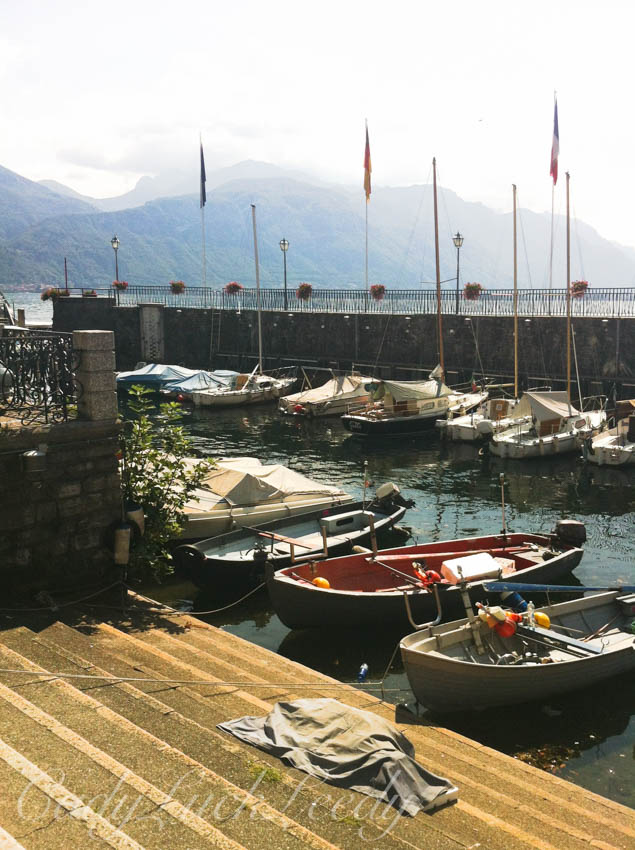
Boats Docked in Menaggio, Italy

Boats Docked in Menaggio, Italy

Now I want to say here another great way I practiced speaking Italian.  One of the first things we noticed going up the mountain were all the different colored trash bins along the tiny road.  One for paper, one for glass, one for trash.  They were everywhere. The bus stop, a little down the mountain where we would walk to, covered three things.  The stop was at the corner of the mountain, beside a set of three trash bins and the hairpin curve.  In order to go up the road further and make the curve you had to go slow, stop your vehicle, inch forward turning your wheels, back up and repeat about 30 times and then you were good to go the rest of the way up to where our apartamento was.  This was why the bus only made two trips a day up to our place. So the rock mountain/trash bin area/bus stop was the meeting place for the locals. While you waited for the bus you read the beautiful obituaries, up-coming marriage banns and local festival plans that were plastered on the face of the rock.  You could also talk with the women who waited in long lines in their small cars bringing trash to the bins.  It was a regular hen peck.  There was no trash picked up at the home they had to haul it to the roadside bins.  Here they greeted their friends, caught up on the news of the day and spent a great deal of time taking care of business. It was their town hall. I could talk to the bin ladies while waiting for the bus. Awesome!  No one was in a hurry and they didn’t speak English.  Perfetto!!!

Now I am ready to make another trip to Italy.  This year I started my third year of Italian with Fluenz.  Right off the bat there was no Sonia.  Now there was an Italian woman speaking like a bat out of hell.  I knew the words, but was convinced she wasn’t saying them. I had to go over Lesson 1 many times, boy did I cuss and complain. I thought I would never get it!!!!  But she sounded just like the Italians speaking. (Fast and just skimming over some of the little words) I plodded on.  Eventually my ear was trained to their language.  I am slowly not hearing Italian words, translating the words to English and then translating back. I am hearing the spoken Italian. So I decided to jump in the deep end of the pool.  I will be attending a language school in Montepulciano, Tuscany. (Il Sasso) for almost a month.

No English. Italian only, complete immersion. It is a small town with locals, who don’t speak English. I have been there on vacation so I know the area. It’s really laid back. The administrator has answered a truck load of questions from me. She suggested lodging, was helpful with train schedules and found Verio Neri from the Cucina Povera cookbook for me. (earlier post about that) The students who have attended the school have raved about it. Bring it on. I am ready.

For more information look up Fluenz Learning Languages, I just think it is THE best! and………..the school
Scuola di Italiano il Sasso, Montepulciano Italy (a Tuscany hill town)
internet: http://www.ilsasso.com or Facebook: Il Sasso Italian Language School

The apartamento near Menaggio, Italy, Apartment Le Eriche, Villa per Barna, Plesio, Italy. It is Italian owned and our neighbors were Italian. They own a B&B also, but we stayed in the private apartment!

Il Negozio di Alimentari (Grocery Store)

Sant Antonio, Montepulciano

Sant Antonio, Montepulciano

I was on the plane from DC to Zurich. At the beginning of the flight the seat next to me was empty for a while, then the stewardess directed a young man to the seat.  He proceeded to strip.  One layer of shirts after another, six layers in all.  He folded everything precisely and placed them in a Disneyland plastic sack. As he sat down he added that he was wearing several layers of pants too.  We got to talking.  The young man from Switzerland had been in the US on a student exchange and work program. But, he also had been shopping.  In Wal-Mart.  He told me he had never seen anything like it.  So much to choose from, so cheap. When he was not working he was at Wal-Mart shopping. He had bought gifts for all his friends and perfume for his mother.

On the train from Switzerland to Italy a young couple boarded the train struggling  with huge suitcases almost bigger than they were. I struck up a conversation with the shy young woman from Indonesia while my husband talked with her husband.
“Have you been to the US,”  I asked.  Yes, her husband had studied there.
I eventually got around to, “What did you like best about the US?”
“Shopping in Wal-Mart, my husband would drop me off and I would spend the entire day there.”  Her eyes lit up as she talked about her shopping experiences.

Shopping in Wal-Mart.  I heard it over and over. Visitors to the US loved walking down all the aisles, looking at all the merchandise.  The Wal-Mart that had the grocery store included was a special treat for them. Double delight.

Shopping in Montepulciano

Shopping in Montepulciano The grocery is to the right with red letters on the building

I know what they mean.  My first grocery shopping experience  in Italy was a highlight for me. We arrived at the monastery outside  Montepulciano on a Saturday night and at the welcome/introduction were told the grocery shops were closed on Sunday in Italy.  After the welcome the guests made a beeline to their cars and the grocery store on the outskirts of Montepulciano.  We had to wait a while to get a parking spot.  It wasn’t really a parking lot just a pull in.  Cars were parked  at the front doors of the shop like someone had just dropped someone off so they could run in.  Except no one was waiting in the car.  Finally we followed other cars to the church lot on the corner and squeezed the car into the piggly wiggly parking spaces. There was no rhyme or reason to the parking.  It looked like the cars had just stopped and parked.  It didn’t matter if you were blocking cars or if the backend of the car blocked the road.  Total chaos. It was exciting!  We walked down the hill and into the store that looked on the outside like any grocery store in the US only smaller.   There were not many carts and the store was crowded with shoppers.  In order to get a cart you put a euro into the box on the cart to release it from the line.  The aisles were tiny with just enough room for the cart to pass.  As we zipped around the store I tried to figure out what the items were by looking at the pictures on the labels.  I found peanut butter next to the Nutella.  Was Nutella peanut butter?  There was lots of that. We got to the vegetables and fruit. I’ve learned to watch before I leap.  The women placed plastic gloves on before touching the fruit or vegetables. I followed suit. There was a counter with meats and cheeses that I just pointed to as I made my selections. The store closed at six, hurry hurry. There was an aisle of t-shirts, shoes, mops and brooms. At the check out the woman gestured, did we have a bag for the groceries?  No? Plastic disposable bags  were dispensed, with a fee of one euro.  A deep breath and out the door we went. What did we buy?  It was all such a blur to hurry up and shop.

Uptown Menaggio

Uptown Menaggio

Another time arriving in Menaggio,  late on Saturday afternoon, we walked up the hill from the boat dock.  On the corner was an old building with a grand stone stair entry that faced two sides of the street.  It was the local grocery complete with so many sticker advertisements on the windows one could not see in or out.  While I stayed at the bottom of the stairs with the luggage my husband hiked up the stairs and into the shop.  I waited and waited and waited.  Finally he came out with two cans of coke, Pringle looking chips and candy bars.  What?  “You will not believe that store, it is one way with yellow tape arrows on the floor to direct you through the aisle. I had to go around twice to find this stuff,”  my harried husband revealed. I would get my chance to see the grocery later in the week.

On my visit to the store I found items from the floor to the ceiling.  How you reached the items on the top of the shelves was beyond me.  Everything was jumbled together so I had to go slow and look at it all. There was a vegetable and fruit section with a young woman there to provide you with the plastic gloves.  I had to go around the store three times to find my items, each time passing the cashier, leaving my items, and then going out and in again.  If there was someone behind me with a cart they had to go at my pace because the aisle wasn’t big enough to pass. The store had everything, I just had to really look for it.  Again I paid for my plastic sack.  One thing you didn’t have to worry about was parking.  There wasn’t any. No one would take out a grocery cart. You had to go up and down many steps to get in or out. There wouldn’t be  weekly shopping, too much to lug home at once.  Daily shopping, walk to get there, bring your sack.  I also did not notice any new cars.  The small cars had scrapes, scratches and dents on them. The buildings had swatches of color  on their walls that matched the  colors of the cars. Nobody got too bent out of shape over parking here. Just stop the car and get out.

Shopping in small towns

Shopping in small towns

Italy Sep _ Oct 2009 656Italy Sep _ Oct 2009 679In the smaller villages of Italy the grocery shopping is more defined.  A different shop for selected items.  The wine store, the cheese shop, the butcher, the baker.  I didn’t find a candlestick maker.  These shops tend to be very small and full! Everyone knows everyone. I had a great time.  Enjoy the pictures of the shops in Italy!

War in Val D’ Orcia

The Road to La Foce

The Road to La Foce

This will be my last review of books I read as part of the Travel Prep for Italy.  In 2009 my husband and I spent a week in a monastery outside of Montepulciano.  Surrounded by olive groves and grape vines this was our home base as we discovered the hill towns of Tuscany. It was ideal and everyday we jumped up and were ready to explore. At night we returned to visit with the other guests and compare notes over dinner.  Driving in Italy can be very hectic, the Italians I am sure get tired of the slow pokey tourist moving as slow as a snail so they can see everything.  One of the highlights of the week was our day trip to La Foce.  La Foce, bought in 1924, is a large estate with a sixteenth century farmhouse,  and the home of Iris Origo, an American, who with her Italian husband, Antonio, restored the  baked barren olive green landscape, neglected by soil erosion and wars between the Italian states, back to life. Fifteen years of hard work produced one central fattoria (farm), where the Origo family lived surrounded by fifty farms of one hundred acres each with each farmer sharing all produce with the owner,  but depending on the owner for a home, equipment and capital.  This was the mezzadria system of farming similar to sharecropping in the United States. Here Antonio Origo introduced modern farming techniques and managed the estate while Iris (the Marchesa) set up a school for the children and adults (eighty percent illiterate) and a hospital for their growing farmstead, eventually six thousand people in all. Then came World War II.
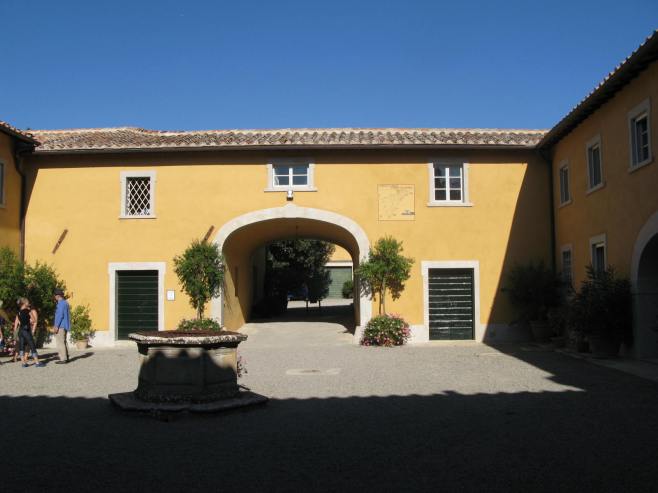
La Foce
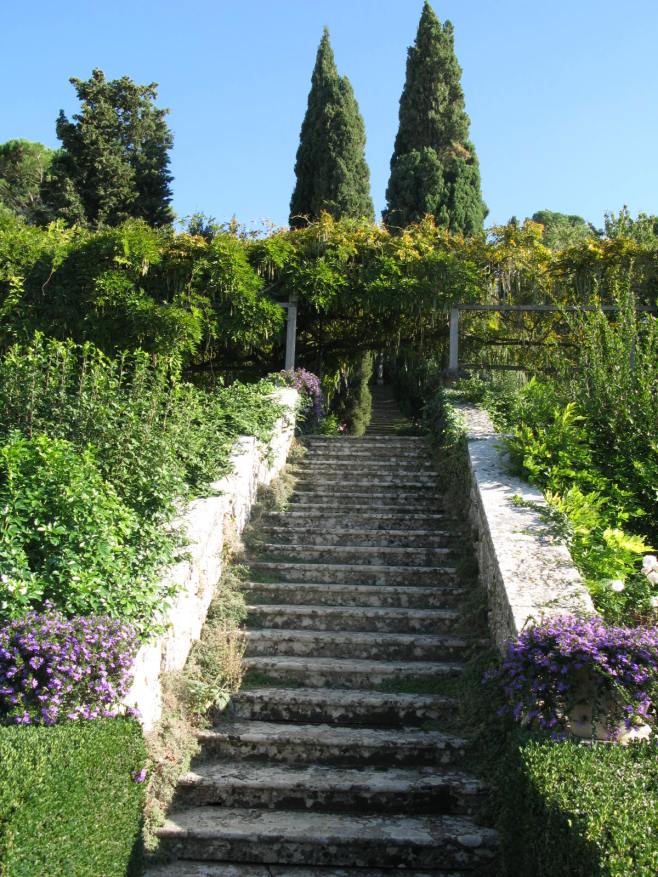
La Foce

The Gardens of La Foce

The Gardens of La Foce

La Foce
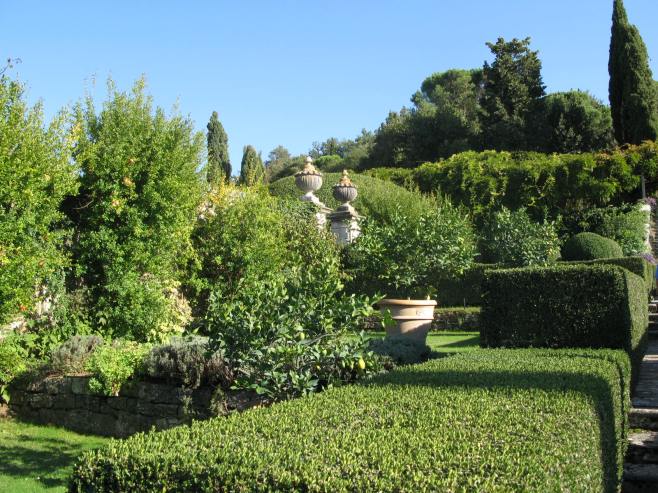
La Foce

Gardens of La Foce

Gardens of La Foce

War in Val D’ Orcia, An Italian War Diary, 1943 -1944 written by Iris Origo is the story of La Foce and its inhabitants during the war and the build up to it.  It describes their life under the fascist administration of Benito Mussolini, who came into power in 1922, their move to La Foce and then their everyday life during the war,  trying to survive.  I think the most important fact for me was that Iris decided not to edit any of the pages she had written when the book was published, in 1948. Her papers were originally written  as a personal journal during her pregnancy, as a pastime, in the middle of domestic isolation and boredom. When the war came to the Val D’ Orcia, her writings became a way to concentrate and clear her mind by writing each days events as she had heard or witnessed them first hand. She left it as it was written, sometimes in scribbles, sometimes lengthy, written in the cellar, or in her children’s nursery, hiding the papers among the children’s books because she didn’t think anyone would look there and eventually burying her diary in the garden. Good or bad they did what they thought at the time was the right thing to do. Coulda, woulda, shoulda times and more.  Sometimes those decisions turned out for the best and sometimes not. She tells it all.

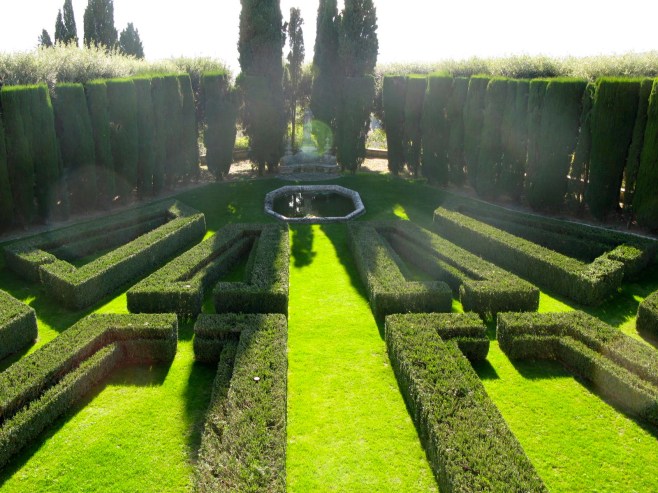
The road we took to La Foce was a two lane paved highway, surrounded by plowed olive green fields ( I have never seen a field that color before or since) bordered by the tall skinny plane trees, that everyone thinks of when they think of Italy. We zigged-zagged down that road and on the crossroads found La Foce,  a bright yellow cheery pallazzo, surrounded by beautiful gardens and a  pool flanked with lemon trees in big terra cotta pots.  We took the tour with an English speaking guide, walking through the gardens and learning about Iris Origo’s  garden design, statuary and the choice of flower variety for her garden. The estate was so beautiful, restful  and peaceful. During the tour, the guide mentioned that the marchesa had written several books. I looked them up when I returned home and was pleasantly surprised that one of her books, the War in Val D’ Orcia, was written in English. So I read the book after returning to the United States. Little did I realize, before reading the book, that the beautiful home of La Foce  and the families that lived there had seen so much hardship.
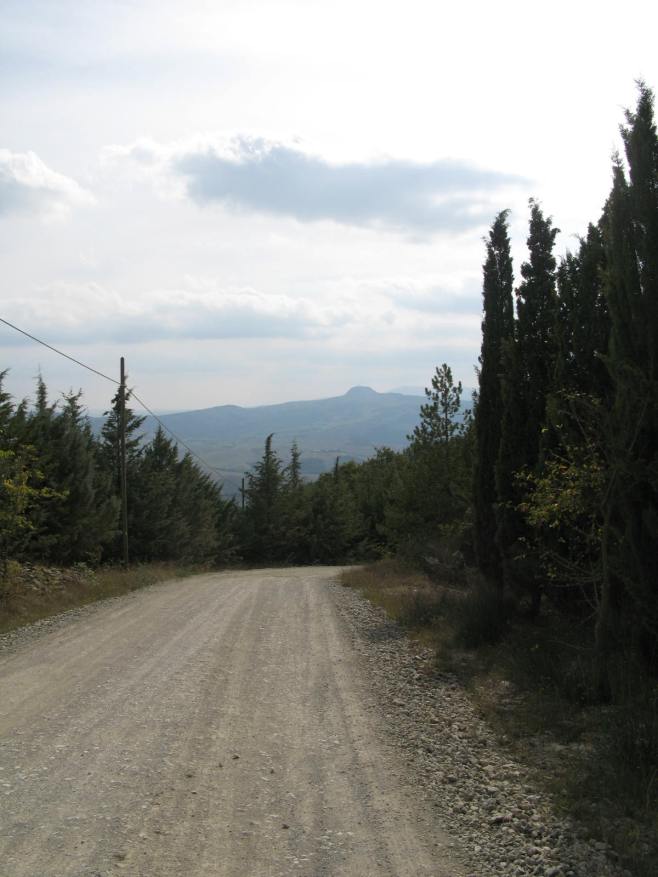
The Dirt Road

The Dirt Road

When we left La Foce, I thought I would give the Italians a break from driving an inch from my rear bumper and then speeding around me on the curves.  We took a dirt road.  I don’t think I ever saw a marking for any road except upon leaving the  North-South  A-1 corridor to and from Rome.  After you got off the A-1 you were on your own. Even with GPS in the car it was nearly a day before I realized that the beautiful sounding Italian voice was actually speaking English. English with a very heavy Italian brogue. Seena? Does  she mean the turn off for SI EN NA is this one?  See what I mean?  She pronounced cities that I was sure were not even on my map.  Anyway, the dirt road seemed like a good choice at the time and we were not that far from Montepulciano.  How bad could it be?  The juts in the narrow dirt road seemed to get deeper and deeper and larger and larger.  Sometimes I had to come to a complete stop and creep across them, the rental car bottoming out.  In the middle of nowhere we came to four or five houses and an old castle.  There was even one streetlight.  Who lived out here?  We stopped to look and to give the car a break.  When we started up again that dirt road seemed to go on and on. It was getting dark when we pulled into a farm lot.  The road had ended.  There were clothes hanging on the line and a tied up barking dog going crazy with our arrival.  The farmer (plaid shirt and everything)  came out in total disbelief that we were in his barnyard. Loudly in case we were deaf, but in rapid Italian and gestures he told me in no uncertain terms to turn around and go back.  I did.  We finally did find our way back to Montepulciano, but I want to find that road on my trip this time, because now I know after reading the book what it was.
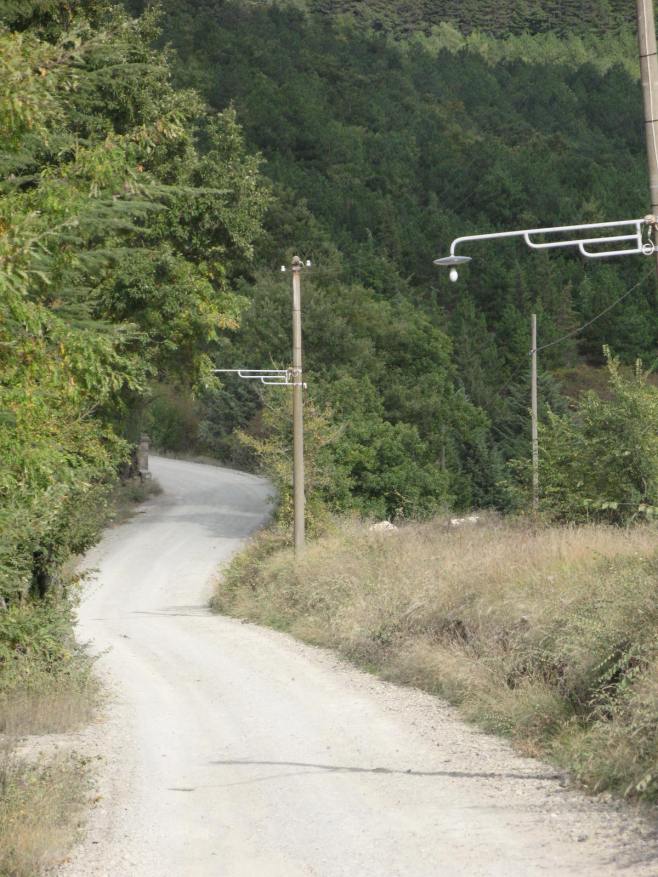
Leading Up to the Castle

Leading Up to the Castle

I never thought of soldiers from many countries being prisoners of war in Italy. There were seventy thousand of them. Early in the war the Fascists in compliance with the Germans informed the Origos that their home would be used to house the P.O.W.s.  A high ranking official came to look the place  over and decided he would be more comfortable at the castle up the hill.  The Origo family and their tenants would be in charge of feeding them, and caring for them. The peasants kept them alive and helped them escape. General O’ Connor wrote after the war, “ I can only say the Italian peasants and others behind the lines were magnificent.  They could not have done more for us.  They hid us, escorted us, gave us money, clothes and food – all the time taking tremendous risks.  Without their help it would have been impossible for us to live and finally escape.”

Iris had the hospital, meager supplies and the only nurse. This is not to say she helped only the Allied forces, but also young Italians, who took up arms against the regime and joined partisan groups, (she hid them in her forest, fed them and reported movements of troops from either side). She also cared for wounded German soldiers stranded from their units.  Yes, she tells all about that castle and what went on there.

When Genoa and Turin were bombed and seeing heavy fighting the city dwellers begged  those people who lived in the country to take in their children.  The children would be safe, in the middle of Italy, so far away from the fighting, or so they thought.  La Foce  and Iris Origo took twenty-six children in, in addition to the two she had of her own by then. Eventually, when the American forces landed near Rome and moved north, the war came to her doorstep literally. As the war raged close to  La Foce, she walked the children to safety in the hill town of  Montepulciano, as the shelling went on all around them. The children were tied together so they would not get lost, and many of the children so accustomed to the bombing and planes thought they were playing a new game. After the war many men, from different countries, wrote her and told her they had survived the war thanks to her kindness.  I am sure the children, who for the most part were re-united with their families felt the same way.  There is a great deal to be learned of strength, determination and courage from Iris Origo.  She shares her life, simple acts of everyday life during a war, with the hope of human kindness. Her book is a must read.

P S   I hope I find that farmer too.  I have studied Italian for two years and will be learning more in Montepulciano.  Maybe we can discuss the weather!

The converted monastery  we stayed in was:  Sant’ Antonio/The Country Resort, Via della Montagna 6/8, Montepulciano, Italy.  Web site:  http://www.santantonio.it

THE SPECTACLED BEAN

Tales, Thoughts + Tribulations of a Free Spirit in Suburbia

Walking Away

Travels on foot

Teacher nickname: The Three Hairs

Minding my mind, one thought at a time.

Tra Italia e Finlandia

Un lungo racconto fotografico.

seanbreslin.jp 2025

Photography, hiking, walking, and cycling across central Japan — from quiet mountain paths to everyday life around Nagoya.

Lost in Translation

Looking for meanings in words, images and sounds

Journeys with Johnbo

Reflections on places traveled and photos taken.

M/VGratitude

Cruising with the Thyrre Family

Caroline's Travel Adventure Blog

Where my Travels and my Blog merge together.

Just Me, Nobody Special

The mental meandering that cross my keyboard

Jennifer's Journal

Website & Blog of J. Kelland Perry, Author

Slow Shutter Speed

A photographic journey.

Ann Mackay: Inspired by Nature

Photography celebrating flowers, plants, and the natural world

Still Restlessjo

Roaming, at home and abroad

Fine for Friday

The Corner Garden

Picture This

Photography, Travel and Retirement

World Traveller 73

Upgrade Your Travels. First Class Luxury Travel from all parts of the Globe. Business Class Airline, Lounge and Hotel Reviews, Stories and Adventures

Rachel Meets China

A China travel and lifestyle blog