Help! What Am I?
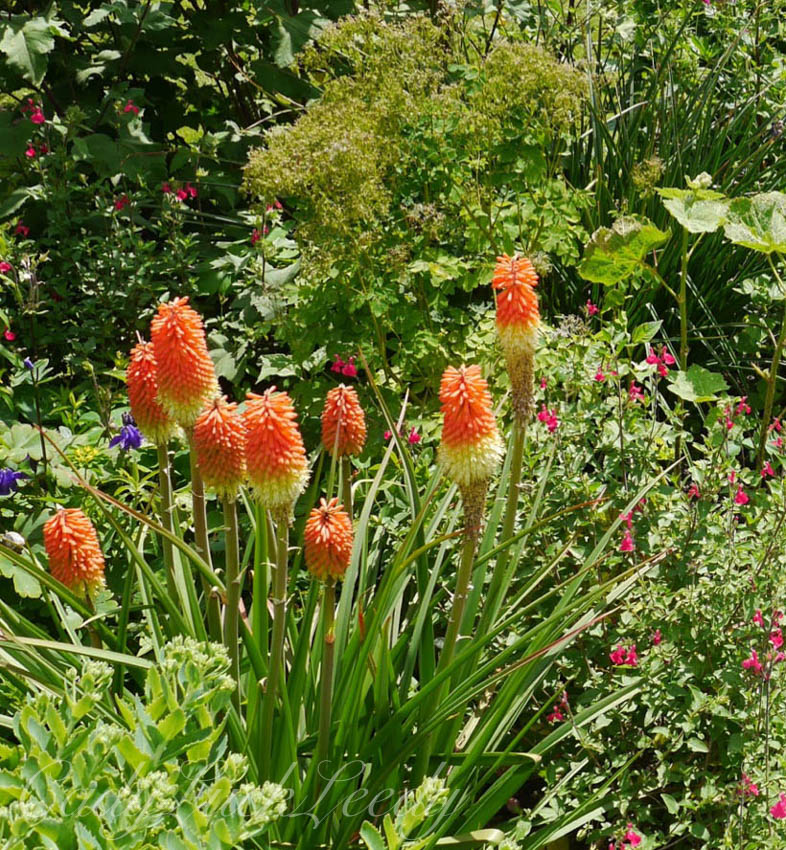
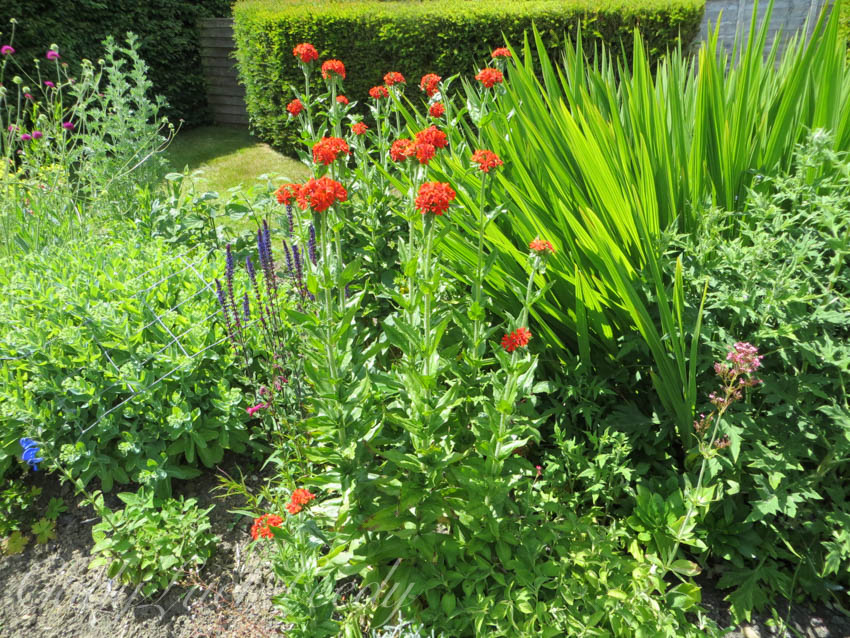
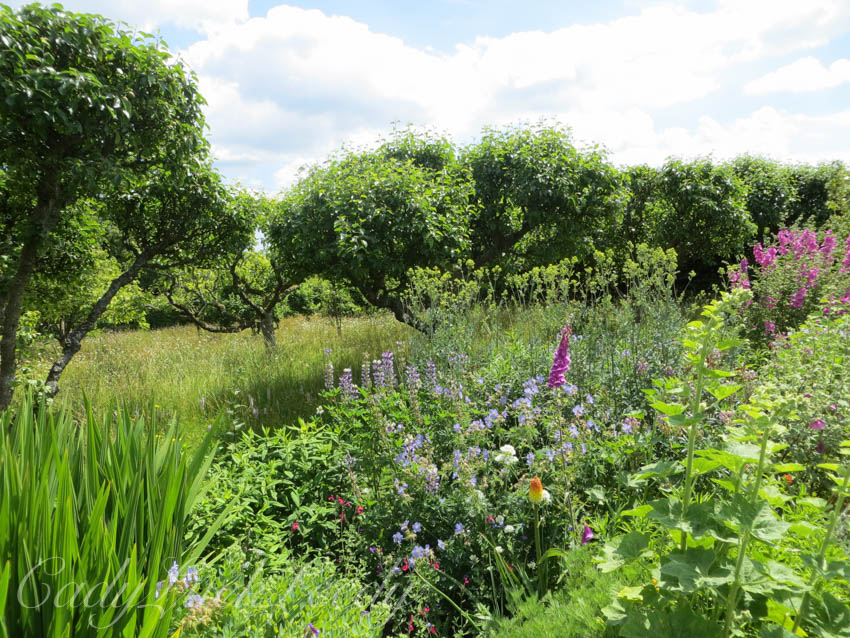
This was my favorite flower during my “English Garden Tour.” We saw it several times in many gardens, but no one was able to identify it. Can a gardener help me out? I loved the way it kept blooming on a single stem!
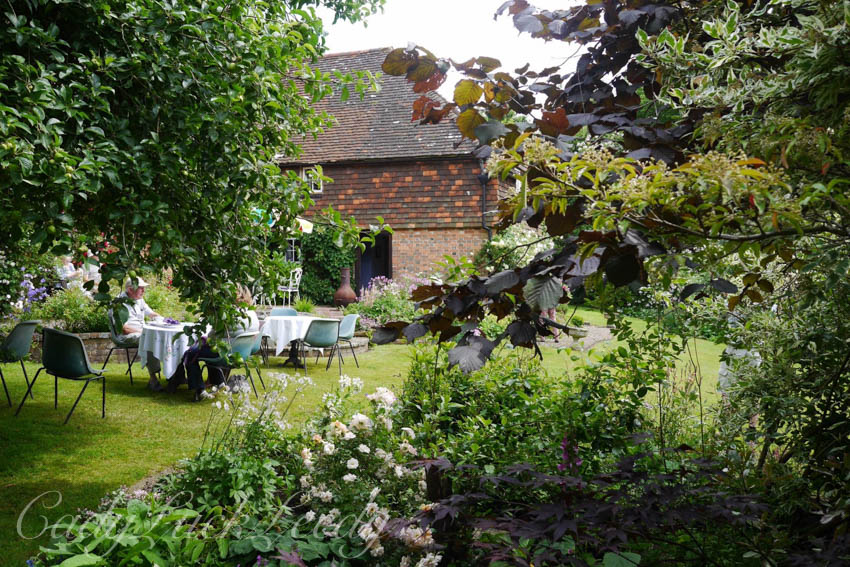
It was so entertaining sitting on the terrace at the Cat Inn in West Hoathly watching the wedding guests stroll in for a wedding lunch. Such beautiful summer finery and oh the hats! Why don’t we wear hats anymore? I am always so envious of women in hats! So elegant looking in the smallest of fluff and feather!
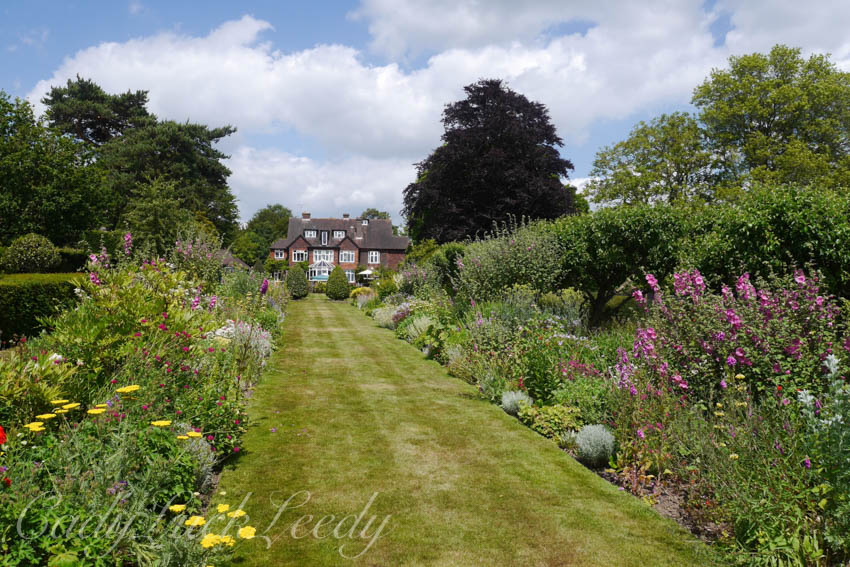
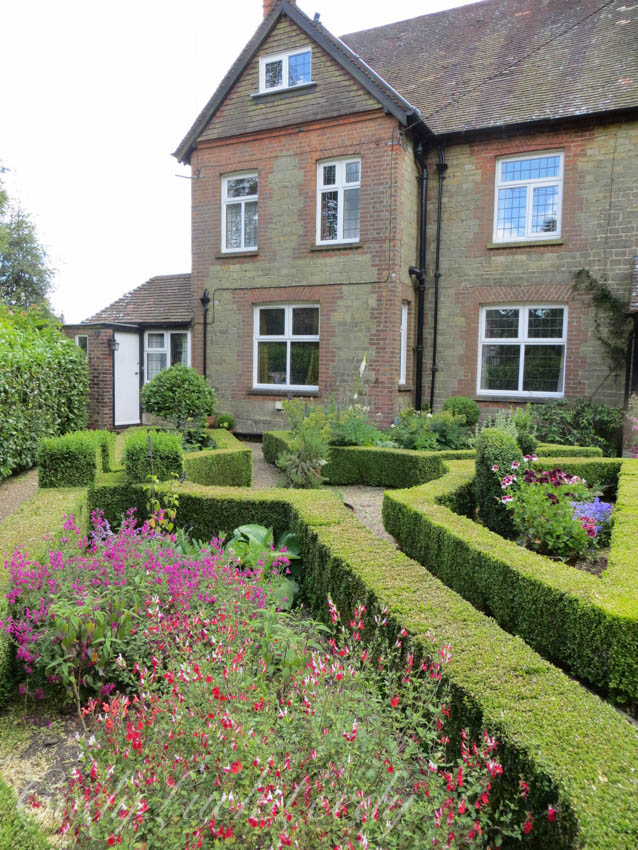
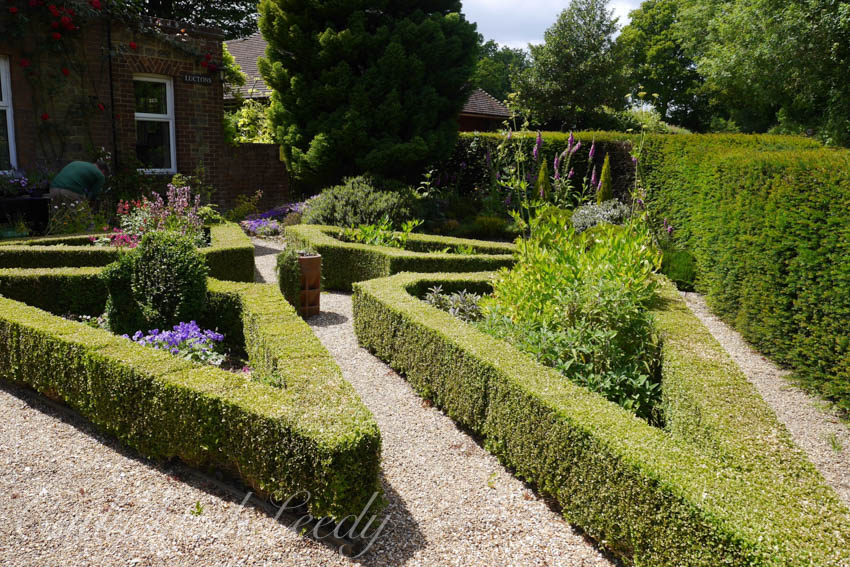
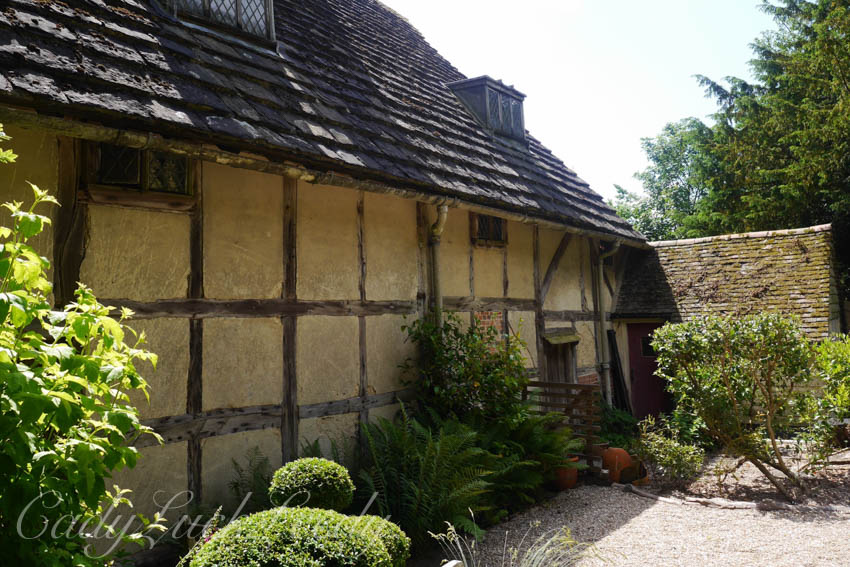
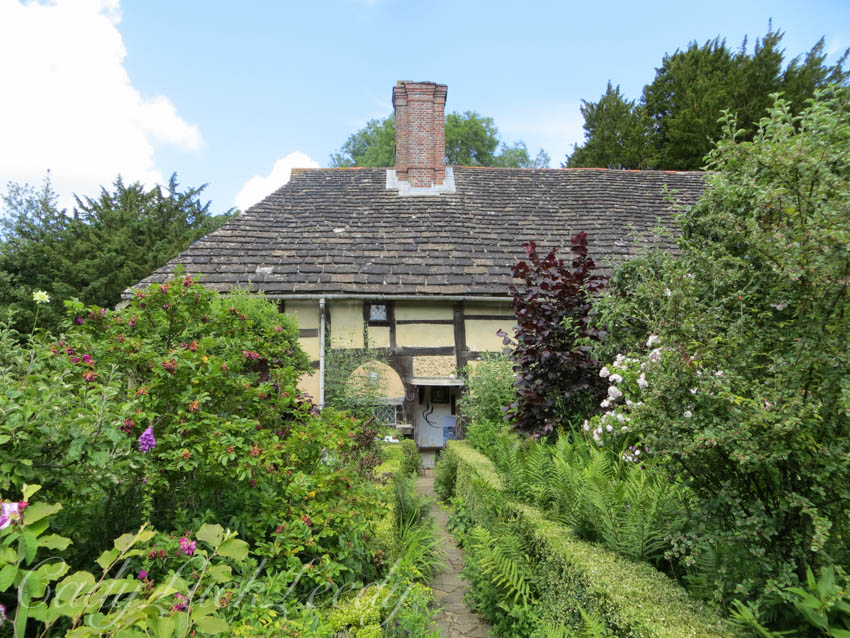
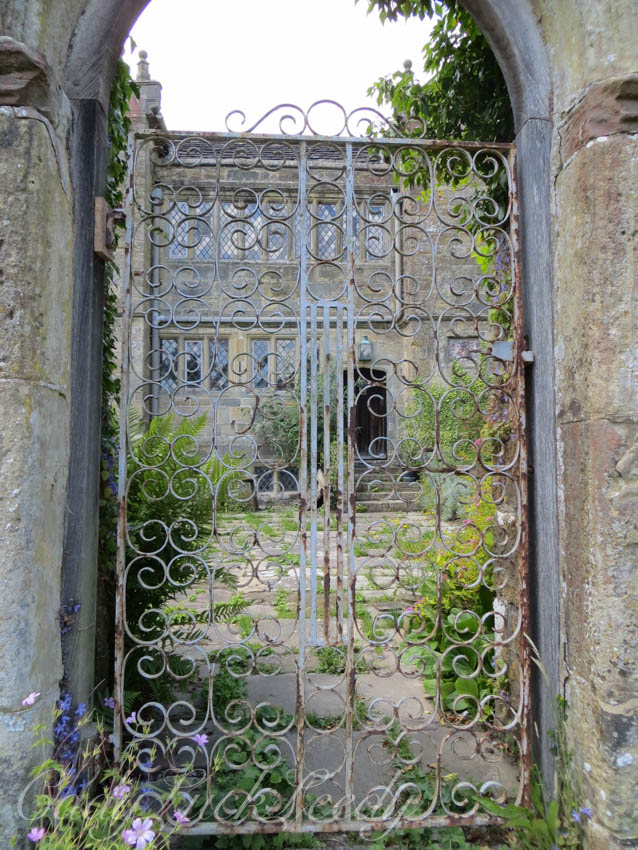
Time to move on to the next garden, Luctons, just a short walk to the end of the street where the “newer homes” are. Talking with the owners, who have lived in their home for thirty years, we find there have been many adjustments and improvements to their 19th century home, green houses and two acre garden.
That is what I find so interesting about the gardens I have seen so far. You get a chance to talk with the gardeners/owners of the gardens and learn more about their garden plans, choice of flowers and involvement with other gardens and gardeners. This garden was designed in the Gertrude Jekyll style, which focused on a relationship between the house and its surroundings. Gertrude Jekyll’s style included foliage, color and texture to achieve a practical and beautiful view. To give a picturesque and natural appearance in the garden the use of stone walls, walkways, and natural partitioning of the garden, ensures a gentle flow. To quote the famous landscape gardener,” A garden is a grand teacher. It teaches patience and careful watchfulness: it teaches industry and thrift; it teaches entire trust.” At Luctons, we see the small box partere, yew topiary, shrubs and flowers that frame the front of the home giving it an inviting entrance. Won’t you join me for careful watchfulness?
In the back is a large lawn with herbaceous borders centered in a large fruit and vegetable garden.
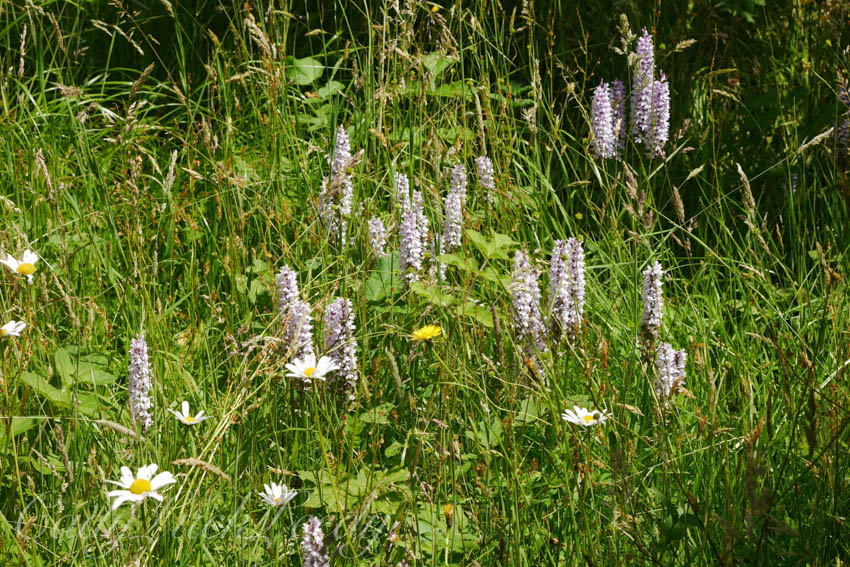
The wild flower orchard is not mowed revealing beautiful meadow flowers and spotted orchids. A tent has been set up where cream teas are served. Could there be anything more English? All I need is my hat!
PS This was hands down my favorite flower! I saw it in many of the gardens we toured, but could never find out the name of it. Can anyone identify it for me?
Today we traveled to West Hoathly, in Sussex, to see the first gardens that I had chosen from the many offered this weekend on the National Garden Scheme. Driving well over an hour we arrived in the center of the small village of 9 homes, including the pub. The Priest House is our first destination. The only one of its kind open to the public, this 15th century Wealden hall house stands in a traditional cottage garden on the edge of the Ashdown Forest. Originally owned by Henry VIII it was given to Anne of Cleaves, wife number four, upon their divorce. The herb garden is planted with over 170 culinary, medicinal and household herbs. Today a special exhibition for the NGS, featured on the upper floor, built in 1600, reveals pictures of local children and their place in the workforce in the 19th century. Many children, as young as five and six, were farm laborers and chimney sweeps. It was not uncommon for the chimney sweep to get stuck in the chimney and die. The Priest House is maintained by the Sussex Archaeological Society and provides rotating exhibits, research, and other learning experiences.
St Margaret’s Church, settled in 1090, records the names of the village from Hadlega, later standardized to Hodlegh, then West Hoathly. This Anglo-Saxon word signifies a heath covered clearing, or the dense woodland of the Ashdown Forest. In 1556, Ann Tree was burnt at the stake near here for refusing to renounce Protestantism, one of seventeen martyrs to suffer this fate in Sussex. A brass memorial in the church commemorates her.
The Manor House was built in 1627 for Mrs Catherine Infield of Gravetye Manor, as a dower house. Her family was the wealthy owners of the local iron works. Later abandoned to smugglers the buildings and grounds were rejuvenated in 1884 when “the greatest English Gardener” William Robinson bought it. Upon his death it was turned over to the Forestry Commission. It now sits vacant and forlorn.
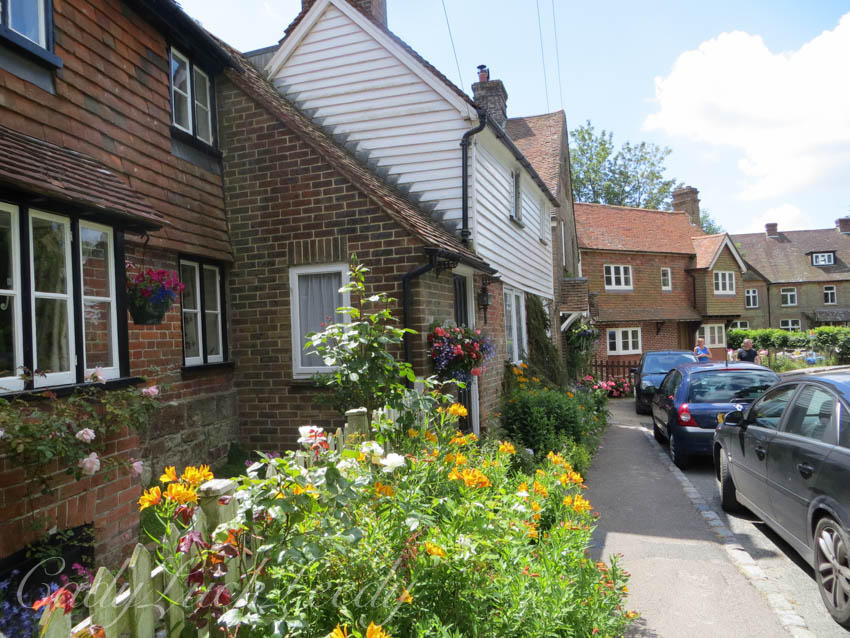
The Phlox and Rose Cottages are 19th century weather boarded over timber framed cottages. They were the newest houses in the village!
The Upper Pendent is a timber framed, tile-hung 17th century home which previously housed the village stores and post office in the 19th and 20th centuries.
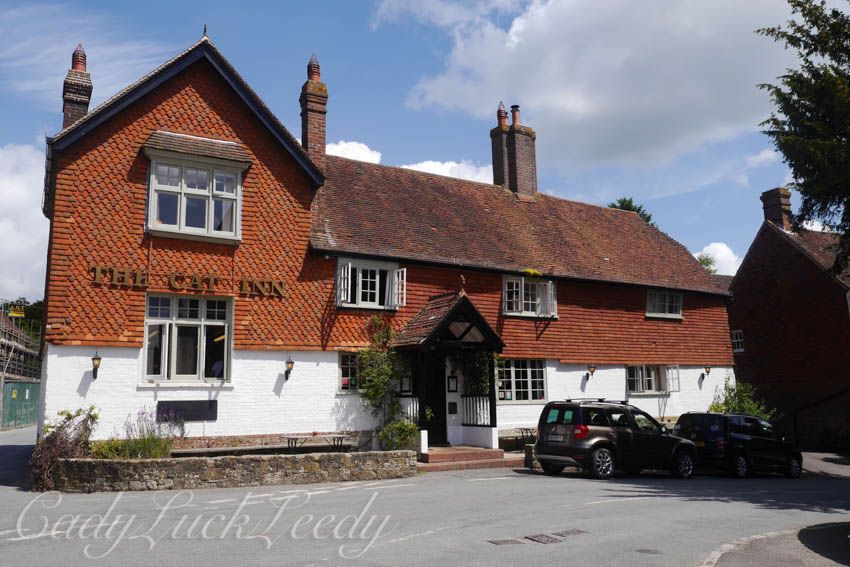
The Cat Inn is the 16th century pub of medieval origin standing in the crossroads of the village. The name is derived from an emblem of the Sackvilles of Knole, which is a leopard. We will be learning a lot about the Sackvilles, a very prominent family in Kent. This is the pub I had picked to stop in for lunch after touring the village. It was highly recommended by the locals also. We sat in the lovely terrace and had a most agreeable meal. Now on to the next garden in the “burbs” of West Hoathly.
P S For a good read about the wives of Henry VIII, I suggest, Six Wives of Henry VIII by Alison Weir. The author draws on early biographies, letters, memoirs, account books, and diplomatic reports to bring each woman to life. Very interesting!
As I stated in my previous post I like to research my vacation before I hit the road. I know, I know, a lot of you like to just “wing it,” but I would rather know all about places of interest, restaurants, and villages that I am am really interested in and then add to that, if something exciting turns up. For this trip, I was glad I started early and took the time to look-up the gardens I was keenly interested in, on the National Garden Scheme, (NGS) so I could co-ordinate going from one garden to the next, (since our plan was to see several a day) I also needed to know how much time it would take to get from one to another, and where we would want to eat between gardens. Although the gardens on the NGS are open on the weekends, for the most part, some had specific times they were open. We would have been quite dismayed to have arrived at a garden only to have to wait to get in. So when I had the gardens lined up I looked for a local pub close to the gardens we would be touring. This was when I realized most pubs are open from 12pm-2pm for lunch and then re-open for dinner, usually 6pm-9pm. So I had to make sure we were at a certain place on schedule.
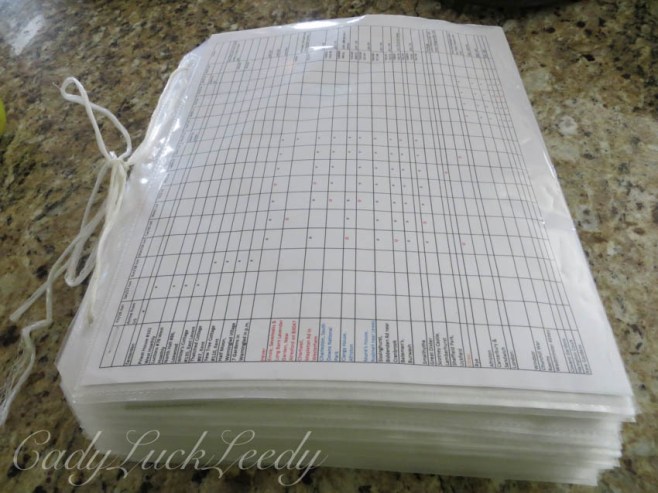
The first thing I learned was that there were GPS co-ordinates listed, for all the gardens in the NGS and all the historic National Trust estates, in their books. This would make the driving so much easier, in theory. But to be on safe side, I printed out maps and directions from garden to garden, to also have with me. As you can see from my work sheets, I made lots of notes. I also printed out the pub or special interest I wanted to see near every garden. I put all my notes, maps, and directions in plastic sleeves and then when I was ready for a particular day I just pulled out the necessary pages to carry along in the car. SB took a look at all my notes and quickly put together a spread sheet for me, so we knew where we WANTED to be everyday at least!
Now for reality. As Americans driving in the UK, it takes us at least three days to get used to, what is for us, a steering wheel on the wrong side of the car and driving on the wrong side of the road. We knew what to expect in that area. What we didn’t expect was that once off the M25 we would be on a village road that got smaller and smaller as we got closer to our destination. These were roads meant for horse and buggy and then pony and trap, but were now meant for a two-car highway. We were rear view mirror to rear view mirror! When we came to a village, the road narrowed even further in front of the stores, where the cars would be parked higgly-piggly in front of them. (I wouldn’t exactly call it parking) Cars were just pulled up at any angle, as long as the car would fit in (or not), and the car abandoned. Now this makes the road even smaller and one must wait your turn to go around and sometimes the car coming towards you is in a very big hurry so you have to creep past all the cars, zigging in and out at a crawl. SB’s habit as we came to a village, was to roll down the window and pull in the rear view mirror saying, “Do you know how close you are to that car?” My reply every time, “I didn’t hit it did I?” This is not the best of ways to start a vacation meant for relaxation, but after three days I could move along with the best of them. I am a terrible navigator, even with a map, so it is best that I drive and SB keep me on the correct side of the road and upon entering a traffic circle tell me which turn-off is the one I want, because I would be just carousing that circle in total chaos.
Also, using the GPS in the car, as it was originally set up, to get from Point A to B in the fastest time, did not prove to be helpful. The GPS, in order to save a mile or two, would take us off the main road and into a tiny lane (and I mean tiny lane) to get to our destination. Now I can truly say I saw some lovely cottages and gardens, that were not on any of my maps, in extremely small clusters of village life, that I am sure the average American tourist does not get to see. I am ABSOLUTELY sure I am the only American who knows that the Swim Club in Sevenoaks is reached by going off the main road onto a 180 degree turn, after you have gone through a section of newly landscaped cottages found on the opposite side of the road to the one I was looking for, then up a steep hill into what had to be the Sherwood Forest, on a road that got narrower and narrower as we came to our supposed destination, Knole. Arriving at the back entrance, I think, where no one could get in, yes the GPS got us there, kind of. It was Knole, but not the proper entrance. But hey, like I said, I know now where the Swim Club is, the drive was nice and shady, it only added a half hour to our trip time, and I AM ON VACATION RIGHT? We did that on a lot of days to various destinations. You just have to go with the flow! We reverted to looking at my printed maps for extra guidance.
After much grumbling, and some hysteria about my driving, we arrived at our first destination near Tenterden. I have to say, also, that we had planned to stop at a local vineyard on the way, but under the circumstances that didn’t seem prudent, as I don’t think SB’s heart could have taken it, so we saved that for another day.
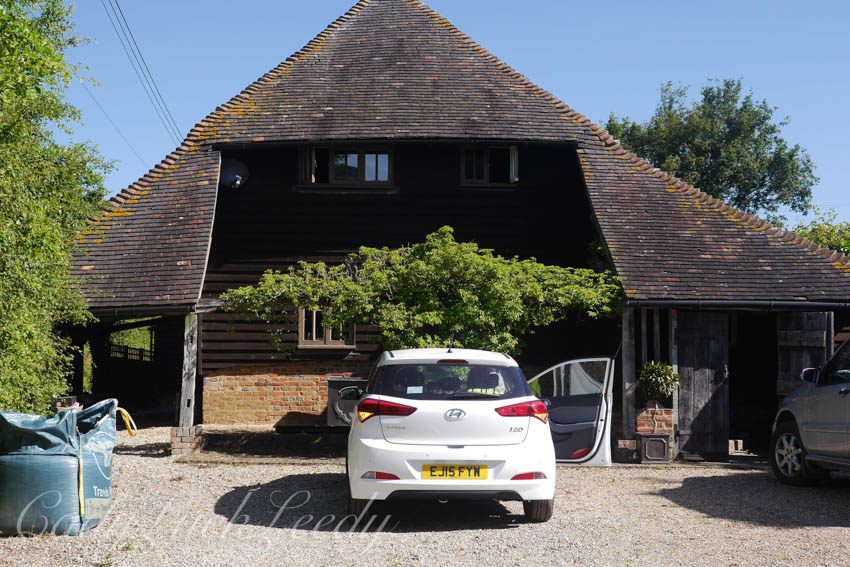
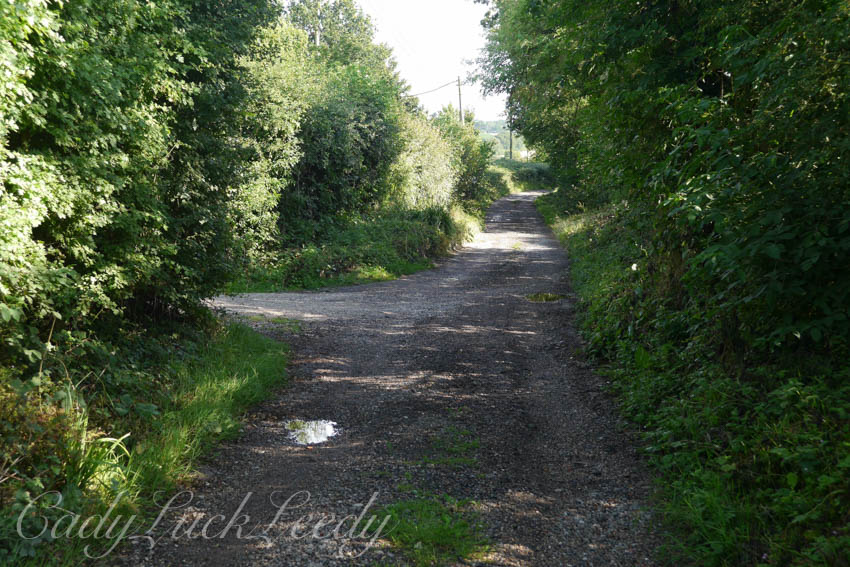
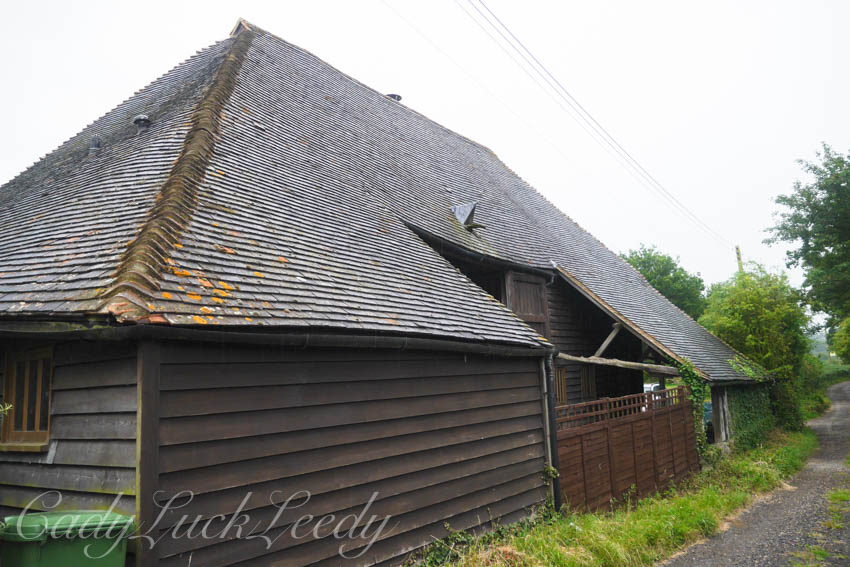
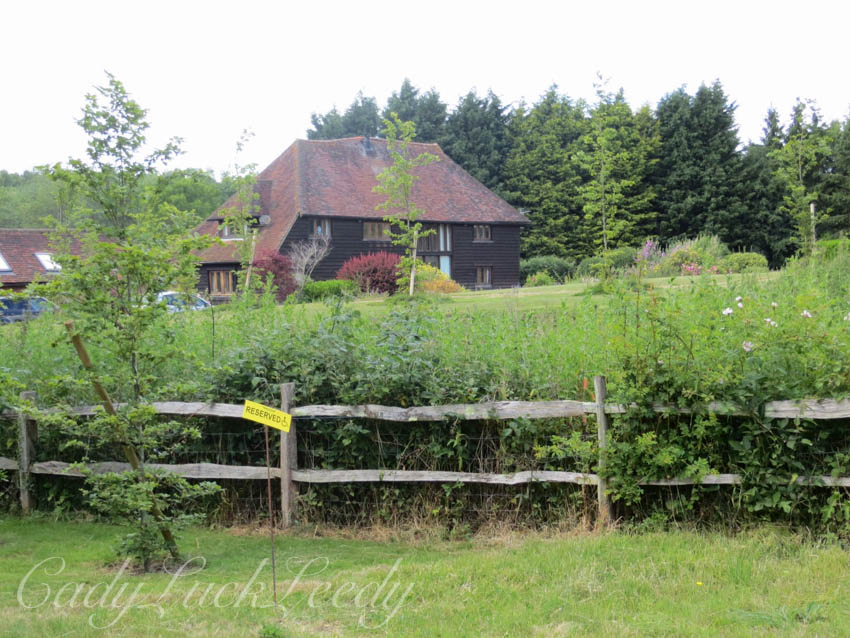
Bulleign Barn, a find on Air B&B, was perfect after our harried day. Turning off onto a narrow one-lane graveled road we poked along for a mile or so following the canal to one side and the rabbit warrens on the other. The lodging, near the hub of Tenterden, (a large village compared to others we had been through that day) was clustered in old hop fields, at one time belonging to the Boleyn family. The long black barns were used for storing the hops. Our Air B&B accommodation was one of the long barns converted into a home with several bedrooms off the main section of the home. Our room was very spacious and modern with WI-FI, located on the main floor, with a private entrance, and set in a small walled courtyard near the old stone horse pool. There was a fridge for our trips to the vineyards too.
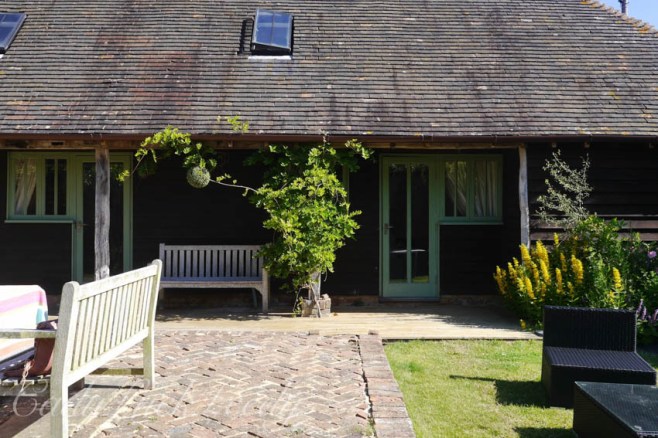
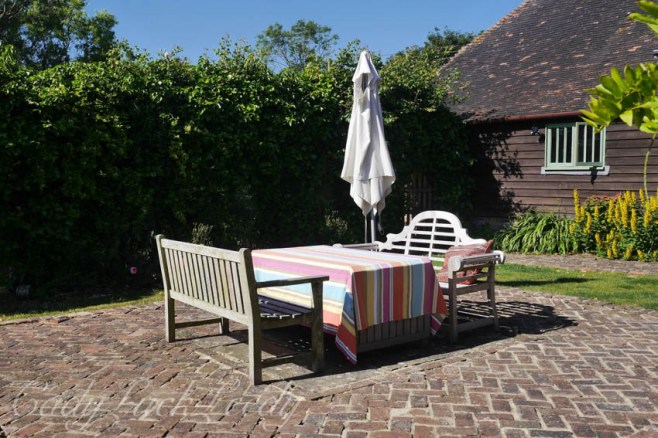
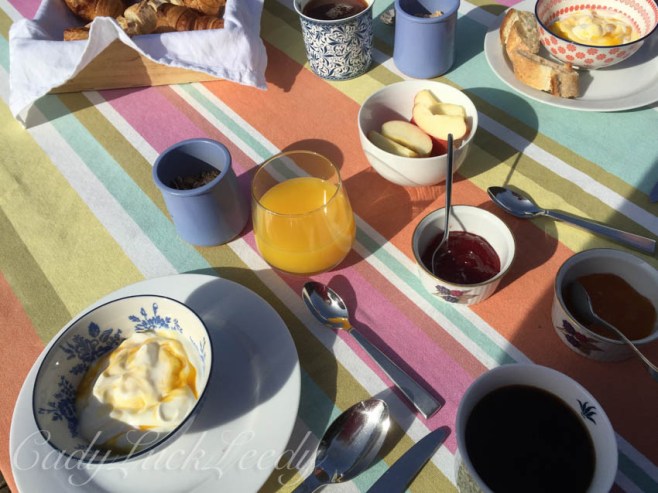
Every morning we were served a delicious breakfast of fresh yogurts, fruits, home made jams, along with croissants and specialty breads, warm from the oven. The outdoor table was set to our time-table and it was nice to talk to the other guests, and watch the playful dogs, chickens and a duck named Jemima.
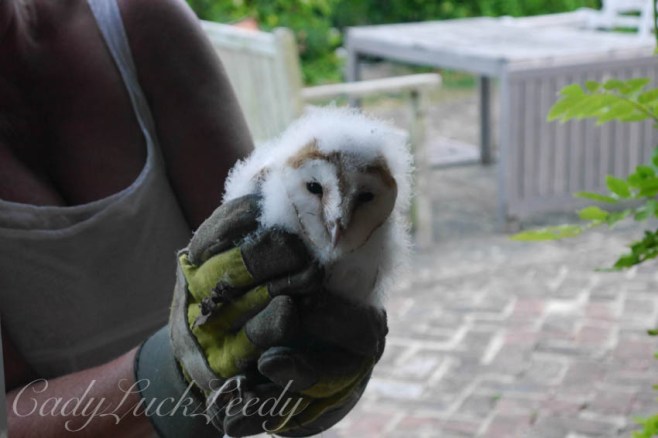
There was also a family of white barn owls, who nested in the eaves, and one morning we got to meet a baby owl, which had fallen from the nest overnight. Our hostess skillfully set about to replace the fallen chick.
It was so nice to have found this country accommodation and start our day in such a relaxing way before we set off on our daily adventures to the gardens. We looked over the listings for quite some time, since there were so many varied spots to choose from. If you haven’t thought of using Air B&B you should give it a try. We had choices of garden sheds, gypsy wagons, tents, rooms in big estates homes, or entire homes in both rural and city settings. It’s just fun to see all the offers available out there and we have never been disappointed with a listing we have stayed in. To top that off it is much less expensive and if you like true interaction with your host and other guests, Air B&B will be for you. See you in the garden tomorrow!
PS
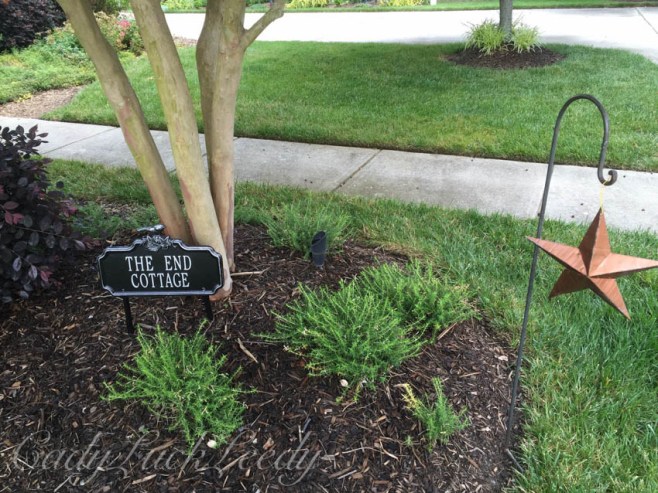
Before leaving on our Tour of the Gardens, in the spirit of things, I decided to name my little house, The End Cottage. Every proper cottage in England has a name, most likely used prior to streets and house numbers, so why shouldn’t our place have a name I say? The Star was placed in my yard because I was selected for the Garden of the Month by my neighbors! Thanks !!!!!!
Of all the delectable islands, the Neverland is the snuggest & most compact…… not large and sprawling, you know, with tedious distance between one adventure & another, but nicely crammed.
J. M. Barrie, author of Peter Pan.
When it comes to gardens I like nothing better than to stroll, admire the collections of beautiful flowers, and imagine the inhabitants of the house and how they like to garden. I especially like the messy, scattered garden with vines dripping over the garden gate, and paths that invite you to explore. It’s even better if there is a flower box of riotous color haphazardly framing the window ledges of the small cottage, nestled in the garden, as if just plunked in, as an after thought. Pieces of art and sculpture placed in a specific spot draw your eye and add to the charm of the garden. I have just returned from several weeks in the United Kingdom, specifically in Kent and Sussex, traipsing through local gardens and visiting magnificent estate homes with acres and acres of gardens. Whew! We lodged in a barn in the middle of the weald, down a mile-long gravel road, wide enough for one car at a time, passing by the field of rabbit warrens and watching for the hop of a bunny on our daily treks into the countryside.
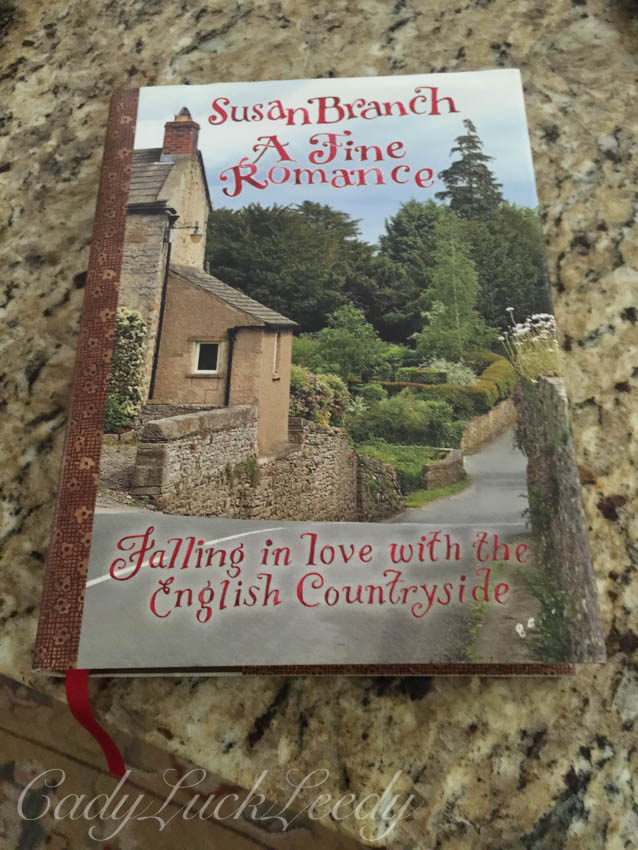
Planning our adventure was one of the fun “bits.” I love the “planning” part! Where to go, what to see? One thing leads to another. First, I looked for places I knew would be of interest. What about the Chelsea Flower Show? No, too crowded and I wanted more rural. Hever Castle during Rose Week? Closer, but not quite right. Then I read a wonderful book, called A Fine Romance, by Susan Branch. It’s about falling in love with the English countryside and her adventures when visiting England.
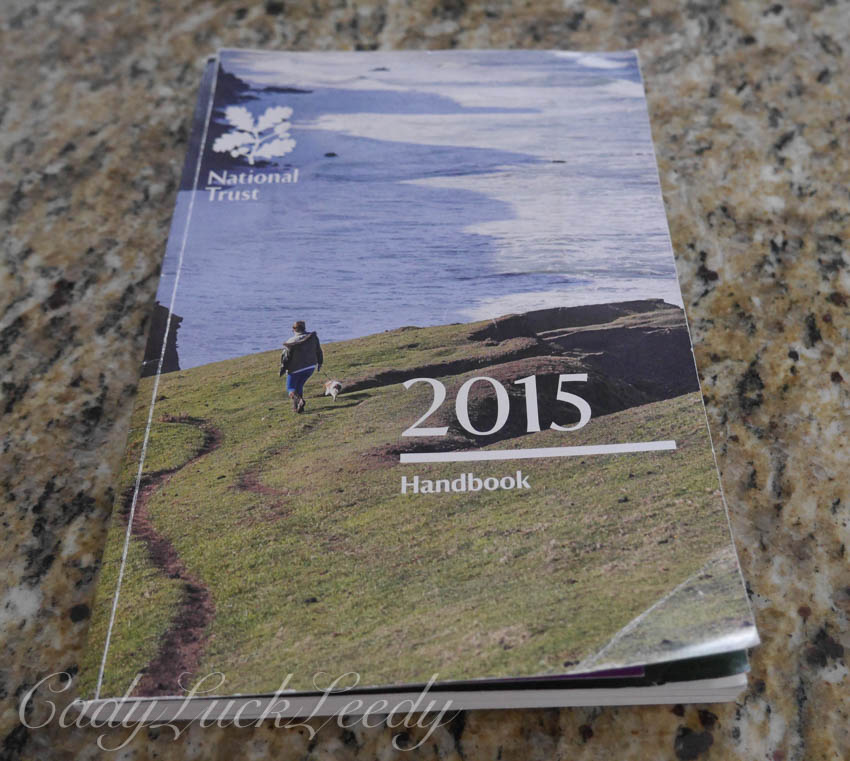
I loved it and the more I read the more I was drawn to Kent and the village of Tenterden. So, I set out to learn all about Kent and especially Tenterden. I also learned more about the National Trust. The National Trust, since 1895, has been preserving the countryside and hundreds of historic properties in England, Wales, and Northern Ireland. I first heard of it when reading all about Beatrix Potter and her home in the Lake District, which was left to the National Trust. The properties restored include huge estates to the small and quirky. Just right up my alley. So our first priority was to join the National Trust, (it’s called the “Royal Oak Society “ in the U.S ) which allowed us to receive a handbook with maps of all the places to visit with the National Trust and a pass to get in all of them for a year and a pass for parking at the different locations.
What a must this is! You don’t realize all the places available to visit until to see them on the maps! So that was a reference point to start with. Where could we set up our “base camp” closest to the sites we wanted to see? Well it still remained Tenterden for us. Then I heard about the National Garden Scheme. What in the world was that? Had to research it before final decisions were made!
The National Garden Scheme was founded in 1927 to open “gardens of quality, character and interest to the public for charity.” Originally the admission fees raised money for district nurses. This was changed in 1948 with the formation of the National Health Service. The National Gardens Scheme has given more than 43 million pounds to nursing and care facilities since the time it opened. Since I am a retired RN this was near and dear to my heart. These are “local” gardeners and their gardens. No big estates, (but some seemed to me like they were!) One woman I was chatting with on our walk through a local garden invited me to her garden, as well, which was not on the list, but exclaimed, “it’s only 12 acres, of course.” So as you can imagine, we visited the “potager,” snuggled behind the small cottage, to large landscaped gardens with “rooms” of flowering blooms. All gardeners were proud of their gardens, more than willing to tell you about them and happy that they were able to do their “bit.”
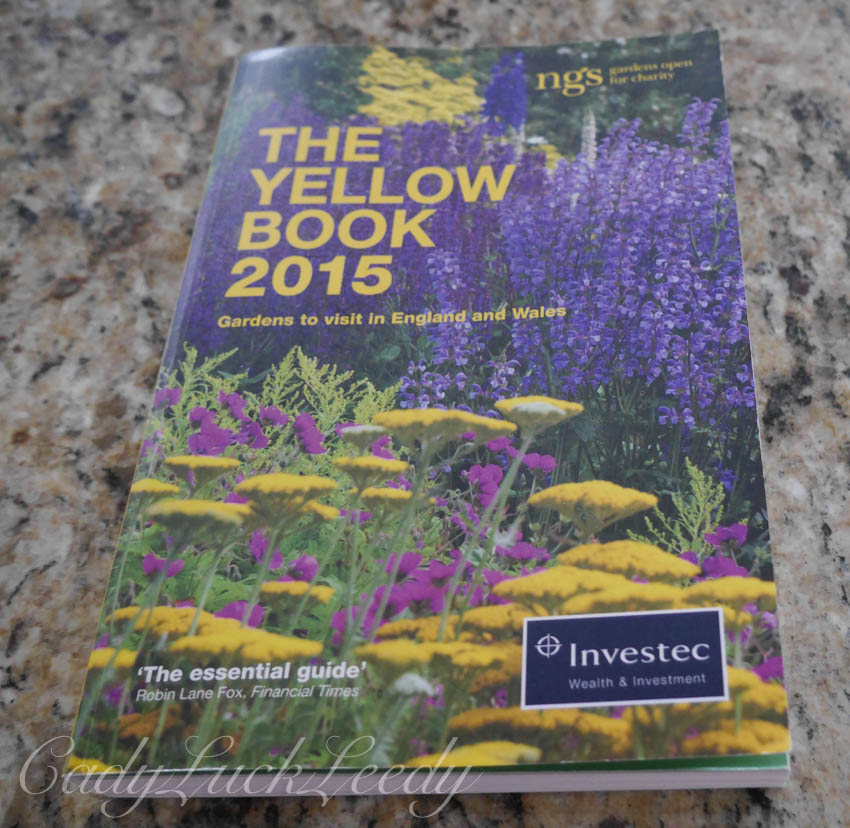
In 2013 there were over 3700 gardens open, which were all vetted to make sure they are all of sufficient interest. Each gardener opens his garden (usually on a weekend), one or two days during the year. I was so excited! But, it takes some planning! “The National Garden Schemes, “Yellow Book”,” can be purchased each year, which lists all the gardens and when they will be open.
Maps, directions, type of garden, and particular interest are included. We were really in the thick of the countryside when directions would reveal, “just go down the gravel road for a mile and then when you get to the yellow mailbox turn right on that gravel road and proceed on to the canal road and windmill place. Light refreshments offered.”
This as going to be one of our best adventures! So after months of looking up gardens and coordinating them with places on the National Trust we were ready to make our way to the “Garden of England,” Kent. We were about to set off on a gardener’s dream! See you tomorrow on our way to the garden!
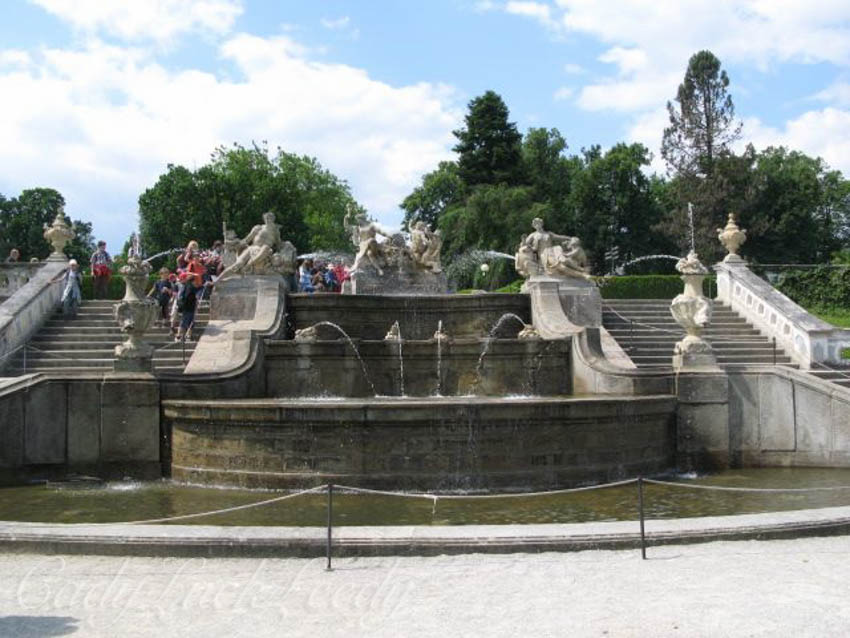
If you take just one tour from Prague I hope it is to Cesky Krumlov! You won’t be disappointed! Our tour was booked through our hotel in Prague, more on that when I talk about our stay there! In order to see the castle and theater in Krumlov, you must be with a guide. The castle’s theatre is fabulous! I have seen many theaters, but the artwork on the walls of this theater are my favorite of all of them! Europe once had several hundred baroque theaters, using candles for light and fireworks for special effects. Most of them burned down. Today only two survive in good shape and are open to tourists; one at Stockholm’s Drottingholm Palace and one here. Sitting on wooden benches in the theater, we study the hundreds of happy villagers, who are painted on the walls. Everywhere you look, in every nook and cranny, there is a small tabloid! Later we visit under the stage to see the wood-and-rope contraptions that allowed the scenes to be moved about in seconds, while the audience was blinded by smoke or fireworks. Sadly, no pictures are allowed inside, but trust me when I say you will love it!
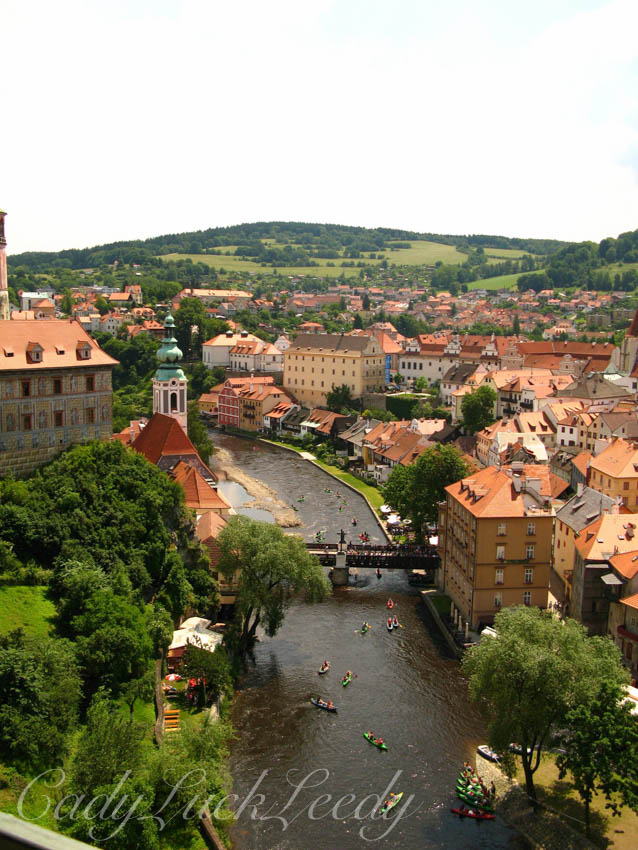
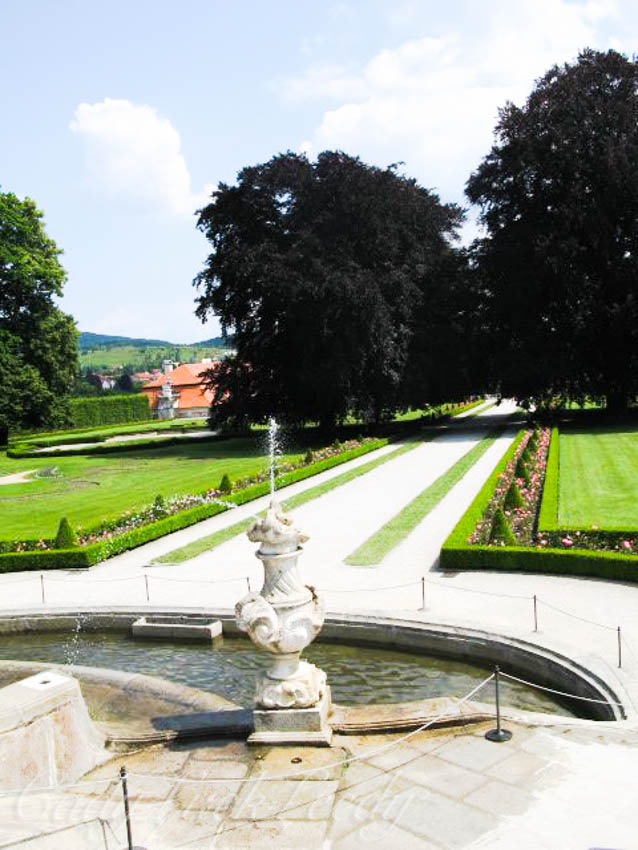
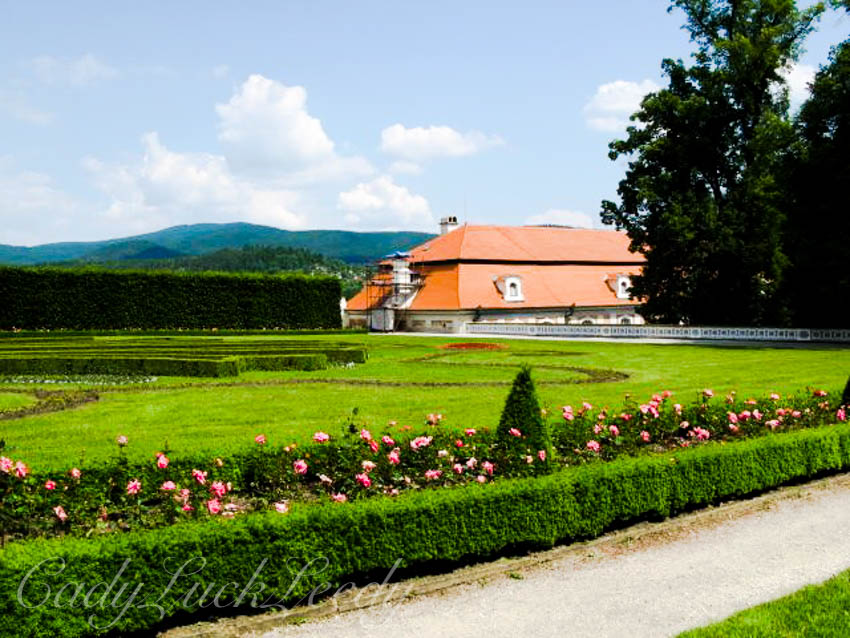
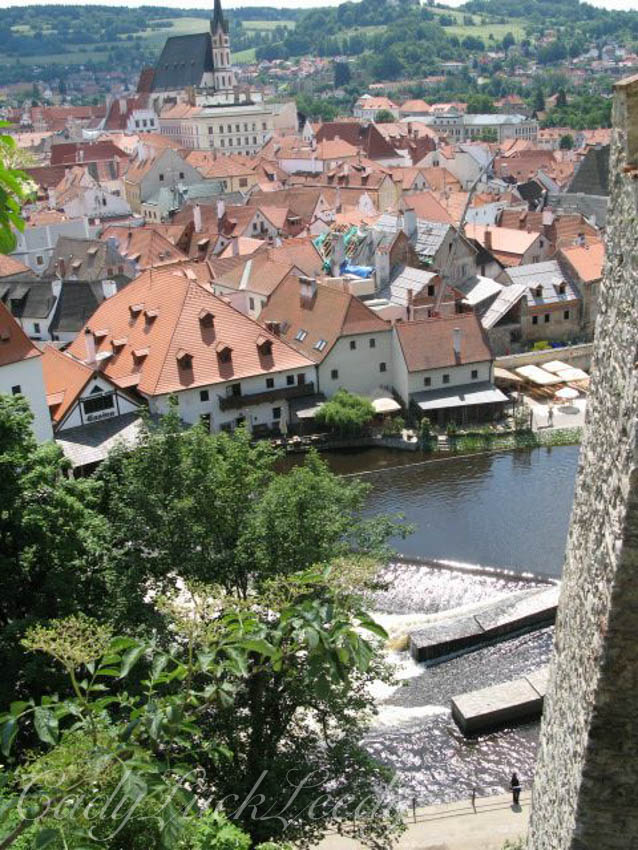
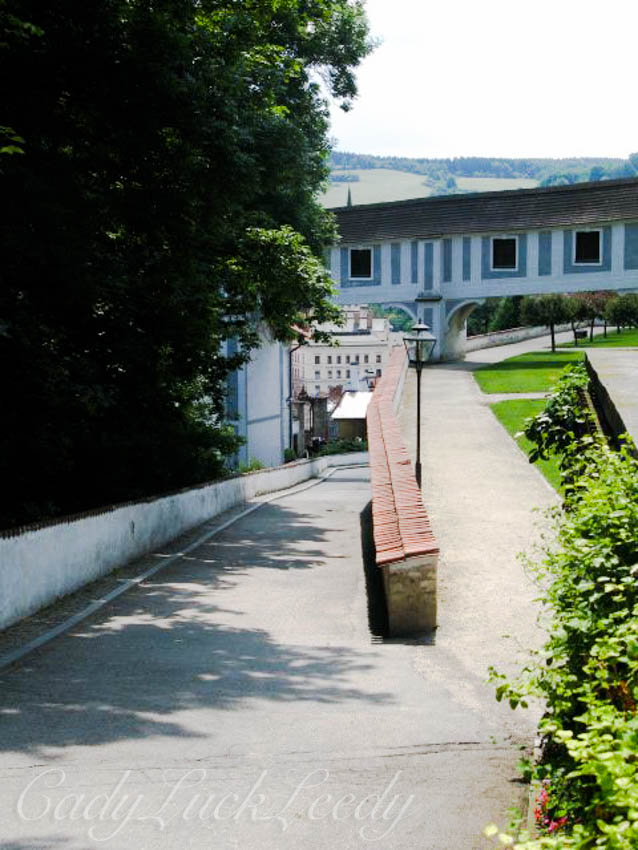
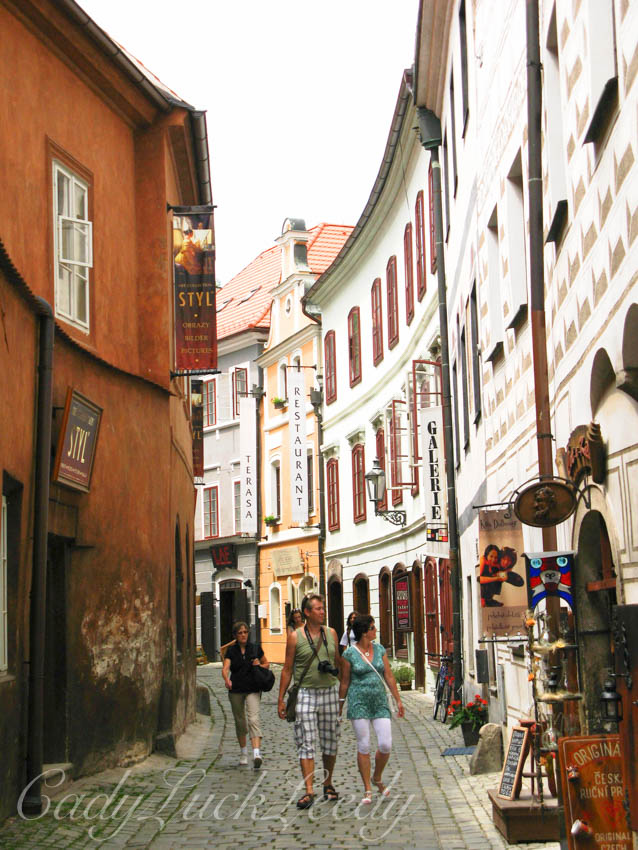
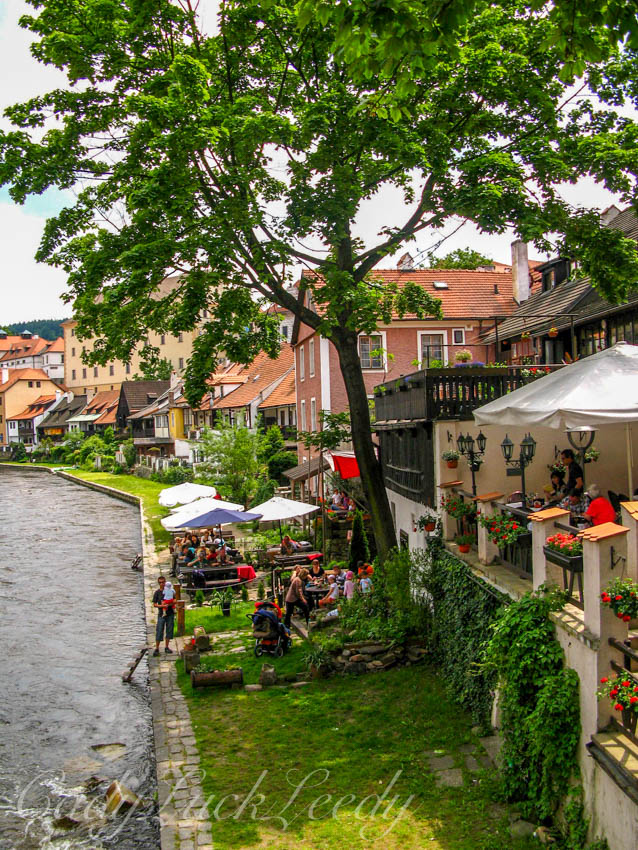
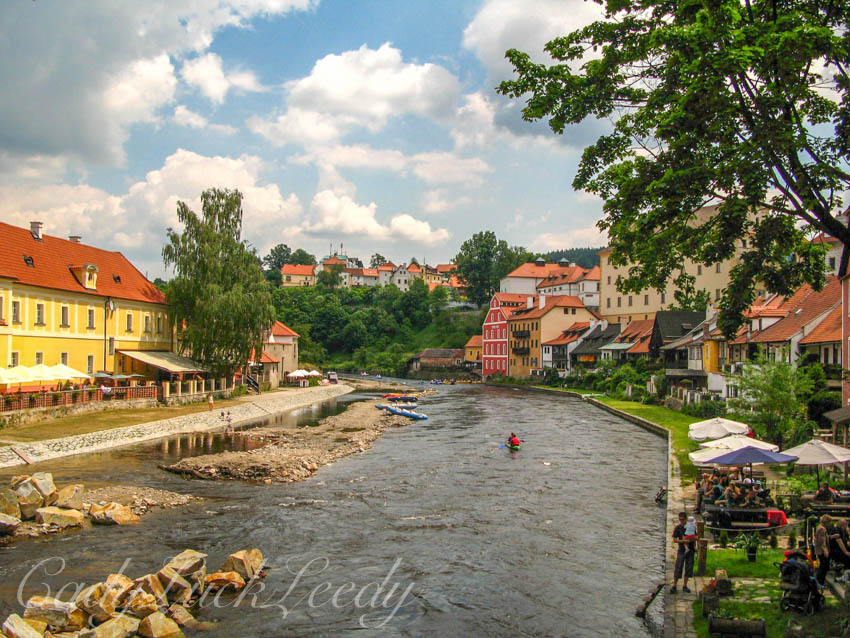
Cesky Krumlov is a magical village situated on the twisty Vltava River which makes a perfect S through town. Above the Old Town is the Castle Town. The one main street winds through town and over a bridge before snaking through the Castle Town, the Castle Complex of courtyards, and up to the Castle Gardens above the town. The castle is complete with moat, drawbridge and bear pits which still house two brown bears. Tip: If you go with a tour group from Prague, the bus drops you off at the parking lot above town at the castle gardens, and you walk down hill rather than trudging up! Later that day the bus picked us up in town, to take us back to Prague. So easy! We’re starting at the Castle Gardens at the top of town! Let’s go!
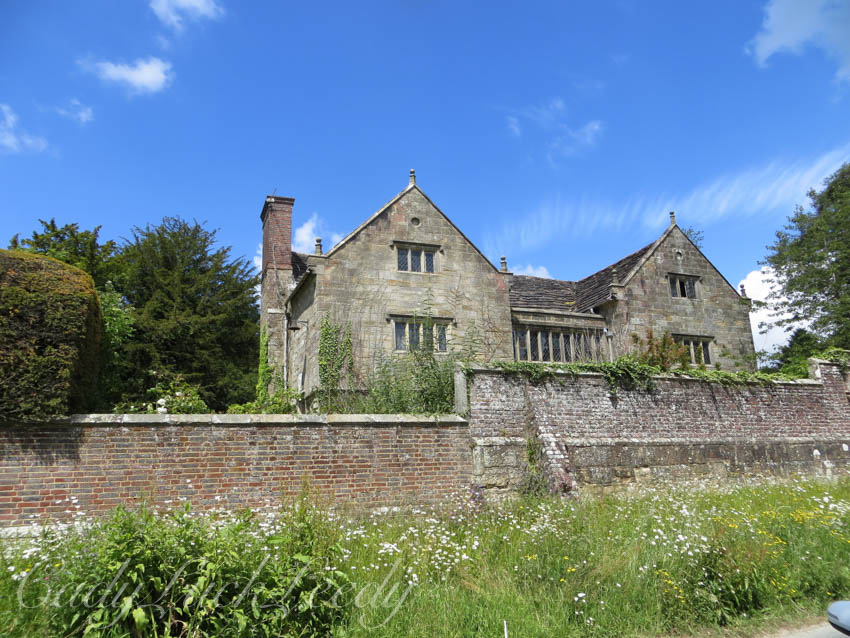
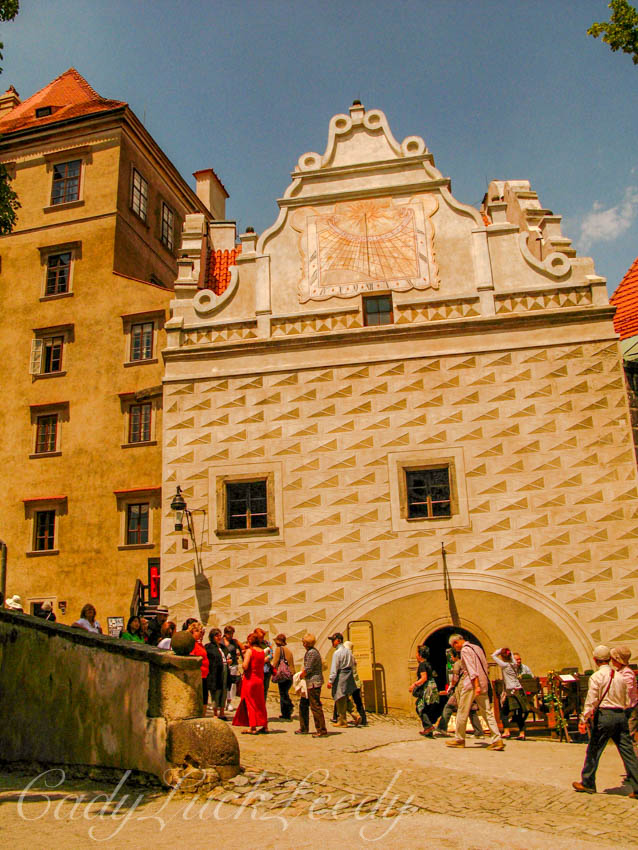
The castle wall bricks are not really bricks! These look-a-likes are painted on! Very impressive! They look real! There were a lot of walls to paint!
The town and castle construction began in the late 13th century at the ford in the Vltava River, which was important to trade routes in Bohemia. In 1302 the town and castle were owned by the House of Rosenberg. Due to heavy gambling debts, the town and castle were sold out of the family in 1602 to Emperor Rudolf II, who placed his mad son, Julius d’Austria, in the castle at Krumlov, because he was causing so much terror at home. For an extremely good read about this mad prince and the Castle Krumlov read, The Bloodletter’s Daughter ( A Novel of Old Bohemia), by Linda Lafferty. Bloodletting at that time seemed to be the answer to all woes, draining the bad spirits from the body to make it better. The poor bloodletter’s daughter soon found herself as the caretaker for the mad prince. Intriguing read!
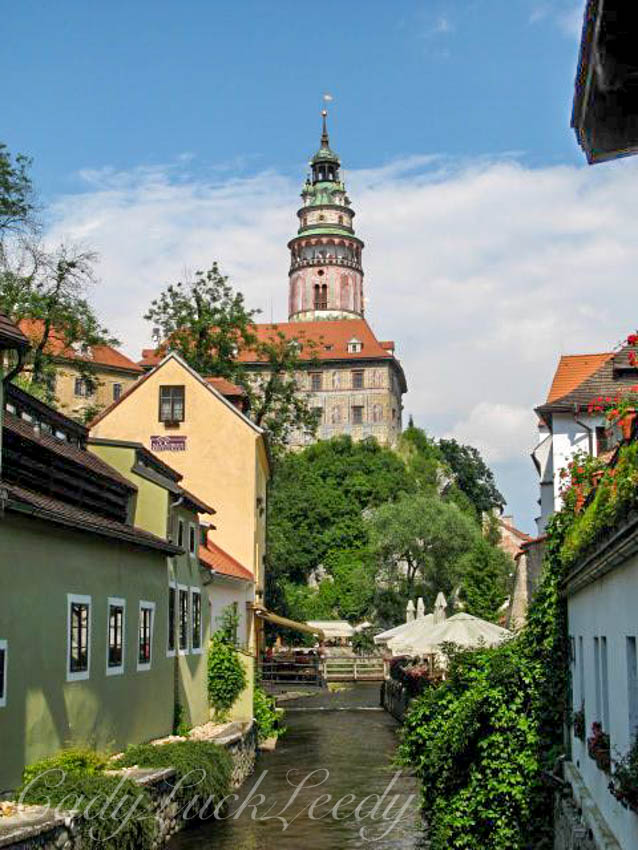
The colorful Round Tower marks the location of the first castle, built here to guard the river crossing. With the 16th century paint scheme carefully restored, it looks exotic, featuring astrological decor, terra-cotta symbols of the zodiac, and a fine arcade.
River rafts or a hard plastic canoe can be rented for a quick 30-minute spin around the village. Or you can go on a 3-hour float and paddle through the bohemian forests and villages of the nearby countryside. Check out the Pujcovna Lodi Malecek Boat Rental. What fun this is!
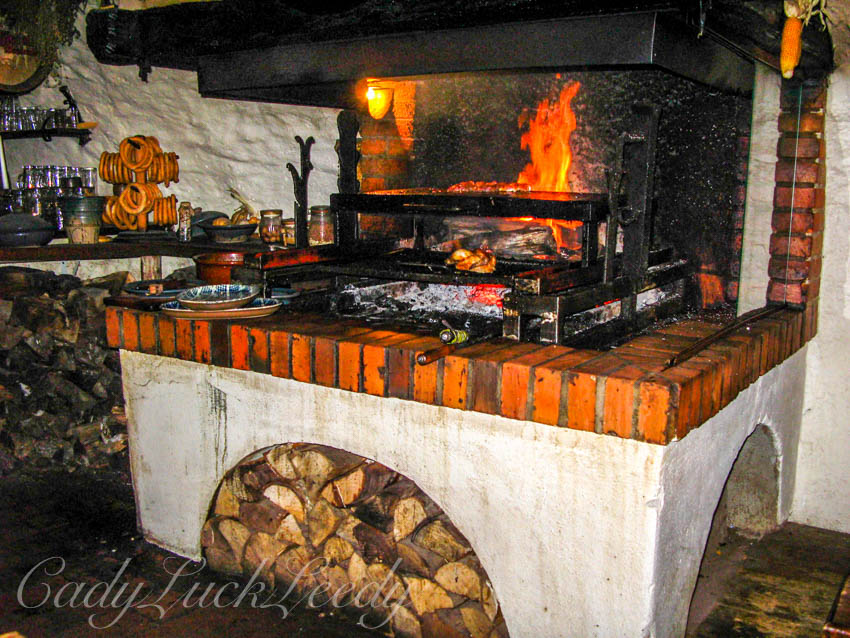
Eating in Krumlof was a treat at Krema v Satlavske, an old prison with an open fire, and big wooden tables under an open medieval vault, serving grilled meats and beer! We had a great time and great food!
I hope you enjoyed our day out in Cesky Krumlov! Krumlov hosts a number of festivals including the Five-Petalled Rose Festival, (the name derived from the Rosenberg family crest of the five petal red rose) celebrated on the weekend of the summer solstice in June. The International Music Festival, Cesky Krumlov is another festival with international music from varied genres. The festival begins in July and ends in August. What a great way to celebrate summer!
Love, Love, Love This!!!! Great post by “Live Like an Italian”!
Bloom Time! Enjoy!
Tip #3: You Have to Know How to Hold ‘Em and Know How to Fold ‘Em!
Traveling in the summer months is easier to pack for. Clothes weigh less and are not bulky. I make outfits that mix and match. For any trip over two weeks; seven tops and five slacks. Interchangeable. Period. This combo makes thirty five different outfits! For trips under two weeks; five tops and four slacks. Add a lightweight sweater that goes with anything, or a light-weight wrap. Remember you can’t enter most religious sites wearing shorts, or having bare shoulders. You’ll need a cover-up and appropriate clothing. I always have just two main color schemes, light and dark. My choice is black and tan. I choose tops than can go with all the slacks. My slacks are capri length or long. This makes a very big wardrobe and believe me it so much easier to deal with. To dress something up add a scarf! If I have a washer and dryer available on an extended trip I go with the 7/4 rule. Don’t be bogged down taking tons of clothes! You will tire of lugging them around, and will not wear most of them!
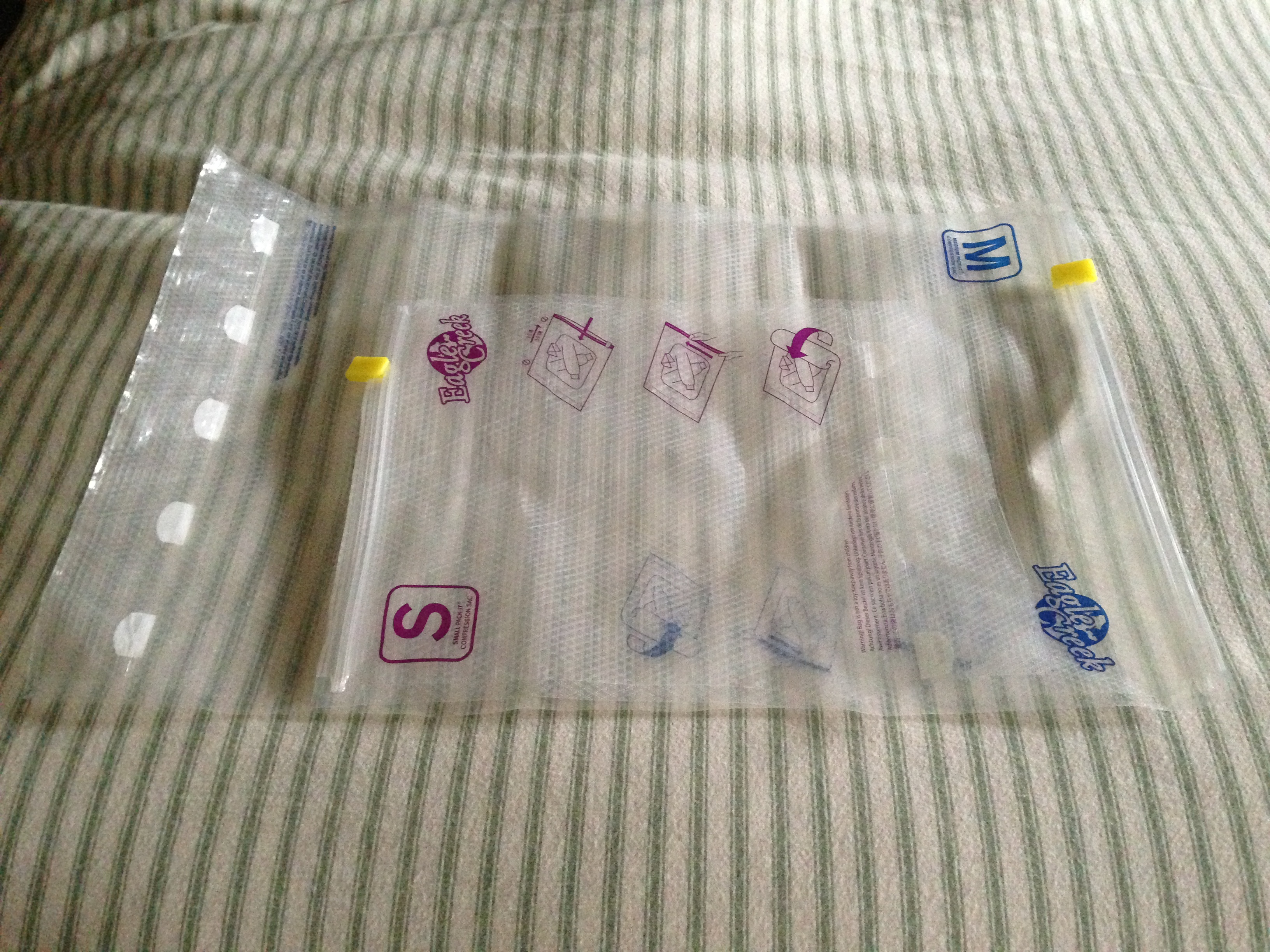
The next best thing to soap is Compression Sacs from Eagle Creek, the kind that don’t need a vacuum to suck out the air. Put your clothes in it, and then roll the sack like you are rolling out a pie. The air escapes and it is flat as a pancake. A miracle! You will be amazed how much you can get into these sacs! The sacs come in three sizes. Small, medium and large. I take one large Compression Sac empty, to use for dirty laundry. I can separate the dirty from the clean stuff so I always know what is what. They are extremely durable and I have been known to mail home my dirty laundry in these sacs, when I bought too many goodies on vacation. (You’ ll still need to find a box to mail them in, but it will be a small one!) Also, if you go to a laundromat in Europe it is easier and less noticeable to carry your laundry to and fro in these sacs. Mark one for clean and one for dirty, so you can bring back clean clothes in a clean sac. Put dirty clothes in marked dirty sac, roll it up, squeeze out the air and place sacs in Veggie Borsa and off you go to wash! Scented laundry sheets are a real winner. Place them in the dirty clothes sac and in your suitcase and everything will smell heavenly!
The other must have is the Eagle Creek Envelopes and it’s matching bags. These come in different shapes and sizes, the items shown here are the ones I use. One for pants, one for tops, one for underwear and one for toiletries. I love it because it keeps my clothes sorted and I don’t have to pull everything out of my suitcase to find something. Also, if I am staying in one spot for a long time I take the envelopes out and put them in the dresser drawers. Easy! It is amazing how your clothes stay freshly pressed in these envelopes too.
For shoes, your new best friend, will be the plastic sleeves that the newspaper comes in. Perfect for shoes, slide the shoe in and pack them. Keeps everything clean. I wear my heaviest shoes on the airplane and pack another pair in Papa Borsa’s front pouch, which is easy to get to. I take three pair of shoes total. One pair of black sandals, for dressier occasions without extensive walking. Also, two pair of walking shoes. We tend to walk a lot, so comfortable shoes is a must. One tan pair, one black. Again they will go with all my outfits. Do not take white tennis shoes! You will stand out in the crowd as the loud, touristy American! They make all sorts of colored, fancy or not, walking shoes and they are stylish anywhere, so you will blend in. I also bring a small roll of duct tape in a bright color to make a fashion statement. Ha Ha! Place a strip on the back of your ankles before you leave home and you will never get a blister, no matter how far you walk!
Small plastic bags in assorted sizes come in most handy for makeup, lotions or hairspray that may leak. Place all toiletries in a plastic bag before it is put in the toiletry bag. Bring only what is necessary and in small plastic travel containers. A small bar of soap and detergent is handy to wash out underclothes in my room. I also bring a small nylon stretchy clothes line.
I never take a hair dryer, too bulky, no matter the size. Most hotels, and B&B’s offer one to use. If not, I go with my “whatever” hairdo! I am on vacation!
Stuff to carry in your purse at all times:
A Tide to Go pen. You want to get at a possible stain before it has time to set. Ever been to a bathroom to discover no toilet paper? Carry Handywipes and a No Rinse Hand Sanitizer. Carry a very small umbrella. If you have it with you, you will never need it. Enjoy your next vacation!
Tales, Thoughts + Tribulations of a Free Spirit in Suburbia
Travels on foot
Minding my mind, one thought at a time.
Un lungo racconto fotografico.
Featured
Photography, hiking, walking, and cycling across central Japan — from quiet mountain paths to everyday life around Nagoya.
Looking for meanings in words, images and sounds
Reflections on places traveled and photos taken.
Cruising with the Thyrre Family
Where my Travels and my Blog merge together.
The mental meandering that cross my keyboard
Website & Blog of J. Kelland Perry, Author
A photographic journey.
Photography celebrating flowers, plants, and the natural world
Roaming, at home and abroad
The Corner Garden
Photography, Travel and Retirement
Upgrade Your Travels. First Class Luxury Travel from all parts of the Globe. Business Class Airline, Lounge and Hotel Reviews, Stories and Adventures
A China travel and lifestyle blog