Travel, Gardens, Food, Photography, Books, Shoes

Posts from the ‘Italy’ category

Travel Themes: Statues

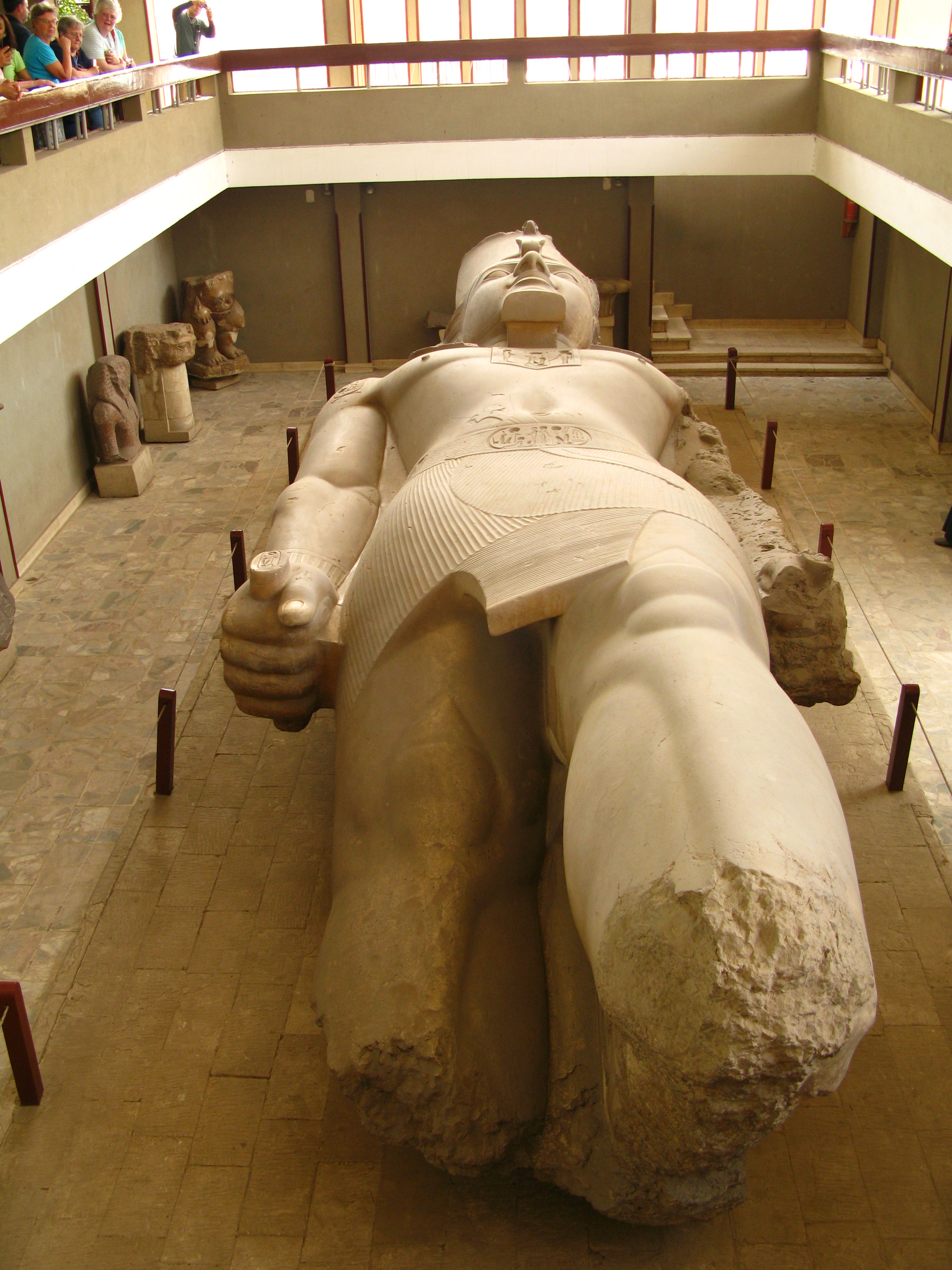
In 1820 Italian archaeologist, Giovanni Caviglia, discovered the statue of Ramses II, (31 feet in length) near the southern gate of the temple of Ptah, in the ancient ruins near Memphis, Egypt.  Because the bottom of the statue has been broken off, the limestone monument is currently displayed lying on his back.

The Colossal, as it is called, was reconstructed and erected in Ramses’s Square in Cairo in 1955. In August 2006, contractors moved his 3,200-year-old statue from Ramses’s Square, to save it from exhaust fumes that were causing the 83-ton statue to deteriorate.

Ramses II

Ramses II

Linked to Travel Themes


Traipsing Through Tuscany- San Casiano dei Bagni

Today head south through the beautiful Tuscan hillside to the village of San Casiano dei Bagni.  The village was discovered by the Etruscans and known for the abundant (42) thermal springs which were later developed by the Romans. There are still  5 star spas to be found here!

The Drive to San Casciano dei Bagni

The Drive to San Casciano dei Bagni


San Casciano dei Bagni, a hill town overlooking the Val di Paglia, springs from a thick woods of oaks, chestnuts and ancient pines. The medieval village reveals a labyrinth of narrow roads winding around a church. Today the main entrance from the south, the “Porta,” leads to the Piazza Matteotti, where there are spectacular views of the valley below. There is also Ristorante Daniela, located right on the piazza. I was drawn to the charming cave-like ambience. Greeted by Daniela herself, we were delighted with the specialties of the house. Our meal of Tuscan ham, cheeses, homemade soup and pasta, was washed down with good local wine. Enjoy a day in San Casiano dei Bagni!

 Ristorante Daniela is located at 6 Piazza Matteotti, San Casciano dei Bagni, Italy.


Traipsing Through Tuscany- Montefollonico to La Foce

Our day trips from Montepulciano continue.  Today we explore the village of Montefollonico, a small medieval hamlet surrounded by thirteenth century walls of fired bricks. In ancient times the village was called Monte a Fullonico. The Romans called “fullones” people that worked the cloths, so  Montefullonico was the mountain of the cloth workers. The first noted people that lived here settled near the Benedictine Monks Abbey in the 8th Century.  The monks raised sheep and dyed the wool.  These small Tuscan villages give you a variety of views of the Italian countryside and life here.  Enjoy!

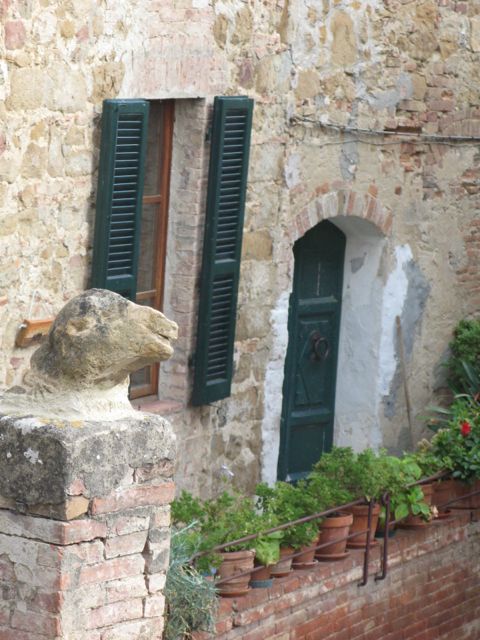
The Sheep!

The Sheep!


Next is one of my favorite spots in Tuscany!  I am showing additional pictures I took of La Foce, the beautiful country estate of the American, Iris Origo, and her family.  Her daughter continues to run the estate, garden, restaurant and B&B. There are tours offered of the estate and multi-layered gardens.  This would be another excellent choice for a home base while touring Tuscany by car. For more about the story of La Foce I have detailed information in the post:  https://cadyluckleedy.com/2013/04/11/war-in-val-d-orcia/.  It is a must read about this heroic woman and her life in Italy! 

For more information about La Foce see:  http://www.lafoce.com

Traipsing Through Tuscany- Montisi

Montisi

Montisi

Montisi

The hill town, Montisi, population 500, is an ancient Etruscan necropolis.  As small as it may seem, the village is divided into four communities, each represented with their own flag. The Castello is the area of the medieval castle.  The Piazza, is the flat area located near the castle.  San Martino is in the northeastern part of the village and the Torre, takes the name of the Tower of the Grange of Santa Maria della Scalla (a farming estate owned by a monastery), which was destroyed by retreating German troops in 1944.

The Civic Tower and the Colonna, in Two Different Districts

The Civic Tower and the Colonna, in Two Different Communities

Civic Tower and the Colonna

Civic Tower and the Colonna

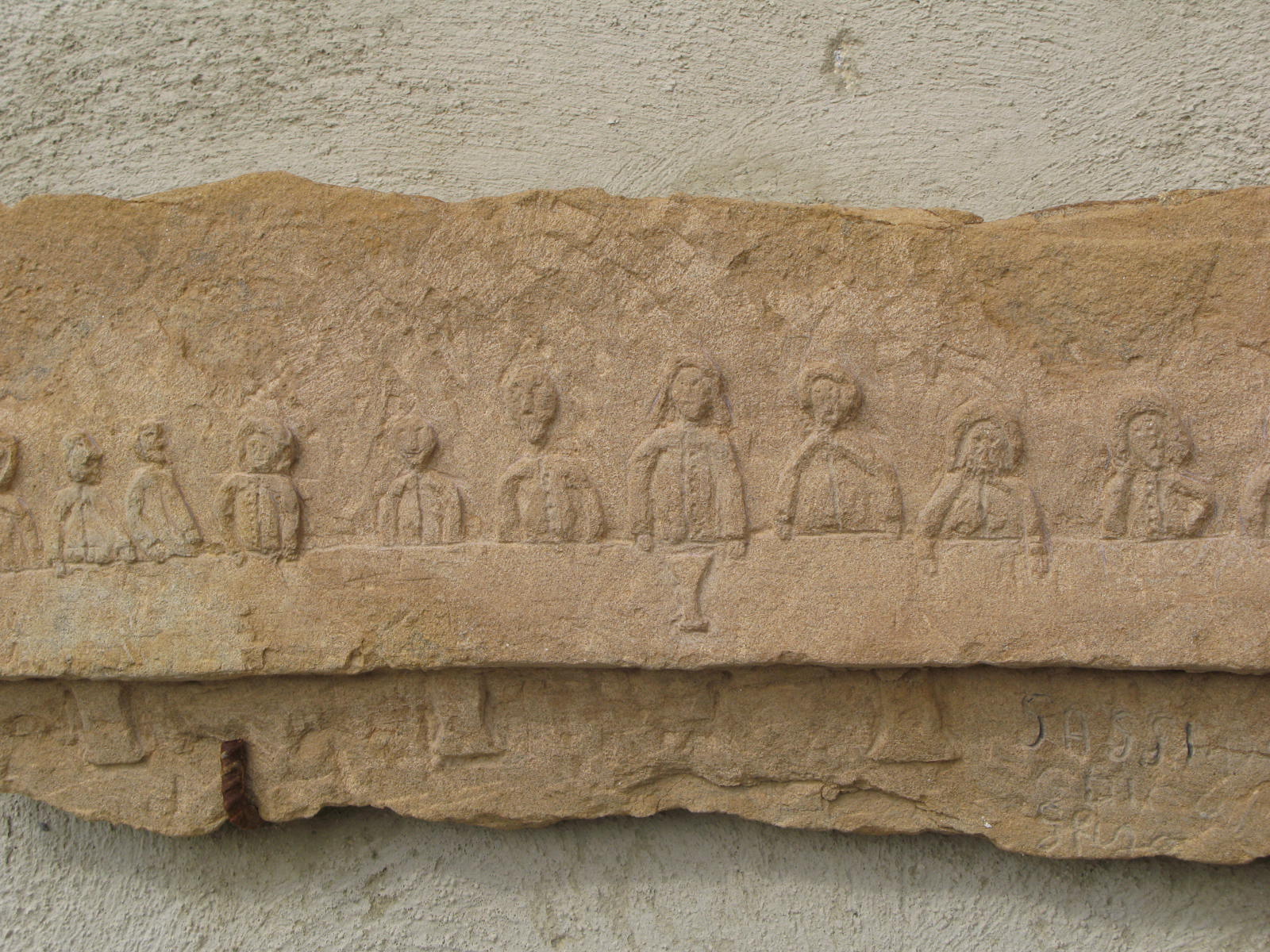
Walking up the small hill to the restored tower, currently, the Grange is a private home built around two main courtyards, with a small theatre used for shows and concerts.  It was here that a clay hand-made map was posted on the wall to point the way around the narrow streets in a circular fashion to locate all the sites on the hill.  It reminded me of a scavenger hunt map! See the chunks of terra cotta on the wall? Following the terra cotta signs, the lane reminded me of the Stations of the Cross along a beautiful garden walk!

Pieve of the Santissima Annunziata

Pieve of the Santissima Annunziata

The Pieve of the Santissima Annunziata

The Pieve of the Santissima Annunziata

The Map

The Map

Markers on the Montisi Walk

Markers on the Montisi Walk

Markers on the Montisi Walk

Markers on the Montisi Walk

Markers on the Montisi Walk

Markers on the Montisi Walk

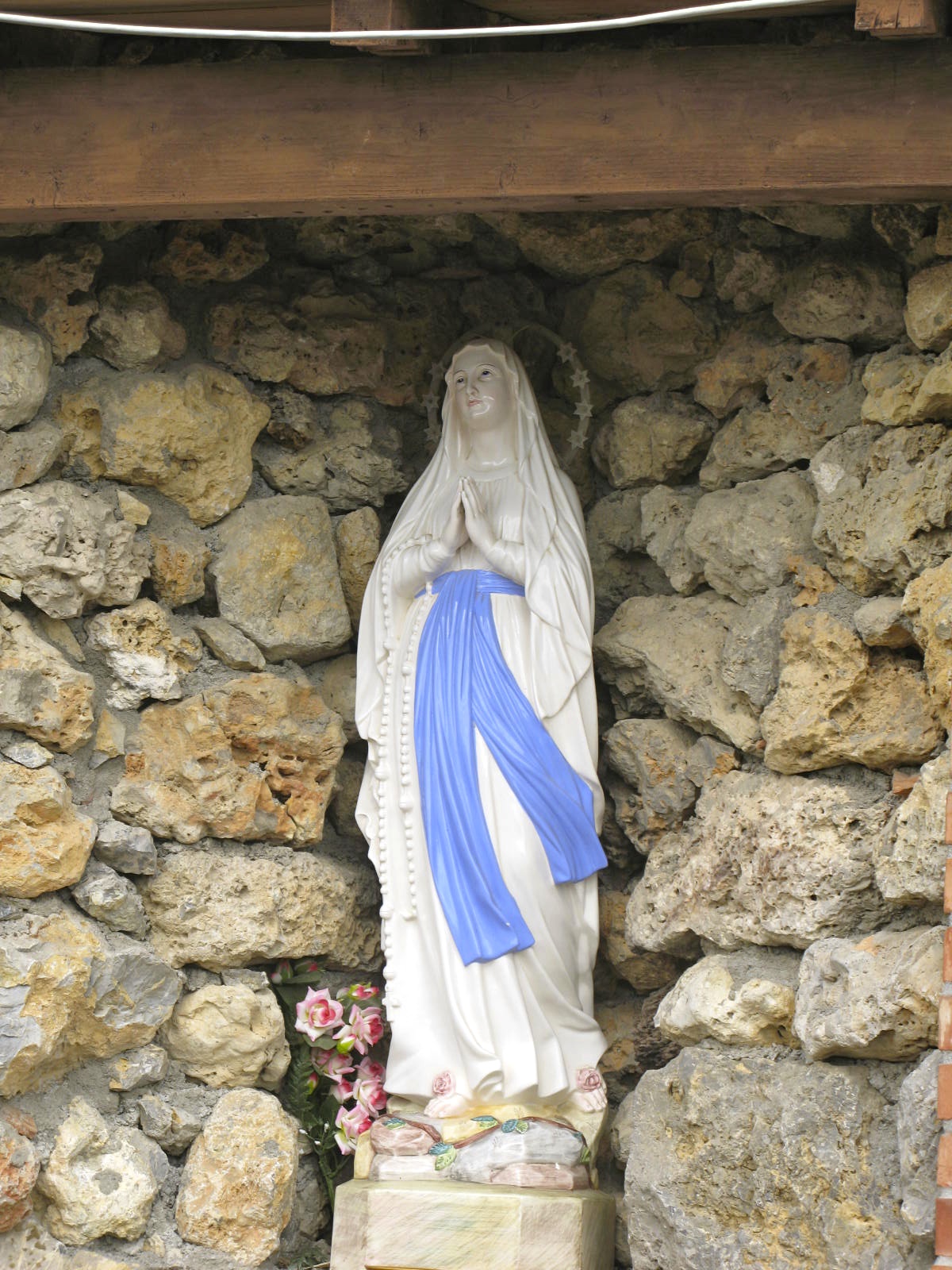
Mother Mary Pray for Us

Mother Mary Pray for Us

The Walk in Montisi

The Markers on the Walk in Montisi

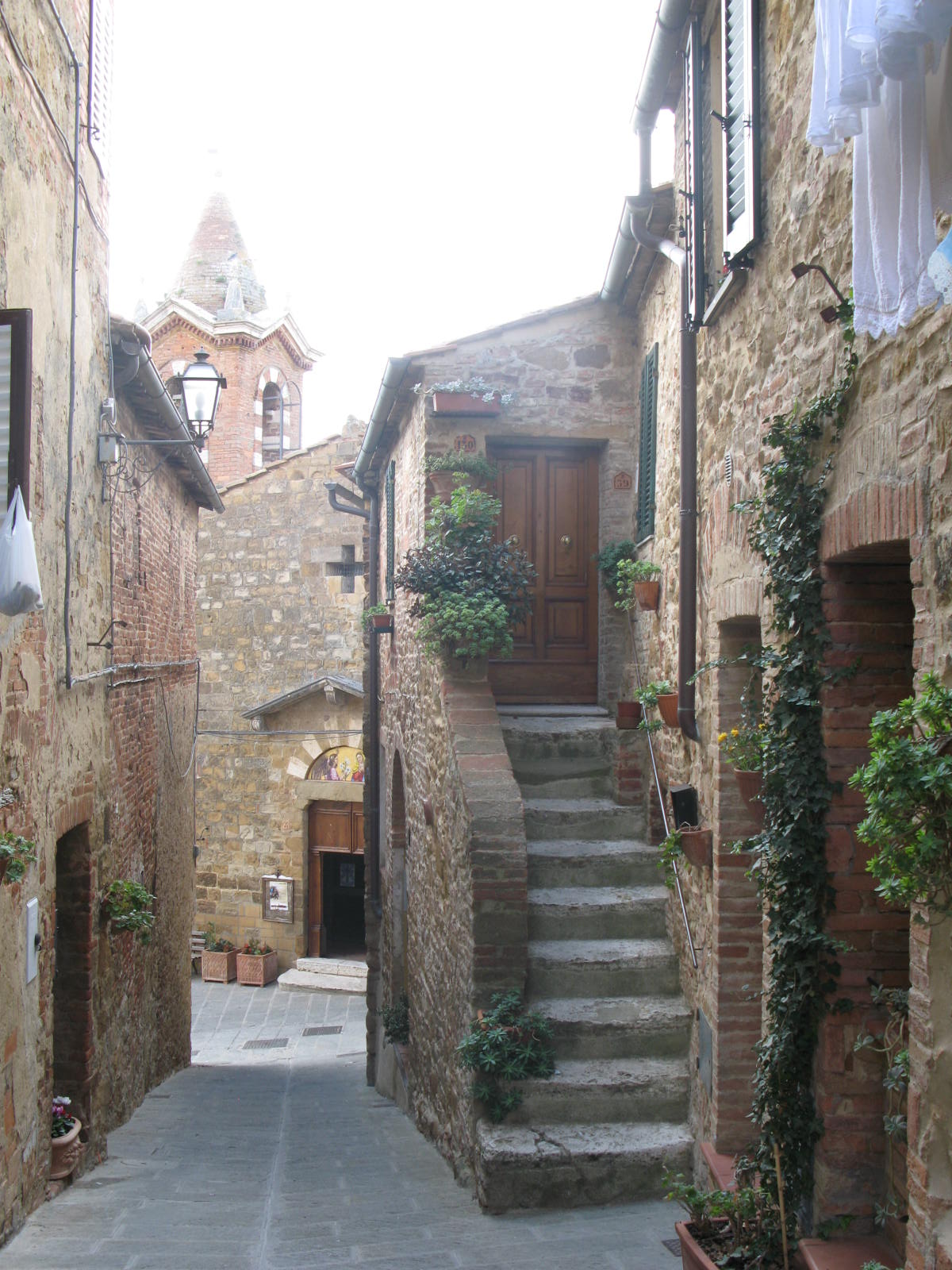
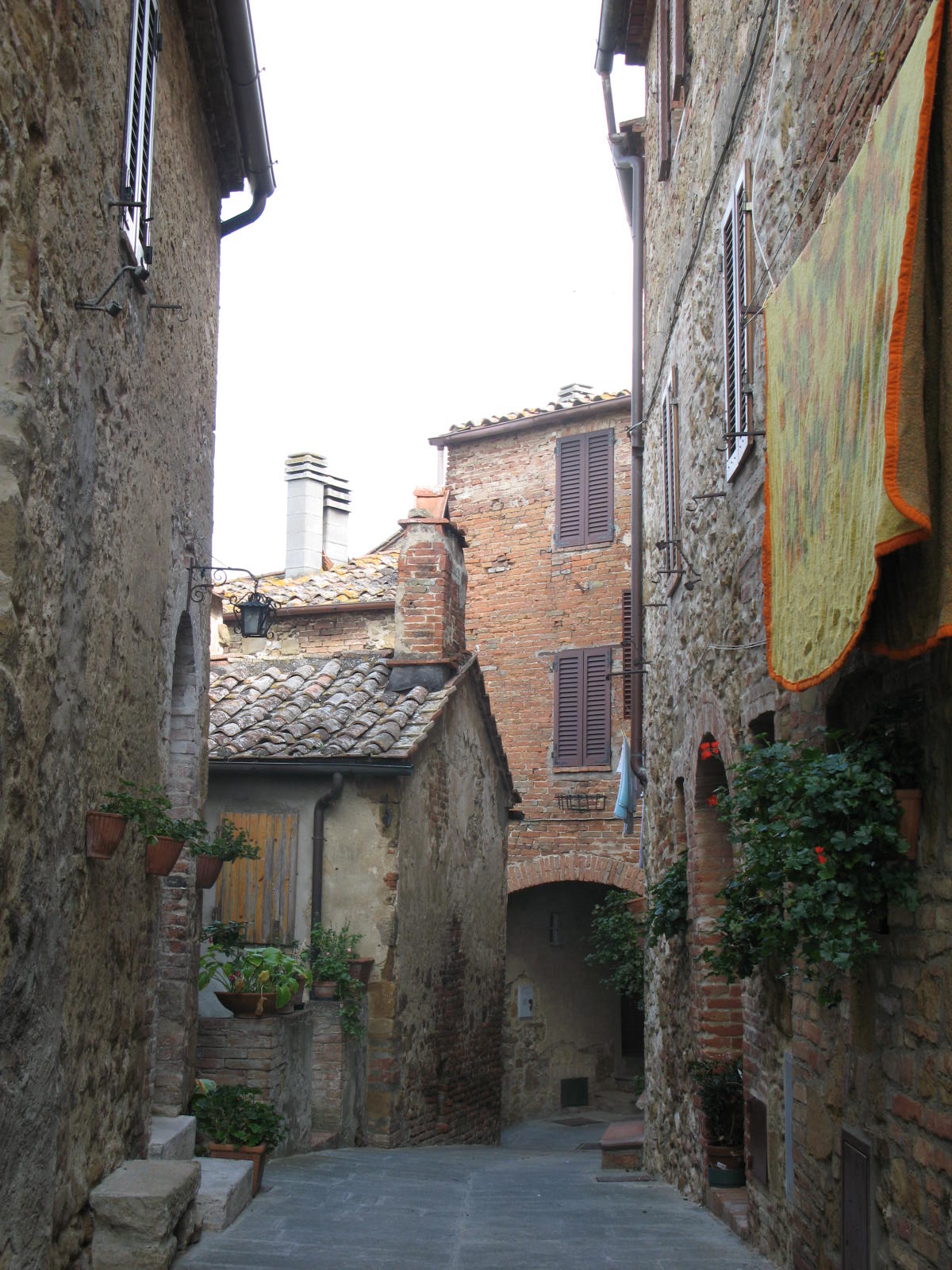
Streets of Montisi

Streets of Montisi

Main Walk Montisi

Main Walk Montisi

Walking Montisi

Walking Montisi

The Only Cat in Town!

The Only Cat in Town!

Returning to the lower ground of the village there is now a frescoed wall playground, the ruins of castle walls, and beautiful flowers, doors and windows. We spent a lovely afternoon in Montisi!

Traipsing Through Tuscany- The Piccolomini Pienza

On Our Way to Pienza

On Our Way to Pienza

From Monticchiello we are off to Pienza, a small town that we can see on the hill in the distance. Pienza, is on a hill, but after arriving in the town, walking here is on flat ground. Unlike Montepulciano,  which is all up hill, Pienza is flat. There is a parking lot outside of town, but since it is full, we drive closer to the school and find a spot there.  Walking to the Town Gate, Porta Prato, I stop and admire a beautiful lawn and garden.  Before I know it an older gentleman came from the porch of the house and down to his gate to talk to me. He speaks Italian and when he realizes I am an American, he thanks my husband and me for saving Italy in WWII!  Then he opens the garden gate and offers me a tour of his lovely flower garden.  It was beautiful and just one of the many flower gardens in this small village.  Directly in front of Porta Prato is a public garden and the fragrance here is unbelievable!  The lawn is surrounded in a small bush hedge covered in white blossoms that are so fragrant!  I tried asking everyone and no one knew what that bush was and even my elderly gentleman friend was gone when I went back by his house to ask him, as we made our way out of town.  Darn! That’s what I will always remember about Pienza, the flowers and the fragrances.

Enea Silvio Piccolomini (1405-1464) was born in Corsignano, the small town on a hill overlooking the Orcia and Asso Valley.  In 1458, Piccolomini became Pope Pius II and when he returned to his home town, he decided to transform the town with the first humanist concept of urban design, (Renaissance) with the aid of Bernardo di Matteo Gamberelli, known as Rossellino, ingenere di palazzo, of Pope Nicholas V in Rome. Rossellino was responsible for the overall layout of the town which consisted of a main street joining two town gates.  On this basic structure he planned the major buildings around a town square, which served as an outdoor room, called the Piazza Pio II. The Piazza is surrounded by the Duomo, the Piccolomini Family Palace, City Hall with the Bell Tower, and the Bishop’s Palace.  All were designed by Rossellino in five years time. In 1464 the work stopped because both Pope Pius II and Rossellino, the architect, were dead. What we see today was completed a century later.  The town was renamed, Pienza after the Pope.  What remains now is a mixture of old stone, potted plants, grand views and a fragrance not to be forgotten.

Traipsing Through Tuscany – Monticchiello

Monticchiello

Monticchiello

Under a Tuscan Sun Road

Under a Tuscan Sun Road

Monticchiello is a very small village on the way to Pienza. I love the zig-zag road with the tall skinny cypress trees, just like in the movie, Under a Tuscan Sun! Asking about these trees I found that the Cupressus Sempervirens are known in Italy as the Italian, Tuscan, or Graveyard Tree. The tree is known as a symbol for mourning and associated with death because it fails to regenerate when cut back too severely. It’s branches were also used to fumigate during cremation and were also suitable to making wreaths.  They are often planted around cemeteries because their roots go straight down rather than spreading out, so little damage is done to the graves sites. Arriving in the village I am surprised to find a new sub-division of homes being built on the outskirts of town. It looks out of place, but I can see why one would want to live here.  The beauty of the village is the landscape; soft, rolling hills, dotted with the cypress trees, under a bright lapis lazuli sky and the warmth of the sun.  It is exactly what you imagine an Italian landscape to be. You can relax and slow down. No one is in a hurry here.  The older village consists of pale ochre colored stone houses with pastel colored doors, surrounded by manicured gardens. The Church of Santi Leonardo and Chrisoforo dates back to the last half of the thirteenth century, with a structure of a single nave and three apses.  It has a Gothic facade adorned with an oval portal with a rosette. Going up the hill there is the ruins of the Cassero Tower, from days long past.  This is the place to be to get away from it all.

Montepulciano Revisited

Our Apartment, San't Antonio

Our Apartment, San’t Antonio

We are back in Montepulciano, making it our base camp for exploring the surrounding hill towns of Tuscany. After renting a car in Florence and driving to San Gimignano, now here we are on Saturday evening getting settled in at Sant’ Antonio, the restored apartments on the grounds of an old monastery, in the hills around the village of Montepulciano. Late afternoon is spent meeting other guests from all over the world, who will also be spending a week here in Tuscany exploring. After our brief introduction to each other, the local maps were passed out, and we all decided to head out to the grocery store in Montepulciano before the store closes at 6pm.  The store is not open on Sundays, so we must get in and get out if we want anything to eat or cook while we are at Sant’ Antonio.  It was a mad dash to the grocery store! Parking is limited, and the store very busy, so we parked in the church parking lot and walked down to the store. A hint in the grocery store; we had to put one euro in the grocery cart to use it in the store and when we brought it back in we got the euro back. Also, do not touch the fruit or vegetables without putting on the plastic gloves that are provided! We were warned by our hosts about this!  Although, when I shopped in the smaller shops up the hill in Montepulcinao, this did not seem to be the case. In the smaller shops the attendant was quick to help me with my selections.

We explored the hill towns during the day, all the guests going in different directions in their cars.  It was fun to sit on the veranda in the evenings and over a glass of wine and nibbles find out where everyone went during the day and what they liked about the places they went to. Our neighbors to the left of us were German and Spanish.  Our neighbors to the right Canadian, and in the family apartment a group, who came here every year from Hawaii.  There were other guests in apartments here as well, so we were a large group of 25 or so. On one evening, during the week, we all came together to share an evening meal, prepared and served by our hosts, in the large meeting room on the premises.  There was also a pool here in case you didn’t want to do a thing but relax. The other option is staying in the village of Montepulciano itself. Sant’ Antonio now offers apartments in town as well.

Another time I stayed in the Politian Apartments, when I came to Montepulciano to study Italian at the Il Sasso Language School.  At that time, I didn’t have a car.  The Politian Apartment was in the village.  It was a huge two bedroom apartment with all the amenities, (washer, dryer, microwave, big stove and oven) and tastefully decorated with antiques. There was a beautiful walled garden that I enjoyed sitting in to do my homework. The owners were on the premises and more than helpful.  There were other guests staying in other apartments, but I was up early and off to school so didn’t get to know them. We all seemed to have different agendas as they only stayed a few days and then were gone and replaced by new guests. The shops and restaurants are plentiful and the locals very friendly. Parking is LIMITED and outside of the village.  The streets are pedestrian-only, but a tiny, tiny bus goes through town from the bottom of the hill to the tippy top. It only stops at the bottom of the village, (the entrance), a designated place in the middle, and the very top of the village. If you stay in the village be prepared to haul your luggage up, up, up the hill at some point!  Pack light! For more highlights of Montipulciano see past blog posts about the Politian Apartments and the Il Sasso Language School. These are some reflections if you want to make Montepulciano your home base for visiting Tuscany.

Next we are off to the hill towns!

For More information about Sant’ Antonio Apartments see: http://www.santantonio.it

For more information about Politian Apartments see: http://www.politian.com

Traipsing Through Tuscany- Florence and San Gimignano

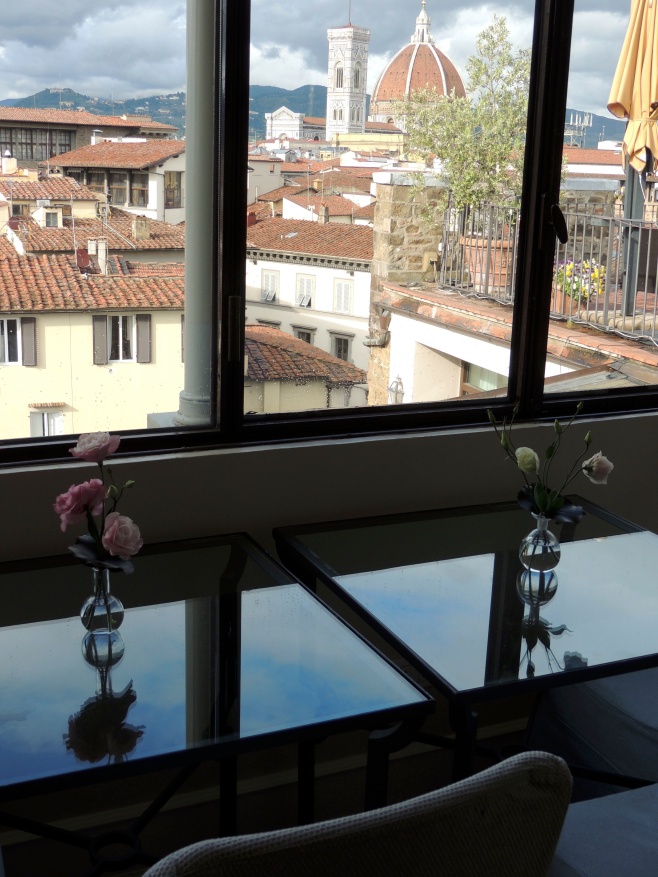
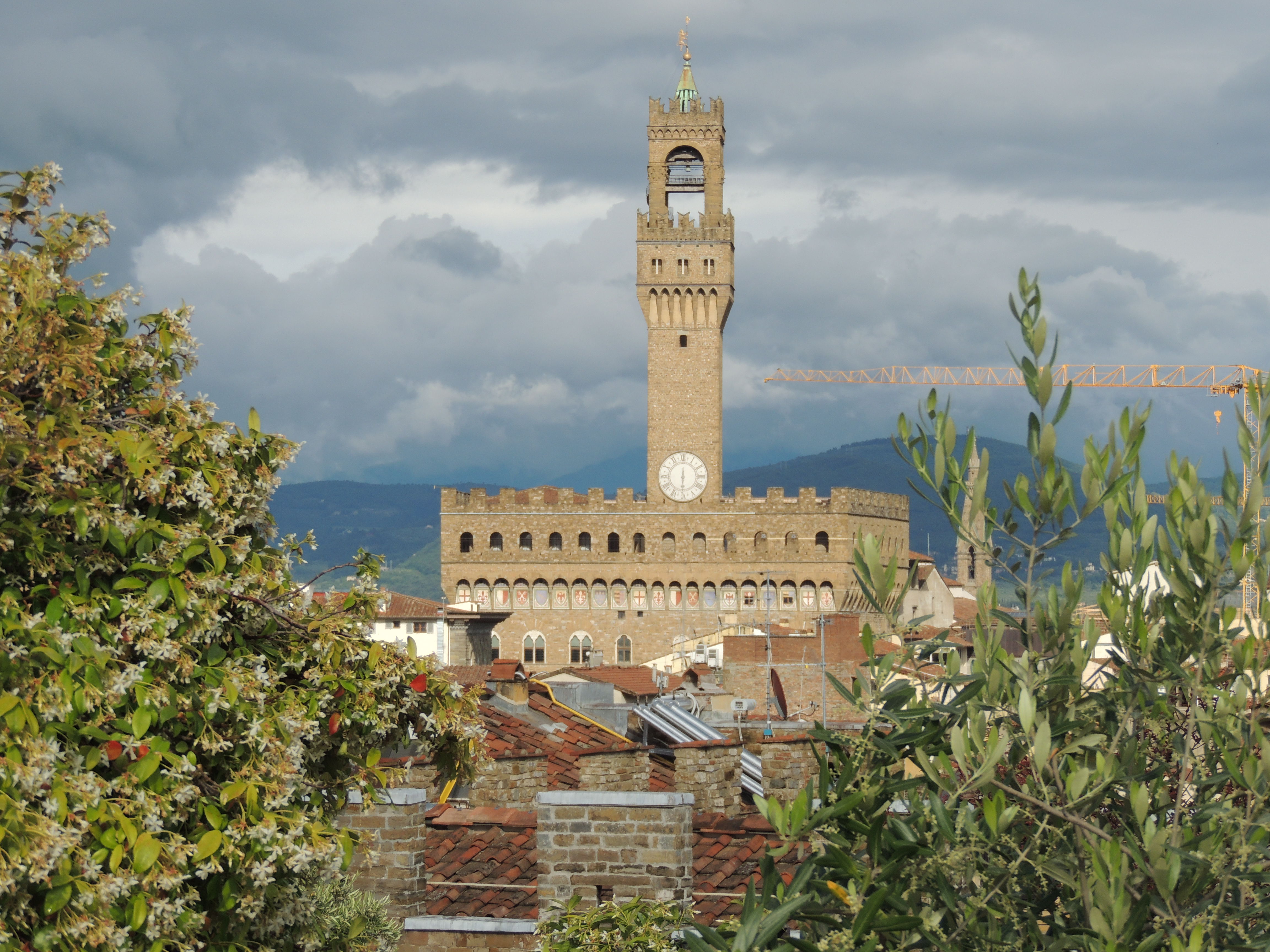
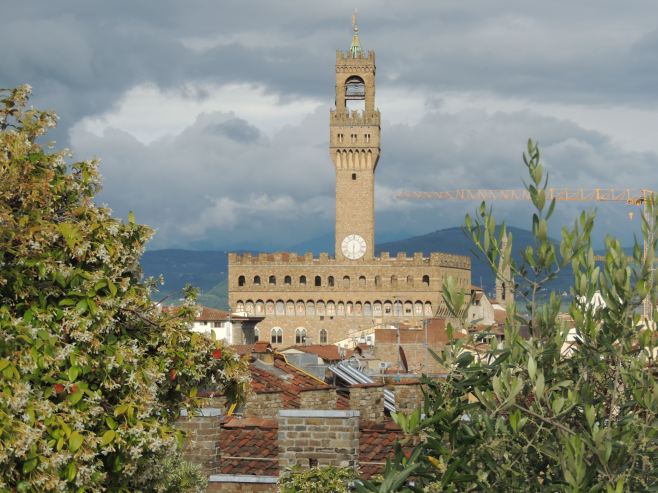
Palazzo Vecchio

Palazzo Vecchio

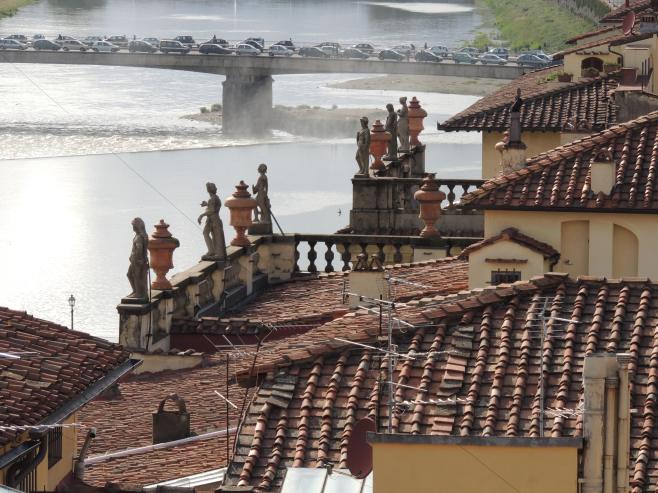
Sculpture

Rooftop Sculpture in Florenc

Tte Window of the World

The Window of the World

Thinking about our visit to Florence I can’t get over all the beautiful art we have seen in the Uffizi Gallery, the Pitti Palace, the Duomo Museum and the Accademia. I was especially excited over the artwork of Artemisia Gentileschi, (1593-1653) that SB pointed out to me in the Uffizi Gallery ( Judith Beheading Holofernes) and the Pitti Palace (The Conversion of Magdalena, Judith and Her Maidservant and David and Bathsheba). I first read about Artemisia Gentileschi in a book called, The Passion of Artemisia: a Novel, by Susan Vreeland. Delving into the themes of art, history and the lives of women, this is is a book that I thoroughly enjoyed.  Gentileschi painted many pictures of strong and suffering women from myth and the Bible. Her works include victims, suicides, warriors and especially, the Judith story. When you read the book and then see her paintings, her real life and her paintings intertwine and give you perspective of the times and how this woman lived and painted, and why she did so. Even her style of painting called chiaroscuro, which represents a strong contrast between light and dark, gives us a glimpse of her life.

One of Gentileschi’s works, David and Bathsheba, completed in 1635, had been found after centuries of deterioration, in a storage deposit area of the Pitti Palace, revealing decay, color flaking, due to improper storage conditions, and humidity damage. The re-evaluation of the Gentileschi’s courageous life and works were brought into focus with the attention of the Florence Committee of National Museum of Women in the Arts, who decided to fund the restoration of David and Bathsheba. Today, Gentileschi is regarded as the most progressive and expressionist painters of her generation.

Thinking of that book, brought to mind another book, called The Birth of Venus, by Sarah Dunant. This historical novel of Florence is a story of love, art, religion and power  as told by Allessandra Cecchi when her father brings a young painter to paint the chapel walls of the family’s pallazzo. This story is told while Florence is caught in a state of turmoil imposed by the fundamentalist monk Savonarola, who is seizing religious and political control and the Medici State, with it’s love of luxury, learning and art. On our walking tours of Florence we learned a great deal about the Medici family and Savonarola.  Recalling that book, brought to mind The Lord’s Supper, painted on the wall of the Santa Maria della Grazie Church in Milan, which I have been lucky enough to see.

I was curious to learn how all this beautiful artwork was saved during WWII. Now, I am currently reading, Saving Italy: The Race to Rescue a Nation’s Treasures from the Nazis, by Robert Edsel. In particular I am interested in, General Karl Wolff, a German officer, who risked his life to save the collections of the Uffizi Gallery and the Pitti Palace. Robert Edsel also wrote, The Monuments Men: Allied Heroes, Nazi Thieves, and  the  Greatest Treasure Hunt in History, now made into a motion picture of the name, The Monuments Men.

San Gimignano, twenty-five miles south of Florence, will be our first stop on our way to Montepulciano, where we will be making our home base for our Tuscany visit.

The parking lot outside the main gate, Porta San Giovanni, was very busy as we approached.  The village itself is pedestrian only. Getting in the car parking queue we had to wait for a car to come out before we could go in and take the spot. One in, one out.  San Gimignano gives you a glimpse of a real Italian countryside experience, but with just enough shops and restaurants added to make it interesting for tourists.  The towers are restored replicas of the original, but they look authentic.

San Gimignano is a small, walled, medieval hill town with fourteen towers of various heights, replicated of the original seventy-two. Before the walls were developed around the town, these towers were a refuge, when ruffians and rival city states were sacking the town.  If under attack, the tower owners would set fire to the external wooden staircase, leaving the sole entrance to the house and it’s strongholds, unreachable. Today you can see all these tiny slit entrances way up on the second story of the towers, minus stairs to get to them. Also, notice that the buildings are made of different colored stones and brick. Heavy stones were used for the bottom floors and lighter cheaper bricks for the upper floors. In the year 1300, about 13,000 people lived within the walls. In 1348, a six-month plague left the town with 4,000 survivors. Crushed and demoralized, the town came under Florence’s rule and was forced to tear down it’s towers, and the trade route was re-directed away from San Gimignano. The town never recovered and poverty drove the well-preserved city to be as it is today.

Our walk takes us through the Porta San Giovanni up to the Piazza del Duomo, and the church itself, which features Sienese Gothic art_ Old Testament to the left___New Testament to the right. Further up the hill is the is Sant’Agostino Church, built by the Augustinians, who arrived in 1260. Here there are English speaking friars, who are happy to tell you about the church and their way of life. We stop and have lunch at the Locanda di Sant’Agostino, right next door to the church on a beautiful small piazza. The restaurant serves typical Tuscan home cooked meals, which would be paninos, pizza, pasta and insalatas, served with a local fruity white wine.   Walking back down the hill, along the ramparts, there are superb views of the Tuscan countryside. Soon we are inside the Rocca, originally another walled defense area, now a small walled garden of olive trees, where a group of men are singing and playing instruments. I loved our time in San Gimignano, but it is time to move on to Montepulciano. For more interesting history and scenes of Sam Gimignano, view the movie, Tea With Mussolini, a 1999 drama of the plight of American and English expatriate women during WWII. Most of the scenes are of Florence and San Gimignano, where the movie was filmed. In particular it reveals the artworks inside the Duomo of San Gimignano and how the women came to be there and tried to save the art. For more readings about the war and art see my  blog postings on Milan,  https://cadyluckleedy.com/2014/02/14/one-day-in-milan/ and the War in Val  D’ Orcia, https://cadyluckleedy.com/2013/04/11/war-in-val-d-orcia near Montepulciano. See you next in Montepulciano!

TTT, Traipsing Through Tuscany

Today starts a new Series in Italy, called TTT, Traipsing Through Tuscany.  Traipsing through the hill towns to be exact. Getting off the beaten track has been some of our best excursions! A bit of advice, we flew into Florence where we took a cab into the city. So we will begin in Florence. After spending a week here we went back to the airport and got a rental car to drive on through Tuscany and the hill towns.  We spent  a week in Montepulciano. As a home base it was perfect.  We explored surrounding hill towns, always coming back to Montepulciano in the evenings, and then we drove on to Rome. We dropped the car off at the Rome Airport and took a cab into Rome, where we stayed another week.  Much easier!  You could not pay me enough to drive in the bigger cities and spend a great deal of time just looking for a place to park.  There aren’t any parking spaces to be found! Save yourself the headache!

Florence, by far is my favorite biggish city in Italy.  It is easily walkable, with museums, restaurants and shopping galore. If museums are not your thing, there is plenty of beautiful outdoor art such as sculptures, icons, buildings, bridges and churches to keep you interested. One of the rituals, near our hotel, was a woman artist who sketched daily with colored chalk on the pedestrian-only street. This was truly a street scene because her sketching would cover a large section of ground. She would work on it all day. It was beautiful!  Very early the next morning between 4am and 5am the street cleaners would come through with their brushing machines and  brooms and wash it all away. Around ten in the morning she would start again with a new scene. Unbelievable!

To see the highlights of Florence we took walking tours that also included the museums. We tried for months to get tickets for the major museums and there were none to be had online. They were available through tour groups. In the end it worked out well because we never had to stand in line to get in the museums, and there were long, long lines. The downside is WE could have spent more time IN the museums, hours and hours. The tour group went to the major and most appealing exhibits, and that would be fine for most. The four tours we took were offered by Art Viva. They were the Original Florence Walk, the Masterpieces of the Uffizi Gallery Tour, and the Original David Tour.   These walks are long, at least three hours each with additional time added for the museums! Wear comfortable shoes! The English speaking walk leaders are very knowledgable, and we stopped occasionally for a cuppa, (wine, coffee, tea) always at good locations for people watching! We took three tours in one day and I was pooped, but from then on we knew where everything was and went back to the areas we wanted to spend more time in on other days.  On another evening we took the Original Evening Walk in Oltrarno, which included a wine and olive oil tasting!  We had a wonderful time on these walks and there are many to choose from!

On this visit we stayed at the Hotel Davanzati, a small boutique hotel located near the Uffitzi Gallery and right across the street from where the Original Florence Walk started each morning. This was good because we didn’t have to walk a great deal before we started the walk. Entering a doorway in the historical area there are a number of stairs to climb to reach a tiny elevator that takes you to the reception area and then to the upper room floors of the Davanzati Hotel.  The owner and his son were there everyday to recommend restaurants and sights to see, provide maps and answer any questions we had.   The breakfasts and late afternoon wine/happy hour gatherings were a big hit. The rooms were tastefully decorated and immaculate. After a lovely week in Florence we were in a rental car and on our way to Montepulciano, to get a taste of the countryside, the hill towns, and the slower pace of Italian life. See you in San Gimignano!


For more information about Hotel Davanzati see: http://www.hoteldavanzati.it

For more information about the Art Viva walking Tours see: http://www.italy.artviva.com

One Day in Milan

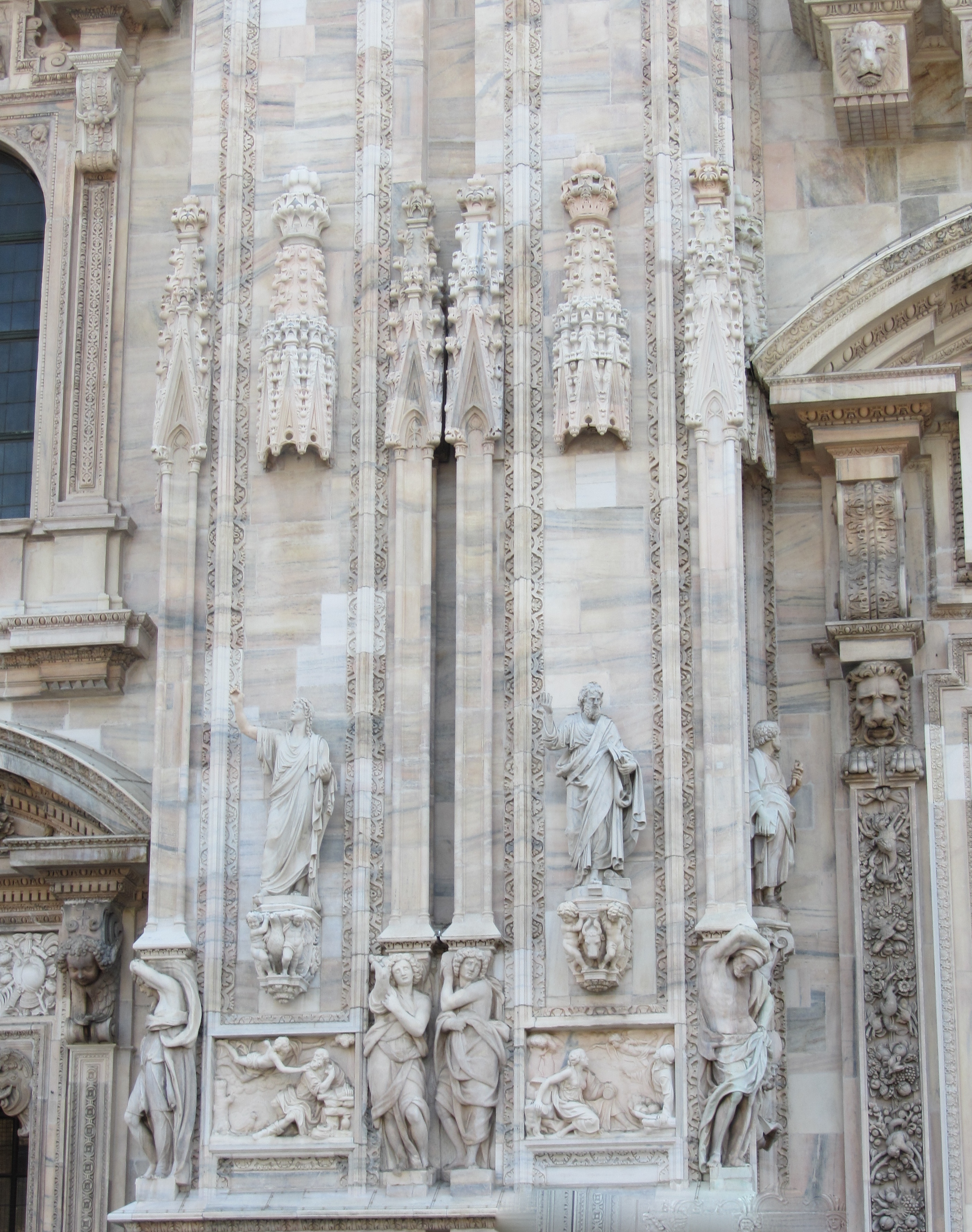
San Bartolomeo by Marco d'Agrate

San Bartolomeo by Marco d’Agrate

IMG_1783

We are on the early morning commuter train from Varenna to Milan. We are meeting up with a private local guide, Lorenza Scorti, who knows the city’s history well. We have marked off certain sights we would like to see. We are hoping Lorenza has been able to get us tickets to get into the Church of Santa Maria delle Grazie, where Leonardo da Vinci’s masterpiece, the Last Supper, is housed. One of the leading families of Italy during the Renaissance, the Sforza Family of Milan, hired da Vinci to decorate the dining hall of the Dominican monastery that adjoins the church. Ultimately, the Sforza family was bribing the monks with this gift so the monks would allow their family tomb to be placed in the church.(Which never happened) The fresco began deteriorating within six years of it’s completion due to the experimental technique used by Leonardo.  Bombing during WWII left only one wall standing in the church.  The wall of the Last Supper. Truly a miracle! In 1999 a 21-year restoration project was completed peeling away 500 years of touch-ups, leaving the masterpiece intact.

Lorenza meets us at the central train station and after going up several escalators in the fashionable shopping area of the train station, Lorenza buys tickets for the metro and we are off! It is early morning and the streets are quiet. First stop, the Duomo, with a forest of spires on its roof, is the fourth largest church in Europe, after the Vatican’s, London’s, and Seville’s. The church was built with Pink Candoglia marble, rafted in from a quarry 60 miles away. We went past this quarry on the train when we went to Cinque Terre. Marble is still extracted from the sight. Inside the church is a beautiful marble mosaic floor and looking up we see The Quadroni, (large paintings on canvas, each about 20 by 26 feet) depicting the life of St Charles Borremeo. The paintings have been brought out and displayed for a special anniversary in the church. The 1st cycle of paintings (starting in 1602), The Facts of Life of Blessed Charles, consists of 28 paintings depicting his life, and were painted by seven different artists. The 2nd cycle, The Miracles of St Charles, consisting of 24 smaller paintings of his miraculous works and healings, were all painted between December 1609 and November 1, 1610, when Charles was canonized. These paintings were displayed for the first time together on November 4, 1610, when the paintings of his miracles could be shown after he had been declared a saint. Now they are only displayed on special days in the church and we were fortunate to be able to see them.

The Duomo

The Duomo

IMG_1765

An impressive, detailed statue of San Bartolomeo Flayed (1562), by Marco d’ Agrate, is upfront and center in the church. That is his skin draped over his shoulder!

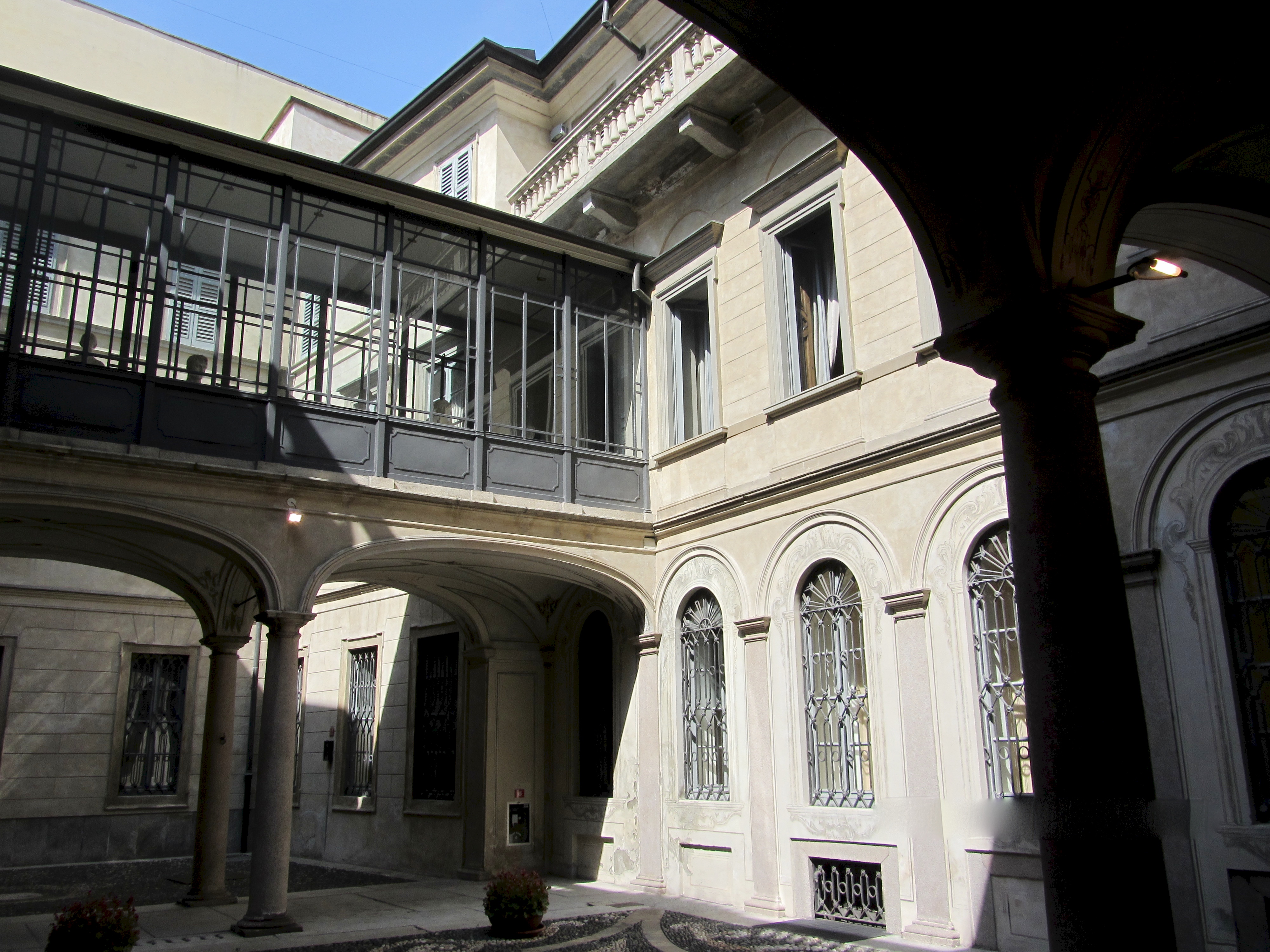
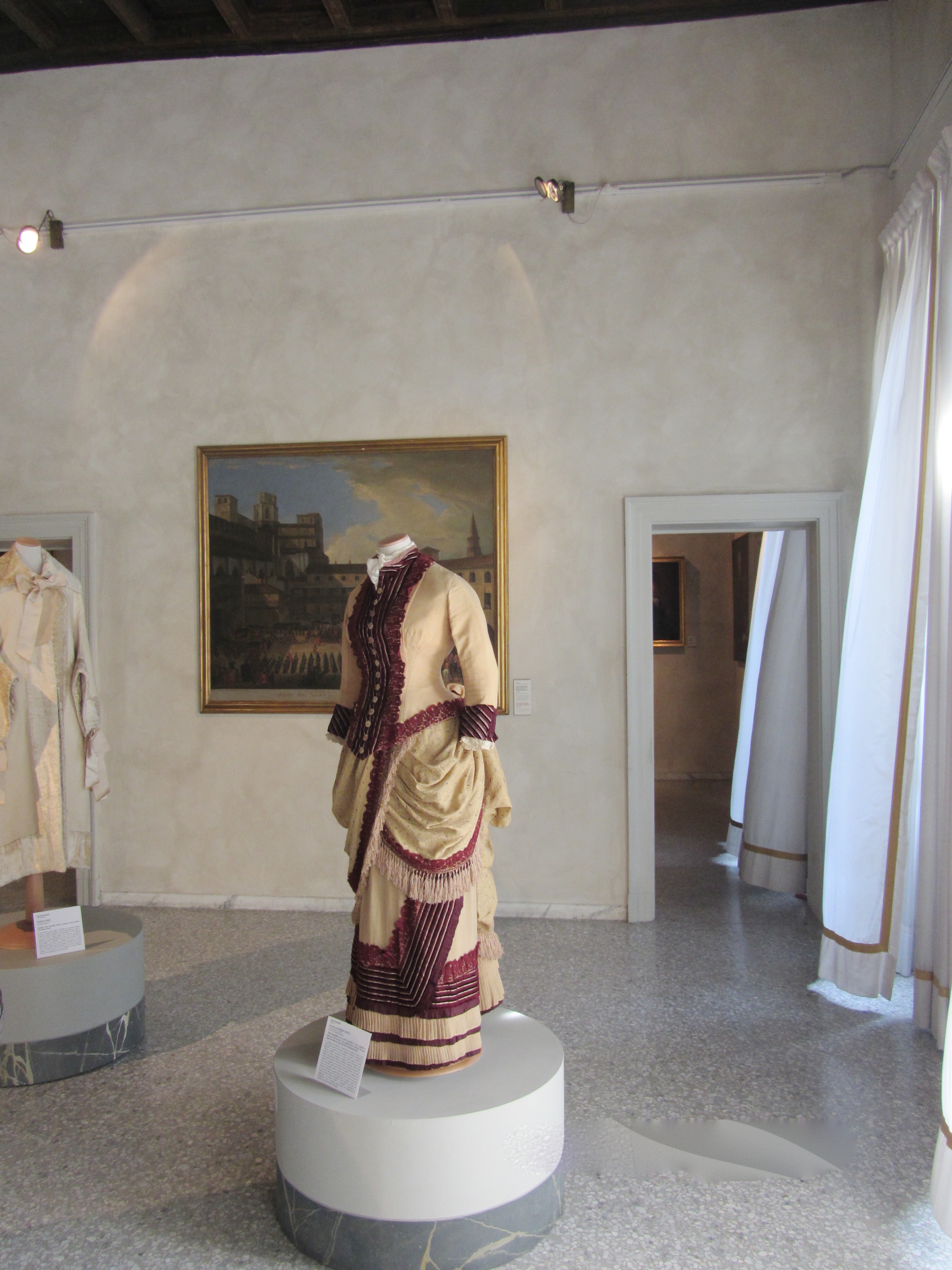
After the church, we are delighted to be shown a small museum in a private palazzo. I have wanted to see what was behind those big oak doors! Following Lorenza, we are lead through an intricate laid marble entryway and up the stairs to the private apartments.  Today there are collections of clothing, shoes and those little bitty one woman carriage/carriers that were lifted on the shoulders of servants to whisk one about town and prevent your dress and shoes from being soiled. Boy were those women TINY! On the outside of the palazzo is a beautiful fresco above the rim of the windows.  (See the video I made)

The Palazzo

The Palazzo

The Dress

Inside the Palazzo

Next, we walk to the La Scala Opera House and museum, the world’s most prestigious opera house!  All that red velvet! Following that we head to the Galleria Vittorio Emanuele, a four story glass domed arcade on the main square, featuring all the Italian high end shopping stores and great for people watching as well. It was the first building in Milan to have electric lighting! Oh how Italians love fashion!  Around the center dome patriotic mosaics symbolize the four major continents and the mosaic marbled floor reveals the city’s symbol, a torino. (little bull) Here locals step and twirl on the bull for good luck.

Inside the Galleria

Inside the Galleria

Il Torino

Il Torino

We go to a local pizza restaurant and I am so glad to sit.  The one person pizzas are HUGE (enough for three people) and we wash it down with good red wine.

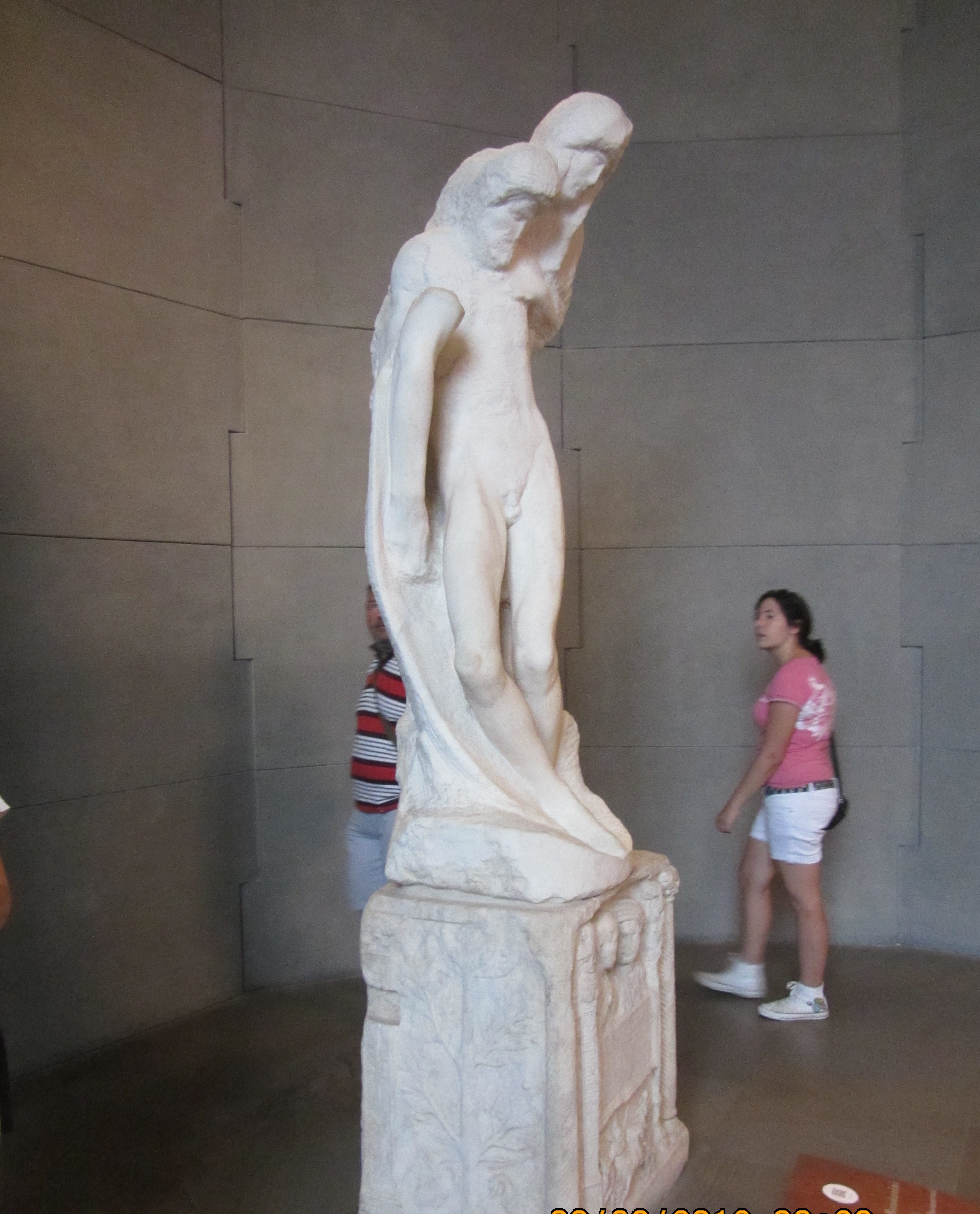
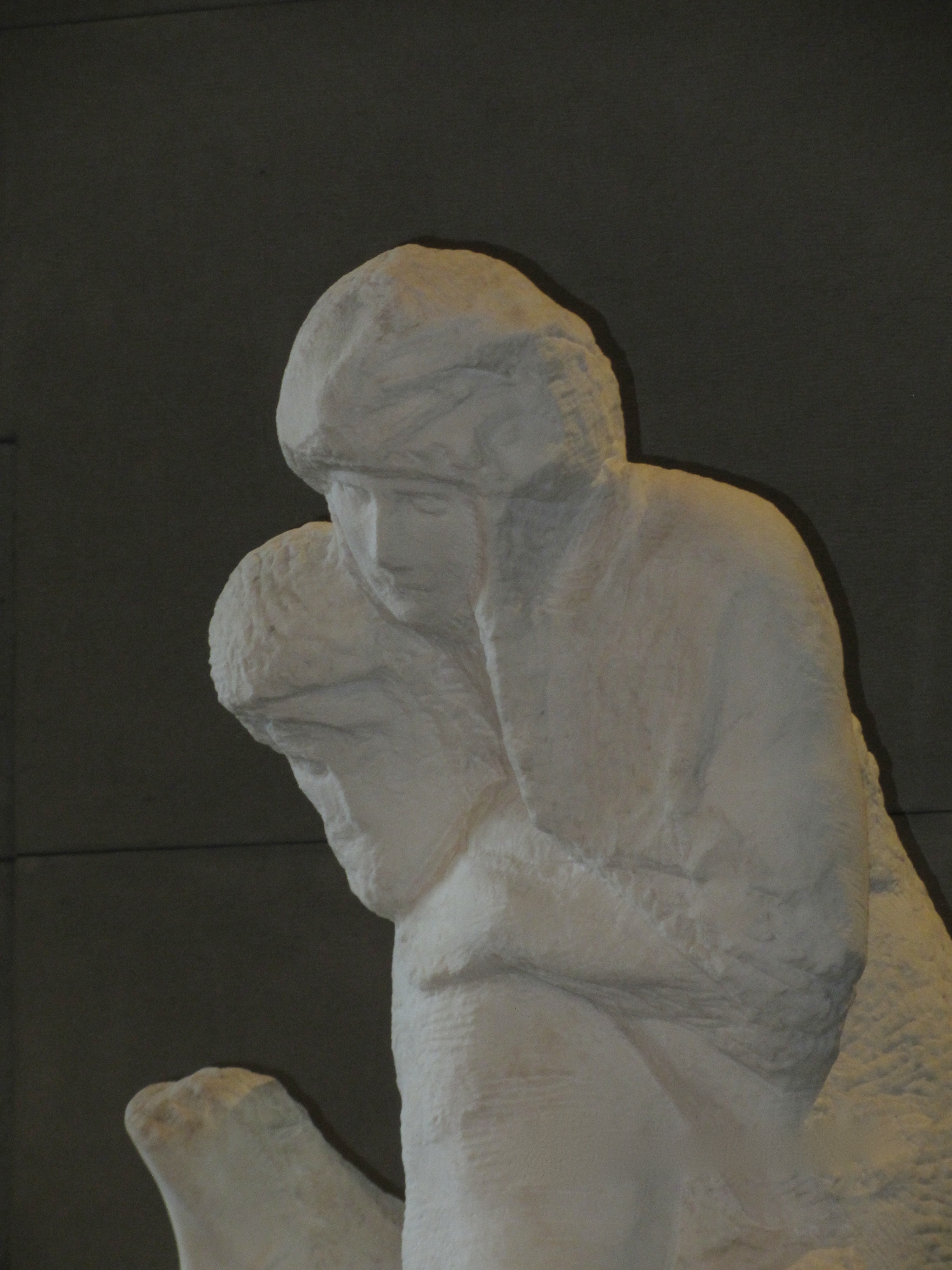
Afterwards, we make our way to the Sforza Castle, previously the residence of the Sforza family. It is now a museum of ancient art which features the last and unfinished Pietà, by Michelangelo and the Sala della Asse, frescoed by Leonardo da Vinci, who worked for the Sforza family as a painter, sculptor, and hydrologic engineer. Seventeen layers of whitewash are slowing being removed to reveal the entire mural by da Vinci, sections having been discovered on the walls as late as 2013.

The Sforza Castle

The Sforza Castle

The Pietà

The Last Pietà

The Pietà

The Last Pietà

IMG_1834

Our last stop of the day is Santa Maria della Grazie Church and we are thrilled to find admittance tickets waiting for us! The church is now hermetically sealed, so you go through sections of air filter stations, filtering the air from the outside, until it is deemed pollutant free and we are admitted.  At last, a group of twenty, is turned out into the refectory for 15 minutes at a time. In the Convent, where the work on the end wall was started in 1495, the mural, measuring 180 inches by 350 inches, represents the scene of the Last Supper of Jesus with his disciples. Completed in 1498, the mural specifically portrays the reaction given by each apostle when Jesus said one of them would betray Him. Working a new technique, dry plaster rather than wet, and choosing to seal the stone wall with a layer of pitch, gesso and mastic, da Vinci painted the sealing layer with tempera. Due to this method the piece began to deteriorate a few years after he finished it. As early as 1517, the painting was starting to flake and by 1556 it was deemed “ruined” and so deteriorated, the figures were unrecognizable.  In 1652, a doorway was cut through the painting, so the monks could get to the kitchens easier.  This door was later bricked up, but can still be seen as an irregular arch shaped structure near the center base of the painting.  In 1768, a curtain was hung over the painting to protect it; but instead it trapped moisture on the painting’s surface and whenever the curtain was pulled back, it scratched the flaking paint. In 1821, Stefano Barezzi, an expert in removing whole frescoes from their walls intact, badly damaged the center section of the mural before realizing the work was not a fresco.(Painted on wet walls) He then attempted to reattach the damaged sections with GLUE.  From 1901 to 1908, Luigi Cavenaghi completed a thorough study of the structure of the painting, then began cleaning it. On August 15, 1943, the refectory was struck by a bomb, but a protective structure of sandbags and an additional wall in front of the painting protected it from bomb splinters. Pictures of the damage to the church line the walls upon leaving.  It was the only wall left standing. We leave Milan and return to Menaggio by train and then ferry, weary but so thankful we have been able to see some of the greatest art in the world.

For more information on a private tour of Milan contact Lorenza Scorti at lorenza.scorti@libero.it

THE SPECTACLED BEAN

Tales, Thoughts + Tribulations of a Free Spirit in Suburbia

Walking Away

Travels on foot

Teacher nickname: The Three Hairs

Minding my mind, one thought at a time.

Tra Italia e Finlandia

Un lungo racconto fotografico.

seanbreslin.jp

Photography, hiking, walking, and cycling across central Japan — from quiet mountain paths to everyday life around Nagoya.

Lost in Translation

Looking for meanings in words, images and sounds

Journeys with Johnbo

Reflections on places traveled and photos taken.

M/VGratitude

Cruising with the Thyrre Family

Caroline's Travel Adventure Blog

Where my Travels and my Blog merge together.

Just Me, Nobody Special

The mental meandering that cross my keyboard

Jennifer's Journal

Website & Blog of J. Kelland Perry, Author

Slow Shutter Speed

A photographic journey.

Ann Mackay: Inspired by Nature

Photography celebrating flowers, plants, and the natural world

Still Restlessjo

Roaming, at home and abroad

Fine for Friday

The Corner Garden

Picture This

Photography, Travel and Retirement

World Traveller 73

Upgrade Your Travels. First Class Luxury Travel from all parts of the Globe. Business Class Airline, Lounge and Hotel Reviews, Stories and Adventures

Rachel Meets China

A China travel and lifestyle blog