English Garden Tour: Garden Picture of the Day, I’ll Grow Anywhere!

I’ll Grow Anywhere, North Hall, Sheffield Green, UK
I’ll Grow Anywhere, North Hall, Sheffield Green, UK
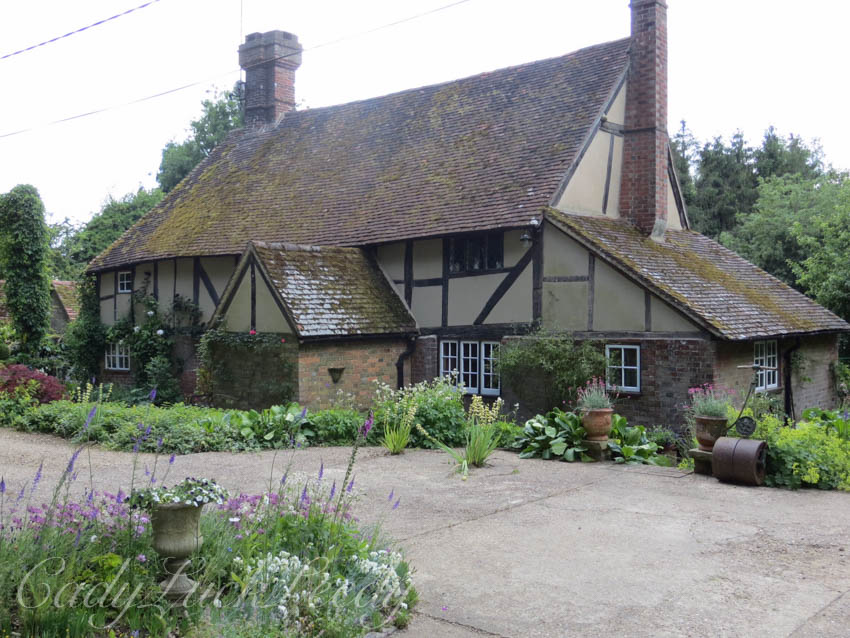
North Hall, Sheffield Green, Uckfield
Why just have a driveway, when you can have a garden in it?

North Hall, Sheffield Green, Uckfield
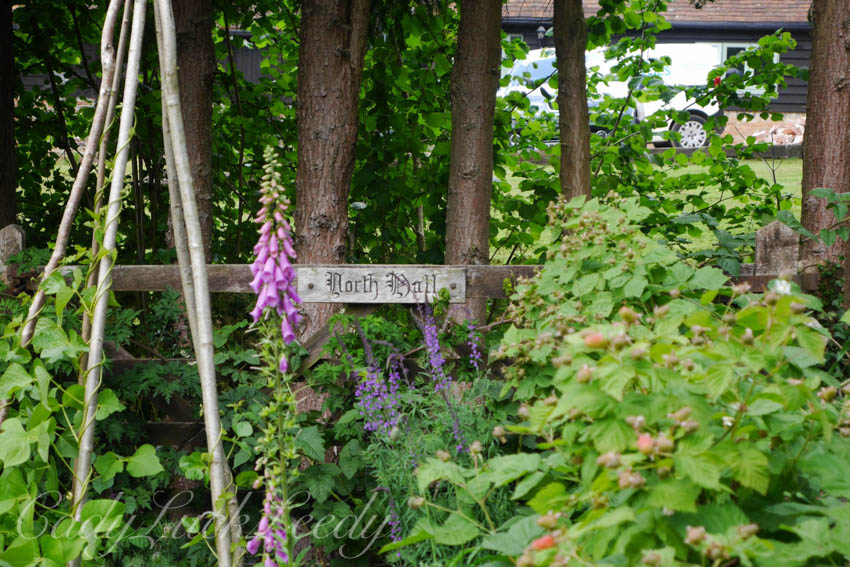
North Hall, Sheffield Green, Uckfield
Here it is, the house and garden of a woman’s dreams! From the moment we entered the drive and was directed to the meadow to park in, I couldn’t wait to see the gardens surrounding this beautiful home! For background musica there was a couple seated at a table playing old time favorites on old, old, crank record players.

The Music at North Hall, Sheffield Green, Uckfield
What sound! So crisp and clear! Who knew! No Beats headphones here! Next was the antique Rolls Royce to inspect. Setting the mood we entered the garden!

The Rolls Royce at North Hall, Sheffield Green, Uckfield
North Hall is overflowing with a palette of soft colors and heady scent. The garden is planted abundantly with a variety of plants. Pathways along the house show off antique planters and old garden equipment creating interest in the multiple tiers of the garden. There are themed island beds, moated terraces, and roses tumbling over the walls. On the back lawn is an area with tables covered in vintage lace cloths and antique table covers, set up for tea and cake. Let’s wonder through this garden shall we? I’m sure this will be one of your favorites on the National Garden Schemes too. This garden is very much loved!
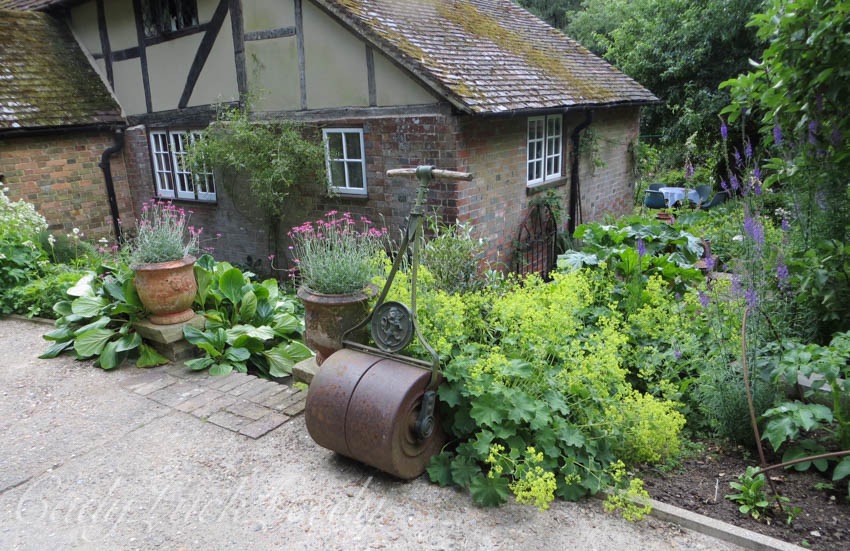
Entering the Path to the Garden at North Hall
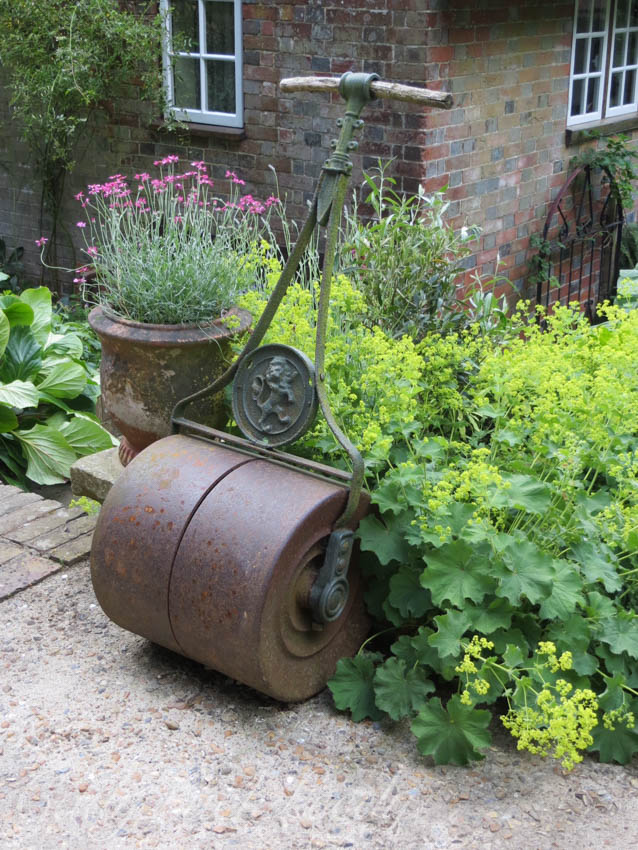
THE Lawn Roller at North Hall, Sheffield Green, Uckfield
Stepping down, the multi-tiered brick paths along the brick walls allowed you to see plants up close at eye level.
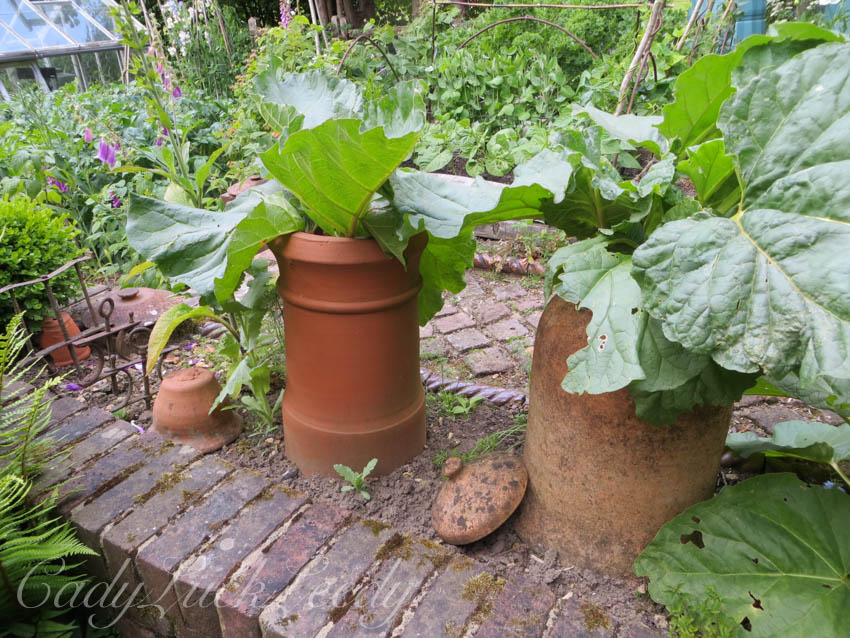
More Chimney Pots Used for Planters at North Hall

The Terraced Gardens at North Hall

The Garden at North Hall, Sheffield Green, Uckfield
The roses covered the house. Notice the contrast of the pinks and violets.

A Side Garden of North Hall, Sheffield Green, Uckfield
Four sides to the house gives one four different gardens!
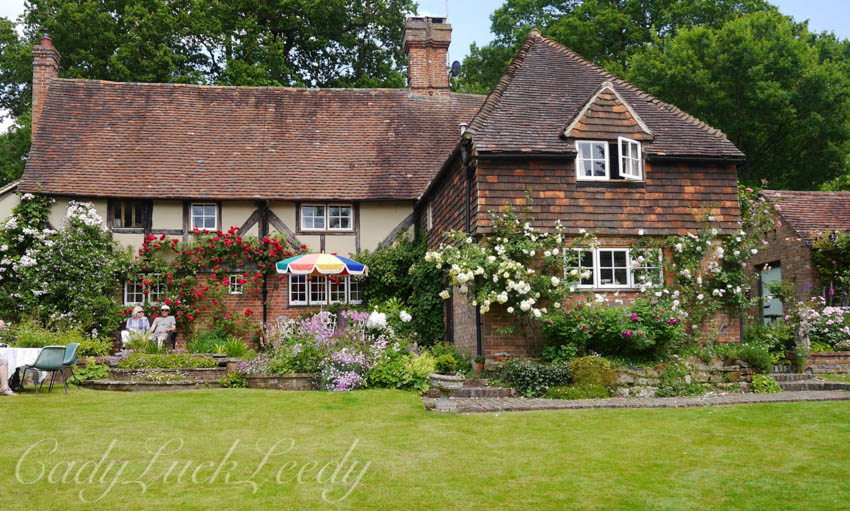
A Look from the Back of the Garden, North Hall
A delightful seating area, was surrounded by a garden moat! What an inspirational way to add a water garden!
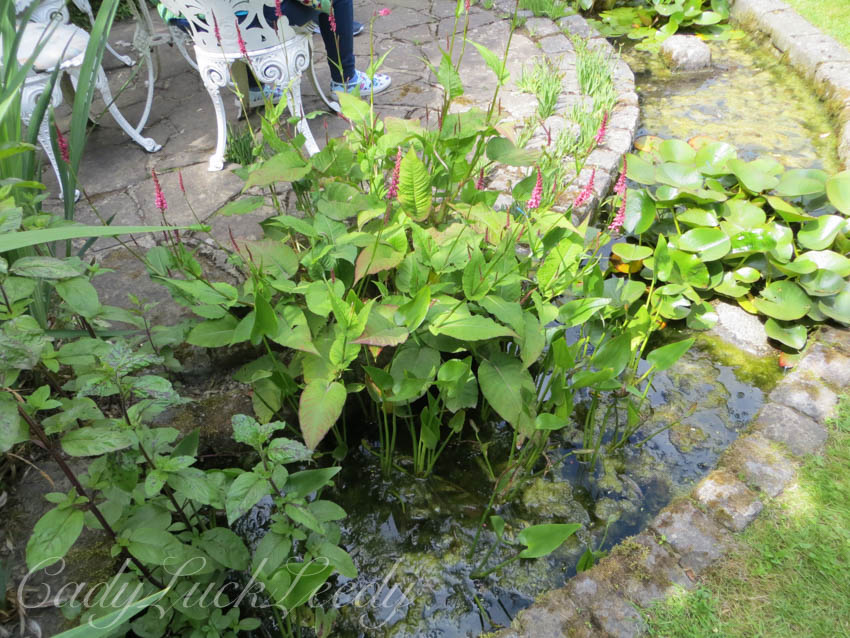
The Moated Terrace at North Hall
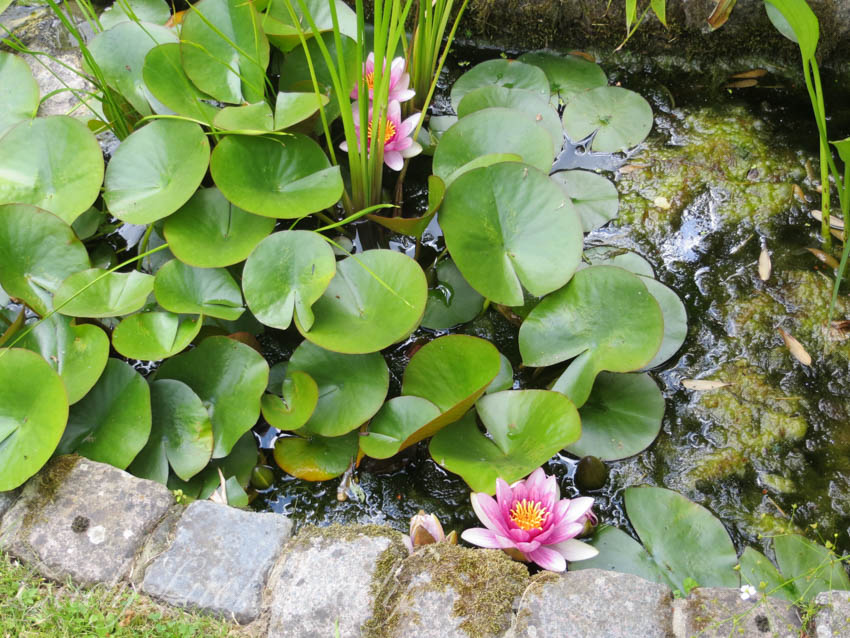
Water Lillies in the Moat at North Hall
There were garden rooms created for relaxing and meeting up with fellow gardeners!
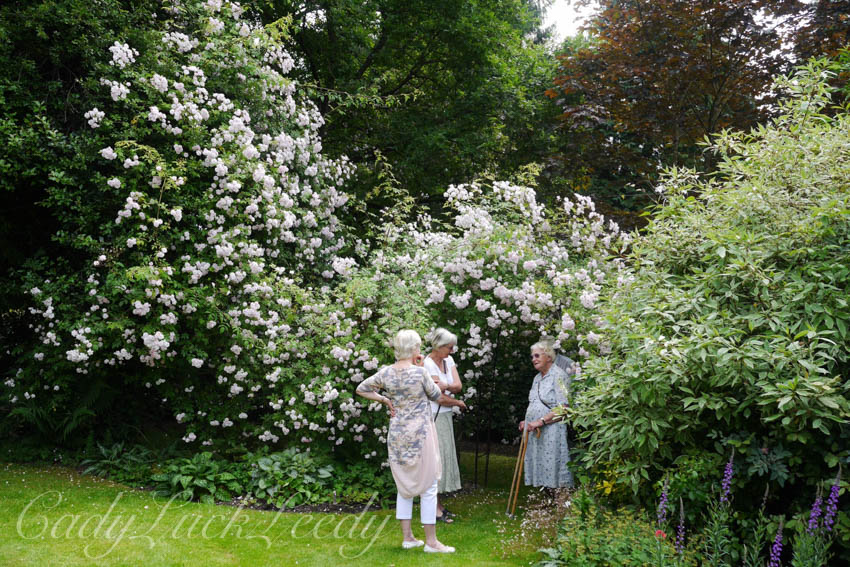
Real English Gardeners!

A Look at the Tea Sets, North Hall
I loved the contrast of the black and lime colors in the garden!
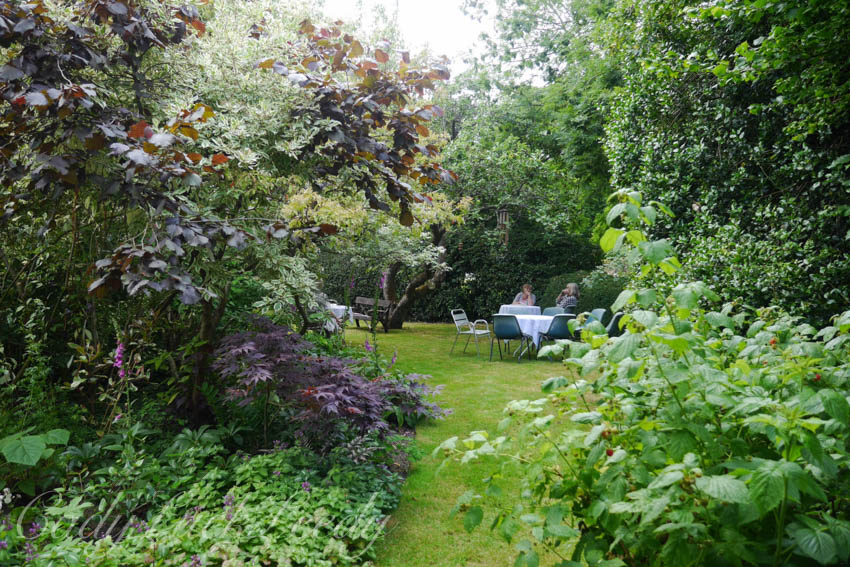
Tea Time in the Garden at North Hall
Entering another “Garden Room.”
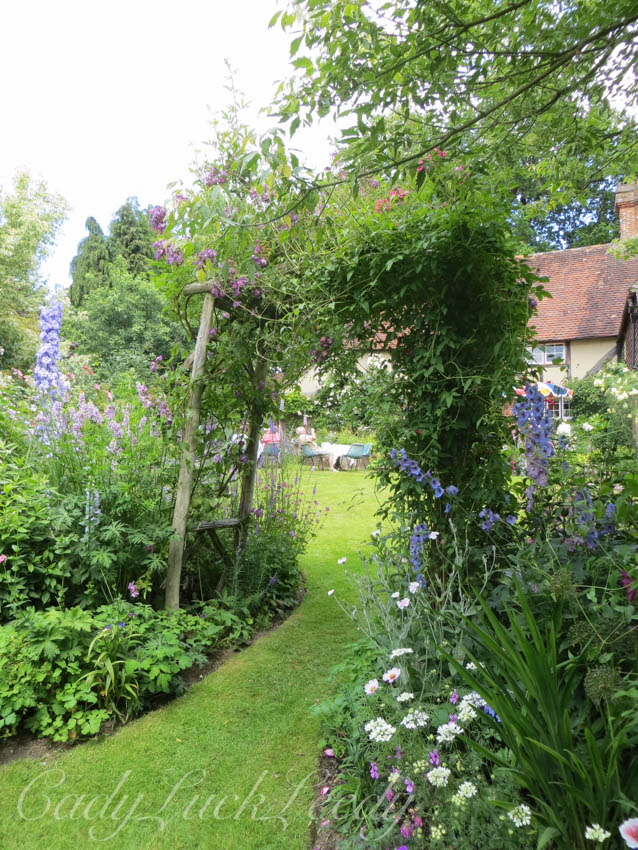
An Arbor at North Hall
Rainfall water storage and composting in the garden! Nothing was overlooked!

Garden Interest at North Hall

Garden Tools Adds Interest to the Clematis Garden at North Hall

The Flowers of North Hall
Trees and flora were tagged! How thoughtful!

Tree Tag at North Hall

The Flowers of North Hall
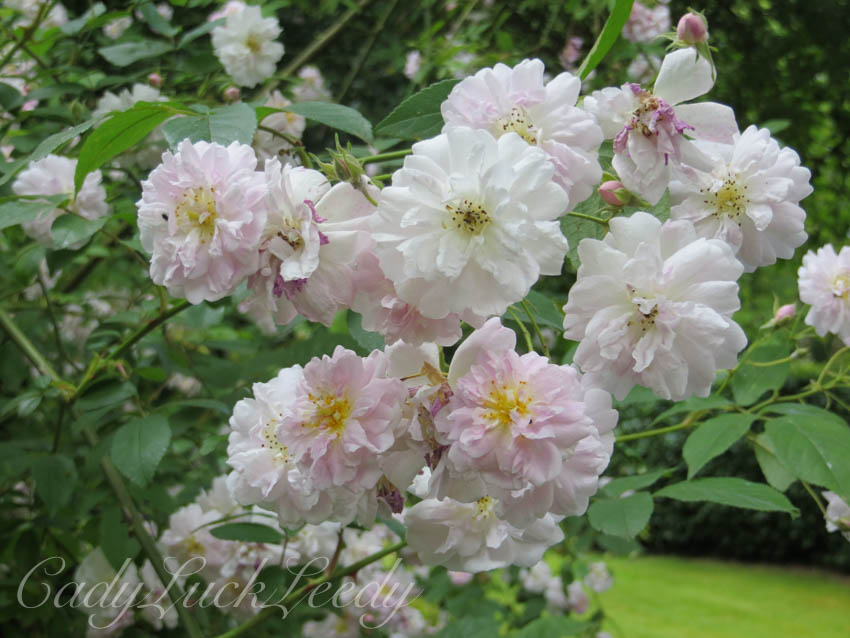
The Flowers of North Hall

The Flowers of North Hall
Add a spot or two!

The Flowers of North Hall, A Mixture in the Garden
Or maybe a bright PINK!

The Flowers of North Hall

The Flowers of North Hall
Can you believe the combination of lavender and blue? They were iridescent!
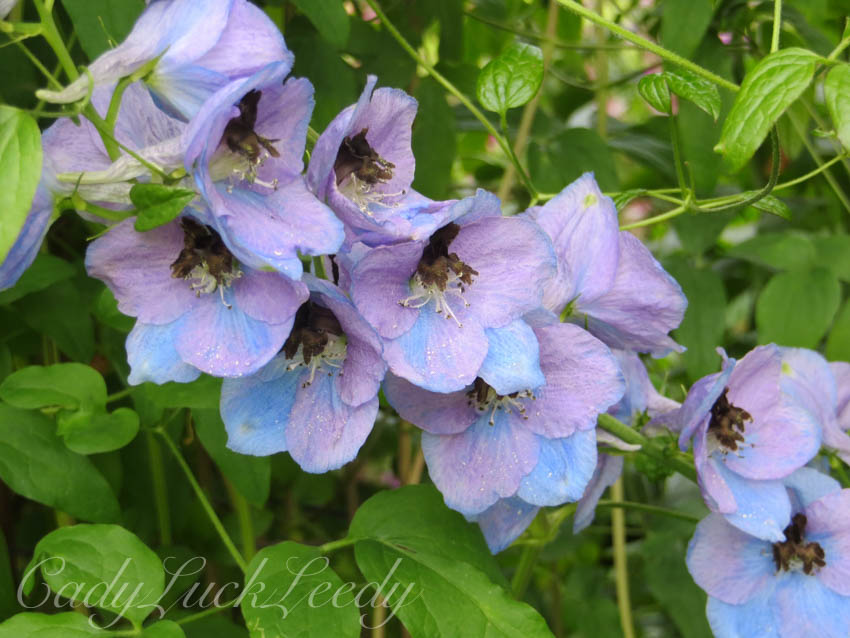
The Flowers of North Hall

The Flowers of North Hall

The Greenhouse at North Hall
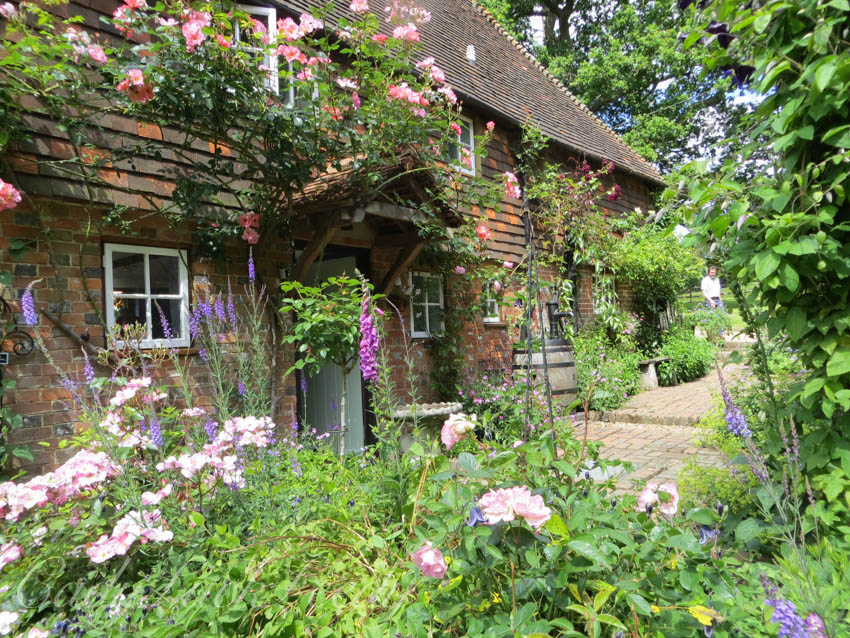
The Other Side of North Hall

The Topiaries at North Hall
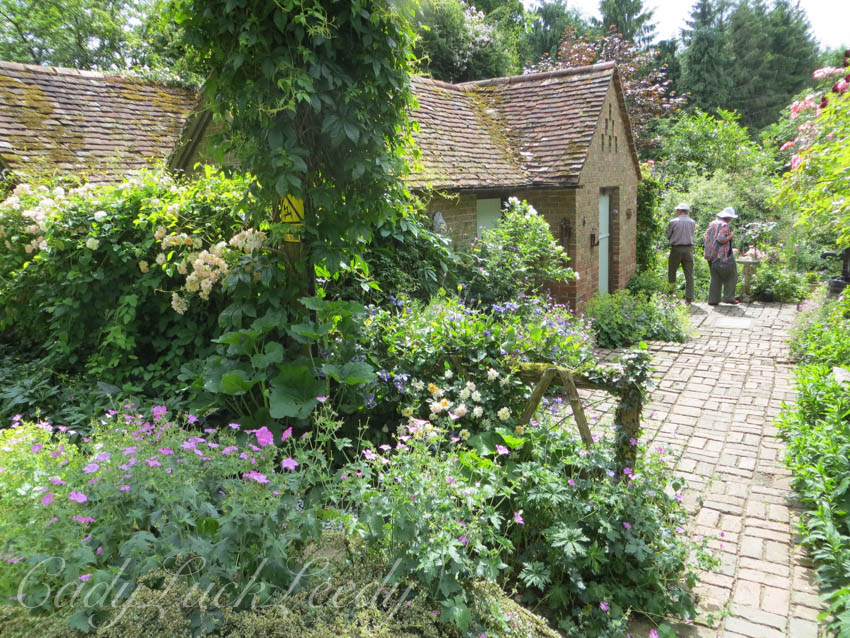
The Garden at North Hall, Sheffield Green, Uckfield
This is one garden I could visit over and over! I just loved it! Thank you, North Hall, for sharing your beauty with us!
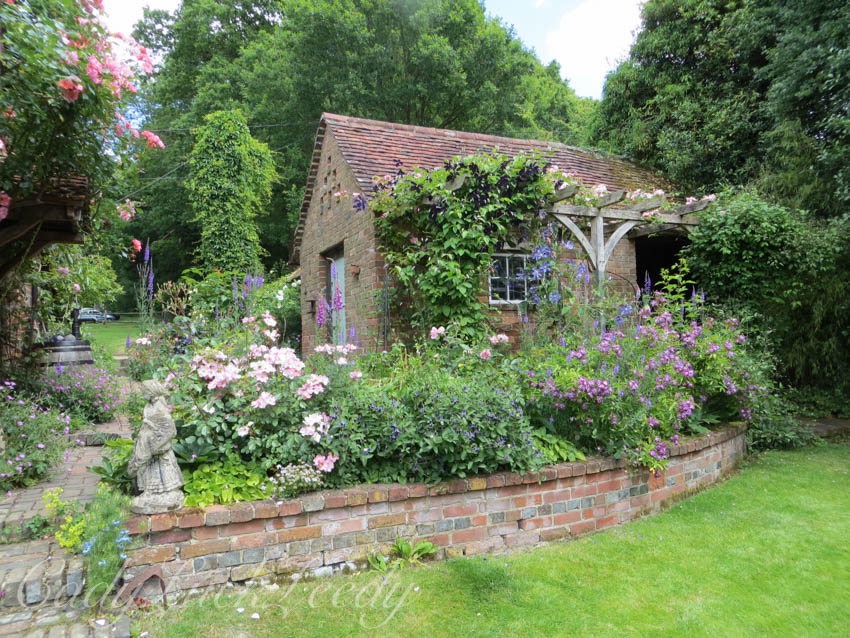
The Varied Terrace Gardens of North Hall
I have so many beautiful pictures from the gardens on the National Garden Scheme in the UK. I called my visit to the gardens, “The English Garden Tour.” Local gardeners open their gardens once a year for charity. Luctons, in Sussex, is a must see! Can’t you just imagine sitting at the end of the day in this garden? I can!

Luctons Garden on the National Garden Scheme, UK

Help! What Am I?
This was my favorite flower during my “English Garden Tour.” We saw it several times in many gardens, but no one was able to identify it. Can a gardener help me out? I loved the way it kept blooming on a single stem!
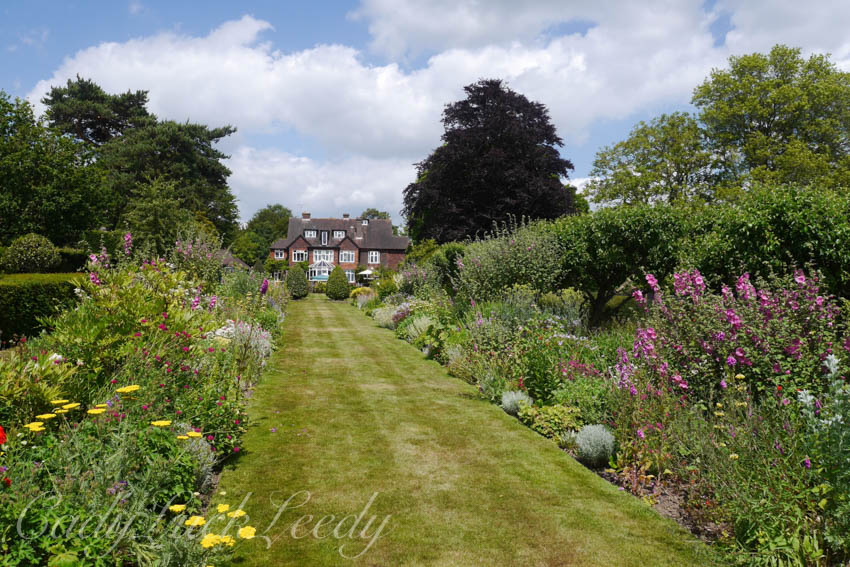
The Back Lawn of Luctons, West Hoathly, Sussex

The Back Lawn of Luctons, West Hoathly, Sussex

The Back Lawn of Luctons, West Hoathly, Sussex
It was so entertaining sitting on the terrace at the Cat Inn in West Hoathly watching the wedding guests stroll in for a wedding lunch. Such beautiful summer finery and oh the hats! Why don’t we wear hats anymore? I am always so envious of women in hats! So elegant looking in the smallest of fluff and feather!
Time to move on to the next garden, Luctons, just a short walk to the end of the street where the “newer homes” are. Talking with the owners, who have lived in their home for thirty years, we find there have been many adjustments and improvements to their 19th century home, green houses and two acre garden.

Herbaceous Borders at Luctons, Sussex

The Flower Garden at Luctons, Sussex

The Flowers of Luctons, Sussex
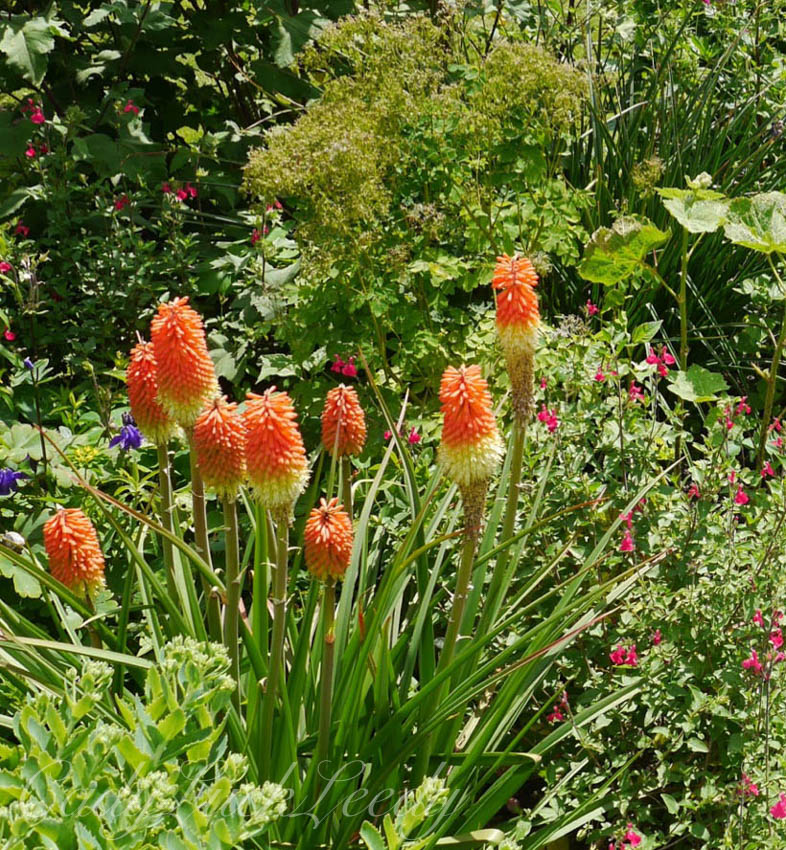
The Flowers of Luctons, Sussex
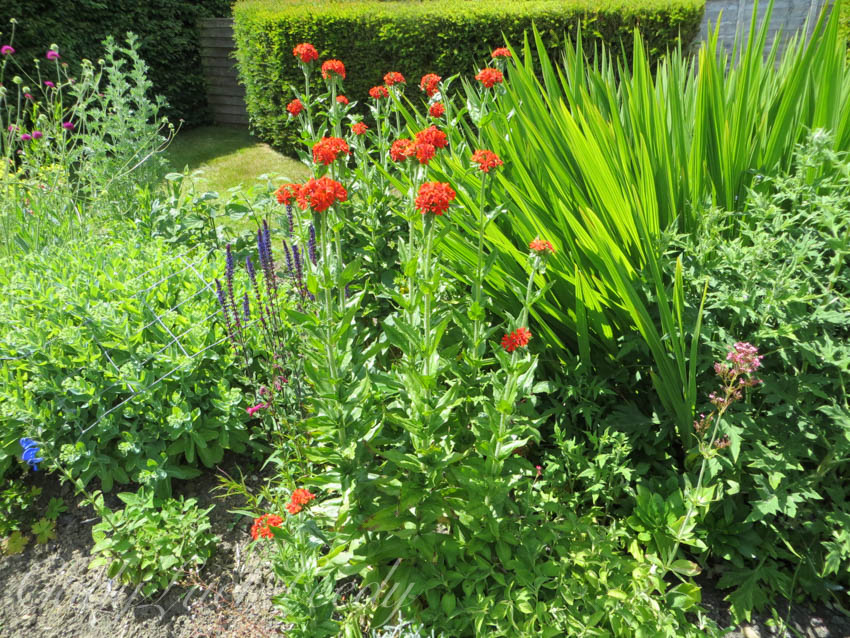
The Flower Garden of Luctons, Sussex
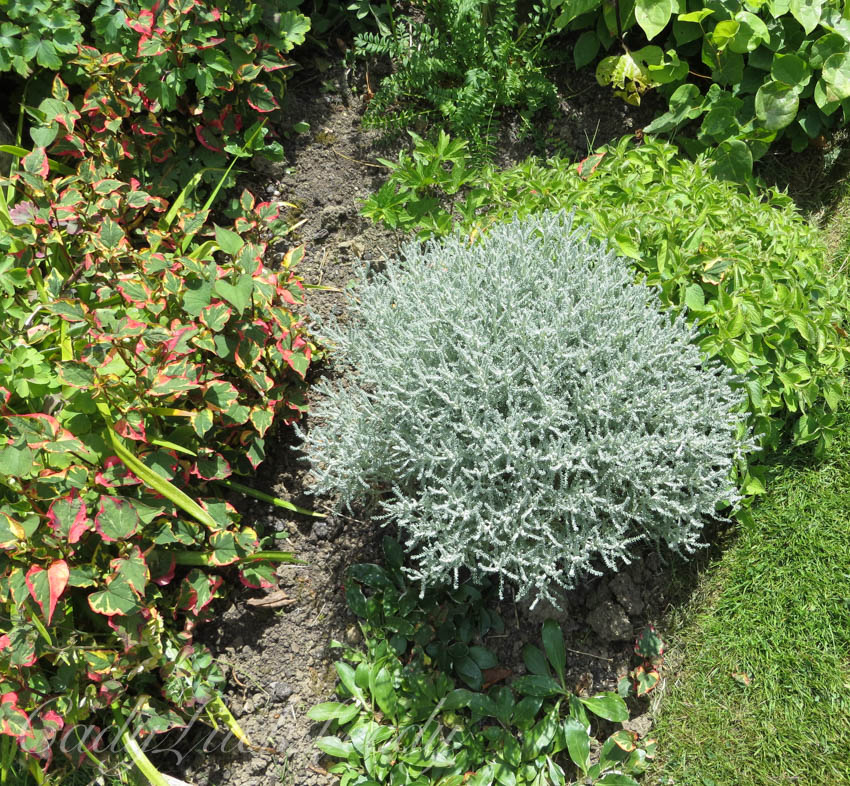
The Flowers of Luctons, Sussex
That is what I find so interesting about the gardens I have seen so far. You get a chance to talk with the gardeners/owners of the gardens and learn more about their garden plans, choice of flowers and involvement with other gardens and gardeners. This garden was designed in the Gertrude Jekyll style, which focused on a relationship between the house and its surroundings. Gertrude Jekyll’s style included foliage, color and texture to achieve a practical and beautiful view. To give a picturesque and natural appearance in the garden the use of stone walls, walkways, and natural partitioning of the garden, ensures a gentle flow. To quote the famous landscape gardener,” A garden is a grand teacher. It teaches patience and careful watchfulness: it teaches industry and thrift; it teaches entire trust.” At Luctons, we see the small box partere, yew topiary, shrubs and flowers that frame the front of the home giving it an inviting entrance. Won’t you join me for careful watchfulness?

The Front Entrance to Luctons, Sussex
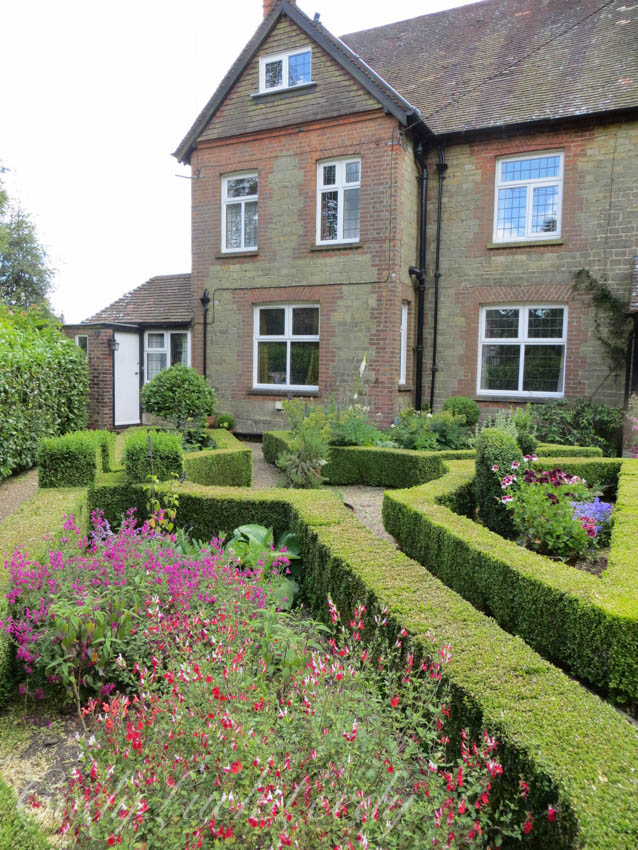
The Front Entrance to Luctons, Sussex
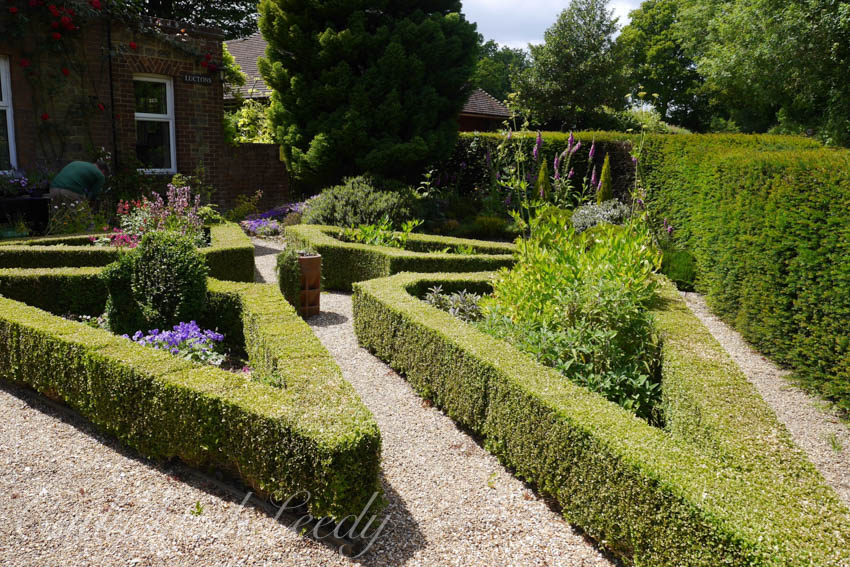
The Front Garden at Luctons, Sussex

The Front Garden at Luctons, Sussex

The Front Garden at Luctons, Sussex

The Peacock Topiary, Luctons, Sussex
In the back is a large lawn with herbaceous borders centered in a large fruit and vegetable garden.

Leading to the Cricket Court at Luctons, Sussex

The Vegetable Garden, Luctons, Sussex
The wild flower orchard is not mowed revealing beautiful meadow flowers and spotted orchids. A tent has been set up where cream teas are served. Could there be anything more English? All I need is my hat!

Tea in the Garden, Luctons, Sussex
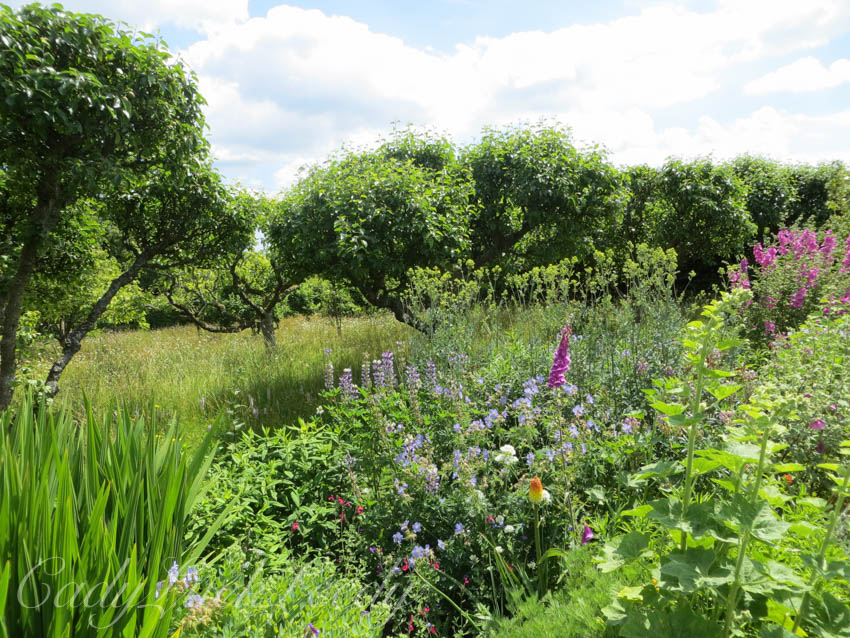
Looking at the Orchard at Luctons, Sussex
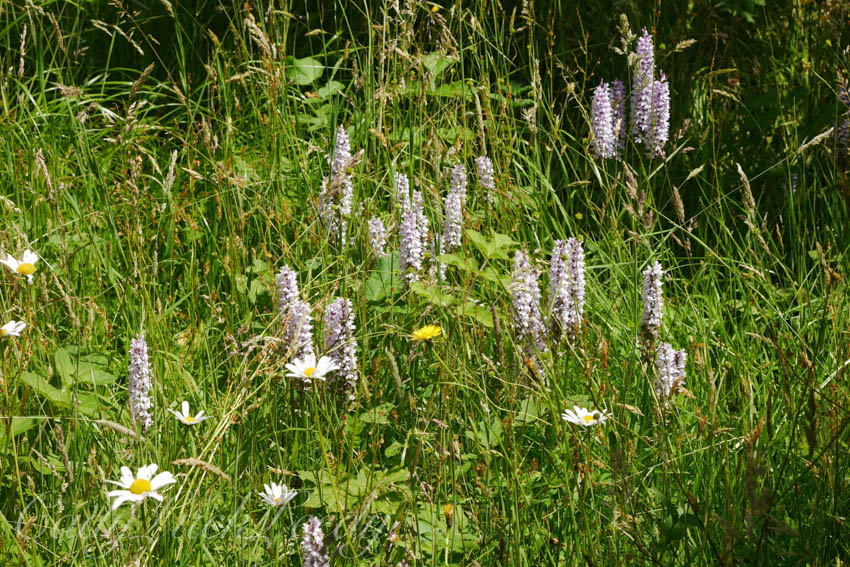
Spotted Orchids in the Meadow at Luctons, Sussex
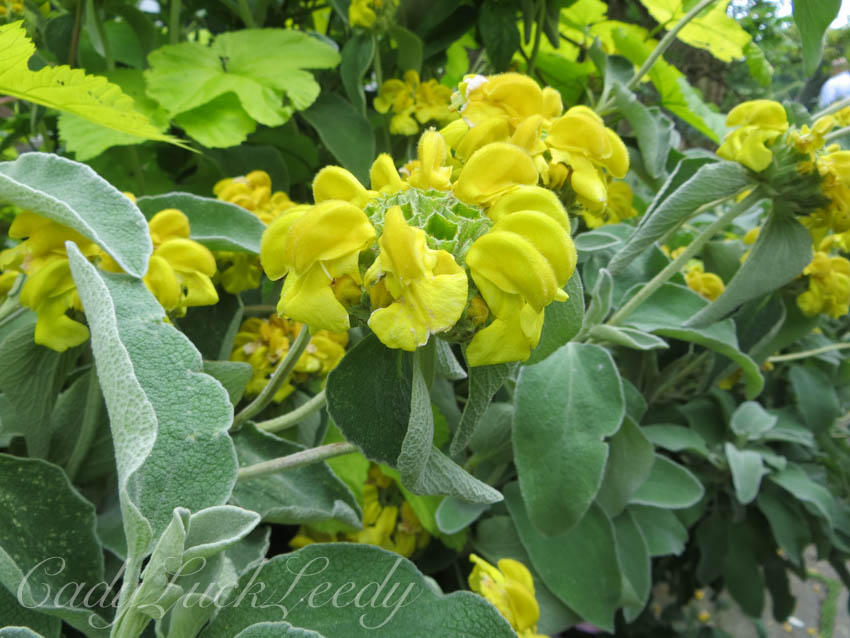
The Lovely Unknown
PS This was hands down my favorite flower! I saw it in many of the gardens we toured, but could never find out the name of it. Can anyone identify it for me?

The Priest House, West Hoathly, Sussex

Map of Center of Village, West Hoathly, Sussex
Today we traveled to West Hoathly, in Sussex, to see the first gardens that I had chosen from the many offered this weekend on the National Garden Scheme. Driving well over an hour we arrived in the center of the small village of 9 homes, including the pub. The Priest House is our first destination. The only one of its kind open to the public, this 15th century Wealden hall house stands in a traditional cottage garden on the edge of the Ashdown Forest. Originally owned by Henry VIII it was given to Anne of Cleaves, wife number four, upon their divorce. The herb garden is planted with over 170 culinary, medicinal and household herbs. Today a special exhibition for the NGS, featured on the upper floor, built in 1600, reveals pictures of local children and their place in the workforce in the 19th century. Many children, as young as five and six, were farm laborers and chimney sweeps. It was not uncommon for the chimney sweep to get stuck in the chimney and die. The Priest House is maintained by the Sussex Archaeological Society and provides rotating exhibits, research, and other learning experiences.

Walkway to the Priest House, West Hoathly, Sussex
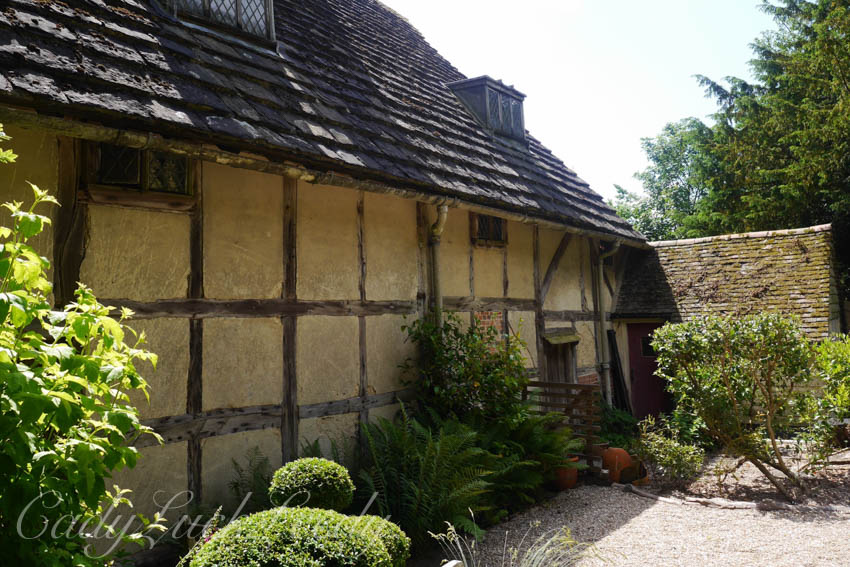
The Priest House, West Hoathly, Sussex

The Priest House, West Hoathly, Sussex

The Gardens at Priest House, West Hoathly, Sussex

The Gardens at Priest House, West Hoathly, Sussex

The Gardens at Priest House, West Hoathly, Sussex

Flowers in the Garden at Priest House, Sussex
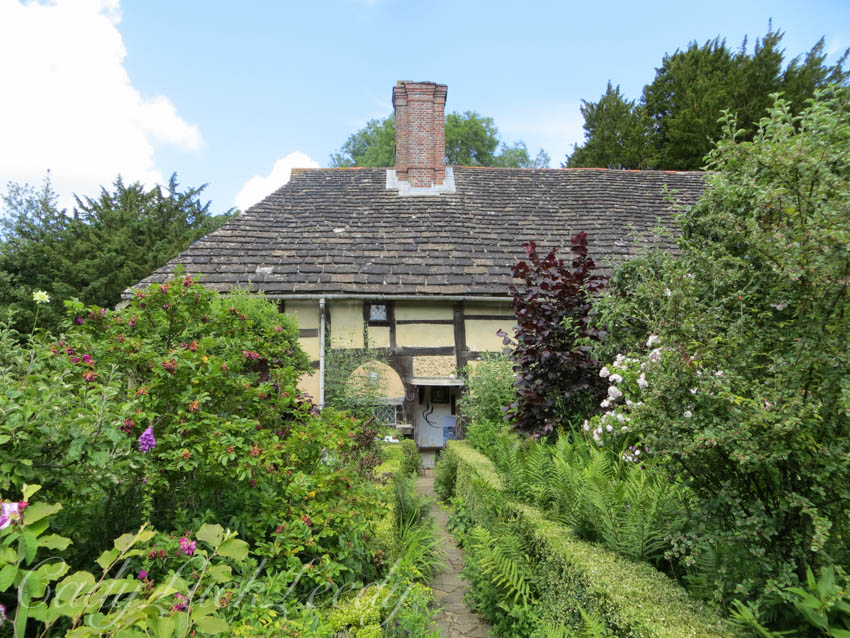
Another Garden at The Priest House, Sussex

The Priest House, West Hoathly, Sussex

The Priest House, West Hoathly, Sussex
St Margaret’s Church, settled in 1090, records the names of the village from Hadlega, later standardized to Hodlegh, then West Hoathly. This Anglo-Saxon word signifies a heath covered clearing, or the dense woodland of the Ashdown Forest. In 1556, Ann Tree was burnt at the stake near here for refusing to renounce Protestantism, one of seventeen martyrs to suffer this fate in Sussex. A brass memorial in the church commemorates her.

St Margaret’s Church, West Hoathly, Sussex

St Margaret’s Church, West Hoathly, Sussex

The Gate to St Margaret’s Church, West Hoathly, Sussex
The Manor House was built in 1627 for Mrs Catherine Infield of Gravetye Manor, as a dower house. Her family was the wealthy owners of the local iron works. Later abandoned to smugglers the buildings and grounds were rejuvenated in 1884 when “the greatest English Gardener” William Robinson bought it. Upon his death it was turned over to the Forestry Commission. It now sits vacant and forlorn.
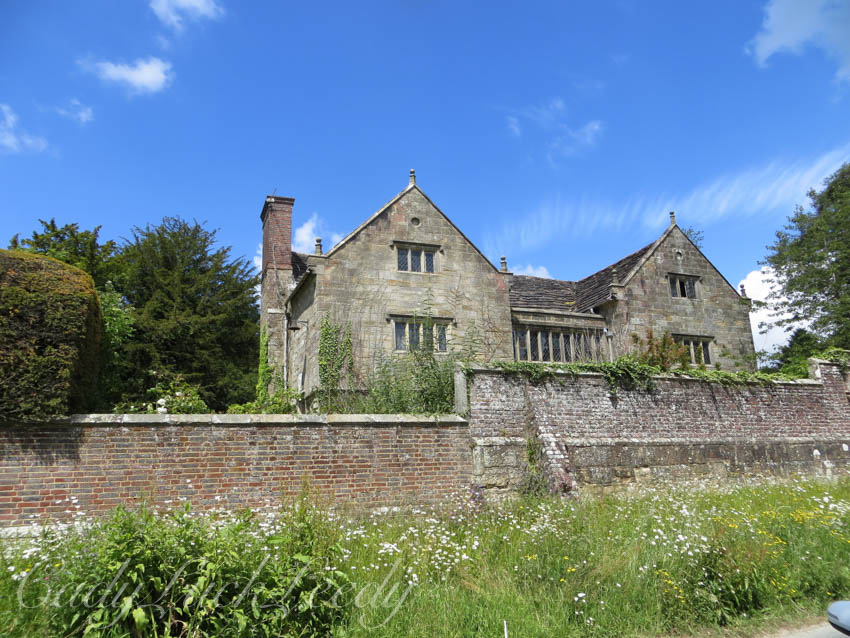
The Manor House, West Hoathly, Sussex
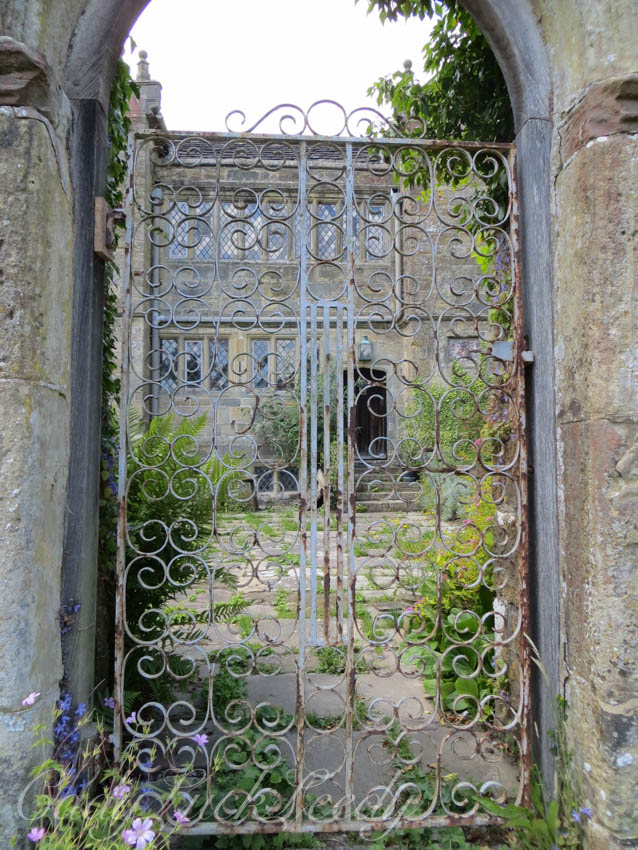
Looking Through the Gate to the Manor House, West Hoathly, Sussex
The Phlox and Rose Cottages are 19th century weather boarded over timber framed cottages. They were the newest houses in the village!

Rose Cottage and Phlox Cottage, West Hoathly, Sussex
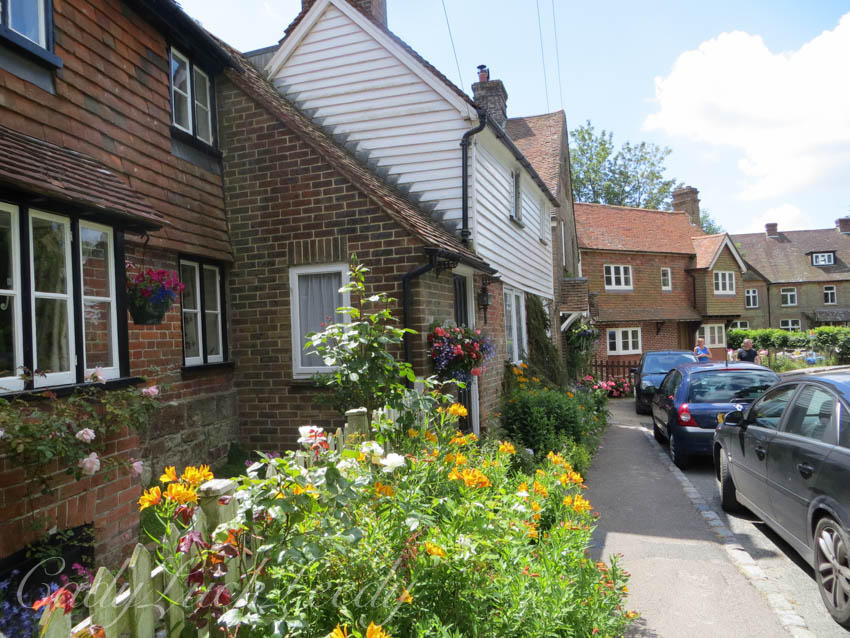
Rose Cottage and Phlox Cottage, West Hoathly, Sussex
The Upper Pendent is a timber framed, tile-hung 17th century home which previously housed the village stores and post office in the 19th and 20th centuries.

Upper Pendent, West Hoathly, Sussex
The Cat Inn is the 16th century pub of medieval origin standing in the crossroads of the village. The name is derived from an emblem of the Sackvilles of Knole, which is a leopard. We will be learning a lot about the Sackvilles, a very prominent family in Kent. This is the pub I had picked to stop in for lunch after touring the village. It was highly recommended by the locals also. We sat in the lovely terrace and had a most agreeable meal. Now on to the next garden in the “burbs” of West Hoathly.
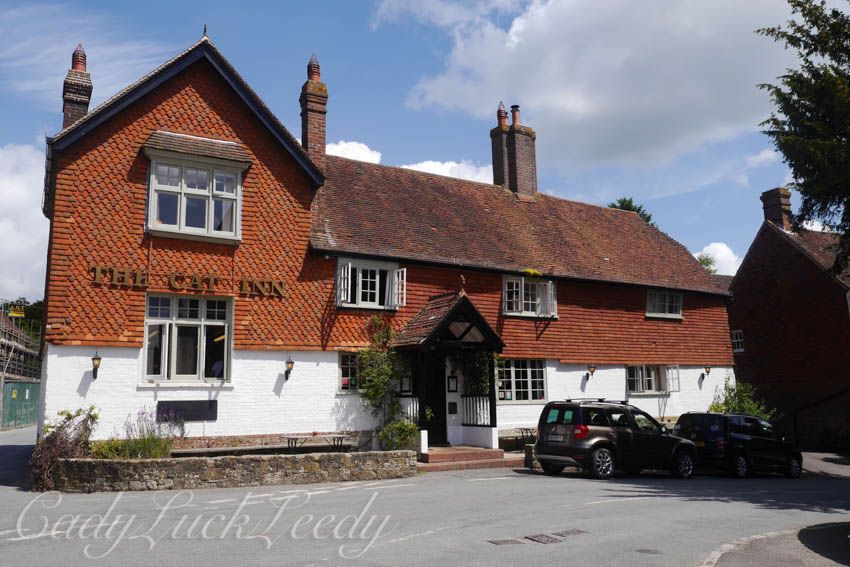
The Cat Inn, West Hoathly, Sussex

A Great Ride Awaits at the Cat Inn, West Hoathly, Sussex
P S For a good read about the wives of Henry VIII, I suggest, Six Wives of Henry VIII by Alison Weir. The author draws on early biographies, letters, memoirs, account books, and diplomatic reports to bring each woman to life. Very interesting!
Tales, Thoughts + Tribulations of a Free Spirit in Suburbia
Travels on foot
Minding my mind, one thought at a time.
Un lungo racconto fotografico.
Featured
Photography, hiking, walking, and cycling across central Japan — from quiet mountain paths to everyday life around Nagoya.
Looking for meanings in words, images and sounds
Reflections on places traveled and photos taken.
Cruising with the Thyrre Family
Where my Travels and my Blog merge together.
The mental meandering that cross my keyboard
Website & Blog of J. Kelland Perry, Author
A photographic journey.
Photography celebrating flowers, plants, and the natural world
Roaming, at home and abroad
The Corner Garden
Photography, Travel and Retirement
Upgrade Your Travels. First Class Luxury Travel from all parts of the Globe. Business Class Airline, Lounge and Hotel Reviews, Stories and Adventures
A China travel and lifestyle blog
 The Travel Lady In Her Shoes