Travel, Gardens, Food, Photography, Books, Shoes

Posts from the ‘What I Learned Series’ category

Old Scotney Castle in the Daylight!

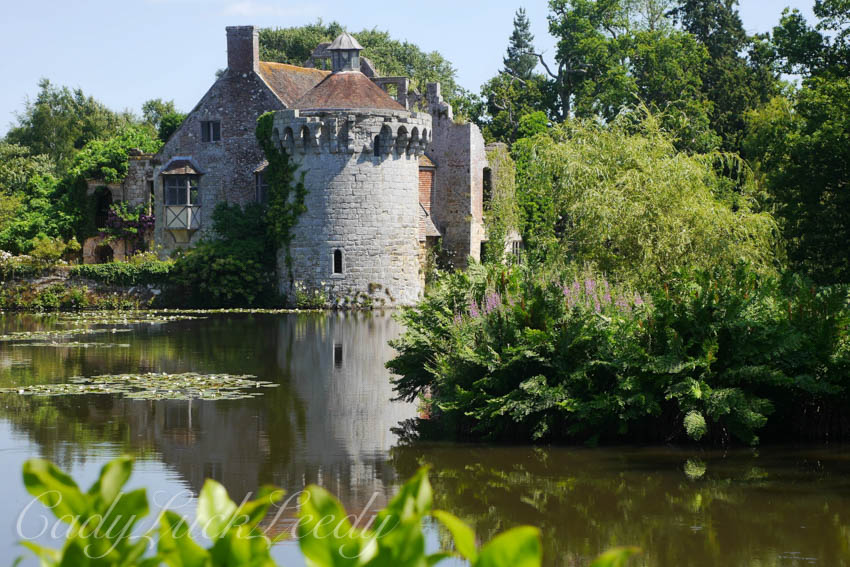
The Ruins of Old Scotney Castle, Lamberhurst, Kent, UK

The Ruins of Old Scotney Castle, Lamberhurst, Kent, UK

As promised, today we’ll walk the grounds of Old Scotney Castle! Can you recognize the pictures I created for the Haunted Scotney Castle blog, from the daytime pictures?

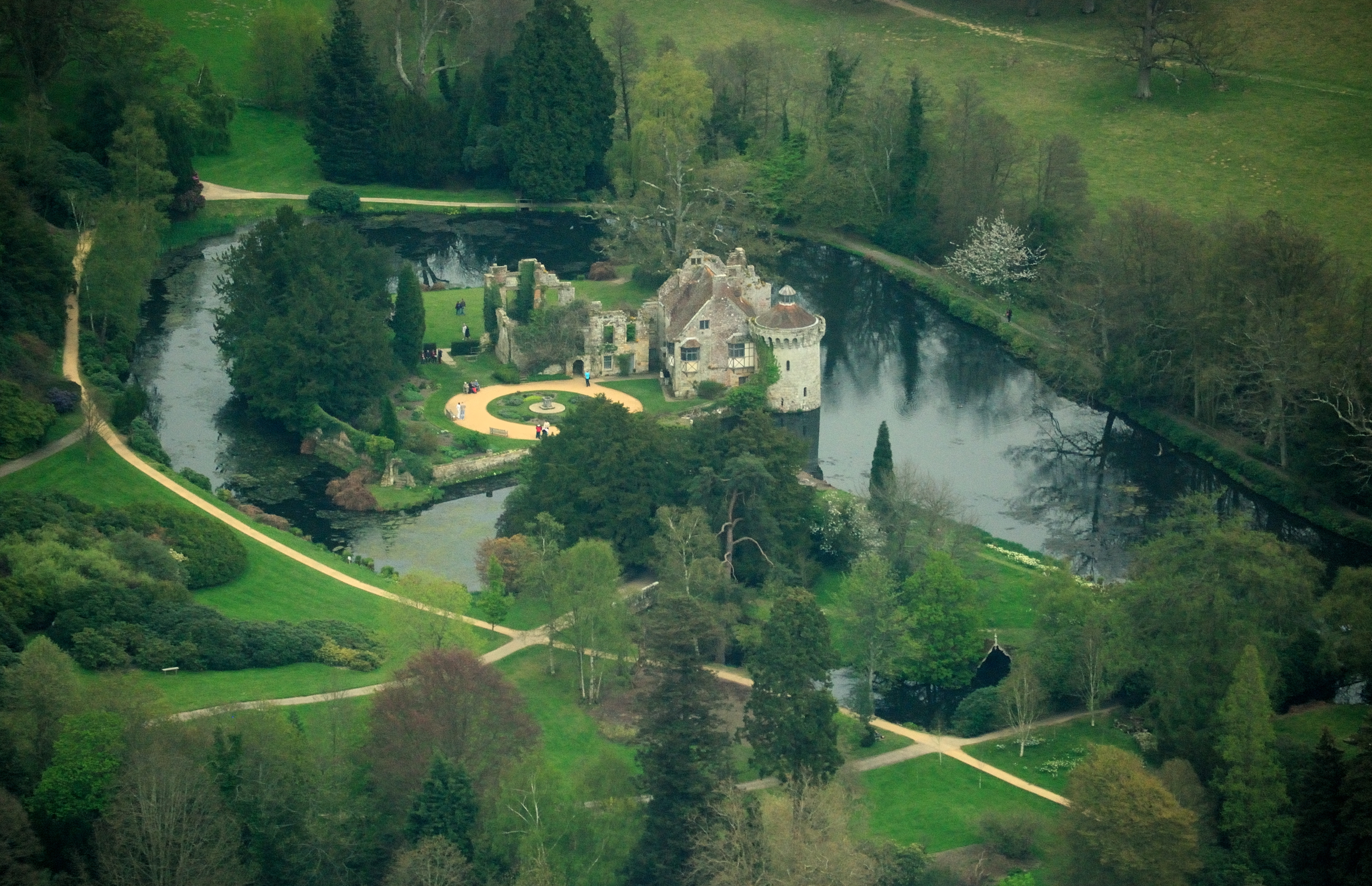
First, the aerial view so you get an idea of the ruins of the old castle and the gardens.

Aerial View of Scotney Castle, Lamberhurst, Kent, UK

Aerial View of Scotney Castle, Lamberhurst, Kent, UK

Then we’ll walk down to the ruins that sit at the bottom of the hill to get a closer look! Click on any of the pictures to enlarge them!

Then the gardens…………..

Then the ruins……… up close and personal!

And the haunted entry and bath in the daylight!

One of the Remaining Dorrways at Old Scotney Castle, Lamberhurst, Kent, UK

One of the Remaining Doorways at Old Scotney Castle, Lamberhurst, Kent, UKA

The Bath at Old Scotney Castle, Lamberhurst, Kent, UK

The Bath at Old Scotney Castle, Lamberhurst, Kent, UK

Tomorrow we’ll be at the New Scotney Castle!  Back up the hill we go!  See you there!

New Scotney Castle, Lamberhurst, Kent, UK

New Scotney Castle, Lamberhurst, Kent, UK

Old Scotney Castle and the Hauntings, Lamberhurst, Kent, UK

Old Scotney Castle in Dusk, Lamberhurst, UK

Old Scotney Castle in Dusk, Lamberhurst, Kent, UK

There are actually two castles at Scotney Castle, near the settlement of Lamberhurst, in Kent; the Old Castle and the New Castle. Today the property is owned by The National Trust, so we had a chance to visit the Scotney property on my “English Garden Tour.” We will walk first, down the hill to the ruins of  the featured medieval, moated manor on a small island, on a small lake; Old Scotney Castle. The lake is surrounded by a sloping wooded garden with collections of rhododendrons, azaleas, wisteria and roses. The ruins of the castle, gardens, moat and lake are beautiful in the bright sunlight of day. But, what do they look like at night?

Since we are nearing Halloween I thought I would look and see if any of the castles or estates we visited were indeed haunted.

So lets sit by the crackling fire with our cup of ale, and let the night play tricks on our mind. The country side is crisp and the early mornings bring a swirling marsh mist, but as dusk falls nature comes alive and the senses are heightened! Pray tell us! What went on at the Old Scotney Castle?

This is what I learned………… about the ghosts at Scotney Castle.  

In 1137 the owner of the estate was Lambert de Scoteni. The family name gave the castle it’s title. (Hence Scotney Castle)

In 1259 Walter de Scoteni was persuaded by William de Valence to give poison to the Earl of Gloucester and his friends, when they dined at a banquet at the manor of the Earl of Gloucester’s. Many people died, however the Earl escaped death, but did lose his hair, teeth and fingernails! Walter de Scoteni was hanged, and some say his ghost walks the castle remains, where eerie whisperings and ghostly footsteps are heard.

In 1378 Roger Ashburnham built a castle, the construction being roughly a rectangular fortified manor house with towers in each corner, designed to withstand attacks by the French on English towns in the south of England. Eventually, the castle became the ancestry home of the Darrell family.

Catholicism was illegal in the 16th century. Thomas Darrell added “priest holes” to the castle to be used for hiding priests fleeing capture. Father Richard Blount, a Jesuit missionary and the family priest at the castle from 1591 to 1598, conducted secret services for the Catholics in Kent. At Christmas in 1598, Father Blount’s presence was betrayed. The authorities took up residence in the castle and conducted rigorous searches of the manor and property. During a terrible storm, and with help from the servants, Father Blount escaped his hiding place and jumped into the moat. He was never caught. Is the ghostly figure…..dripping wet…..that of Father Blount returning to the castle to dry off and carry on with his services?

In the 18th century Arthur Darrell lived in the castle and was a smuggler. Some say he killed a revenue collector and threw his corpse in the moat around the castle. Darrell fled the country and died abroad. In 1720 his body was returned to the estate for burial. It is said that as the coffin was lowered into the ground a tall stranger in a black cloak whispered, “That is not me they think they are burying.” The stranger was never seen again. Did Arthur Darrell fake his own death so he could continue smuggling? Ever since that moment people have described seeing the ghost of the revenue collector rise from the murky depths of the moat, covered in weeds, and taking to a pathway which leads to the front door of the old castle. He is said to bang on the door seeking the long gone spirit of Arthur Darrell.

One of the Doors to the Old Scotney Castle, Lamberhurst, Kent, UK

One of the Doors to the Old Scotney Castle, Lamberhurst, Kent, UK

In 1924, Darrell’s iron studded coffin in the Scotney Chapel at St Mary’s Church in Lamberhurst, was opened by the sexton. The coffin was filled with rocks! That discovery fueled the story of tax collector ghost at Scotney Castle!

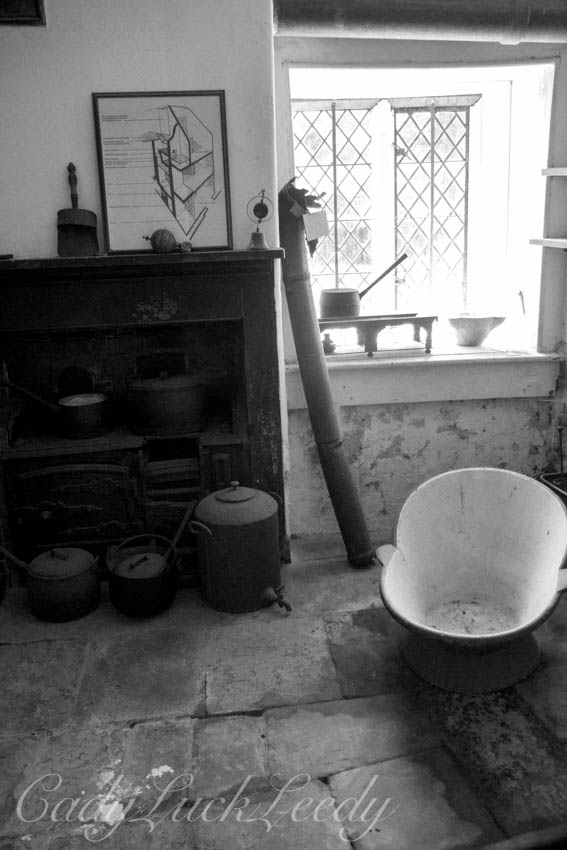
Today the ruins are closed off to the public after teatime. I for one am glad!  So taking liberty with some of my pictures of the castle, I have created their ghostly look at dusk.  Let’s have another cup of ale! Could Walter Scoteni, Father Blount and Authur Darrell be banging on the door to get inside to take a bath? That’s was all I found inside the castle’s ruins!

Inside Old Scotney Castle, Lamberhurst, Kent, UK

Inside Old Scotney Castle, Lamberhurst, Kent, UK

See you tomorrow in the gardens and castle grounds on a bright summer day! You will see how beautiful the Old Castle and grounds really are!  In the daytime! Enjoy!

Old Scotney Castle, Tunbridge Wells, Kent, UK

We’re off to Scotney Castle, home of Edward Hussey III. What will we find here? More to follow from the castle! See you there!

Scotney Castle, Kent, UK

Scotney Castle, Tunbridge Wells, Kent, UK

The Dirt on the Domestics; Life with the Bloomsburys

Nellie Boxall, Lottie Hope and Grace Higgin

Nellie Boxall, Lottie Hope and Grace Higgins in their Younger Days with Angelica Bell 

In 1904, the Stephen’s children, Vanessa, Virginia, Thoby and Adrian, left their comfortable surroundings  in Kensington, after their parent’s death, to move to the bohemian neighborhood of Bloomsbury. Since they could no longer afford the grand house and the ten servants for four people, they chose to escape many of the rituals of the Victorian household.  No more dark rooms, heavy furniture, formal dinners and restrictive lifestyles for them! Vanessa painted all the rooms of their new home white and decorated with shawls and mirrors! Discussing their new lifestyle in their weekly meetings with the Cambridge Apostles, they were full of ideas about how one should live….think, talk, write and paint. This group, made up of middle and upper class men, except for Vanessa and Virginia, formed The Bloomsbury Group, who were dedicated to domestic experiments, which were scandalous to their families and the general population.  (For more information about the members of the Bloomsbury Group see my previous post on the Charleston Farmhouse.)

They all wanted to be free from the social norms of the time, however, there was one problem. None of them could live without servants. For the men it was easier, they were not expected to take care of themselves or stoop to the mundane tasks of running a household. They could either have servants or replace them with wives, who would take care of all the nitty gritty of the household. Vanessa and Virginia had a dilemma.  Staff demanded a lot of time; they would have to hire and train the servants and supervise their work. Where would they find the time to write and paint? Neither of them knew how to clean or cook, since it had never been required of them. If they did the cooking and cleaning themselves, how would they have time to write and paint? Such a dilemma! The women could only follow their grandiose lifestyle because they and their inner circle of friends relied on some sort of unearned family money for support. It certainly was not the same for their servants.

So while the social experiments were forming and taking shape, who did all the work behind the scenes for Virginia Woolf and Vanessa Bell?

This is what I learned……..about three of the servants, who worked for these two women.

Nellie Boxall, (1890-1965) was the youngest of ten children and orphaned by the time she was twelve. Life for many of these women meant leaving their large families and taking up work as domestics at an early age, and moving away from their villages into the big cities. They had little to no formal education and relied on their large families for emotional support. Without that support they were nervous and often afraid of the unknown in a new family, and new town. They relied heavily on the friendships of other domestics in the household.  When the wealthy could no longer support the large household, it was a blow to the domestic life in more ways than one. There was more work to do and less support and comfort. 

From 1912 until 1916, Nellie worked for Roger Fry (a member of Bloomsbury Group) and then in 1916 joined the Virginia Woolf household as cook, with Lottie Hope as maid. Nellie’s relationship with Virginia was fraught with tension from the start.

Virginia wanted to live the life of “ the fully self-directed, autonomous woman,” but because of her mental instability and nervous breakdowns was looked after by her servants, who supervised her eating, her bodily needs, and her resting times, in addition to the cooking and cleaning, as instructed by her husband. Virginia hated their meddling and felt she never had any time for herself. She constantly wrote to Vanessa with what she called “the servant problem.”  Virginia absolutely loathed the servants.

“I am sick of the timid, spiteful servant mind, my brains are becoming soft by the constant contact with the lower classes,” she wrote to Vanessa.

I think Virginia wanted life both ways. She felt she couldn’t live with the servants and couldn’t live without them. Even with Virginia’s work for Women’s rights, Virginia had no desire to improve the economic situation of her servants. When Virginia went on to make 4000 pounds a year for her writings, she paid a meager total of 40 pounds a year for her two servants! A woman is hardly going to become self sufficient on 20 pounds a year! Why did the domestics put up with all the strife? In the Woolfe and Bell household the servants didn’t have to wear uniforms, attend church, wait on tables, or do “fetching and carrying” for their employers. They enjoyed the glamour of working for famous artists and traveling with them on their luxurious vacations.  They were allowed to mingle with the guests and no longer lived in the dismal attics or basements. The arrangements with the servants appeared to be “unbelievingly lax.” It was a trade off that they all considered. 

Nellie Boxall stayed with the Woolfs until 1934, although she frequently threatened to quit, having big rows with Virginia. Nellie was doing her best to take care of Virginia and Virginia despised her. Nellie wanted recognition for all she did and Virginia refused to acknowledge her. They played on each others dependencies. Nellie did quit (after 16 years) and went on to work for the actor, Charles Laughton, in London. She made much more money and was treated with respect, something that she never had received from Virginia.  She never married or had children. In her middle age she had saved enough money to buy a house, one of the first people in her neighborhood to do so.  The neighborhood children thought she was “a lady” and “a notch higher in her manner,” but also very bossy. Perhaps she was finally able to express her personality that had been suppressed for years.

Lottie Hope (1890-1973) was a housemaid for Virginia Wollfe. She was a foundling and grew up in the Home for Deserted Children at Hambleton in Surrey. She left the Home at fourteen and went into service at the home of Roger Fry, where she worked with Nellie Boxall. She left Fry’s home and moved to the Woolf’s home when Nellie did. When Lottie had had enough of Virginia she left the Woolfe’s home in 1924, and went to work for several of the Bloomsbury Group, but finally settled with Clive Bell and eventually went with him to Charleston Farmhouse, the country house of his estranged wife. Lottie was back living near her good friend Nellie Boxall, who was like family to her.  She left the Charleston Farmhouse in 1941, to work at a local laundry, and lived with Nellie Boxall, in her house. Like Nellie, she never married or had children, but died at the Hambleton Homes for the Aged. For a fascinating read of all the servants that worked for Virginia Woolf I suggest, Mrs Woolfe and the Servants; an Intimate History of Domestic Life in Bloomsbury, by Alison Light. It sheds light on all the unheard voices of the domestics, while Virginia established her reputation as a feminist. It tells of their meager existence and lack of control of their futures.

Grace Germany Higgins, (1904-1983) called “the Angel of Charleston,” worked for Vanessa Bell for more than fifty years. She came to Charleston at the age of 16 to care for Angelica Bell, Vanessa’s daughter with Duncan Grant. That’s a long intertwined story in itself. I think Grace, at such an early age, was fascinated with the lifestyle created by the Bloomsbury Group, who frequently partied, and lived off and on at Charleston. It certainly would have kept her entertained! Eventually, she was promoted to cook and housekeeper and remained full time at Charleston, even when nobody was there. Was that truly a promotion? There was no indoor facilities, no heating in the house and no running water. When the Bloomsbury gang was all there, and after she had met her household duties and served the Friday evening meal, she was allowed to take her bath outside in the tub, while all  the guests ate their dinner! After her bath she could return and clean up after them! In 1934, she married Walter Higgins, who also worked at Charleston, and they moved into a large bedsit over the kitchen. Ironically, this room is still deemed too un-important to be part of the tour at Charleston. The domestics are still kept firmly in their place.

Grace, her husband, and eventually her son, continued with the Friday night bath rituals the entire time they lived there. Vanessa did have one rule for her varied guests. They had to all be in their proper beds before Grace got up and started to cook and clean. I really think Grace would have known what was going on, she just didn’t let on. Walter Higgins, who hated working for Vanessa and living in her house, finally convinced Grace to leave Charleston, where they had continued to live long after Vanessa was dead. She had stayed to care for the ailing Duncan Grant, who she adored. Grant was always a favorite with everyone. He lived there with Vanessa, and had a child with her, (Vanessa’s wishes as she was madly in love with him), as he continued to carry on with his homosexual friends, who financially supported him until his dying days, while he lived and played at Charleston. He and Vanessa just painted their days away, including every inch of the farmhouse and furniture in squares, circles and triangles, their mantra! Grace took care of them all and never complained! When Grace finally moved to Lewes with her family in 1970, she burned all her detailed diaries of her life at Charleston. She was faithful to them until the end, but her son, John Higgins, recalled his recollections of his mother’s time there to Stewart MacKay, who wrote the book, The Angel of Charleston; Grace Higgins, Housekeeper to the Bloomsbury Group. To get the entire story of Grace and her time with the Bloomsbury Group at Charleston read the book. She truly was an angel! It is an eyeopener in the life of the domestic servant and the hardships they faced. If you read these books, I don’t think you will be disappointed! See you next time as I continue to visit the homes and gardens on my “English Garden Tour!”
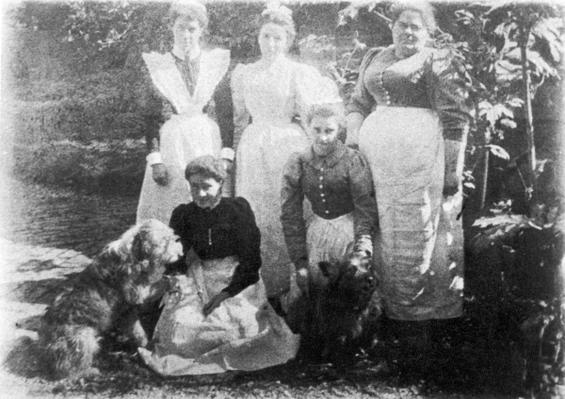
The Servants of Virginia Woolfe

Nellie Boxall, Cook, in Later Life, the Woman Standing Far Right
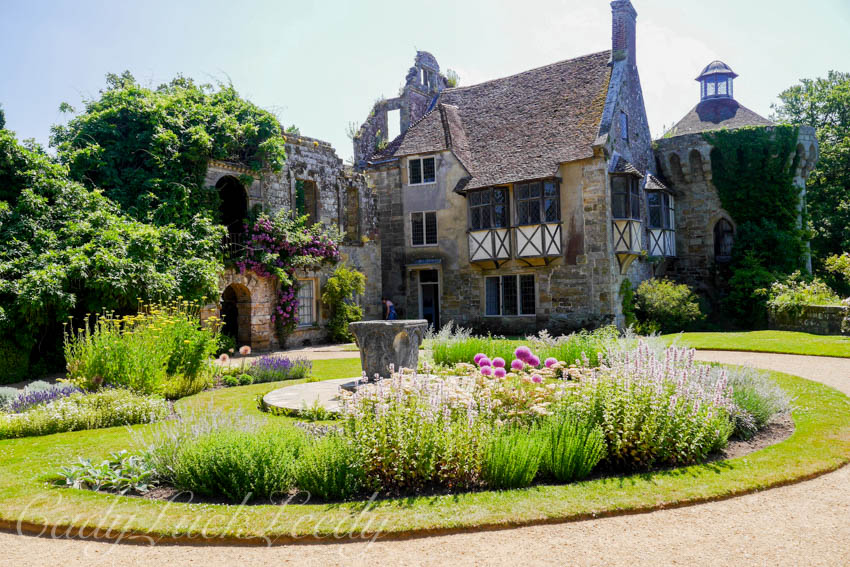
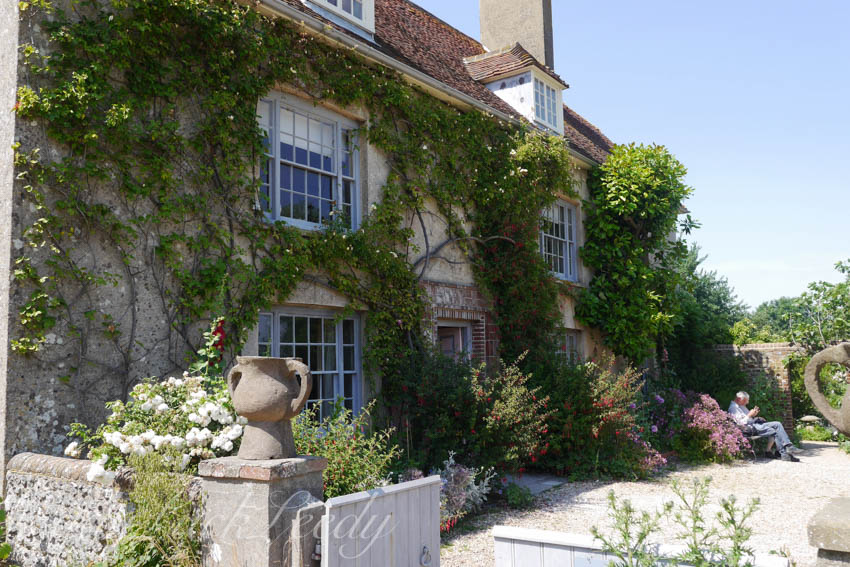
Charleston Farmhouse, Home of Vanessa Bell and Duncan Grant

Charleston Farmhouse, Sussex, UK

Charleston Farmhouse, Sussex, UK

Charleston Farmhouse, Sussex, UK

Charleston Farmhouse, Sussex, UK

Charleston Farmhouse, Sussex, UK

Charleston Farmhouse, Sussex, UK

Charleston Farmhouse, the home of Vanessa Stephen Bell, (Virginia Woolf’s sister) is about six miles from Monk’s House, (Virginia Woolf’s home) as the the crow flies. The farmhouse sits in a big open field, down a long narrow road, in the middle of no where.

This is what I learned……..

In 1916, Charleston Farmhouse was rented by Vanessa Bell, and Duncan Grant, under the terms of his exemption from the military as a conscientious objector. He and his lover, David Garnett, were employed at a nearby farm and lived at Charleston with Vanessa Bell. Vanessa Bell was married at the time to Clive Bell and would remain so all her life. Their unconventional household became the meeting place for the Bloomsbury Group, a group of writers, artists and intellectuals who had formed from the Apostles group at Cambridge. Vanessa’s and Duncan’s decorative style, made up of squares, circles, and triangles, were featured throughout the farmhouse on every wall, ceiling and piece of furniture! People came and went over the years but the farmhouse was lived in by Vanessa and Duncan for sixty years. Vanessa stated, “it will be an odd life, but……. it ought to be good for painting.” The Bloomsbury members came here to relax and have fun. It was said the group lived in squares, painted in circles, and loved in triangles. To me their life was very complicated. To them they lived a bohemian life, and felt anything was OK as long as it didn’t hurt anybody. I’m not sure you can live that life without hurting somebody. Just my thoughts, I tend to be starchy.

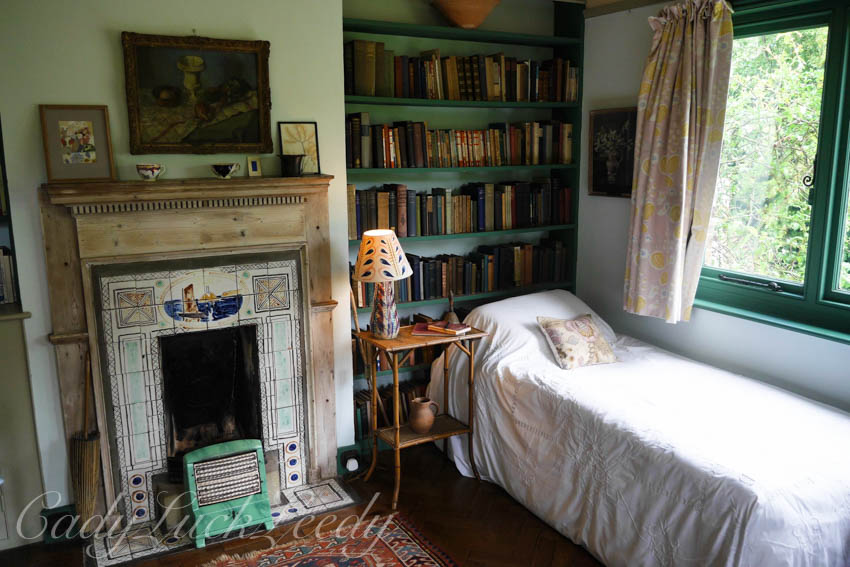
There is no picture taking allowed inside Charleston Farmhouse and only a small group is allowed in at any one time with a well versed guide. You must make a reservation or risk not getting in or having to wait. The rooms show a complete example of the decorative art of the Bloomsbury artists: murals, ceramics, paintings, textiles and objects from their Omega Workshops. Vanessa’s room was painted by Duncan, Vanessa’s lover. (a triangle between her, Duncan and David Garnett) He painted a huge red dog above her bed, to always protect her, and she painted his room in delicate pastel circles, squares, and flowers. There are lots of bedrooms in the farmhouse and what struck me the most were the various ceramic numbers above the doorway representing a specific room. For some reason it reminded me of something you would find in a bordello. Maybe because the guide kept reminding us of all the people who came and went and their various activities there. They did more than paint, write, or talk. The farmhouse was interesting and different and the garden was beautiful. It is now owned by the Charleston Trust, a charity set up in 1980 to restore and maintain the property. Every May there is the Charleston Festival, which draws artists and writers alike to promote the arts. For more information about the Charleston Farmhouse see here. There were several very knowledgable artists among our tour group and artists could be found painting or sketching in the garden while we were there, so it is still an artists’ hangout. Let’s walk through the garden!

Click on any image for a larger look!

While visiting Charleston, I bought a book at the gift shop, called, Vanessa and Her Sister, by Priya Parmar,  which enlightened me further on the Bloomsbury Group, Vanessa Bell, and Virginia Woolf. Their lives were anything, but conventional. I won’t go into ALL the details, but it was a very good read! The group had ten or so core members, the males, all educated at Trinity or Kings College of Cambridge, and were called the Apostles. Vanessa and Virginia’s brother, Thoby, was friends with the Apostles and this is how they came to meeting at the Stephens home in Bloomsbury, a neighborhood in London, in which Vanessa and Virginia, the only women, were included. Here is the Bloomsbury Group.

Clive Bell, art critic, Vanessa Bell’s eventual husband.

E.M Forster, fiction writer.

Roger Fry, art critic and post impressionist painter. (Had a passionate affair with Vanessa Bell)

John Maynard Keynes, economist. (Had an affair with Duncan Grant, but married Russian ballet dancer, Lydia Lopokova, and eventually lived close to Charleston Farmhouse.

Desmond McCarthy, literary journalist.

Lytton Strachey, biographer, who was Virginia Woolf’s fiancé for one day.  He was a homosexual and in love with his cousin, Duncan Grant.

Leonard Woolf, essayist and non-fiction writer, who married Virginia Stephen.

Thoby Stephen, brother of Virginia and Vanessa, who brought all these men home for dinner and their weekly meetings in Bloomsbury.

Virginia Woolf, fiction writer, essayist and publisher.

Vanessa Bell, post-impressionist painter, started Friday painting club, an addition to the Thursday night intellectual meetings.

Duncan Grant, post-impressionist painter and Vanessa’s lover. He was also the father of Vanessa’s only daughter. He also had many homosexual affairs. What a triangle this was! There was a lot going on with them, read the book!

Were they a group of rich spoiled kids, who did what they wanted, come what may? Or were they trying to change the world? They had grown up in a strict victorian society, and then the great war and the loss of so many men changed the lives of all English men and women forever.  Women were no longer confined to the home and women’s rights were taking front and center stage.  Men and women did not want to return to service for the affluent. The affluent could no longer manage their large estates and homes. So times were changing! Were the Bloomsburys just caught up in this new way of life? Were they the survivors? You can draw your own conclusions. Next we’ll explore the lives of the maids and housekeepers that took care of Virginia and Vanessa! After I had explored  the Bloomsburys, I wanted to know about the other side of that coin! See you next time in the kitchen!
One of my Favorites in the Charleston Farmhouse Garden, Sussex, UK

One of my Favorites in the Charleston Farmhouse Garden, Sussex, UK

The Village of Rodmell, Sussex, UK

The Abergavenny Arms Pub, Rodmell, Sussex UK

The Abergavenny Arms Pub, Rodmell, Sussex UK

In the last several posts I have been writing about Virginia Woolf and her country retreat, Monks House, situated in Rodmell. I am fascinated with small English villages and the people that live in them. Rodmell proved to be one of the smallest, population 250. The Lewes to Newhaven Road twists and turns and upon reaching the Abergavenny Arms Pub, you turn onto a smaller paved road and follow it until it dead ends at Mill Lane, where the parking spaces are for Monk’s House. It was an easy walk through the one lane village of about twenty homes to reach the pub after our visit to the gardens and cottage.  However, I was in for a bigger surprise.

The Sign to Monk's House, Rodmekll, Sussex, UK

The Sign to Monk’s House, Rodmekll, Sussex, UK

This is what I learned………….

The small village of  Rodmell, which can be translated from Old English meaning, place with red soil, has been here before the time of the Norman Conquest, when it was held by Harold II. Located along the River Ouse, the village was an important crossing point between the South Downs way and the Roman road to the port of Newhaven, having a cross channel route to Dieppe in France. The springs in Rodmell made it the perfect place for people to live because there was water here. The original village well is located inside the Abergavenny Arms Pub. So the pub truly was the original “watering hole!”

In 1085, the Doomsday Book noted there was a church in Rodmell, which was granted to Lewes Priory by William de Warenne, Second Earl of Surrey. This early Norman church is dedicated to St Peter. The font is believed to be Saxon predating the church itself. People have been inhabiting this area for a long time. But the most extraordinary find for me, was the name William de Warenne. That name rang a bell. So upon searching my ancestry files, another passion I follow and update regularly, I located William de Warenne. He is my 27th great grandfather! So strolling this small village which has remained unchanged for several centuries was particularly interesting to me!

Let’s admire the village on the way to the pub!

In 1439 Rodmell Manor  was owned by the Bergavennys, hence the name Abergavenny Arms Pub. For more information about the Pub look here.

In the 1600’s Monk’s House was built as a row of a small cottages.

In 1810, a milling family (The Glazebrooks) moved into Monk’s House and the three or four other small cottages on the property were used for agricultural laborers. The Glazebrooks lived at Monk’s House for the next sixty years.  The Mill was on the hillside just on the other side of the pub, and was sold in 1876. There was also a blacksmith at this junction.  So we’ll whet our whistle at the pub since we’ve had another fine day in the UK! We’ll start afresh with the Charleston House, home of Vanessa Bell (Virginia Woolf’s sister), and learn about the Bloomsbury Group!  See you then!

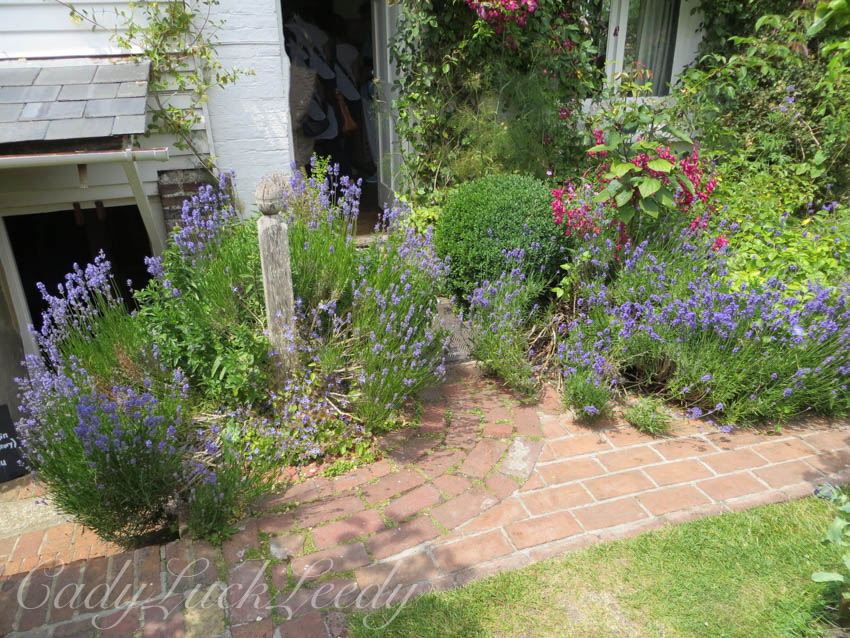
The Flowers of Rodmell, Sussex, UK

The Flowers of Rodmell, Sussex, UK

The National Trust: The Garden at Virginia Woolf’s Monk’s House

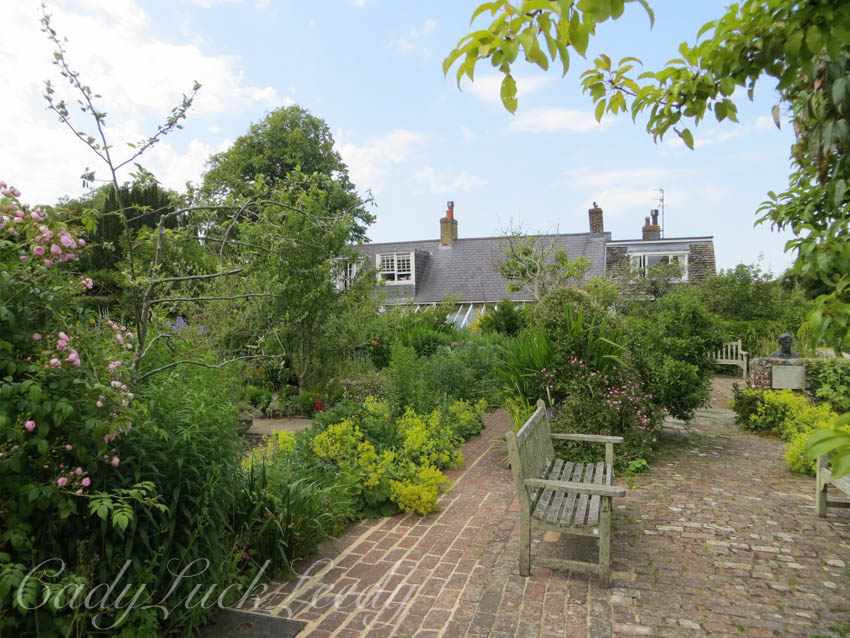
The Garden at Monk's House, Rodmell, UK

The Garden at Monk’s House, Rodmell, UK

The Garden at Monk's House, Rodmell, UK

The Garden at Monk’s House, Rodmell, UK

In letters to friends Virginia said, “ The point of Monks House is the garden. I shan’t tell you, for you must come and sit there on the lawn with me, or stroll in the apple orchard, or pick—-there are cherries, plums, pears, figs, together with all the vegetables. This is going to be the pride of our hearts I warn you.”

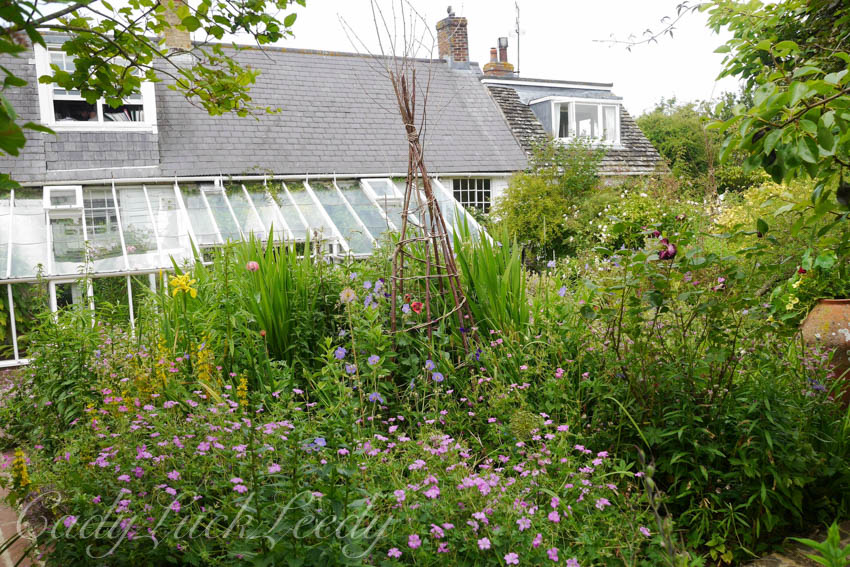
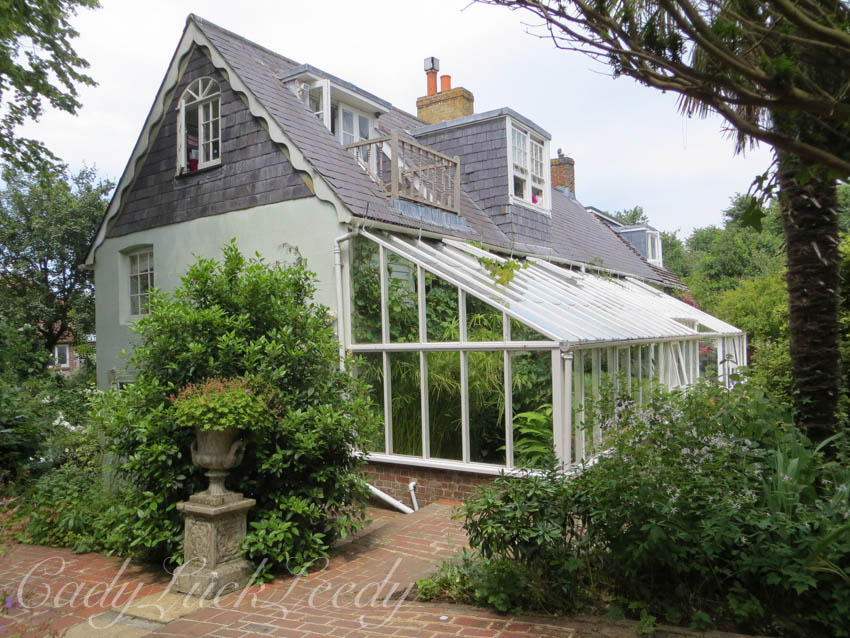
The Greenhouse, Monk's House, Rodmell, UK

The Greenhouse, Monk’s House, Rodmell, UK

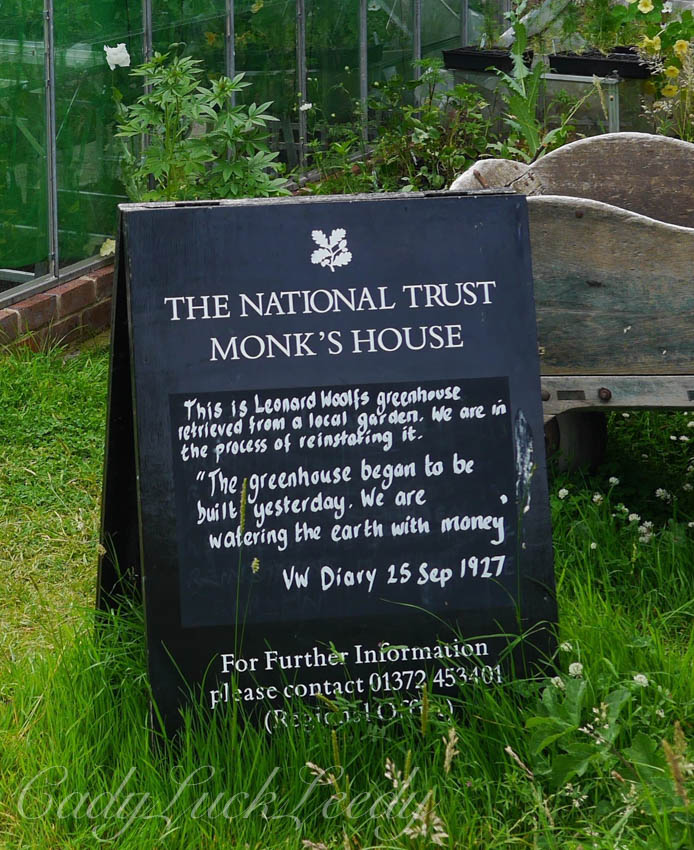
The Chalkboard Sign of Diary Quotes, Virginia, Woolf

The Chalkboard Sign of Diary Quotes, Virginia, Woolf

Many of the details of day to day life found in Virginia’s diary include the gardens. (Note the writing from her diary displayed on the chalkboard in front of the glasshouse that is being reconstructed in the yard.)

By 1928, after expanding their plot Virginia felt they had really started to “dig in.”

So the Woolfs spent their days comfortably, with Virginia writing in her room or in the lodge, and entertaining many of their Bloomsbury friends, while Leonard became an expert gardener.  Virginia often commented the garden was the third person in their marriage. For Leonard tending and developing the garden was totally absorbing. Virginia found peace and tranquility in the garden which helped her mental state of mind, and walking to her lodge every morning was part of her creative routine.

The Vegetable Garden at Monk's House, Rodmell, UK

The Vegetable Garden at Monk’s House, Rodmell, UK

The vegetable garden was so productive, that when the Woolfs were in London they would have a hamper sent to them every week to keep them supplied. The excess produce was sent to the Women’s Institute market.  Home Fires on BBC’s Masterpiece Theatre is a good start to learning about the Women’s Institute and a very good movie about how one of the women’s group chose to raise money is portrayed in Calendar Girls. It is one of my favorite movies!

The Italian Garden, Monks House, Rodmell, UK

The Italian Garden, Monks House, Rodmell, UK

The Italian Garden, Monks House, Rodmell, UK

The Italian Garden, Monks House, Rodmell, UK

The Italian Garden, Monks House, Rodmell, UK

The Italian Garden, Monks House, Rodmell, UK

In 1933, following the publication of Flush (Virginia’s biography of Elizabeth Barrett Browning’s cocker spaniel named Flush) they were able to make additions to their garden.  Upon returning from a trip to Tuscany in the same year, work started on an Italian garden by adding plants, pavings and walkways to various parts of the garden.  Virginia’s contribution was to buy pots, urns, and a statue.

Eventually as the garden grew Leonard employed a gardener, Percy Bartholomew,  who would live in one of the cottages near the property that the Woolfs had bought when they purchased Monk’s House. Although their garden was small and unpretentious compared to that of some of their friends, notably Vita Sackville-West, the delightfully small, informal garden is what made it so special. Leonard was so engrossed in gardening that in 1941 he founded the Rodmell Horticultural Society. I wondered if it included everyone in the village, because it is a very small place! Maybe it was his Bloomsbury Group! Next we”ll explore the village of Rodmell so you can see for yourselves! See you there!

The National Trust: Monk’s House; Home of Virginia Woolf

The Lane to Monks House, Rodmell, Sussex, UK

The Lane to Monk’s House, Rodmell, Sussex, UK

Parking at the end of a narrow country lane in Rodmell, Sussex, we walked to the  National Trust Property of Monk’s House, the country cottage that was the home of Leonard and Virginia Woolf from 1919 until her death in 1941. There are few houses on this country lane and it is quiet and peaceful. That is the exact reason it was purchased in the first place. During WWI Virginia lived in nearby Firle to escape the hubbub of London, and the war, and to diminish the anxiety and depressive episodes that she experienced when stressed. Following the war she and Leonard bought Monk’s House and lived there a good part of the year, as Leonard thought it was better for her health.

This is what I learned……….

Unlike other homes we have visited on The National Trust, Monk’s House is a small unpretentious home, that anyone could have lived in. I would have loved to have lived in this house! It is not too big, but cozy, and the interior is a time capsule of the 1930’s. You get the feeling Virginia is waiting to greet you at the door! The house itself is a timber framed, but weather boarded house, that originally had a Sussex stone roof, but now is slate.

The front of the house faces the garden, the back is to the street, as we see here. Let’s go in the gate!

The Entrance to Monk's House, Rodmell, Sussex, UK

The Entrance to Monk’s House, Rodmell, Sussex, UK

Sign at Monk's House, Rodmell, Sussex, UK

Sign at Monk’s House, Rodmell, Sussex, UK

Monks House, Rodmell, Sussex, UK

Monk’s House, Rodmell, Sussex, UK

Monks House, Rodmell, Sussex, UK

Monk’s House, Rodmell, Sussex, UK

Previously renting an old roundhouse windmill,  Virginia and Leonard saw the advertisement for the auction of Monk’s House, which included three other small cottages and a 3/4 acre garden. Spread out on the lawn, during the auction, were the provisions and paintings from the previous owners, the Glazebrook family.  The Woolfs bought the property and three primitive paintings for 700 pounds. Another draw to the house was the fact that Virginia’s sister, Vanessa, had bought the farmhouse, Charleston, just a few miles away, where she and several members of the Bloomsbury Group had settled to entertain and paint.

The house was derelict when they moved in…… no electricity, no running water and no inside toilets, just a earth closet in the garden. I wasn’t sure what an earth closet was so I have included a picture here with instructions!

Slowly, as finances improved they updated the house adding bathrooms, which included an inside toilet in 1926, and a kitchen. The two bathrooms were paid for from Virginia’s earnings from Mrs. Dalloway and she often said when she was going to the toilet that she was going to see Mrs. Dalloway! By 1929 with the earnings from their Hogarth press business, (remember Virginia was printing and hand binding books for therapy), they decided to add  a two story extension, which included “a room of one’s own.”  The sitting room was moved upstairs because the view of the garden and South Downs was beautiful and Virginia used the downstairs room as her bedroom. The only way in and out of her bedroom was via a door to the garden. Leonard slept at the opposite room of the house and every  morning brought Virginia her coffee in bed.

Virginia's Room of her Own, Monks House, Sussex, UK

Virginia’s Room of her Own, Monk’s House, Sussex, UK

The lower to door is to the kitchen of the main house and used to be a shed!

The Kitchen Entrance at Monks House, Rodmell, UK

The Kitchen Entrance at Monk’s House, Rodmell, UK

A Room of One's Own, Monks House, Rodmell, Sussex, UK

A Room of One’s Own, Monk’s House, Rodmell, UK

Virginia's Bedroom, Monks House, Rodmell, UK

Virginia’s Bedroom, Monk’s House, Rodmell, UK

Virginia’s favorite color was viridian green!  Her friends and family thought it horrid!

More property was added so they could have an unobstructed view of the South Downs,   and a writing lodge was tucked into the orchard garden for a retreat for Virginia.

The South Downs, Monks House, Rodmell, UK

The South Downs, Monk’s House, Rodmell, UK

Virginia's Writing Lodge, Monks House, Rodmell, UK

Virginia’s Writing Lodge, Monk’s House, Rodmell, UK

Virginia's Bedroom Writing Area, Monks House, Rodmell, UK

Virginia’s Lodge Writing Area, Monks House, Rodmell, UK

Behind the back garden wall sits St Peter’s Church, which I thought made the grounds very peaceful and serene. The garden was Virginia’s source of inspiration.

St Peters Church, Rodmell, UK

St Peter’s Church, Rodmell, UK

A View of St Peters Church, from the Garden at Monks House, Rodmell, UK

A View of St Peters Church, from the Garden at Monks House, Rodmell, UK

By 1939 the Woolfs were living full time at Monks House to escape the bombing in London. Their home in Bloomsbury was destroyed. The peace was shattered for Virginia when German bombers flew low, almost daily, over Sussex on their way to bomb London.  Her brother provided both of them with lethal doses of morphine in case the Germans invaded. During this time they were both nervous because Leonard was Jewish and Virginia was listed in Hitler’s black book. The anxiety took its toll and Virginia committed suicide by filling her pockets with rocks and drowning herself in the nearby Ouse River. She left two suicide notes, one for Leonard and one for her sister, Vanessa. Her ashes were scattered unceremoniously under an Elm tree in the backyard.

Leonard lived at Monks House for 50 years and died there in 1969, at the age of 88. He left the cottage and property to his friend Trekkie Ritchee Parsons, who really didn’t know what to do with it and so passed it to the University of Sussex. The university sold off the 4000 books and rented the house to visiting lecturers. Eventually it was too much for them and they gave the house to The National Trust in 1980. A sizable sum of money was raised by Quentin and Angelica Bell (Virginia’s surviving nephew and niece; children of Vanessa) for the upkeep.  Quentin was at this time a Professor of Fine Art and History of Ceramics at the University of Sussex. Together they helped to restore the house to 90% of how it was in Leonard’s and Virginia’s time there. We were able to explore four of the rooms of the cottage, the rest of the house is cordoned off for the resident caretaker. There are guides in each room who can explain all the artifacts and what they meant to the family. It was a joy to visit and next we’ll explore the garden at Monk’s House!  See you there! 

Virginia and Leonard Woolf, Monk's House, Rodmell, UK

Virginia and Leonard Woolf, Monk’s House, Rodmell, UK

A Room of One’s Own: The Life of Virginia Woolf

Virginia Stephen Woolf

Virginia Stephen Woolf

What I knew about Virginia Woolf was revealed to me in a film titled, Who’s Afraid of Virginia Woolf?, featuring Elizabeth Taylor and Richard Burton. The only thing I knew for certain after the movie was that the couple never stopped yelling. That’s all I remember. Was that yelling person Virginia Woolf?  Who was the real Virginia Woolf? Somewhere, along the way, I realized she was an author, but  I never explored it any further. So I was excited to learn that her home, Monk’s House, was part of the National Trust. I wanted to know about the Virginia Woolf!

What I learned about Virginia Woolf…………as  I attempt to sort her story out.

Adeline Virginia Stephen was born on January 25, 1882 into a well-heeled family. Both her wealthy, influential, mother and father had been married previously, and widowed, with four children between them, before the birth of Virginia and her three siblings. Thus the family contained the children of three marriages.  Her father, Leslie Stephen, was an eminent editor, critic, and biographer; her mother, Julia Princep Duckworth Stephen, was committed to serving the poor. Virginia and Vanessa, (Virginia’s natural older sister), were educated at home, while the boys attended Cambridge.  The family was well connected and the children were raised in an environment of great literary works, with an immense library, but also under the influences of Victorian society. However, between 1897 and 1901 Vanessa and Virginia were allowed to attend the Ladies’ Department of King’s College, London, to study Ancient Greek, Latin, German, and history. Virginia thrived with all this knowledge.

The early years were rough going for the Stephen’s family. Virginia’s oldest half-sister, Laura Makepeace Stephen, from her father’s first marriage, was committed to an insane asylum. Virginia’s mother suddenly died in 1895, when Virginia was thirteen, followed by the death of another half-sister, Stella Duckworth, two years later. These events and possible child abuse by the older Duckworth brothers, led to the first of Virginia’s several nervous breakdowns. When her father died in 1904 Virginia collapsed and was briefly institutionalized and would be in and out of Burley House in Twickenham, described as “a private nursing home for women with nervous disorders”, in 1910, 1912, and 1913. Though her instability affected her private life, her literary productivity increased and was continued throughout her life. Her bouts of mental illness were thought to have been the result of what is now termed a bipolar disorder. She was extremely fragile.

Vanessa Stephen, being the oldest of the Stephen children, decided to sell the fashionable family home at 22 Hyde Park Gate and bought a house at 46 Gordon Square, Bloomsbury, (a bohemian, not so nice area of London), where Virginia and her brothers and sister, (Thoby, Adrian, and Vanessa) could escape the restraints, criticism, and gossip of a strict Victorian society.

A group of twelve intellectual Cambridge men, known as the “Apostles”, were among the friends of Thoby. The men gathered at the  Bloomsbury home on Thursday evenings to have dinner and discuss anything and everything late into the wee hours of the morning. Virginia and Vanessa attended the meetings as well. Vanessa, who was mostly interested in art, later started a Friday night group consisting of artists and critics. Virginia at this time began writing for the Times Literary Supplement, a forum for literary culture; bringing scholars, scientists, and artists together to address questions of value, meaning and purpose.  Hefty stuff!  Together this young, educated, and elite group  wanted to change the world. The Bloomsbury Group became very close and chose to live a lifestyle all their own, while supporting each other’s endeavors. (More on the Bloomsbury Group in a later post).

Thoby died from typhoid, at age 26, after he and Vanessa fell ill following a vacation in Greece. Soon after Vanessa married Clive Bell, a member of the Bloomsbury Group, and moved out of the Bloomsbury home, leaving Adrian and Virginia to fend for themselves.  Virginia was very upset by this move. Could Vanessa no longer cope with Virginia’s fragile mental state, attention and needs? Vanessa was more of a free spirit and she wanted her freedom from being the “mother” to her siblings. Virginia reluctantly accepted this, but would ultimately get her revenge.  Virginia rented a cottage in Firle, in the Sussex countryside, but continued her friendship and meetings with the Bloomsbury Group, of which Vanessa and Clive Bell were still a part of.

During this time, Leonard Woolf, another Cambridge man, briefly met Virginia Stephen at one of the forays in Bloomsbury, before leaving for a diplomatic post in Ceylon. Lytton Strachey, another Bloomsbury member, had proposed to Virginia (although he was a homosexual) and was quite pleased and relieved, when she turned him down. In correspondence to Leonard, during his stay in Ceylon, Lytton convinced Leonard that when he returned to England he should give up his job and propose to Virginia, and he did. They barely knew one another, and although Leonard was poor and Jewish, Virginia accepted. It was 1912 and Virginia was thirty. Did Virginia need someone to take care of her? Was Leonard aware of Virginia’s state of mind? The answer was yes she did and no he didn’t.

Virginia’s writings were very controversial, supporting the thoughts of the Bloomsbury Group of radical thinking, women’s rights and the freedom to love both men and women. She found it increasingly hard to get her work published and  was  at odds with “polite society”.

In 1915 Virginia completed her book, Voyage Out, and she and Leonard set up Hogarth Press to publish Virginia’s work and the work of her liberal friends: the hand printing providing a hobby as well as therapy for Virginia. In 1919 the Woolfs bought Monk’s House, in the countryside of Sussex, where Leonard thought Virginia could write in peace with less mental stress. Although Virginia loved the city and all it’s trappings and busywork, the move was a success for her mental health.  Virginia had no more mental breakdowns for twenty years. That’s not to say their life was uneventful, as you will find when we discuss Vanessa’s life.

One of Virginia’s books that I found very interesting was Mrs Dalloway. She definitely had a flair and gift with words and she experimented with stream of consciousness and the underlying psychological as well as emotional motives of her characters. Who was more prepared to write like this than Virginia? Her novels were highly experimental, with a narrative frequently uneventful and commonplace, as we see in Mrs Dalloway. This book centers on the efforts of Clara Dalloway, a middle-aged society woman, to organize a party, as her life is paralleled with that of Septmus Warren Smith, a working- class veteran who has just returned from WWI bearing deep emotional scars. The book has no chapters, does not explain anything, and no conversation is needed. It is just one continuous thought. (Stream of Consciousness) The story is the thoughts of Mrs Dalloway, in one given day! You know how you think things to yourself, your own running commentary as you go about the business of your day? This is Mrs. Dalloway! Her thoughts, just like ours, that jump from one to another. And then the day ends. It’s quite remarkable to be put into words and is extraordinary in thought! I’ve never read anything like it! Virginia went on to publish novels and essays as a public individual to both critical and popular success. In her book-length essay, A Room of Own’s Own, (1929) she wrote, “A woman must have money and a room of her own if she is to write fiction.” She achieved this at Monk’s House.  Now with our background somewhat complete, we’ll visit her home at Monk’s House, to learn more about her and the intertwining lives of others.  I can’t wait to see where this incredibly complex woman lived!  See you there!

Virginia Woolf

Listen to Virginia Woolf Speak

A Girl’s Gotta Eat: Pubs on “My English Garden Tour”

The Three Chimneys, Biddenden, Kent, UK

The Three Chimneys, Biddenden, Kent, UK

The Three Chimneys, Biddenden, Kent, UK

The Three Chimneys, Biddenden, Kent, UK

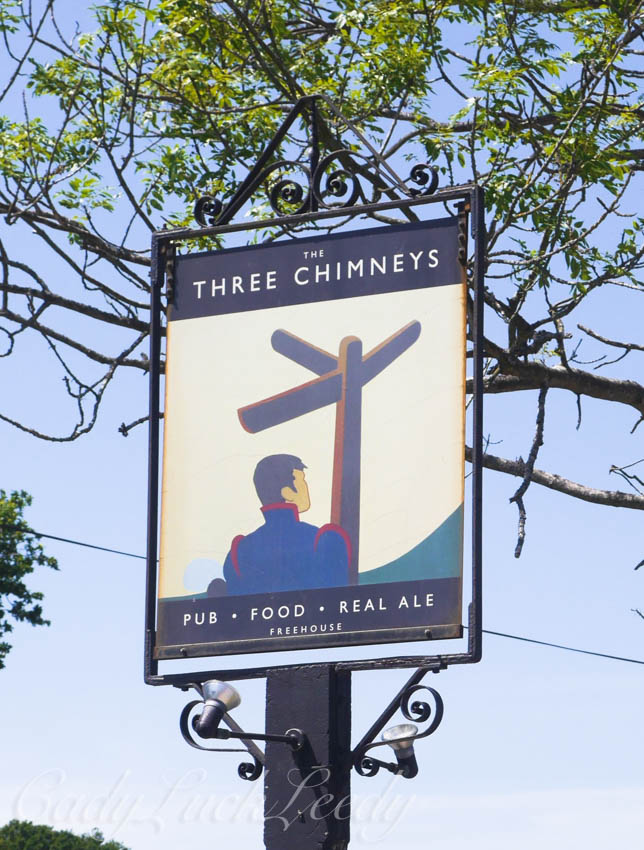
Near Sissinghurst Castle is a “not to be missed” pub called The Three Chimneys Freehouse. Located at the intersection of three country roads, the outside is much as it was hundreds of years ago. During the Seven Year’s War (1756-1763) some of the three thousand French prisoners at Sissinghurst Castle, who were placed on parole, were allowed as far as the pub. At the time the locals called the pub “The Three Wents,” or three ways, referring to the three paths that led there, but the prisoners called it Les Trois Chemins ( The Three Paths). Did the locals think the French were saying three chimneys or did that name refer to the chimneys on the pub? Or could it be the three chimneys at the three paths? The sign at the pub reflects the paths part of it’s past. See the particulars about The Three Chimneys Freehouse here.

The Three Chimneys is dated 1420 and the half timbered structure remained the same for 500 years. At that time it was a simple country ale house. Although The Three Chimneys has never lost it’s character there are now several eating areas within the pub, the newest being the seating area overlooking the gardens. There is lots of history to be gleaned here and I particularly liked the story of the last man who died here. Needless to say, there no longer is a pond outside.

Here was our appetizer at the Three Chimneys Pub; a mushroom and cheese dish for two.  A GIANT field mushroom with carmelized  red onions was drizzled in balsamic and topped with a grilled soft goat cheese! Delicious!!!!

Three Chimneys Pub, Biddenden, Kent, UK

Three Chimneys Pub, Biddenden, Kent, UK

To our delight the country pub has been recruiting great chef’s! The food offered in the neighborhood pub would make Jamie Oliver proud. The freshest local ingredients and creative food choices has definitely added to the charisma of the local pub. The atmosphere of the English Pub is what draws us to the pub in the first place. Sitting at a wooden table by the fireplace, cozy in a low ceilinged, small room, reminds us of days gone by. In the pub you are part of the community; catching up on news, celebrating events, just enjoying life! Today the locals are visiting the pubs like they have always done, although the pubs are now non-smoking and serving much more than the local ales. There are not as many pubs in town as there used to be due to the stiffer drinking laws, so the surviving pub needs to present it’s best. We were not disappointed in our choices and these two pubs were some of our favorites!

Tenterden, our “base camp” for our “Tour of English Gardens” was a thriving, busy, market town with the widest streets by far! Here one could find all the amenities and fine shopping one desired. Parking is at a premium here and an oddity for us was paying to park while shopping at the grocery store. It was, however, the largest parking lot in town and others would have parked there whether grocery shopping or not so I understand the meter business. We learned all about the meter system too! Every country is so different! Here you place part of the numbers of your car license plate into the meter machine along with your money at a localized spot! Voila!

Tenderden Town Sign, Tenderden, UK

Tenderden Town Sign, Tenderden, UK

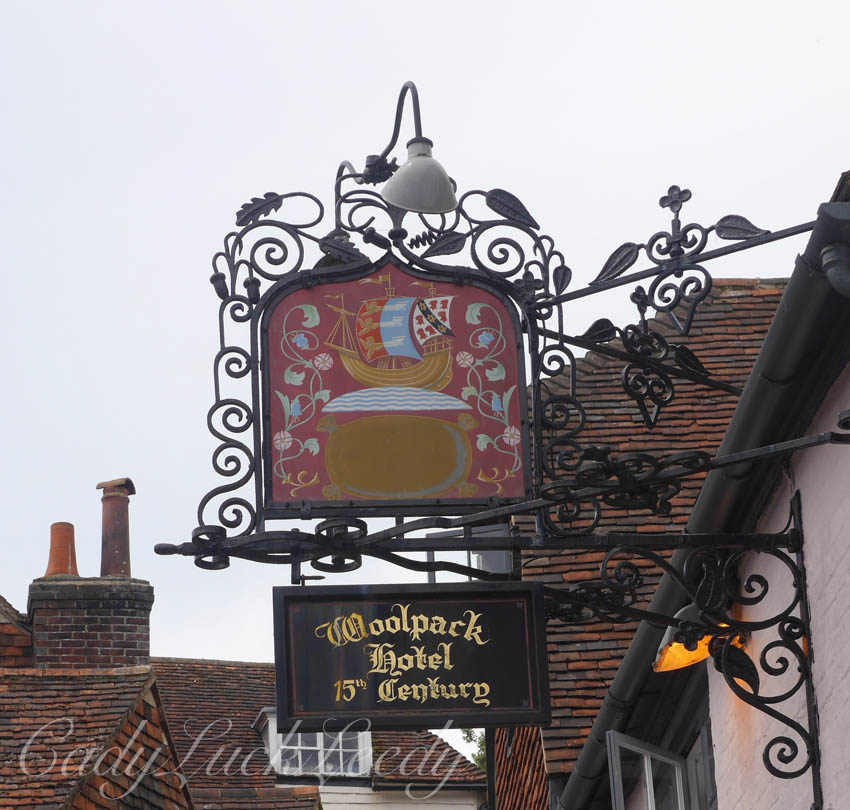
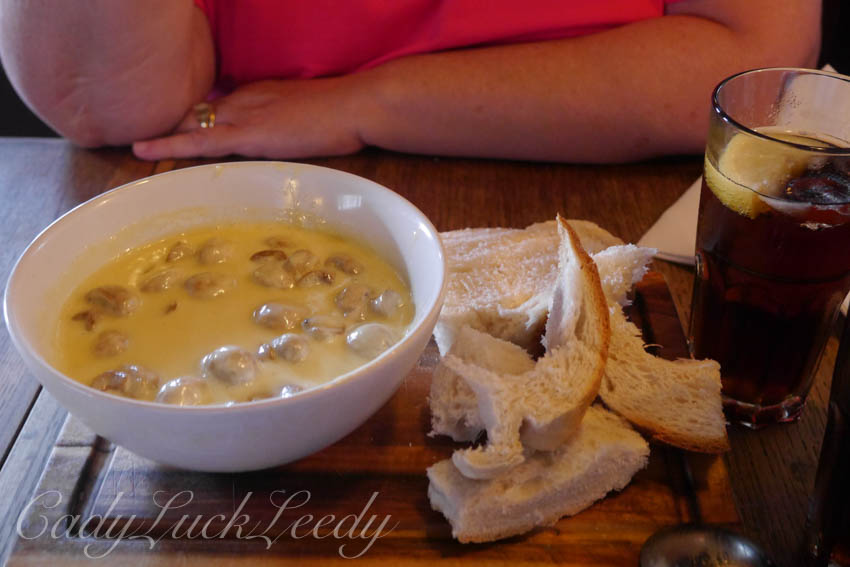
Our favorite pub, “The Wooley”, in Tenderden was at The Woolpack, a 15th century hotel that has just undergone re-furbishment and new management. Located on High Street, in the heart of Tenderden, we had THE BEST cheese and mushroom hors d’oeuvre. It turned out to be a warm, thick, creamed, cheese soup with whole mushrooms in it and was served with a loaf of warm french bread! Need I say more!  Delicious!!!! Be sure to check out the local pubs when visiting the U.K. You won’t be disappointed!

"The Wooley at the Woolpack Hotel, Tenterden, Kent, UK

“The Wooley” at the Woolpack Hotel, Tenterden, Kent, UK

The Mushroom Cheese Hors' d-eovre, The Wolley, Tenterden, Kent, UK

The Mushroom Cheese Hors d’oeuvre, The Wolley, Tenterden, Kent, UK

Man’s best friend comes here too!

"The Wooley" at the Woolpack Hotel, Tenterden, Kent, UK

“The Wooley” at the Woolpack Hotel, Tenterden, Kent, UK

THE SPECTACLED BEAN

Tales, Thoughts + Tribulations of a Free Spirit in Suburbia

Walking Away

Travels on foot

Teacher nickname: The Three Hairs

Minding my mind, one thought at a time.

Tra Italia e Finlandia

Un lungo racconto fotografico.

seanbreslin.jp

Photography, hiking, walking, and cycling across central Japan — from quiet mountain paths to everyday life around Nagoya.

Lost in Translation

Looking for meanings in words, images and sounds

Journeys with Johnbo

Reflections on places traveled and photos taken.

M/VGratitude

Cruising with the Thyrre Family

Caroline's Travel Adventure Blog

Where my Travels and my Blog merge together.

Just Me, Nobody Special

The mental meandering that cross my keyboard

Jennifer's Journal

Website & Blog of J. Kelland Perry, Author

Slow Shutter Speed

A photographic journey.

Ann Mackay: Inspired by Nature

Photography celebrating flowers, plants, and the natural world

Still Restlessjo

Roaming, at home and abroad

Fine for Friday

The Corner Garden

Picture This

Photography, Travel and Retirement

World Traveller 73

Upgrade Your Travels. First Class Luxury Travel from all parts of the Globe. Business Class Airline, Lounge and Hotel Reviews, Stories and Adventures

Rachel Meets China

A China travel and lifestyle blog