Travel, Gardens, Food, Photography, Books, Shoes

Posts tagged ‘Food’

Magical Cesky Krumlov, in the Czech Republic
The Village of Cesky Krumlov, the Czech Republic

The Village of Cesky Krumlov, the Czech Republic

If you take just one tour from Prague I hope it is to Cesky Krumlov!  You won’t be disappointed! Our tour was booked through our hotel in Prague, more on that when I talk about our stay there! In order to see the castle and theater in Krumlov, you must be with a guide. The castle’s theatre is fabulous! I have seen many theaters, but the artwork on the walls of this theater are my favorite of all of them!  Europe once had several hundred baroque theaters, using candles for light and fireworks for special effects.  Most of them burned down. Today only two survive in good shape and are open to tourists; one at Stockholm’s Drottingholm Palace and one here. Sitting on wooden benches in the theater, we study the hundreds of happy villagers, who are painted on the walls. Everywhere you look, in every nook and cranny, there is a small tabloid! Later we visit under the stage to see the wood-and-rope contraptions that allowed the scenes to be moved about in seconds, while the audience was blinded by smoke or fireworks. Sadly, no pictures are allowed inside, but trust me when I say you will love it!

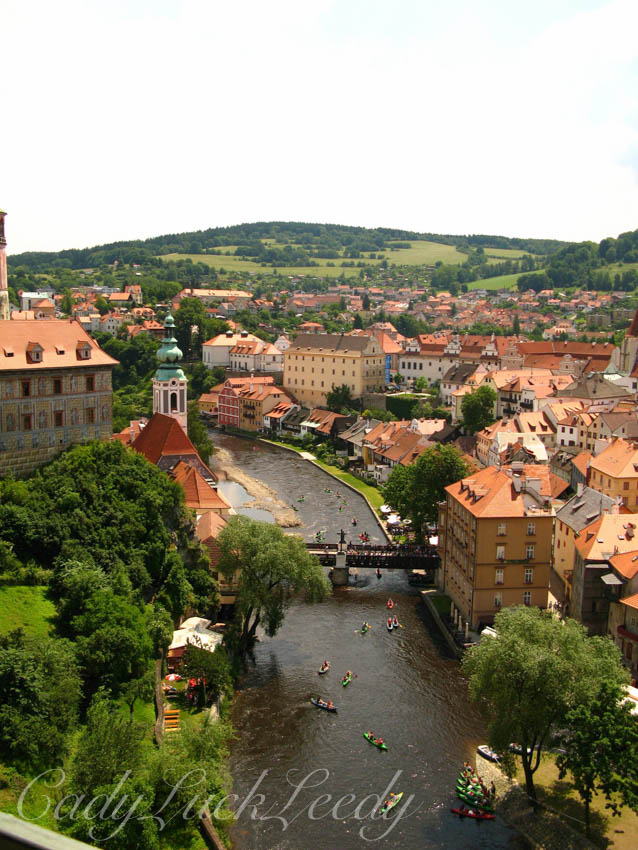
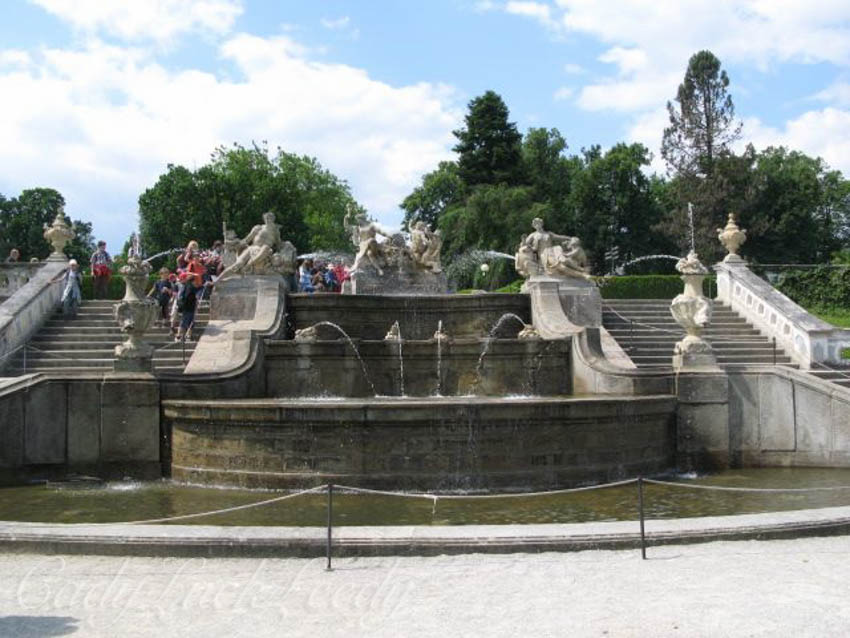
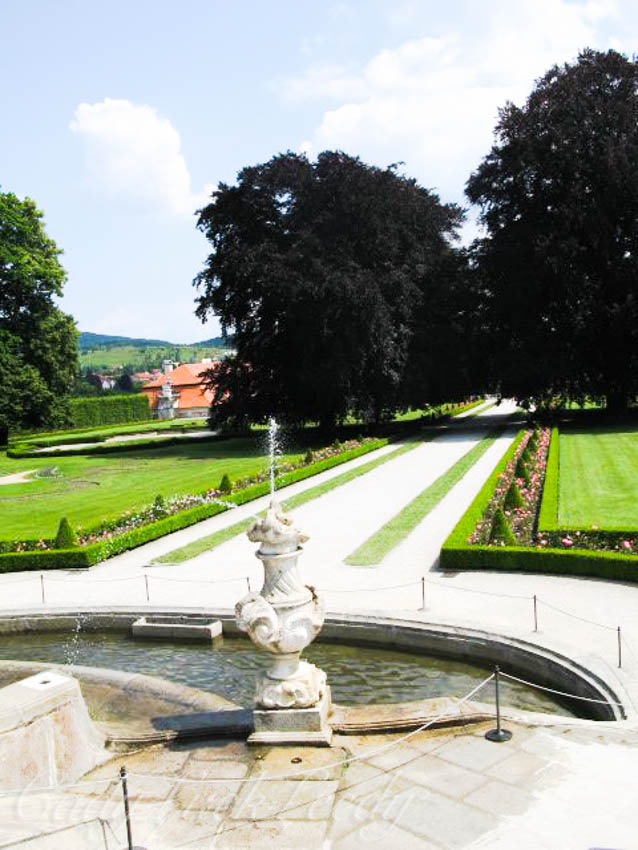
Cesky Krumlov is a magical village situated on the twisty Vltava River which makes a perfect S through town. Above the Old Town is the Castle Town. The one main street winds through town and over a bridge before snaking through the Castle Town, the Castle Complex of courtyards, and up to the Castle Gardens above the town. The castle is complete with moat, drawbridge and bear pits which still house two brown bears.  Tip: If you go with a tour group from Prague, the bus drops you off at the parking lot above town at the castle gardens, and you walk down hill rather than trudging up! Later that day the bus picked us up in town, to take us back to Prague. So easy! We’re starting at the Castle Gardens at the top of town! Let’s go!

The Castle Gardens of Cesky Krumlov, the Czech Republic
The Castle Gardens of Cesky Krumlov, the Czech Republic
The Castle Gardens of Cesky Krumlov, the Czech Republic
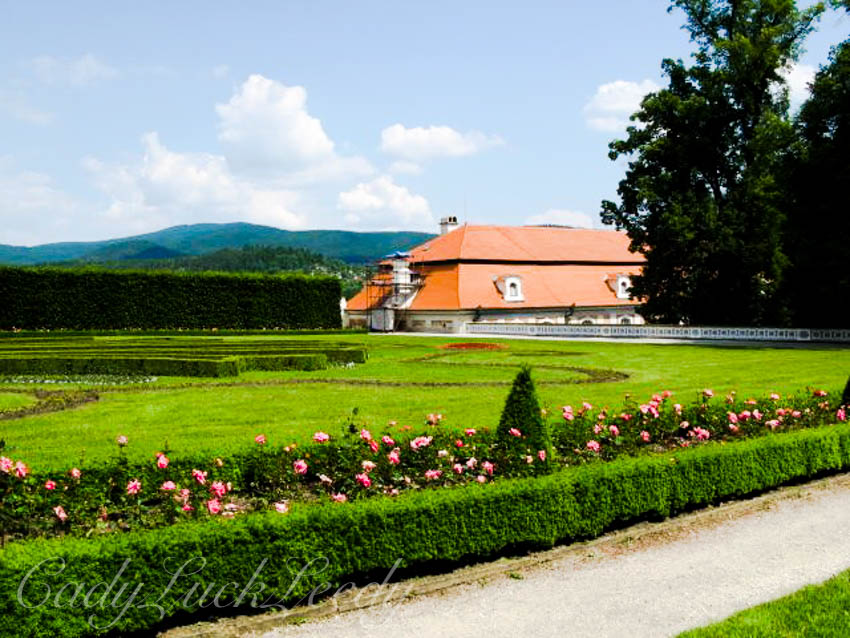
The Castle Gardens of Cesky Krumlov, the Czech Republic

The Castle Gardens of Cesky Krumlov, the Czech Republic

The Castle Gardens of Cesky Krumlov, the Czech Republic

The Castle Gardens of Cesky Krumlov, the Czech Republic

The Castle Gardens of Cesky Krumlov Looking at the Brewery, the Czech Republic
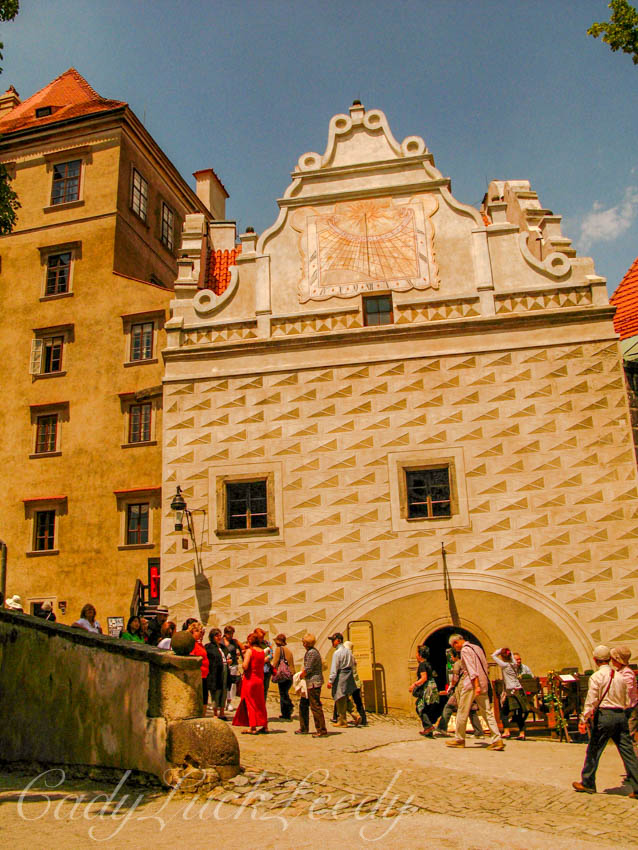
The Krumlov Castle, Casky Krumlov, the Czech Republic

The Krumlov Castle, Casky Krumlov, the Czech Republic

The Krumlov Castle, Casky Krumlov, the Czech Republic

The Krumlov Castle, Casky Krumlov, the Czech Republic

The Krumlov Castle, Casky Krumlov, the Czech Republic

The Krumlov Castle, Casky Krumlov, the Czech Republic

The castle wall bricks are not really bricks! These look-a-likes are painted on!  Very impressive! They look real! There were a lot of walls to paint!

The Krumlov Castle, Casky Krumlov, the Czech Republic

The Krumlov Castle, Casky Krumlov, the Czech Republic

The Krumlov Castle of Cesky Krumlov, the Czech Republic

The Krumlov Castle of Cesky Krumlov, the Czech Republic

The town and castle construction began in the late 13th century at the ford in the Vltava River, which was important to trade routes in Bohemia. In 1302 the town and castle were owned by the House of Rosenberg. Due to heavy gambling debts, the town and castle were sold out of the family in 1602 to Emperor Rudolf II, who placed his mad son, Julius d’Austria, in the castle at Krumlov, because he was causing so much terror at home. For an extremely good read about this mad prince and the Castle Krumlov read, The Bloodletter’s Daughter ( A Novel of Old Bohemia), by Linda Lafferty. Bloodletting at that time seemed to be the answer to all woes, draining the bad spirits from the body to make it better. The poor bloodletter’s daughter soon found herself as the caretaker for the mad prince. Intriguing read!
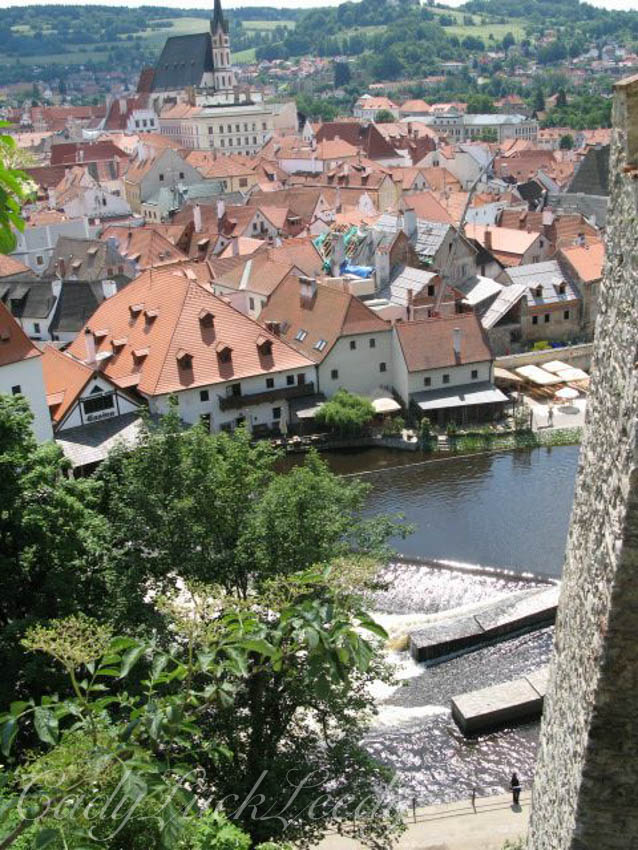
A View of Cesky Krumlov, the Czech Republic

A View of Cesky Krumlov from the Castle, the Czech Republic

The Bears! Castle Krumlov, the Czech Republic

The Bears in the Bear Pit! Castle Krumlov, the Czech Republic
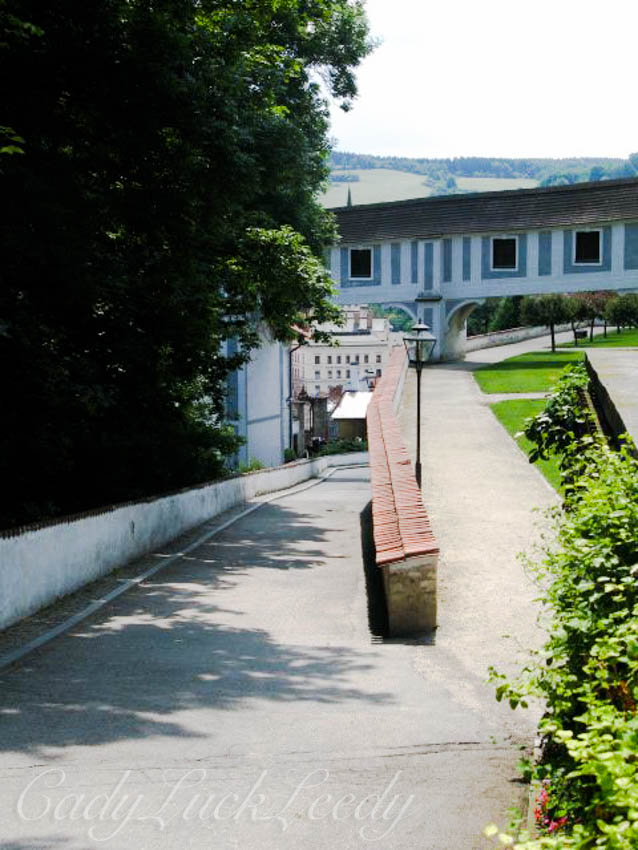
Zigzagging Under Parts of the Castle Krumlov's Raised Walkways

Zigzagging Down the Hill Under Parts of  Castle Krumlov’s Raised Walkways

Walking Under Parts of the Castle Krumlov's Raised Walkways

Walking Under Parts of the Castle Krumlov’s Raised Walkways

The Overhead Walkways at Castle Krumlov

The Overhead Walkways at Castle Krumlov

The Round Tower, Castle Krumlov, the Czech Republic

The Round Tower, Castle Krumlov, the Czech Republic

The colorful Round Tower marks the location of the first castle, built here to guard the river crossing. With the 16th century paint scheme carefully restored, it looks exotic, featuring astrological decor, terra-cotta symbols of the zodiac, and a fine arcade.

The Round Tower, Castle Krumlov, the Czech Republic

The Round Tower, Castle Krumlov, the Czech Republic

The Round Tower, Castle Krumlov, the Czech Republic

The Round Tower, Castle Krumlov, the Czech Republic

The Round Tower, Castle Krumlov, the Czech Republic

The Round Tower from Above at the Castle, Castle Krumlov, the Czech Republic
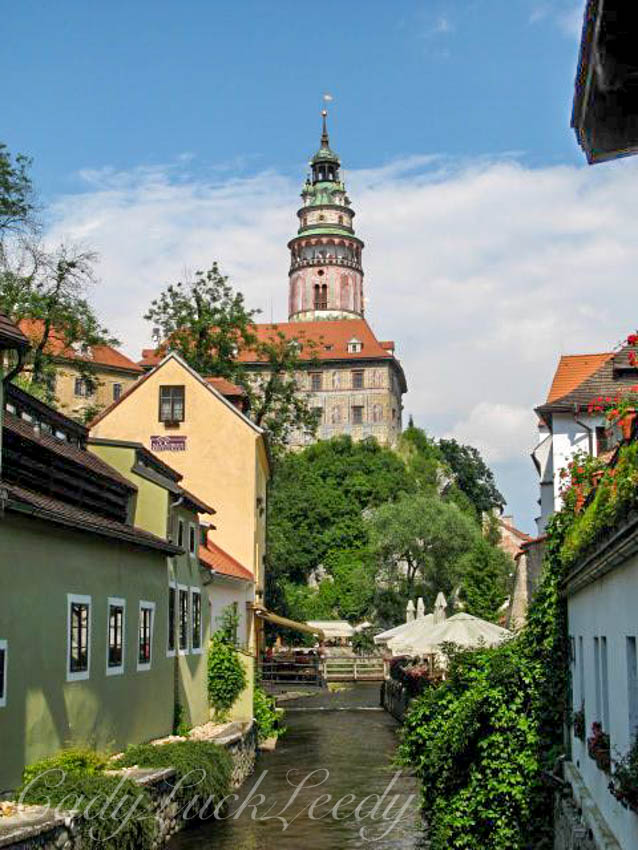
The Round Tower, Cesky Krumlov, the Czech Republic
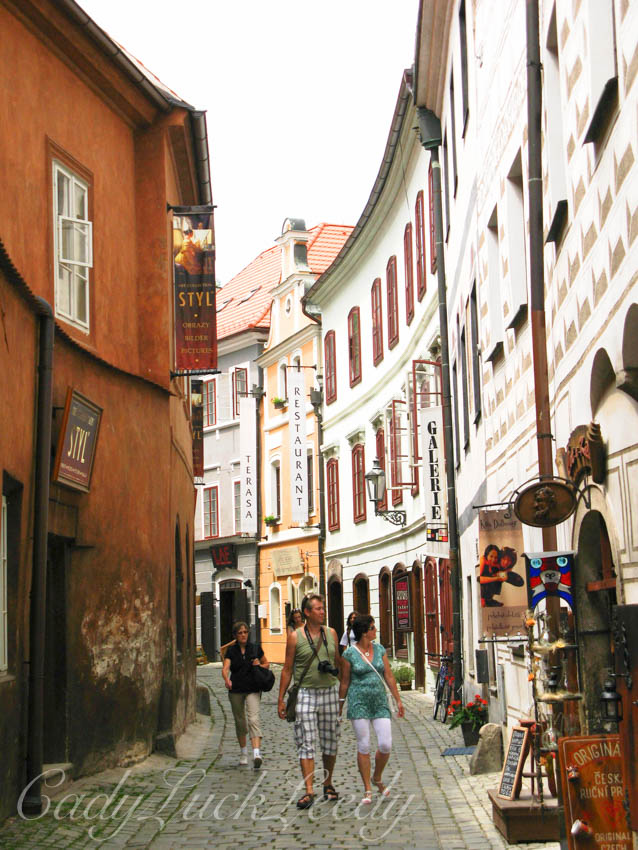
The Round Tower, Cesky Krumlov, the Czech Republic

Main Street, Cesky Krumlov, the Czech Republic

Main Street, Cesky Krumlov, the Czech Republic

The View of the Round Tower from Main Street, Cesky Krumlov, the Czech Republic

The View of the Round Tower from Main Street, Cesky Krumlov, the Czech Republic

A View of Cesky Krumlov, the Czech Republic

Rafting down the Vltava River, the Czech Republic

River rafts or a hard plastic canoe can be rented for a quick 30-minute spin around the village. Or you can go on a 3-hour float and paddle through the bohemian forests and villages of the nearby countryside. Check out the Pujcovna Lodi Malecek Boat Rental. What fun this is!
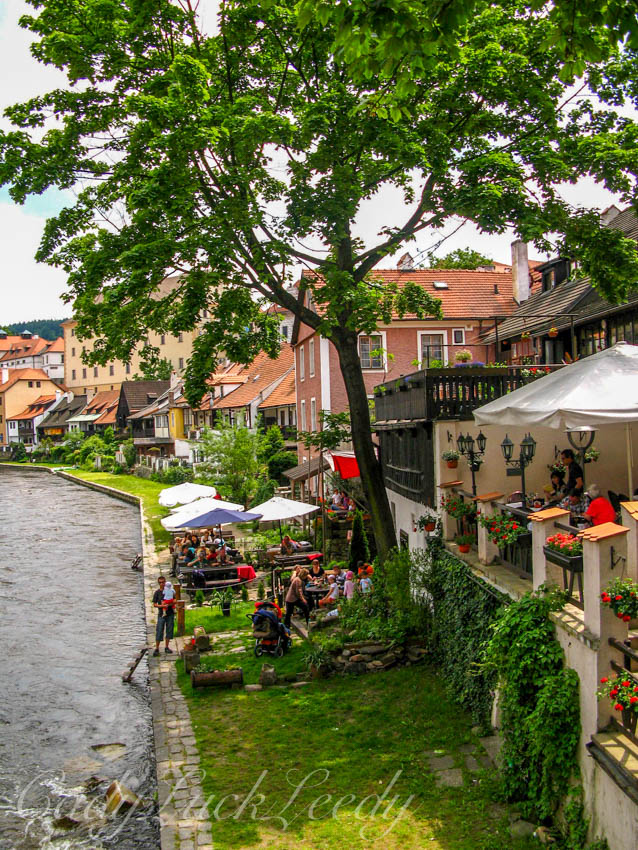
A View of Cesky Krumlov, the Czech Republic

Along the Vltava River of Cesky Krumlov, the Czech Republic

Town Square, Cesky Krumlov

Town Square, Cesky Krumlov

Park In Town With Great Views of Cesky Krumlov

Park In Town With Great Views of Cesky Krumlov

Krema v Satlavske Restaurant, Cesky Krumlov

Krema v Satlavske Restaurant, Cesky Krumlov

Eating in Krumlof was a treat at Krema v Satlavske, an old prison with an open fire, and big wooden tables under an open medieval vault, serving grilled meats and beer!  We had a great time and great food!

Krema v Satlavske Restaurant, Cesky Krumlov
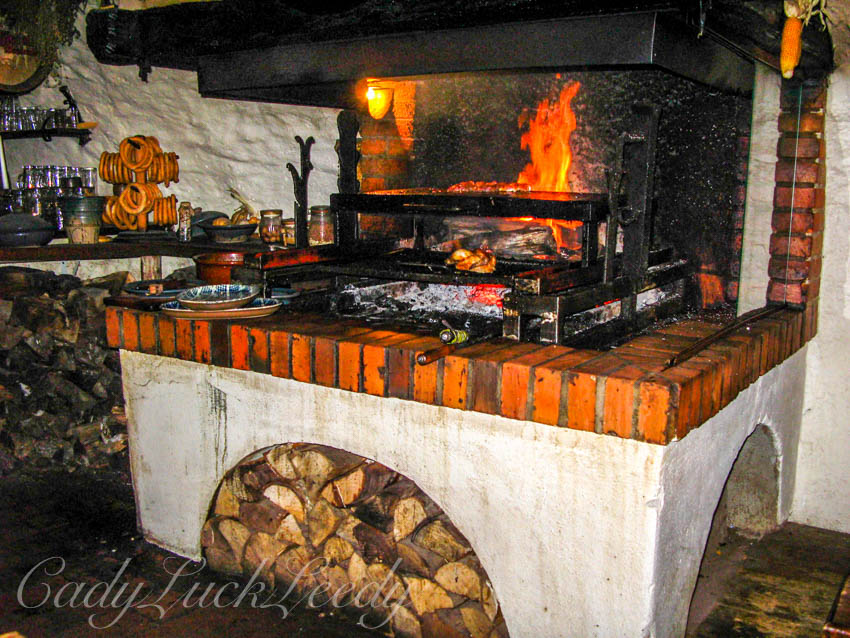
Krema v Satlavske Restaurant, Cesky Krumlov

Krema v Satlavske Restaurant, Cesky Krumlov

Krema v Satlavske Restaurant, Cesky Krumlov

I hope you enjoyed our day out in Cesky Krumlov! Krumlov hosts a number of festivals including the Five-Petalled Rose Festival,  (the name derived from the Rosenberg family crest of the five petal red rose) celebrated on the weekend of the summer solstice in June. The International Music Festival, Cesky Krumlov is another festival with international music from varied genres. The festival begins in July and ends in August. What a great way to celebrate summer!
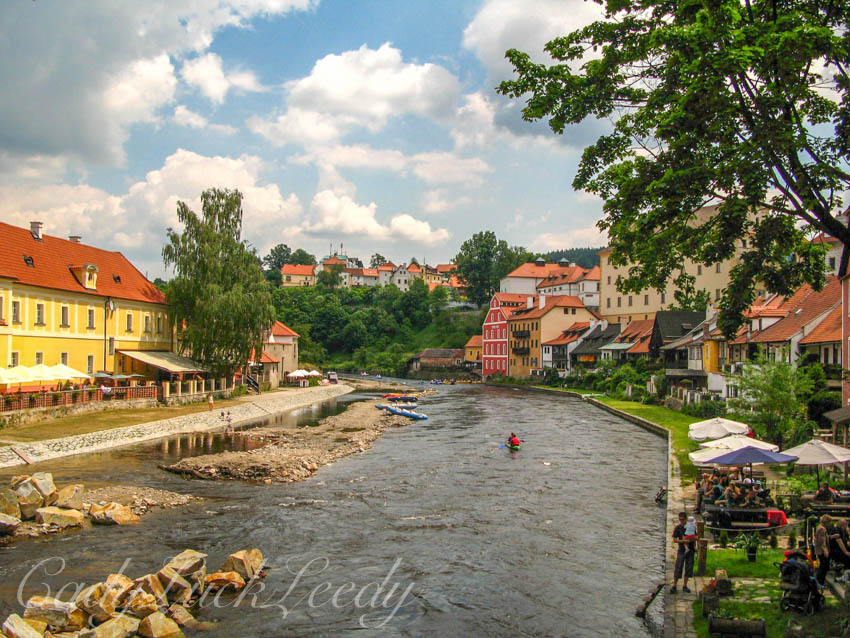
A View of Cesky Krumlov, the Czech Republic

A  Last Look at Cesky Krumlov, the Czech Republic

Triple Treat in Belgium

Damme, Belgium

Along the Canal at Damme, Belgium

Doesn’t the picture above just convey what you dreamed the Netherlands would look like? It does to me and I was not disappointed! Today we are having a triple treat! We are taking the “Triple Treat Bus Tour,” offered by Quasimodo Tours. The day is overcast with occasional wind gusts and blowing rain, but nothing dampens our tour out into the countryside of Brugge. The Triple Treat Tour  features several country homes, the village of Damme, the oldest gothic buildings in Flanders at the former monastery at Ter Doest, where we will have lunch, a tour of a chocolate factory, and last stop, a beer brewery! We are in for a day of fun which started when the  Quasimodo Guides picked us up at our B&B and took us to the bus waiting for us in the town square.

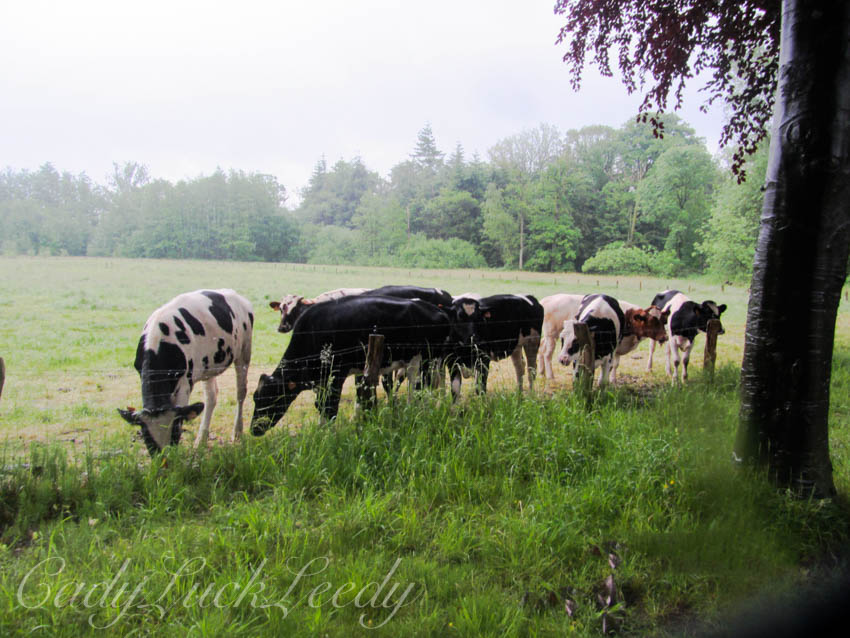
The bus takes us out into “Burbs” of Brugge. Then down this narrow lane and deep into the wood, passing the grazing cows we come to the moated castle of Tillegem.

Through the Woods and Down a Narrow Lane!

Through the Woods and Down a Narrow Lane!

The Cows in the Country at Tillegem, Belgium

The Cows in the Country at Tillegem, Belgium

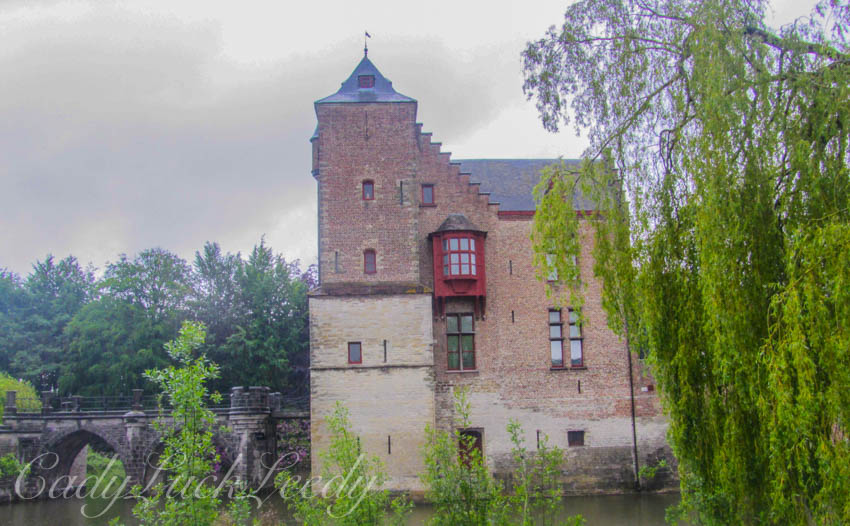
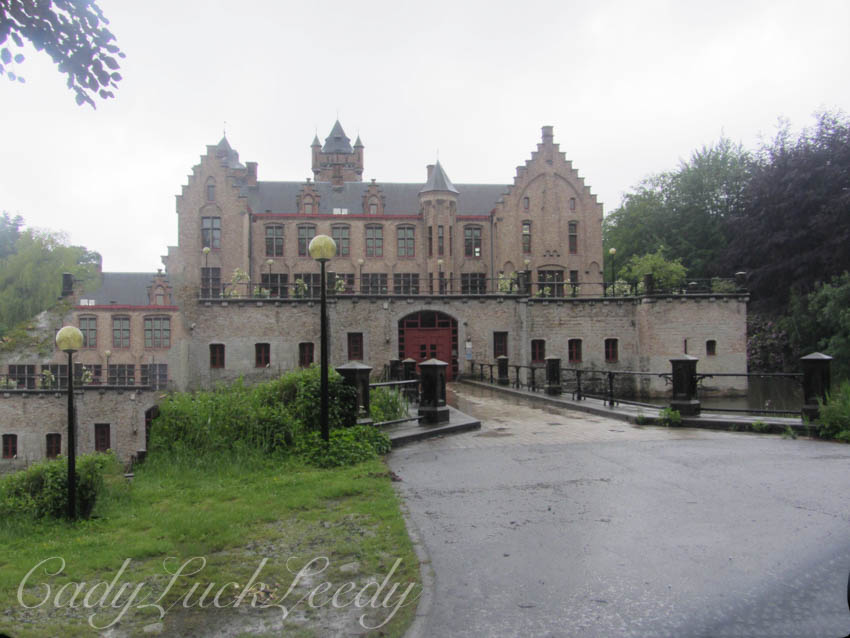
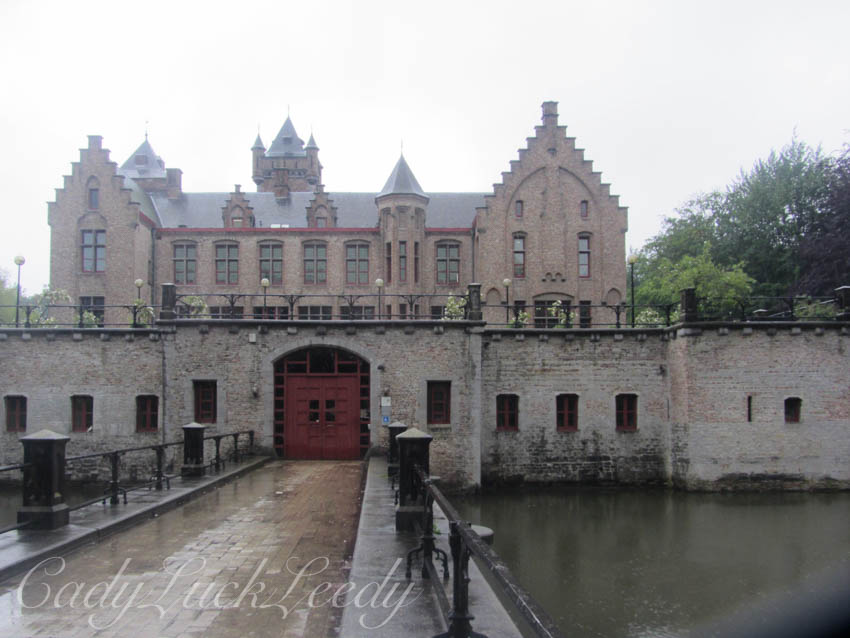
Had to take a picture of the cows! And now for the Castle of Tillegem! Baldwin, the Iron Arm, first count of Flanders, constructed a wooden tower surrounded by battlements where the castle now stands.  Since 1980 the castle and beautiful park has been the property of the province of West Flanders.  I had to take a picture of the castle from every angle!  The castle is not open to visitors.

The Moated Castle of Tillegem, Belgium

The Moated Castle of Tillegem, Belgium

The Moated Castle of Tillegem, Belgium

The Moated Castle of Tillegem, Belgium

The Moated Castle of Tillegem, Belgium

The Moated Castle of Tillegem, Belgium

The Moated Castle of Tillegem, Belgium

The Moated Castle of Tillegem, Belgium

The Moated Castle of Tillegem, Belgium

The Moated Castle of Tillegem, Belgium

Next we drove to the neo-gothic Chateau of Loppem, full of artwork and other treasures! Built between 1859 and 1862 for Baron Charles Van Caloen and his family, the castle’s original architecture and interior decoration is remarkably well preserved.  The park and castle are owned by the Jean van Caloen Foundation and is open to the public. I took so many pictures inside here, but they were dark, fuzzy and not too good.  Trust me when I say this home was a delight to see.

Chateau of Loppem, Belgium

Chateau of Loppem, Belgium

Chateau of Loppem, Belgium

Chateau of Loppem, Belgium

It’s now pouring and really gusty as we get to Ter Doest!

Lambert, Lord of Lissewege, donated land to the Benedictus friers in 1106, to build a priory. In 1270 the Benedictines left and the Cistercienzers Order, who had ties to the Templer Knights, took over. In 1172, Richard, the Lionheart, one of my relatives, was captured by Leopold of Austria on his return from the Crusades. It is said that the abbot of Ter Doest paid the larger part of the ransom in order to get Richard out of prison. It is assumed he came to Ter Doest for a time after his release. He was in fact in Damme, where we are headed later today.

The gothic barn, built around 1280, is the largest remaining barn of its kind, and was used to store crops. In 1308 the barn and abbey were confiscated during protestant religious wars, so the farm we see today was built from the debris of the destroyed abbey. Today a lovely restaurant and B&B also sit on this site! Let’s go have lunch!

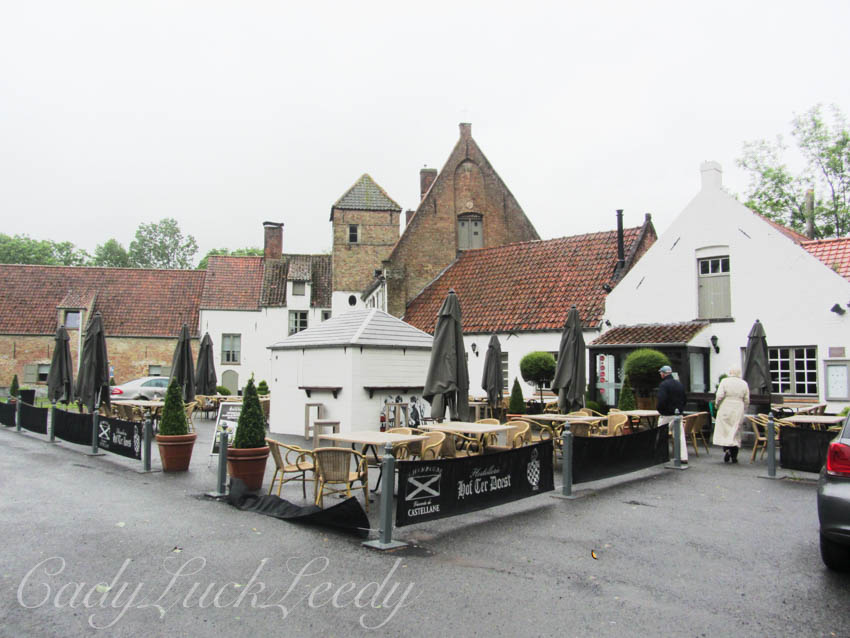
The Restaurant at Ter Doest, Belgium

The Restaurant at Ter Doest, Belgium

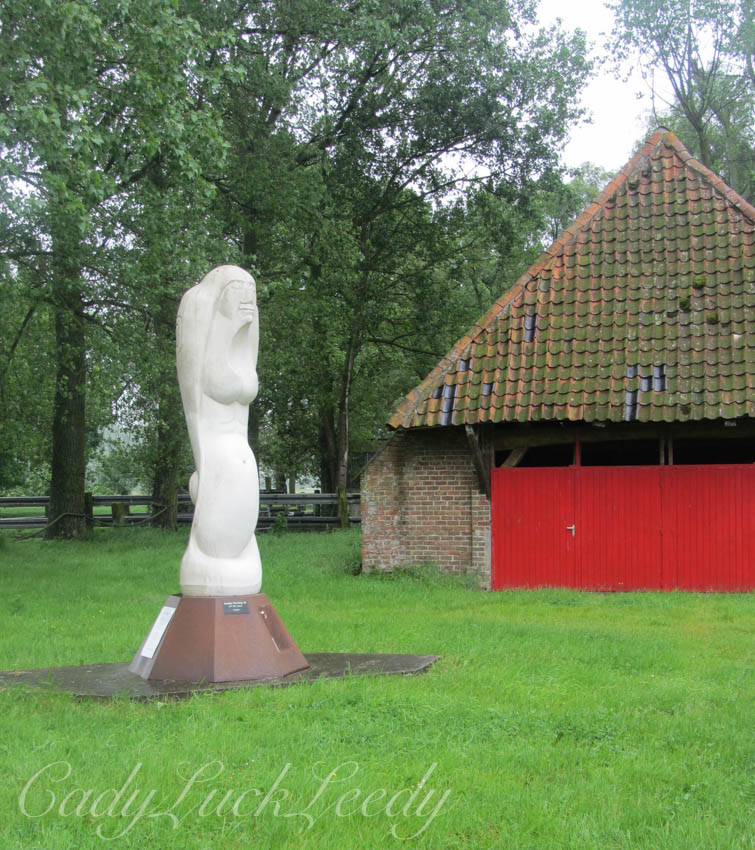
The Old Barn at Ter Doest, Belgium

The Old Barn and ArtWork at Ter Doest, Belgium

Artwork at Ter Doest, Belgium

Artwork at Ter Doest, Belgium

After our great lunch at Ter Doest, we made our way to Damme.  Situated right along the river Reie, the river has now been canalized into the long , straight, tree-lined and picturesque Damse Vaart Canal from Brugge, just 6 kilometers away, to the Dutch border in Sluis. This makes a great bike trip from the city. Even though it was raining and windy there were bikers doing just that!  We all met up in Damme! What exquisite scenery!

Picure Perfect Along the Canal in Damme, Belgium

Picture Perfect Along the Canal in Damme, Belgium

A Windmill Along the Canal in Damme, Belgium

A Windmill Along the Canal in Damme, Belgium

The town is a favorite venue for eating and a destination for boat trips. It is also known for being a great “book town” with numerous bookshops and regular book fairs! Just so nice to explore too!

The Village of Damme, Belgium

The Village of Damme, Belgium

The Village of Damme, Belgium

The Village of Damme, Belgium

Wrought Iron Sculptured Art in Domme, Belgium

Wrought Iron Sculptured Art in Damme, Belgium

Our next stop was the tour of a Belgium Chocolate factory, but sad to say I was addicted to the Dumon’s Chocolates, and wanted to wait it out until evening to stock up on my favorites. Finally, our last stop back in Brugge, was The Fort Lapin Brewery. There was a variety of Belgium Beers to taste (included in price of tour) but my hand must have been busy holding those pints because I didn’t get any pictures! What a fabulous tour! Be sure to check Quasimodo Tours in Belgium.  Enjoy!

Spring Time Fun and the Hot Cross Bun!


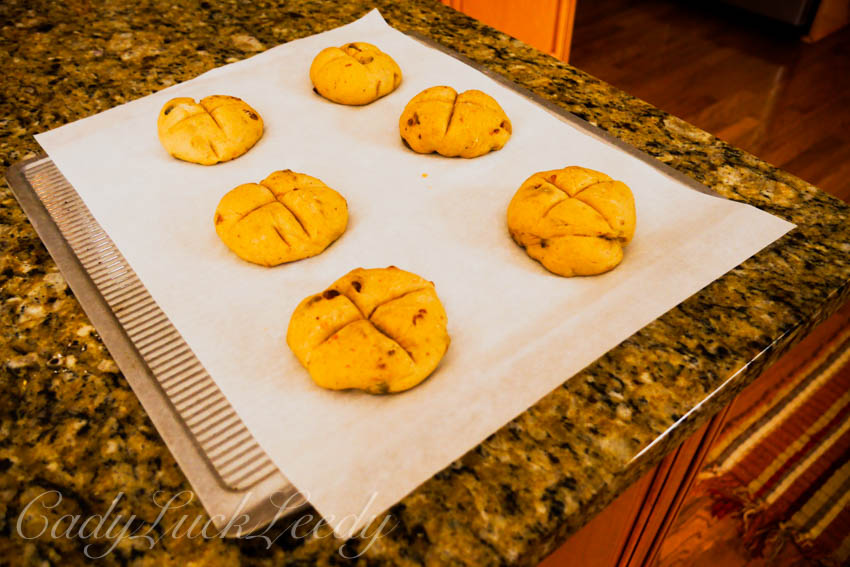
Preparing the Hot Cross Buns

Preparing the Hot Cross Buns


Spring time offers foods which are rich in history and symbolism. These foods can be broken down into three groups: 1. Food specifically related to Christ, such as ( lamb, for “the lamb of God.”)  Easter was the time to start eating the season’s new lamb. 2. Food related to pagan rites of spring (eggs for re-birth) (ham for luck), (lamb for sacrifice) and (cake/bread for fertility) 3. Modern foods such as candy and the Easter basket.

Eggs are traditionally connected with re-birth, rejuvenation and immortality. This is why they are celebrated at Easter. In the early Christian times eggs were forbidden during Lent, so this made them bountiful and exciting, forty days later. They were dyed or decorated in bright colors to honor this celebration. Red eggs brought to the table on Easter Sunday symbolized life, and were given as emblems of friendship.  Eggs with the pattern “XV” etched on them stood for “Christ is Risen”, a traditional Easter greeting. We hunt for eggs during an Easter Egg Hunt to identify with riches. Eggs were a treasure, a bounty of nature, and the treasures were deposited by hens in unsuspecting places. To find such a hidden nest was equal to finding a hidden treasure.

Preparing the Hot Cross Buns!

The Baked Hot Cross Buns!

The word “Easter” came from the name for the anglo saxon goddess of light and spring, Eostre.  Special dishes were cooked in her honor so that the year would bring fertility.  Most important of these dishes was a tiny cake or small spiced bun. The association of protection and fertility, birth and re-birth, became a Christian tradition, especially in English society. During Tudor times, the English custom of eating spiced buns on Good Friday was established when a London by-law was introduced forbidding the sale of such buns except on Good Friday, Christmas and burials. Issued in 1592, the thirty-six year of Queen Elizabeth I, by the London Clerk of Markets the proclamation read: That no bakers at any time or time hereafter make, utter or sell by retail, within or without their houses, unto any of the Queen’s subjects any spice cakes, buns, biscuits  or other spice bread except at burials or on the Friday before Easter or at Christmas, upon pain of death or forfeiture of all such spiced bread to the poor. A cross was etched or decorated on the bun to represent Christ’s Cross. “One-a-penny, two-a penny, hot cross buns”, was the call of the day. Superstitions regarding bread that was baked on Good Friday date back to a very early period. In England particularly, people believed that bread baked on this day could be hardened in the oven and kept all year to protect the house from fire. Sailors took loaves of it on their voyages to prevent shipwreck and a Good Friday loaf buried in a heap of corn kept away rats, mice and weevils. They also hung hot cross buns in the house on Good Friday to protect them from bad luck during the year and finely grated bread, mixed with water was sometimes used as medicine.

The Hot Cross Buns!

The Hot Cross Buns for Gifts!

Bath buns, hot cross buns, spice buns, penny buns, Chelsea buns, ( hot cross buns sold in great quantity by the Chelsea Bun House in the 18th century) and currant buns; all small, plump, sweet, fermented cakes that are English institutions! Join me today as I bake my hot cross buns! To enjoy this recipe too see, Hot Cross Buns on the King Arthur Webpage !  My favorite place for baking needs! Happy Easter!

The Best Bits of Eats in Brugge, Belgium


Our Morning Stroll Along the Canals, Brugge, Belgium

Our Morning Stroll Along the Canals, Brugge, Belgium

One of the best experiences when traveling is finding the neighborhood eateries off the beaten path. We like to eat in the neighborhoods we lodge in. It is the best way to meet the locals and enjoy the sit-down-and-focus-on-your-new-friend experience. In our neighborhood, near the B&B Gastenhuis Sint-Andriescruyse, we found two pubs/cafes that we enjoyed very much for their ambiance, simple meals and world-class beers.

First let’s take our morning stroll in the neighborhood!

Our Daily Walk Along the Canal, Brugge, Belgium

Our Daily Walk Along the Canal, Brugge, Belgium

The Cafe Terrastje was just the cozy-pub-spot where you could enjoy a meal or drink inside or outside at the terrace overlooking the canal. Isn’t this the quaintest of buildings?  Who could resist coming in here?

Cafe Terrastje, Brugge, Belgium

Cafe Terrastje, Brugge, Belgium

Herberg Vlissinghe was another pub close by and the oldest pub in town, dating 1515. It has the best old-time tavern feel and the garden for outside dining comes with a boules court. Both of these small pubs served the best simple, but delicious meals.

Herberg Vlissinghe, Brugge, Belgium

Herberg Vlissinghe, Brugge, Belgium

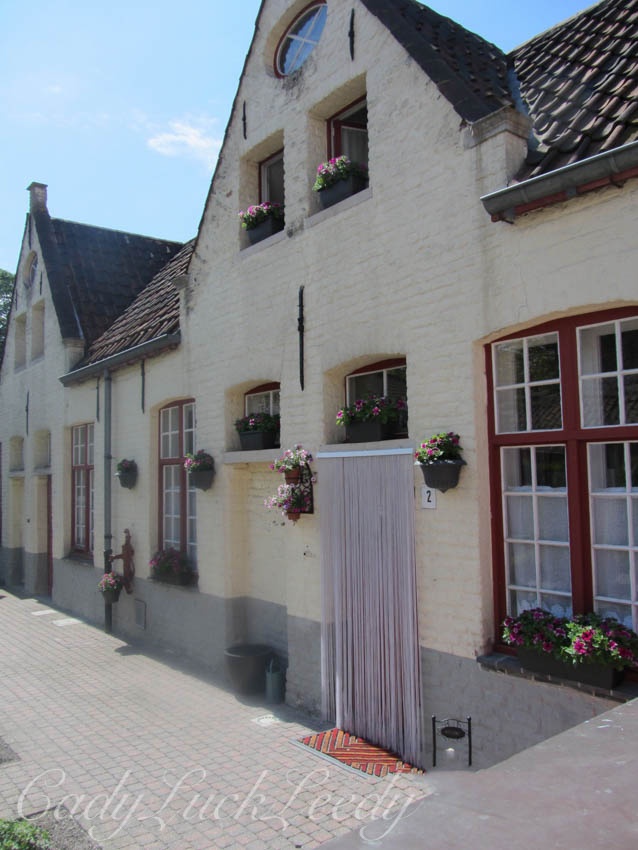
Let’s get back to our walk through Brugge. I just love strolling among the quiet streets and homes! There are always spots of color and flowers tucked in everywhere! So many different textures and styles to admire!

Strolling Through Brugge, Belgium

Strolling Through Brugge, Belgium

I loved this little green door! It must be a girl’s house!

Strolling Through Brugge, Belgium

Strolling Through Brugge, Belgium

Strolling Through Brugge, Belgium

Strolling Through Brugge, Belgium

As we reached the town center it’s time for a bathroom break. These were the beautifully sculptured, flowering bushes, that were designed to create one long rolling WAVE! Absolutely delightful and right in front of the public restrooms!

The Rolling Wave Flowering Bush, Brugge, Belgium

The Rolling Wave Flowering Bush, Brugge, Belgium

The Artwork in Brugge, Belgium

The Green Lanterns,  Artwork in Brugge, Belgium

The Mermaid, Brugge, Belgium

The Mermaid, Brugge, Belgium

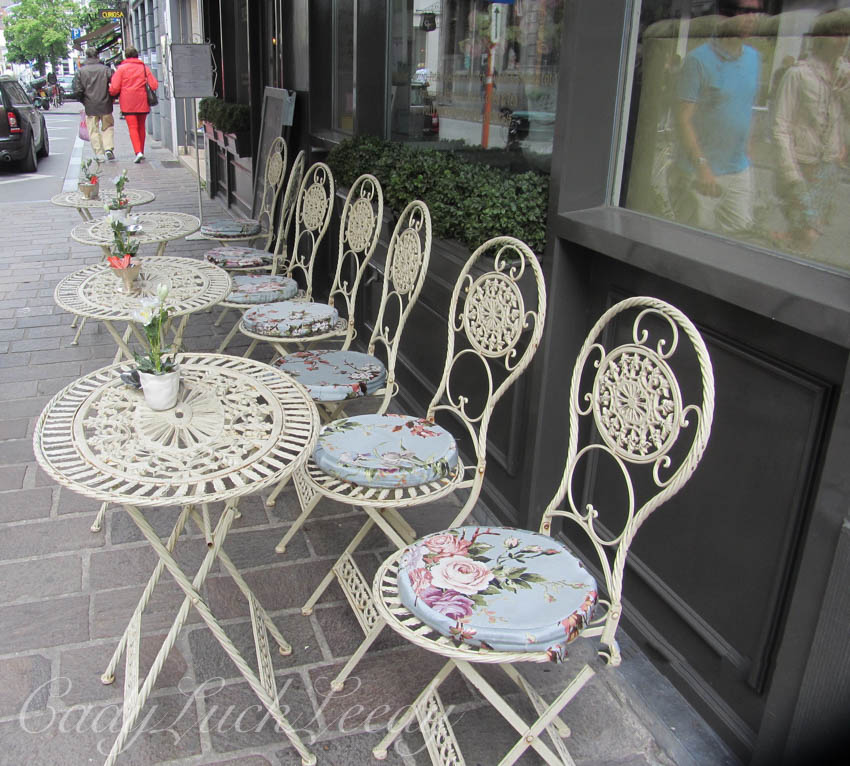
The Sidewalk Cafe, Brugge, Belgium

The Sidewalk Cafe, Brugge, Belgium

Strolling in Brugge, Belgium

Strolling in Brugge, Belgium

Strolling Through Brugge, Belgium

Strolling Through Brugge, Belgium

Time for a chocolate break! Dumon Chocolate was our daily pick for treats! Madame Dumon and her children greet you in her tiny, always packed, chocolate shop. They make their chocolates daily and describe their chocolates in person, no labels here! We always left with a little box of assorted out-of-this-world flavors!

Dumons Chocolate Shop, Brugge, Belgium

Dumons Chocolate Shop, Brugge, Belgium

Our favorite restaurant in Old Town was without question, The Flemish Pot. The ambiance of red-cloth table covers and potted flowers everywhere just made you relax and set the mood to truly enjoy your meal. We enjoyed the local recipe for the beef stew pot!

The Flemish Pot, Brugge, Belgium

The Flemish Pot, Brugge, Belgium

I could live in that tiny room at the top!

Another Look at the Flemish Pot, Brugge, Belgium

Another Look at the Flemish Pot, Brugge, Belgium

Artwork Everywhere, Brugge, Belgium

Artwork Everywhere, Brugge, Belgium

A riot of color and texture everywhere!

Close Up of Shop Window, Brugge, Belgium

Close Up of Shop Window, Brugge, Belgium

Quiet Morning Street, Brugge, Belgium

Quiet Morning Street, Brugge, Belgium

Near City Hall, Brugge, Belgium

Near City Hall, Brugge, Belgium

Strolling Through Brugge, Belgium

Strolling Through Brugge, Belgium

One of the Churches in Brugge, Belgium

One of the Churches in Brugge, Belgium

Strolling Through Brugge, Belgium

Strolling Through Brugge, Belgium

Well we’ve made the rounds for today!  Back to the neighborhood pubs! Enjoy your day in Brugge!

Town Square, Brugge, Belgium

Town Square, Brugge, Belgium

How to Save for a Vaca; Is Winter Over Yet?

I'm Ready for Spring

I’m Ready for Spring

What happened to January and February? I do know that one thing leads to another, so maybe it is better to never start projects! Have you noticed all the hype to clean out this and clean out that? Well I did and January seemed like a good time to dig in and organize. So I started in my cupboards, taking out everything and labeling and dating everything that went in new. I discovered I had a salt container dated 1989! It looked brand new! Does salt go bad? Well out it went anyway. There were 4 opened bottles of olive oil. How old were they? Which one had I used last?  Out they went. I had bags of assorted opened flours. How old were they? They all went.  Now to re-stock. I did not realize how many different salts are now available. Dozens and dozens of salt. I went with the smallest container of free flowing salt and big flake sea salt. One bottle of Italian olive oil is now dated and ready for use. All flour is labeled and placed together on the shelf. I thought I was done cleaning, sorting, and labeling.

Then I got an email asking about one of my ancestors. When I looked up the name in my genealogy files I noticed there were lots of new “leaves” on the site. So I jumped in to update the files with pictures, stories, and obituaries. I added well over 1000 names and many, many documents. Well that’s done for awhile. It is a fun and never ending project.

Then I decided to accept a challenge to clean out  my freezers and use up the food there; clean out the freezer and re-stock when food was on sale. This is when I hit pay day.  I went a month just using up food in my freezer. I had meat, vegetables, stocks, desserts, bread! More flour!   At least it was labeled! So I put aside the grocery money and I now have enough for a small  getaway vacation! Whala!  So winter is almost over for us. My cupboards, files, and freezer are spic and span. And I’m ready for spring! Let’s go to Brugges, Belgium and Amsterdam and see the tulips! Won’t you follow me into SPRING? Enjoy!

One Word Photo Challenge: Lemon Two

For elegance and romance, celebrate at the Inn at Little Washington! FABULOUS!

My Birthday Celebration at the Inn at Little Washington LEMON ALL AROUND

My Birthday Celebration at the Inn at Little Washington LEMON ALL AROUND

Photography 101: Day 12, Architecture

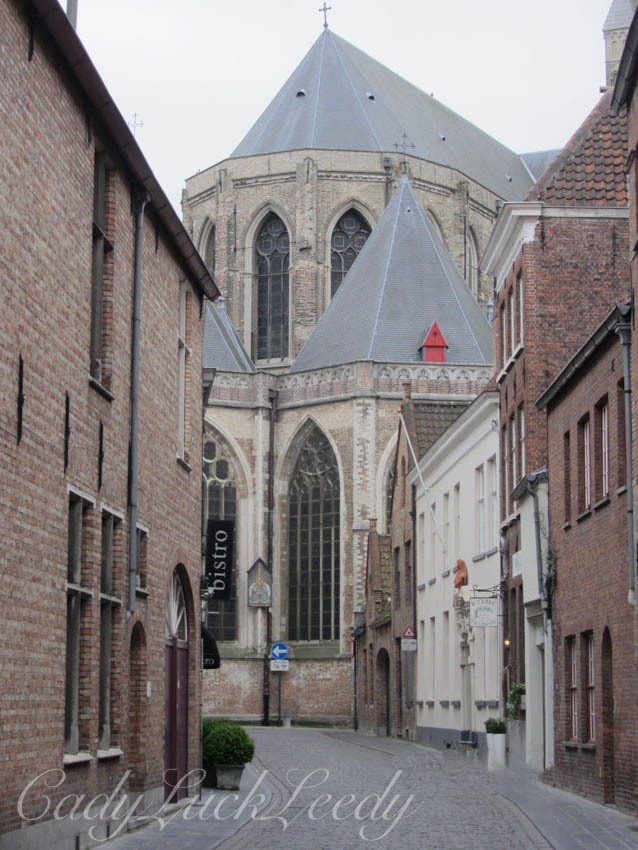
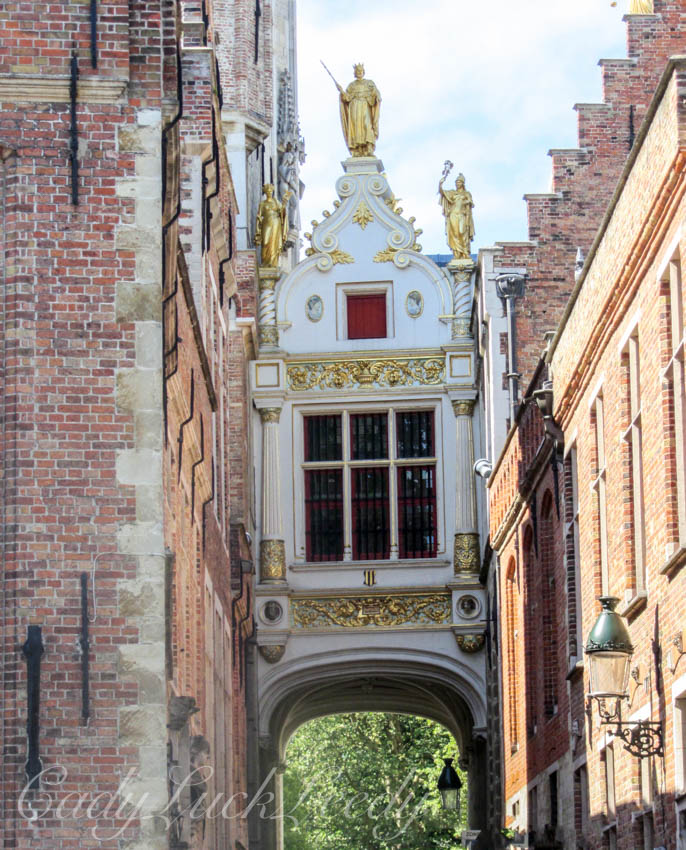
I LOVE ARCHITECTURE! I am always amazed by texture, shapes, curves, color, and style. These are my pictures for today, all taken in Bruges, Belgium, a great city for architecture!

Part of our assignment was to convert a picture to black and white to bring out the features of the architecture.

Stonework in Black and White, Bruges, Belgium

Stonework in Black and White, Bruges, Belgium

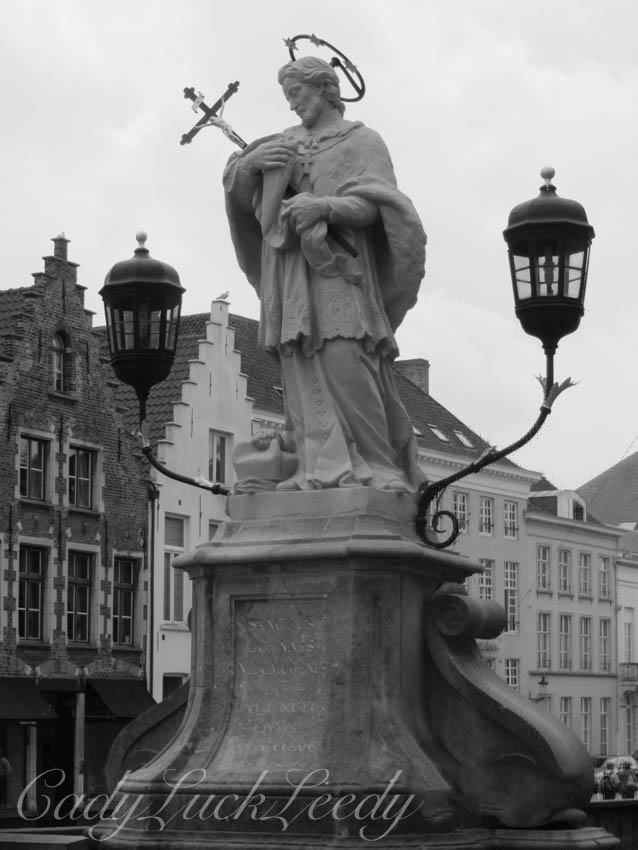
I always look for unusual ironwork and lighting fixtures when I travel. It can be very intricate, as shown here.

Fancy Lighting, Bruges, Belgium

Fancy Ironwork , Bruges, Belgium

This picture reveals great architecture in the buildings, stonework and ironwork. I was lucky to get all three in one shot! First the picture in color, and following, the same picture in black and white.

Buildings, Stonework, and Lighting, in Bruges Belgium

Buildings, Stonework, and Lighting, in Bruges Belgium

Black and White, Buildings, Stonework, and Lighting, in Bruges Belgium

Black and White, Buildings, Stonework, and Lighting, in Bruges Belgium

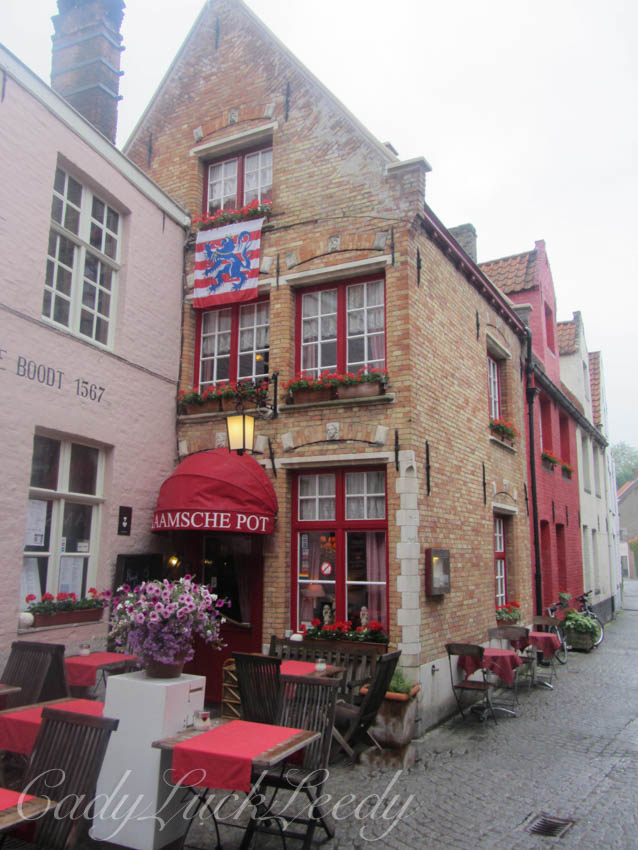
I particularly like to photograph unusual buildings arranged at odd angles. This was the beautiful restaurant called the Vlaamsche Pot. The architecture drew me to it, but in addition, the food was fabulous! Notice the lighting sconce?  The pops of color?  Throw in foliage and bicycles! Perfect!

Vlaamsche Pot Restaurant, Bruges, Belgium

Vlaamsche Pot Restaurant, Bruges, Belgium

Quebec City On Fall Weekend
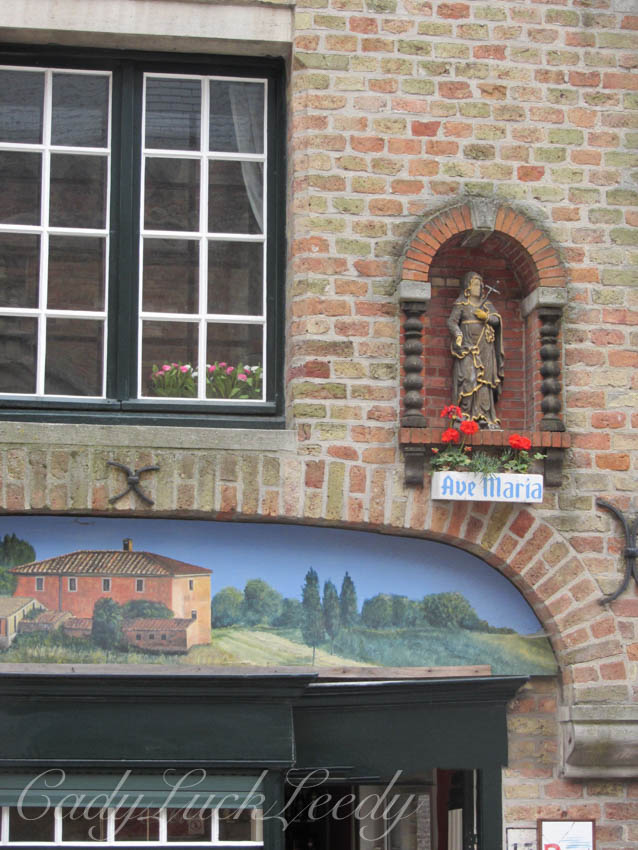
La Park au Petit-Champlain, Quebec City, Canada

Le Parc au Petit-Champlain, Quebec City, Canada

It’s that time of year for the annual trip to Quebec City. Without a doubt, it is my favorite city in North America! The shops and parks are decorated for Fall and the weather is sunny and cool!  Here are just a few of my favorite sights on a quick walk through Petit-Champlain!  Lots to look at here! There is COLOR everywhere! Enjoy!

Fall Decorations at My Favorite Hotel, Hotel Saint Germaine

Stick Trees! Fall Decorations at My Favorite Hotel, Hotel Saint Germaine

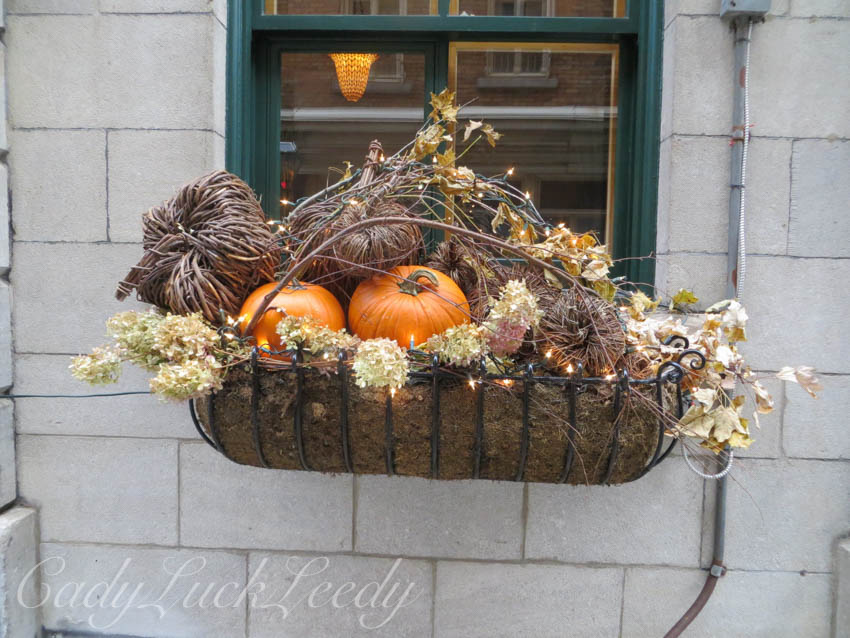
My Favorite Basket Planters, Quebec City, Canada

My Favorite Basket Planters, Quebec City, Canada

Fall Planters! Quebec City, Canada

More Fall Planters! Quebec City, Canada

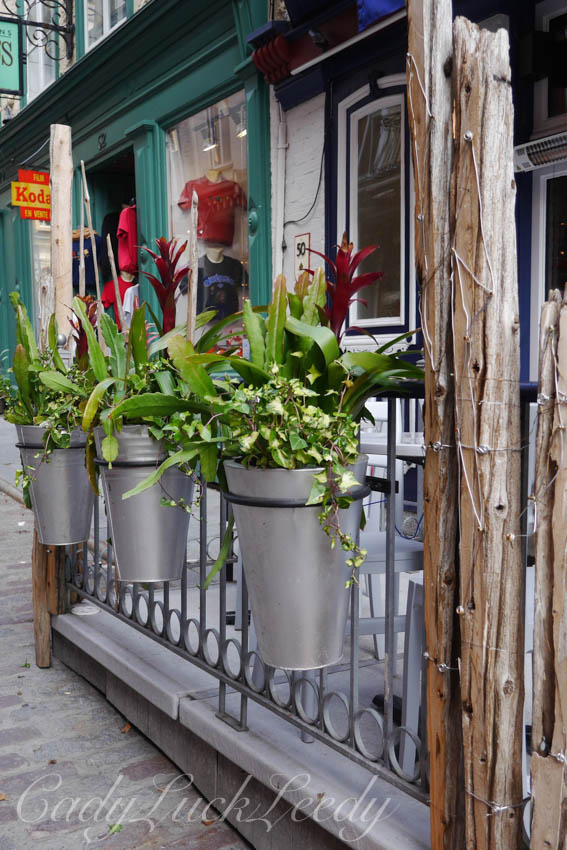
New Planters in the Park! Quebec City, Canada

New Planters! Quebec City, Canada  

 Simple and Chic!

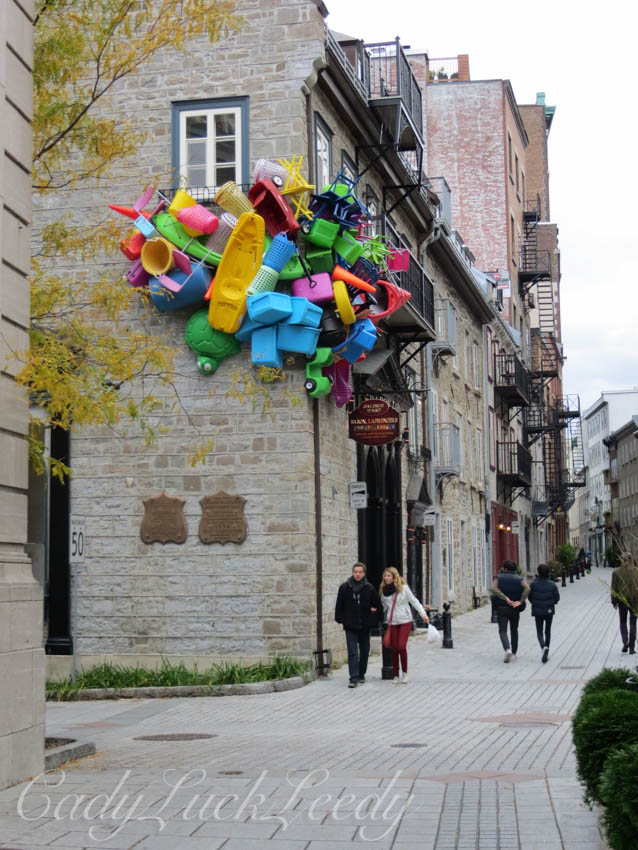
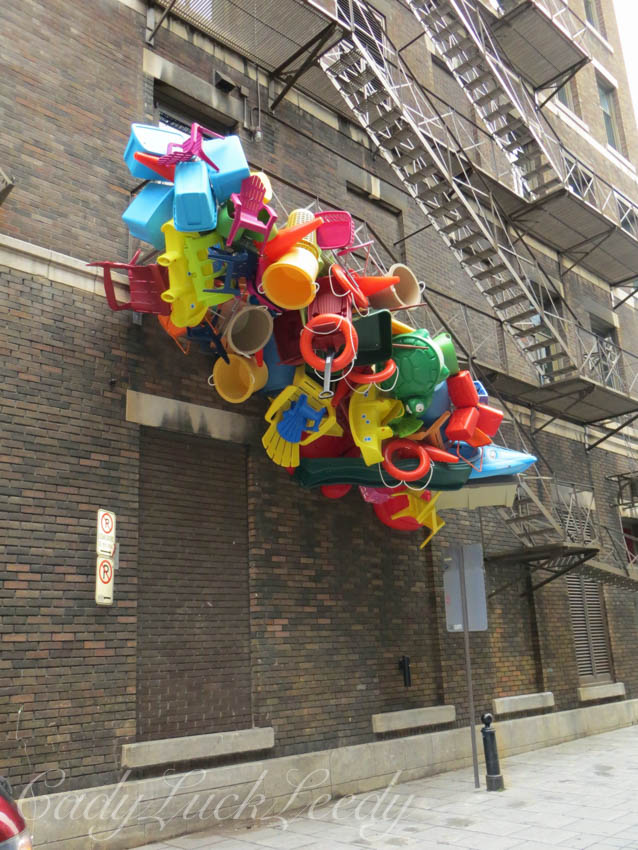
New this year were the four different displays of Plastic in Bas-Ville. Entertaining to say the least and as I studied them there were some baskets I could have used!

Plastic Baubles Anyone?

Plastic Baubles Anyone?

More Plastic! Quebec City, Canada

More Plastic! Quebec City, Canada

And Yet Another! Quebec City, Canada

And Yet Another! Quebec City, Canada

And Yet Another! Plastic Everywhere! Quebec City, Canada

And Yet Another! Plastic Everywhere! Quebec City, Canada

Perhaps the Plastic Baubles  remind us of the fun of Summer and the Sea?

Fall Decorating in the Park! Quebec City, Canada

Fall Decorating in the Park! Quebec City, Canada

Apple Anyone? Quebec City, Canada

Apple Anyone? Quebec City, Canada

Street Sign, Quebec City, Canada

Street Sign, Quebec City, Canada

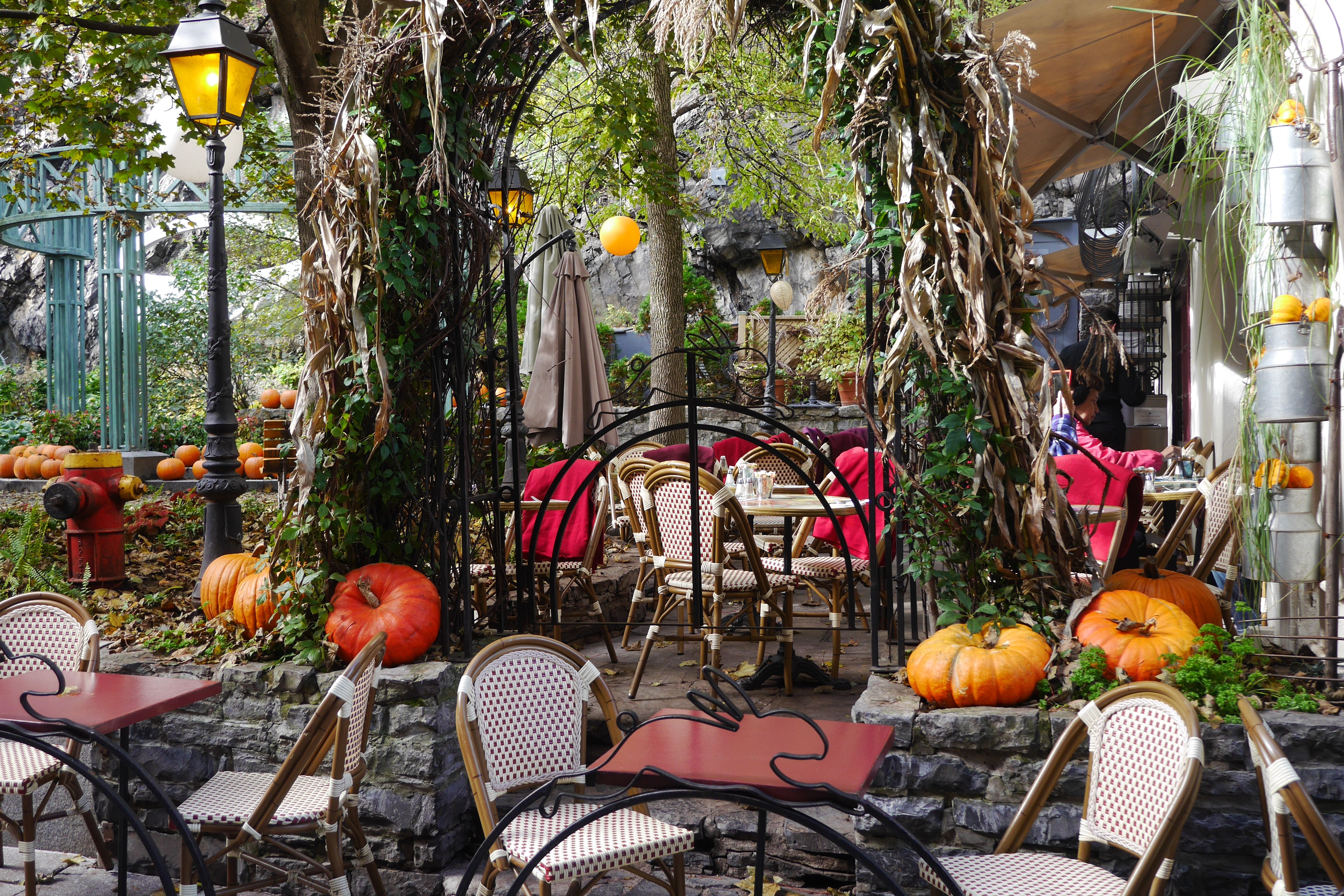
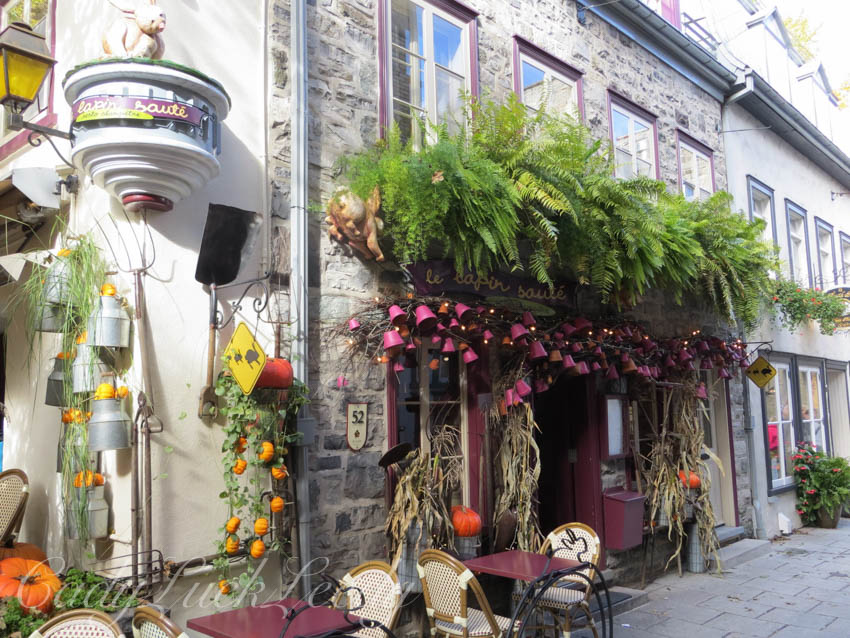
Outdoor Seating at Park Next to Le Lapin Restaurant, Quebec City, Canada

Outdoor Seating at Park Next to Le Lapin Restaurant, Quebec City, Canada

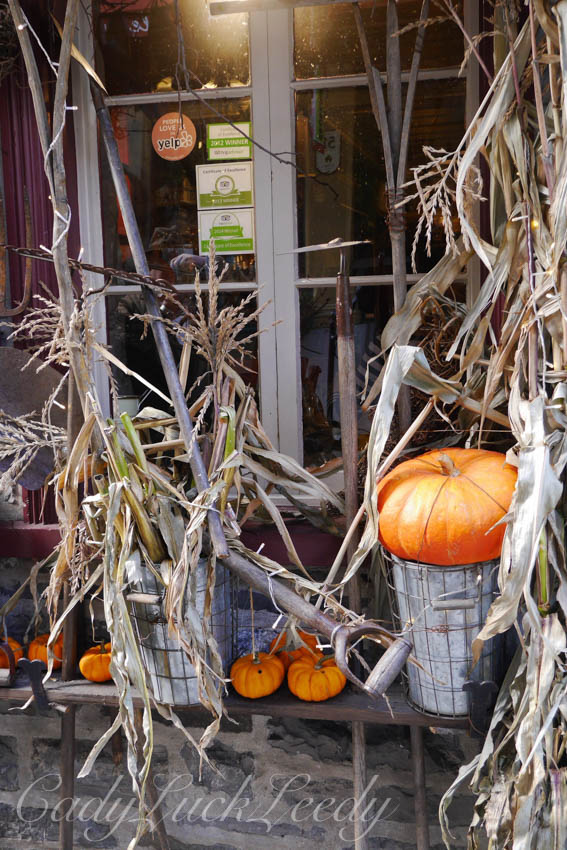
Pumpkins, Corn and Rakes!

Pumpkins, Corn and Rakes! Where Is That Rabbit?

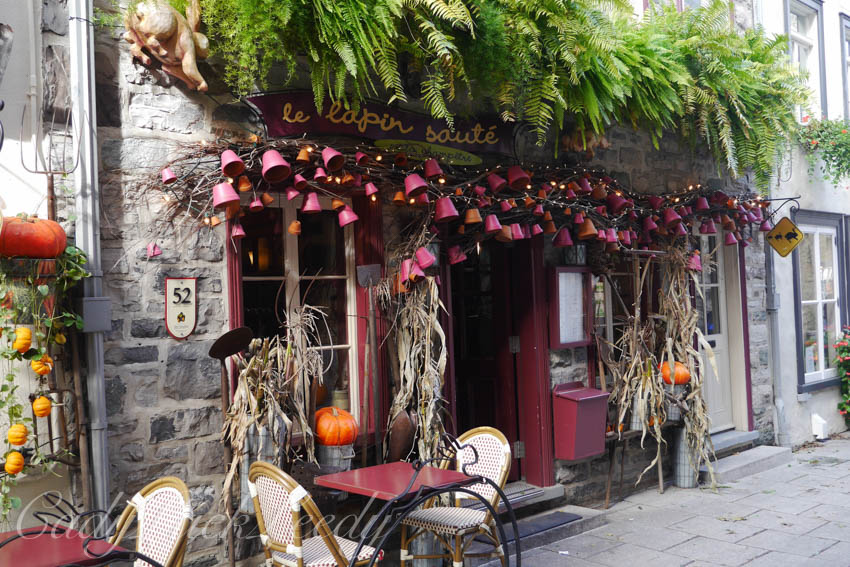
Another View of Le Lapin Restaurant, Quebec City, Canada

Another View of Le Lapin Restaurant, Quebec City, Canada

I Loved the tiny purple pots!

Decorations at Le Lapin Restaurant, Quebec City, Canada

Decorations at Le Lapin Restaurant, Quebec City, Canada

Le Lapin Restaurant, Quebec City, Canada

Le Lapin Restaurant, Quebec City, Canada

The Blue Mosque and Neighborhood, Istanbul, Turkey

The Blue Mosque, Istanbul, Turkey

The Blue Mosque, Istanbul, Turkey

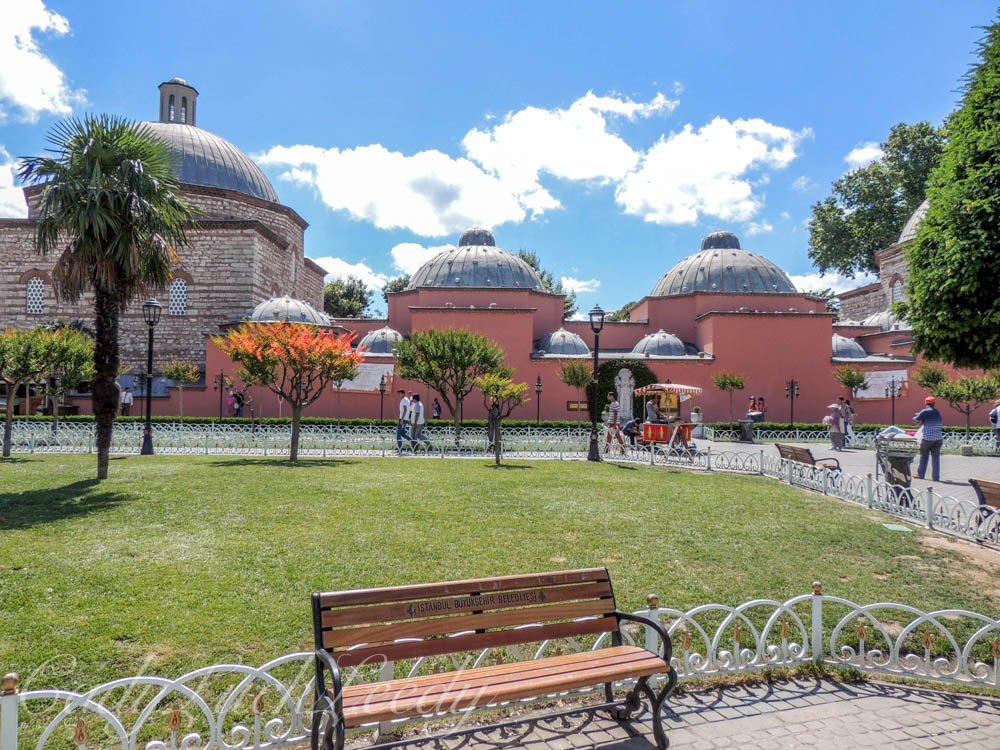
Just like Rome, Istanbul’s Old Town is built on seven hills.  The district called Sultanahmet, on top of the first hill, is the historic city center. This site gave the Greeks control of three surrounding bodies of water; the Bosphorus Strait, the Golden Horn and the Sea of Marmara. Leaving Hagia Sophia at one end of  Sultanahmet Park, we walk past the beautiful fountain where the arcs of water mimic the domes of Hagia Sophia.

Hagia Sophia, Istanbul, Turkey

Hagia Sophia, Istanbul, Turkey

Sultanahmet Park, Istanbul, Turkey

Sultanahmet Park, Istanbul, Turkey

Sultanahmet Park, Istanbul, Turkey

Sultanahmet Park, Istanbul, Turkey

Sultanahmet Park, Istanbul, Turkey

Sultanahmet Park, Istanbul, Turkey

Sultanehmet Park, Istanbul, Turkey

Sultanahmet Park, Istanbul, Turkey

Sultanahmet Park, Istanbul, Turkey

Sultanahmet Park, Istanbul, Turkey

Here the gardeners are busy planting new flowers in swirls of decorative display.

Sultanahmet Park, Istanbul, Turkey

Sultanahmet Park, Istanbul, Turkey

Sultanahmet Park, Istanbul, Turkey

Sultanahmet Park, Istanbul, Turkey

The Blue Mosque, Istanbul, Turkey

The Blue Mosque, Istanbul, Turkey

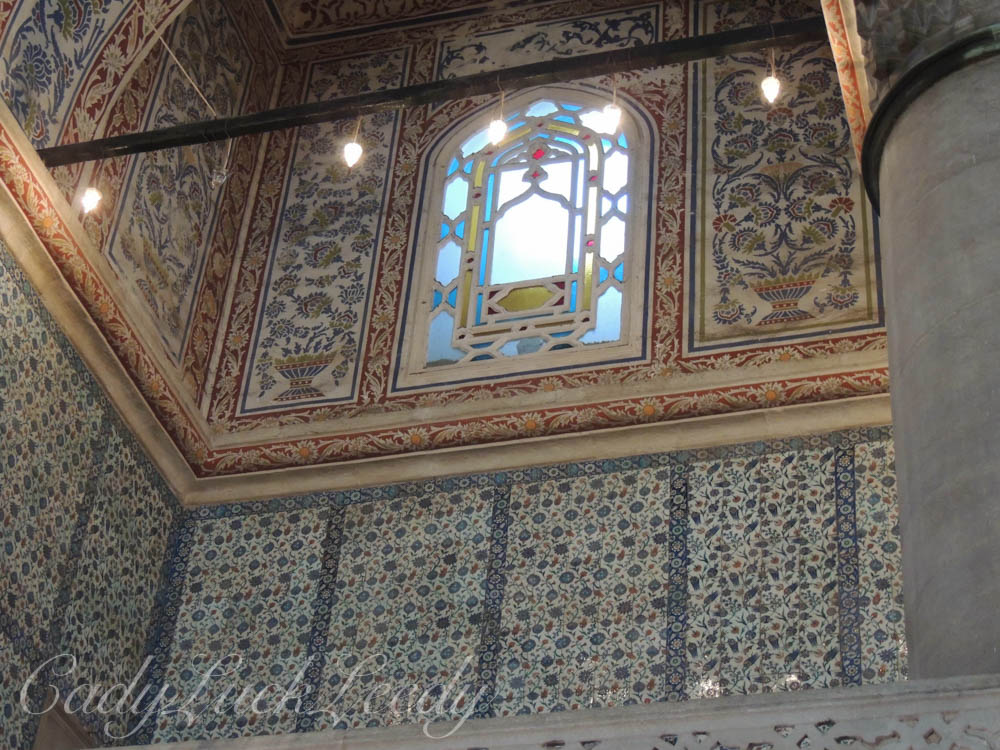
At the opposite end of the park is the Sultan Ahmed Mosque, known as the Blue Mosque, noted for the interior of blue paint and 20,000 rich, blue, handmade, ceramic tiles in fifty different tulip designs. The tiles at the lower level are traditional in design while the tiles at gallery level are flamboyant with exquisite flowers, fruit and cypresses. The upper floors are dominated by blue paint and more than 200 stained glass windows with intricate designs. In addition to the natural light there are massive chandeliers. Ostrich eggs were placed on the chandeliers to repel spiders and prevent cobwebs inside the mosque.

The Courtyard of the Blue Mosque, Istanbul, Turkey

The Courtyard of the Blue Mosque, Istanbul, Turkey

Inside the Blue Mosque, Istanbul, Turkey

Inside the Blue Mosque, Istanbul, Turkey

Inside the Blue Mosque, Istanbul, Turkey

Inside the Blue Mosque, Istanbul, Turkey

Inside the Blue Mosque, Istanbul, Turkey

Inside the Blue Mosque, Istanbul, Turkey

Inside the Blue Mosque, Istanbul, Turkey

Inside the Blue Mosque, Istanbul, Turkey

A Chandelier Inside the Blue Mosque, Istanbul, Turkey

A Chandelier Inside the Blue Mosque, Istanbul, Turkey

The Sultan’s Tale goes like this.

The Blue Mosque was built in six years from 1609-1616 by the architect, Mehmet Aga, who also built the giant black cube at the center of the mosque in Mecca, the holiest shrine of Islam. Sultan Ahmet I  (1590-1617) ascended the thrown at the age of 14 and his greatest achievement was the construction of the Blue Mosque. To prevent future conflicts it was customary for a new sultan to kill his closest brother. Ahmet went against tradition and spared his brother Mustafa’s life. After Ahmet’s death from typhoid at the age of 28, in 1617, his 11 year old son Murat IV, became sultan and had his younger brother, Prince Beyazit strangled, which ended the new tradition and reverted to the old. Murat’s mother, Kösem, was one of the most influential women of her time. Following Ahmet’s death, for nearly a decade Kösem ruled the empire without intrusion because Murat IV,  now the the sultan, ruled at such a young age. When Murat died, Kösem placed her grandson, Mehmet, as the next sultan. Mehmet’s mother, tired of Kösem’s domination, had Kösem strangled in her sleep by the eunuchs. And so the story goes.

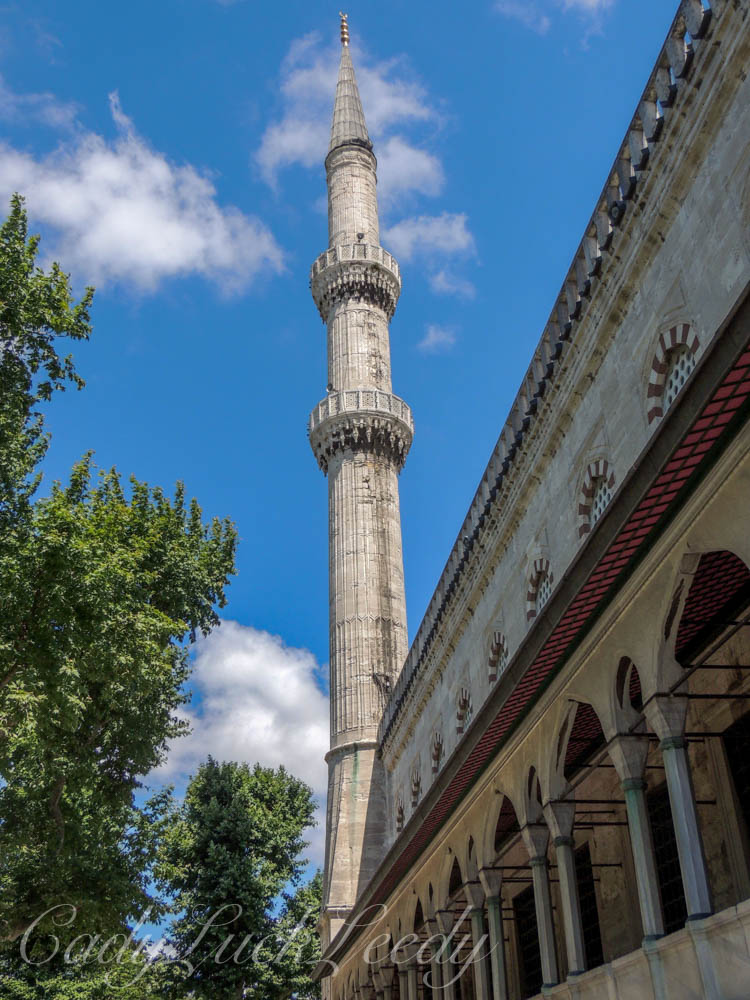
Outside the Blue Mosque are six minarets. Only one is needed.  The imam (prayer leader) or muezzin (a man noted for his talent in voicing the call to prayer) would climb to the top of the minaret five times a day to announce the call. Sultan Ahmet requested six minarets, to flaunt his wealth, but since there were six in Mecca, he had a seventh built in Mecca, as not to upstage the holy shrine.

A Minaret of the Blue Mosque, Istanbul, Turkey

A Minaret of the Blue Mosque, Istanbul, Turkey

Right outside the Blue Mosque is the Hippodrome, the spot for chariot races and a place where people gathered for social and religious disputes, political clashes and violent uprisings. Today there are market stalls here and at night families gather to eat and party.

The Hippodrome, Istanbul, Turkey

The Hippodrome, Istanbul, Turkey

The Hippodrome, Istanbul, Turkey

The Hippodrome, Istanbul, Turkey

The Hippodrome, Istanbul, Turkey

The Hippodrome Market Stalls, Istanbul, Turkey

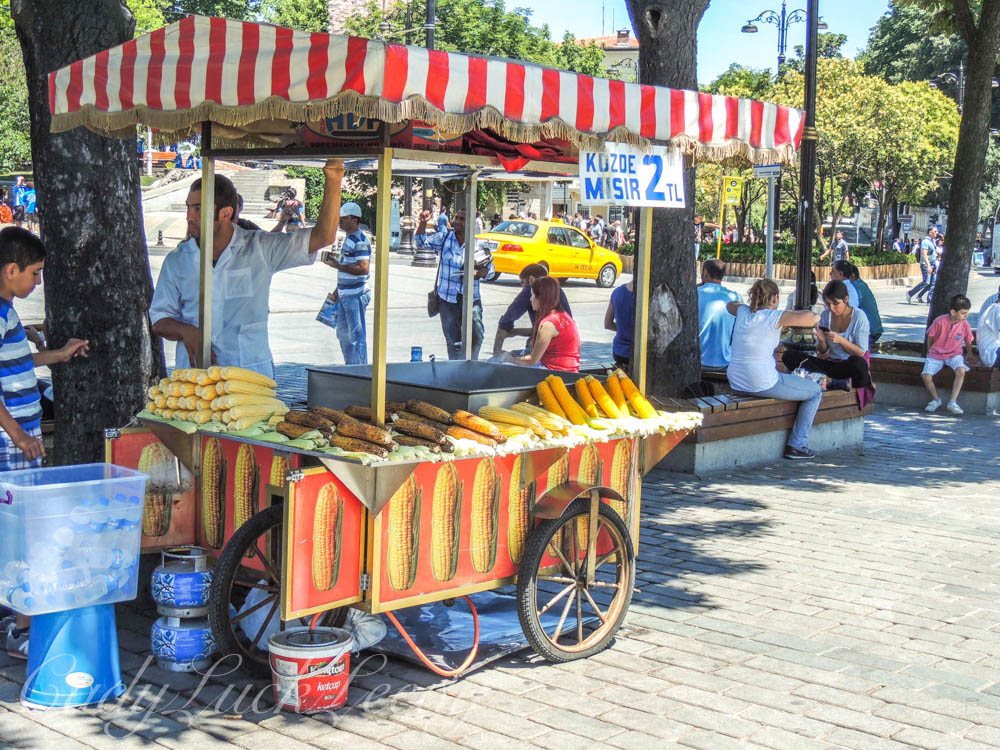
Eating at Sutanahmet Park, Istanbul, Turkey

Eating at Sutanahmet Park, Istanbul, Turkey

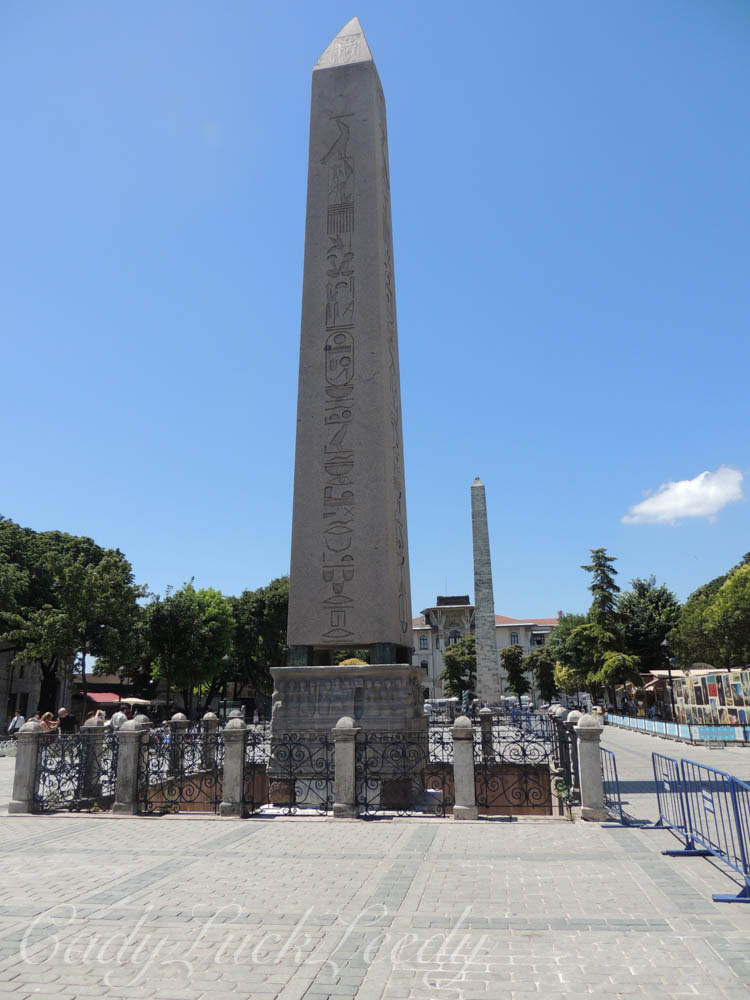
The Egyptian Obelisk was carved 1500 years before the birth of Christ to honor the Egyptian Pharaoh Thutmose III, and to commemorate his military achievements. The obelisk was brought here from the Upper Nile and is only the upper one third of the original massive stone block. The base of the block was cut of local marble and the four sides tell the story of Theodosius the Great, and his family, as they sat here watching the chariot races at the Hippodrome.

The Egyptian Obelisk, Istanbul, Turkey

The Egyptian Obelisk, Istanbul, Turkey

The Column of Constantine was constructed in Istanbul. It was originally sheeted with bronze panels, but in the Fourth Crusade, (early 13th century) the city was looted and the panels stripped to make weaponry.

The Column of Constantine, Istanbul, Turkey

The Column of Constantine, Istanbul, Turkey

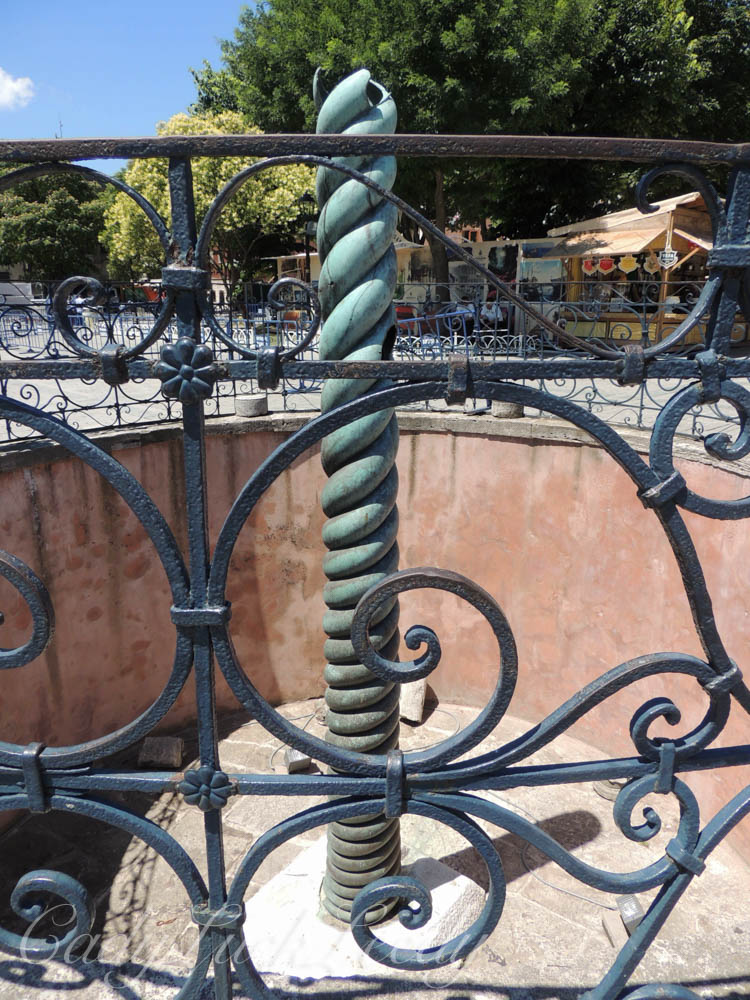
The Column of the Serpent was a victory monument dedicated to the 31 Greek city-states to commemorate their victory over the Persians at Plataea. (479 BC)  Originally, this column showed three serpents twisted together, their heads supporting a golden trophy. The golden trophy is long gone and only the jaw of one snake still exists and it is in the Istanbul Archeological Museum. The Hippodrome also was the place of the famous four cast-bronze horses from ancient Greece. During the 4th Crusade they were plundered and taken to Venice, where they now reside at St Mark’s Basilica.  (See a photo of them in my Venice posts)

The Column of the Serpent, Istanbul, Turkey

The Column of the Serpent, Istanbul, Turkey

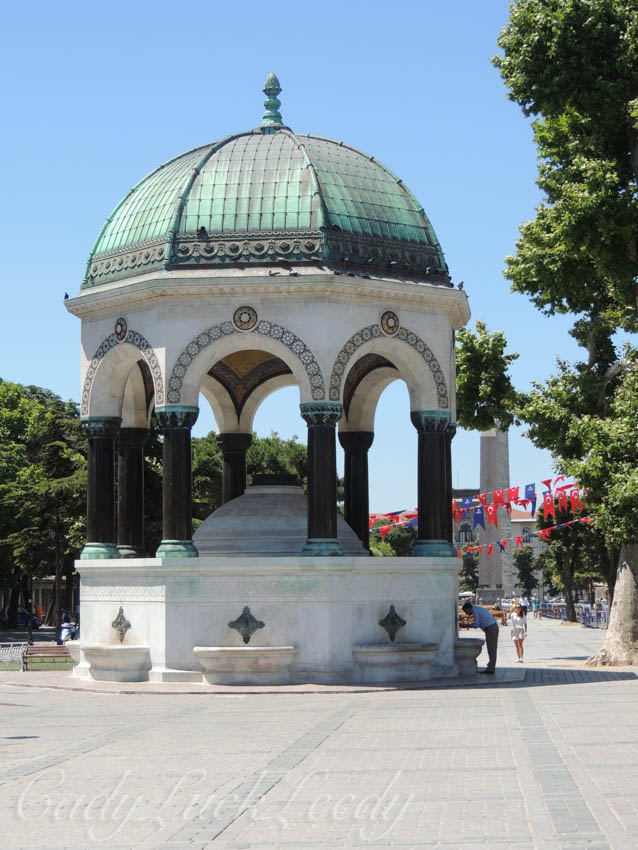
The German Fountain was a gift from the German government to commemorate Kaiser Wilhelm II’s visit to Istanbul in 1898. It was constructed in Germany and transfered in pieces to Istanbul in 1901 and re-assembled on this location.

The German Fountain, Istanbul, Turkey

The German Fountain, Istanbul, Turkey

The Divan Yolu was the main thoroughfare in Byzantine times.  The road started right here where the Golden Milestone still stands in a pit. 1500 years ago this was considered the point of the center of the world and it showed the distances to key locations within the empire.

The Tram Station at Divan Yolu, Istanbul, Turkey

The Tram Station at Divan Yolu, Istanbul, Turkey

The Golden Milestone, Istanbul, Turkey

The Golden Milestone, Istanbul, Turkey

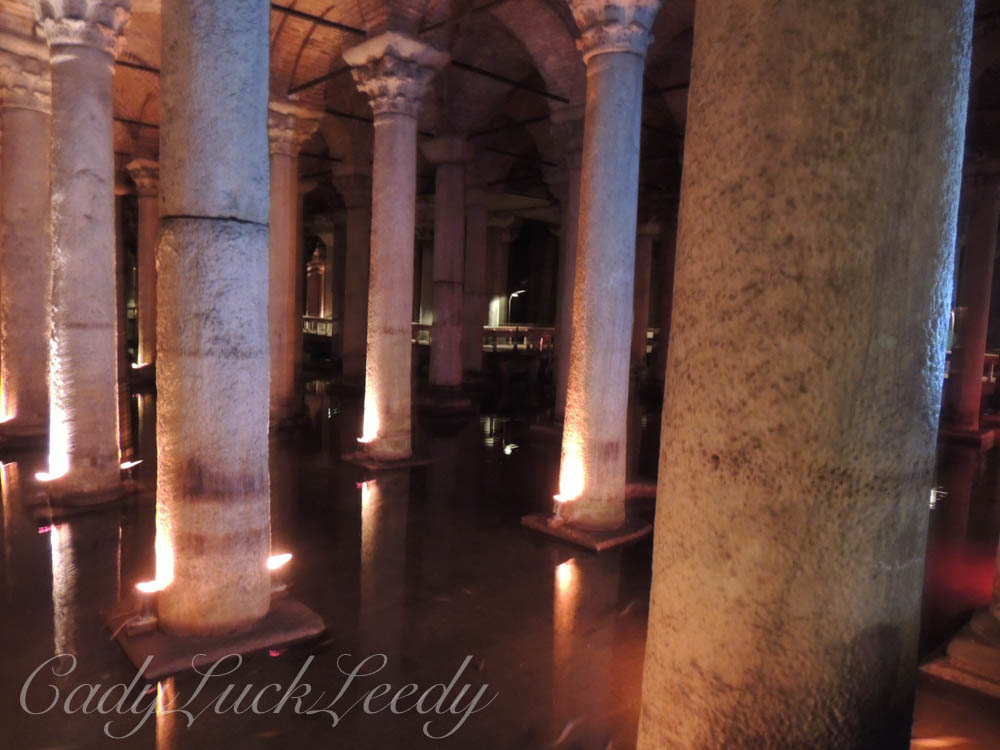
Below ground, the Underground Cistern, was a vast reservoir that held  water reserves for ever growing Istanbul. The cistern covers an area of two football fields and could hold 27 million gallons of fresh water. 336 columns support the brick ceiling, most of them coming from earlier Roman ruins. Clay pipes and aqueducts carried the water twelve miles to this cistern. Today the cistern is open to the public.  The cistern is a shallow pond with a walkway around it. At the exit of the cistern a stage is in the water and serves as an exhibition hall for art festivals and concerts!

Underground Cistern, Istanbul, Turkey

Underground Cistern, Istanbul, Turkey

Underground Cistern, Istanbul, Turkey

Underground Cistern, Istanbul, Turkey

The Ancient Columns in the Underground Cistern, Istanbul, Turkey

The Ancient Columns in the Underground Cistern, Istanbul, Turkey

Underground Cistern, Istanbul, Turkey

Underground Cistern, Istanbul, Turkey

I hope you enjoyed the day at the Blue Mosque!

THE SPECTACLED BEAN

Tales, Thoughts + Tribulations of a Free Spirit in Suburbia

Walking Away

Travels on foot

Teacher nickname: The Three Hairs

Minding my mind, one thought at a time.

Tra Italia e Finlandia

Un lungo racconto fotografico.

seanbreslin.jp

Photography, hiking, walking, and cycling across central Japan — from quiet mountain paths to everyday life around Nagoya.

Lost in Translation

Looking for meanings in words, images and sounds

Journeys with Johnbo

Reflections on places traveled and photos taken.

M/VGratitude

Cruising with the Thyrre Family

Caroline's Travel Adventure Blog

Where my Travels and my Blog merge together.

Just Me, Nobody Special

The mental meandering that cross my keyboard

Jennifer's Journal

Website & Blog of J. Kelland Perry, Author

Slow Shutter Speed

A photographic journey.

Ann Mackay: Inspired by Nature

Photography celebrating flowers, plants, and the natural world

Still Restlessjo

Roaming, at home and abroad

Fine for Friday

The Corner Garden

Picture This

Photography, Travel and Retirement

World Traveller 73

Upgrade Your Travels. First Class Luxury Travel from all parts of the Globe. Business Class Airline, Lounge and Hotel Reviews, Stories and Adventures

Rachel Meets China

A China travel and lifestyle blog