Travel, Gardens, Food, Photography, Books, Shoes

Posts tagged ‘Gardens’

A Cottage in the Cotswolds: Snowshill and Broadway Tower

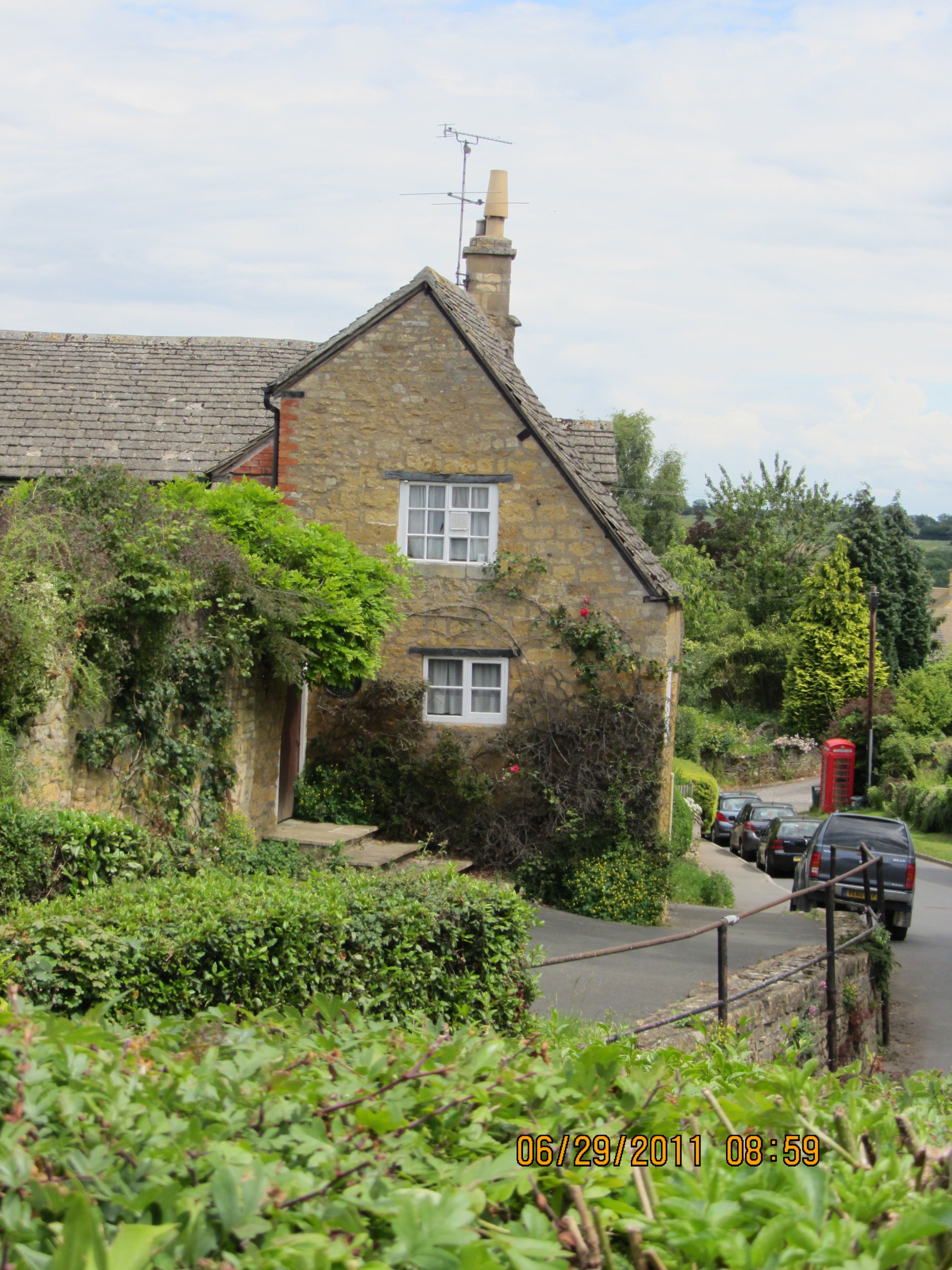
A Cottage in Snowshill

A Cottage in Snowshill


There are so many lovely villages in the Cotswolds! Every time we explore a new village  I think, “Oh, I love this one!”  The village of Snowshill was like that! We made a slight turn into the village, up and around St Barnabus Church and Cemetery and then past the Cotswold stone cottages, laden with bursting roses, to admire the tended gardens and the sheep grazing in the pastures. It’s truly hard to believe there are still villages to be found like this! 

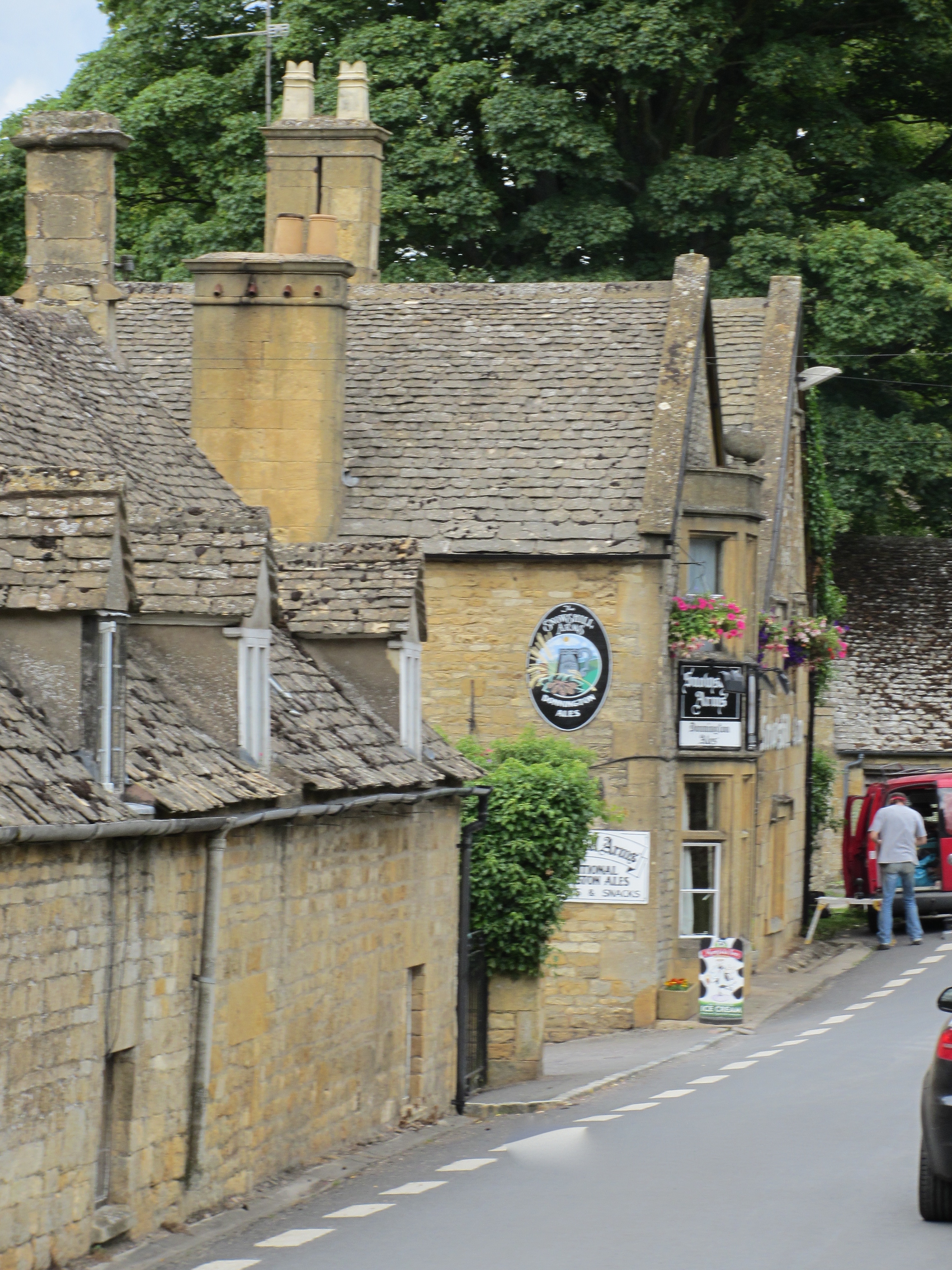
Visiting the Snowshill Arms, the local friendly pub, I see the featured Donnington beers can be found in seventeen pubs in the area!  We could do a pub crawl!  Better yet, for the more adventurous, there is a 62-mile circular walk, called the “Donnington Way,” from fifteen pub-to-pub sections, where you can join the walk from any pub. Some Donnington Inns offer B&B’s, so you can walk distances of your choice. There is a map available for purchase called, the OS Outdoor Leisure 45, the Cotswolds, that covers the entire route! What a grand way to see the well-kept countryside and hidden villages!


Snowshill Arms

Snowshill Arms

The Only Pub in Snowshill

The Only Pub in Snowshill

Next we visit the fragrant lavenders fields of Snowshill Lavender Farm. Rows and rows of sweet fragrant lavender! There is also a retail shop and small restaurant here. A very relaxing way to spend the afternoon! Returning to Chipping Campden, let’s round out the day strolling the meadows of Broadway.

Broadway Tower is a folly located on Broadway Hill, near the village of Broadway, UK. The tower was the brainchild of Capability Brown and designed by James Wyatt in 1794, in the form of a castle, and built for Lady Coventry. The tower was built on a “beacon hill” where torches were lit on special occasions. Lady Coventry wondered if a beacon built on this hill could be seen from her house 22 miles away and sponsored the construction of the folly to find out. Broadway Tower could clearly be seen! Today the tower is a tourist attraction with a country park of deer. There is also a restaurant and gift shop here. The grounds are a perfect place to picnic!


For more information on Cotswold Lavender see: http://www.cotswoldlavender.co.uk/

For more information about Snowshill Arms see: http://www.donnington-brewery.com/the_snowshill_arms_snowshill.htm

A Cottage in the Cotswolds: Ebrington


Oak Cottage Gate, Ebrington, UK

Oaks Cottage Gate, Ebrington, UK


I met a lovely man in a Chipping Campden clothing shop on High Street, who asked me what brought me to the village. When I answered, “my ancestors,” he invited me to his village and church in Ebrington. You see, I am making my way to Kinlet, Shropeshire, UK and St John the Baptist Church, where my ancestors, Sir Humphrey Blount and his wife Elizabeth, are buried. 

Ebrington, UK

Ebrington, UK

 Ebrington, a village of narrow lanes and tiny streets of Cotswold stone cottages and thatched roof cottages, is a just a short walk from Chipping Campden. The Ebrington Arms Inn and Pub, is a great place to eat and quench your thirst before exploring.  The Inn features guest rooms, a restaurant and pub, the hub of village life. The Inn was packed and will not disappoint you.   Walking up a short hill I came to a narrow lane, walked past the Church Steps Cottage and on into the gate of St Eadburgha, named after Eadburgha, the daughter of King Edward the Elder. The tower and south doorway of the church are believed to date from the 13th century, but the church, like most ancient churches, has been enlarged and restored over the years. Stepping inside the church, which is not locked like so many these days, there is  a stone coffin, lepers seat, and other ancient  architectural  details. Be sure to read St Paul’s Admonitions to Wives and Husbands to the left of the font! St Eadburgha’s  Church stands on a commanding position on one of the highest hills in the Cotswolds and the tower can be seen for miles around.  We loved the thatched cottages, stone walls, garden gates and abundant flowers in Ebrington. I discovered that the bird, that I thought was rather still for a long time on one of the cottages, was part of the thatched roof and made of straw! Every cottage had a name, and upon returning home I was determined to name my own, The End Cottage. Not far from Ebrington, is Hidcote Manor, a National Trust Garden, one of the most lovely gardens in the UK.  The day we were here it was closed, bummer, but what a wonderful excuse to come back to the village of Ebrington! Enjoy!

For more information about the Ebrington Arms Inn and Pub see:

Home


The Church Cat at St Eadburgha's

The Church Cat at St Eadburgha’s

A Cottage in the Cotswolds: Chipping Campden

Walking through the village of Chipping Campden, we come to St James Church, a beautiful golden-yellow colored stone sanctuary set in the meadows. The path to the church is flanked with old tombstones that have been moved here and huge trees that seem to have another tree growing inside them!

Then we walked along the lanes and through the hamlets of straw covered cottages, gardens, and old street lamps. It felt like walking in an old English fairytale! Proud holly hocks were basking in the dappled sunlight everywhere!  After our walk we took a short stroll off High Street to the Eight Bells Inn for dinner. Originally built in the 14th century, to house the stonemasons that built St James Church, it later was used to store the peel of eight bells that were hung in the church tower! Hence the name, Eight Bells! The Inn was rebuilt using most of the original stone and timbers during the 17th century. In front of the Inn are bountiful hanging baskets of flowers to welcome you and usually a fancy car of some kind outside!  Enjoy the day in Chipping Campden!


For more information about the Eight Bells Inn see: http://eightbellsinn.co.uk/

Travel Theme: Misty

The Stanway Fountain opened in June, 2004. The single-jet fountain which rises over 300 feet is the tallest fountain spray in Britain. The fountain has a two inch bronze nozzle and the water is driven from a 100,000-gallon reservoir, 580 feet above the canal in which it is placed, and is operated by remote control! Follow me as we explore the “Cottages of the Cotswolds.”

The Fountain at Stanway House, UK

The Fountain at Stanway House UK

A Cottage in the Cotswolds: Rosemary and Thyme

Every year, in early spring, when my garden is beginning to bloom, I tend my garden in the early morning hours, before it gets HOT and HUMID, sometimes still in my nightgown…….don’t tell the neighbors please!   In the evening I curl up on the couch to watch my favorite British gardening detectives, Rosemary and Thyme. The gardening mysteries feature Rosemary Boxer and Laura Thyme, professional gardeners thrown together by a sudden death, who are forced to re-access their lives.  Their friendship leads them to gardening ventures set in the beautiful villages and gardens of the English countryside. Being gardeners, they overhear secrets and dig up clues which lead them to solve crimes and capture criminals, and at the same time handle floral problems! The series ran from 2003 to 2007, but I watch the mysteries every year, one episode at a time and never tire of it!

Would there be a real place that mirrored the villages and gardens in the Rosemary and Thyme mystery series?  I wanted to find a place where Miss Marple, from the Agatha Christie books, (the finest mystery writer of all time, in my opinion) would be settling down to tea with her cronies in the afternoon. They would be in the garden…….with the fragrance of fresh bloomed flowers…..sweet cut grass….. bees all a buzz…….

I found that delight in the villages of the Cotswolds. 

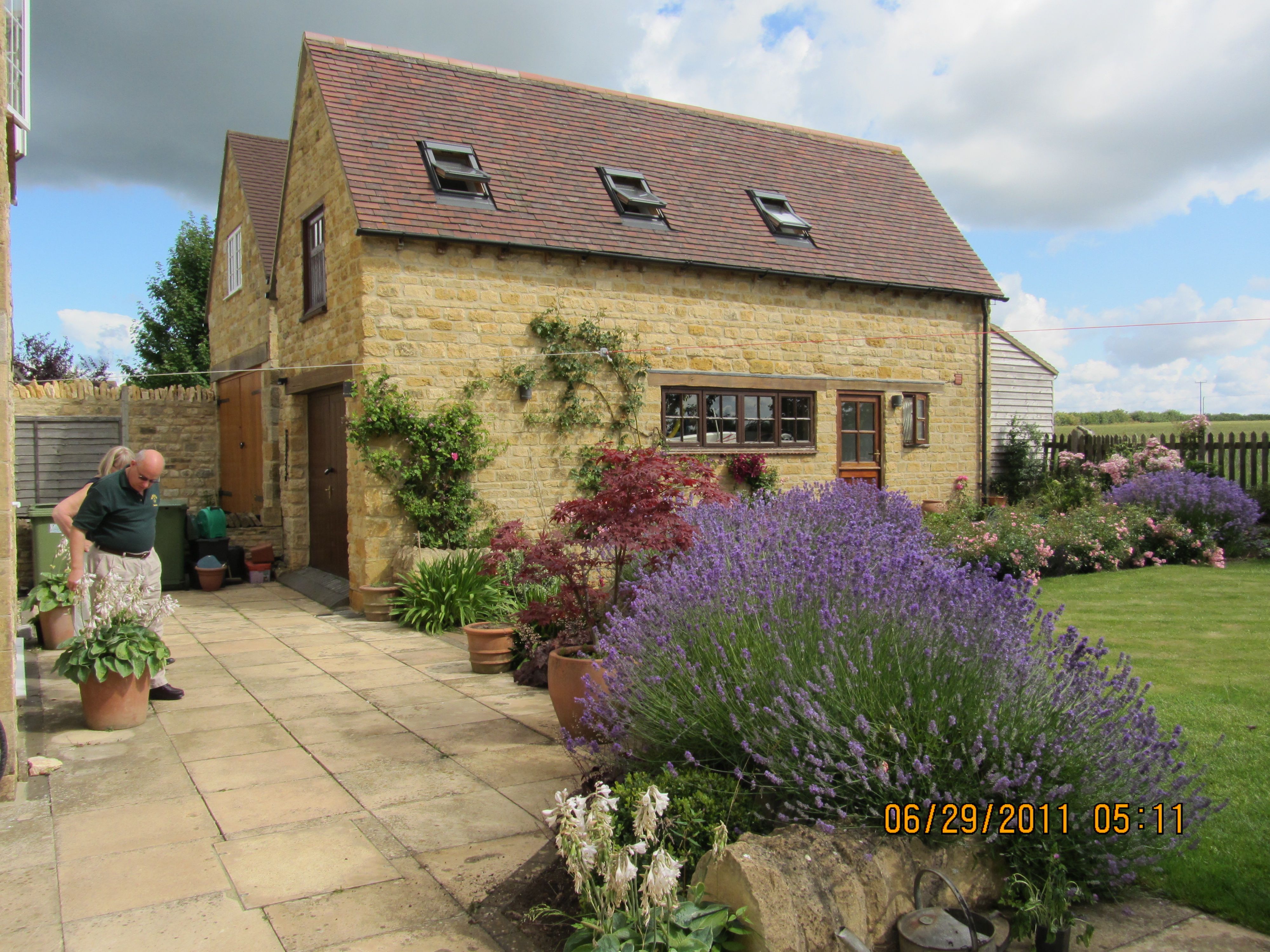
Bramley House, Chipping Campden

Bramley House

The Bramley House Cottage

The Bramley House Cottage

For this adventure we are driving northwest from London, to our first stop, Chipping Campden, (population 2,206) in the Cotswold (meaning market) district of Gloucestershire. In the Middle Ages, Chipping Campden was the wool trading center, and High Street is lined with fine honey-colored limestone buildings built with Cotswold stone. The Market Hall was built in 1627 and the grand wool church, St James, in 1500. Local wealthy silk merchant, Sir Baptist Hicks, built the Almshouses and the Woolstaplers Hall in the 17th Century. His home, the Campden House, was destroyed by fire during the English Civil War, to prevent it from falling into the hands of the Parliamentarians, but his descendants still live in the Court House attached to the site. 

From the 17th century on, the village was known for the rural Cotswold Olimpick Games. Later these games became the Robert Dover Cotswolds Olimpick Games because the games were held in late May, on Dover’s Hill.   One of the noted games was the sport of shin-kicking. (Hay was stuffed down pants to ease the blows) This game and others are still played today during the Cotswolds Olimpicks. Following the end of the games there is a torch-lit procession back into town, after the bonfire and fireworks display, and dancers take over the local square. The next day the Scuttlebrook Wake takes place. The locals wear fancy dress costumes and follow the Scuttlebrook Queen and her attendants into the village, with the Morris Men leading a decorated dray. Then there is dancing around the Maypole and the prizes for the games are handed out. The Morris Men (from “Moorish” dancers) were working peasant men, who wore shin pads, (a holdover from the shin-kicking games?) and are considered to be the original rural folk dancers of England. The current Morris Men of the Cotswolds, claim their lineage to the early dancers, only one of four teams in England who can boast this achievement! 

In Chipping Campden we will be staying at the Bramley House B&B, not far from Dover’s Hill. It is a lovely double Cotswold stone cottage with an additional cottage overlooking the lavender garden. Jane cooked English breakfasts, made to order, and served it with cereals, yogurts and fresh pressed juices. She was also very helpful with choosing our sights of the day. We stayed several days, picking a new village everyday to explore! It is a gardener’s paradise! Enjoy!

For information about Bramley House see: http://www.bramleyhouse.co.uk/


A Word a Week Photo Challenge: Contrast

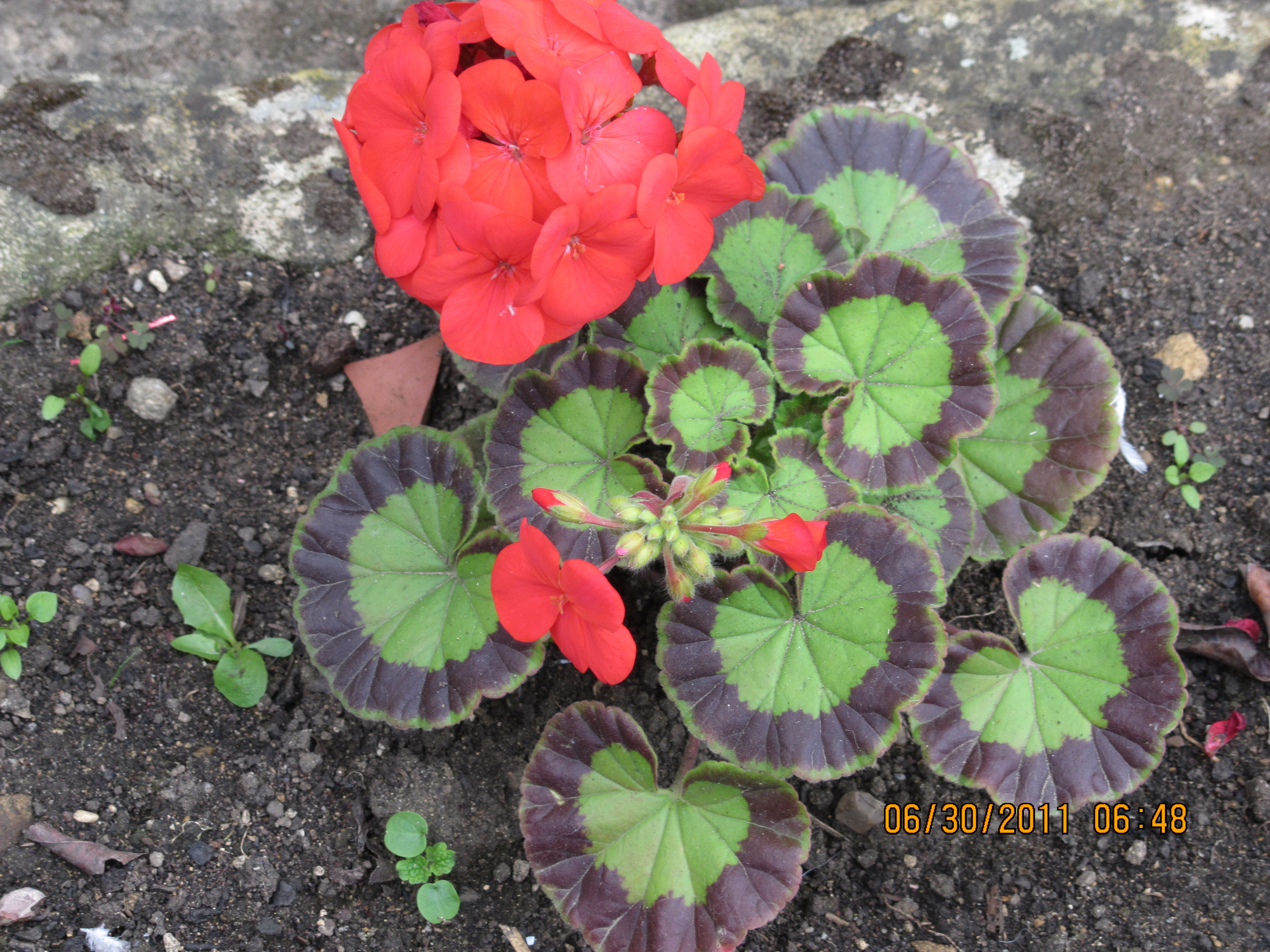
I love flowers! Today for A Word a Week Photo Challenge: Contrast, I have a picture of a  geranium that I took in an English Garden in Broadway, UK. Enjoy!

Geranium in an English Garden

A  Geranium in an English Garden


Traipsing Through Tuscany- Montefollonico to La Foce

Our day trips from Montepulciano continue.  Today we explore the village of Montefollonico, a small medieval hamlet surrounded by thirteenth century walls of fired bricks. In ancient times the village was called Monte a Fullonico. The Romans called “fullones” people that worked the cloths, so  Montefullonico was the mountain of the cloth workers. The first noted people that lived here settled near the Benedictine Monks Abbey in the 8th Century.  The monks raised sheep and dyed the wool.  These small Tuscan villages give you a variety of views of the Italian countryside and life here.  Enjoy!

The Sheep!

The Sheep!


Next is one of my favorite spots in Tuscany!  I am showing additional pictures I took of La Foce, the beautiful country estate of the American, Iris Origo, and her family.  Her daughter continues to run the estate, garden, restaurant and B&B. There are tours offered of the estate and multi-layered gardens.  This would be another excellent choice for a home base while touring Tuscany by car. For more about the story of La Foce I have detailed information in the post:  https://cadyluckleedy.com/2013/04/11/war-in-val-d-orcia/.  It is a must read about this heroic woman and her life in Italy! 

For more information about La Foce see:  http://www.lafoce.com

Traipsing Through Tuscany- The Piccolomini Pienza

On Our Way to Pienza

On Our Way to Pienza

From Monticchiello we are off to Pienza, a small town that we can see on the hill in the distance. Pienza, is on a hill, but after arriving in the town, walking here is on flat ground. Unlike Montepulciano,  which is all up hill, Pienza is flat. There is a parking lot outside of town, but since it is full, we drive closer to the school and find a spot there.  Walking to the Town Gate, Porta Prato, I stop and admire a beautiful lawn and garden.  Before I know it an older gentleman came from the porch of the house and down to his gate to talk to me. He speaks Italian and when he realizes I am an American, he thanks my husband and me for saving Italy in WWII!  Then he opens the garden gate and offers me a tour of his lovely flower garden.  It was beautiful and just one of the many flower gardens in this small village.  Directly in front of Porta Prato is a public garden and the fragrance here is unbelievable!  The lawn is surrounded in a small bush hedge covered in white blossoms that are so fragrant!  I tried asking everyone and no one knew what that bush was and even my elderly gentleman friend was gone when I went back by his house to ask him, as we made our way out of town.  Darn! That’s what I will always remember about Pienza, the flowers and the fragrances.

Enea Silvio Piccolomini (1405-1464) was born in Corsignano, the small town on a hill overlooking the Orcia and Asso Valley.  In 1458, Piccolomini became Pope Pius II and when he returned to his home town, he decided to transform the town with the first humanist concept of urban design, (Renaissance) with the aid of Bernardo di Matteo Gamberelli, known as Rossellino, ingenere di palazzo, of Pope Nicholas V in Rome. Rossellino was responsible for the overall layout of the town which consisted of a main street joining two town gates.  On this basic structure he planned the major buildings around a town square, which served as an outdoor room, called the Piazza Pio II. The Piazza is surrounded by the Duomo, the Piccolomini Family Palace, City Hall with the Bell Tower, and the Bishop’s Palace.  All were designed by Rossellino in five years time. In 1464 the work stopped because both Pope Pius II and Rossellino, the architect, were dead. What we see today was completed a century later.  The town was renamed, Pienza after the Pope.  What remains now is a mixture of old stone, potted plants, grand views and a fragrance not to be forgotten.

Ring Around the Kerry

This is my last posting of 4, of the Going Green to Ireland Series.

St Finian's Beach

St Finian’s Beach

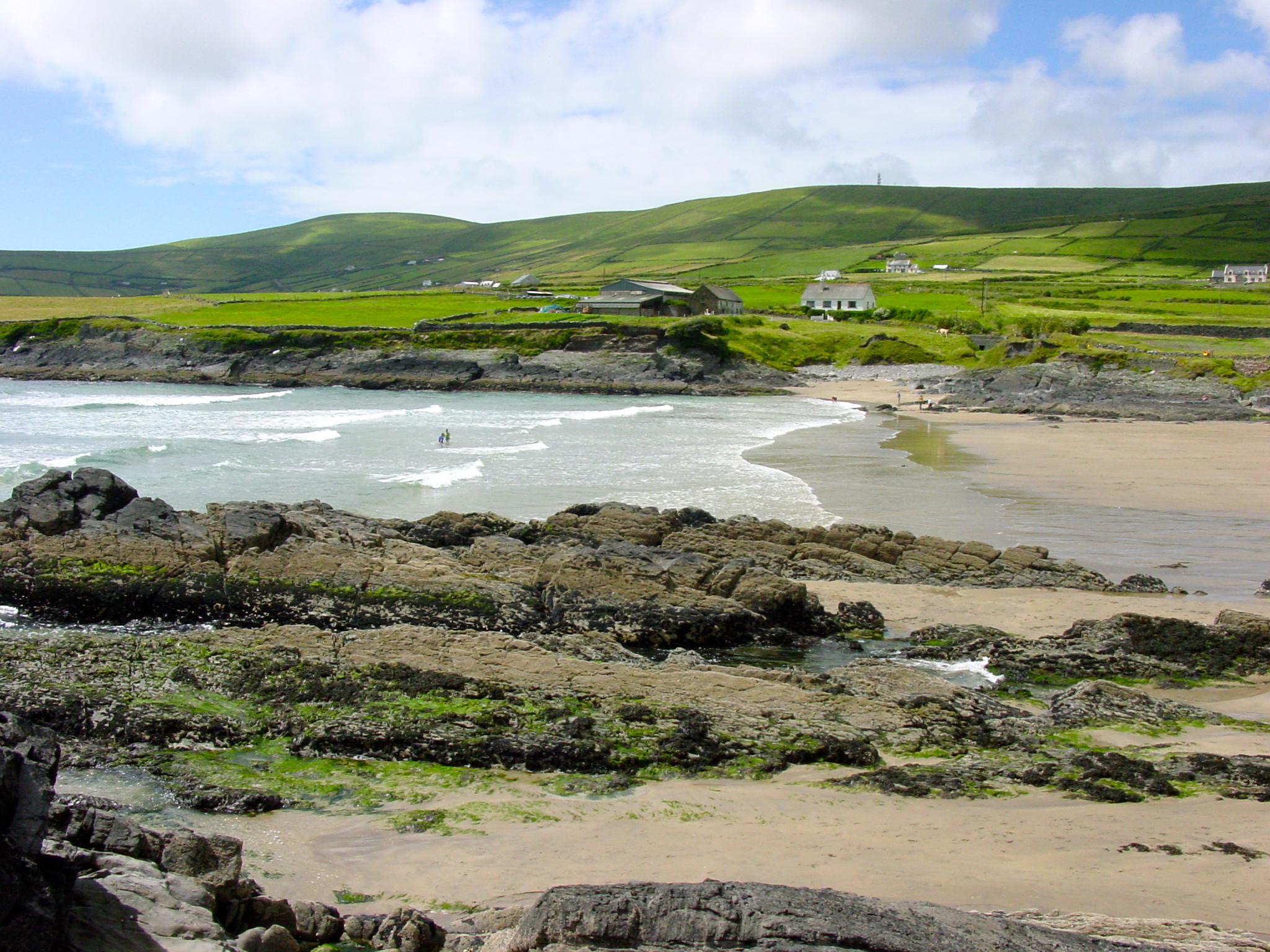
We are on a long circular stretch of road called the Ring of Kerry from Killorglin to  Kenmare. We are adding in the Skellig Ring, a twenty mile, bus free ring road, traveling out to Portmagee. Here we reach St Finian’s Bay, where we will staying at the Beach Cove B&B, owned by Bridie O’Connor.

The Beach Cove B&B

The Beach Cove B&B

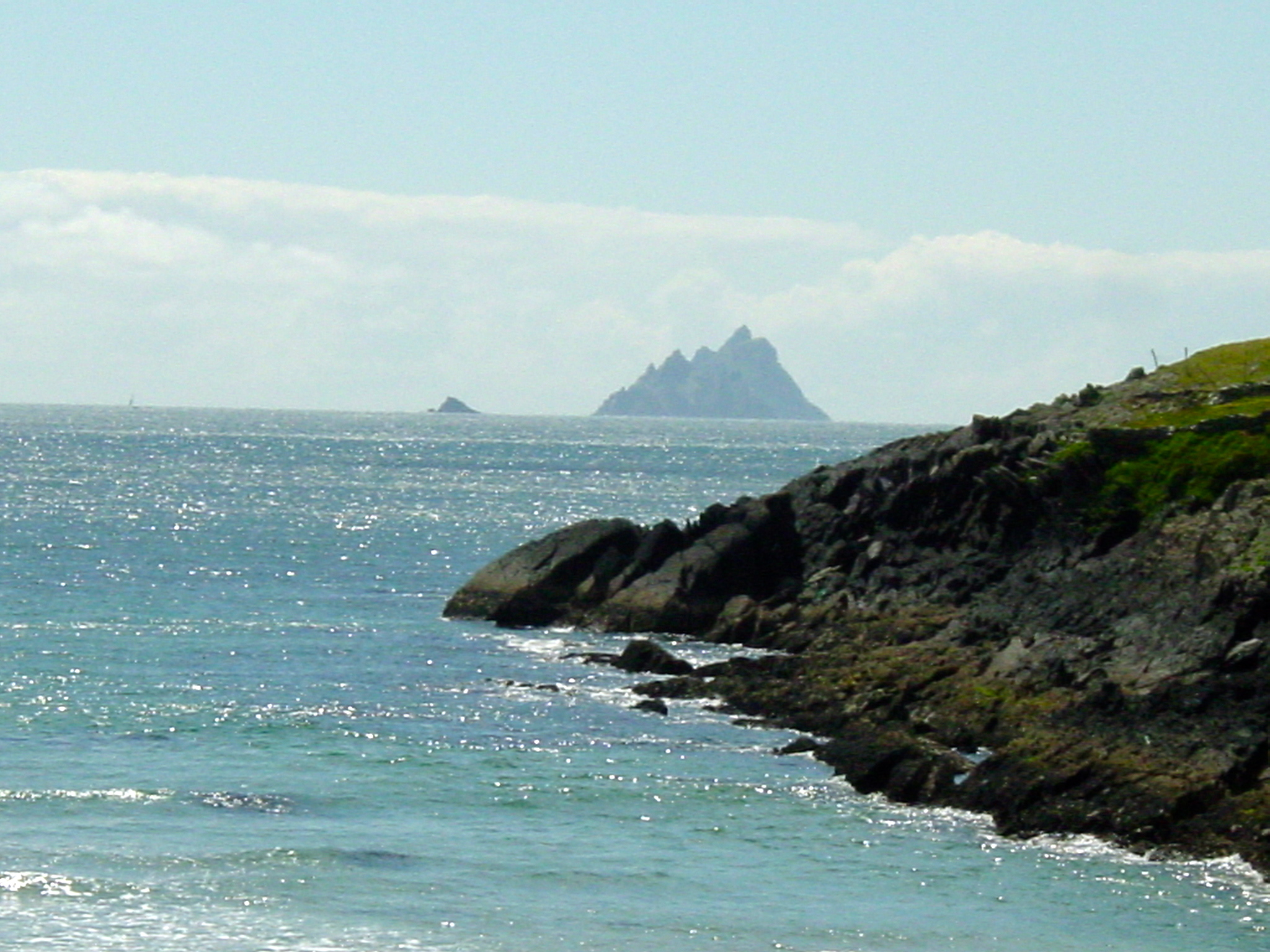
She offers four comfortable rooms on Coomanaspic Ridge, overlooking the beach at St Finian’s Bay. We are welcomed by bright sunshine, but cool temperatures, and as we sit on her lawn bundled up in our jackets and wool caps to watch the world go by, there are people in the bay swimming. I guess if the sun is shining make hay or swim!  Later we travel around the entire Skellig Ring, and I like the antics of the puffins as well as the views of the Skelligs, two huge slate and sandstone rocks, seven miles from the shore.

The Skelligs

The Skelligs

Skellig Michael, the larger of the two, has a tiny cluster of abandoned bee hive huts clinging near the summit. The island was originally inhabited by ultra-pious, sixth-century Christian monks seeking isolation to get nearer to God. The smaller island, Little Skellig, is home to a colony of gannets (a large sea gull) protected by law from visitors stepping foot on shore.

The Beach Cove B&B is perfectly situated on the bay and is just down the road from the Skelligs Chocolate Factory. Yes, a chocolate factory on the tiny road around the bay! Inviting visitors in for a sample they proclaim their chocolates are “ never boring, always gorgeous, and sometimes a little different…..just like the Irish!”  Where else can you find dark chocolate, lime zest and pepper chocolates, I think?  I buy several different varieties for our road trip. Fabulous! Spending only one night here we move on the next day following the ring along the shore and then back to the bigger Ring of Kerry to Kenmare, a lovely little town where we stop for a look see and lunch.
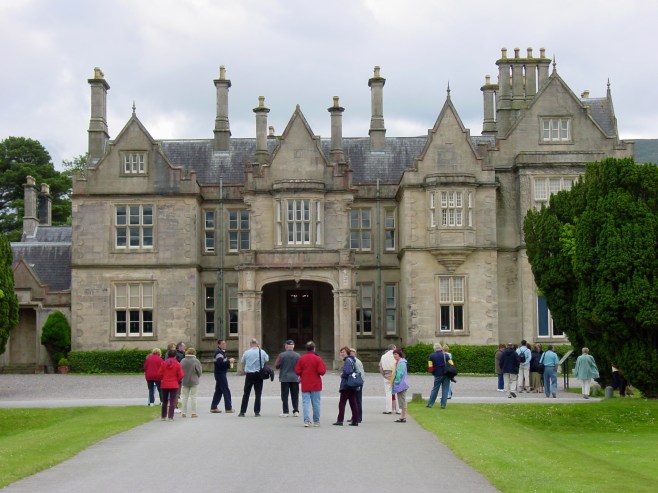
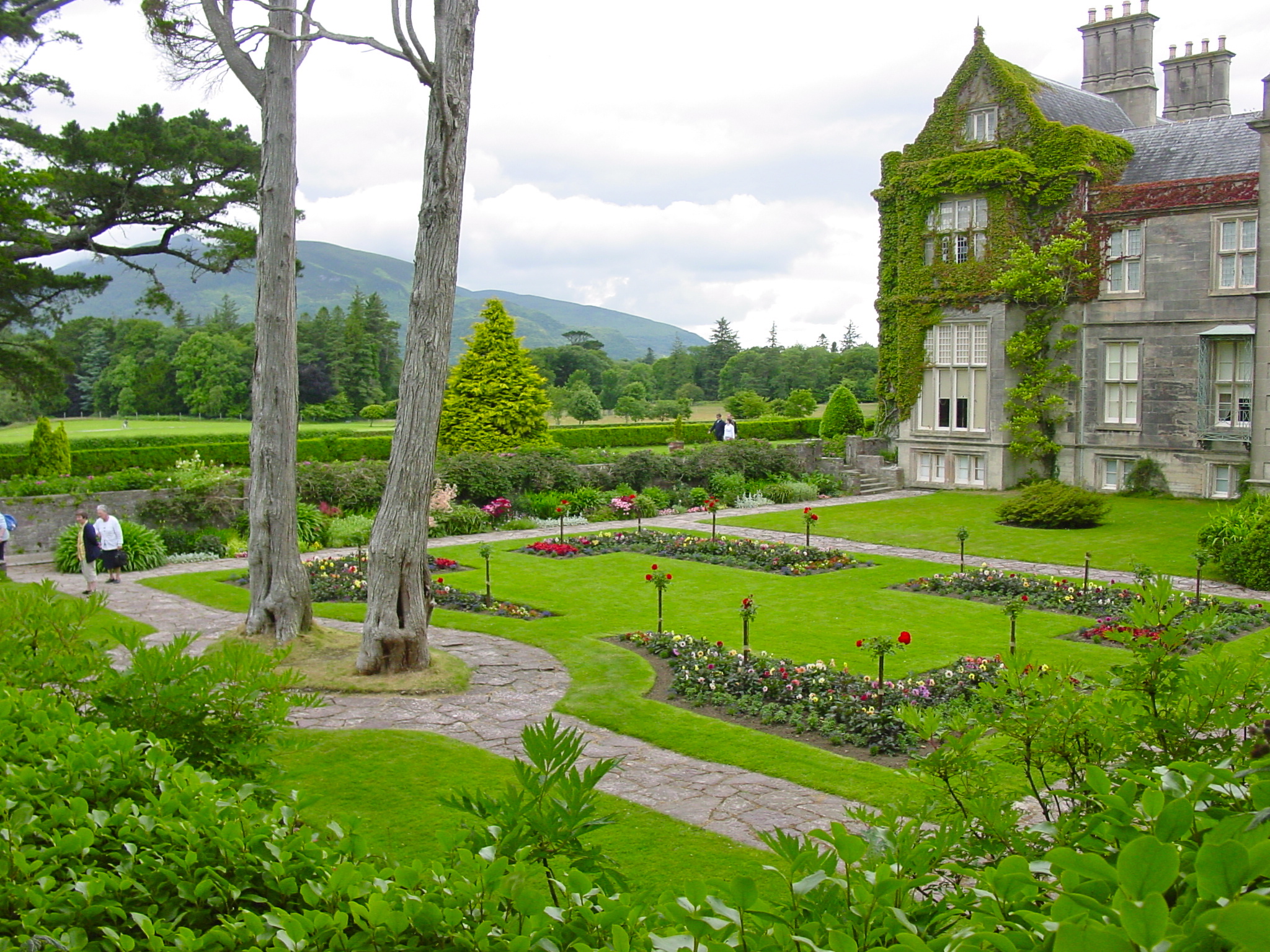
Muckross House

Muckross House

Muckcross House Garden

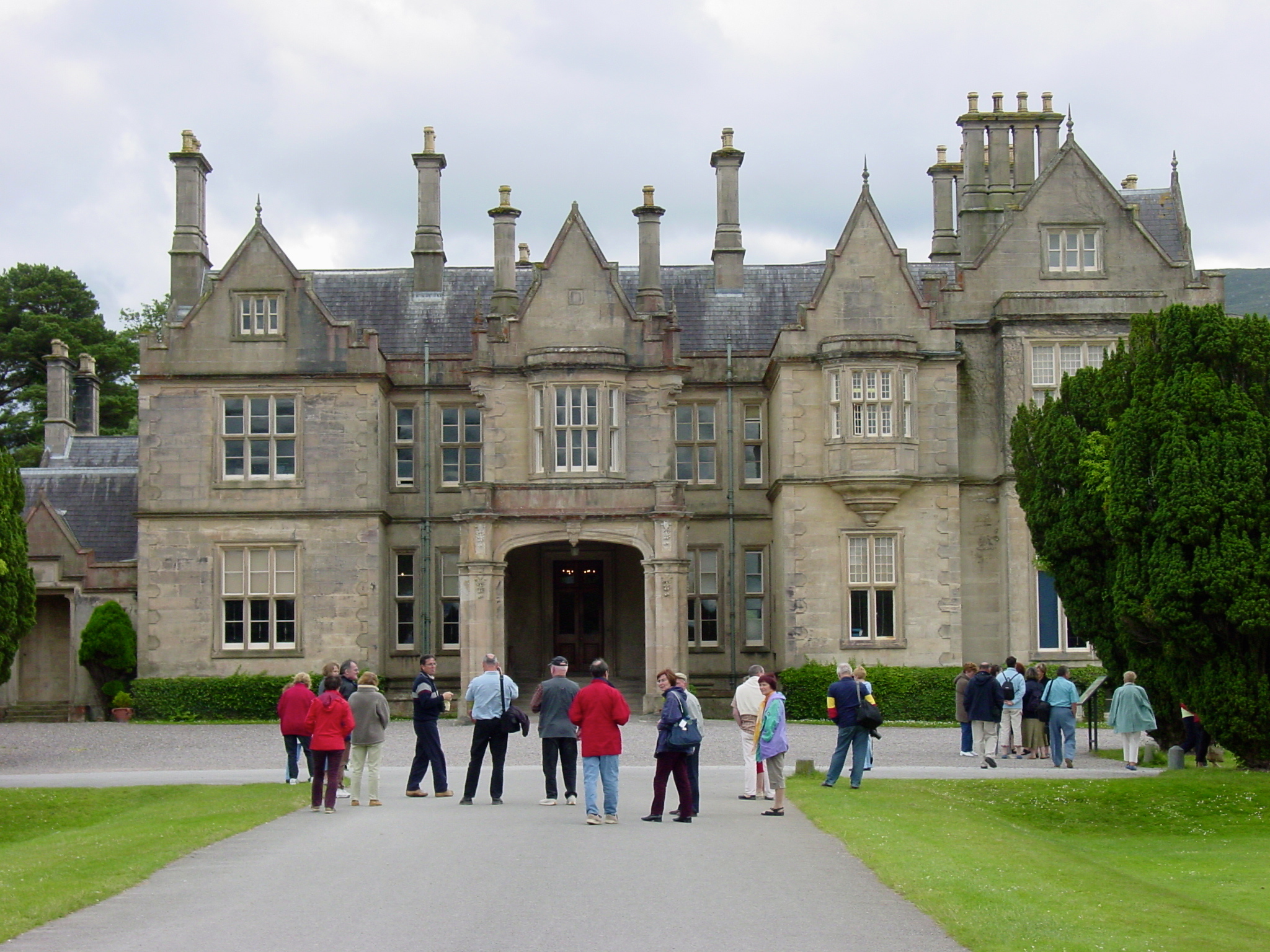
Our last stop is the Muckross House, located on the small Muckross Penisula, located between Muckross Lake and Lough Leanne. Muckross House is a mansion built in 1843 for Henry Arthur Herbert and his wife, watercolorist Mary Balfour Herbert. With sixty-five rooms, expansive improvements were made in the late 1850’s in preparation of the visit of Queen Victoria in 1861. It is said that these improvements for the queen’s visit resulted in financial difficulties for the Herberts’ resulting in the sale of the estate in 1899 to Arthur Guinness, who wanted to preserve the dramatic landscape. In 1911, the estate was sold to William Bowers Bourn, an American mining magnate. In 1932, Muckross House and the 11,000 acre estate was presented to the Irish nation, and became the first National Park in the Republic of Ireland and formed the basis for the present day Kilarney National Park. The house and grounds are beautiful!  Be sure to take the cart ride out to the falls!

Last, but not least, I want to mention my favorite author, Maeve Binchy.  I picked up my first “Maeve” book in an English bookstore in Quebec, Canada, mostly because I thought she had the most unusual name. I went on to read every book I could find.  A novelist, playwright, short story writer, columnist, and speaker, she is known for her humorous take on small-town life in Ireland and her descriptive characters. I am inspired by her. Her novels have been translated in 37 languages and sold more than 40 million copies worldwide. She finished third in a 2000 poll for World Book Day. Binchy was raised Catholic and attended convent schools, but a trip to Israel affected her life and her career.  To quote Maeve.

“In 1963, I worked in a Jewish school in Dublin, teaching French with an Irish accent to kids, primarily Lithuanians. The parents there gave me a trip to Israel as a present. I had no money, so I went and worked in a kibbutz– plucking chickens, picking oranges. My parents were very nervous; here I was going out to the Middle East by myself. I wrote to them regularly, telling them about the kibbutz. My father and mother sent my letters to a newspaper, which published them. So I thought, It’s not so hard to be a writer. Just write a letter home. After that, I started writing other travel articles.”

Maeve went on to write and write. I love all her books, but I re-read every year, The Lilac Bus and Evening Class. My inspiration, is her book, the Maeve Binchy Writer’s Club, words of encouragement in letters from Maeve. To read about the Irish culture, Maeve Binchy, is the author for you! Sadly, Maeve passed in 2012 and is missed by readers everywhere.

For more information about Beach Cove B&B see: http://www.stayatbeachcove.com

For more information about the Skellig Chocolate Factory see: http://www.skelligschocolate.com

For more information about Muchross House see:http://www.muckross-house.ie

For Information about Maeve Binchy see:http://www.maevebinchy.com

The King of Cong

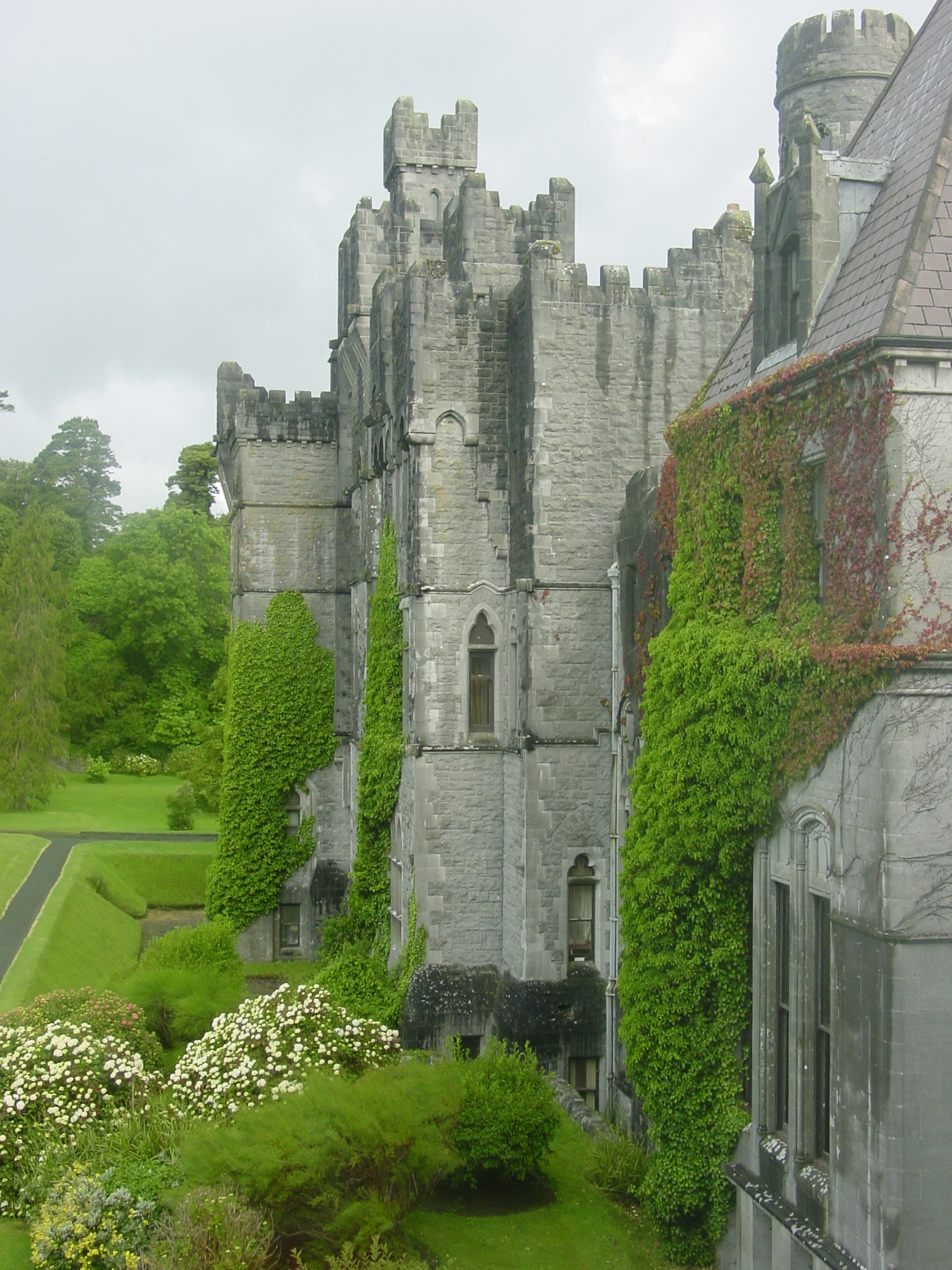
A Look at Ashford Castle

A Look at Ashford Castle

This is Part II in the Going Green to Ireland series.  Today we have made our way to Cong!

Ashford Castle is a medieval castle built in 1228 by the Anglo-Norman de Burgo family. Over the centuries the castle has been expanded and turned into a five star luxury hotel near Cong on the Mayo/Galway border in Ireland, on the shore of Lake Corrib. In 2012 the hotel was voted the best resort in Ireland and the third best in Europe by Condé Nast Traveler. We arrived at the expansive wrought gates and drove down the long driveway to the castle at early dusk. In the shadows I felt just like a maiden returning to the manor. We were shown to a beautiful corner room of the hotel with views of the garden and Lake Carrib.

King George Ding Room at Ashford Castle

King George Dining Room at Ashford Castle

The dining room was our next stop, just like something out of Downton Abbey, but on a much larger scale. It was tuxedos and white gloves for all the servers. Later, we topped off the evening in the castle pub, where the singing was about to begin. The Irish music was so captivating, and I had had just enough drink.  The result: I was coerced to go onstage and sing. It was so much fun! However, there was a group in the rear of the pub who would rather talk than listen and/or sing. Before I got up for the sing-along with the entertainer, he had warned the inattentive group to keep it down. We began our song, reading the lyrics from a tele-prompter. Of course he had a beautiful voice with an Irish brogue, and I was happily trying to sing along and not make a fool of myself.  During one of our subsequent songs, suddenly the entertainer stopped singing and the music stopped. He determined the guests at the rear table were not paying any attention and asked them to leave. So that was my stage debut and my last. But, it was great fun while it lasted!

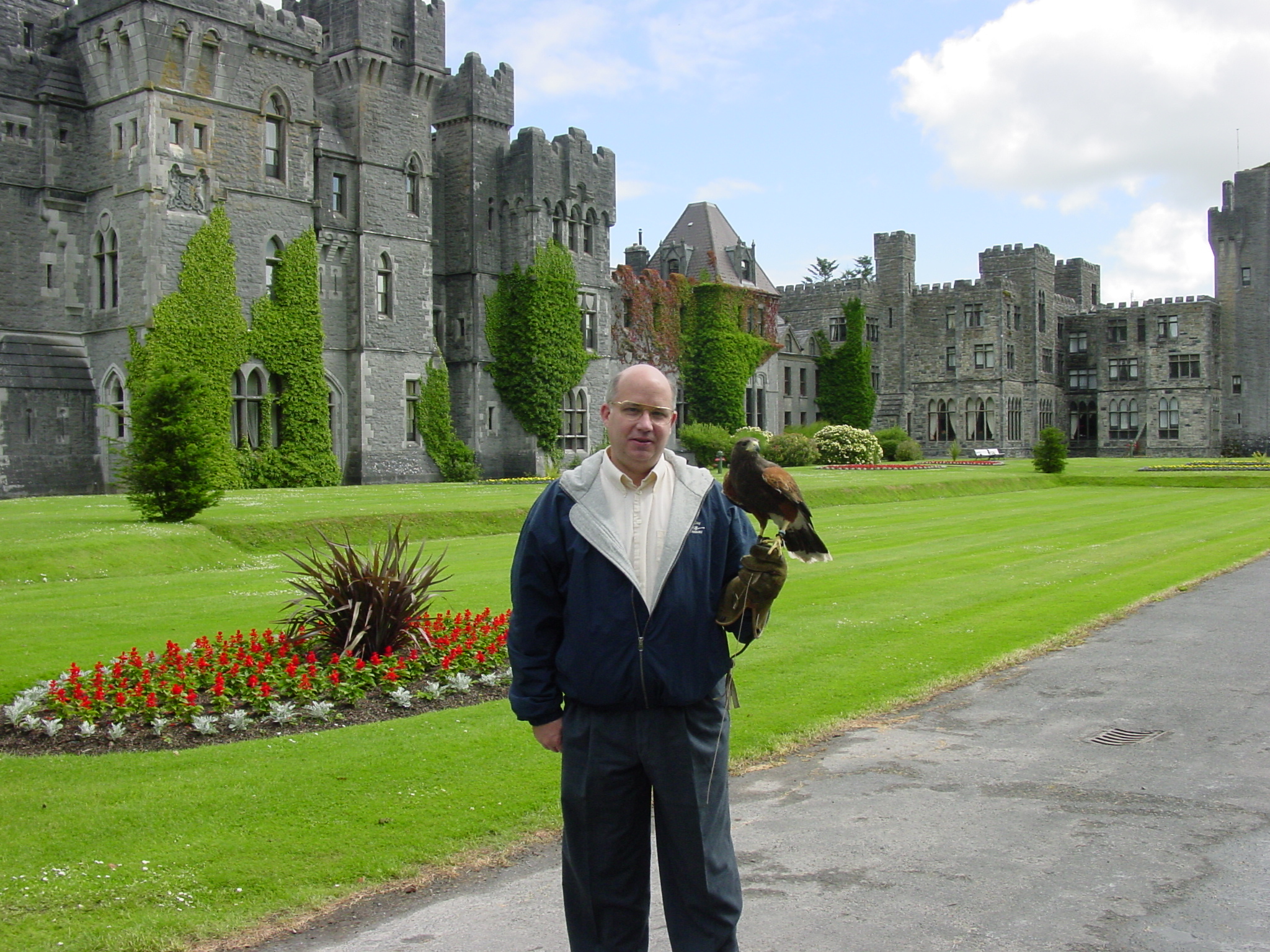
Guest with Harris Hawk

Guest with Harris Hawk

The next day we toured the Falconry School training area where falconry classes are taught at Ashford Castle, the oldest established falconry school in Ireland. A young American girl led the class and I watched and some participated in a session with a falcon and an owl, known as the Hawk Walk. Falconry is an ancient art and said to be the oldest sport in the world. It was used as a way to catch food for yourself and your family.  Harris Hawks, owls and falcons are brought from their cages and within minutes, with the bird sitting on your gloved hand you are ready for the walk and his performance. Our teacher explains the birds’ exceptional eyesight, speed and agility and how the bird will follow you from tree to tree and at the end return to your gloved hand. Everyone truly enjoyed the falconry class.

The Cong River

The Cong River 

 Later in the day we walked more of the grounds of Ashford Castle. I was particularly interested in seeing the cottages and land marks filmed in the 1951 movie, The Quiet Man, with John Wayne and Maureen O’Hara. The grounds of Ashford Castle and nearby village of Cong, formed the backdrop for much of the action in the film. It’s March, time to watch The Quiet Man and listen to Bing!

For information about Ashford Castle see:http://www.ashford.ie/irish-castles.html

THE SPECTACLED BEAN

Tales, Thoughts + Tribulations of a Free Spirit in Suburbia

Walking Away

Travels on foot

Teacher nickname: The Three Hairs

Minding my mind, one thought at a time.

Tra Italia e Finlandia

Un lungo racconto fotografico.

seanbreslin.jp

Photography, hiking, walking, and cycling across central Japan — from quiet mountain paths to everyday life around Nagoya.

Lost in Translation

Looking for meanings in words, images and sounds

Journeys with Johnbo

Reflections on places traveled and photos taken.

M/VGratitude

Cruising with the Thyrre Family

Caroline's Travel Adventure Blog

Where my Travels and my Blog merge together.

Just Me, Nobody Special

The mental meandering that cross my keyboard

Jennifer's Journal

Website & Blog of J. Kelland Perry, Author

Slow Shutter Speed

A photographic journey.

Ann Mackay: Inspired by Nature

Photography celebrating flowers, plants, and the natural world

Still Restlessjo

Roaming, at home and abroad

Fine for Friday

The Corner Garden

Picture This

Photography, Travel and Retirement

World Traveller 73

Upgrade Your Travels. First Class Luxury Travel from all parts of the Globe. Business Class Airline, Lounge and Hotel Reviews, Stories and Adventures

Rachel Meets China

A China travel and lifestyle blog