Travel, Gardens, Food, Photography, Books, Shoes

Posts tagged ‘History’

The English Garden Tour: Garden 1; The Priest House, West Hoathly, Sussex

The Priest House, West Hoathly, Sussex

The Priest House, West Hoathly, Sussex

Map of Center of Village, West Hoathly, Sussex

Map of Center of Village, West Hoathly, Sussex

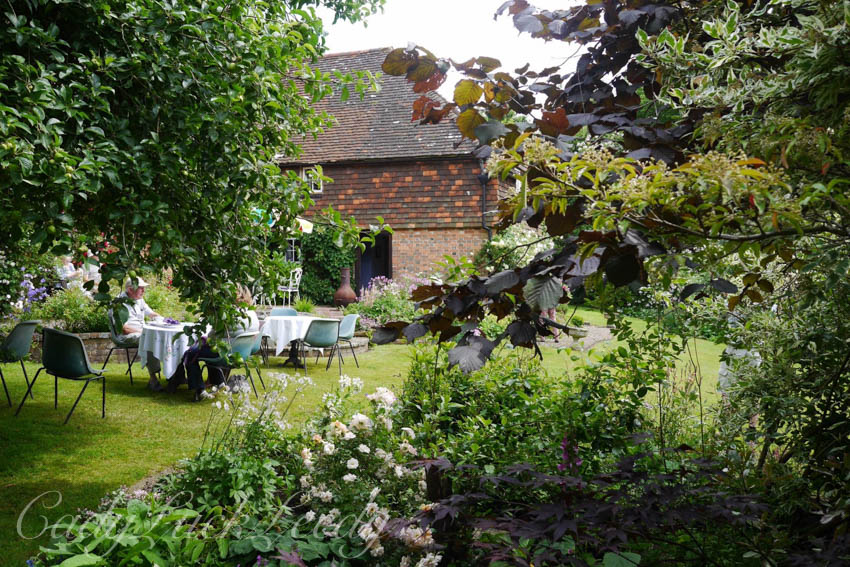
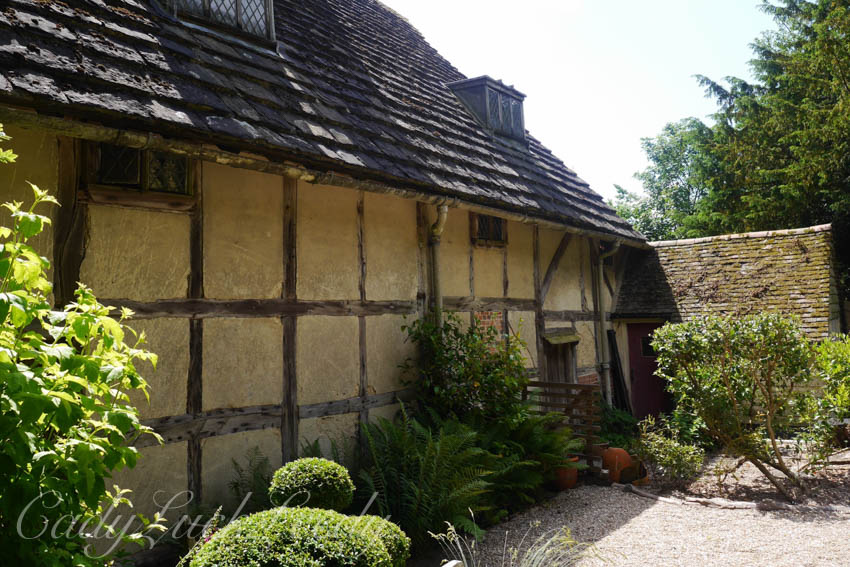
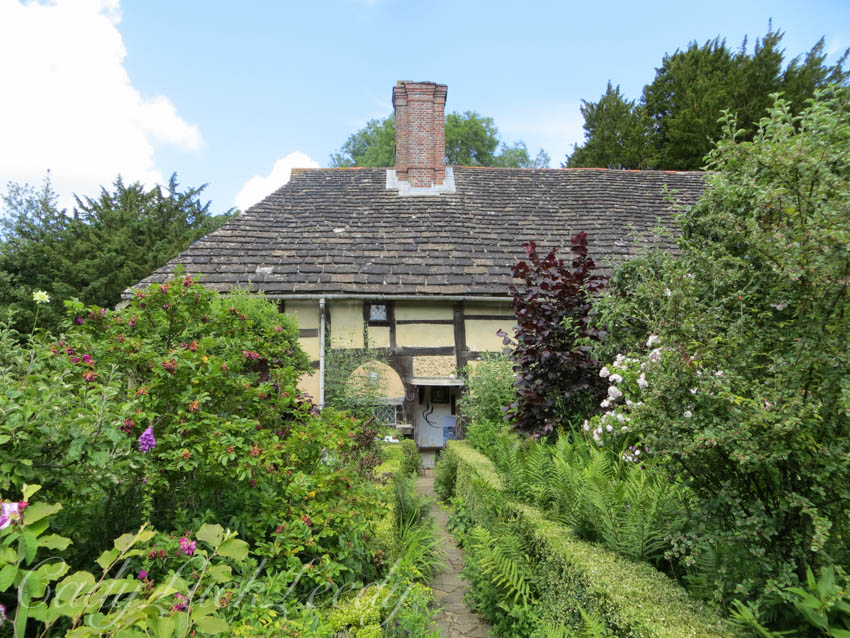
Today we traveled to West Hoathly, in Sussex, to see the first gardens that I had chosen from the many offered this weekend on the National Garden Scheme. Driving well over an hour we arrived in the center of the small village of 9 homes, including the pub. The Priest House is our first destination. The only one of its kind open to the public, this 15th century Wealden hall house stands in a traditional cottage garden on the edge of the Ashdown Forest. Originally owned by Henry VIII it was given to Anne of Cleaves, wife number four, upon their divorce. The herb garden is planted with over 170 culinary, medicinal and household herbs. Today a special exhibition for the NGS, featured on the upper floor, built in 1600, reveals pictures of local children and their place in the workforce in the 19th century. Many children, as young as five and six, were farm laborers and chimney sweeps. It was not uncommon for the chimney sweep to get stuck in the chimney and die. The Priest House is maintained by the Sussex Archaeological Society and provides rotating exhibits, research, and other learning experiences.

Walkway to the Priest House, West Hoathly, Sussex
Walkway to the Priest House, West Hoathly, Sussex

The Priest House, West Hoathly, Sussex

The Priest House, West Hoathly, Sussex

The Priest House, West Hoathly, Sussex

The Priest House, West Hoathly, Sussex

The Gardens at Priest House, West Hoathly, Sussex

The Gardens at Priest House, West Hoathly, Sussex

The Gardens at Priest House, West Hoathly, Sussex

The Gardens at Priest House, West Hoathly, Sussex

The Gardens at Priest House, West Hoathly, Sussex

The Gardens at Priest House, West Hoathly, Sussex

Flowers in the Garden at Priest House, Sussex
Flowers in the Garden at Priest House, Sussex

Another Garden at The Priest House, Sussex

Another Garden at The Priest House, Sussex

The Priest House, West Hoathly, Sussex

The Priest House, West Hoathly, Sussex

The Priest House, West Hoathly, Sussex

The Priest House, West Hoathly, Sussex

St Margaret’s Church, settled in 1090, records the names of the village from Hadlega, later standardized to Hodlegh, then West Hoathly. This Anglo-Saxon word signifies a heath covered clearing, or the dense woodland of the Ashdown Forest. In 1556, Ann Tree was burnt at the stake near here for refusing to renounce Protestantism, one of seventeen martyrs to suffer this fate in Sussex. A brass memorial in the church commemorates her.

St Margaret's Church, West Hoathly, Sussex

St Margaret’s Church, West Hoathly, Sussex

St Margaret's Church, West Hoathlu, Sussex

St Margaret’s Church, West Hoathly, Sussex

The Gate to St Margaret's Church, West Hoathly, Sussex

The Gate to St Margaret’s Church, West Hoathly, Sussex

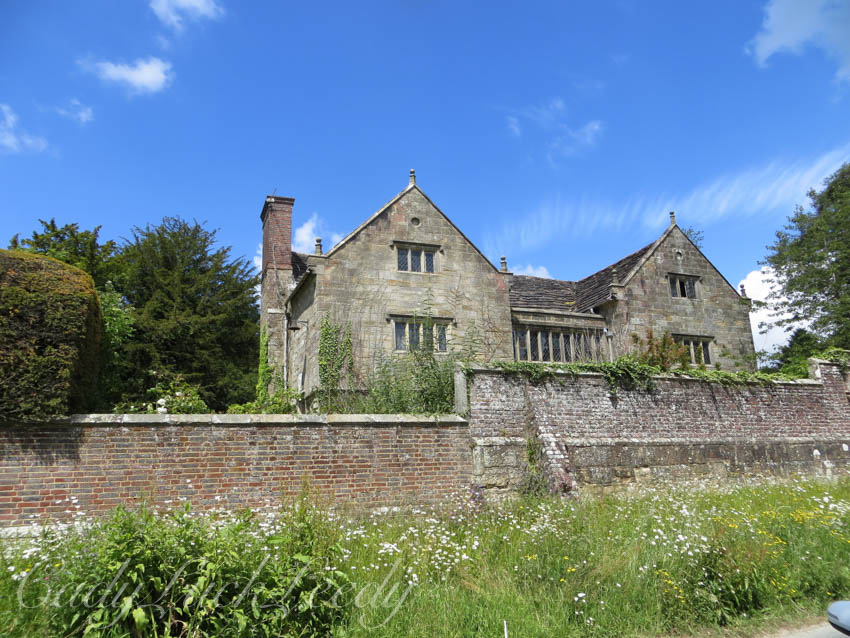
The Manor House was built in 1627 for Mrs Catherine Infield of Gravetye Manor, as a dower house.  Her family was the wealthy owners of the local iron works. Later abandoned to smugglers the buildings and grounds were rejuvenated in 1884 when “the greatest English Gardener” William Robinson bought it. Upon his death it was turned over to the Forestry Commission. It now sits vacant and forlorn.
The Manor House, West Hoathly, Sussex
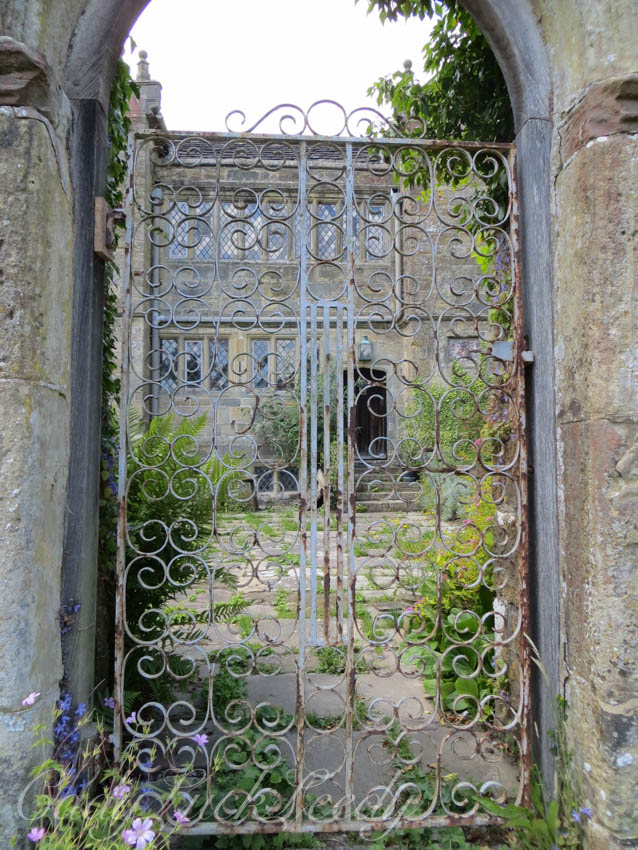
The Manor House, West Hoathly, Sussex

Looking Through the Gate to the Manor House, West Hoathly, Sussex

Looking Through the Gate to the Manor House, West Hoathly, Sussex

The Phlox and Rose Cottages are 19th century weather boarded over timber framed cottages. They were the newest houses in the village!

Rose Cottage and Phlox Cottage, West Hoathly, Sussex
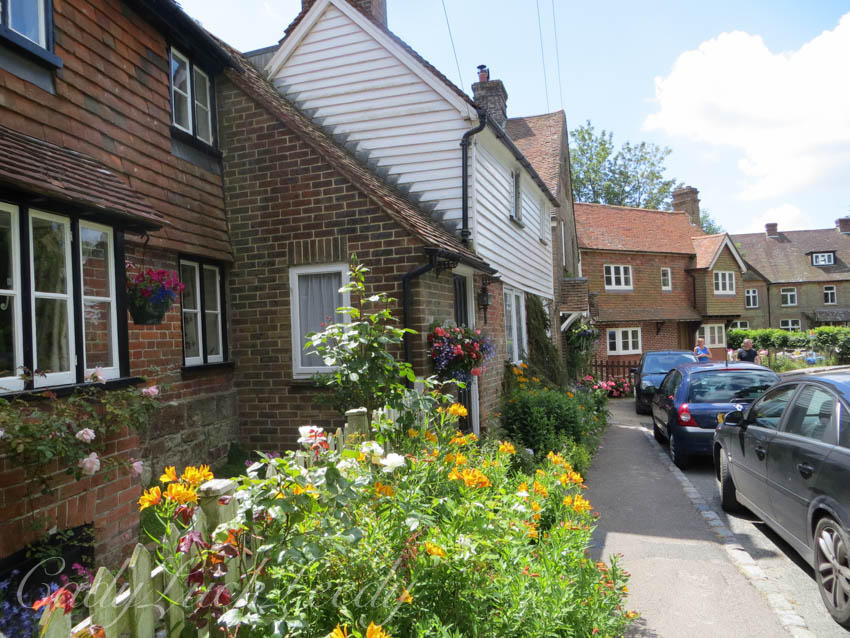
Rose Cottage and Phlox Cottage, West Hoathly, Sussex

Rose Cottage and Phlox Cottage, West Hoathly, Sussex

Rose Cottage and Phlox Cottage, West Hoathly, Sussex

The Upper Pendent is a timber framed, tile-hung 17th century home which previously housed the village stores and post office in the 19th and 20th centuries.

Upper Pendent, west Hoathly, Sussex

Upper Pendent, West Hoathly, Sussex

The Cat Inn is the 16th century pub of medieval origin standing in the crossroads of the village. The name is derived from an emblem of the Sackvilles of Knole, which is a leopard. We will be learning  a lot about the Sackvilles, a very prominent family in Kent. This is the pub I had picked to stop in for lunch after touring the village. It was highly recommended by the locals also. We sat in the lovely terrace and had a most agreeable meal. Now on to the next garden in the “burbs” of West Hoathly.
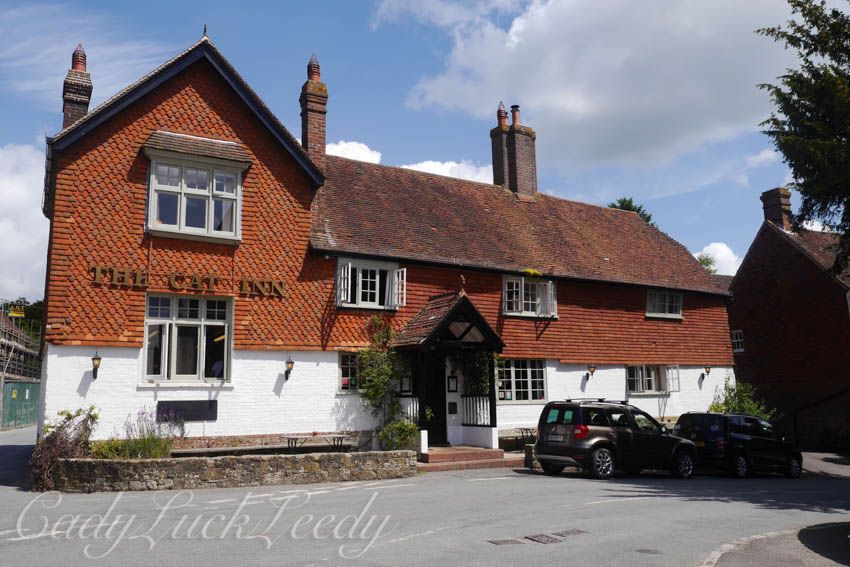
The Cat Inn, West Hoathly, Sussex

The Cat Inn, West Hoathly, Sussex

A Great Ride Awaits at the cat Inn, West Hoathly, Sussex

A Great Ride Awaits at the Cat Inn, West Hoathly, Sussex

P S For a good read about the wives of Henry VIII, I  suggest, Six Wives of Henry VIII by Alison Weir. The author draws on early biographies, letters, memoirs, account books, and diplomatic reports to bring each woman to life.  Very interesting!

An Adventure in Gardens, the Weald of Kent

A Garden in Kent UK

A Garden in Kent UK

Of all the delectable islands, the Neverland is the snuggest & most compact…… not large and sprawling, you know, with tedious distance between one adventure & another, but nicely crammed. 

J. M. Barrie, author of Peter Pan.

The Yellow Flowers

The Yellow Flowers

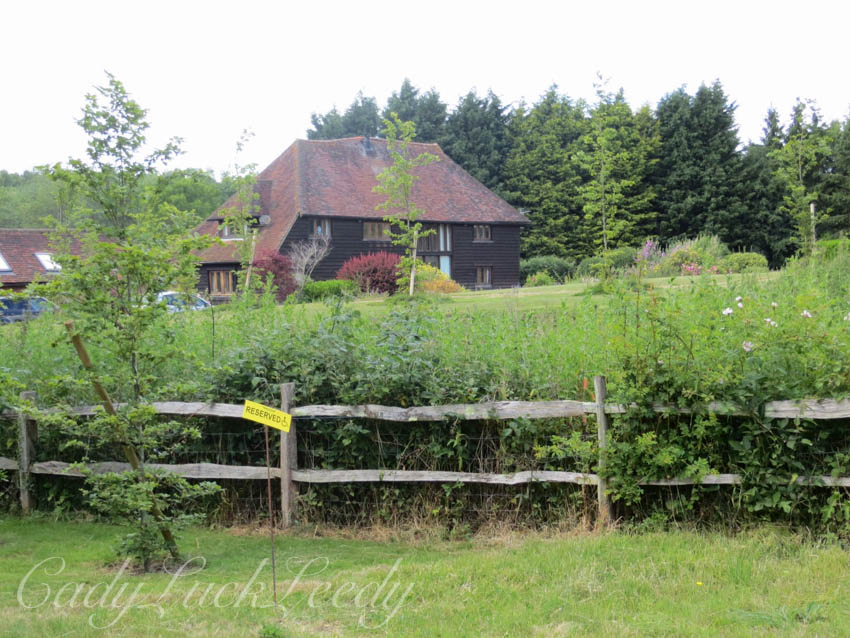
When it comes to gardens I like nothing better than to stroll, admire the collections of beautiful flowers, and imagine the inhabitants of the house and how they like to garden. I especially like the messy, scattered garden with vines dripping over the garden gate, and paths that invite you to explore. It’s even better if there is a flower box of riotous color haphazardly framing the window ledges of the small cottage, nestled in the garden, as if just plunked in, as an after thought. Pieces of art and sculpture placed in a specific spot draw your eye and add to the charm of the garden. I have just returned from several weeks in the United Kingdom, specifically in Kent and Sussex, traipsing through local gardens and visiting magnificent estate homes with acres and acres of gardens. Whew!  We lodged in a barn in the middle of the weald, down a mile-long gravel road, wide enough for one car at a time, passing by the field of rabbit warrens and watching for the hop of a bunny on our daily treks into the countryside.

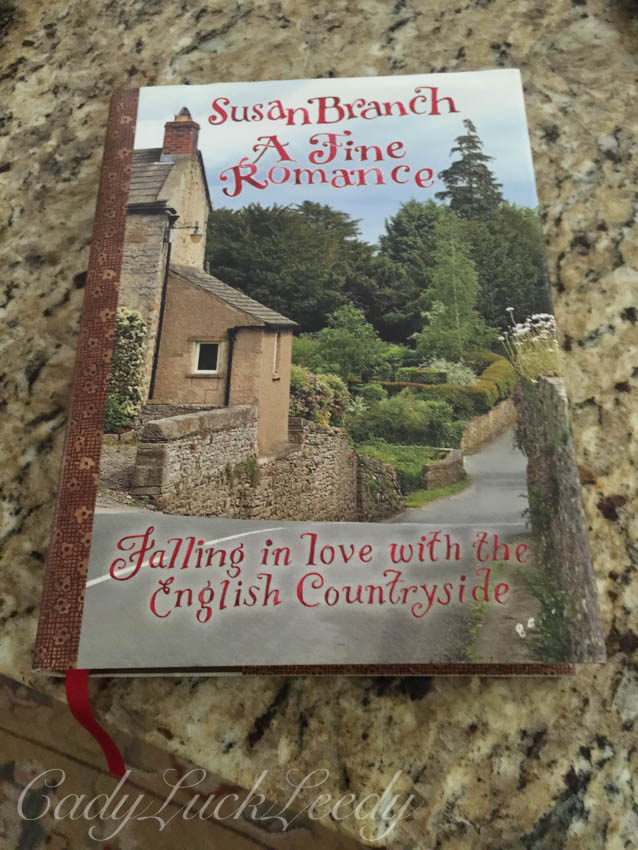
Planning our adventure was one of the fun “bits.” I love the “planning” part! Where to go, what to see? One thing leads to another. First, I looked for places I knew would be of interest. What about the Chelsea Flower Show? No, too crowded and I wanted more rural. Hever Castle during Rose Week? Closer, but not quite right. Then I read a wonderful book, called A Fine Romance, by Susan Branch. It’s about falling in love with the English countryside and her adventures when visiting England.

A Fine Romance

A Fine Romance

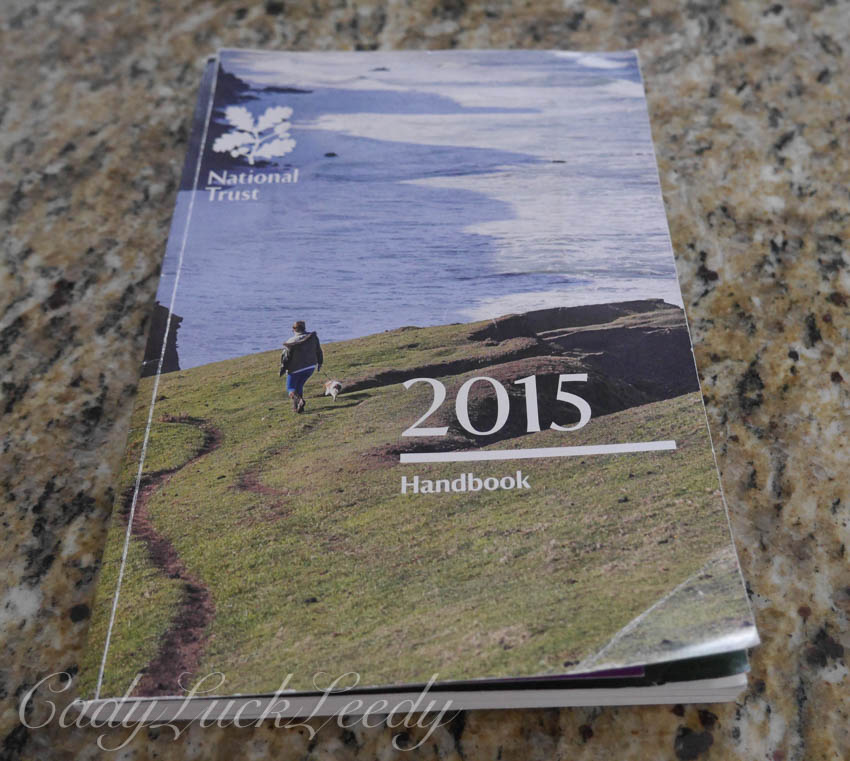
I loved it and the more I read the more I was drawn to Kent  and the village of Tenterden. So, I set out to learn all about Kent and especially Tenterden. I also learned more about the National Trust.  The National Trust, since 1895, has been preserving the countryside and hundreds of historic properties in England, Wales, and Northern Ireland. I first heard of it when reading all about Beatrix Potter and her home in the Lake District, which was left to the National Trust. The properties restored include huge estates to the small and quirky. Just right up my alley. So our first priority was to join the National Trust, (it’s called the “Royal Oak Society “ in the U.S ) which allowed us to receive a handbook with maps of all the places to visit with the National Trust and a pass to get in all of them for a year and a pass for parking at the different locations.

National Trust Book

National Trust Book 2015

What a must this is!  You don’t realize all the places available to visit until to see them on the maps! So that was a reference point to start with. Where could we set up our “base camp” closest to the sites we wanted to see? Well it still remained Tenterden for us. Then I heard about the National Garden Scheme. What in the world was that? Had to research it before final decisions were made!

The National Garden Scheme was founded in 1927 to open “gardens of quality, character and interest to the public for charity.”  Originally the admission fees raised money for district nurses. This was changed in 1948 with the formation of the National Health Service. The National Gardens Scheme has given more than 43 million pounds to nursing and care facilities since the time it opened. Since I am a retired RN this was near and dear to my heart.  These are “local” gardeners and their gardens. No big estates, (but some seemed to me like they were!) One woman I was chatting with on our walk through a local garden invited me to her garden, as well, which was not on the list, but exclaimed, “it’s only 12 acres, of course.”  So as you can imagine, we visited the “potager,” snuggled behind the small cottage, to large landscaped gardens with “rooms” of flowering blooms. All gardeners were proud of their gardens, more than willing to tell you about them and happy that they were able to do their “bit.”

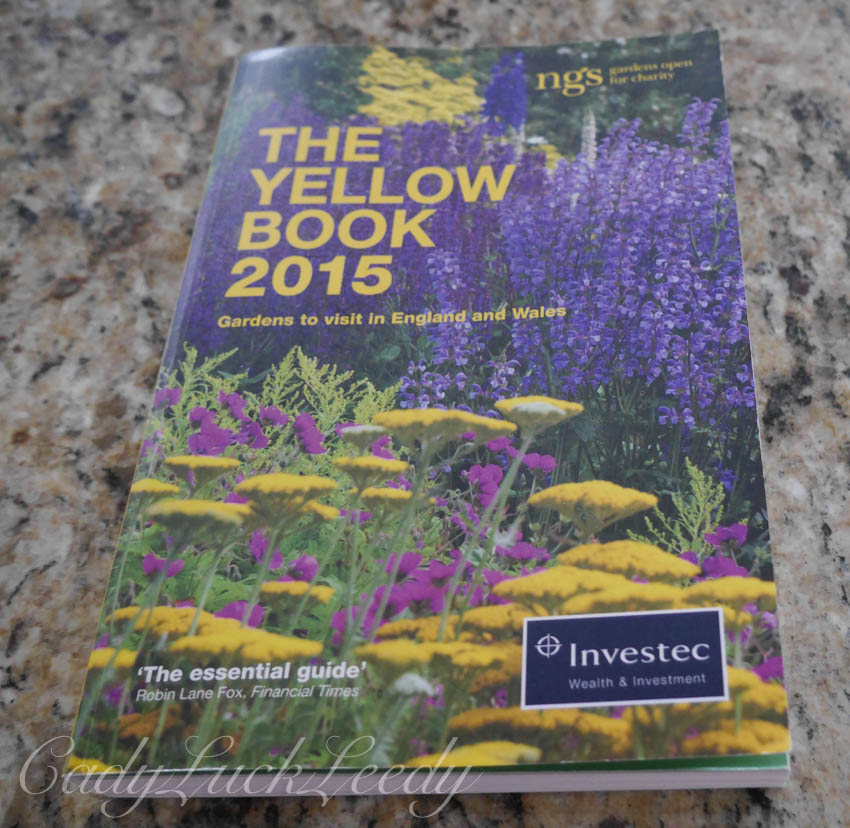
In 2013 there were over 3700 gardens open, which were all vetted to make sure they are all of sufficient interest. Each gardener opens his garden (usually on a weekend), one or two days during the year. I was so excited! But, it takes some planning! “The National Garden Schemes, “Yellow Book”,” can be purchased each year, which lists all the gardens and when they will be open.

The Yellow Book 2015

The Yellow Book 2015

Maps, directions, type of garden, and particular interest are included. We were really in the thick of the countryside when directions would reveal, “just go down the gravel road for a mile and then when you get to the yellow mailbox turn right on that gravel road and proceed on to the canal road and windmill place. Light refreshments offered.”

The Countryside Garden

The Countryside Garden

In the Garden

Tea In the Garden

This as going to be one of our best adventures! So after months of looking up gardens and coordinating them with places on the National Trust we were ready to make our way to the “Garden of England,” Kent. We were about to set off on a gardener’s dream! See you tomorrow on our way to the garden!

All Aboard for Amsterdam!

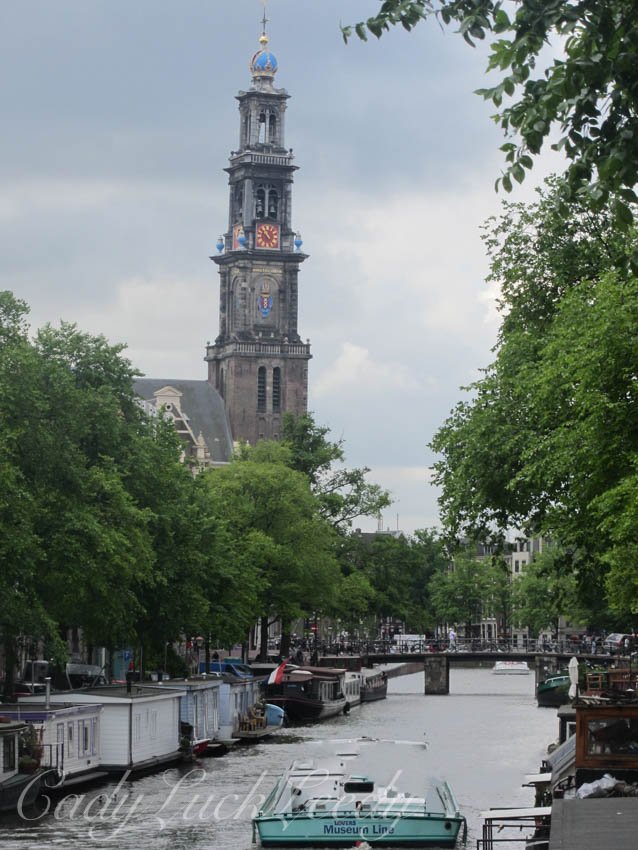
Along the Canals, Amsterdam, the Netherlands

Living Along the Canals, Amsterdam, the Netherlands

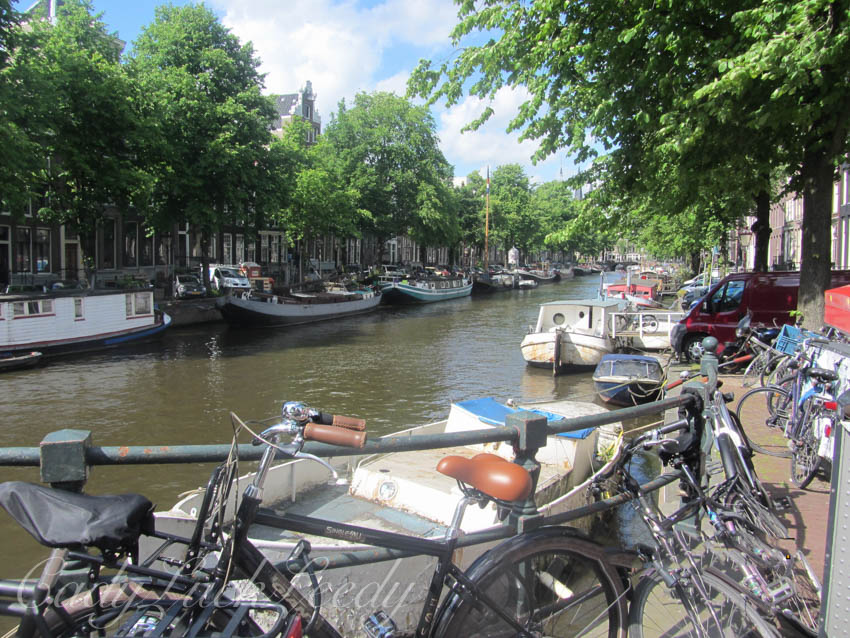
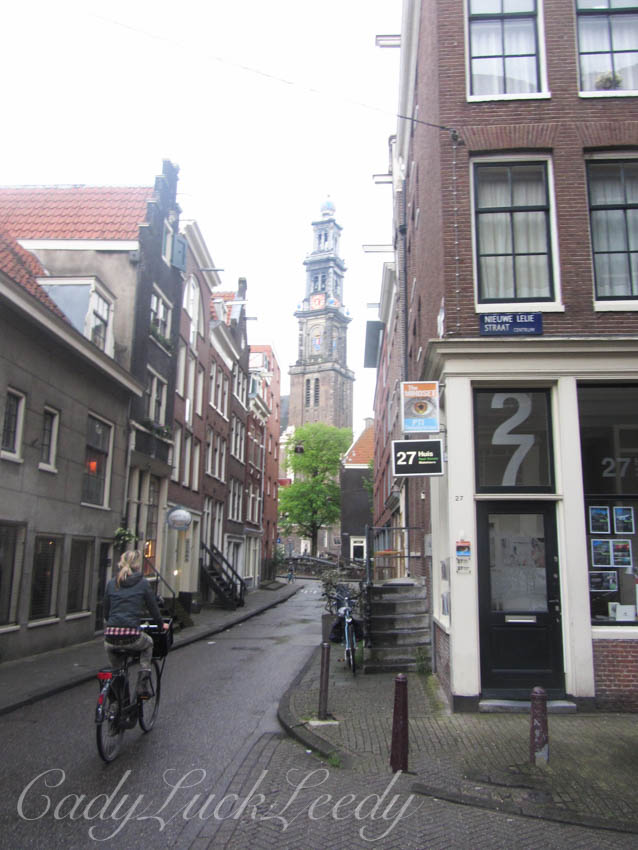
We’ve left Brugge and made our way by train to Amsterdam! This is another city treasure built on millions of wooden pilings, that have held up for hundreds of years! The Royal Palace sits on 13,000 pilings, still solid after 350 years! The wood pilings hold up the buildings as long as it stays wet and is not exposed to air! Since WWII all new buildings have concrete pilings driven 60 feet deep through the first layer of sand, through more mud, and then a second layer of sand. Today’s biggest buildings sit on a foundation that goes down to 120 feet deep! So now that we know we won’t be sinking any time soon, let’s explore this beautiful city of canals, lined with trees and gabled townhouses.

The Icons of Holland: Windmills, wooden shoes and tulips.

The word “Netherlands” means lowland. In medieval times, the inhabitants of the lowland along the Amstel River built a system of dikes to protect their land from flooding. Amsterdam sits like a fan spread out with four surrounding canal rings. There are more canals in Amsterdam than Venice! The icon Dutch windmills were built to to harness energy to lift the water up out of enclosed areas and divert it into the canals and drain the land. They grew hardy plants that removed the salt from the soil, slowly turning mushy marshes into fertile farmland. Later the windmills were used to turn stone wheels to grind their grain.

Why do the dutch wear wooden shoes (Klompen)? Wooden shoes allowed farmers to walk across soggy fields and were easy to find if they came off in high water, because they float!

In the 1630’s Holland was gripped with “tulip mania.” Tulips were native to Turkey, (tulip comes from the turkish word for turban.) The Holy Roman Emperor’s ambassador to Constantinople first sent bulbs westward in the mid-1500’s. The harsh soil conditions of Holland turned out to be ideal for growing tulips. Financial speculators invested wildly in these rare plants, growing and selling exotic varieties. You could buy a house with just three tulip bulbs! Later, during WWII when the people of Amsterdam were starving, they dug up and ate tulip bulbs. Dutch people are known to be among the world’s most handsome people— tall, healthy and with very good posture. Like a tulip! Tulip anyone? Now let’s explore Amsterdam! It’s another great city to get to know on foot!

A Restaurant Along the Canals, Amsterdam, the Netherlands

A Restaurant Along the Canals, Amsterdam, the Netherlands

Along the Canals, Amsterdam, the Netherlands

Along the Canals, Amsterdam, the Netherlands

There are 765,000 people in Amsterdam and just as many bikes! Everyone rides a bike here.  Be very careful, look in all directions when crossing a lane!

Yikes, Bikes, in Amsterdam!

Yikes, Bikes, in Amsterdam!

Bikes Everywhere!

Bikes Everywhere!

Bike Seat to Sit On!

Bike Seat to Sit On or Chain your Bike To!

Riding, Riding! Everyone is  On a Bike!

Riding, Riding! Everyone is On a Bike!
Riding, Riding!

Riding, Riding!
This is Why One Rides a Bike Here! Pedestrian Only Here!

This is Why One Rides a Bike Here! 

Cozy Amsterdam! More Bikes!

Cozy Amsterdam! More Bikes!

The buildings do shift a little, all leaning on each other!

The Very Early Morning Biker!

 Very Early Morning ! The Bikes are at Rest!

A Cosy Outdoor Cafe, Lots to Pick From, Amsterdam

A Cosy Outdoor Cafe, Amsterdam

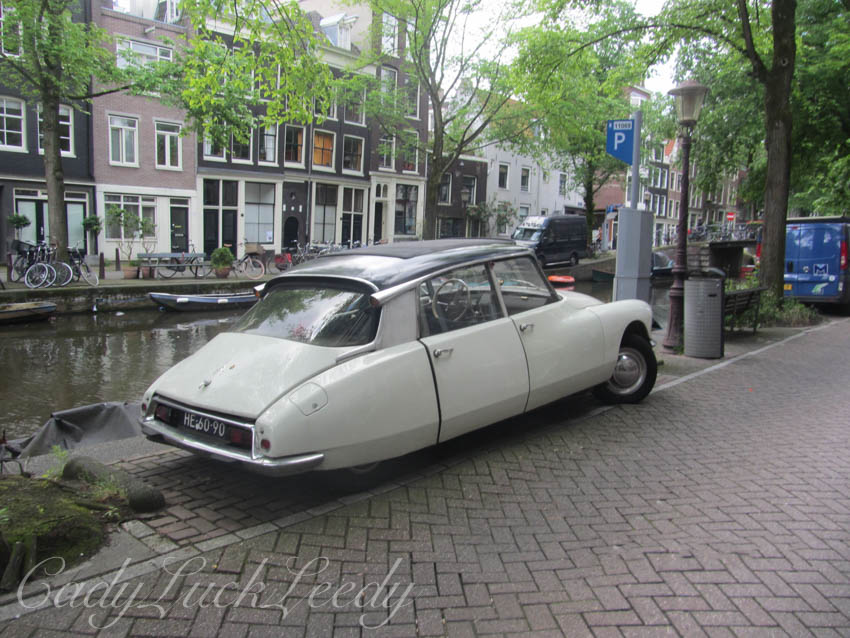
If you are very persistent and really must have a car, how about these?  Such contrast!

Vintage Wheels!

Vintage Wheels!

Or Electric Car!

Or Electric Car!

Or maybe this is your ride?

The Red Truck, Amsterdam

The Red Truck, Amsterdam

Or this?

Or Just Go Afloat!

 Just Go Afloat!

Boat Tours, Amsterdam

Boat Tours, Amsterdam

Along Another Canal, Amsterdam!

Along Another Canal, Amsterdam!

Along the Walk in Amsterdam!

Along the Walk in Amsterdam!

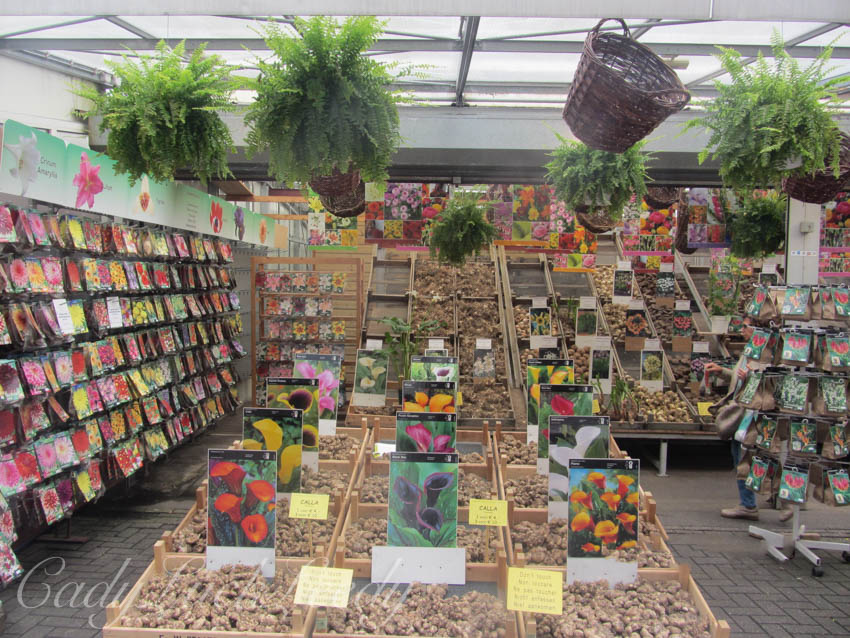
Calla and Tulip Stalls in Amsterdam!

Calla and Tulip Stalls in Amsterdam!

Please Don't Water the Plants!

Dogs, Please Don’t Water the Plants!

This Girl Should Have Taken a Bike!

This Girl Is Very Tired! Get a Bike!

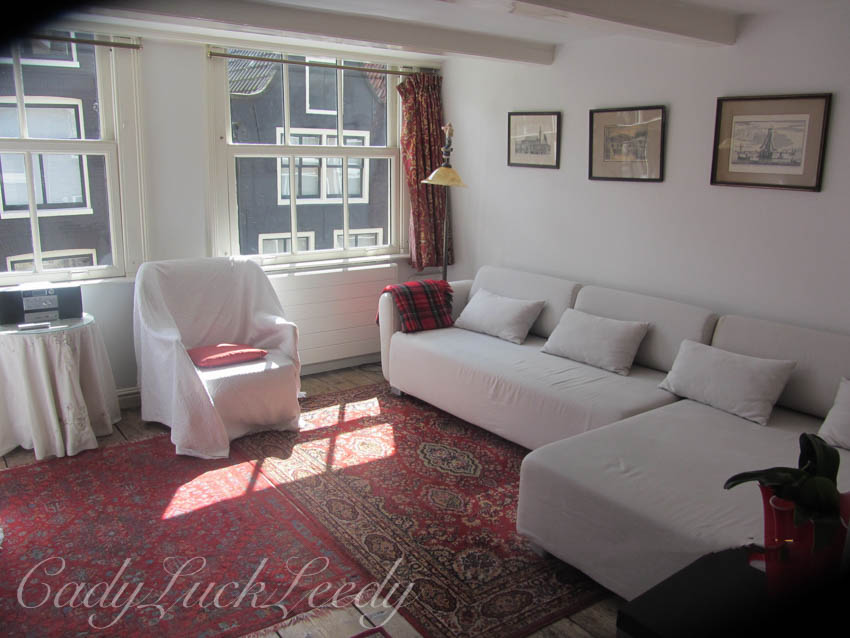
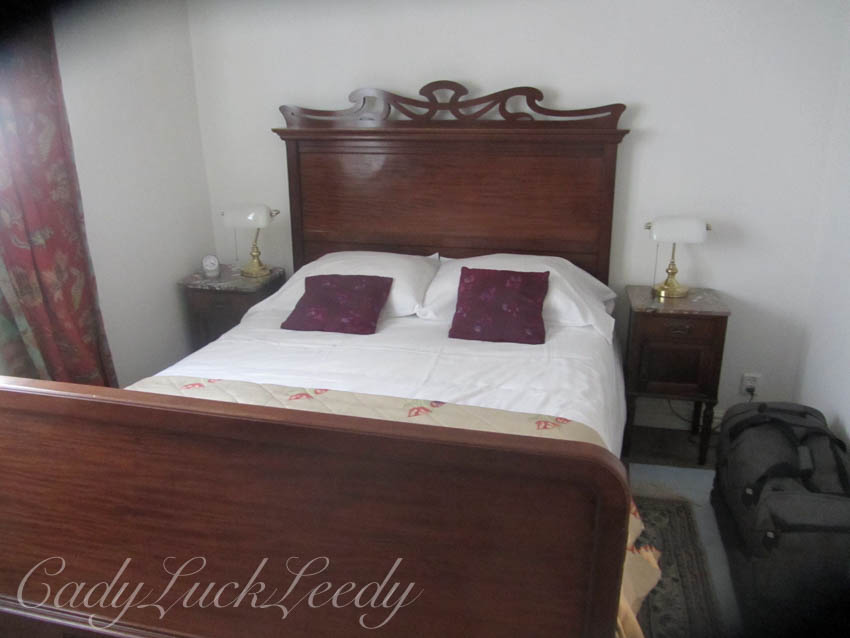
For our stay in Amsterdam we loved the Maes B&B. We had a bedroom, living room, and a fantastic bathroom! Very close to everything and located in one of the gabled townhouses, it was a delight to see what one of these buildings looks like on the inside! Every morning we were treated to a hearty, home made, cooked breakfast, with the staff meeting our every need. It was a great stay in Amsterdam! Check it out here, Maes B&B.

Home Away from Home, Maes B&B, Amsterdam

Home Away from Home, Maes B&B, Amsterdam

Our Room, Maes B&B, Amsterdam

Our Room, Maes B&B, Amsterdam

Our Room, Maes B&B, Amsterdam

The Bedroom Room, Maes B&B, Amsterdam

Our Room, Maes B&B, Amsterdam

Sparkling Clean, Modern Bathoom, Maes B&B, Amsterdam

Enjoy Amsterdam!

Beautiful and Tropical? Amsterdam, the Netherlands

Beautiful and Tropical? Amsterdam, the Netherlands

One Word Photo Challenge: Copper

Beautiful copper tiles on the Chateau de La Rochepot! A fairy castle built on a rocky peak, became the home of Regnier and Phillippe Pot, both Knights of the Golden Fleece. Enjoy this little corner of France!

Chateau de la Rochepot, Near Beaune, France

Chateau de la Rochepot, Near Beaune, France

Chateau de la Rochepot, Near Beaune, France

Chateau de La Rochepot, Near Beaune, France


Triple Treat in Belgium

Damme, Belgium

Along the Canal at Damme, Belgium

Doesn’t the picture above just convey what you dreamed the Netherlands would look like? It does to me and I was not disappointed! Today we are having a triple treat! We are taking the “Triple Treat Bus Tour,” offered by Quasimodo Tours. The day is overcast with occasional wind gusts and blowing rain, but nothing dampens our tour out into the countryside of Brugge. The Triple Treat Tour  features several country homes, the village of Damme, the oldest gothic buildings in Flanders at the former monastery at Ter Doest, where we will have lunch, a tour of a chocolate factory, and last stop, a beer brewery! We are in for a day of fun which started when the  Quasimodo Guides picked us up at our B&B and took us to the bus waiting for us in the town square.

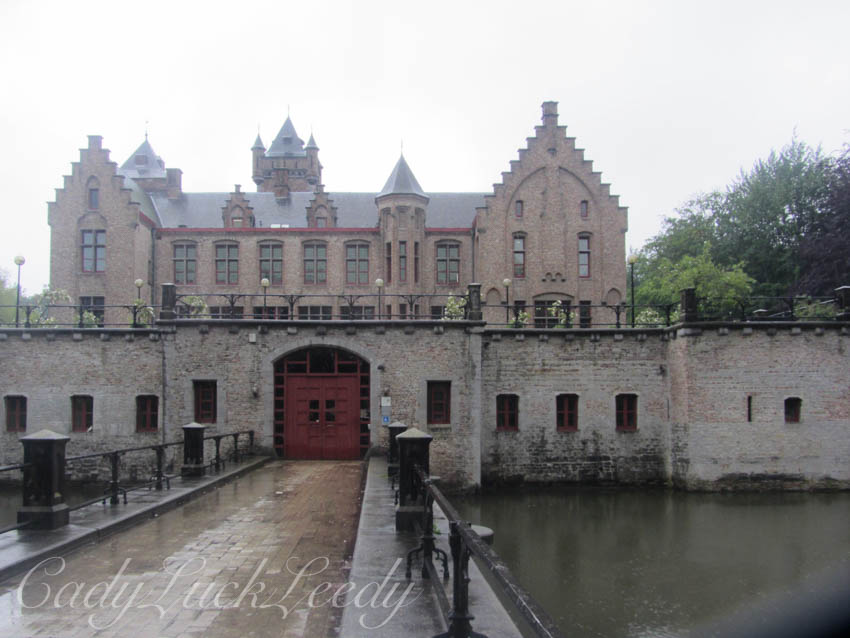
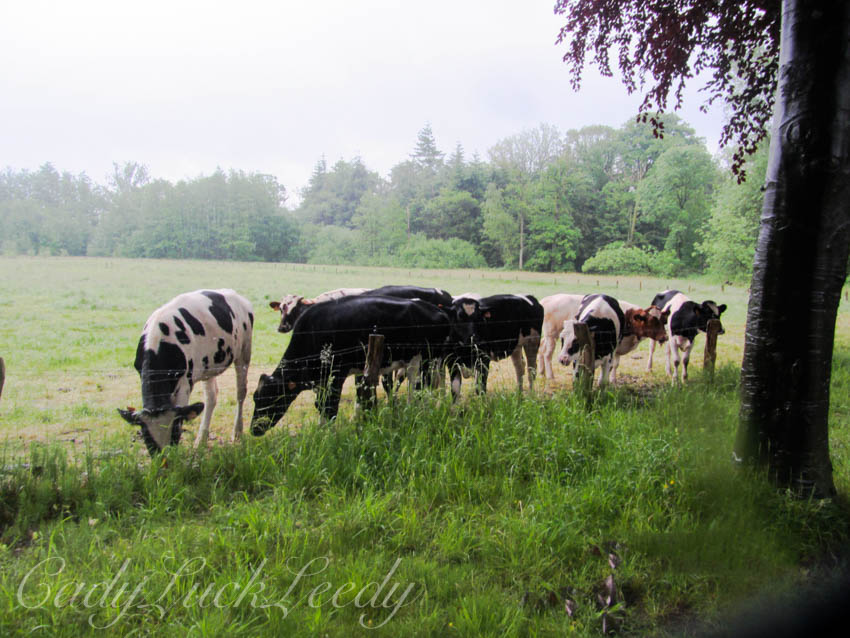
The bus takes us out into “Burbs” of Brugge. Then down this narrow lane and deep into the wood, passing the grazing cows we come to the moated castle of Tillegem.

Through the Woods and Down a Narrow Lane!

Through the Woods and Down a Narrow Lane!

The Cows in the Country at Tillegem, Belgium

The Cows in the Country at Tillegem, Belgium

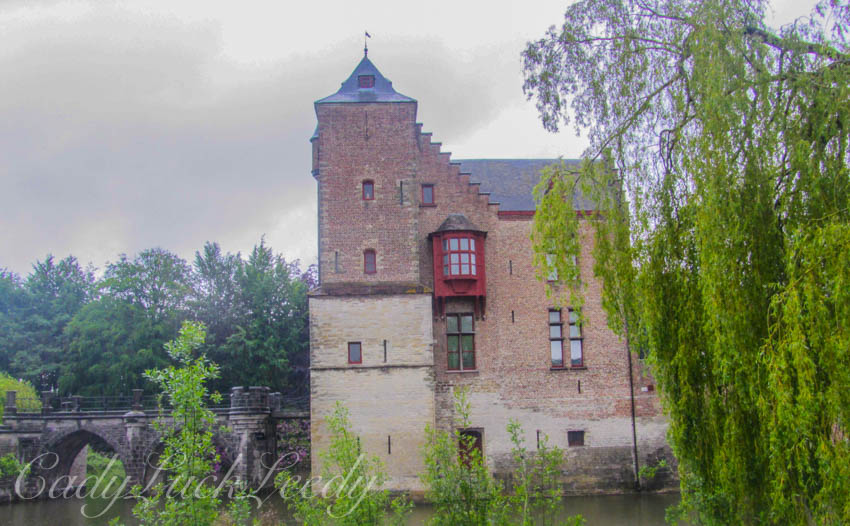
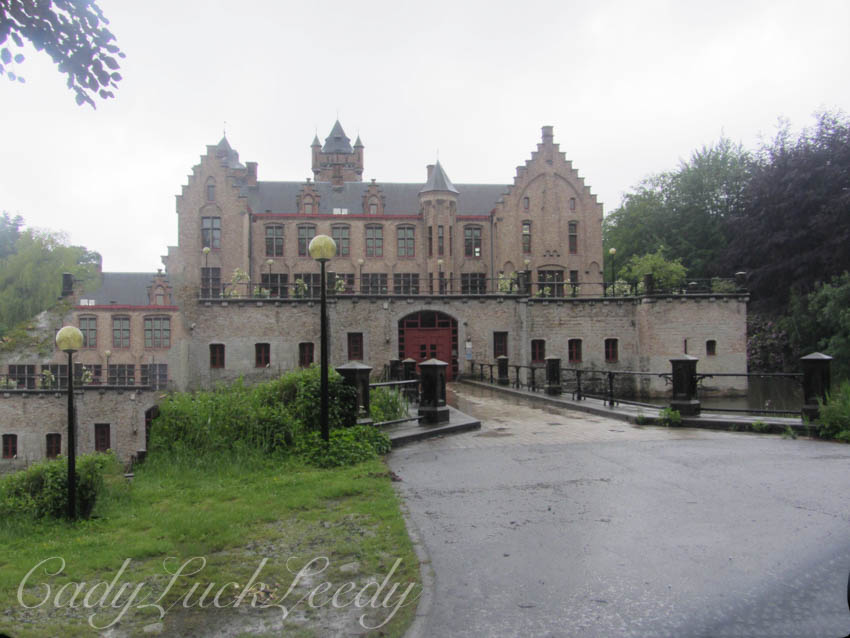
Had to take a picture of the cows! And now for the Castle of Tillegem! Baldwin, the Iron Arm, first count of Flanders, constructed a wooden tower surrounded by battlements where the castle now stands.  Since 1980 the castle and beautiful park has been the property of the province of West Flanders.  I had to take a picture of the castle from every angle!  The castle is not open to visitors.

The Moated Castle of Tillegem, Belgium

The Moated Castle of Tillegem, Belgium

The Moated Castle of Tillegem, Belgium

The Moated Castle of Tillegem, Belgium

The Moated Castle of Tillegem, Belgium

The Moated Castle of Tillegem, Belgium

The Moated Castle of Tillegem, Belgium

The Moated Castle of Tillegem, Belgium

The Moated Castle of Tillegem, Belgium

The Moated Castle of Tillegem, Belgium

Next we drove to the neo-gothic Chateau of Loppem, full of artwork and other treasures! Built between 1859 and 1862 for Baron Charles Van Caloen and his family, the castle’s original architecture and interior decoration is remarkably well preserved.  The park and castle are owned by the Jean van Caloen Foundation and is open to the public. I took so many pictures inside here, but they were dark, fuzzy and not too good.  Trust me when I say this home was a delight to see.

Chateau of Loppem, Belgium

Chateau of Loppem, Belgium

Chateau of Loppem, Belgium

Chateau of Loppem, Belgium

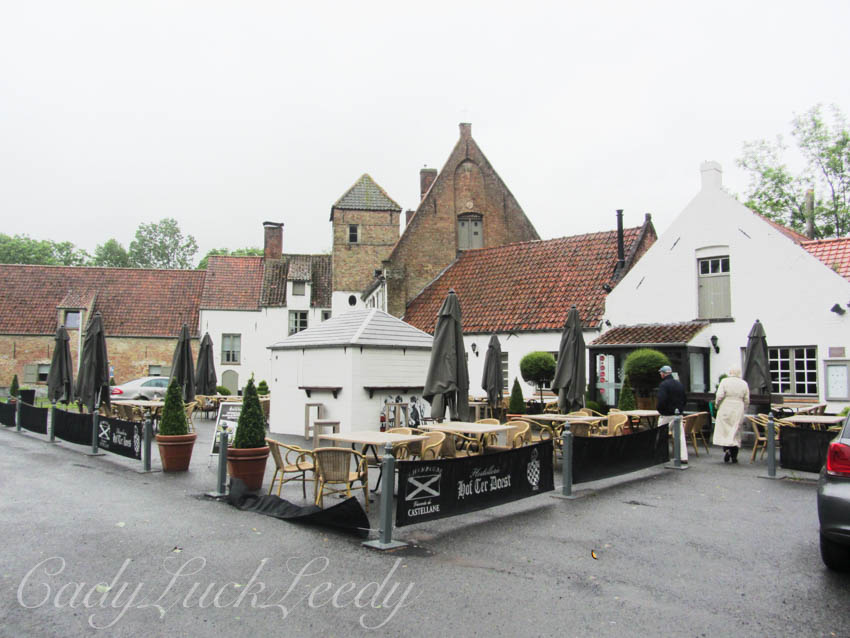
It’s now pouring and really gusty as we get to Ter Doest!

Lambert, Lord of Lissewege, donated land to the Benedictus friers in 1106, to build a priory. In 1270 the Benedictines left and the Cistercienzers Order, who had ties to the Templer Knights, took over. In 1172, Richard, the Lionheart, one of my relatives, was captured by Leopold of Austria on his return from the Crusades. It is said that the abbot of Ter Doest paid the larger part of the ransom in order to get Richard out of prison. It is assumed he came to Ter Doest for a time after his release. He was in fact in Damme, where we are headed later today.

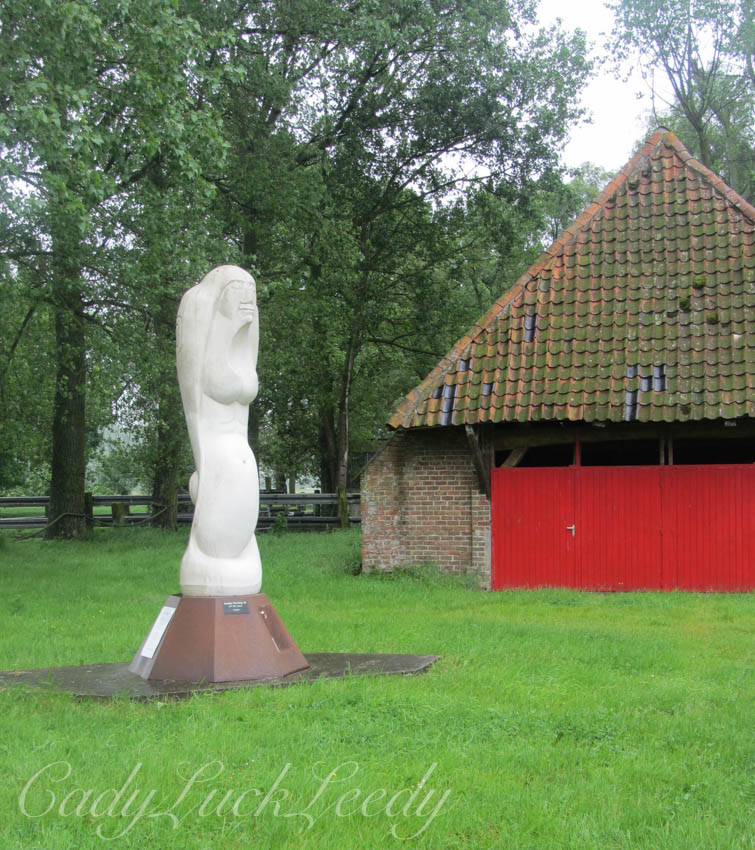
The gothic barn, built around 1280, is the largest remaining barn of its kind, and was used to store crops. In 1308 the barn and abbey were confiscated during protestant religious wars, so the farm we see today was built from the debris of the destroyed abbey. Today a lovely restaurant and B&B also sit on this site! Let’s go have lunch!

The Restaurant at Ter Doest, Belgium

The Restaurant at Ter Doest, Belgium

The Old Barn at Ter Doest, Belgium

The Old Barn and ArtWork at Ter Doest, Belgium

Artwork at Ter Doest, Belgium

Artwork at Ter Doest, Belgium

After our great lunch at Ter Doest, we made our way to Damme.  Situated right along the river Reie, the river has now been canalized into the long , straight, tree-lined and picturesque Damse Vaart Canal from Brugge, just 6 kilometers away, to the Dutch border in Sluis. This makes a great bike trip from the city. Even though it was raining and windy there were bikers doing just that!  We all met up in Damme! What exquisite scenery!

Picure Perfect Along the Canal in Damme, Belgium

Picture Perfect Along the Canal in Damme, Belgium

A Windmill Along the Canal in Damme, Belgium

A Windmill Along the Canal in Damme, Belgium

The town is a favorite venue for eating and a destination for boat trips. It is also known for being a great “book town” with numerous bookshops and regular book fairs! Just so nice to explore too!

The Village of Damme, Belgium

The Village of Damme, Belgium

The Village of Damme, Belgium

The Village of Damme, Belgium

Wrought Iron Sculptured Art in Domme, Belgium

Wrought Iron Sculptured Art in Damme, Belgium

Our next stop was the tour of a Belgium Chocolate factory, but sad to say I was addicted to the Dumon’s Chocolates, and wanted to wait it out until evening to stock up on my favorites. Finally, our last stop back in Brugge, was The Fort Lapin Brewery. There was a variety of Belgium Beers to taste (included in price of tour) but my hand must have been busy holding those pints because I didn’t get any pictures! What a fabulous tour! Be sure to check Quasimodo Tours in Belgium.  Enjoy!

The Begijnhof of Brugge, Belgium

The Meadow Woods of the Begijhof

The Meadow Woods of the Begijnhof

Before 1240 a community of pious women settled in an area of south  Brugge in a low- lying meadow or vineyard. These lay women called Beguines, spent their lives in piety and service without taking the vows that a nun would. Due to war and military fatalities there were more women than men in the medieval low lying countries. The order of Beguines offered women (often single or widowed) a dignified place to live and work.  When the order died out many towns took over the begijnhofs for subsidized housing. Believe me when I say you could be so lucky to live in one of the small subsidized cottages of the Begijnhof of Brugge. Today we are strolling from the town square through the curved portals of buildings delving further and further into the neighborhoods of Brugge. 

Walk Past the Little Market on the Way to the Begijhof

Walk Past the Little Market on the Way to the Begijnhof

I Loved These Trees Along our Walk!

I Loved These Trees Along our Walk!

Beautiful Pots of Hostas Along the Way!

Beautiful Pots of Hostas at the Pink House!

Tiny Statuaries Everywhere Along Our Path

Tiny Statuaries Everywhere Along Our Path

Statuaries in Tiny Courtyards

Headless Statuaries in Tiny Courtyards Along the Way

We get further from the town center! I feel like I’m in the country!

Picturesque Church in Brugge, Belgium

Walking Along Canal to Begijnhof in Brugge, Belgium

A Stroll to Reach the Begijnhof, Brugge, Belgium

A Neigborhood Stroll to Reach the Begijnhof, Brugge, Belgium

We pass over the three-arched stone bridge, the Wijngaard Bridge,  to the main gated entrance. Here is a large beautiful meadow and a complex of thirty white stoned gothic buildings dating from the 16th through the 18th centuries, built around a central yard.

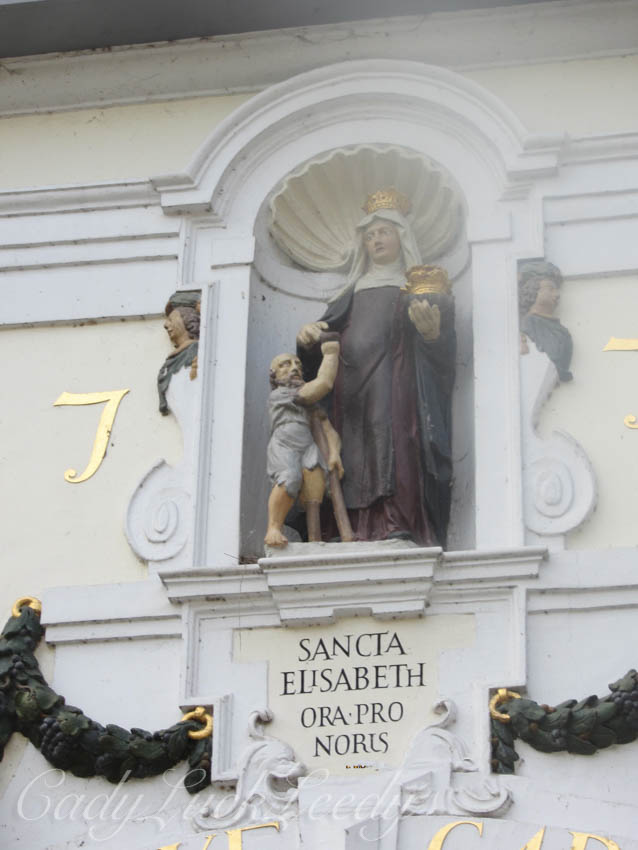
An Image of the Holy Elizabeth of Hungary, Patron Saint of the Beguinages

An Image of the Holy Elizabeth of Hungary, Patron Saint of the Beguinages

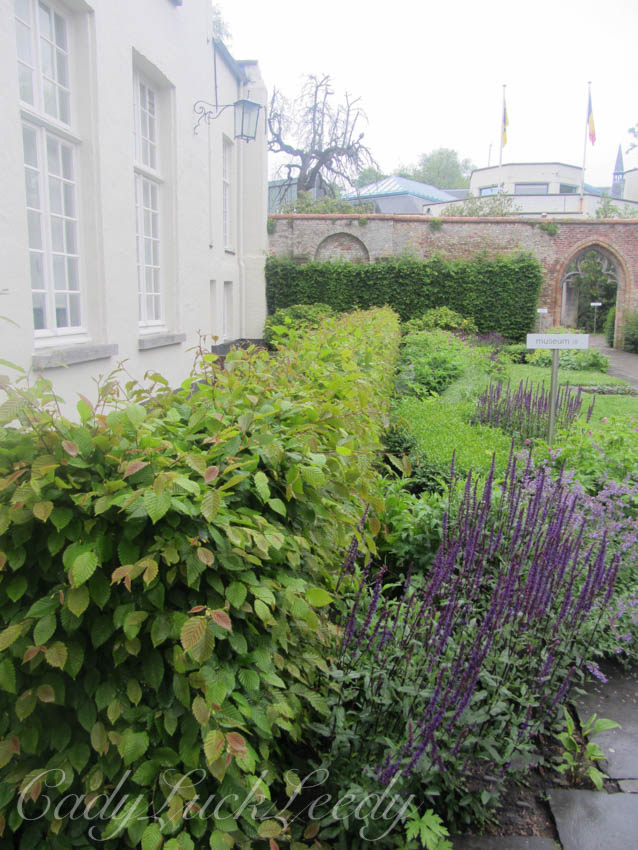
The Gardens in Begijnhof

The Gardens in Begijnhof

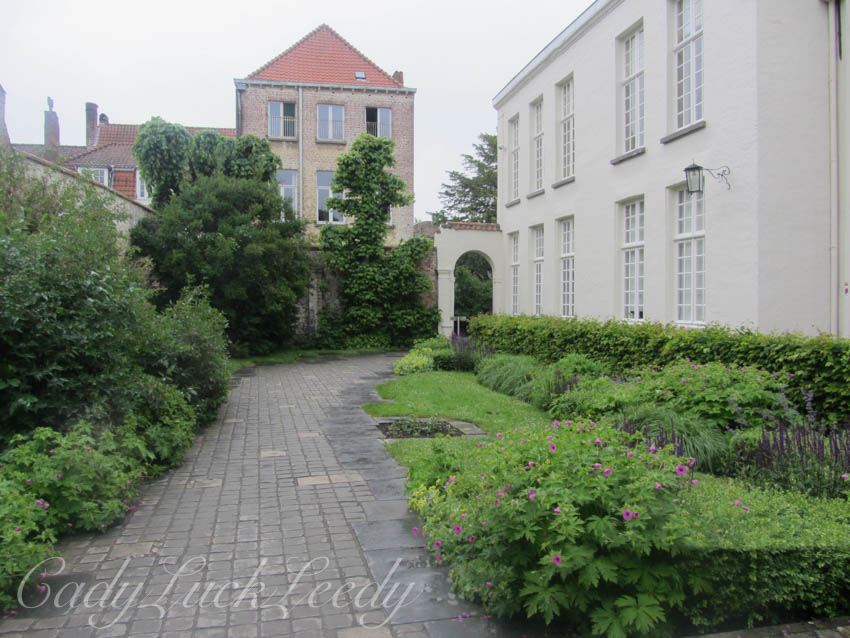
Garden Courtyards of the Begijnhof

Garden Courtyards of the Begijnhof

Beautiful Artwork for Meditation and Prayer in the Begijnhof

Beautiful Artwork for Meditation and Prayer in the Begijnhof

The Retirement Homes in Begijnhof

The Retirement Homes in Begijnhof

Aren’t these just the cutest places to live?

The Houses of Begijnhof

The Houses of Begijnhof

Just follow the garden paths!

Beautiful Gardens to See, Begijnhof

Beautiful Gardens to See, Begijnhof

A Woman Calls to Us From Her Rooftop Sanctuary, Begijnhof, Brugge

A Woman Calls to Us From Her Rooftop Sanctuary, Begijnhof, Brugge

Notice the sweet little heart above her head? Another memorable day in Brugge! I hope you enjoyed our walk through the Begijnhof!

Another Church Along Our Walk in Brugge

Our Final Church Along Our Walk Home in Brugge

Spring Time Fun and the Hot Cross Bun!


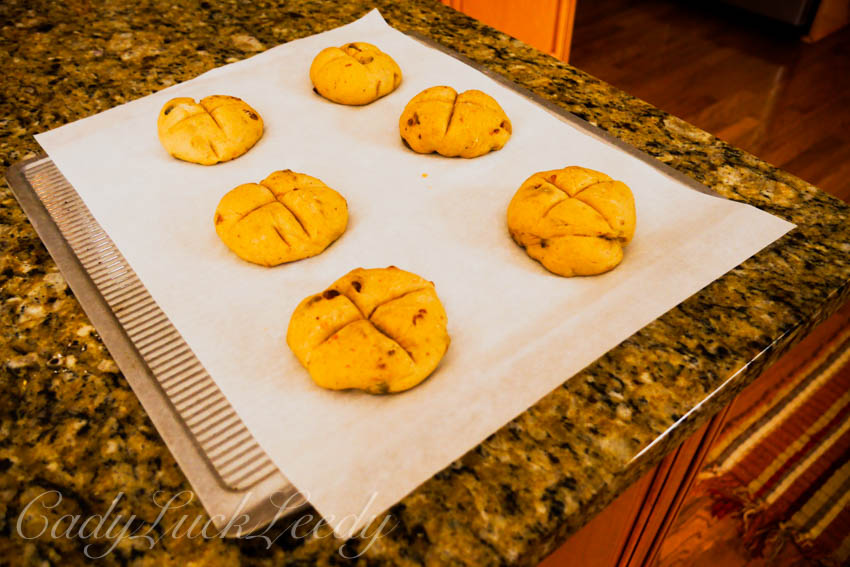
Preparing the Hot Cross Buns

Preparing the Hot Cross Buns


Spring time offers foods which are rich in history and symbolism. These foods can be broken down into three groups: 1. Food specifically related to Christ, such as ( lamb, for “the lamb of God.”)  Easter was the time to start eating the season’s new lamb. 2. Food related to pagan rites of spring (eggs for re-birth) (ham for luck), (lamb for sacrifice) and (cake/bread for fertility) 3. Modern foods such as candy and the Easter basket.

Eggs are traditionally connected with re-birth, rejuvenation and immortality. This is why they are celebrated at Easter. In the early Christian times eggs were forbidden during Lent, so this made them bountiful and exciting, forty days later. They were dyed or decorated in bright colors to honor this celebration. Red eggs brought to the table on Easter Sunday symbolized life, and were given as emblems of friendship.  Eggs with the pattern “XV” etched on them stood for “Christ is Risen”, a traditional Easter greeting. We hunt for eggs during an Easter Egg Hunt to identify with riches. Eggs were a treasure, a bounty of nature, and the treasures were deposited by hens in unsuspecting places. To find such a hidden nest was equal to finding a hidden treasure.

Preparing the Hot Cross Buns!

The Baked Hot Cross Buns!

The word “Easter” came from the name for the anglo saxon goddess of light and spring, Eostre.  Special dishes were cooked in her honor so that the year would bring fertility.  Most important of these dishes was a tiny cake or small spiced bun. The association of protection and fertility, birth and re-birth, became a Christian tradition, especially in English society. During Tudor times, the English custom of eating spiced buns on Good Friday was established when a London by-law was introduced forbidding the sale of such buns except on Good Friday, Christmas and burials. Issued in 1592, the thirty-six year of Queen Elizabeth I, by the London Clerk of Markets the proclamation read: That no bakers at any time or time hereafter make, utter or sell by retail, within or without their houses, unto any of the Queen’s subjects any spice cakes, buns, biscuits  or other spice bread except at burials or on the Friday before Easter or at Christmas, upon pain of death or forfeiture of all such spiced bread to the poor. A cross was etched or decorated on the bun to represent Christ’s Cross. “One-a-penny, two-a penny, hot cross buns”, was the call of the day. Superstitions regarding bread that was baked on Good Friday date back to a very early period. In England particularly, people believed that bread baked on this day could be hardened in the oven and kept all year to protect the house from fire. Sailors took loaves of it on their voyages to prevent shipwreck and a Good Friday loaf buried in a heap of corn kept away rats, mice and weevils. They also hung hot cross buns in the house on Good Friday to protect them from bad luck during the year and finely grated bread, mixed with water was sometimes used as medicine.

The Hot Cross Buns!

The Hot Cross Buns for Gifts!

Bath buns, hot cross buns, spice buns, penny buns, Chelsea buns, ( hot cross buns sold in great quantity by the Chelsea Bun House in the 18th century) and currant buns; all small, plump, sweet, fermented cakes that are English institutions! Join me today as I bake my hot cross buns! To enjoy this recipe too see, Hot Cross Buns on the King Arthur Webpage !  My favorite place for baking needs! Happy Easter!

The Best Bits of Eats in Brugge, Belgium


Our Morning Stroll Along the Canals, Brugge, Belgium

Our Morning Stroll Along the Canals, Brugge, Belgium

One of the best experiences when traveling is finding the neighborhood eateries off the beaten path. We like to eat in the neighborhoods we lodge in. It is the best way to meet the locals and enjoy the sit-down-and-focus-on-your-new-friend experience. In our neighborhood, near the B&B Gastenhuis Sint-Andriescruyse, we found two pubs/cafes that we enjoyed very much for their ambiance, simple meals and world-class beers.

First let’s take our morning stroll in the neighborhood!

Our Daily Walk Along the Canal, Brugge, Belgium

Our Daily Walk Along the Canal, Brugge, Belgium

The Cafe Terrastje was just the cozy-pub-spot where you could enjoy a meal or drink inside or outside at the terrace overlooking the canal. Isn’t this the quaintest of buildings?  Who could resist coming in here?

Cafe Terrastje, Brugge, Belgium

Cafe Terrastje, Brugge, Belgium

Herberg Vlissinghe was another pub close by and the oldest pub in town, dating 1515. It has the best old-time tavern feel and the garden for outside dining comes with a boules court. Both of these small pubs served the best simple, but delicious meals.

Herberg Vlissinghe, Brugge, Belgium

Herberg Vlissinghe, Brugge, Belgium

Let’s get back to our walk through Brugge. I just love strolling among the quiet streets and homes! There are always spots of color and flowers tucked in everywhere! So many different textures and styles to admire!

Strolling Through Brugge, Belgium

Strolling Through Brugge, Belgium

I loved this little green door! It must be a girl’s house!

Strolling Through Brugge, Belgium

Strolling Through Brugge, Belgium

Strolling Through Brugge, Belgium

Strolling Through Brugge, Belgium

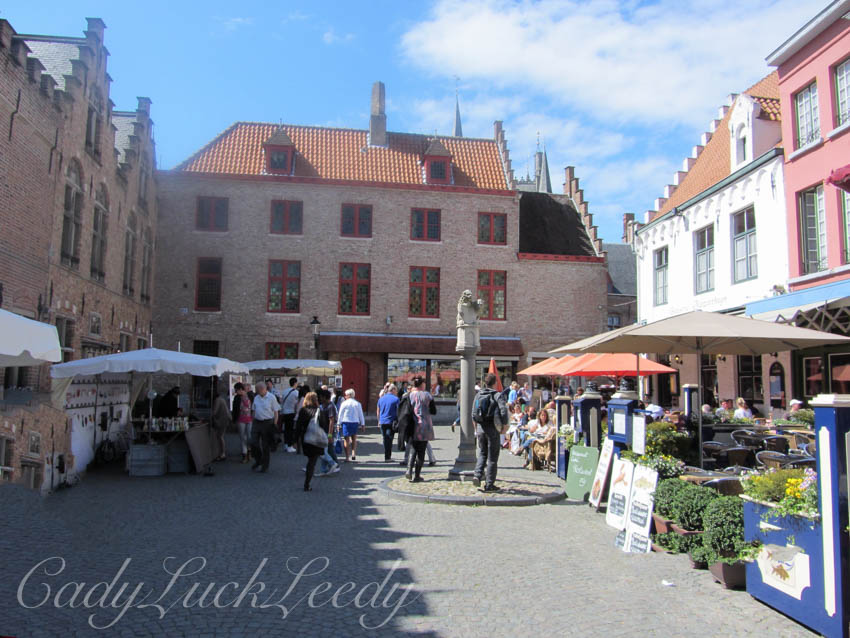
As we reached the town center it’s time for a bathroom break. These were the beautifully sculptured, flowering bushes, that were designed to create one long rolling WAVE! Absolutely delightful and right in front of the public restrooms!

The Rolling Wave Flowering Bush, Brugge, Belgium

The Rolling Wave Flowering Bush, Brugge, Belgium

The Artwork in Brugge, Belgium

The Green Lanterns,  Artwork in Brugge, Belgium

The Mermaid, Brugge, Belgium

The Mermaid, Brugge, Belgium

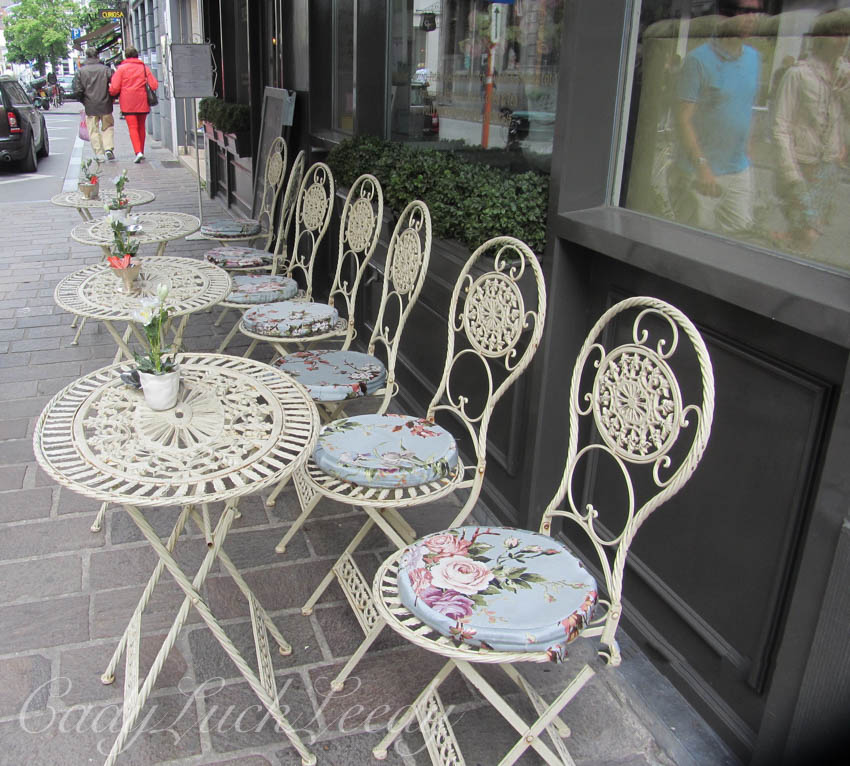
The Sidewalk Cafe, Brugge, Belgium

The Sidewalk Cafe, Brugge, Belgium

Strolling in Brugge, Belgium

Strolling in Brugge, Belgium

Strolling Through Brugge, Belgium

Strolling Through Brugge, Belgium

Time for a chocolate break! Dumon Chocolate was our daily pick for treats! Madame Dumon and her children greet you in her tiny, always packed, chocolate shop. They make their chocolates daily and describe their chocolates in person, no labels here! We always left with a little box of assorted out-of-this-world flavors!

Dumons Chocolate Shop, Brugge, Belgium

Dumons Chocolate Shop, Brugge, Belgium

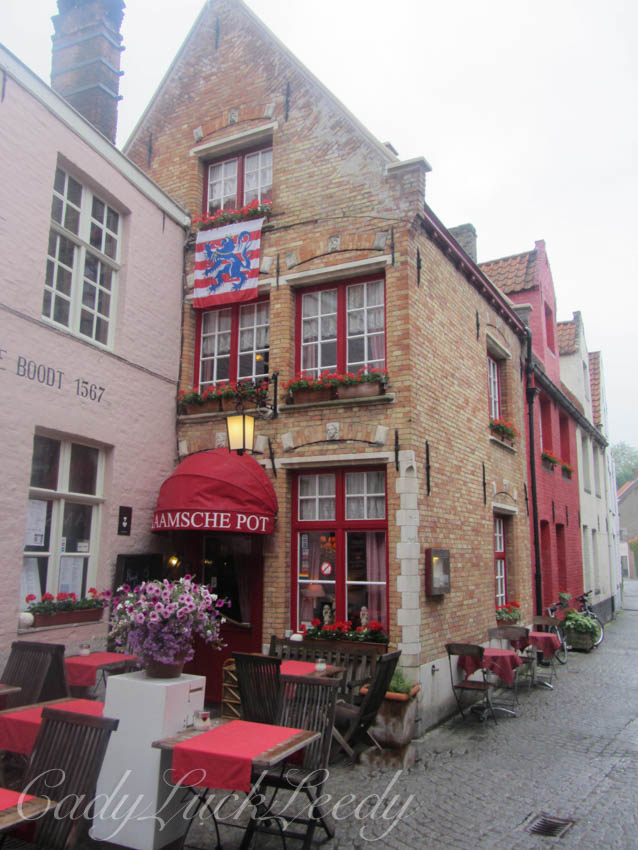
Our favorite restaurant in Old Town was without question, The Flemish Pot. The ambiance of red-cloth table covers and potted flowers everywhere just made you relax and set the mood to truly enjoy your meal. We enjoyed the local recipe for the beef stew pot!

The Flemish Pot, Brugge, Belgium

The Flemish Pot, Brugge, Belgium

I could live in that tiny room at the top!

Another Look at the Flemish Pot, Brugge, Belgium

Another Look at the Flemish Pot, Brugge, Belgium

Artwork Everywhere, Brugge, Belgium

Artwork Everywhere, Brugge, Belgium

A riot of color and texture everywhere!

Close Up of Shop Window, Brugge, Belgium

Close Up of Shop Window, Brugge, Belgium

Quiet Morning Street, Brugge, Belgium

Quiet Morning Street, Brugge, Belgium

Near City Hall, Brugge, Belgium

Near City Hall, Brugge, Belgium

Strolling Through Brugge, Belgium

Strolling Through Brugge, Belgium

One of the Churches in Brugge, Belgium

One of the Churches in Brugge, Belgium

Strolling Through Brugge, Belgium

Strolling Through Brugge, Belgium

Well we’ve made the rounds for today!  Back to the neighborhood pubs! Enjoy your day in Brugge!

Town Square, Brugge, Belgium

Town Square, Brugge, Belgium

The Best Bits of Brugge, Belgium

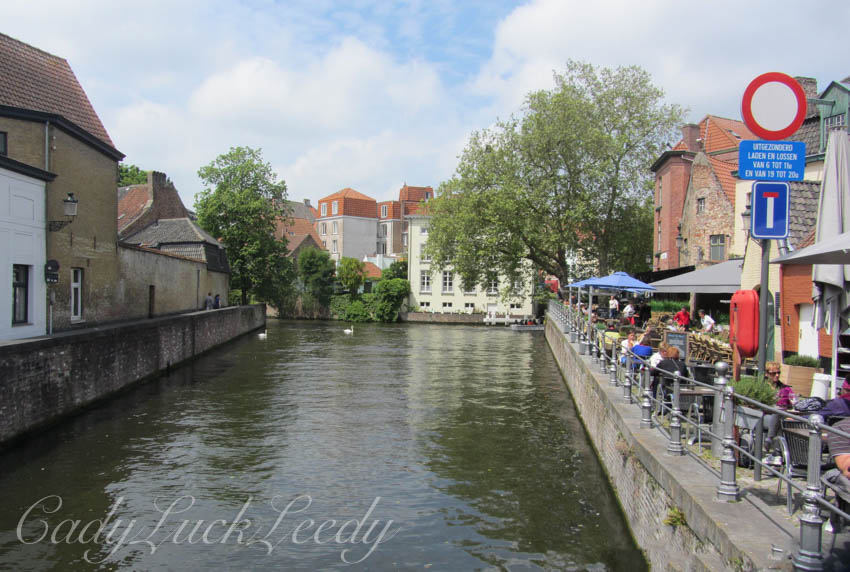
Along the Canal, Brugge, Belgium

Along the Canal, Brugge, Belgium

Along the Canal, Brugge, Belgium

Along the Canal, Brugge, Belgium

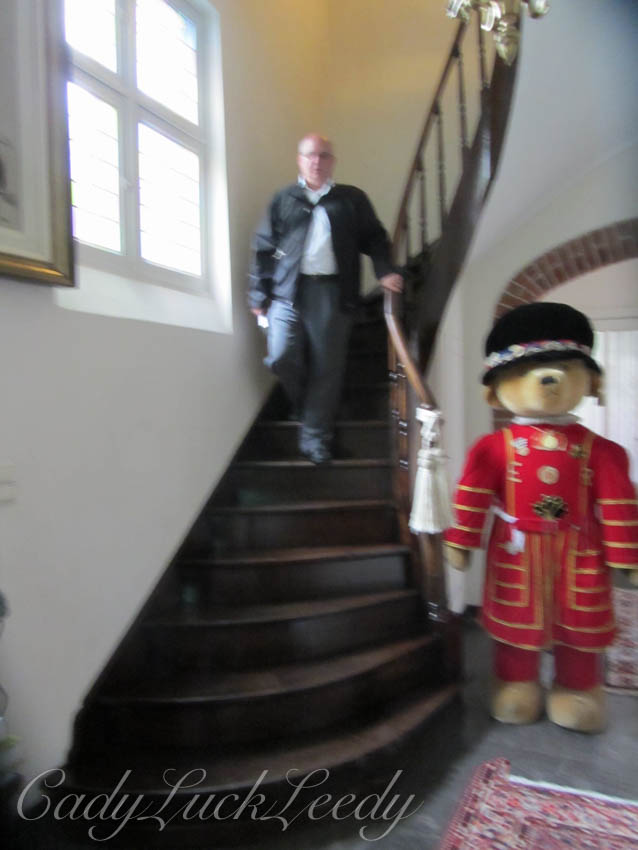
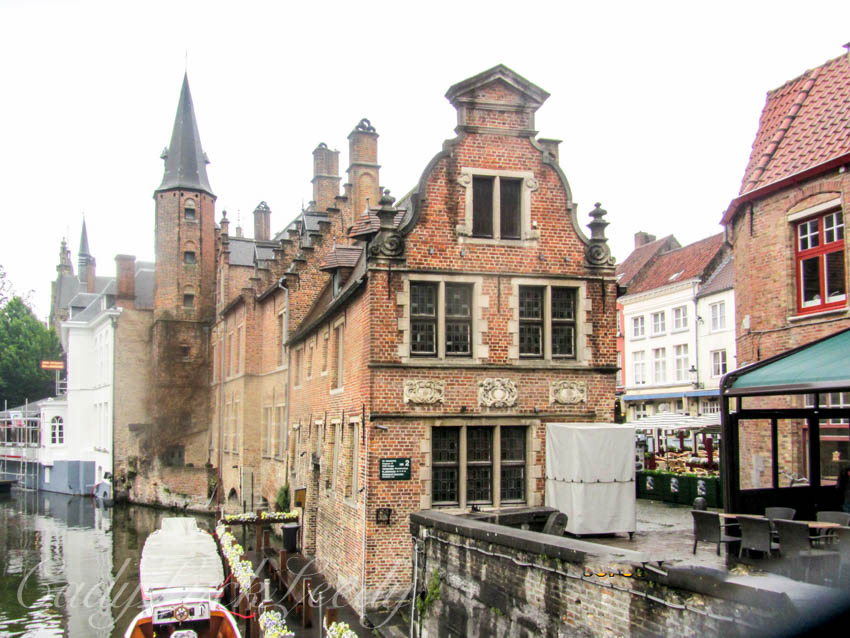
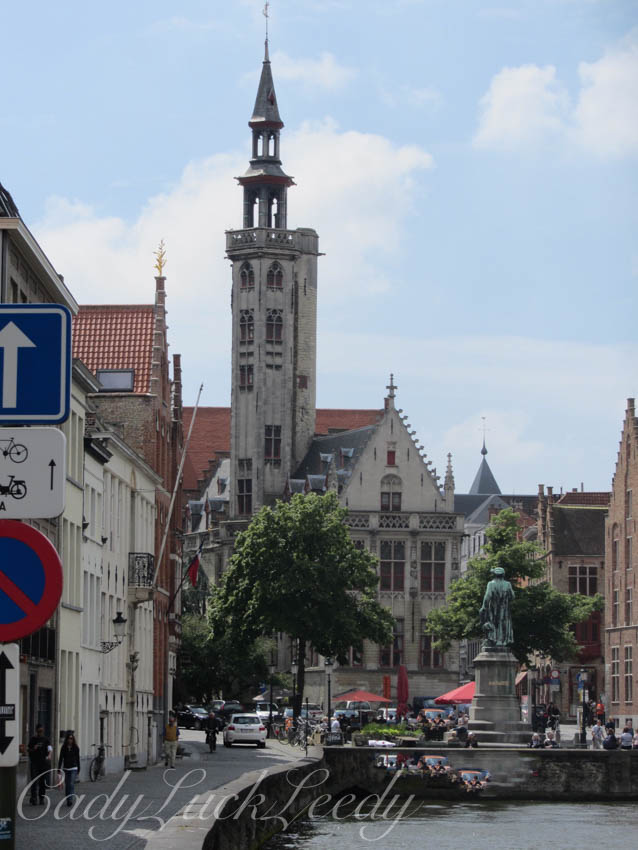
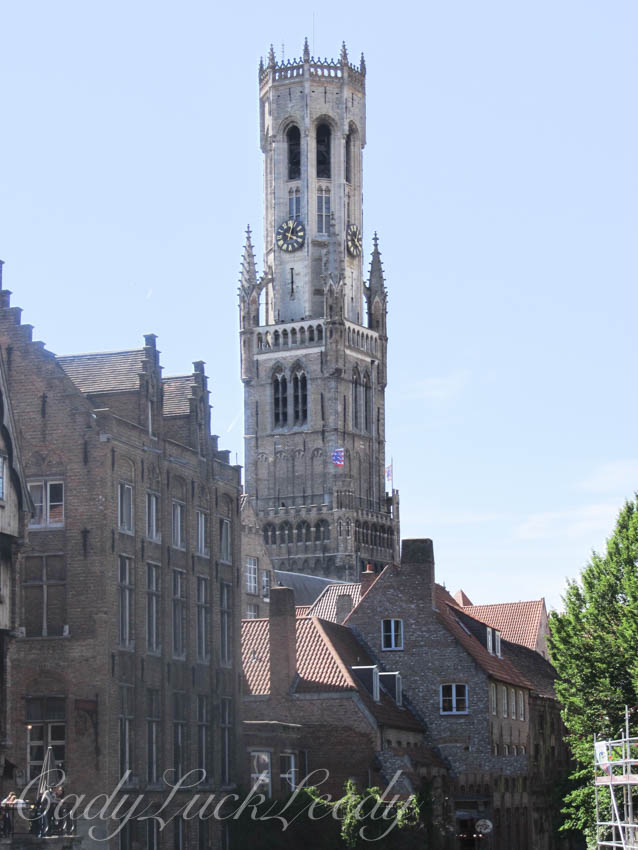
It’s a beautiful day for a walk through Brugge!   We’re starting out from the Huis Sint-Andriescruyse , a traditional gabled B&B in the old town of Brugge.  Situated right along the canal the house is in the long, narrow, dutch design, with the steep, curvy, staircase to the upper rooms overlooking the garden. Our hosts, Luc and Christiane, made us most welcome to their home and I loved being able to lodge inside one of these distinctive homes.  Out the door, just walking along the canal, I was quite content! History abounds in the WWI Flanders Fields nearby and the monuments are easily reachable by car or bus tours from Brugge. I have written extensive posts on these cemeteries and tours so check those out too. But, today we are out for a lovely walk through town. I enjoyed the canals, architecture, gardens, pubs and restaurants! First, we will stroll along the canal. As usual be sure to look up! You don’t want to miss anything! Enjoy!

THE STAIRS in a Traditional Dutch Gable , Brugge Belgium

THE STAIRS in a Traditional Dutch Gable, Brugge, Belgium

The Bear is Huge! What a welcome for guests!

The Canals in Bruge, Belgium

The Canals in Brugge, Belgium

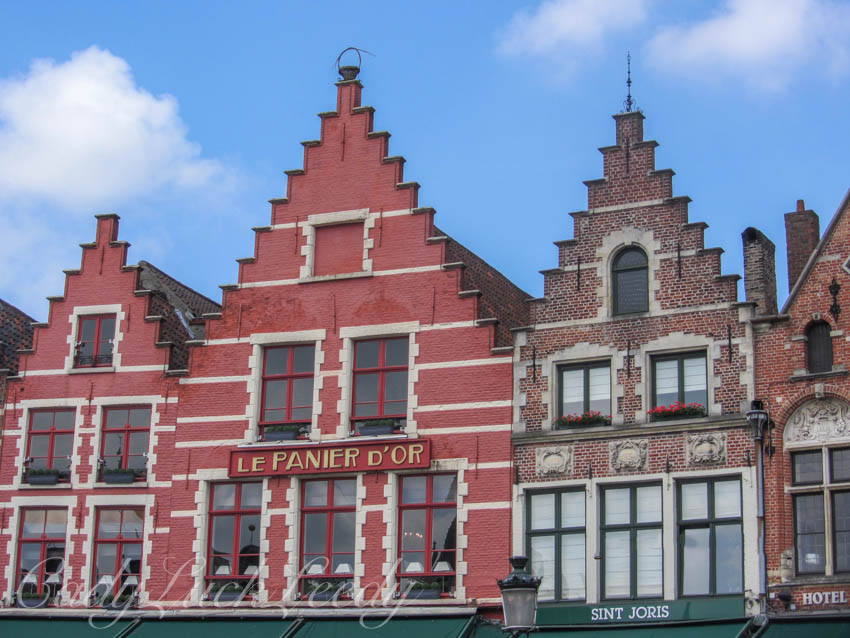
Crow Stepped Gabled House, Brugge, Belgium

Crow Stepped Gabled House, Brugge, Belgium

Crow Stepped Gabled House, Brugge, Belgium

Crow Stepped Gabled House, Brugge, Belgium

Crow-stepped gabled houses are staircase designed projections above roof lines used as decoration and an easy way to finish off the brick of the house. This extensive architecture was quite common in medieval Belgium. Most of the homes in the Old Town are of this design. I like the artwork at the tippy tops!

Canal Walk of Brugge, Belgium

Canal Walk of Brugge, Belgium

Brugge Architecture

Brugge Architecture Along the Canal

Along the Canals, Brugge, Belgium

Picture Perfect Along the Canals, Brugge, Belgium


Canal Running Right Through the Middle of the Old Town, Brugge, Belgium

Canal Running Right Through the Middle of the Old Town, Brugge, Belgium

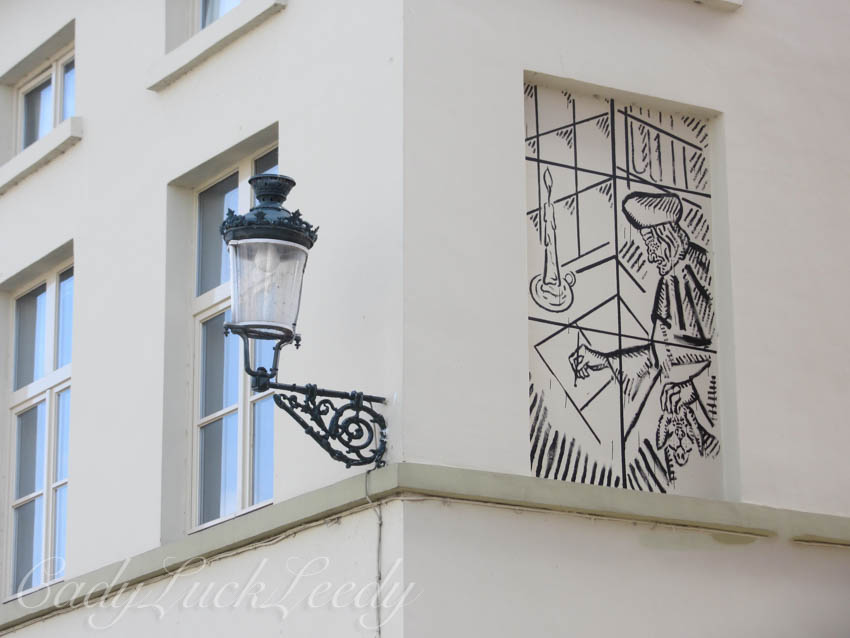
Look Up and in Between Walls!

Look Up and in Between Walls!

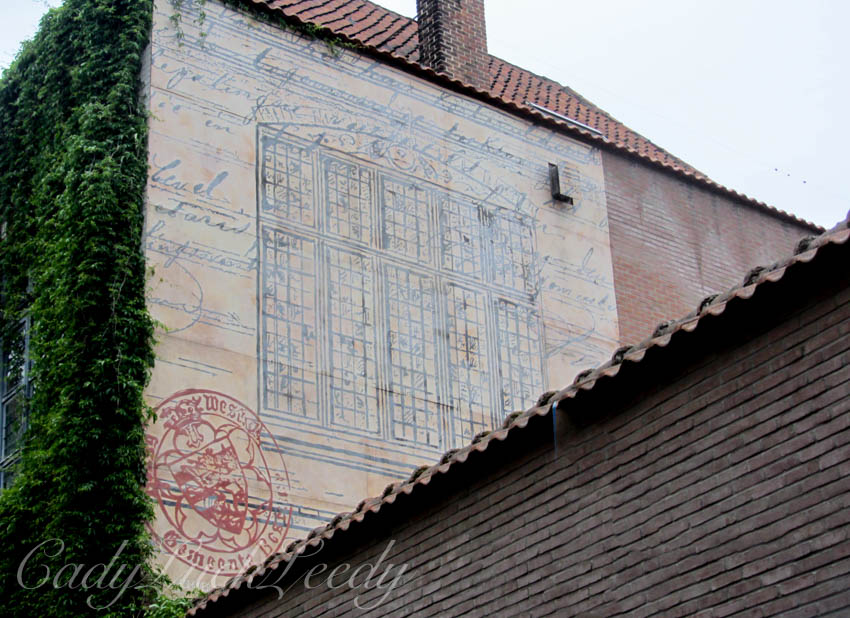
This Home is Mapped Out on the Wall

This Home is Mapped Out on the Wall

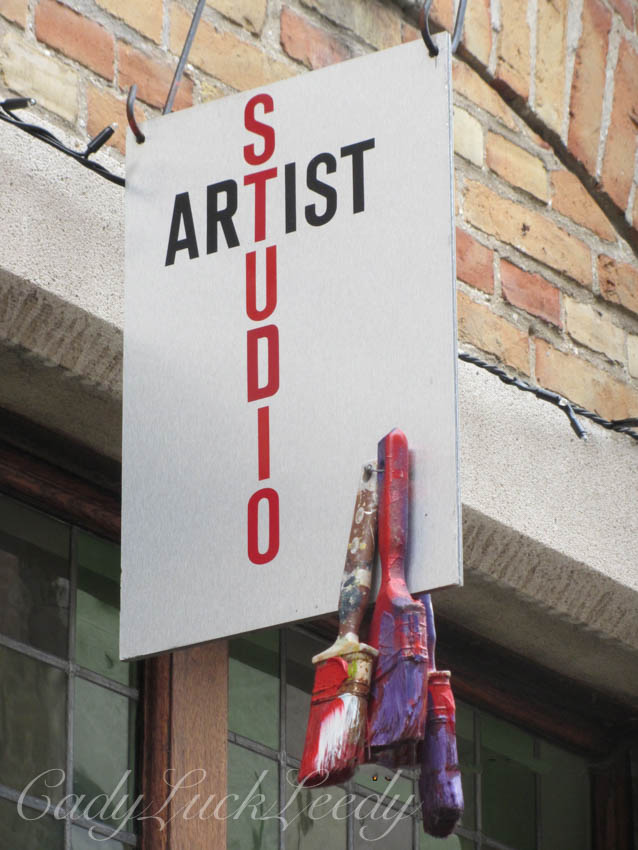
The Artist Studio, Brugge, Belgium

The Artist Studio, Brugge, Belgium

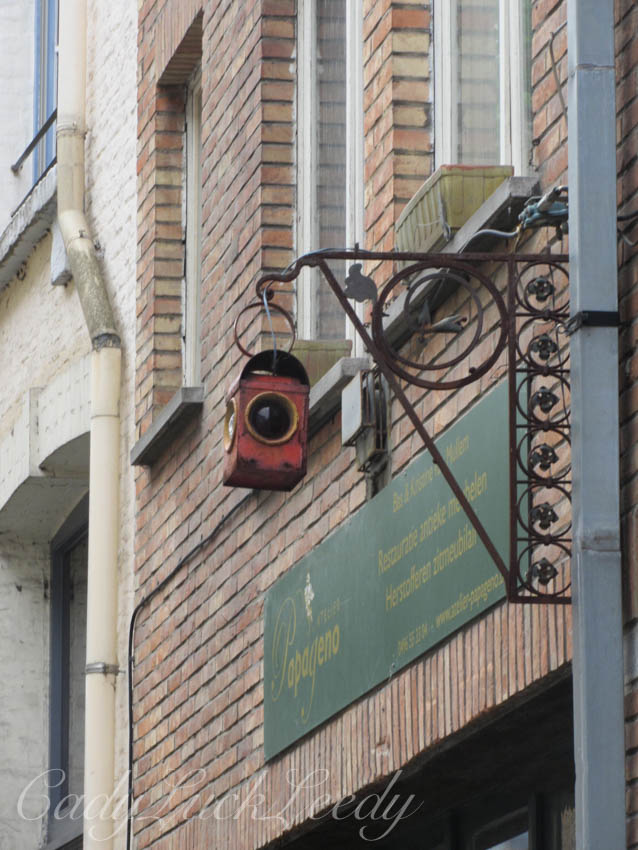
Old Lanterns, Brugge, Belgium

Old Lantern, Brugge, Belgium

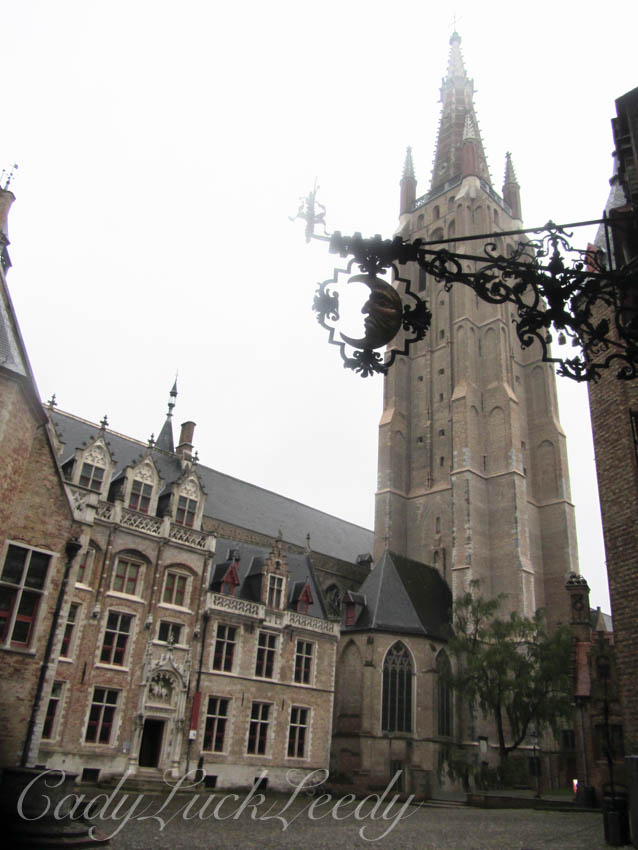
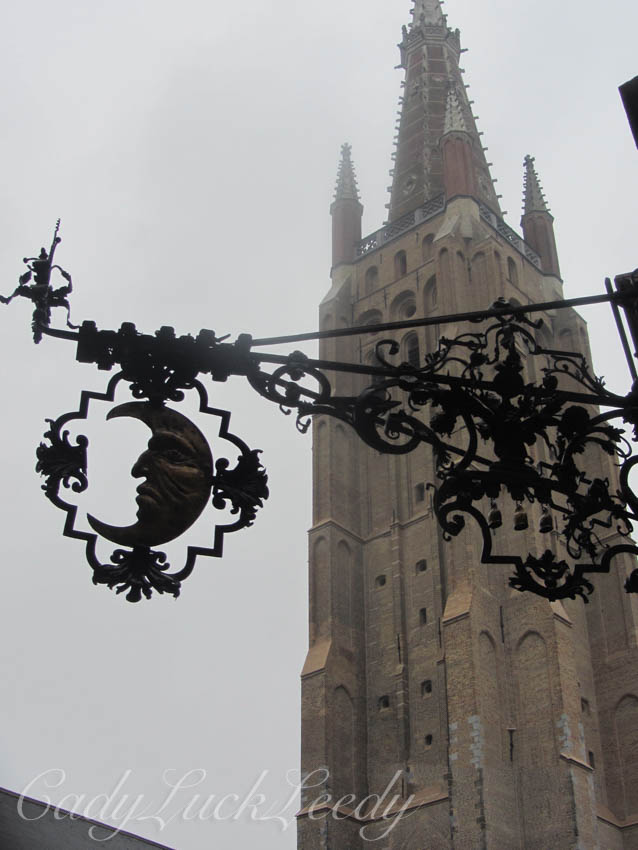
Iron Works, Brugge, Belgium

Iron Works, Brugge, Belgium

Iron Works, Brugge, Belgium

Iron Works, Brugge, Belgium

The Swann Hotel, Brugge, Belgium

The Swann Hotel, Brugge, Belgium

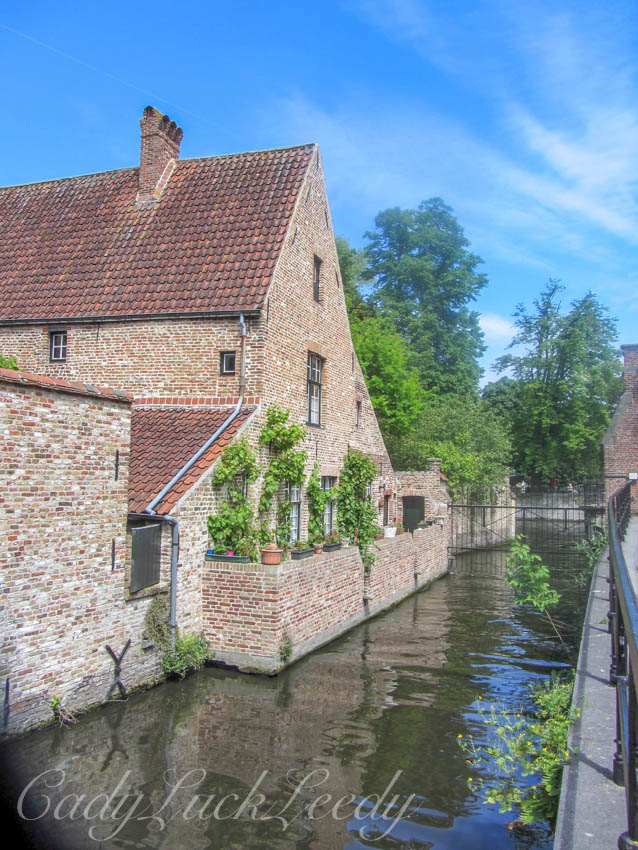
The Gardens Along the Canal, Brugge, Belgium

The Gardens Along the Canal, Brugge, Belgium

Along the Canals, Brugge, Belgium

Right Under the House, Along the Canals, Brugge, Belgium

Along the Canals, Brugge, Belgium

What a Lovely Garden Along the Canals, Brugge, Belgium

Along the Canals, Brugge, Belgium

Along the Canals, Brugge, Belgium

Along the Canals, Brugge, Belgium

Along the Canals, Brugge, Belgium

The Swans Aswimming in Bruge, Belgium

The Swans Aswimming in Brugge, Belgium

Tomorrow we will go in a different direction through Old Town.  See you there!

Weekly Photo Challenge: Yellow

The Yellow Light of Remembrance. In 1839, my family left this small village in France to come to the United States. This is just one of the two churches in the village. The other is St Adolphe, which supported my family’s departure and helped them adjust to their new life in a new country. It’s good to know where you came from and where you are going!

Inside St Pierre and St Paul Church, Neuwiller-les-Saverne, France

Inside St Pierre and St Paul Church, Neuwiller-les-Saverne, France

THE SPECTACLED BEAN

Tales, Thoughts + Tribulations of a Free Spirit in Suburbia

Walking Away

Travels on foot

Teacher nickname: The Three Hairs

Minding my mind, one thought at a time.

Tra Italia e Finlandia

Un lungo racconto fotografico.

seanbreslin.jp

Photography, hiking, walking, and cycling across central Japan — from quiet mountain paths to everyday life around Nagoya.

Lost in Translation

Looking for meanings in words, images and sounds

Journeys with Johnbo

Reflections on places traveled and photos taken.

M/VGratitude

Cruising with the Thyrre Family

Caroline's Travel Adventure Blog

Where my Travels and my Blog merge together.

Just Me, Nobody Special

The mental meandering that cross my keyboard

Jennifer's Journal

Website & Blog of J. Kelland Perry, Author

Slow Shutter Speed

A photographic journey.

Ann Mackay: Inspired by Nature

Photography celebrating flowers, plants, and the natural world

Still Restlessjo

Roaming, at home and abroad

Fine for Friday

The Corner Garden

Picture This

Photography, Travel and Retirement

World Traveller 73

Upgrade Your Travels. First Class Luxury Travel from all parts of the Globe. Business Class Airline, Lounge and Hotel Reviews, Stories and Adventures

Rachel Meets China

A China travel and lifestyle blog