Travel, Gardens, Food, Photography, Books, Shoes

Posts tagged ‘UK’

A Room of One’s Own: The Life of Virginia Woolf

Virginia Stephen Woolf

Virginia Stephen Woolf

What I knew about Virginia Woolf was revealed to me in a film titled, Who’s Afraid of Virginia Woolf?, featuring Elizabeth Taylor and Richard Burton. The only thing I knew for certain after the movie was that the couple never stopped yelling. That’s all I remember. Was that yelling person Virginia Woolf?  Who was the real Virginia Woolf? Somewhere, along the way, I realized she was an author, but  I never explored it any further. So I was excited to learn that her home, Monk’s House, was part of the National Trust. I wanted to know about the Virginia Woolf!

What I learned about Virginia Woolf…………as  I attempt to sort her story out.

Adeline Virginia Stephen was born on January 25, 1882 into a well-heeled family. Both her wealthy, influential, mother and father had been married previously, and widowed, with four children between them, before the birth of Virginia and her three siblings. Thus the family contained the children of three marriages.  Her father, Leslie Stephen, was an eminent editor, critic, and biographer; her mother, Julia Princep Duckworth Stephen, was committed to serving the poor. Virginia and Vanessa, (Virginia’s natural older sister), were educated at home, while the boys attended Cambridge.  The family was well connected and the children were raised in an environment of great literary works, with an immense library, but also under the influences of Victorian society. However, between 1897 and 1901 Vanessa and Virginia were allowed to attend the Ladies’ Department of King’s College, London, to study Ancient Greek, Latin, German, and history. Virginia thrived with all this knowledge.

The early years were rough going for the Stephen’s family. Virginia’s oldest half-sister, Laura Makepeace Stephen, from her father’s first marriage, was committed to an insane asylum. Virginia’s mother suddenly died in 1895, when Virginia was thirteen, followed by the death of another half-sister, Stella Duckworth, two years later. These events and possible child abuse by the older Duckworth brothers, led to the first of Virginia’s several nervous breakdowns. When her father died in 1904 Virginia collapsed and was briefly institutionalized and would be in and out of Burley House in Twickenham, described as “a private nursing home for women with nervous disorders”, in 1910, 1912, and 1913. Though her instability affected her private life, her literary productivity increased and was continued throughout her life. Her bouts of mental illness were thought to have been the result of what is now termed a bipolar disorder. She was extremely fragile.

Vanessa Stephen, being the oldest of the Stephen children, decided to sell the fashionable family home at 22 Hyde Park Gate and bought a house at 46 Gordon Square, Bloomsbury, (a bohemian, not so nice area of London), where Virginia and her brothers and sister, (Thoby, Adrian, and Vanessa) could escape the restraints, criticism, and gossip of a strict Victorian society.

A group of twelve intellectual Cambridge men, known as the “Apostles”, were among the friends of Thoby. The men gathered at the  Bloomsbury home on Thursday evenings to have dinner and discuss anything and everything late into the wee hours of the morning. Virginia and Vanessa attended the meetings as well. Vanessa, who was mostly interested in art, later started a Friday night group consisting of artists and critics. Virginia at this time began writing for the Times Literary Supplement, a forum for literary culture; bringing scholars, scientists, and artists together to address questions of value, meaning and purpose.  Hefty stuff!  Together this young, educated, and elite group  wanted to change the world. The Bloomsbury Group became very close and chose to live a lifestyle all their own, while supporting each other’s endeavors. (More on the Bloomsbury Group in a later post).

Thoby died from typhoid, at age 26, after he and Vanessa fell ill following a vacation in Greece. Soon after Vanessa married Clive Bell, a member of the Bloomsbury Group, and moved out of the Bloomsbury home, leaving Adrian and Virginia to fend for themselves.  Virginia was very upset by this move. Could Vanessa no longer cope with Virginia’s fragile mental state, attention and needs? Vanessa was more of a free spirit and she wanted her freedom from being the “mother” to her siblings. Virginia reluctantly accepted this, but would ultimately get her revenge.  Virginia rented a cottage in Firle, in the Sussex countryside, but continued her friendship and meetings with the Bloomsbury Group, of which Vanessa and Clive Bell were still a part of.

During this time, Leonard Woolf, another Cambridge man, briefly met Virginia Stephen at one of the forays in Bloomsbury, before leaving for a diplomatic post in Ceylon. Lytton Strachey, another Bloomsbury member, had proposed to Virginia (although he was a homosexual) and was quite pleased and relieved, when she turned him down. In correspondence to Leonard, during his stay in Ceylon, Lytton convinced Leonard that when he returned to England he should give up his job and propose to Virginia, and he did. They barely knew one another, and although Leonard was poor and Jewish, Virginia accepted. It was 1912 and Virginia was thirty. Did Virginia need someone to take care of her? Was Leonard aware of Virginia’s state of mind? The answer was yes she did and no he didn’t.

Virginia’s writings were very controversial, supporting the thoughts of the Bloomsbury Group of radical thinking, women’s rights and the freedom to love both men and women. She found it increasingly hard to get her work published and  was  at odds with “polite society”.

In 1915 Virginia completed her book, Voyage Out, and she and Leonard set up Hogarth Press to publish Virginia’s work and the work of her liberal friends: the hand printing providing a hobby as well as therapy for Virginia. In 1919 the Woolfs bought Monk’s House, in the countryside of Sussex, where Leonard thought Virginia could write in peace with less mental stress. Although Virginia loved the city and all it’s trappings and busywork, the move was a success for her mental health.  Virginia had no more mental breakdowns for twenty years. That’s not to say their life was uneventful, as you will find when we discuss Vanessa’s life.

One of Virginia’s books that I found very interesting was Mrs Dalloway. She definitely had a flair and gift with words and she experimented with stream of consciousness and the underlying psychological as well as emotional motives of her characters. Who was more prepared to write like this than Virginia? Her novels were highly experimental, with a narrative frequently uneventful and commonplace, as we see in Mrs Dalloway. This book centers on the efforts of Clara Dalloway, a middle-aged society woman, to organize a party, as her life is paralleled with that of Septmus Warren Smith, a working- class veteran who has just returned from WWI bearing deep emotional scars. The book has no chapters, does not explain anything, and no conversation is needed. It is just one continuous thought. (Stream of Consciousness) The story is the thoughts of Mrs Dalloway, in one given day! You know how you think things to yourself, your own running commentary as you go about the business of your day? This is Mrs. Dalloway! Her thoughts, just like ours, that jump from one to another. And then the day ends. It’s quite remarkable to be put into words and is extraordinary in thought! I’ve never read anything like it! Virginia went on to publish novels and essays as a public individual to both critical and popular success. In her book-length essay, A Room of Own’s Own, (1929) she wrote, “A woman must have money and a room of her own if she is to write fiction.” She achieved this at Monk’s House.  Now with our background somewhat complete, we’ll visit her home at Monk’s House, to learn more about her and the intertwining lives of others.  I can’t wait to see where this incredibly complex woman lived!  See you there!

Virginia Woolf

Listen to Virginia Woolf Speak

A Girl’s Gotta Eat: Pubs on “My English Garden Tour”

The Three Chimneys, Biddenden, Kent, UK

The Three Chimneys, Biddenden, Kent, UK

The Three Chimneys, Biddenden, Kent, UK

The Three Chimneys, Biddenden, Kent, UK

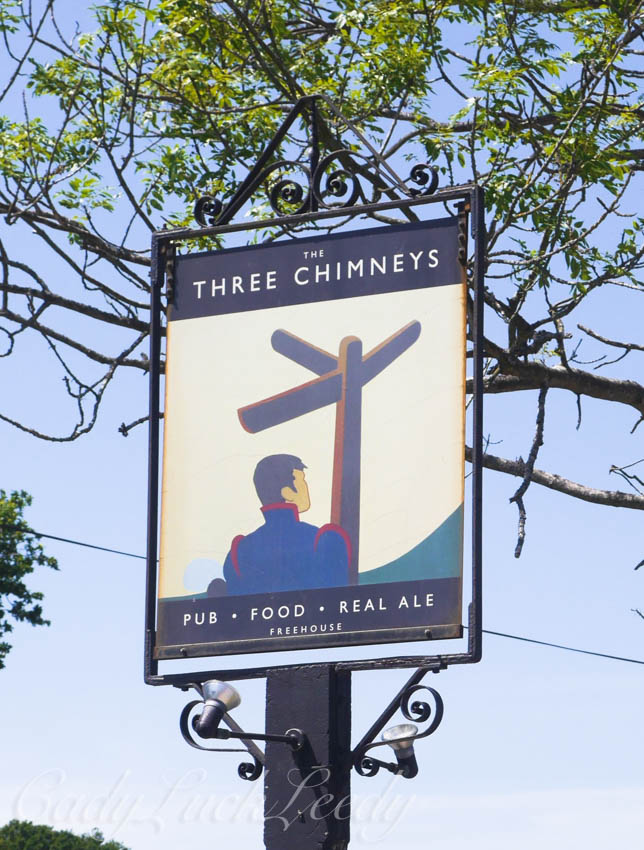
Near Sissinghurst Castle is a “not to be missed” pub called The Three Chimneys Freehouse. Located at the intersection of three country roads, the outside is much as it was hundreds of years ago. During the Seven Year’s War (1756-1763) some of the three thousand French prisoners at Sissinghurst Castle, who were placed on parole, were allowed as far as the pub. At the time the locals called the pub “The Three Wents,” or three ways, referring to the three paths that led there, but the prisoners called it Les Trois Chemins ( The Three Paths). Did the locals think the French were saying three chimneys or did that name refer to the chimneys on the pub? Or could it be the three chimneys at the three paths? The sign at the pub reflects the paths part of it’s past. See the particulars about The Three Chimneys Freehouse here.

The Three Chimneys is dated 1420 and the half timbered structure remained the same for 500 years. At that time it was a simple country ale house. Although The Three Chimneys has never lost it’s character there are now several eating areas within the pub, the newest being the seating area overlooking the gardens. There is lots of history to be gleaned here and I particularly liked the story of the last man who died here. Needless to say, there no longer is a pond outside.

Here was our appetizer at the Three Chimneys Pub; a mushroom and cheese dish for two.  A GIANT field mushroom with carmelized  red onions was drizzled in balsamic and topped with a grilled soft goat cheese! Delicious!!!!

Three Chimneys Pub, Biddenden, Kent, UK

Three Chimneys Pub, Biddenden, Kent, UK

To our delight the country pub has been recruiting great chef’s! The food offered in the neighborhood pub would make Jamie Oliver proud. The freshest local ingredients and creative food choices has definitely added to the charisma of the local pub. The atmosphere of the English Pub is what draws us to the pub in the first place. Sitting at a wooden table by the fireplace, cozy in a low ceilinged, small room, reminds us of days gone by. In the pub you are part of the community; catching up on news, celebrating events, just enjoying life! Today the locals are visiting the pubs like they have always done, although the pubs are now non-smoking and serving much more than the local ales. There are not as many pubs in town as there used to be due to the stiffer drinking laws, so the surviving pub needs to present it’s best. We were not disappointed in our choices and these two pubs were some of our favorites!

Tenterden, our “base camp” for our “Tour of English Gardens” was a thriving, busy, market town with the widest streets by far! Here one could find all the amenities and fine shopping one desired. Parking is at a premium here and an oddity for us was paying to park while shopping at the grocery store. It was, however, the largest parking lot in town and others would have parked there whether grocery shopping or not so I understand the meter business. We learned all about the meter system too! Every country is so different! Here you place part of the numbers of your car license plate into the meter machine along with your money at a localized spot! Voila!

Tenderden Town Sign, Tenderden, UK

Tenderden Town Sign, Tenderden, UK

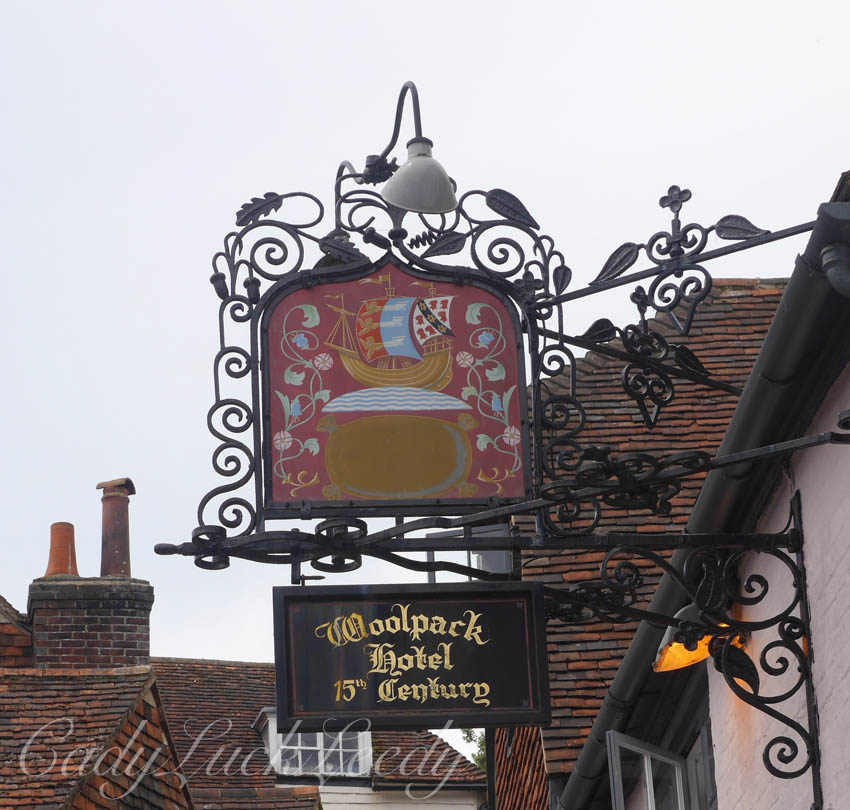
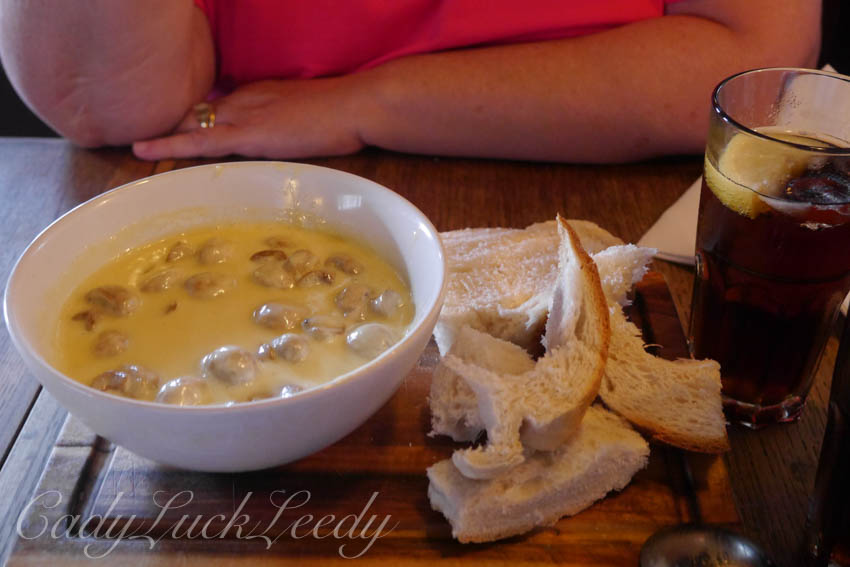
Our favorite pub, “The Wooley”, in Tenderden was at The Woolpack, a 15th century hotel that has just undergone re-furbishment and new management. Located on High Street, in the heart of Tenderden, we had THE BEST cheese and mushroom hors d’oeuvre. It turned out to be a warm, thick, creamed, cheese soup with whole mushrooms in it and was served with a loaf of warm french bread! Need I say more!  Delicious!!!! Be sure to check out the local pubs when visiting the U.K. You won’t be disappointed!

"The Wooley at the Woolpack Hotel, Tenterden, Kent, UK

“The Wooley” at the Woolpack Hotel, Tenterden, Kent, UK

The Mushroom Cheese Hors' d-eovre, The Wolley, Tenterden, Kent, UK

The Mushroom Cheese Hors d’oeuvre, The Wolley, Tenterden, Kent, UK

Man’s best friend comes here too!

"The Wooley" at the Woolpack Hotel, Tenterden, Kent, UK

“The Wooley” at the Woolpack Hotel, Tenterden, Kent, UK

The National Trust: Sissinghurst Gardens, Cranbrook, Kent, UK


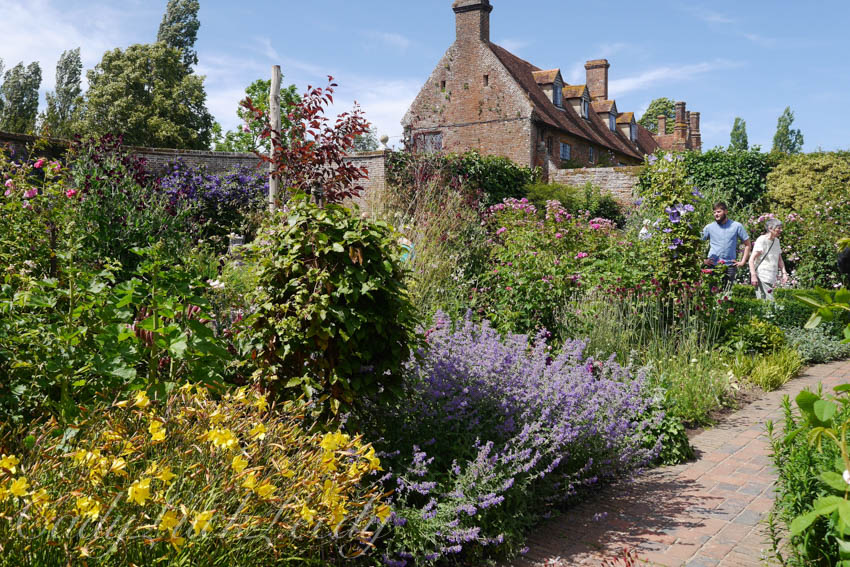
Sissinghurst Gardens, Cranbrook, Kent, UK

Sissinghurst Gardens, Cranbrook, Kent, UK


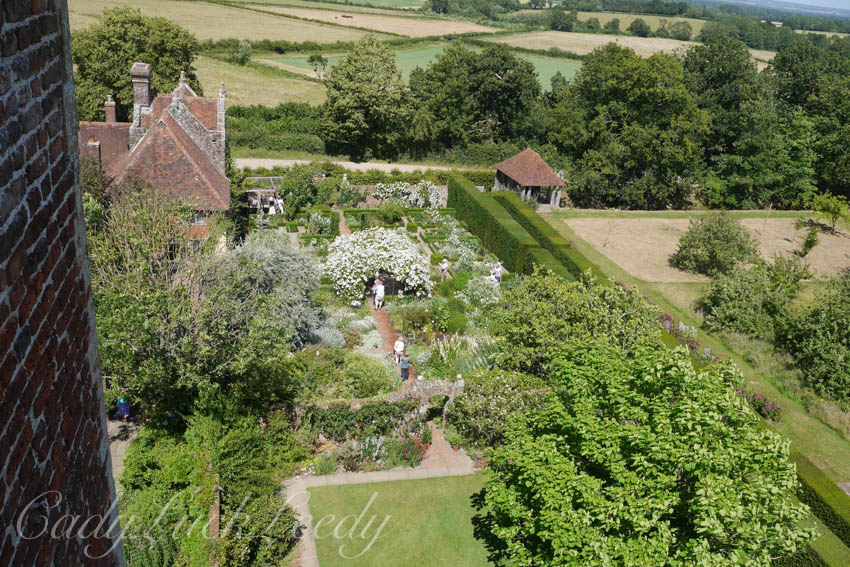
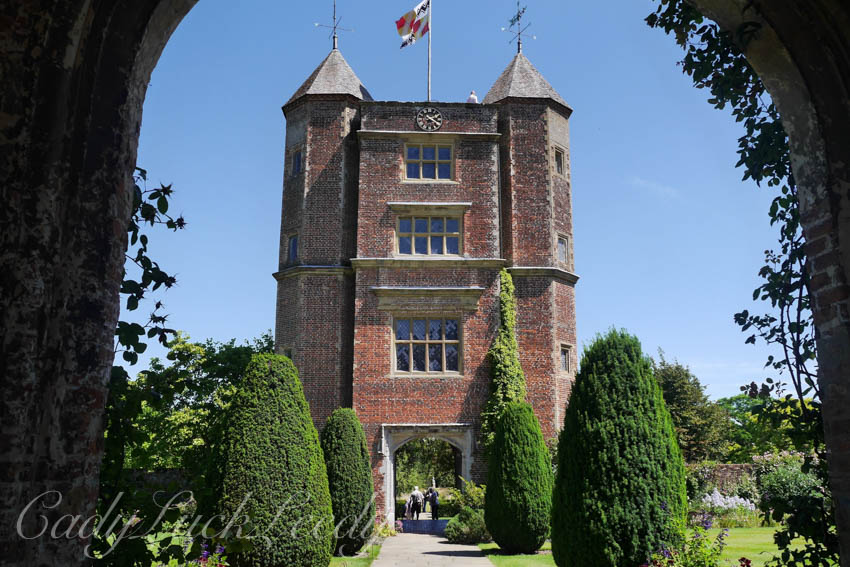
The Prospect Tower at Sissinghurst Gardens, Cranbrook, Kent, UK

The Prospect Tower at Sissinghurst Gardens, Cranbrook, Kent, UK

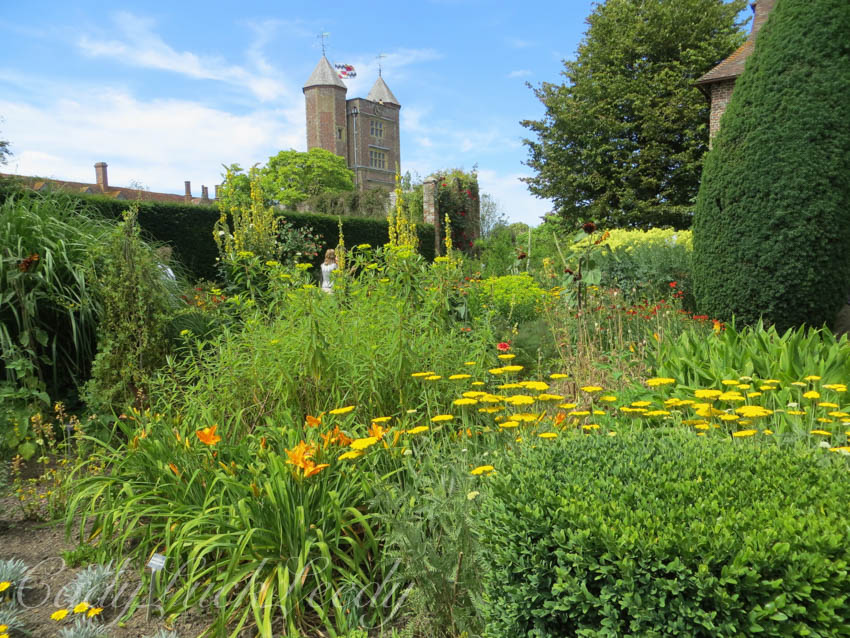
As we learned previously, the property at Sissinghurst was already, for the most part demolished, or in need of much repair, by the time Vita Sackville-West and her husband Harold Nicholson bought the property in the 1930’s. That is why it looked so strange to me just to see a tower in the middle of the yard! You had to know that at one time there was a much larger castle and courtyards that surrounded the turret towers to fully appreciate what the grounds had looked like at this time. (See my 1770’s picture of Sissinghurst Castle in my previous post to get the picture.) That picture also reminded me of Knole, the childhood home of Vita. Did Vita want this property because it reminded her of Knole?  Would  Sissinghurst  make up for the loss of Knole?  I think so, in my opinion. And then came the gardens……

Sissinghurst Gardens, Cranbrook, Kent, UK

Sissinghurst Gardens, Cranbrook, Kent, UK

The Sissinghurst Garden Map

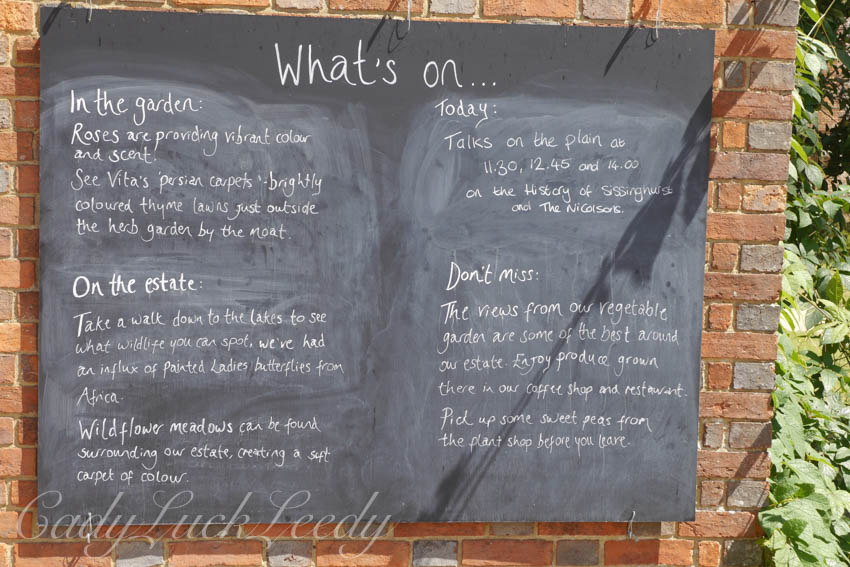
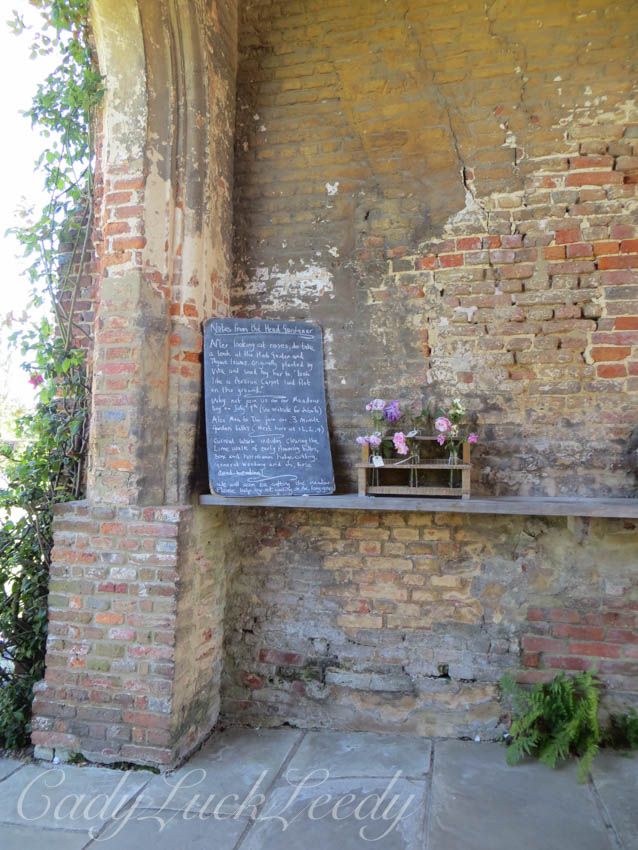
Chalkboard of Today's Events in the Sissinghurst Gardens, Kent, UK

Chalkboard of Today’s Events in the Sissinghurst Gardens, Kent, UK


Chalkboard of Today's Events in the Sissinghurst Gardens, Kent, UK

Chalkboard of Today’s Events in the Sissinghurst Gardens, Kent, UK

What I learned about the Sissinghurst Gardens………

Vita, who became in her own words, “a damned outmoded poet”, turned to writing weekly garden columns for The Observer, which in turn made her garden famous. By 1938, her friends and  gardeners were flocking to see the gardens and what the Nicolson’s were accomplishing. Vita,  began to charge one shilling to see the garden. Today as you enter the gardens you are given a wooden shilling to present to the gatekeeper to keep the tradition alive. First, let’s walk through the White Garden!

The White Garden, Sissinghurst, Kent, UK

The White Garden, Sissinghurst, Kent, UK


Entering the White Garden, Sissingurst Gardens, Kent, UK

Entering the White Garden, Sissingurst Gardens, Kent, UK


The White Garden, Sissinghurst, Kent, UK

The White Garden, Sissinghurst, Kent, UK


The White Garden, Sissinghurst, Kent, UK

The White Garden, Sissinghurst, Kent, UK

After WWII their attention returned to developing the garden and when Head Gardener, Jack Vass, returned from the war in 1948, the idea of a White Garden became a firm plan. Vita’s rose garden was moved from the area of the Tower Lawn and the Priest House to the Rondel Garden. The late rose garden area would now feature a white,  grey and green garden. “ I have what I hope will be a really lovely scheme for it: all white flowers, with clumps of very pale pink. White clematis, white lavender, white agapanthus, white double primroses, white anemones, white lilies”……

Together, Vita and Harold, constructed a garden of connected “rooms” which would become a romantic substitute for Knole. Each room had a different character of color and theme, the walls being clipped hedges or pink brick. Nicholson spent his efforts designing new interconnecting garden walkways between Vita’s exciting flower interior of each room.

The Rose Garden, Sissinghurst, Kent, UK

A Room With a View, Sissinghurst, Kent, UK


The Rondel Garden, Sissinghurst, Kent, UK

The Rondel Garden, Sissinghurst, Kent, UK


The Rondel Garden, Sissinghurst, Kent, UK

The Rondel Garden, Sissinghurst, Kent, UK


The Rondel Garden, Sissinghurst, Kent, UK

The Rondel Garden, Sissinghurst, Kent, UK


The Rondel Garden, Sissinghurst, Kent, UK

The Rondel Garden, Sissinghurst, Kent, UK


The Rondel Garden, Sissinghurst, Kent, UK

The Rondel Garden, Sissinghurst, Kent, UK


The Rondel Garden, Sissinghurst, Kent, UK

The Rondel Garden, Sissinghurst, Kent, UK


The Rondel Garden, Sissinghurst, Kent, UK

The Rondel Garden, Sissinghurst, Kent, UK


The Rondel Garden, Sissinghurst, Kent, UK

The Rondel Garden, Sissinghurst, Kent, UK


The Cottage Garden, Sissinghurst , Kent, UK

The Cottage Garden, Sissinghurst , Kent, UK


The Cottage Garden, Sissinghurst , Kent, UK

The Cottage Garden, Sissinghurst , Kent, UK

Vita’s thoughts on planting, “Why have one plant when you can have a hundred!” She loved to plant en masse!

The Cottage Garden, Sissinghurst , Kent, UK

The Cottage Garden, Sissinghurst , Kent, UK


A Connecting Walkway at Sissinghurst Garden, Kent UK

A Connecting Walkway at Sissinghurst Garden, Kent UK

One of the hedges was being trimmed!  What an upkeep that would be!

The Lime Walk, Sissinghurst, Kent, UK

The Lime Walk, Sissinghurst, Kent, UK


The Orchard, Sissinghurst, Kent, UK

The Orchard, Sissinghurst, Kent, UK


The Herb Garden, Sissinghurst, Kent, UK

Walking to the Herb Garden, Sissinghurst, Kent, UK

Jack Vass was a skilled propagator and many of the seeds and cuttings came from all over the garden. Vita would only buy one plant and cuttings would be taken from that and many plants came from friends and other private gardens such as the garden at  Hever Castle. In total the White Garden cost three pounds. Later there was the creation of the Thyme Lawns, and the Moat Walk, as her rose collection continued to grow.  By 1953 there were 194 different roses grown at Sissinghurst. Vita’s take on the garden was to allow the garden to have a certain wildness about it which fitted her romantic and free nature. Her strength was in creating imaginative planting schemes and using color in stunning combinations.

In 1967, The National Trust took over the garden, farm, and buildings. Today the  garden is the epitome  of an English garden and well cared for by eight gardeners and many National Trust volunteers. It is one of the most visited and loved gardens in England. I hope you have enjoyed the Gardens at Sissinghurst!  It was one of my favorite gardens!

The National Trust: Sissinghurst Castle; Home of Vita Sackville-West

Sissinghurst Castle Gardens, Kent, UK

Sissinghurst Castle, Cranbrook, Kent, UK


Sissinghurst Castle, Cranbrook, Kent, UK

Sissinghurst Castle, Cranbrook, Kent, UK

Here looking at the main section of the house, the Long Library is to the left, and the Main House is to the right.

Sissinghurst Castle, Cranbrook, Kent, UK

Sissinghurst Castle, Cranbrook, Kent, UK

From 1915 to 1930, Vita Sackville-West, poet, and her husband, Harold Nicholson, diplomat, lived at Long Barn in Sevenoaks, after the family had been forced to leave Knole, her family home, when Vita was not able to inherit the family estate because she was a woman. 

In 1930 they bought  the ruins and the farm around Sissinghurst Castle. The Nicolson’s must have had a good imagination and wanted something that would keep them busy for years, because Sissinghurst had had a long and colorful past, but by 1930 the buildings were all dilapidated and the grounds one massive field of weeds!

This is what I learned about Sissinghurst………

In 1235, the manor belonged to John de Saxingherste, a gentleman farmer. The house was protected by a moat, which provided the family with fish. This moat still exists on two sides of the orchard. By 1530 the manor was sold to John Baker of Cranbrook, a very wealthy man during the reign of King Henry VIII. The house was expanded and a entrance gateway was built. In 1560, son Richard, built a new house on the site around three courtyards with a Prospect Tower at the center. A smaller house to the north, known as the Priest’s House, was originally a banqueting house and later housed their priest.

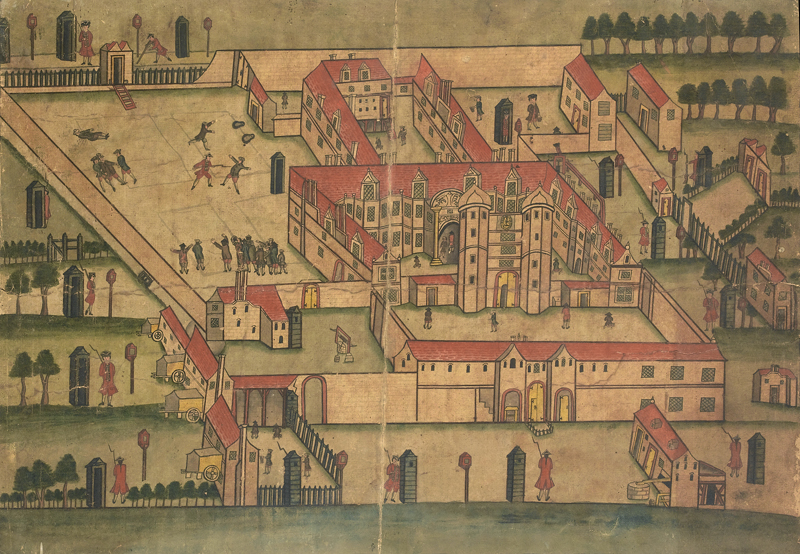
Chateau de Sissinghurst

Chateau de Sissinghurst, 1756-1763

By 1730 Sir John Baker died, leaving four daughters and as there were no men descendants left, the estate was sold to Horace Mann, who never lived there, but leased the property to the government to be used as a prison, during the Seven Year’s War. French Naval officers were housed in the tower and some of the graffiti of sailing ships, names, and dates still remain there. The three thousand prisoners referred to their prison as Chateau de Sissinghurst, and the name stuck.  By the end of the war the sailors had destroyed the property; trashing, burning and looting the fine architectural details from fireplaces, doorways and windows.

In 1796, the parish of Cranbrook took over the lease, creating a poor house here where one hundred men were offered housing, employment and food. A devastating fire in the 1800’s destroyed the manor so badly that even the foundations of the house, that stood in the orchard, were picked up and carted away.

Here is a Map of the property after many years of work by the Nicholson’s. It gives you an idea of what was left on the property and how they mapped out the gardens. They lived in the smaller Priest House and the South Cottage,  while re-building the remaining section of the gated wall, and set out to transform it into the beautiful house and garden it is today. In 1967 The National Trust took over Sissinghurst, the gardens, farm and buildings. Today it is one of the most popular manors owned by the National Trust. Tomorrow we’ll take a close up look at the gardens and how they developed over the years at Sissinghurst. Now let’s look at the buildings on the property of Sissinghurst Castle.

Tower at Sissinghurst Castle, Cranbrook, Kent, UK

Prospect Tower at Sissinghurst Castle, Cranbrook, Kent, UK

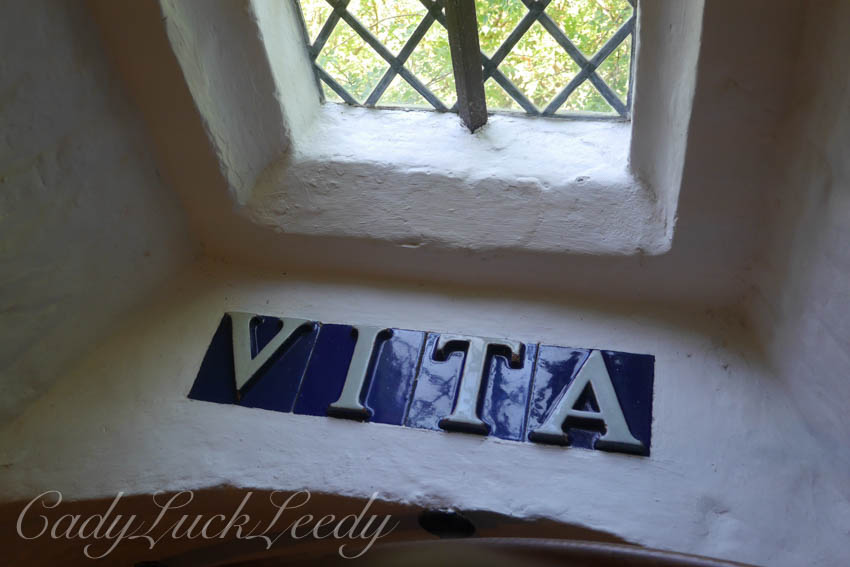
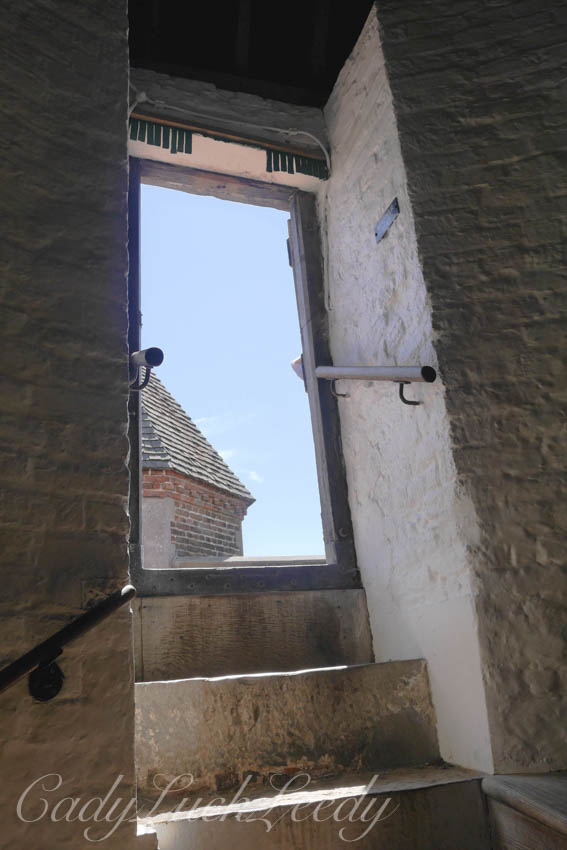
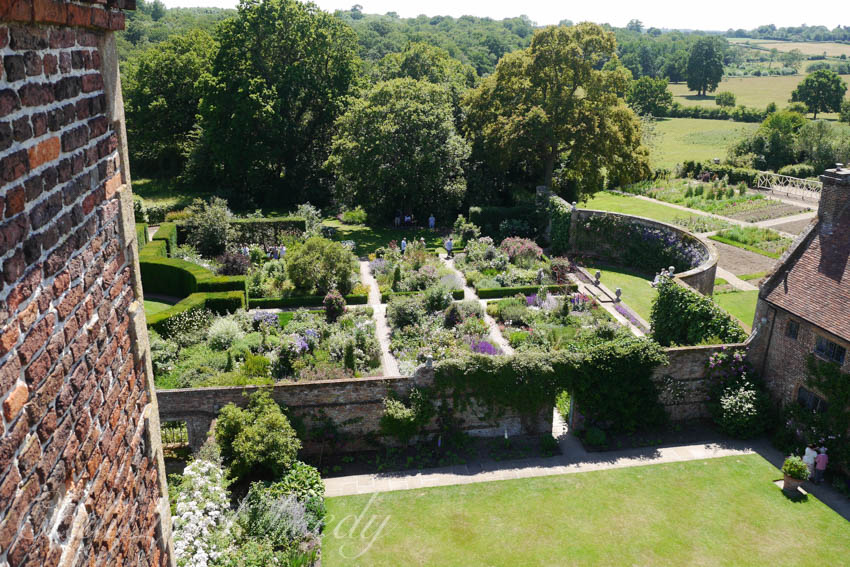
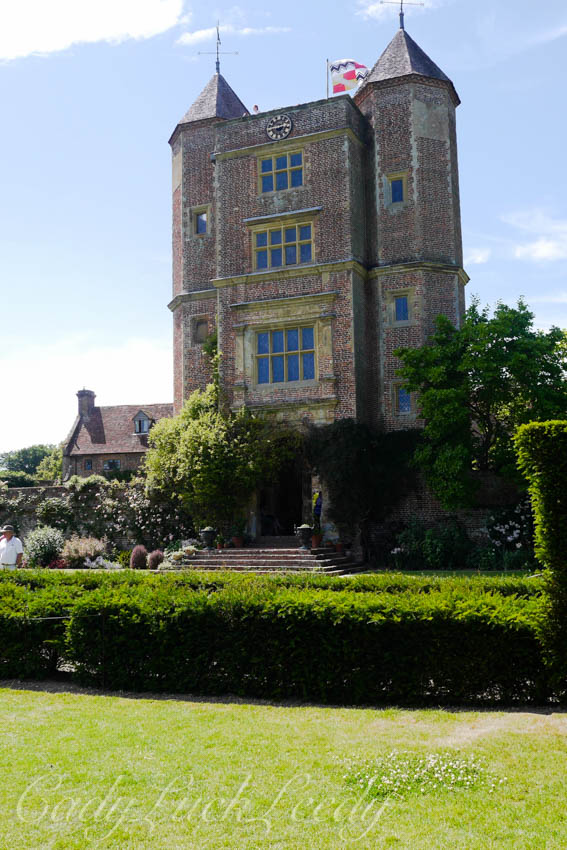
The Tower became Vita’s “Room of Her Own”, where she went daily to write for three hours. The rest of the day was spent working in her gardens. Here are some views of her room and the views she had when writing.

Steps to the Tower, Sissinghurst, Castle, Cranbrook, Kent, UK

Steps to the Tower, Sissinghurst, Castle, Cranbrook, Kent, UK


Prospect Tower, Sissinghurst, Castle, Cranbrook, Kent, UK

Prospect Tower, Sissinghurst, Castle, Cranbrook, Kent, UK


Prospect Tower, Sissinghurst Castle, Kent, UK

Prospect Tower, Sissinghurst Castle, Kent, UK


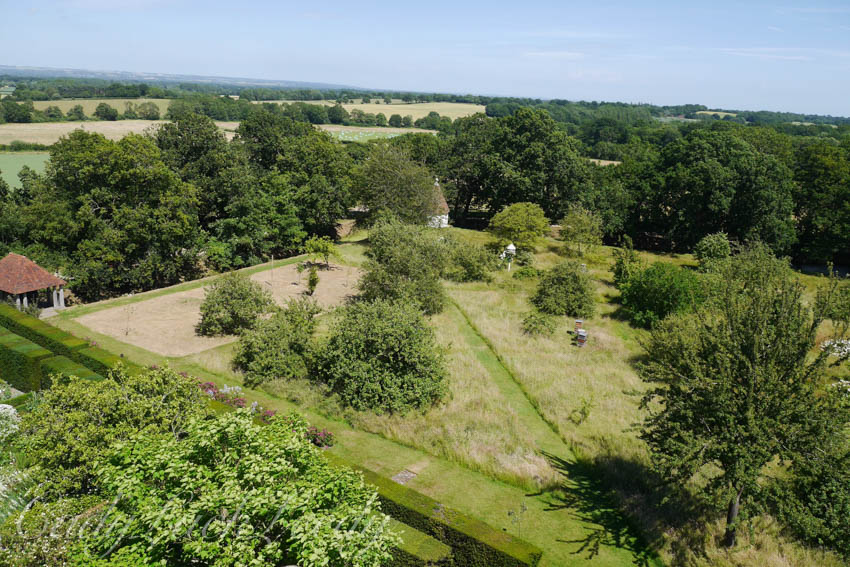
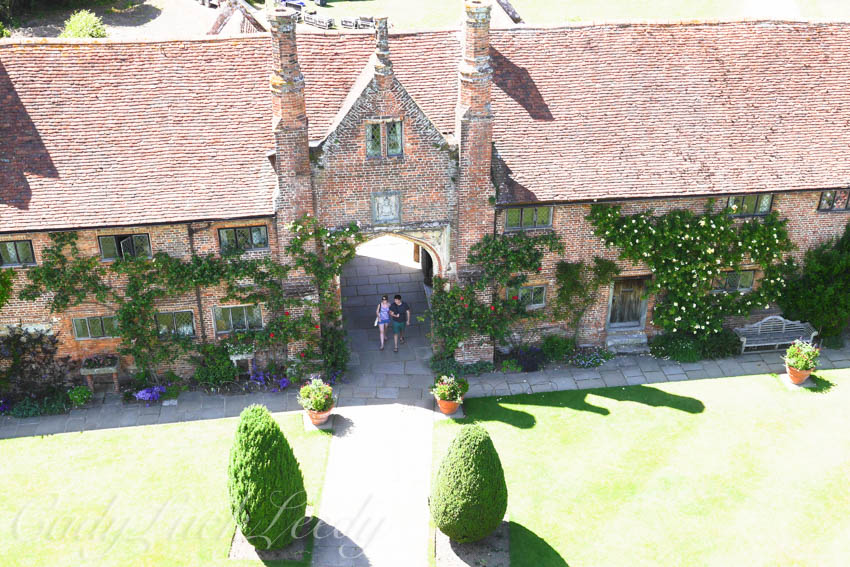
View from Prospect Tower, Sissinghurst Castle, Kent, UK

View from Prospect Tower, Sissinghurst Castle, Kent, UK


View from Prospect Tower, Sissinghurst Castle, Kent, UK

View from Prospect Tower, Sissinghurst Castle, Kent, UK

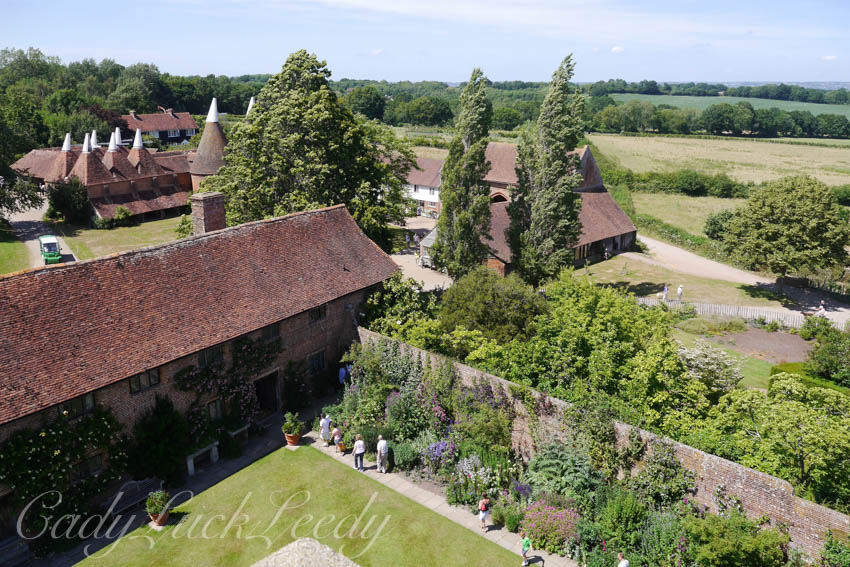
The rooftop shown in the picture above is the Priest’s House, now a B&B on the National Trust Property at Sissinghurst. Wouldn’t be great to stay in this garden?

View from Prospect Tower, Sissinghurst Castle, Kent, UK

View from Prospect Tower, Sissinghurst Castle, Kent, UK


View from Prospect Tower, Sissinghurst Castle, Kent, UK

View from Prospect Tower, Sissinghurst Castle, Kent, UK


View from Prospect Tower, Sissinghurst Castle, Kent, UK

View from Prospect Tower, Sissinghurst Castle, Kent, UK


View from Prospect Tower, Sissinghurst Castle, Kent, UK

View from Prospect Tower, Sissinghurst Castle, Kent, UK

Here is the South Cottage Farmhouse, another B&B on the property at Sissinghurst.  It is a much larger property, in case you need more room!

View from Prospect Tower, Sissinghurst Castle, Kent, UK

View from Prospect Tower, Sissinghurst Castle, Kent, UK


View from Prospect Tower, Sissinghurst Castle, Kent, UK

View from Prospect Tower, Sissinghurst Castle, Kent, UK


Prospect Tower, Sissinghurst, Kent, UK

Prospect Tower, Sissinghurst, Kent, UK


Prospect Tower, Sissinghurst, Kent, UK

Prospect Tower, Sissinghurst, Kent, UK


The Back of the Main House, Sissinghurst, Kent, UK

The Back of the Main House, Sissinghurst, Kent, UK


The Back of the Main House, Sissinghurst, Kent, UK

The Back of the Main House, Sissinghurst, Kent, UK


The Boat House along the Moat, Sissinghurst Castle, Kent, UK

The Boat House along the Moat, Sissinghurst Castle, Kent, UK

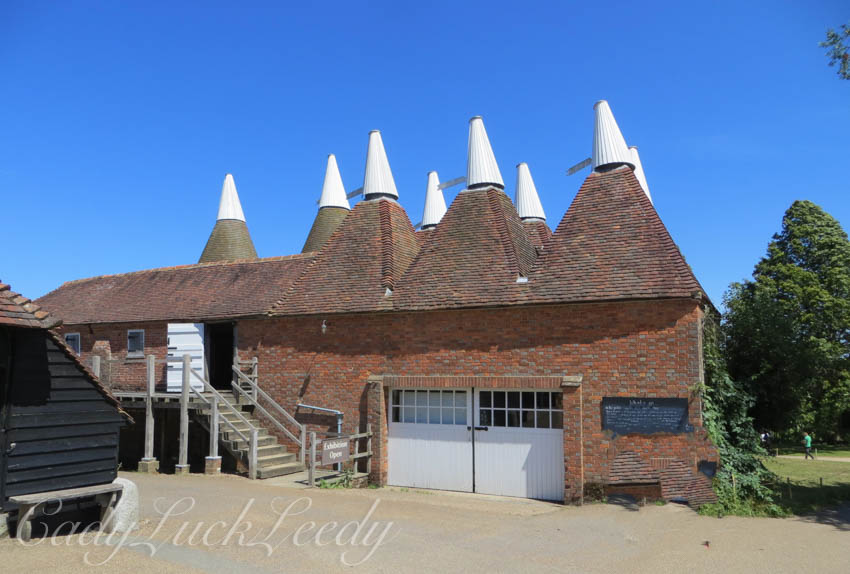
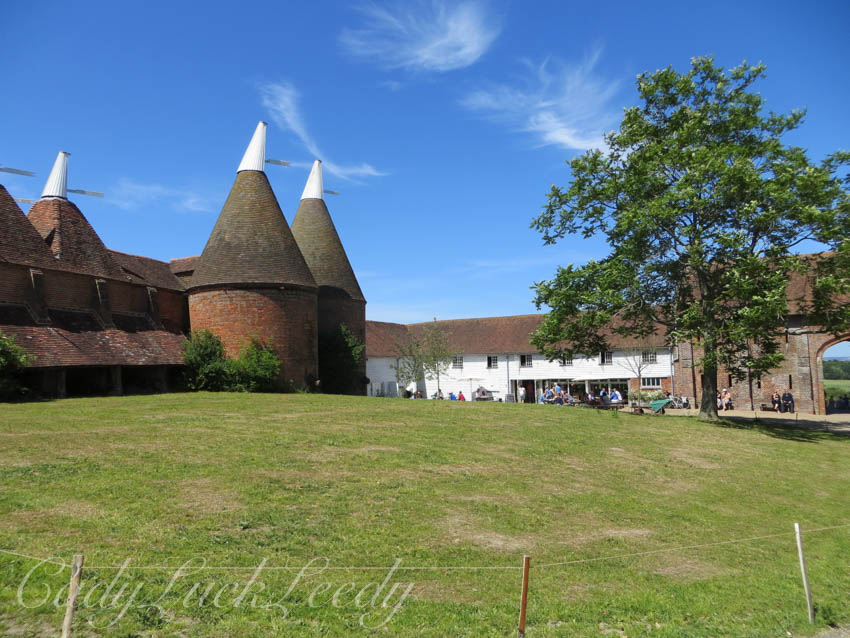
Here are the Oasts, so we know this was a working farm!

The Oasts at Sissinghurst Castle, Kent, UK

The Oasts at Sissinghurst Castle, Kent, UK

Now these buildings make up the restaurant,  gift shops and museum at Sissinghurst Castle.

The Gift Shop and Restaurant at Sissinghurst Castle, Kent, UK

The Gift Shop and Restaurant at Sissinghurst Castle, Kent, UK

Tomorrow we’ll explore the garden up close and personal and see the remarkable transition that took place and continues to do so in the Sissinghurst’s gardens. Vita and Harold had a definite plan for their new home! See you there!

The Gift Shop and Restaurant at Sissinghurst Castle, Kent, UK

The Gift Shop and Restaurant at Sissinghurst Castle, Kent, UK

The Hop Shop: Castle Farm, Shoreham, North Kent, UK

The Hop Shop, Shoreham, North Kent, UK

The Hop Shop, Shoreham, North Kent, UK

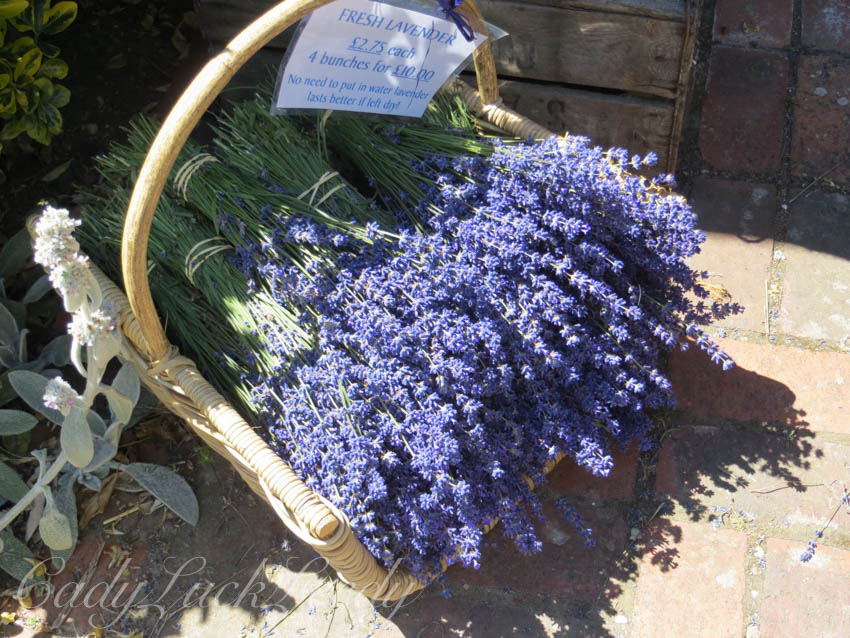
Before we leave North Kent, let’s take a lovely drive through the country to go to the Hop Shop. The Hop Shop is a family owned, award winning farm shop, that serves as a gift shop, and country store in the rolling hills of Kent. The family sells their own beef, apples, apple juice, hops, dried flowers, Kentish lavender and honey. When we were here the lavender fields were in bloom and a group of gardeners was here to tour the garden. Let’s join them right after I pick out some gifts!

Portrait of a Marriage: The Life of Vita Sackville-West


Vita Sackville-West

Vita Sackville-West

Vita Sackville-West was her own woman and a very complicated one. When I first read about her, and many of her friends, my first reaction was these women had too much money and fame, and not enough to do. But the more I read and studied them, and the time period, their lives made more sense to me and I wondered what I would have done in similar circumstances and if I would have been so brave as to be myself or buck the system, come what may.  It’s easy to think so, in a day when women have so many freedoms. But, it would have been a very different story in Vita Sackville-West’s day!

To lay the groundwork about Vita………

Born March 9, 1892, into a wealthy and prominent family, swirling in turmoil and strife, it would be hard to grow up not being confused, and unsure of one self.  One has to make up their mind to succumb to it or rise above it as best you can. The family ancestry was one that would have been tolerated, due to who they were, but there would always be the gossip and scandals to torment the family.

Vita’s grandfather, Lionel Sackville-West died in 1908, leaving five illegitimate children. Although he was considered a bachelor, when the children’s mother, Pepita, died in 1871, the two boys were sent to South Africa, to learn farming, and the three girls to a private school in Paris, all provided for by Lionel. His oldest daughter, Victoria, came to live with him in 1880, and it was at this time that she learned about her illegitimacy; the Sackville-West family, her Uncle Mortimer who lived in the huge house called Knole, and the other aunts. Lionel thought it best to admit, what had been the subject of rumor for years, that he was her father and that he soon would be a diplomat to the U.S. With Queen Victoria’s permission he took the 19 year old, Victoria, to Washington, to serve as his hostess. When Mortimer, the oldest brother died in 1888, Lionel returned to England to assume the responsibilities at Knole, one of the largest estates in England, (If you don’t know what a challenge that would have been please read my previous post on Knole)  and Victoria became the mistress/hostess of Knole.

In 1890, with the encouragement of her father and her own need to think about herself, Victoria married her first cousin, another Lionel, the son of her uncle, William Sackville-West, who would inherit Knole, upon the death of his Uncle Lionel, Victoria’s father. What a mess that was, since the other family members, on both sides of the family, were not happy about this decision. It was all about keeping the money and the Estate, Knole, in the family.

A child was born to Victoria and Lional, who was named, Victoria Mary Sackville-West, after her mother, and was called Vita. Victoria’s remark of Vita at birth, was she sooner would have drowned than have another child, and she didn’t. In the years to follow, both her mother and father had lovers and sometimes they all lived at Knole together! With 365 rooms it would be easy to live separate lives at Knole and not run into each other. When Grandfather Lionel died in 1908 , another scandal commenced when Victoria’s brothers filed a claim of inheritance and the right to claim Knole. The trial was vicious,  Victoria having to admit in court that she indeed was illegitimate, proving her mother, Pepita, was  married to someone else at the time all the children were born to Lionel. Victoria was caught in the middle, if the judge declared her brothers and sisters legitimate she and her husband would lose the money and Knole.  It was a messy family affair and fodder for the press. Can you imagine the tongue wagging and headlines in the paper? Vita, who was sixteen at the time went everyday to the court with her mother to listen to the proceedings, while her mother gave her testimony. Victoria and Lionel won the decision and everyone was safe, for the time being at Knole.

There had not been enough income to support the finances of Knole. Victoria was in charge of the bills, as her husband the young Lionel, was not concerned with the everyday responsibilities of running the estate. There was not enough money to pay the staff of sixty indoor and outdoor servants, make improvements to the house, maintain upkeep of other properties, fund Lionel’s sporting expeditions, throw constant parties, and pay the enormous court expenses from the legitimacy trial. John Murray Scott,  one of Victoria’s lovers, died in 1912, and had promised Victoria, in his will, to free her from all financial worry. And he did. His family was aghast and had called the Sackville’s, “The Locusts”, and that was before they sued them in court to retrieve the substantial amount of money and property he had left to Victoria. This trial ended in 1913 with affirmation to Victoria, leaving her a wealthy woman. This was Vita’s childhood background and forewarning of crisis as she grew up.

Was it any wonder that Vita should be confused about love and stability? Her life had been plagued by trials, gossip, and her mother’s survival.  Many times she had been left alone at Knole while her mother and father travelled the world. She was lonely, and considered herself unsociable and unnatural. She preferred solitude and discovered her joy of writing. She fancied her fortunes from writing would save Knole. Everything was centered around Knole and the lifestyle.

Vita’s first real friend, was Rosamund Grosvenor, who had been invited to share a  governess with her. Rosamund was also Vita’s first love and was besotted with Vita, four years her junior. Vita later stated she felt no real conflict, only that, “I had no business sleeping with Rosamund and I should never have allowed anyone to find out.  I really was very innocent.”

Vita later was more deeply involved with Violet Keppel, later Trefusis. Their relationship began in her teens and strongly influenced them both for years.  This affair was scandalous for both families and nearly collapsed both their lives. During her early years, Vita had also met Harold Nicolson, a diplomat, who she thought of as very charming, but nothing more. He had stood by her during all the upheavals of the trials and also during the stormy relationship with Violet Keppel. Perhaps to escape her confusion and the rage of both families, concerning her love affairs with women, she married Harold in 1913, at the age of 21, in the family chapel at Knole. Her mother claimed to be too ill to come downstairs to the wedding. Was Vita longing for a life like everyone else? Love ever after?

In reality, Harold was a homosexual, and Vita continued on with her affair with Violet. Harold and Vita had decided on an open marriage with both going their own ways, but committed to each other.  Their marriage had stormy times.  On several occasions the two women had decided to elope with each other. On and off they would run off together to Italy and other places and live as man and wife, Vita dressing as a man in public.  Both women were married by this time, and Vita had two children with Harold. During a messy episode when Harold was convinced that Vita and Violet would go through with their liaison, Harold took Violet’s husband, who was shocked that his wife was in love with Vita, and together flew to Italy to confront the two women. Vita was convinced to return to Harold, and Violet was crushed. Vita at this time had written the novel  Challenge which bears witness to the affair, in collaboration with Violet. Vita’s mother found the portrayal obvious enough and refused to allow the publication of the novel in England. Soon Vita would suffer another disaster. Due to aristocratic inheritance customs, when Vita’s father died, Knole, the only place Vita had ever lived,  was bequeathed to Vita’s cousin, Charles, along with the title, 5th Lord Sackville. He promptly removed  Vita, Harold and Victoria from Knole.  He was tired of the shenanigans and scandal. Vita was crushed once more.

Was it the stifling Victorian society that Vita rebelled against? Was it because women had so few choices? Was it because women’s lives always depended on men, their fathers or their husbands? Was the unstable and lonely childhood the root of Vita’s choices?

Things were changing for the children of the Victorians. Another group of writers and artists, of whom Vita had connections, formed a very liberal thinking group called the Bloomsbury Group, who also challenged current day principles and lifestyles. Life would never be the same for any of them, and to add to the frenzy they were on the brink of WWI.  We’ll pick up the story here when we travel to Charleston, the home of Vanessa Bell, a Bloomsbury member and to Monk’s House, home of Virginia Woolf, who was also Vita’s lover at one time, and the sister of Vanessa Bell. Virginia also was a member of the Bloomsbury Group! They were all so intertwined!

For a very good read, Portrait of a Marriage,  by Nigel Nicholson, can take you through the fifty year marriage of Vita and Harold Nicholson. Based on a diary Vita left, at her death in 1962, her son Nigel added his thoughts about what he knew and thought while he was growing up. Vita wanted to tell the truth of her life and how she felt during all those years, and for that time period most of what was known was speculation, because it simply was’t discussed in polite circles!  She refers to “possible readers” and believed “the psychology of people like myself will be a matter of interest”. She also hoped her life would spread progress in the world. Nigel thought his mother had, ”fought for the right to love, men and women, rejecting the conventions  that marriage demands exclusive love, and that women should love only men and men only women. For this she was willing to give up everything” ……I will be continuing the story of Vita’s life at Sissinghurst Castle,  the effect her garden made on everyone, and her friends Vanessa Bell and Virginia Woolf. We’ll meet up in the gardens!

Vita-Sackville-West

Vita-Sackville-West and Harold Nicolson at Sissinghurst

The National Trust: Knole; Childhood Home of Vita Sackville-West

Knole, Sevenoaks, Kent, UK

Knole, Sevenoaks, Kent, UK

The Entry to Knole, in the Green Courtyard, Sevenoaks, Kent, UK

The Entry to Knole, into the Green Courtyard, Sevenoaks, Kent, UK

One of the Towers at Knole, Sevenoaks, Kent, UK

One of the Towers at Knole, Sevenoaks, Kent, UK

One of the Towers at Knole, Sevenoaks, Kent, UK

Some of the Towers at Knole, Sevenoaks, Kent, UK

Nothing could have prepared me for Knole.  I had read up about Knole. It would be a big house, extraordinary.  Well, the people who had lived there made it so very interesting too. I discovered Vita Sackville-West. I discovered another world.

But in reality, it was unbelievable that anyone could live in this home, really a castle, but bigger than any castle I had ever seen. The shear size of it is unimaginable!  I wanted to understand this life. I wanted to understand the people who lived like this.

I am breaking my post into two segments because I think that Knole and Vita Sackville- West demand such attention. I was enthralled. I hope you will be as well. Now………

What I learned about Knole.

Knole is nestled in a 1000 acre medieval deer-park. The deer know there are no guns here and are happy to be in the front yard, (if you can call it that) and near the parking spaces for Knole. You could reach out and touch them, certainly feed them, or just sit amongst them. Knole has been open as a park for several years and has been a favorite recreational park for large groups of school children, as a field trip adventure, with plenty of space to run around! Walking up the gravel lane from the car park you get plenty of opportunity to observe the deer!

The Deer of Knole, Sevenoaks, Kent, UK

The Deer of Knole, Sevenoaks, Kent, UK

The Deer of Knole, Sevenoaks, Kent, UK

The Deer of Knole, Sevenoaks, Kent, UK

Sprawled out in front of us is Knole, rated as one of England’s largest houses.  Since 2012 the National Trust, has cared for the house and 52 of the acres. More than half the house has been kept by the Sackville-Wests, along with the remaining gardens and estate, but they do permit commercialized access and charitable and sporting events. Believe me when I say you could live at one end of this place and NEVER know what was going on at the other. The National Trust has documented this house as a Calendar House, which defines it as having 365 rooms, 52 staircases, 12 entrances, and 7 courtyards, following the order of a calendar with 365 days, 52 weeks, 12 months, and 7 days in a week.  Can you imagine that? Who exactly lived here?

I had to stand far away just to take pictures of SECTIONS of Knole! It goes on and on in the shape of a rectangle with several inner courtyards!

Knole, Sevenoaks, Kent, UK

Knole, Sevenoaks, Kent, UK

Knole, Sevenoaks, Kent, UK

Knole, Sevenoaks, Kent, UK

Knole,Sevenoaks, Kent, UK

Knole, Sevenoaks, Kent, UK

Knole, Sevenoaks, Kent, UK

Knole, Sevenoaks, Kent, UK

The Chapel at Knole, Sevenoaks, Kent. UK

The Chapel at Knole, Sevenoaks, Kent. UK

The oldest parts of the house were built by Thomas Bourchier, Archbishop of Canterbury between 1456 and 1486, on the site of an earlier house.  Above and on either side of a large Tudor fireplace is the motto of the Archbishop and subsequently the house was passed on to future Archbishops, enlarging the house with new courtyards, (The Green Courtyard which is now the front yard)  and new entrance towers. In 1538 the house was taken from the Archbishop Thomas Cranmer by King Henry VIII. In 1566 Queen Elizabeth I gave the house to her cousin, Thomas Sackville, whose descendants have lived there since 1603. In 1606, Sackville made extensive renovations, to the house,  to prepare for a possible visit from King James VI.  The estate was not given outright to the Sackvilles. Under the terms of the lease the “manor and mansion house”, with the park and deer, were given in a ninety-nine year lease for 200 pounds. The leasee, had to do all the repairs, but could re-build the house at his pleasure. The estate just got larger and larger and it remained in the hands of the Sackville’s.

The organ, dating from the 1620’s, is located in the private chapel (which is as big as some modern churches) and is the oldest playable organ in England.

There is a walled garden of 26 acres, and it is large enough to have a very unusual walled garden inside itself. How many stones would that take? How long would it take to build?

Walled Garden at Knole, Sevenoaks, Kent, UK

Walled Garden at Knole, Sevenoaks, Kent, UK

Here is a hedged garden inside a walled garden, inside another walled garden!

Walled Garden at Knole, Sevenoaks, Kent, UK

Walled Garden at Knole, Sevenoaks, Kent, UK

This passageway in the wall lead to yet another garden!

The Walled Garden, Knole, Sevenoaks,Kent, UK

The Walled Garden, Knole, Sevenoaks,Kent, UK

 Garden at Knole, Sevenoaks, Kent, UK

Garden at Knole, Sevenoaks, Kent, UK

 Garden at Knole, Sevenoaks, Kent, UK

Garden at Knole, Sevenoaks, Kent, UK

The Garden at Knole, Sevenoaks, Kent, UK

The Garden at Knole, Sevenoaks, Kent, UK

The Garden at Knole, Sevenoaks, Kent, UK

The Garden at Knole, Sevenoaks, Kent, UK

The Garden at Knole, Sevenoaks, Kent, UK

The Garden at Knole, Sevenoaks, Kent, UK

The Garden at Knole, Sevenoaks, Kent, UK

The Garden at Knole, Sevenoaks, Kent, UK

The Garden at Knole, Sevenoaks, Kent, UK

The Garden at Knole, Sevenoaks, Kent, UK

The Garden at Knole, Sevenoaks, Kent, UK

The Garden at Knole, Sevenoaks, Kent, UK

The gardens are so extensive it will take years to completely restore them and lots of gardeners!

The Garden at Knole, Sevenoaks, Kent, UK

The Garden at Knole, Sevenoaks, Kent, UK

Today the inside of the house is undergoing conservative reconstruction with support from the Heritage Lottery Fund, since the external repairs have been completed. There is a Bookshop Café, along the Green Courtyard, one of the many inner courtyards. 

Knole, Sevenoaks, Kent, UK

Knole, Sevenoaks, Kent, UK

Tents have been placed outside, with a temporary eating station, until the larger restaurant facilities are complete. Now that I have got over the shock of the sheer size of the house let’s walk through the orangery from the garden. In the orangery are marble statues, orange trees and a Buzaglo. What in the world is a Buzaglo?  I wanted  to know too!

The Orangery, Knole, Sevenoaks, Kent, UK

The Orangery, Knole, Sevenoaks, Kent, UK

The Orangery, Knole, Sevenoaks, Kent, UK

The Orangery, Knole, Sevenoaks, Kent, UK

The Orangery, Knole, Sevenoaks, Kent, UK

The Orangery, Knole, Sevenoaks, Kent, UK

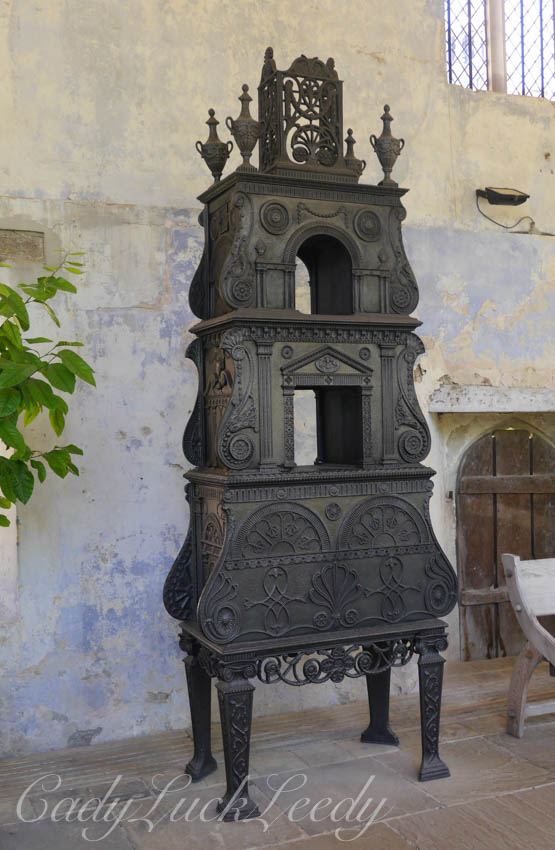
The Buzaglo, Knole, Kent, UK

The Buzaglo, Knole, Kent, UK

Abraham Buzaglo (1710-1782) came from Morocco to England in 1760, and in 1765 was granted a patent for a new type of stove, known after him as a “Buzaglo”. These “warming  stoves”, as they were called, were effective, fashionable and exclusive because of their cost. These coal burning, cast iron-stoves were the cutting edge of keeping warm in the 1770’s. Mr Buzlos’s trade card promised that his stoves “surpass in Utility, Beauty, and Goodness say anything hitherto invented in Europe”.  They “cast an equal and agreeable heat to any Part of the Room and are not attended by Stench,  with a bright Fire to be seen at pleasure”. The stove also “preserved the Ladies Complexions and Eyesight,  warming equally the whole body, without Scorching the Face or Legs”. I’m sure if it was the newest and costliest it was wanted at Knole. My question would be how many of the warming stoves would it take to warm up the house? After the “warming stoves” were placed there Mr. Buzaglo could have retired!

It is clear that Knole prospered for the rich and powerful!

Conservation of Knole is going to take several years. It will be interesting to see how much of the house will be opened to the public and how the gardens will be restored. In 2014 archeologists found oak beams beneath the floors and near the fireplaces, that had been scorched and carved with “witch marks” to prevent witches and demons from coming down the chimney! The house will have to be monitored. It would be so easy to get lost in a house with 365 rooms! Tomorrow I will share with you the life of  Vita Sackville-West, an English poet, novelist, and gardener, who was born at Knole, in 1892. She was an only child! I hope she had enough room in that house! Enjoy!
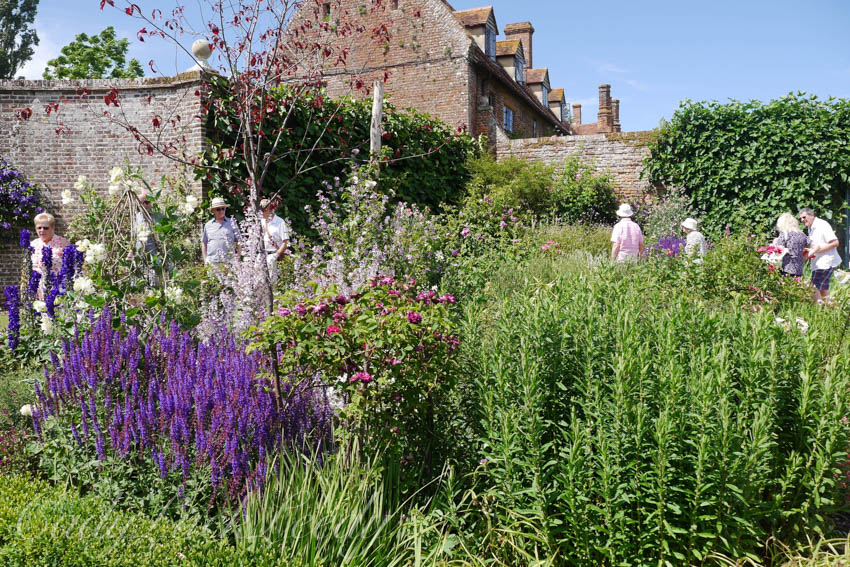
Here’s a last look at Knole, with the chapel on the end!

The Chapel at Knole, Sevenoaks, Kent, UK

The Chapel at Knole, Sevenoaks, Kent, UK

The National Trust: Alfriston Clergy House, Alfriston, Sussex, UK

Alfriston Clergy House, Alfriston, Sussex, UK

Alfriston Clergy House, Alfriston, Sussex, UK

Alfriston Clergy House, Alfriston, Sussex, UK

Alfriston Clergy House, Alfriston, Sussex, UK

Alfriston Clergy House, Alfriston, Sussex, UK

Alfriston Clergy House, Alfriston, Sussex, UK

Today we are visiting another estate belonging to the National Trust. How exactly did the National Trust get stated?

This is what I learned.

Octavia Hill, the eighth daughter of nine children, born into a modest family, was a social reformer, with a strong commitment to alleviating poverty in the late nineteenth century. With no formal education, she worked from the age of 14 for the welfare of working people. She wanted to improve the housing of the working classes. Due to a severe shortage of available property, she decided to become a landlord herself. John Ruskin provided the money to buy three cottages of six rooms each, and placed Hill to manage them. She improved the properties, all which had been on dilapidated ground, among cowsheds and manure. Hill was a very prudent manager believing  in personal responsibility, and punctual payment. She visited each home personally paying careful attention to allocations with regard to size of families and location of the accommodation offered. It was mandatory that the head of the family work, send his children to school, and not overcrowd his rooms, in addition to paying the rent on time.  As her holdings increased to over 3000 cottages, she added assistants, who checked every detail of the premises, and got to know the tenants personally. She promoted tenant’s associations and after-work, and children’s after school programs. This was an early stage of social work. Among Hill’s concerns was that her  tenant’s and all urban workers should have access to open spaces. She believed in “the life-enhancing virtues of pure earth, clean air and blue sky”. She wanted four things. Places to sit, places to play in, places to stroll in and places to spend a day in. She campaigned against building on existing suburban woodlands. Together she and Ruskin conceived of a trust that could buy and preserve places of natural beauty and historic places for the nation.

The National Trust was formed in 1875 and the first property, acquired in 1896, was the rare 14th century, thatched and timber-framed, Wealden “hall house,” in Alfriston. The Alfriston Clergy House was built in 1350 by a farmer who prospered after the Black Death. In 1395 the house was taken over by St Andrew’s Church, which is close by, and used as a vicarage, and eventually rented out for income. In 1885 church authorities wanted the house demolished. Rev F.W. Beynon campaigned to save the house and contacted the newly formed National Trust. Harriet Coates was the last person to live in the house before it was purchased in 1896 for ten pounds, by the National Trust, which now maintains the property. 

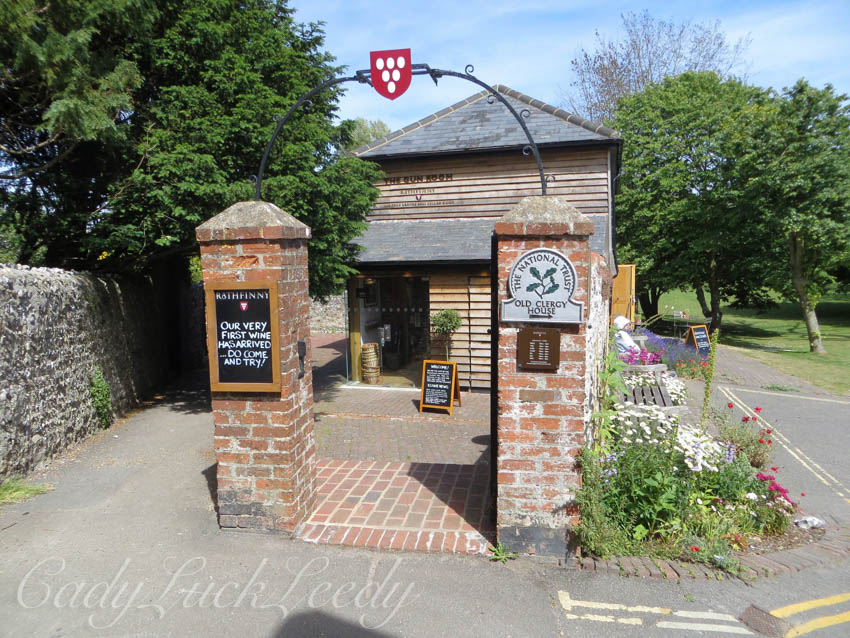
Today, the Alfriston Clergy House, is surrounded by a tranquil cottage garden full of wildlife, with beautiful views of the River Cuckmere. Alfriston is a small village of 760, noted in the Doomsday Book as Aelfrictun, (the son of Alfric).  Coming to the village green we find a local winery, announcing the the direction of the Clergy House.

Alfriston Clergy House, Alfriston, Sussex, UK

The Way to Alfriston Clergy House, Alfriston, Sussex, UK

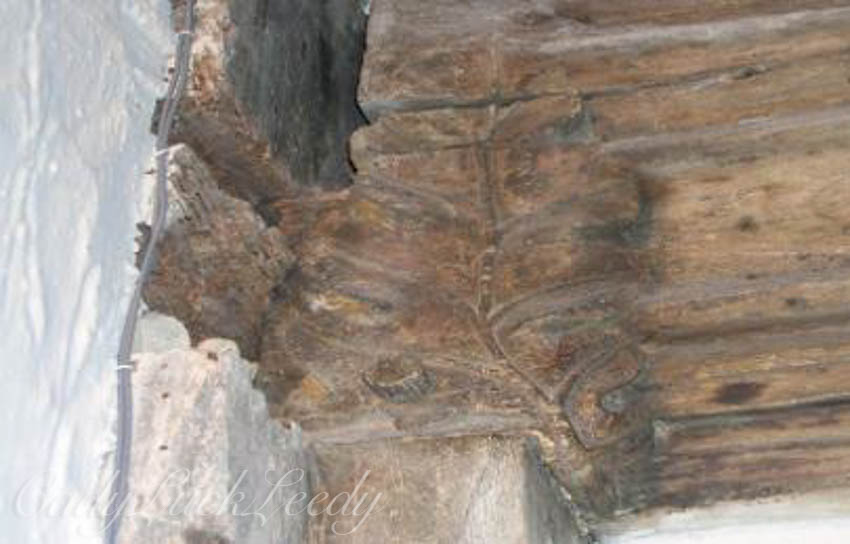
The oak leaf is the symbol of the National Trust. Here in the eaves of the Clergy House is a carved oak leaf. Perhaps it was the inspiration for the symbol? Look for it on signs signifying homes on the National Trust.
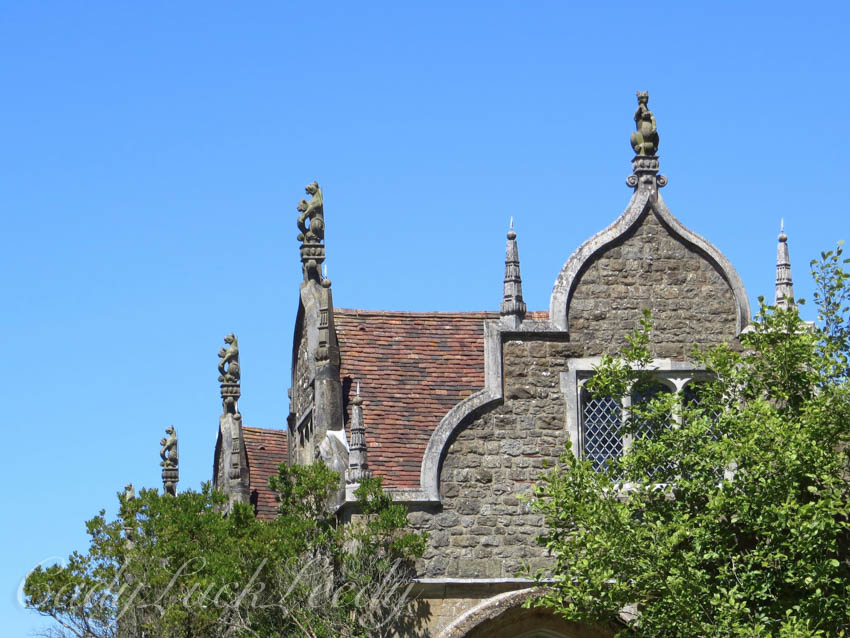
Oak Leaf National Trust, Alfriston Clergy House, Alfriston, UK

Oak Leaf Symbol of National Trust, Alfriston Clergy House, Alfriston, UK

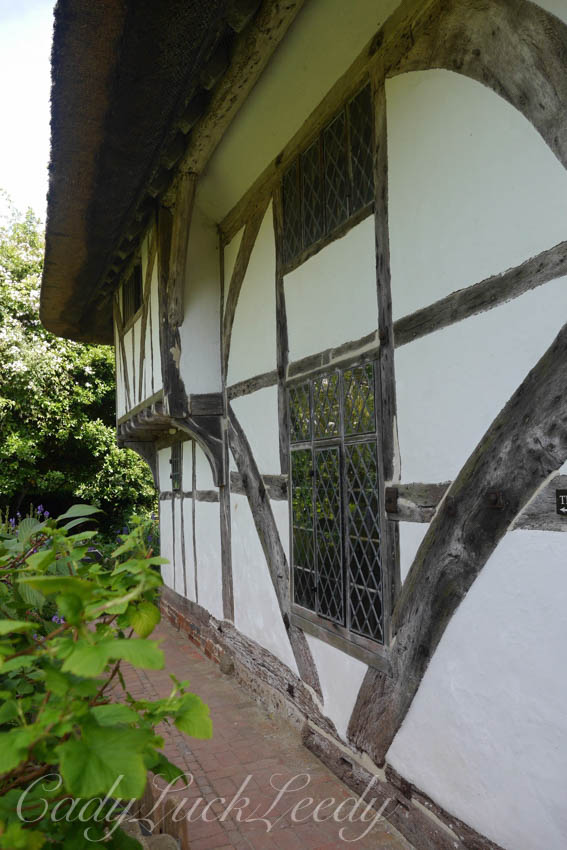
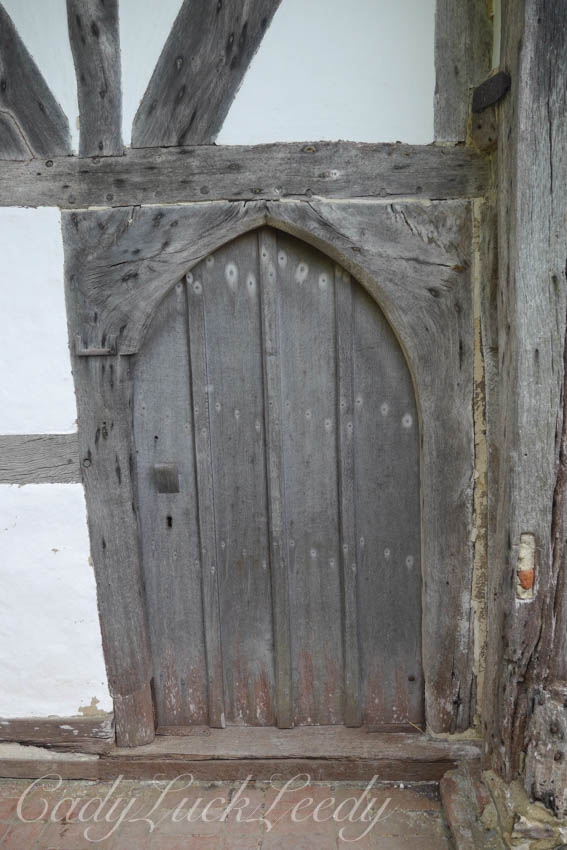
Here is a look at the timber-framed house.

Alfriston Clergy House, Alfriston, Sussex, UK

Alfriston Clergy House, Alfriston, Sussex, UK

Alfriston Clergy House, Alfriston, Sussex, UK

Alfriston Clergy House, Alfriston, Sussex, UK

Alfriston Clergy House, Alfriston, Sussex, UK

Alfriston Clergy House, Alfriston, Sussex, UK

Alfriston Clergy House, Alfriston, Sussex, UK

Alfriston Clergy House, Alfriston, Sussex, UK

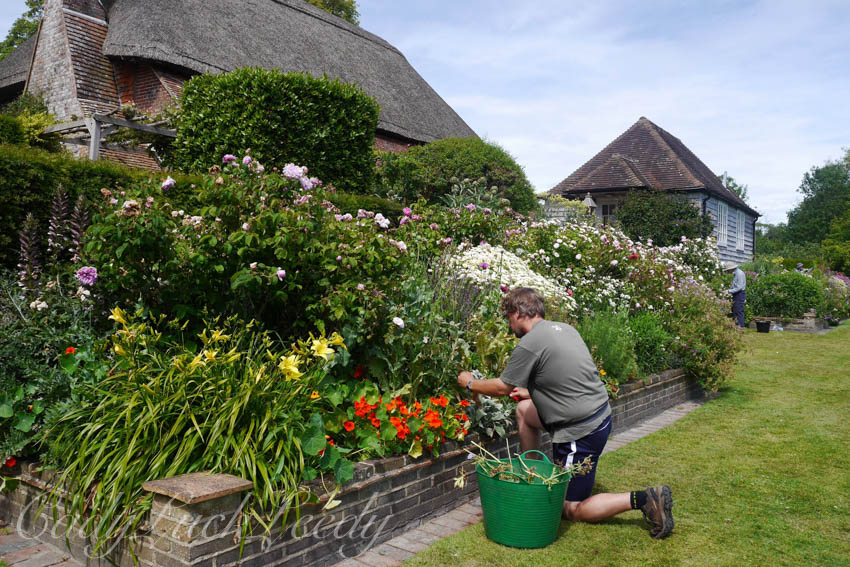
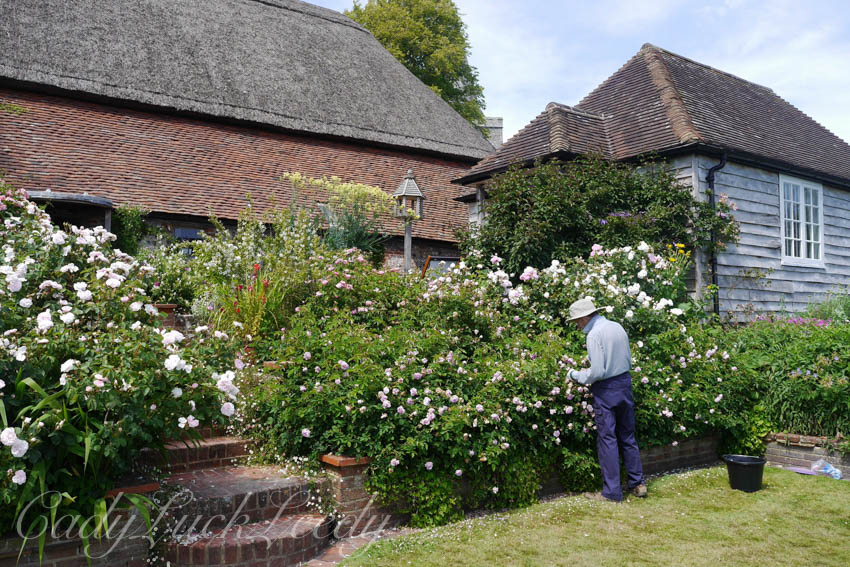
Next we visit the tidy garden and the gardeners who keep it that way!

Alfriston Clergy House, Alfriston, Sussex, UK

Alfriston Clergy House, Alfriston, Sussex, UK

Alfriston Clergy House, Alfriston, Sussex, UK

Alfriston Clergy House, Alfriston, Sussex, UK

Alfriston Clergy House, Alfriston, Sussex, UK

Alfriston Clergy House, Alfriston, Sussex, UK

Alfriston Clergy House, Alfriston, Sussex, UK

Alfriston Clergy House, Alfriston, Sussex, UK

Alfriston Clergy House, Alfriston, Sussex, UK

Alfriston Clergy House, Alfriston, Sussex, UK

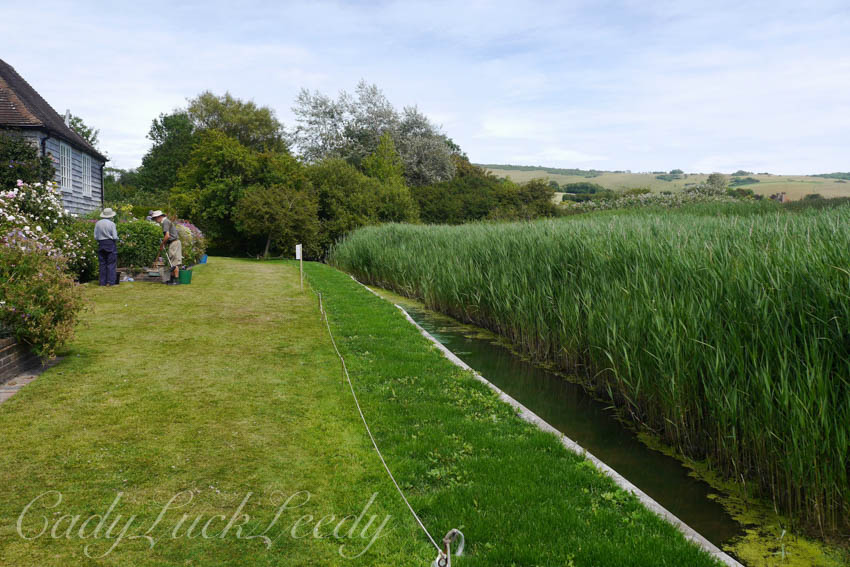
The water runs from the Cuckmere River, which is nearby, right along the back of the cottage, creating the perfect setting in the South Downs!

Alfriston Clergy House, Alfriston, Sussex, UK

Alfriston Clergy House, Alfriston, Sussex, UK

As with all National Trust properties, there is a gift shop which sells goods specific to that property, along with plants from the property. If I lived here I’d have to have a plant from each National Trust estate!

Alfriston Clergy House, Alfriston, Sussex, UK

Alfriston Clergy House Gift Shop, Alfriston, Sussex, UK

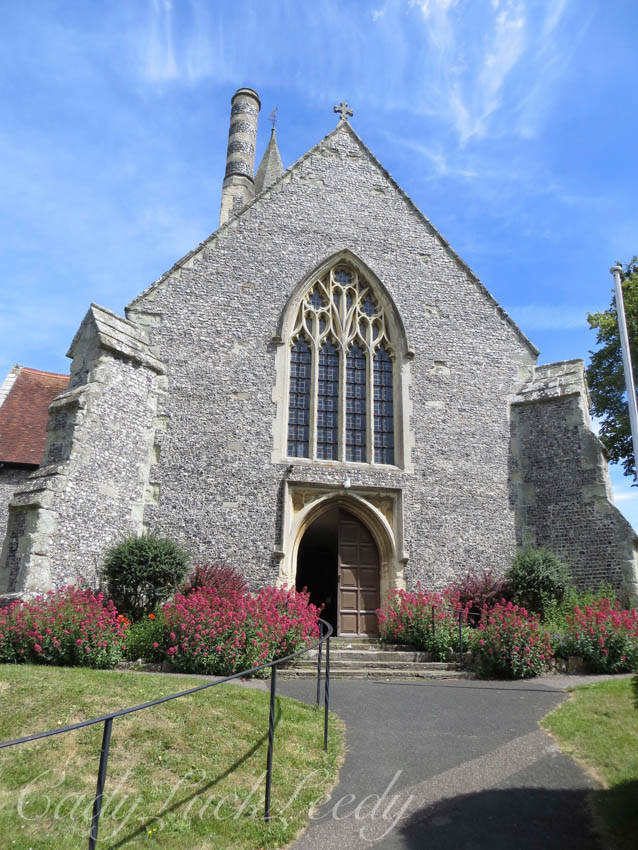
St Andrew’s Church, with Saxon origins, is known as “The Cathedral of the South Downs,” and is surrounded by a flowered graveyard. Built in the form of a cross it sits on a small flint-walled mound in the middle of the local village green.

St Andrew's Church, Alfriston, Sussex, UK

St Andrew’s Church, Alfriston, Sussex, UK

St Andrew's Church, Alfriston, Sussex, UK

St Andrew’s Church, Alfriston, Sussex, UK

St Andrew's Church, Alfriston, Sussex, UK

St Andrew’s Church, Alfriston, Sussex, UK

St Andrew's Church, Alfriston, Sussex, UK

St Andrew’s Church, Alfriston, Sussex, UK

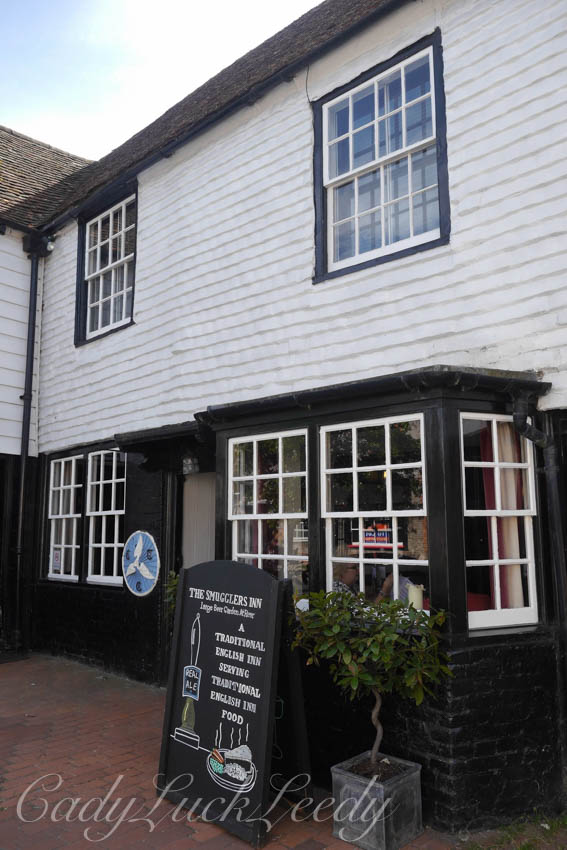
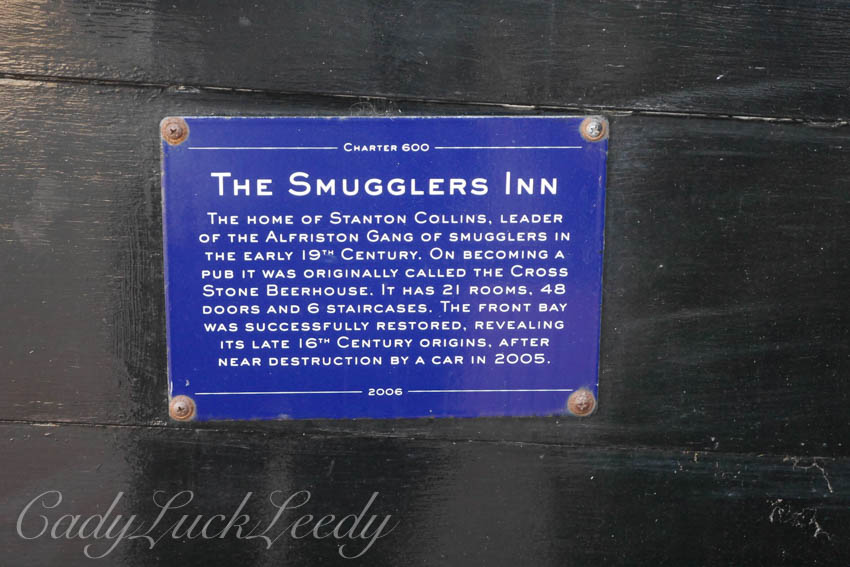
Let’s explore the village. The streets are narrow and don’t allow for parking, but a parking lot can be found at the end of the village and it is just a short walk to the pubs and other historic sites.  The Star Inn, a religious hostel built in 1345 and used to accommodate monks and pilgrims, is now one of three pubs in the village.  Later a smuggling gang used the inn as a base, before the leader was transported to Australia in 1830. The George Inn and the Smugglers Inn are also pubs located along the main road through Alfriston.

Alfriston, Sussex, UK

Alfriston, Sussex, UK

The Star Inn, Alfriston, Sussex, UK

The Star Inn, Alfriston, Sussex, UK

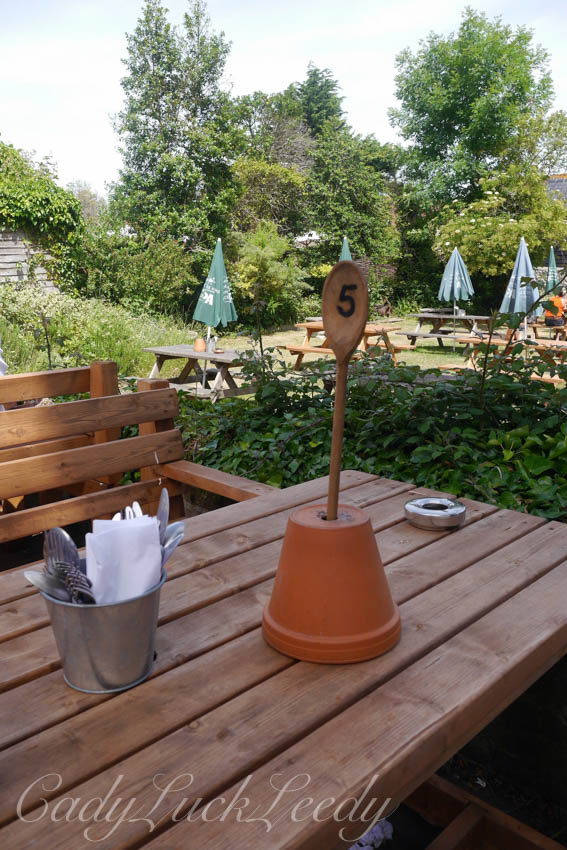
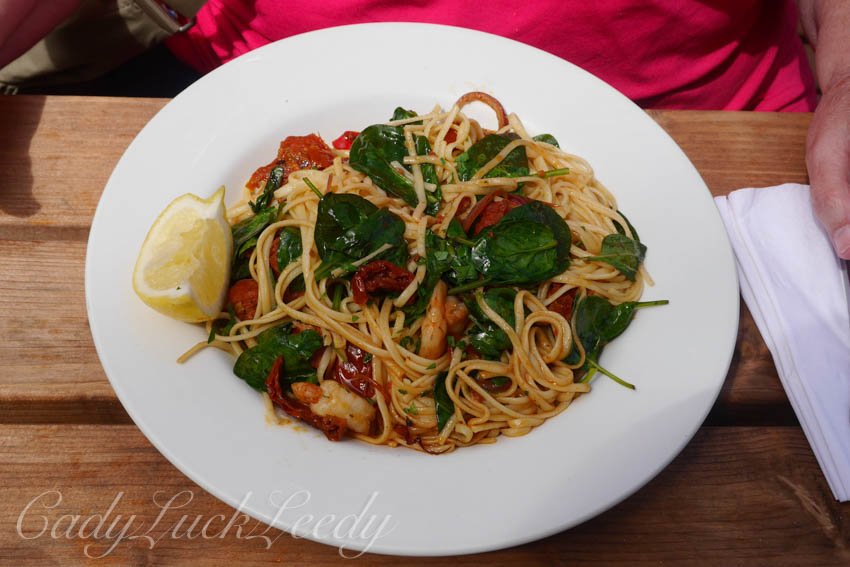
We popped into The George Inn for a bite to eat. We had a drink inside and then went outside in the garden to have a meal. YUMMY!

The George Inn, Alfriston, Sussex, UK

The George Inn, Alfriston, Sussex, UK

The George Inn, Alfriston, Sussex, UK

The George Inn, Alfriston, Sussex, UK

The George Inn, Alfriston, Sussex, UK

The George Inn, Alfriston, Sussex, UK

The Garden at the George Inn, Alfriston, Sussex, UK

The Garden at the George Inn, Alfriston, Sussex, UK

The Garden at the George Inn, Alfriston, Sussex, UK

The Food at the George Inn, Alfriston, Sussex, UK

Smugglers Inn, Alfriston, Sussex, UK

Smugglers Inn, Alfriston, Sussex, UK

Smugglers Inn, Alfriston, Sussex, UK

Smugglers Inn, Alfriston, Sussex, UK

Walking through the village we see the small shops and monuments of the village.

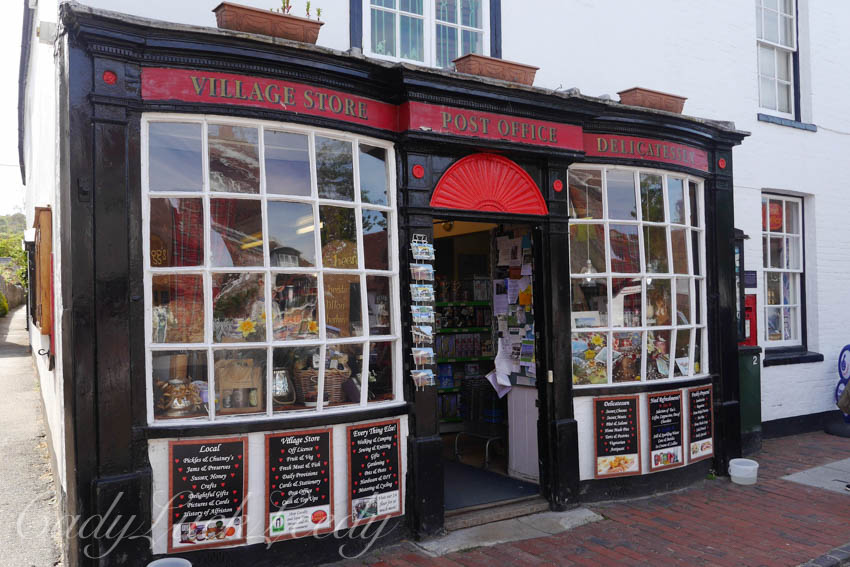
The Village Store, Alfriston, Sussex, UK

The Village Store and Post Office, Alfriston, Sussex, UK

Market Square, Alfriston, Sussex, UK

Market Square, Alfriston, Sussex, UK

Market Square, Alfriston, Sussex, UK

Market Square, Alfriston, Sussex, UK

This was my favorite “little house” in Alfriston. I could live here!

Little House in Alfriston, Sussex, UK

Little House in Alfriston, Sussex, UK

No records survive to establish what function this little building once served. A map of 1874 marks it as a dovecote, but it’s sufficiently similar to examples in other parts of the country to suggest that this was, in fact, Alfriston’s lock-up, where the local hotheads and drunks were left to cool down before the administration of justice. Yikes!

Alfriston Lock Up, Alfriston, Sussex, UK

Alfriston Lock Up, Alfriston, Sussex, UK

I called this house, “Lavender Door Cottage.” I absolutely loved it! Alfriston is a beautiful village and we had a great day exploring the first house on the National Trust!  It had a place to sit, a place to play, a place to stroll, and was a wonderful place to spend the day in! Octavia Hill would be so proud! See you tomorrow at another property! Enjoy!

The Lavender Door Cottage, Alfriston, Sussex, UK

The Lavender Door Cottage, Alfriston, Sussex, UK

Bateman’s: Home of Rudyard Kipling

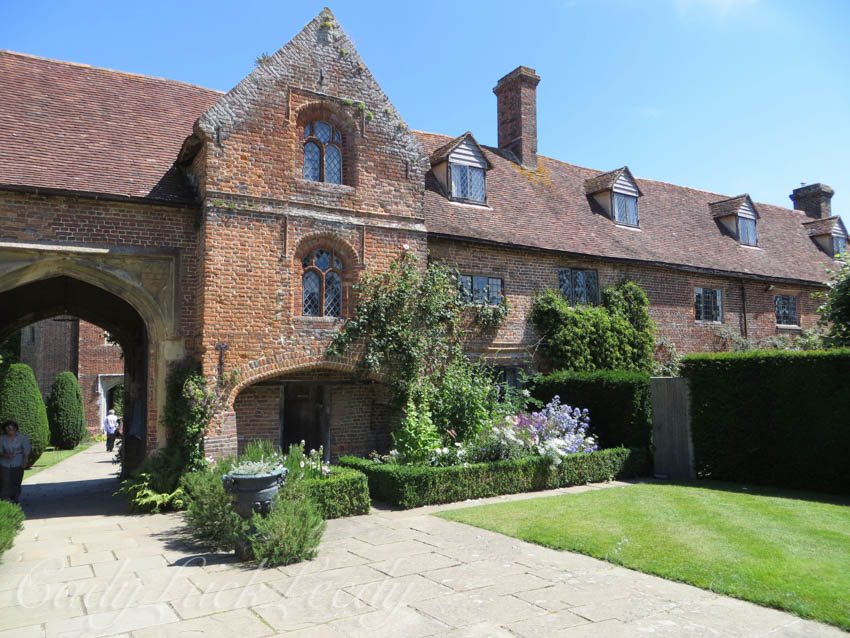
Bateman's, Burwash, East Sussex, U

Bateman’s, Burwash, East Sussex, UK

Bateman's, Burwash, East Sussex, UK

Bateman’s, Burwash, East Sussex, UK

Bateman's, Burwash, East Sussex, UK

Bateman’s, Burwash, East Sussex, UK

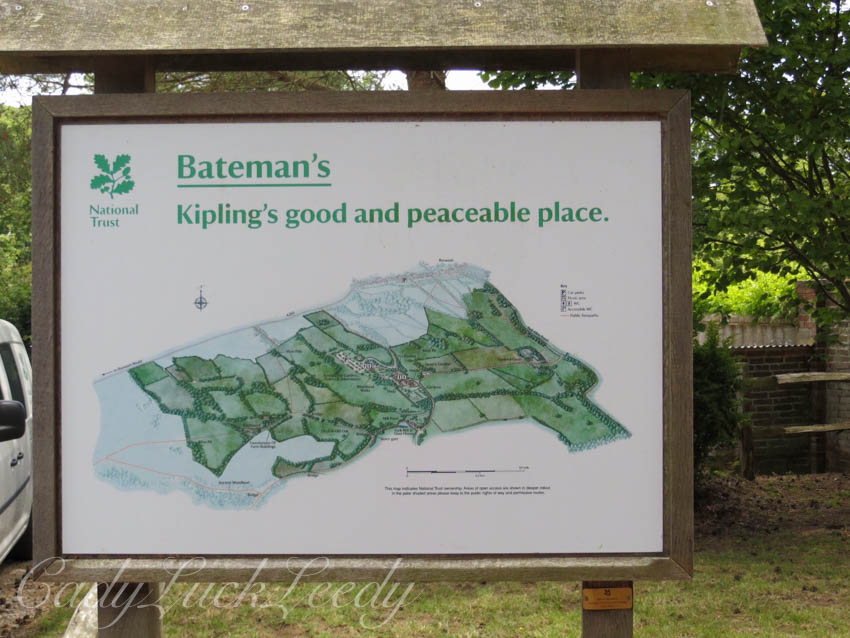
The National Trust was set up to preserve places of historic interest or natural beauty for the enjoyment of the British public. We are members of the National Trust (in the U.S. this is called the Royal Oak Society) which allowed us entry into the historic sites and provided a parking permit. The first National Trust property we toured, on my English Garden Tour, was Bateman’s, home of Rudyard Kipling; an English poet, short-story writer, and novelist chiefly remembered for his celebration of British imperialism, tales and poems of British soldiers in India, and his tales for children.

What I learned at Bateman’s:

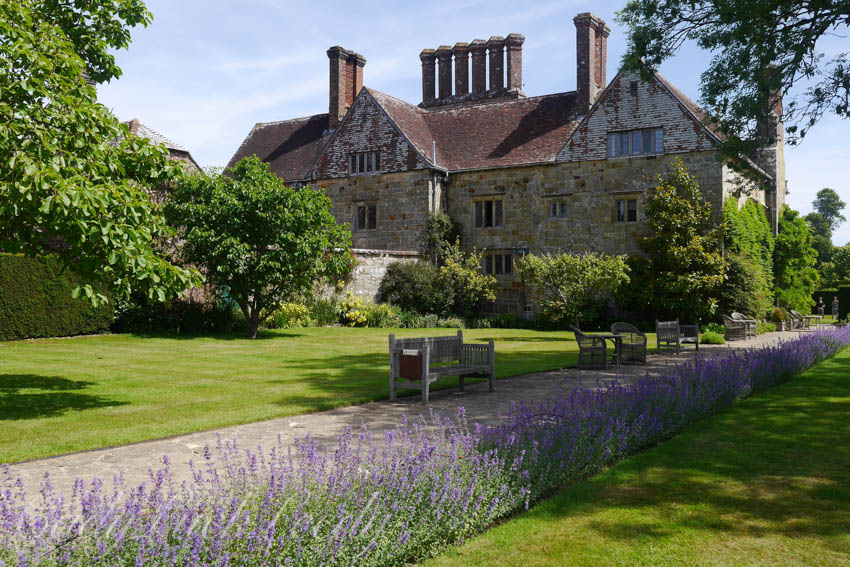
Rudyard Kipling bought the Bateman’s Estate, in 1902, to escape the tourist attraction he had become, at his home in Brighton.   His wife found the sand-stoned estate in Burwash, East Sussex, built in 1634 by local ironmaster, John Bateman. It had 33 acres with outbuildings and a mill, no bathrooms, no running water upstairs, and no electricity, but Kipling loved it. In a letter he wrote, “Behold us, lawful owners of a grey stone lichened house- A.D. 1634 over the door– beamed, panelled, with old oak staircase, and all untouched and unfaked. It is a good and peaceable place. We have loved it ever since our first sight of it.”

Bateman's, Burwash, East Sussex, UK

Bateman’s, Burwash, East Sussex, UK

Kipling had a road built from the village to his estate at Bateman’s. His car, which was driven by a chauffeur, was a 1928 Rolls-Royce Phantom 1.  The car is on the property in one of the out buildings, now used as part of the museum.

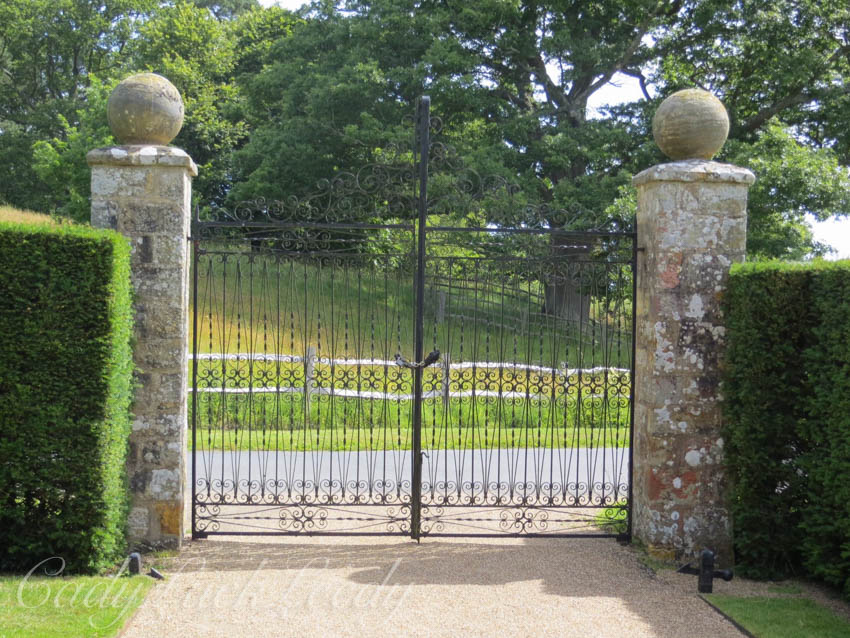
The Main Gate to Bateman's, Burwash, East Sussex, UK

The Main Gate to Bateman’s, Burwash, East Sussex, UK

The Lavender Walk, Bateman's, Burwash, East Sussex, UK

The Lavender Walk, Bateman’s, Burwash, East Sussex, UK

Bateman's, Burwash, East Sussex, UK

Bateman’s, Burwash, East Sussex, UK

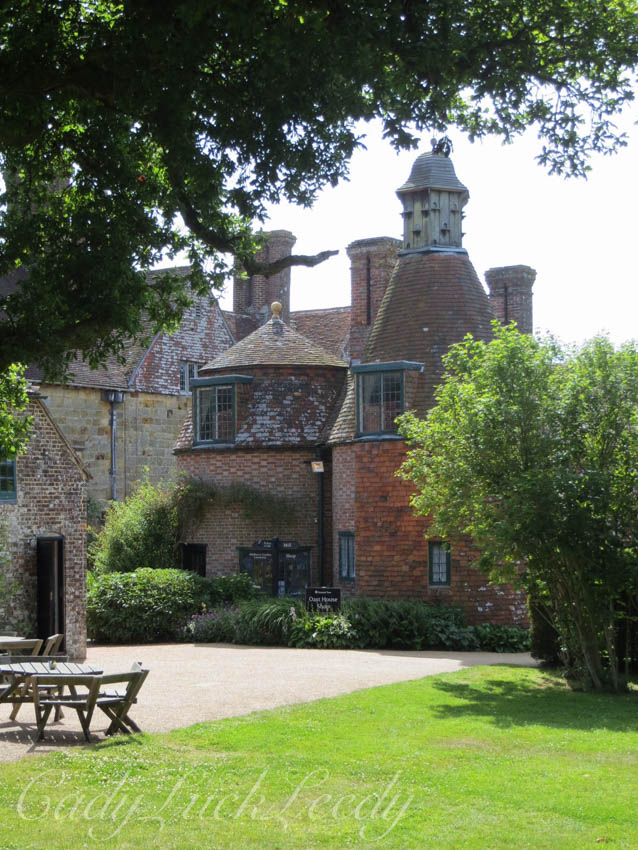
An oast is found in the peaceful, secluded, garden and is now used for a gift shop selling plants, Kipling souvenirs, books, and flour from the flour mill on the property.

Bateman's, Burwash, East Sussex, UK

Bateman’s, Burwash, East Sussex, UK

There is also  a lovely restaurant serving seasonal lunches, and homemade cakes with inside or outside seating. It was a beautiful spot to sit and enjoy the garden.

Bateman's, Burwash, East Sussex, UK

Bateman’s, Burwash, East Sussex, UK

Bateman's, Burwash, East Sussex, UK

Bateman’s, Burwash, East Sussex, UK

Bateman's, Burwash, East Sussex, UK

Bateman’s, Burwash, East Sussex, UK

Here is the flower shop at Bateman’s!

Bateman's, Burwash, East Sussex, UK

Bateman’s, Burwash, East Sussex, UK

Bateman's, Burwash, East Sussex, UK

Bateman’s, Burwash, East Sussex, UK

Kipling, born in Bombay, India to British nationals, was sent at the age of five, to England, to live with people who boarded children of British nationals, who were serving in India. He and his three year old sister, Trix, lived there for six years and Kipling recalled the stay with horror and thought the cruelty and neglect he experienced hastened the onset of his literary career. He had turned to writing for comfort. The two Kipling children, however, did have relatives in England whom they could visit. They spent a month each Christmas with their maternal aunt, Georgiana and her husband, at their house, “The Grange,” in Fulham, London, which Kipling was to call “a paradise which I verily believe saved me.” When “The Grange” was sold Kipling bought the antique doorbell and placed it at Bateman’s, to remind him how he had loved his stay there. 

The Door Bell at Bateman's, Burwash, East Sussex, UK

The Door Bell at Bateman’s, Burwash, East Sussex, UK

There was also a hidden room ( Mrs. Kipling’s private room with a peephole) just above the entry which allowed her to say yea or nay when someone showed up at the house to visit. With a ring of a bell she relayed whether the guests should be allowed to stay or turned away. She was very protective of Kipling’s privacy and his writing time.

Here is Kipling’s desk and library; his personal paradise.

Bateman's, Burwash, East Sussex, UK

Bateman’s, Burwash, East Sussex, UK

Bateman's, Burwash, East Sussex, UK

Bateman’s, Burwash, East Sussex, UK

Kipling’s poems and works of fiction include, “Gunga Din” (1892), The Jungle Book (1894), and Kim (1901), Puck of Pook’s Hill (1906), and Rewards and Fairies (1910). Pook’s Hill  was part of the estate at Bateman’s. The latter contained the poem, “If.  In a 1995 BBC opinion poll, it was voted the U.K.’s favorite poem. In 1907, he was awarded the Nobel Prize for Literature.

Acres of countryside provide a tranquil retreat.

Bateman's, Burwash, East Sussex, UK

Bateman’s, Burwash, East Sussex, UK

Bateman's, Burwash, East Sussex, UK

Bateman’s, Burwash, East Sussex, UK

Bateman's, Burwash, East Sussex, UK

Bateman’s, Burwash, East Sussex, UK

Here an oast, near the mill, has been converted to the caretaker’s cottage.

Caretaker's Cottage at Bateman's, Esat Sussex, UK

Caretaker’s Cottage at Bateman’s, Esat Sussex, UK

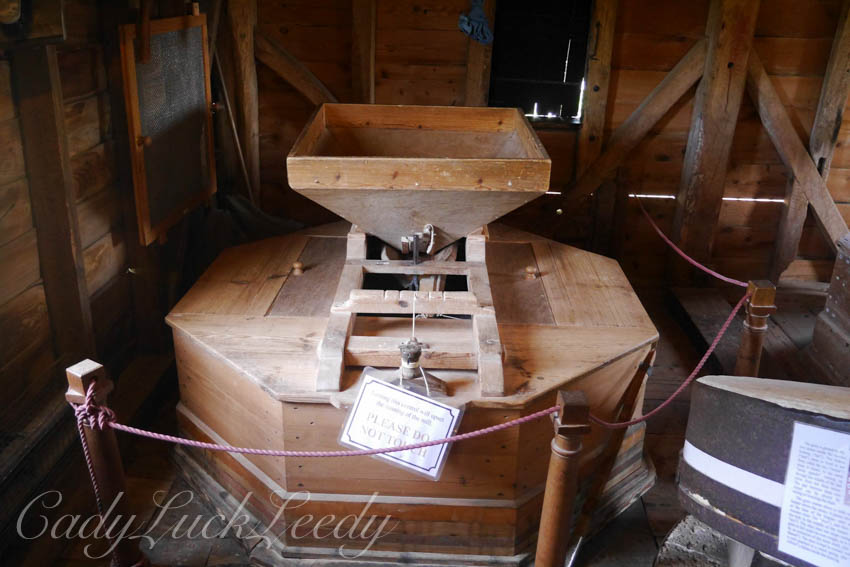
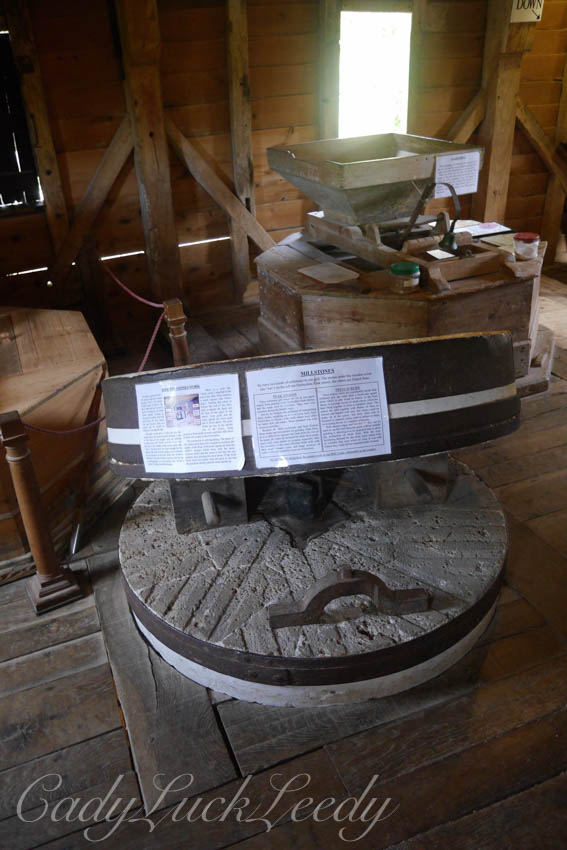
A very knowledgable guide instructed us on the workings of the mill.

The Mill at Bateman's, Burwash, East Sussex, UK

The Mill at Bateman’s, Burwash, East Sussex, UK

The Mill at Bateman's, Burwash, East Sussex, UK

The Mill at Bateman’s, Burwash, East Sussex, UK

The Mill at Bateman's, Burwash, East Sussex, UK

The Mill at Bateman’s, Burwash, East Sussex, UK

The Mill at Bateman's, Burwash, East Sussex, UK

The Mill at Bateman’s, Burwash, East Sussex, UK

Kipling had three children. After the death of his oldest daughter, Josephine, at age six from pneumonia, he published the first of many children’s books. One was Just So Stories for Little Children.

Kipling actively encouraged his youngest, and only son, to go to war. Kipling’s son, John, died in the First World War, at the Battle of Loos, in September 1915, at age 18. John had initially wanted to join the Royal Navy, but having had his application turned down after a failed medical examination due to poor eyesight, he opted to apply for military service as an Army officer. But again, his eyesight was an issue during the medical examination and he was rejected. His father had been lifelong friends with Lord Roberts, commander-in-chief of the British Army, and colonel of the Irish Guards, and at Rudyard’s request, John was accepted into the Irish Guards.

He was sent to Loos two days into the battle in a reinforcement contingent. He was last seen stumbling through the mud blindly, screaming in agony after an exploding shell had ripped his face apart. A body identified as his was not found until 1992, although that identification has been challenged.

After his son’s death, Kipling wrote, “If any question why we died/ Tell them, because our fathers lied.” It is speculated that these words may reveal his feelings of guilt at his role in getting John a commission in the Irish Guards.

Kipling became friends with a French soldier whose life had been saved in the First World War when his copy of Kim, which he had in his left breast pocket, stopped a bullet. The soldier presented Kipling with the book (with bullet still embedded) and his Croix de Guerre as a token of gratitude. They continued to correspond, and when the soldier, Maurice Hammoneau, had a son, Kipling insisted on returning the book and medal. 

Partly in response to John’s death, Kipling joined the Imperial War Graves Commission, the group responsible for the garden-like British war graves that can be found to this day dotted along the former Western Front, and all the other locations around the world where troops of the British Empire lie buried. His most significant contribution to the project was his selection of the biblical phrase,”Their Name Liveth For Evermore”,  found on the Stones of Remembrance in larger war cemeteries and his suggestion of the phrase “Known unto God” for the gravestones of unidentified servicemen. He chose the inscription “The Glorious Dead” on the Cenotaph, Whitehall, London. He also wrote a two-volume history of the Irish Guards, his son’s regiment, that was published in 1923 and is considered to be one of the finest examples of regimental history.

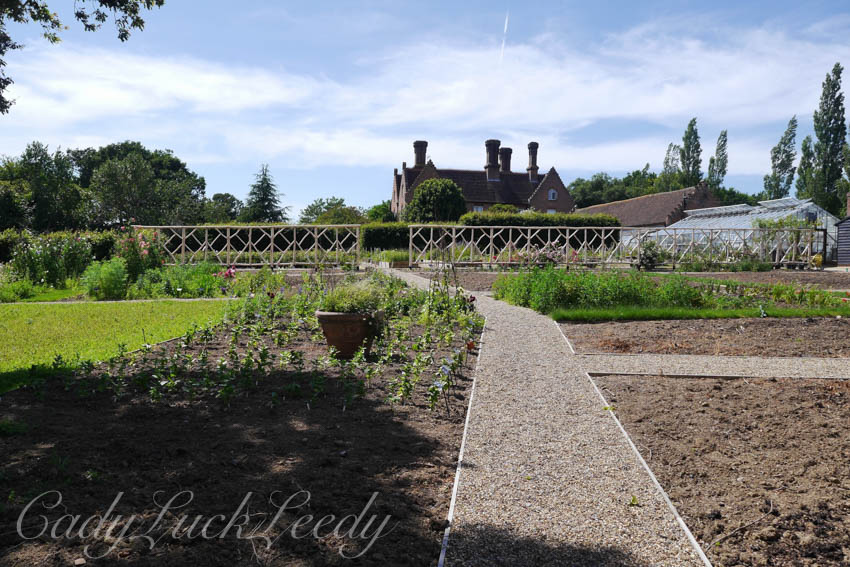
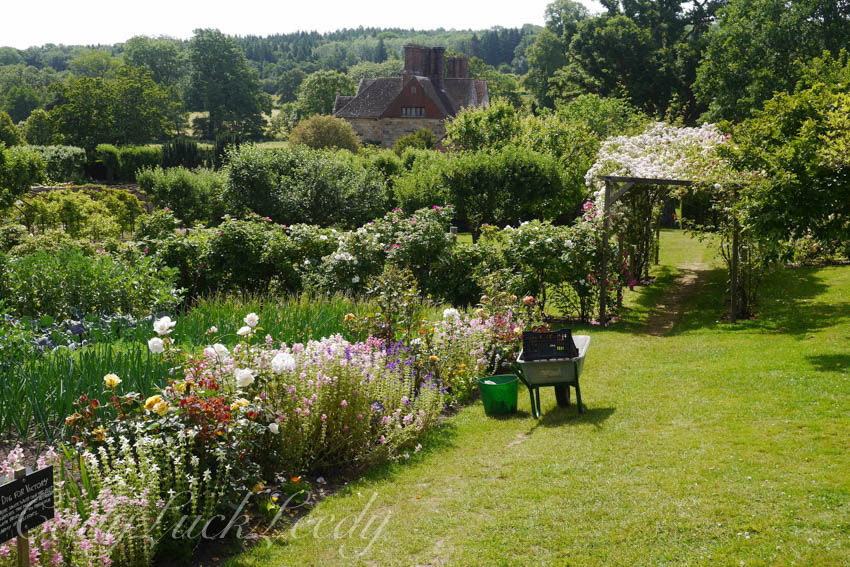
Let’s take a stroll through the vegetable and flower gardens before we leave!

A Walk Through the Vegetable Gardens at Bateman's, Burwash, East Sussex, UK

A Walk Through the Flower Gardens at Bateman’s, Burwash, East Sussex, UK

A Walk Through the Flower Gardens at Bateman's, Burwash, East Sussex, UK

A Walk Through the Flower Gardens at Bateman’s, Burwash, East Sussex, UK

A Walk Through the Flower Gardens at Bateman's, Burwash, East Sussex, UK

A Walk Through the Flower Gardens at Bateman’s, Burwash, East Sussex, UK

A Walk Through the Flower Gardens at Bateman's, Burwash, East Sussex, UK

A Walk Through the Vegetable Gardens at Bateman’s, Burwash, East Sussex, UK

A Walk Through the Vegetable Gardens at Bateman's

A Walk Through the Flower Gardens at Bateman’s, Burwash, East Sussex, UK

After the death of Kipling’s wife in 1939, his house, “Bateman’s,  where he had lived from 1902 until 1936, was bequeathed to the National Trust and is now a public museum dedicated to the author. Elsie Bambridge, his only child, who lived to maturity, died childless in 1976, and also bequeathed her copyrights to the National Trust, which in turn donated them to the University of Sussex, in Brighton, to ensure better public access. We truly enjoyed our day at Bateman’s! See you tomorrow at another National Trust property! Enjoy!

Bateman's, Burwash, East Sussex, UK

Bateman’s, Burwash, East Sussex, UK

A Gardener’s Farewell?

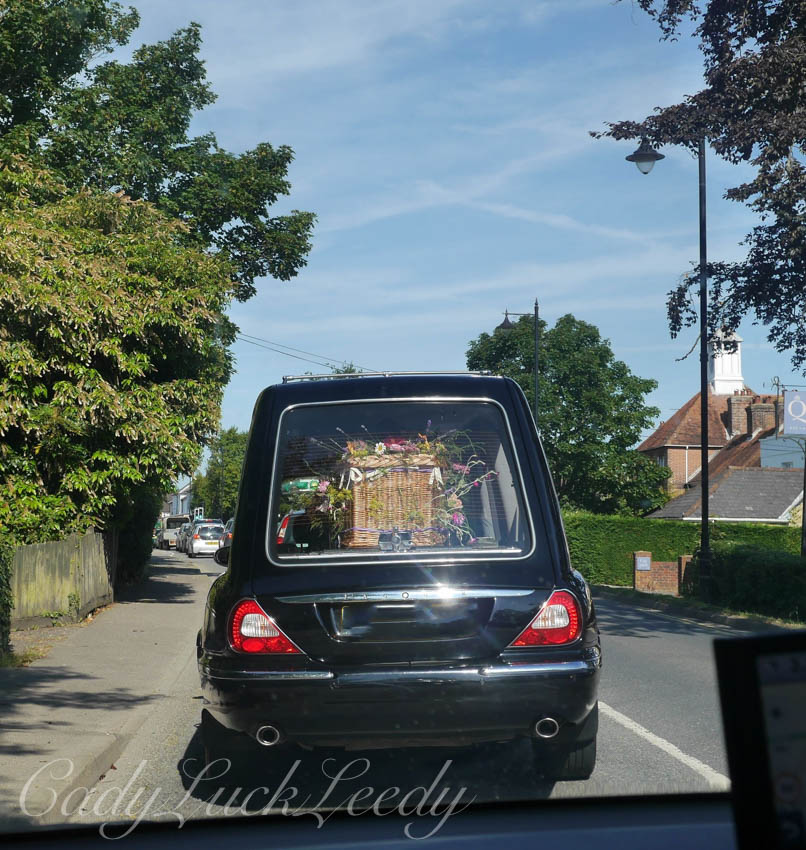
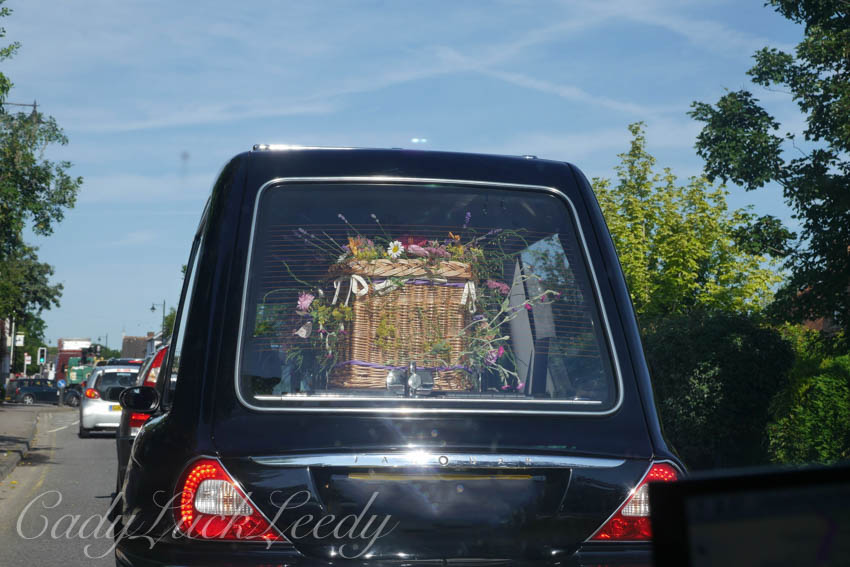
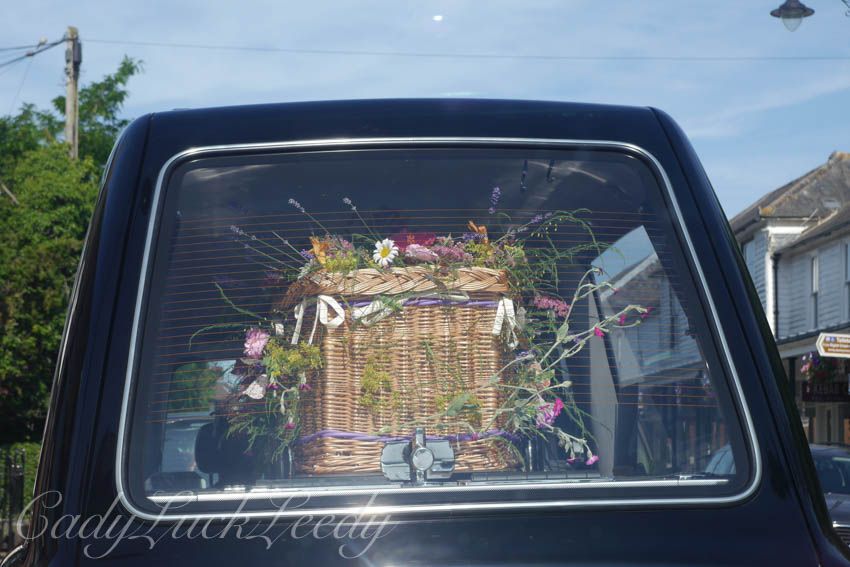
The Hearse, Kent, UK

The Hearse, Kent, UK

Closer, The Hearse, Kent, UK

Closer, The Hearse, Kent, UK

Closest, The Hearse, Kent, UK

Closest, The Hearse, Kent, UK

Finishing up my National Garden Schemes tour we started out on one of our daily drives to a National Trust Estate. One morning we stopped in Hawkhurst, to let a hearse out of a driveway.  Imagine our surprise when it stopped in front of us and the gentleman in the passenger seat got out. Dressed in top hat and tails he approached the side of the hearse, removed his hat, and bowed his head in prayer. After a minute or so, he returned to the front seat and the hearse moved on in the slow traffic. As we sat in our car watching this spectacle, I was surprised to see what looked like a picnic basket casket with flowers stuck into the sides. Was this the coffin of a gardener, I wondered? What a moving tribute that would be! When we asked our friends about this, we were told this was one of the new eco-friendly caskets. Another new take on caskets was the cardboard casket. I looked it up and here is one article you  might want to read before settling on the eco-friendly casket. I had not ever heard of such a thing so researching ahead of time might be a good thing. An eco-friendly funeral does give one something to ponder. To each his own or as the french say, à chacun ses gouts! Rest in peace with that bit of garden with you! I thought it was lovely!

THE SPECTACLED BEAN

Tales, Thoughts + Tribulations of a Free Spirit in Suburbia

Walking Away

Travels on foot

Teacher nickname: The Three Hairs

Minding my mind, one thought at a time.

Tra Italia e Finlandia

Un lungo racconto fotografico.

seanbreslin.jp 2025

Photography, hiking, walking, and cycling across central Japan — from quiet mountain paths to everyday life around Nagoya.

Lost in Translation

Looking for meanings in words, images and sounds

Journeys with Johnbo

Reflections on places traveled and photos taken.

M/VGratitude

Cruising with the Thyrre Family

Caroline's Travel Adventure Blog

Where my Travels and my Blog merge together.

Just Me, Nobody Special

The mental meandering that cross my keyboard

Jennifer's Journal

Website & Blog of J. Kelland Perry, Author

Slow Shutter Speed

A photographic journey.

Ann Mackay: Inspired by Nature

Photography celebrating flowers, plants, and the natural world

Still Restlessjo

Roaming, at home and abroad

Fine for Friday

The Corner Garden

Picture This

Photography, Travel and Retirement

World Traveller 73

Upgrade Your Travels. First Class Luxury Travel from all parts of the Globe. Business Class Airline, Lounge and Hotel Reviews, Stories and Adventures

Rachel Meets China

A China travel and lifestyle blog