Travel, Gardens, Food, Photography, Books, Shoes

Posts by CadyLuck Leedy

Cee’s Fun Photo Challenge: Circles and Curves

I have just returned from a three week adventure in Austria, Italy and Turkey! One day we explored Melk, home of the Melk Abbey. Walking down the cobbled hill from the Abbey we spotted this hotel sign. I believe it is for a Nature Hotel. I thought it was sooooo unusual! It was perfect for this challenge too! Won’t you join me in the upcoming days for more posts about the AIT Tour? Lots for show and tell! Enjoy! For more entries see Cee’s Fun Photo Challenge Here.

A Hotel Sign in Melk, Austria

A Hotel Sign in Melk, Austria

A Lingering Look at Architecture: Open

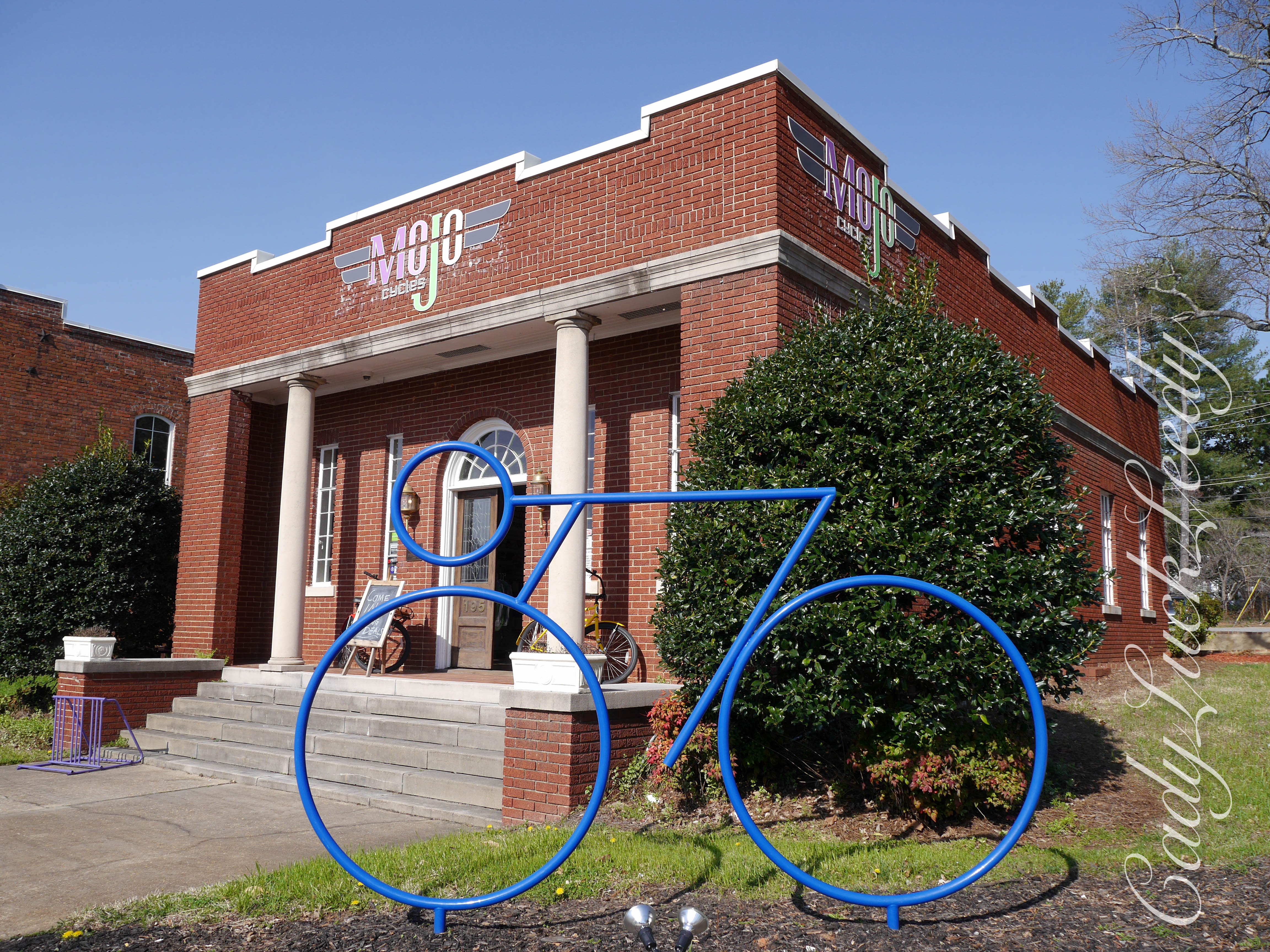
It’s summertime and the bike shops are OPEN! This is Mojo Bicycle Shop, Matthews, NC. Check out other entries at “ A Lingering Look at Architecture.” Enjoy!

Mojo Bicycle Shop, Matthews, NC

Mojo Bicycle Shop, Matthews, NC

Absinthe, Pirates, History and the NOLA Charm

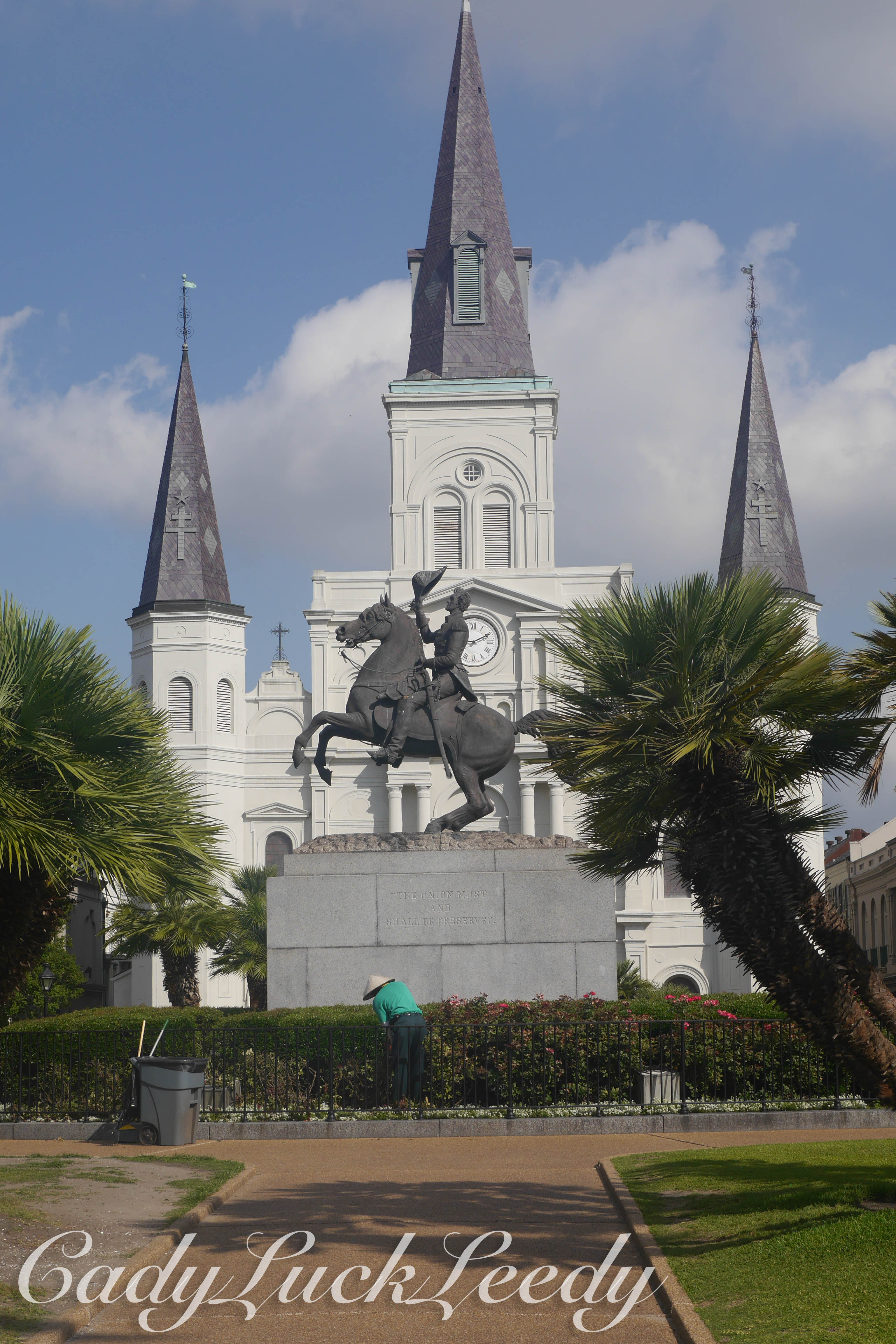
St Louis Cathedral

St Louis Cathedral

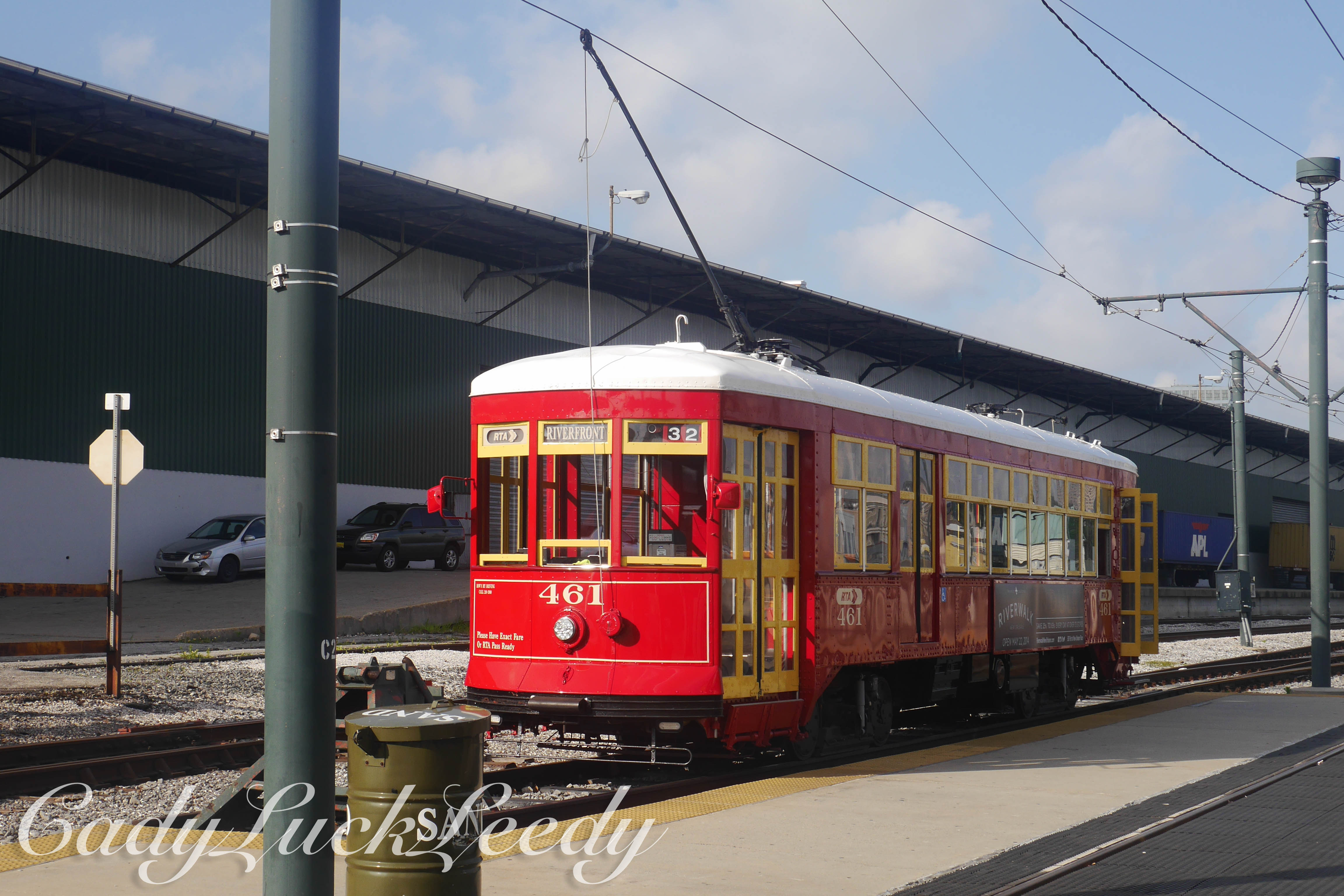
There are two ways to get to the center of  The French Quarter from our spot in Marigny; stroll the seven blocks on Chartres St to St Louis Cathedral or take the Loyola-UPT Streetcar that ends near us at the French Market.

The French Market Streetcar

The French Market Streetcar

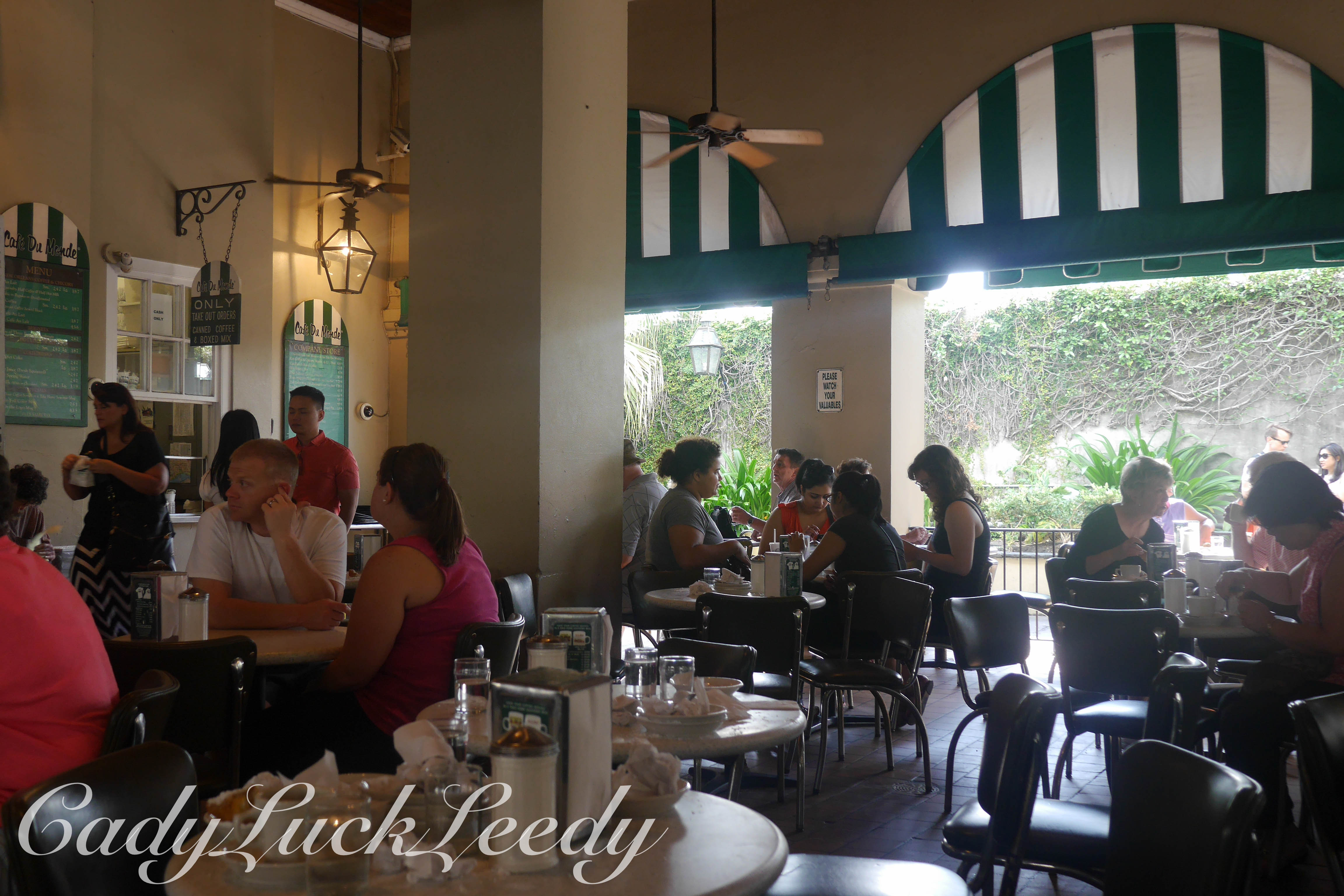
During our stay we do both. From the French Market  we get off the streetcar at Dumaine St and walk a couple of blocks to our first stop, the Cafe Du Monde, open 24 hours a day, seven days a week!

Cafe Du Monde

Cafe Du Monde

A large area of indoor/outdoor seating, the cafe is packed. The menus are imprinted on the napkin holders. The choices are coffee, soft drinks, orange juice and two sizes of beignets, either 3 or 6, smothered in powdered sugar. That’s it! I really can’t see what the hub-bub about the place is, but every time we passed by the cafe it was full. It’s been a landmark in New Orleans since 1862. 

Jackson Square

Jackson Square


Jackson Square, NOLA

Jackson Square, NOLA

Continuing on we come to Jackson Square and behind that the beautiful St Louis Cathedral, the oldest continuously operating church in the US, built in 1720, rebuilt in 1789, becoming a cathedral in 1794.

St Louis Cathedral, NOLA

St Louis Cathedral, NOLA

St Louis Cathedral, NOLA

St Louis Cathedral, NOLA

In front of the church on a wide band of street there are small booths of fortune tellers, ice cream vendors and musicians. Stepping inside the church we get relief from the heat and humidity which is quickly rising.  Leaving the church and turning right  and then right again we are on a small cobblestoned alley with St Anthony’s Garden behind the church. This alley is known to the locals as Pirates Alley. 600 feet long and 16 feet wide it is not listed on many of the maps of the French Quarter. The smell of New Orleans is more intense here, a smell of damp vegetation and a faint woodiness lingering with the latin rhythms, salsa music and blues coming from the corner.  This corner was infamous for settling duels and debts of honor.  Jean Lafitte, the famous pirate, who provided services to any country at war against another by attacking their ships, brought the booty to town and the goods were sold in the alley. Eventually the Spanish Colonial Prison called the Calabozo was built on this corner in 1769. Lafitte and his men were jailed here by Governor Claiborne of New Orleans.  The prison was demolished in 1837, and the land was sold to make a long creole house which was the home of William Faulkner, where he wrote his first novel ”Soldiers Pay.”  The creole house is now home to the Faulkner House Books. Now at the intersection of Pirates Alley and Cabildo Alley, where the prison was, is the Pirates Alley Cafe, known for caribbean drinks and absinthe.

Pirates Alley Cafe

Pirates Alley Cafe

Traditional absinthe was made of anise, fennel and wormwood (a plant) with added herbs and flowers making it green in color. The herbs and spices were soaked in alcohol and then distilled. The drink called la fée verte, (Green fairy) in French, was thought to be highly hallucinative also. Yes, drinking a couple of those today one might see fairies and pirates! 

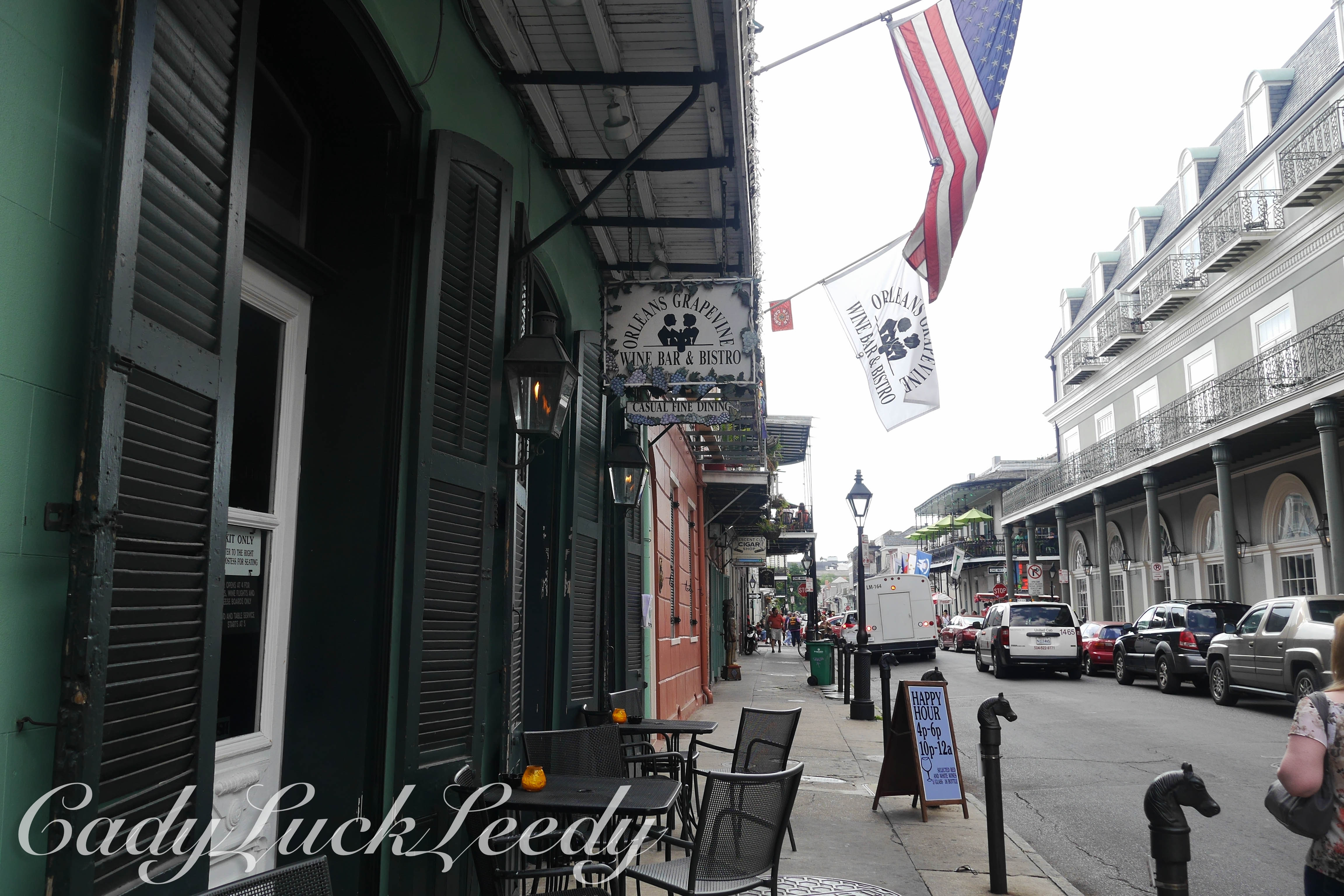
One afternoon, not far from Pirates Alley, we made our way to the Grape Vine Wine Bar and Bistro. We spent a lovely afternoon wine tasting and choosing cheeses from the cheese board. Then we were served large portions of appetizers. I had the crab cakes and they were fabulous. The ambience and service in this bistro is outstanding.  With seating indoors or out this was our favorite spot in the old French Quarter.


Grapevine Wine Bar and Bistro

Grapevine Wine Bar and Bistro

Grapevine Wine Bar and Bistro

Grapevine Wine Bar and Bistro

Another highlight of New Orleans is the WWII National War Museum. Traveling by way of the Canal Streetcar, switching to the St Charles Streetcar, we got off at Lee Circle and walked the rest of the way to the museum. The large museum is separated into different buildings and exhibits. Upon entering the ticket building in the Louisiana Memorial Pavilion we were greeted by veterans who are here every day and volunteer their services at all of the different venues. It was truly inspiring to see so many retired serviceman still giving of their time.  Our first stop was the “Train Car Experience” where we boarded a train re-creating the tearful farewells and bittersweet returns of the men and women who went to war. Then we went upstairs to see the “America Goes to War,” “D-Day Invasion of Normandy,” “The Landing Beaches,” and the “D-Day Invasions of the Pacific.” All the exhibits were interactive and very interesting. One of the highlights of the museum was the short movie, “Beyond All Boundaries” produced and narrated by Tom Hanks. The movie is a journey of words and stories of actual WWII participants. The Solomon Victory Theater, where the movie is shown, has a screen 120 feet wide, with 9 digital cinema DPL Projectors. (a regular theater has only one) There are 27 surround sound custom speakers and 250 special effects theater seats that shake when the tanks are rolling by! Many of the props used to make the movie come alive are authentic pieces of equipment. There are 305 archival photographs and 517 film clips of actual footage shot during the war. You will not want to miss this special attraction.

Going outside the exhibits we looked at a WWII Victory Garden complete with posters! 

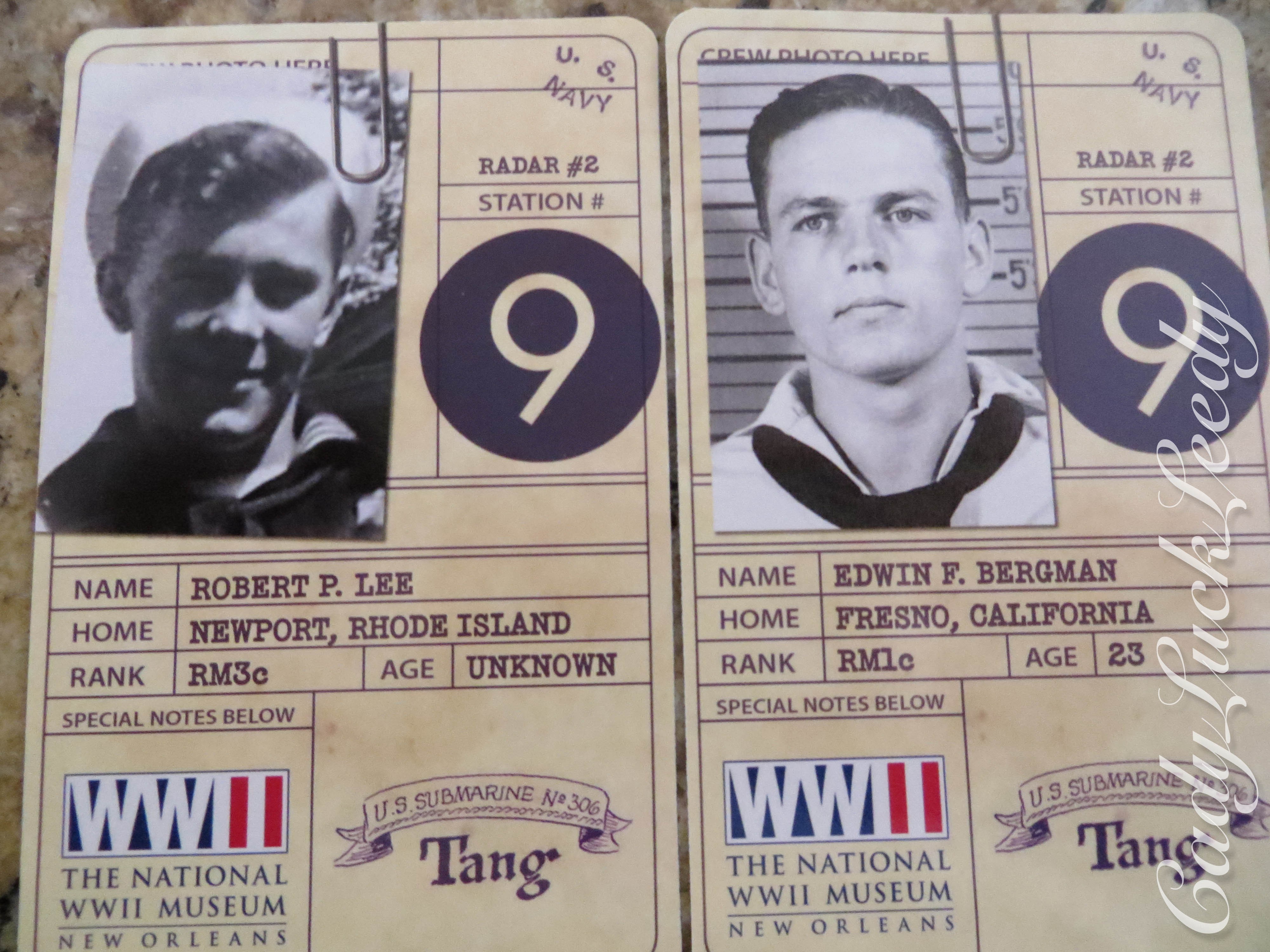
The other feature that I enjoyed was the “USS Tang” experience. Upon entering the submarine we are given actual sailors’ ID cards.  Using the ID of the sailor, we were assigned to his station and duty in the sub.

Submarine Sailor ID's

Submarine Sailor ID’s

We had an interactive encounter recreating the last war patrol of America’s most decorated submarine in WWII! What a great time we had visiting the museum! There is the Stage Door Canteen and the American Sector Restaurant to eat in and then to wrap up our day we were entertained by the Marine Corps Band of New Orleans, part of the Memorial Day Concert Series. New Orleans has so much to offer; great food and drink, stunning architecture, history and perseverance. I think you will enjoy including NOLA to your list of  “Not to Miss.” Enjoy!


Cee’s Fun Photo Challenge: Things With Edges


This is the “Masterpiece” that sits in front of our Post Office. I think it is simply a piece of junk!  Lots of edges here! Check out Cee’s Fun Photo Challenge!

What Exactly is This?

What Exactly is This?

The Wiltshire Gardener

A few weeks ago I wrote a post for the genealogy section of Dominic’s blog, Flibberatic Skreebles.  He also writes at A Wiltshire Garden. This is a post that he so thoughtfully wrote for me about gardening. Enjoy! Thank you Dominic!

Growing up in a small Wiltshire village amidst the rolling hills of south-western England, I had what most would call a typical childhood relationship with our garden. That is, the edges of the garden borders became havens for my various wild animal toys. The lawn was turned into prairie, savannah or – more prosaically – farmland. Camp outs, snail hunts, hedgehog spotting and somewhere to play and be free. I can’t say that I consciously took a great deal of notice of what was around me. 

I did, however, notice that not everybody had such a garden as mine, that not everybody’s mother spent hours in a greenhouse or would spend hours in a garden centre (or carried a small penknife with her when she went on trips to public gardens so she could ‘appropriate’ cuttings). I also noticed that not all of my friends ate vegetables fresh from the garden. I began to taste the difference between a tomato picked fresh from the vine not more than 10 minutes before and one that was taken from a plastic box out of the fridge. It was then that I realised I didn’t have what other people necessarily had: a constant and early exposure to horticulture.

“My Mother's Garden, 2005.

“My Mother’s Garden, 2005.

Of course, gardening isn’t something new. As soon as humans ear-marked permanent homes then the local environment was altered – beneficial plants collected and protected, undesirables eliminated and foreign species introduced. The enclosure of outdoor space began around 10,000 BCE – and the words garden and yard both come from the Old English term geard which means fence or enclosure.

The Romans may have imported their own views on gardening – a separation of the aesthetic beauty from the pragmatic fruit and vegetable (i.e. kitchen) garden – but I can’t imagine pre-Roman Britain devoid of domestic spaces that yielded produce for the household. This produce would’ve been primarily limited to plants with culinary, medicinal or other practical uses (violas were often strewn on the floor to release their aroma when stood upon, for example, as well as their leaves being used as a potherb to flavour soups and stews).

Whilst gardening trends came and went with the owners of large houses – Italian Renaissance, French Baroque, English Romantic – the general population, predominantly rural in nature, continued with their own home gardens. These were used to grow fruit and vegetables that weren’t available elsewhere – after all, there were no supermarkets and no greengrocers conveniently around the corner stocking all foods in all seasons! These spaces also included animals such as poultry and often a pig or two (my mother remembers quite clearly her grandparents fattening up a pig each year in a sty at the bottom of the garden and then sending it to slaughter).

Of course, as the Industrial Revolution and Enclosure movements* came about, more and more people were migrating into urban areas and these towns and cities exploded. There wasn’t the space for people to grow their own produce or the leisure time to dedicate to these pursuits. However, as the 19th century continued, the Victorian philanthropists realised that the poor would benefit both physically and spiritually from having outdoor areas in which to grow their own food. 

(*It’d be a bit outside of this post to discuss the Enclosure movement in England – but suffice to say that it changed the face of the British countryside by chopping up the open field system, and allowed the wealthy landowners to own more land and accumulate more wealth at the expense of their tenant farmers.)

“Allotments in Bath, England.

“Allotments in Bath, England.

Areas given over to growing produce for private use (as opposed to areas used for growing food to sell – market gardens) were nothing new in England. These allotments were parcels of land rented from a central local authority and each individual is responsible for his or her own patch – and often include a shed of some kind. (This aspect of one parcel of a much larger area being managed individually makes them different from community or victory gardens – more on which later!)

Allotments have gone in and out of fashion over the years – with the most recent peaks being during WWI (1,500,000 plots) and WWII (1,400,000 plots) – but over the last few decades the numbers have started to grow again with demand outstripping supply. This is seen to be a reaction against growing food prices and modern agricultural practices, as well as consumers demanding a greater awareness of where their food comes from. 

“Dig For Victory, UK WWII poster”

“Dig For Victory, UK WWII Poster”

Victory gardens sprang up on both sides of the Atlantic during WWI, with household yards, parks and public areas being turned into vegetable and fruit gardens in USA, UK, Canada and Germany. In America alone over 5 million gardens were created during WWI. In WWII England’s gardeners were exhorted through the “Dig For Victory” campaign – and waste ground, railway verges, lawns and sports grounds, even areas of Hyde Park in London, were requisitioned for the purpose. After WWII the majority of these English victory gardens reverted back to their pre-war state. In America it was common to see vacant lots and apartment building roofs as gardens – something that has come back into vogue with not only the guerilla gardening movement but also the rise of urban gardening and food production.

Guerilla gardening is a global movement, defined as “an act of gardening on land that the gardeners do not have the legal rights to utilize”. This includes such diverse areas as verges, roundabouts/traffic islands, tree pits, bus stops or even potholes in roads! This is often done to highlight the neglect of certain areas of land, but also to foster a sense of community or to raise a smile on passersby.
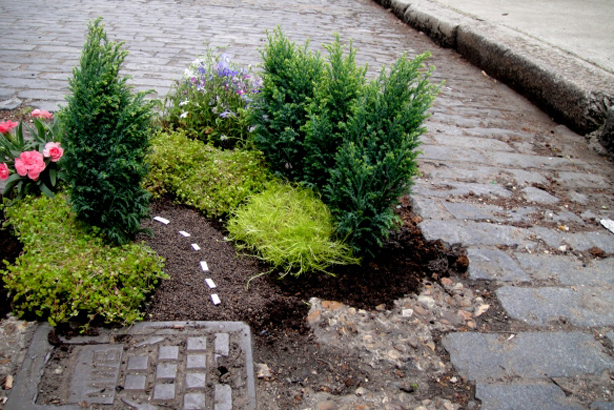
“The Work of UK Pothole Gardener Extraordinaire, Steve Wheen”

“The Work of UK Pothole Gardener Extraordinaire, Steve Wheen”

Of course, along side this guerilla gardening is the increase not only of urban greening but also of the regeneration of the community gardening movement used to change not only the inner city landscape but also the mental health of people using them – one community garden based in the UK is being used by local doctors to help patients with depression and anxiety disorders. 

One thing that the rise in the number of these activities highlights is that gardening isn’t going anywhere. Its been part of the British landscape for as long as there have been people around to pull up an unwanted plant and replace it with something else, and despite the rapid urbanisation of the country around us, the desire to plunge your fingers into some loam and watch the beauty that follows is still with us. And long may it last!

For more information on any of the in the UK, please visit some of the links below!

Guerilla Gardening – http://www.guerrillagardening.org/

Groundwork – community greening charity – http://www.groundwork.org.uk/

Project Dirt – social network for green communities – http://www.projectdirt.com/

The Edible Bus Stop – from one community garden to an entire scheme – http://www.theediblebusstop.org/

Landshare – social network connecting growers to those with land to share – http://www.landshare.net/

Federation of City Farms & Community Gardens – https://www.farmgarden.org.uk/home

National Society of Allotment & Leisure Gardeners – http://www.nsalg.org.uk/

Kabloom Seedboms – a mixture of compost and seeds – http://kabloomshop.co.uk/products


Weekly Word Challenge: Food

 May Spring Garden Party Spring

May Spring Garden Party 

The Front Porch

The Front Porch

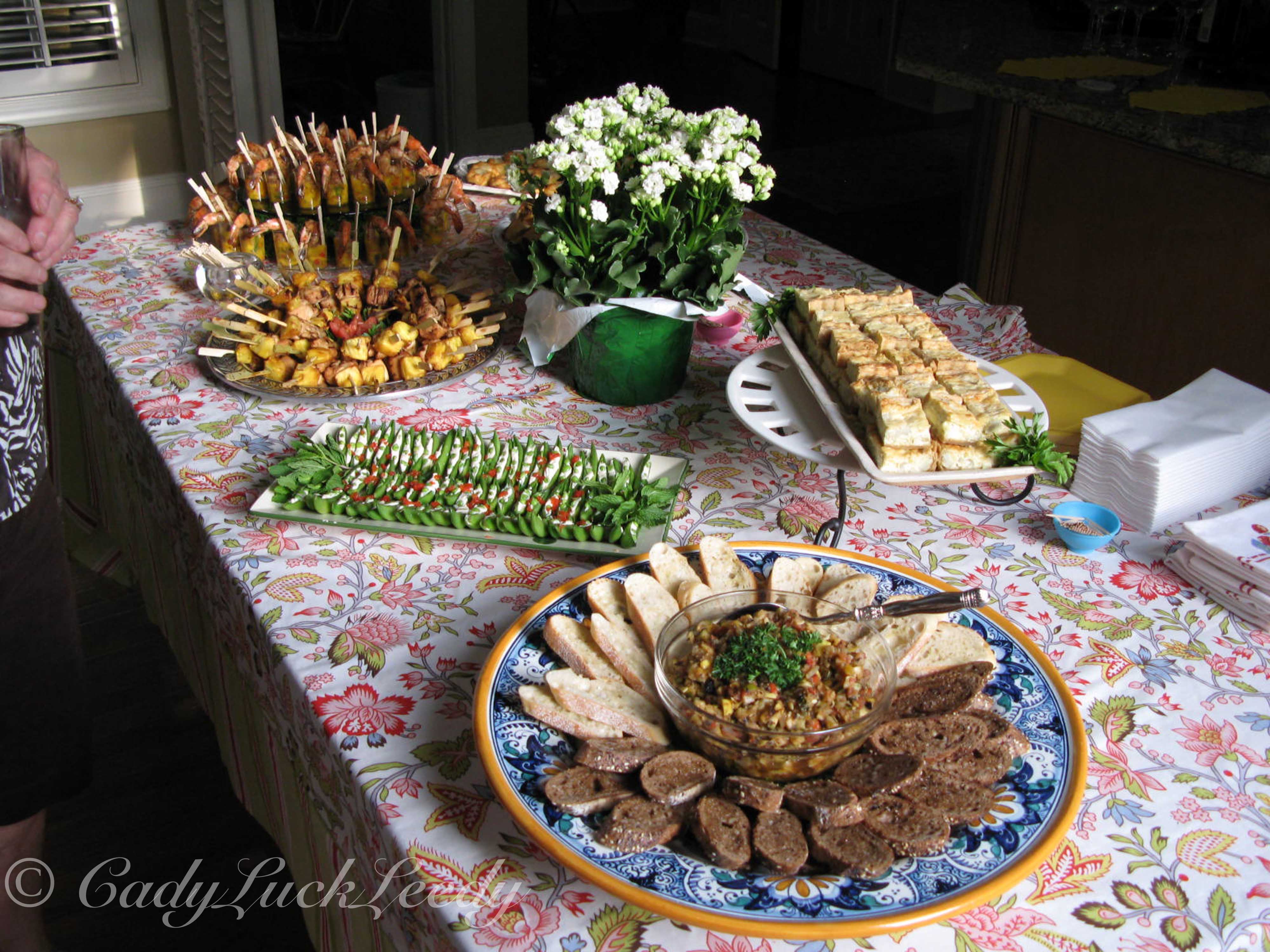
Spring is the time for a Garden Party! These are pictures of one one of the best “Spring Parties” we ever had! The garden is in bloom and it is not too hot outside so we can entertain moving in and out of the garden. My next door neighbors are professional chefs and they made all the fine food for this party! How lucky am I? Enjoy!

For more “FOOD” follow Susie’s Weekly Word Challenge  this week !

This is the garden!

Cottage Garden

Cottage Garden

May Spring Garden Party

May Spring Garden Party

The Garden

The Garden

The Garden

The Garden

Cottage Garden

Cottage Garden

Cottage Garden

Cottage Garden

Cottage Garden

Cottage Garden

My Gardens at the End of the Month: May

Northern Sea Oats

Northern Sea Oats

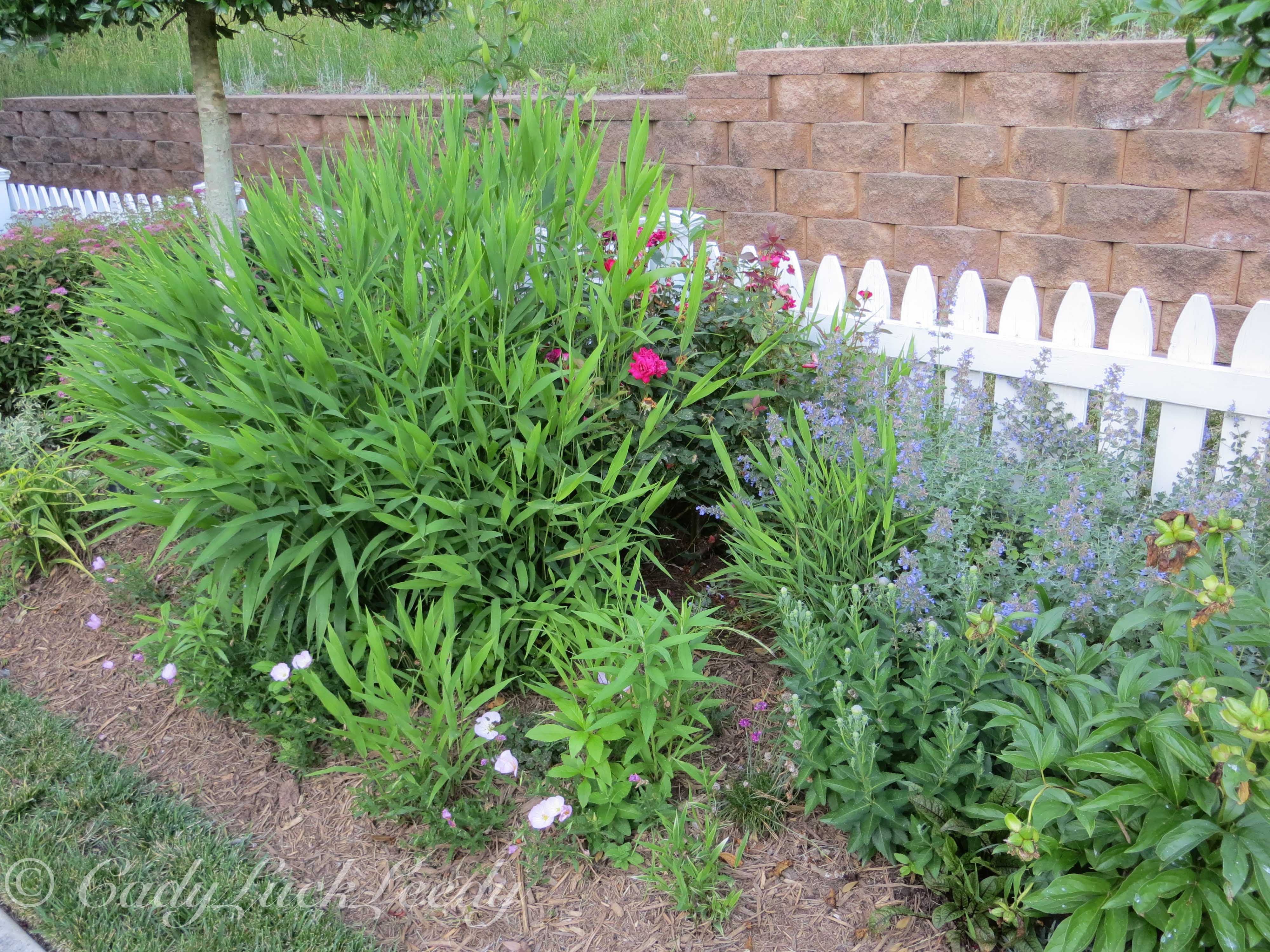
I  have been on vacation, so I am a little behind with this month’s post for The Garden End of Month: May. As you can see the Northern Sea Oats are very happy in their spot! Soon she will have whitish wispy flowers, shaped like oats, that float like butterflies in a breeze!

Guara by theWatering Can

Northern Sea Oats  to the Right of the Watering Can 

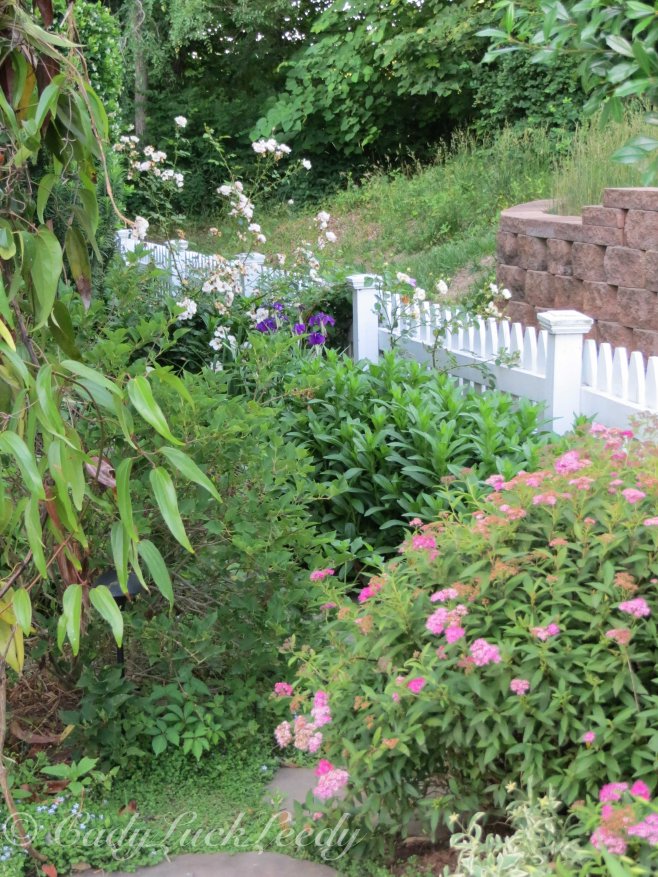
The Cottage Garden

The Cottage Garden

The Cottage Garden

The Cottage Garden


The Oak Leaf Hydrange

The Oak Leaf Hydrangea in the Woodland Garden

The Heucherella is Doing  Well Too

The Heucherella is Doing Well Too


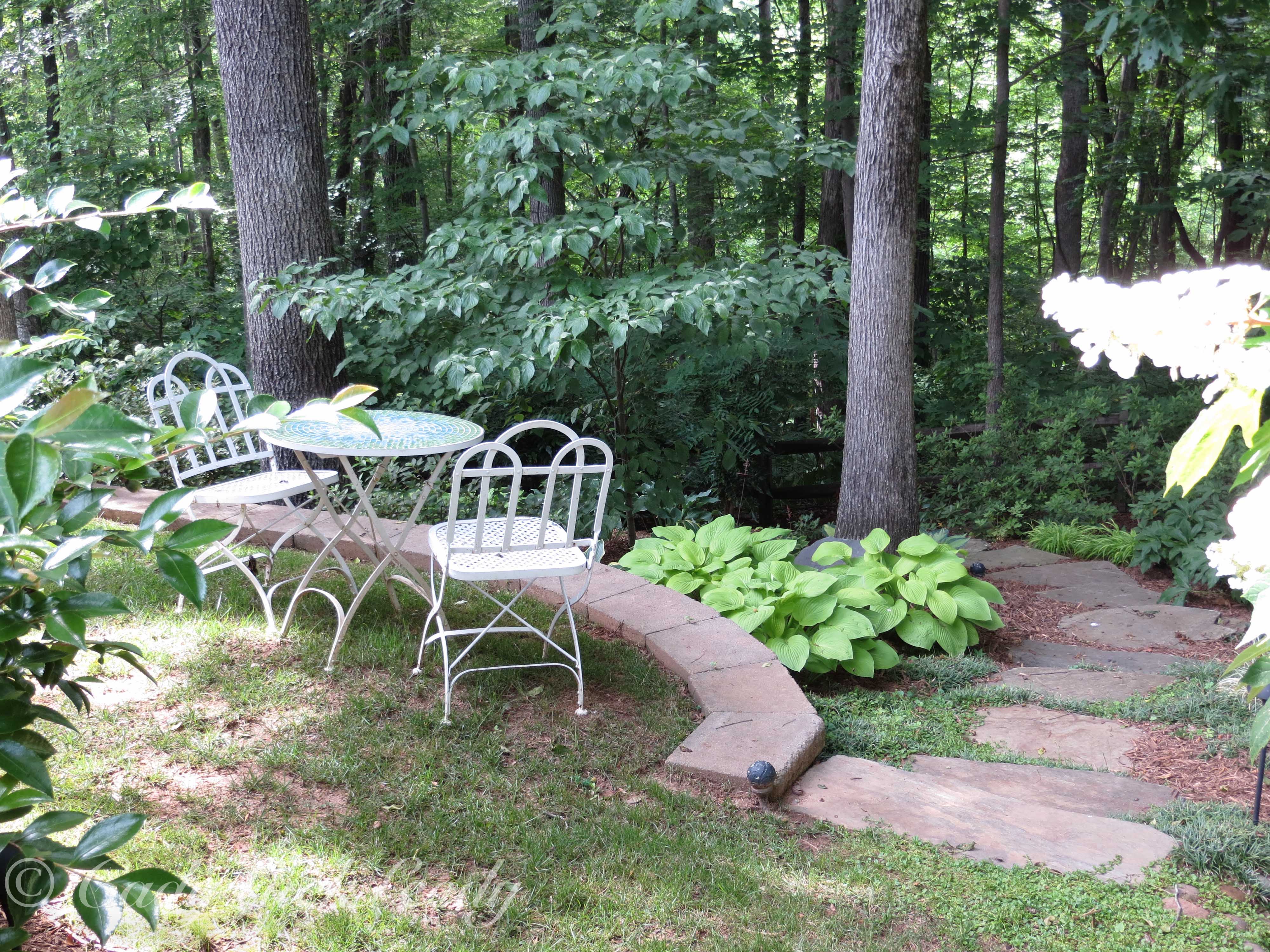
The Woodland Garden

The Woodland Garden at End of May


Fern on the Porch!

Fern on the Porch!

To B or Not to B: That was the Question


Marginy BnoB

Marginy BnoB

Fleur-de-Lis

Fleur-de-Lis

In the past week I returned from a 5 day stay in New Orleans. I have never been before. When I first mentioned going there, SB’s remarks were, “I went there in college, you won’t like it.” My daughter went this winter for a conference and texted me, “Mom, you won’t like it.” Really? “What’s there not to like, I asked?”  

“The drinking, that’s all anyone does there.” 

“You mean like during Mardi Gras?”

“Yep.”

Then I started to check out the hotels. Hmmmm…….. They were very expensive with more than the average reviews by unhappy campers. After spending many hours pouring over reviews I decided to look at a different venue. Hmmmm…..  What was the AIRB&B website?   Now this was interesting!  People rent out rooms in their house?   Hmmmmm… I felt uncomfortable about showing up in a strange town AND at somebody’s house, who I didn’t even know!  “Knock, knock, I’m here, glad to meet you, show me my room!” So I typed in “private apartments.”  One looked very promising, the  Marginy BnoB in the Frenchman Area.

The listing stated, “I am and have been a “New Orleans Public School Teacher” for 27 years. I have 3 children and 1 grandchild. I own a double shotgun house in New Orleans. I converted part of it as a bedroom for my daughter. When she moved out I converted to a Bed no Breakfast. I look forward to meeting new people ”

I liked her sense of humor and I liked the reviews I read about her place, so I booked it. The owner, Ginger, sounded responsible, the location in a residential neighborhood looked good, and the price was VERY REASONABLE. I looked forward to the trip!  

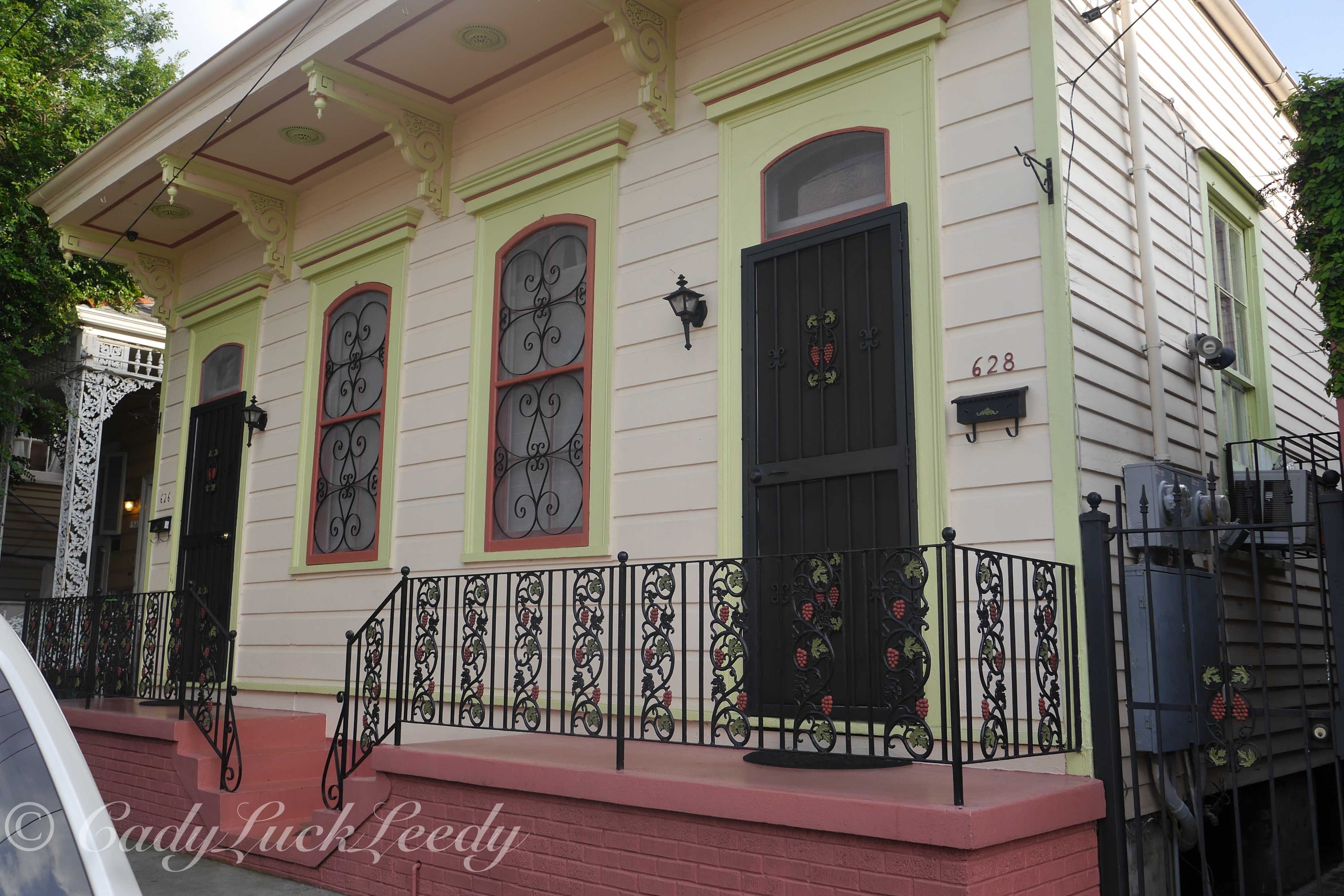
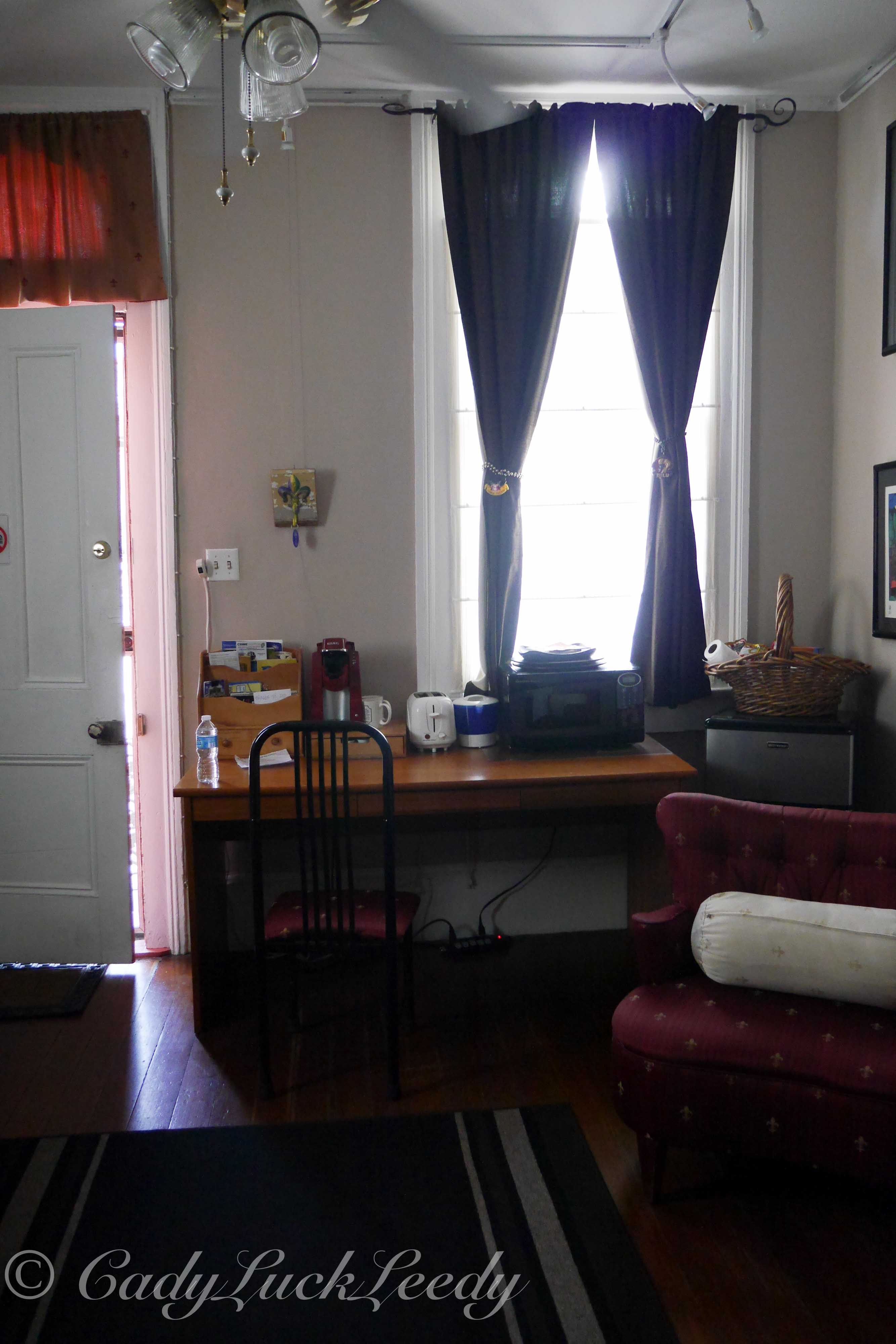
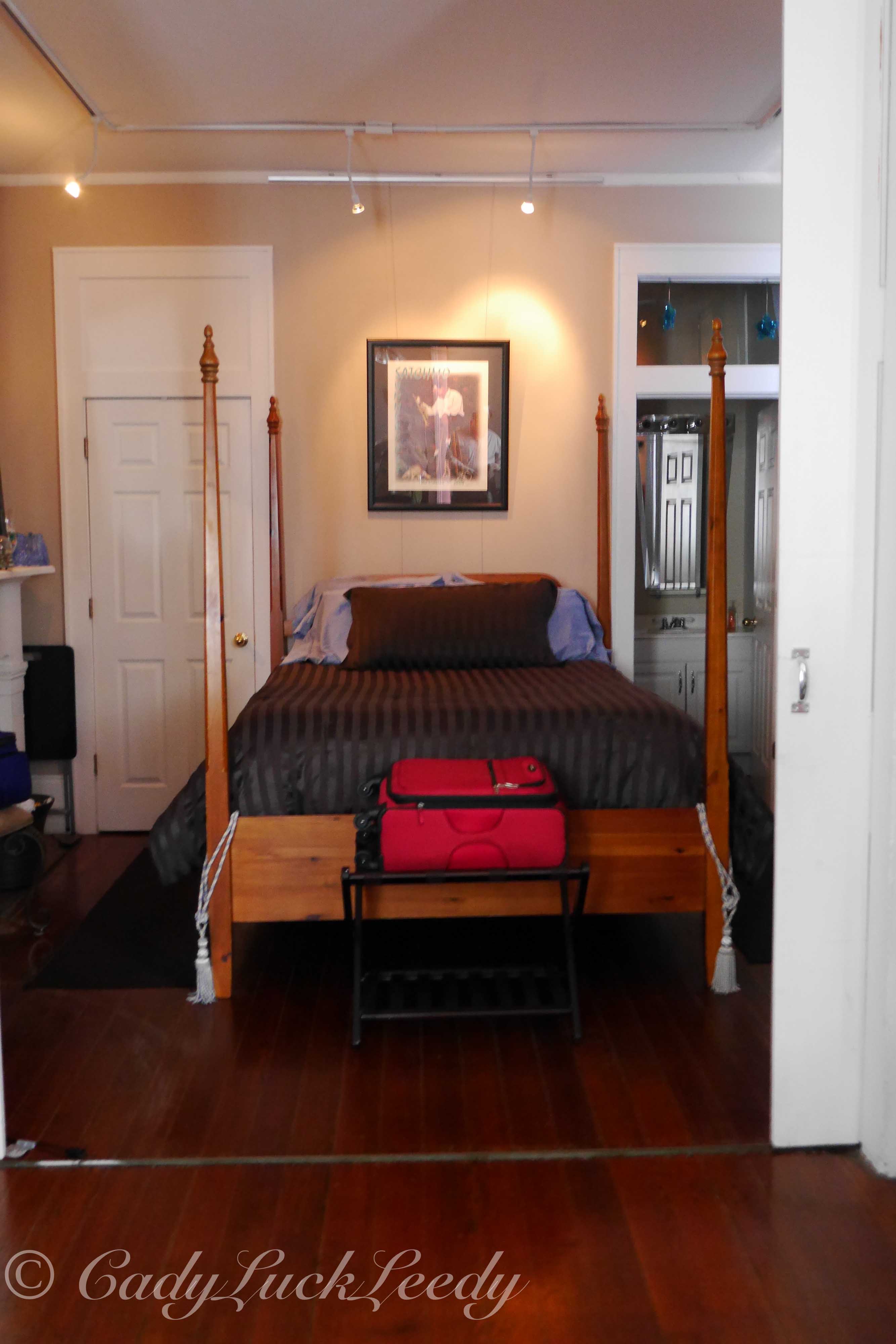
Marginy BnoB was perfect! It was a Double Shotgun House, a long narrow house with a door at each side of the rectangle, revealing twin houses, divided by a center wall, one of the very popular style homes here. Our side consisted of a private entrance,  large living area, with TV, microwave, coffee pot with tea/coffee and bottled water,  and  large bedroom area with a bathroom. Everything was spotless.

Marginy BnoB

Marginy BnoB

The Living Room

The Living Room

Marginy BnoB

Marginy BnoB

Showing us around and making sure we had everything we needed, we asked her if her house had been affected by Hurricane Katrina. She told us how the Marigny Neighborhood was the highest point of land in New Orleans, but she knew that so many others had not fared as well. She was very proud of her Cajun heritage and the recovery process of so many people, especially the children she taught. Then she showed us her fleur-de-lis tattoo on her arm and told me we would see many people with the tattoo.  The tattoo represented perseverance and solidarity after Katrina.  Talking with Ginger was like going to an old friend’s house, and after giving us the layout of the land she returned to her home next door. She was there if we needed anything. Perfect! For an interesting background on the Marigny Neighborhood read my photo narrative HERE!

Artwork in Marigny

Artwork in Marigny

I was excited about exploring my new digs. I loved all the different styles of homes jumbled into long skinny lots. AND the color! It was a spilled paintbox of brightness!  It was like a box of chocolates, you never knew what to expect.

One of My Favorite Houses in NOLA

One of My Favorite Houses in NOLA

My Other favorite House

My Other favorite House

 We were close to some of the best rated restaurants in New Orleans.  One of our favorites, The Praline Connection, was one block from the apartment. Soul Food/Cajun at its finest! BBQ ribs, fried chicken, macaroni and cheese, meatloaf, catfish and one of the side dishes was my favorite, crowder peas and okra with rice, rice, rice! The restaurants were frequented by locals, standing room only, and the crowds (drink in hand) did not mind waiting in line to get in. New Orleans,  allows the possession and consumption on the street of any alcoholic beverage in an open plastic container. I want to think this started due in part to the intense heat and humidity.

 Another of our favorites was the Port of Call Restaurant.  Here they served their famous Monsoon Drinks (tropical juices, with or without booze) with their specialties of steaks, hamburgers and scrumptious huge baked potatoes with all the trimmings! It was very dark and cool in this restaurant, especially in the heat of the day. You will notice closed shutters on all the windows in New Orleans, even on the doors, which I though a bit odd at first. The shutters are kept closed to keep the cool air in because the heat and humidity are fierce here. We walked the neighborhood at night to get a peek at the chandelier ceilings and the tiny romantic interiors of these homes. It was the only time of day you could actually see inside. Many of the homes had outdoor gas lamps which also added to the charm.

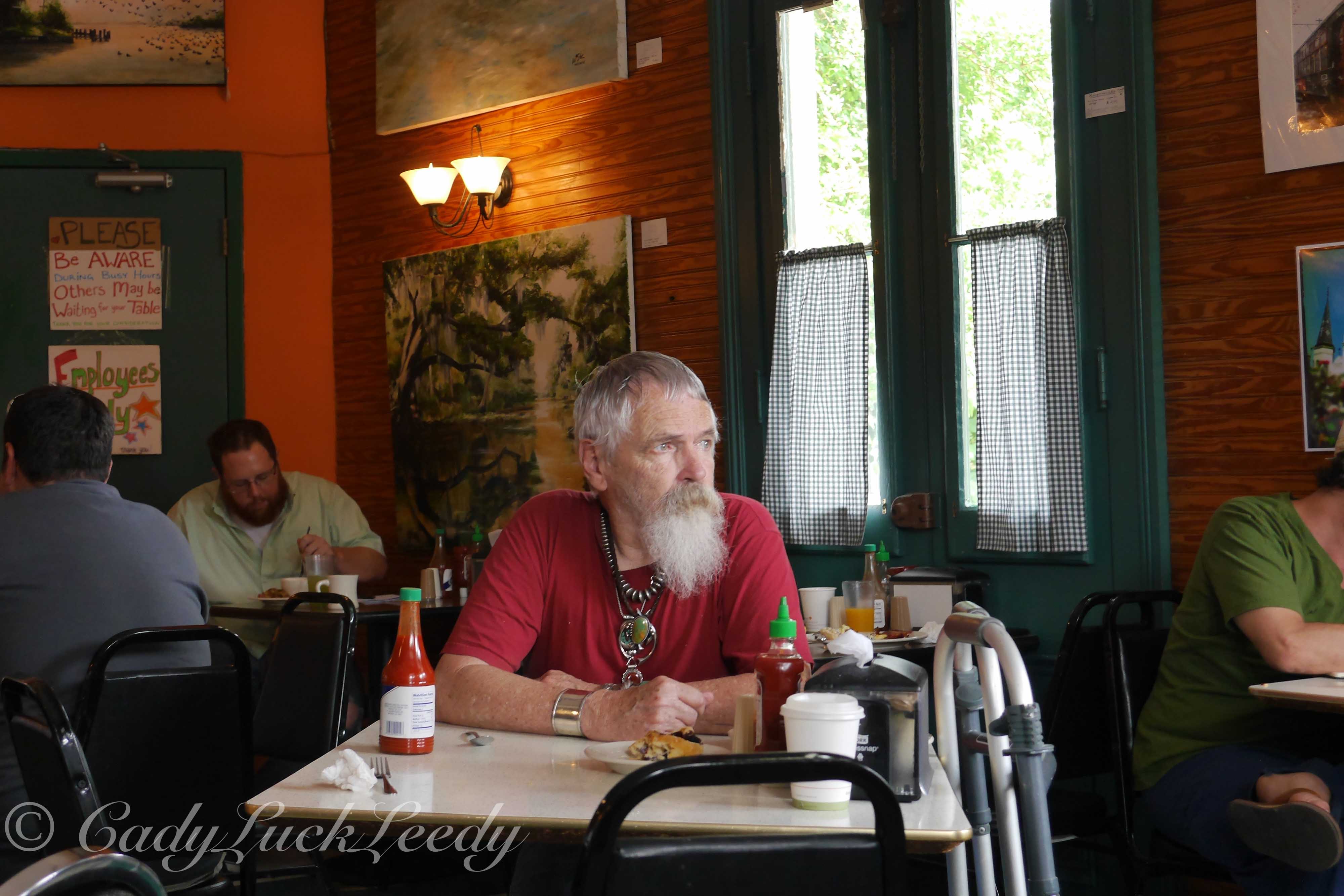
Our favorite morning spot was the Cake Cafe and Bakery. Further up the street we walked through the charming neighborhood to reach this icon on the corner for breakfast. Clearly a local favorite, I could have sat here all day (well until 3pm when they close) just to watch the people. One gentleman and his friend was here every time I was.  He walked with the assistance of a walker and his friend would park the car near the entrance whether there was room or not. When the servers saw them coming they went out of there way to open doors and help him into the restaurant and would quickly find him a seat.  He clearly was a favorite and well known. I was struck by his features, his style of dress, his jewelry, his soft spoken demeanor and the reverence the locals had for him. As I was snapping shots of the cafe, he watched me.  He knew I wanted to take his picture and was hesitant. Then he nodded and I clicked twice. I just love his picture and I bet he has a fleur-di-lis somewhere too! I can’t begin to tell you how many people would pass us on the street and start up a conversation. The people are clearly proud of New Orleans and wanted to make us welcome. 

Cake Cafe and Bakery

Cake Cafe and Bakery

Interspersed among the restaurants were the jazz clubs, crayfish boils, and a small neighborhood grocery that would have given the small Italian markets I love so much, a run for their money. 

So, I was very impressed with our first venture with AIRB&B. But, I was greatly moved by the people of New Orleans and their motivation to keep their lifestyle alive and well. Next…… What else did I do and see in New Orleans?   Yes, I reluctantly left Marigny to see other neighborhoods in the city. Part 3 NOLA is next to come! Enjoy!


THE SPECTACLED BEAN

Tales, Thoughts + Tribulations of a Free Spirit in Suburbia

Walking Away

Travels on foot

Teacher nickname: The Three Hairs

Minding my mind, one thought at a time.

Tra Italia e Finlandia

Un lungo racconto fotografico.

seanbreslin.jp

Photography, hiking, walking, and cycling across central Japan — from quiet mountain paths to everyday life around Nagoya.

Lost in Translation

Looking for meanings in words, images and sounds

Journeys with Johnbo

Reflections on places traveled and photos taken.

M/VGratitude

Cruising with the Thyrre Family

Caroline's Travel Adventure Blog

Where my Travels and my Blog merge together.

Just Me, Nobody Special

The mental meandering that cross my keyboard

Jennifer's Journal

Website & Blog of J. Kelland Perry, Author

Slow Shutter Speed

A photographic journey.

Ann Mackay: Inspired by Nature

Photography celebrating flowers, plants, and the natural world

Still Restlessjo

Roaming, at home and abroad

Fine for Friday

The Corner Garden

Picture This

Photography, Travel and Retirement

World Traveller 73

Upgrade Your Travels. First Class Luxury Travel from all parts of the Globe. Business Class Airline, Lounge and Hotel Reviews, Stories and Adventures

Rachel Meets China

A China travel and lifestyle blog