Travel, Gardens, Food, Photography, Books, Shoes

Posts from the ‘Destinations’ category

The Burials; Kaisergruft, the Imperial Crypt

Kaisergruft, Vienna, Austria

Kaisergruft, Vienna, Austria

Kaisergruft, Vienna, Austria

Kaisergruft Crypt Entrance to the Right , Vienna, Austria

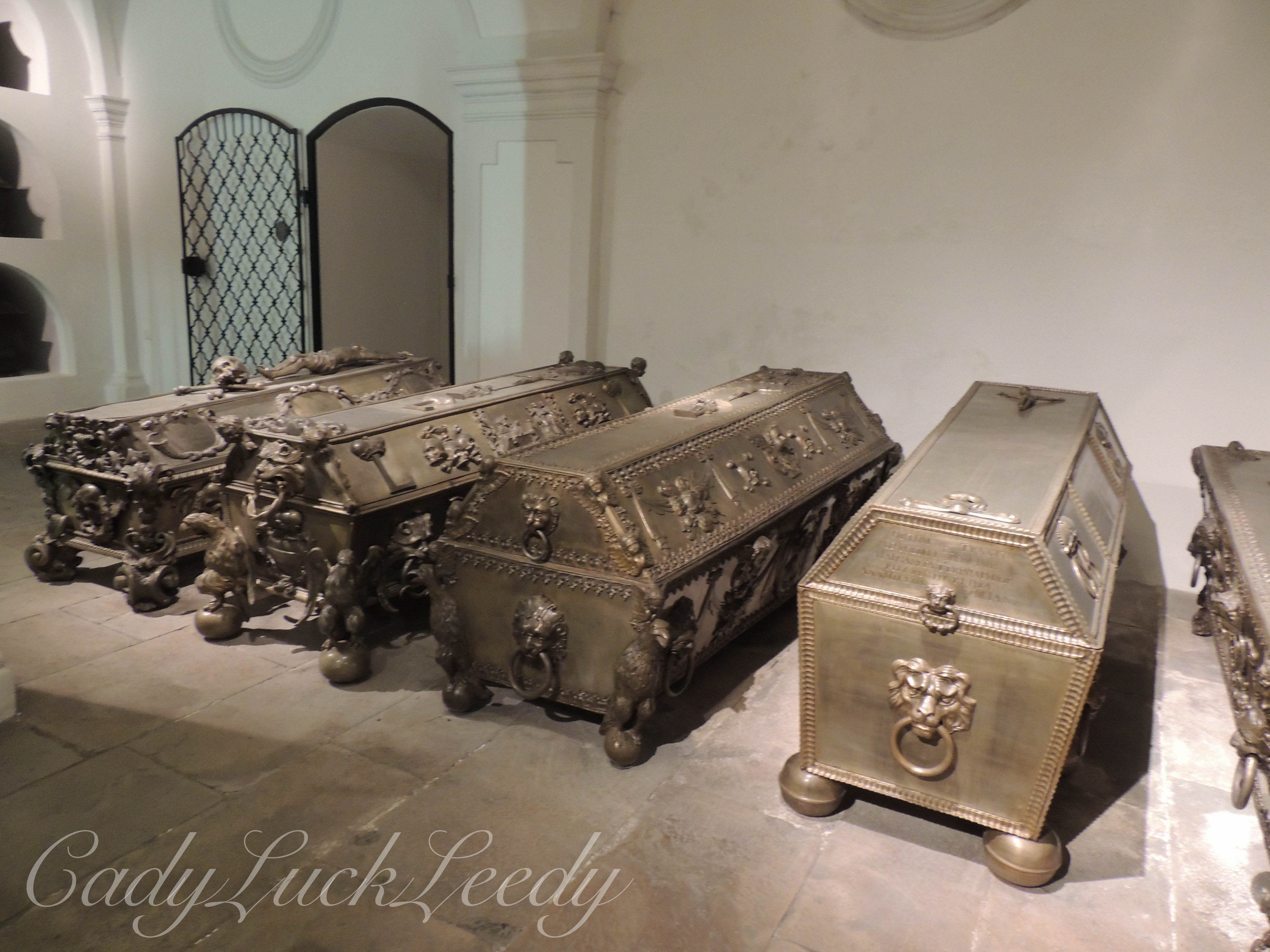
Previously we visited the Augustinian Church where the Habsburgs’ were married so today we are visiting the Imperial Crypt or Kaisergruft, a burial chamber beneath the Capuchin Church located in the Neuer Markt Square near the Hofberg Palace. In 1617, Anna of Tyrol, wife of Emperor Matthias left funds for a Capuchin cloister and burial crypt. Today the bones of 145 Habsburg royalty, including 12 emperors and 18 princesses, plus urns containing hearts, rest here.  Twelve friars continue their role as custodians and guardians of the crypt.

Kaisergruft, Vienna, Austria

Kaisergruft, Vienna, Austria

Kaisergruft, Vienna, Austria

Kaisergruft, Vienna, Austria

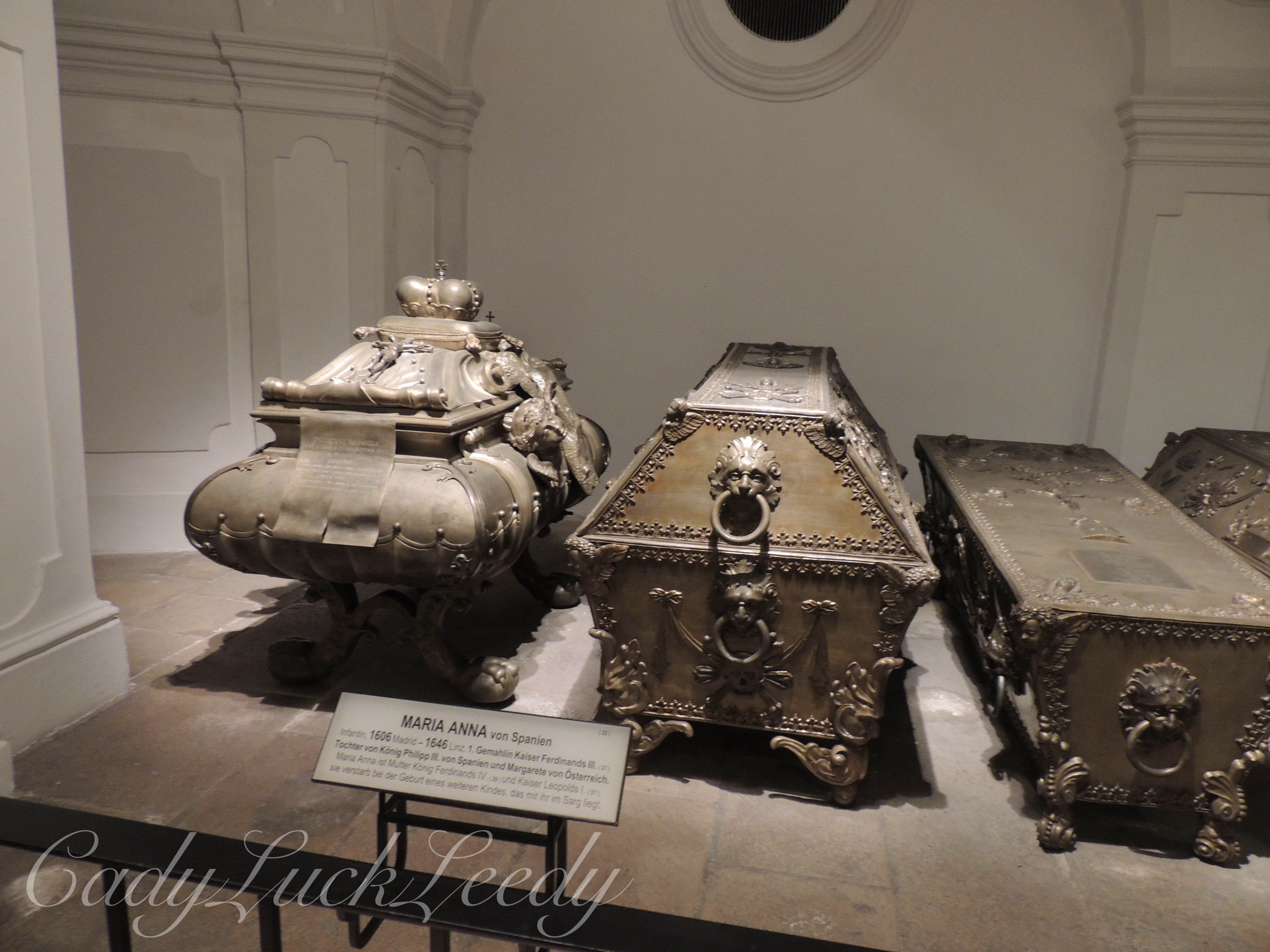
The free standing tombs are variations of a flat-topped storage chest or a tub with sloping sides and a convex lid. The most common material for the sarcophagi was a bronze-like alloy of tin, but the beautiful tombs of the baroque and rococo eras are true bronze. The cover of of the double tomb of Maria Theresa and her husband alone weighs 3800 pounds. In order to stabilize the tombs they have iron bracings and wood linings to avoid cave ins and the buckling of side walls from the weight of the cover. Within the outer case lies a wooden coffin that is wrapped in silk; black with gold trim for rulers and red with silver trim for others. Various techniques of metal working were used; full casting or hollow for decorative sculpture, with ornaments and decorative figures screwed on. The coffin usually has two locks, one key kept by the Capuchin Guardian of the Crypt and the other is kept in the Schatzhammer of the Hofburg Palace.


Kaisergruft, Vienna, Austria

Emperor Charles VI, Kaisergruft, Vienna, Austria 

Kaisergruft, Vienna, Austria

Kaisergruft, Vienna, Austria

Kaisergruft, Vienna, Austria

Kaisergruft, Vienna, Austria

Kaisergruft, Vienna, Austria

Kaisergruft, Vienna, Austria

Kaisergruft, Vienna, Austria

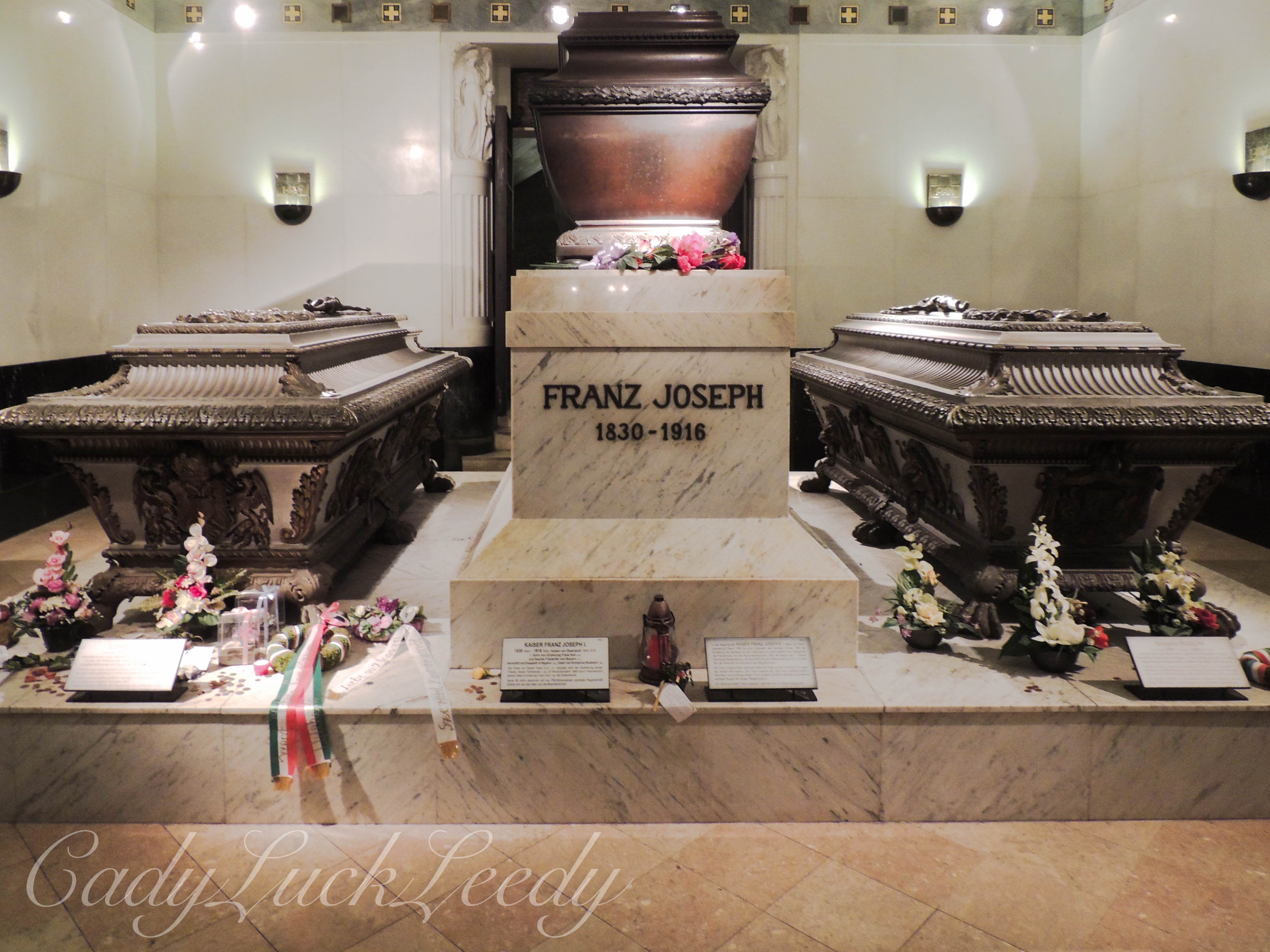
Franz Josef and Sisi, Kaisergruft, Vienna, Austria

The chamber had increased over the years from under the nave of the church to the entire length and width and then beyond the church to include the monastery garden’s, creating a hodgepodge of tombs and chambers beneath the church. This made it necessary to create additional space and dehumidify the crypt. There have been serious deteriorating conditions. Changes in heat and humidity, the peeling of horizontal surfaces, broken base plates and decorative fixtures broken off or stolen made it necessary for major restoration efforts. In 2003 remodeling of the crypt allowed visitors to see the tombs in historical order and enter from one end and leave at another. There are now ten interconnected, air conditioned, Vaults of the Imperial Crypt. In addition, security measures were put into place to prevent damage to the tombs.  The oldest and most recent person entombed  here (16 July 2011) is Otto von Habsburg, aged 98 years and 7 months. Twenty five percent of those entombed here were five years of age or less when they died. A very interesting place!

Vienna; the Good, the Sad, and the Beautiful

Habsburg Palace

Hofburg Palace, Vienna, Austria

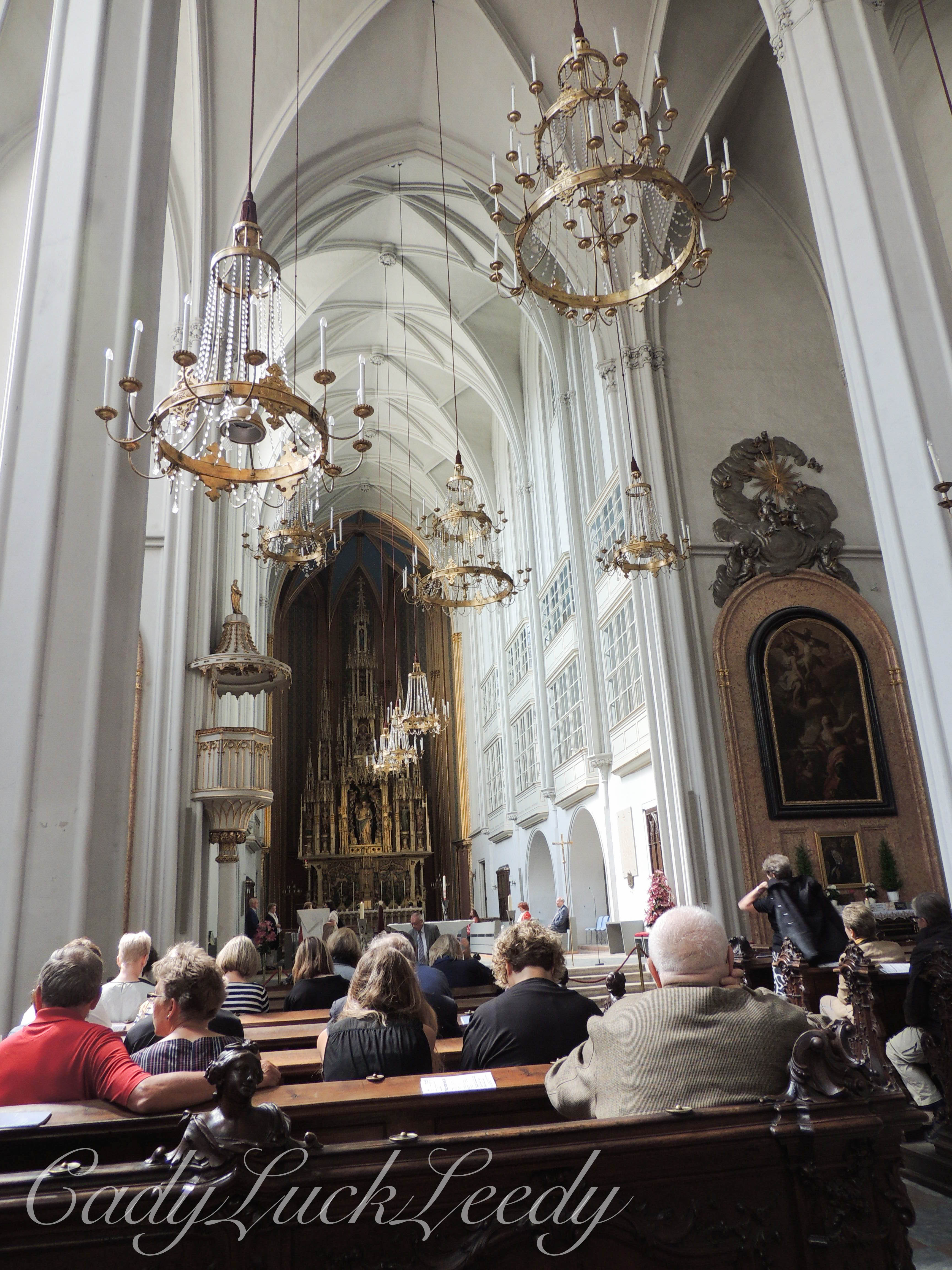
The Good. It is Sunday and we are going to one of the many concerts in Vienna. The choir and full orchestra are presenting a program at 11am High Mass at the Augustinian Church (Augustinerkirche), located  on Josefsplatz. The church was founded in 1327 by Duke Frederick, the Handsome, with a cloister of Augustinian friars. In 1634, it became the parish church of the imperial church  and is now part of the vast Hofburg Palace complex. Here the Habsburg’s wedding of the Archduchess Maria Theresa in 1736 to Duke Francis of Lorraine, the wedding of Archduchess Marie Louise in 1810 to Emperor Napoleon Bonaparte of France, and the wedding of Emperor Franz Josef in 1854 to Duchess Elisabeth (Sisi) of Bavaria, took place. The church looks unremarkable from the outside, but the Gothic interior is exquisite. We get there early to get a good seat in one of the pews up front. Soon it is standing room only. Let the music and Mass begin!

Augustinian Church, Vienna, Austria

Augustinian Church, Vienna, Austria

Augustinian Church, Vienna, Austria

Augustinian Church, Vienna, Austria

Augustinian Church, Vienna, Austria

Augustinian Church, Vienna, Austria

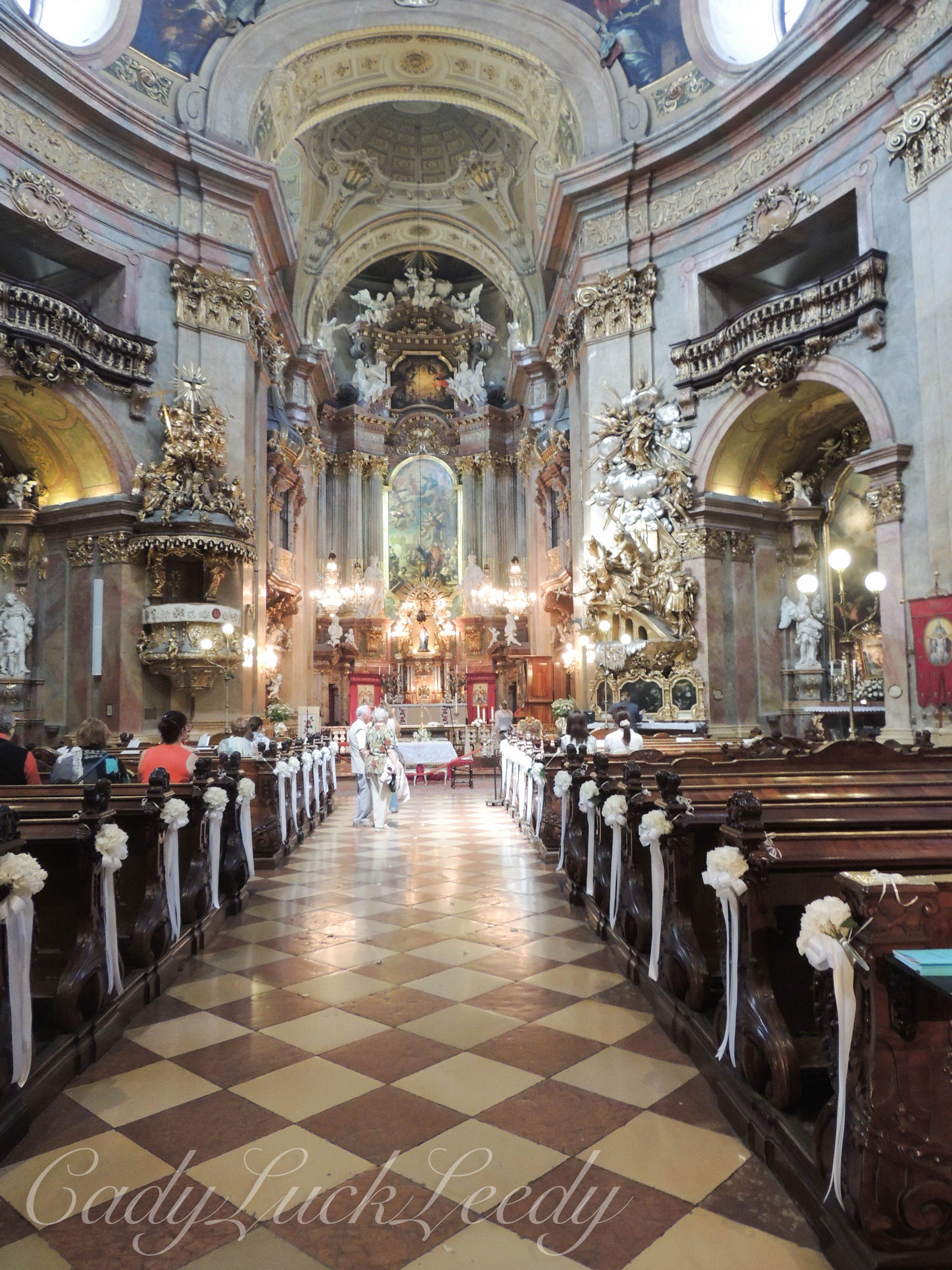
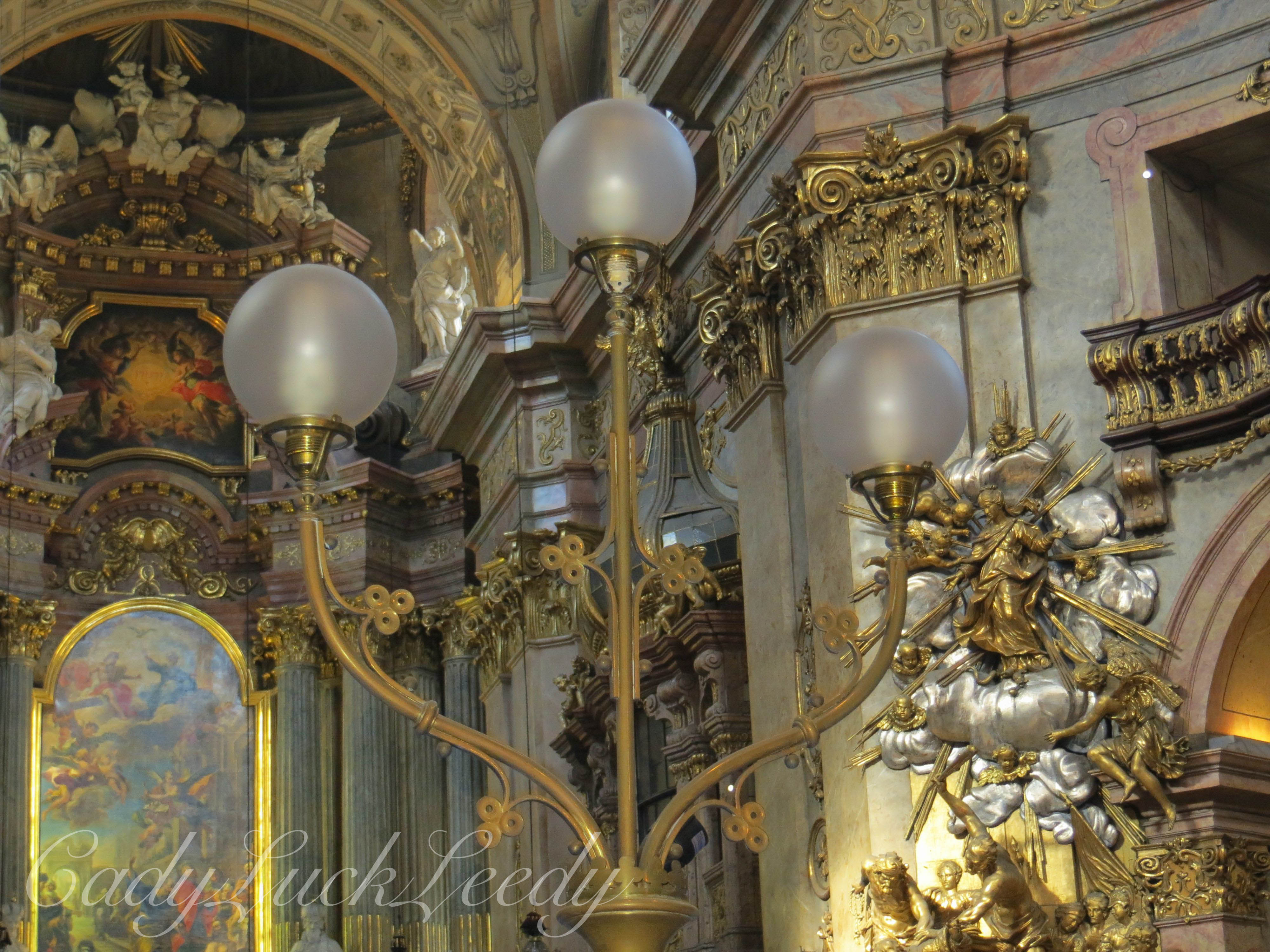
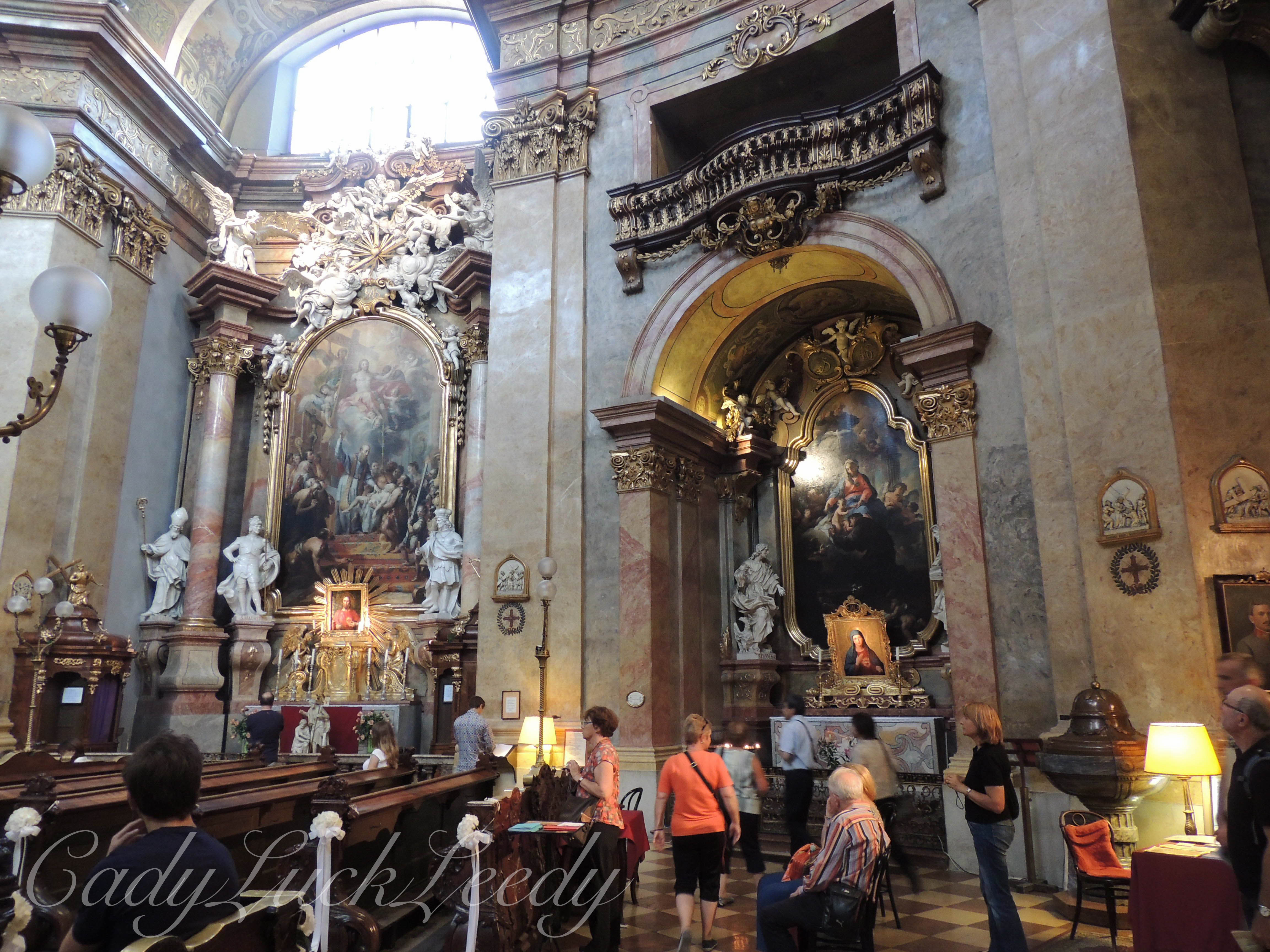
The Best. Coming out of Mass we walk over to St Peters Church. (Peterskirche) This church site dates back to the Middle Ages and was built on the site of the Roman encampment in the Graben. In 1661 the church burned down and a new church was built when Leopold I took a vow to rebuild this church when Vienna was ravaged by the plague in 1679. This church was the first domed structure in baroque Vienna and fashioned after St Peter’s Basilica in Rome.  Situated in a very compact space, closed in between the modern Vienna,  once inside, the interior is rich with gold stucco. Today we are there as a wedding couple are exiting the church and we observe the church decorated beautifully for the wedding!

 St Peter's Church, Vienna, Austria

St Peter’s Church, Vienna, Austria

 St Peter's Church, Vienna, Austria

St Peter’s Church, Vienna, Austria

The Wedding Couple, St Peter's Church, Vienna, Austria

The Wedding Couple, St Peter’s Church, Vienna, Austria

 St Peter's Church, Vienna, Austria

St Peter’s Church, Vienna, Austria

 St Peter's Church, Vienna, Austria

St Peter’s Church, Vienna, Austria

 St Peter's Church, Vienna, Austria

St Peter’s Church, Vienna, Austria

 St Peter's Church, Vienna, Austria

St Peter’s Church, Vienna, Austria

 St Peter's Church, Vienna, Austria

St Peter’s Church, Vienna, Austria

The Sad. Next, let’s see how Emperor Franz Josef and Sisi  lived in the Imperial Apartments at the Hofburg Palace. Going up a large marble staircase, turning and going up another set of steps we reach the royal floor and the Sisi Museum. Now, this is my short rendition of Sisi’s life. Franz Josef at twenty three, was engaged to Sisi’s sister, Helene, in a diplomatic marriage.  However, once he saw Sisi, age sixteen, all bets were off and he defied his domineering mother and married Duchess Elisabeth (Sisi). Within ten months, Sisi gave birth to their first child, Sophie. Franz Josef’s  demanding mother didn’t think Sisi was old enough or smart enough to handle royal life, so she took over everything that concerned Sisi; the children, and the royal household affairs.  That included naming the couple’s first born after herself, Sophie, and taking the child away from Sisi,  a decision that continued for all the children to follow. Sisi, bored with her non-existent life, except that of brooder, became obsessed about her weight and followed a rigorous workout regime, putting a workout room in her private apartments. Fixated on her appearance, after her ritual cold bath in the morning, she spent three hours daily having her ankle length hair washed, combed and braided. Every evening there was an oil bath and a slab of veal was placed on her face to prevent wrinkles. At five foot eight and 100 pounds she wore a leather fitted corset to keep her waist at sixteen inches and after four children her waist never exceeded nineteen and one half inches. Her weight at times would drop to 95 pounds after fasting  for days.  Truly her looks must have been the only thing she felt she had control of.  After ten years of marriage and four children, Sisi chose to spend very little time in Vienna, frequently visiting Hungary. After the age of thirty she refused to sit for her portrait and have any pictures taken of her. She never smiled because she hated her teeth.

Tragedy struck 1889, with the death of Sisi’s only son, Rudolf, the Crown Prince of Austria, and his mistress, in a murder-suicide pact at a hunting lodge at Mayerling. Sisi withdrew further from court duties and traveled widely, unaccompanied by her family. While traveling in 1898 she was stabbed to death by an Italian anarchist, who had missed his chance to assassinate another royal family member, Prince Phillippe, Duke of Orleans. Sisi had served as the longest princess-consort of Austria, at 44 years. Next in line of succession after Rudolf was Archduke Karl Ludwig, Franz Josef’s younger brother. However, a few days after Rudolf’s death Karl Ludwig renounced his succession rights to his oldest son, Archduke Franz Ferdinand, who became heir presumptive. Franz Ferdinand’s assassination in 1914 sparked WWI. What a mess of lives all that turned out to be!

Imperial Apartments, Hofsburg Palace, Vienna, Austria

Imperial Apartments, Hofburg Palace, Vienna, Austria

Imperial Apartments, Hofsburg Palace, Vienna, Austria

Imperial Apartments, Hofburg Palace, Vienna, Austria

Imperial Apartments, Hofsburg Palace, Vienna, Austria

Imperial Apartments, Hofburg Palace, Vienna, Austria

The Horse and Buggies, Vienna, Austria

The Horse and Buggies, Vienna, Austria

The Horse and Buggies, Vienna, Austria

The Horse and Buggies, Vienna, Austria


The Horse and Buggies, Vienna, Austria

The Horse and Buggies, Vienna, Austria

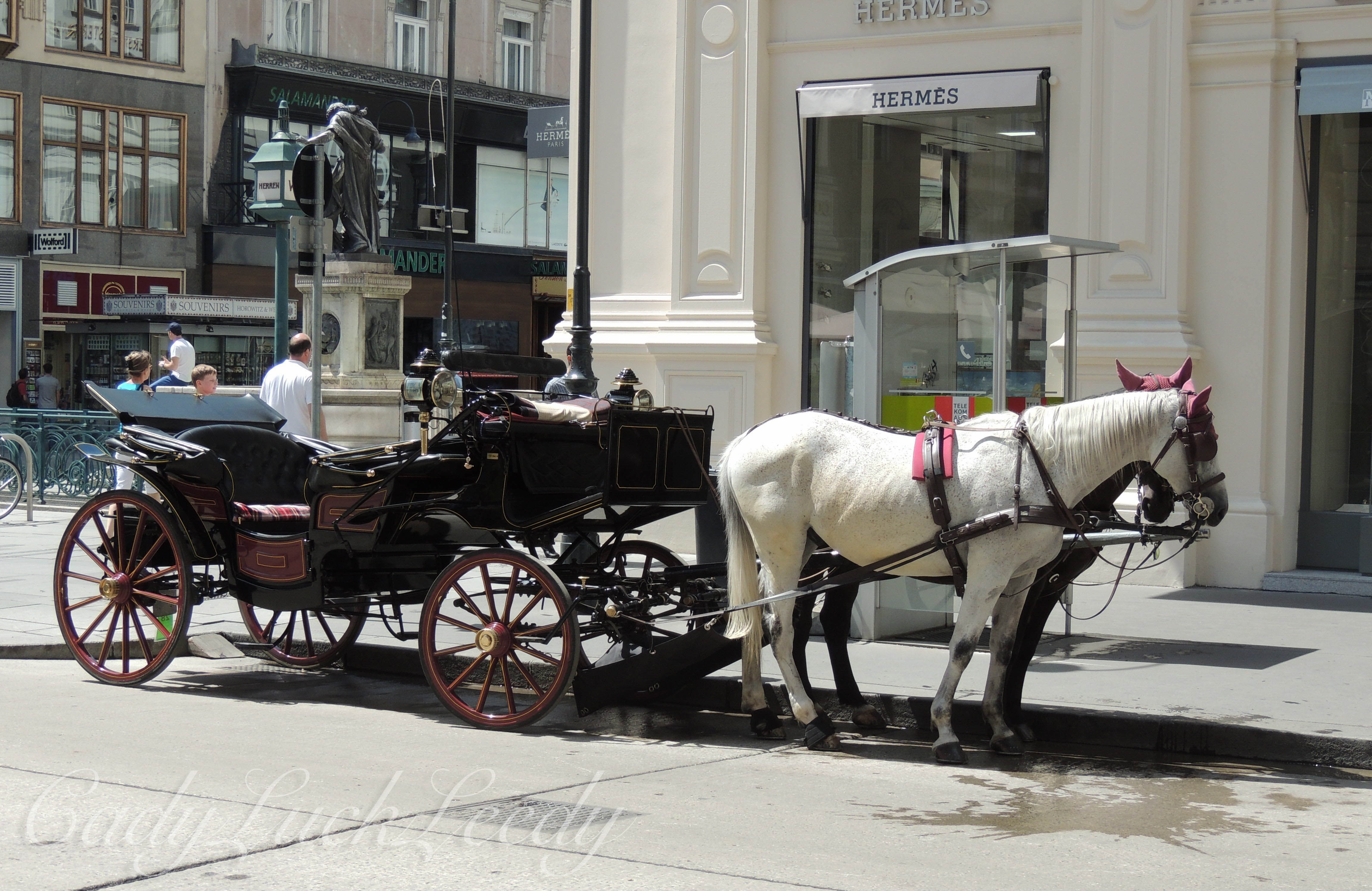
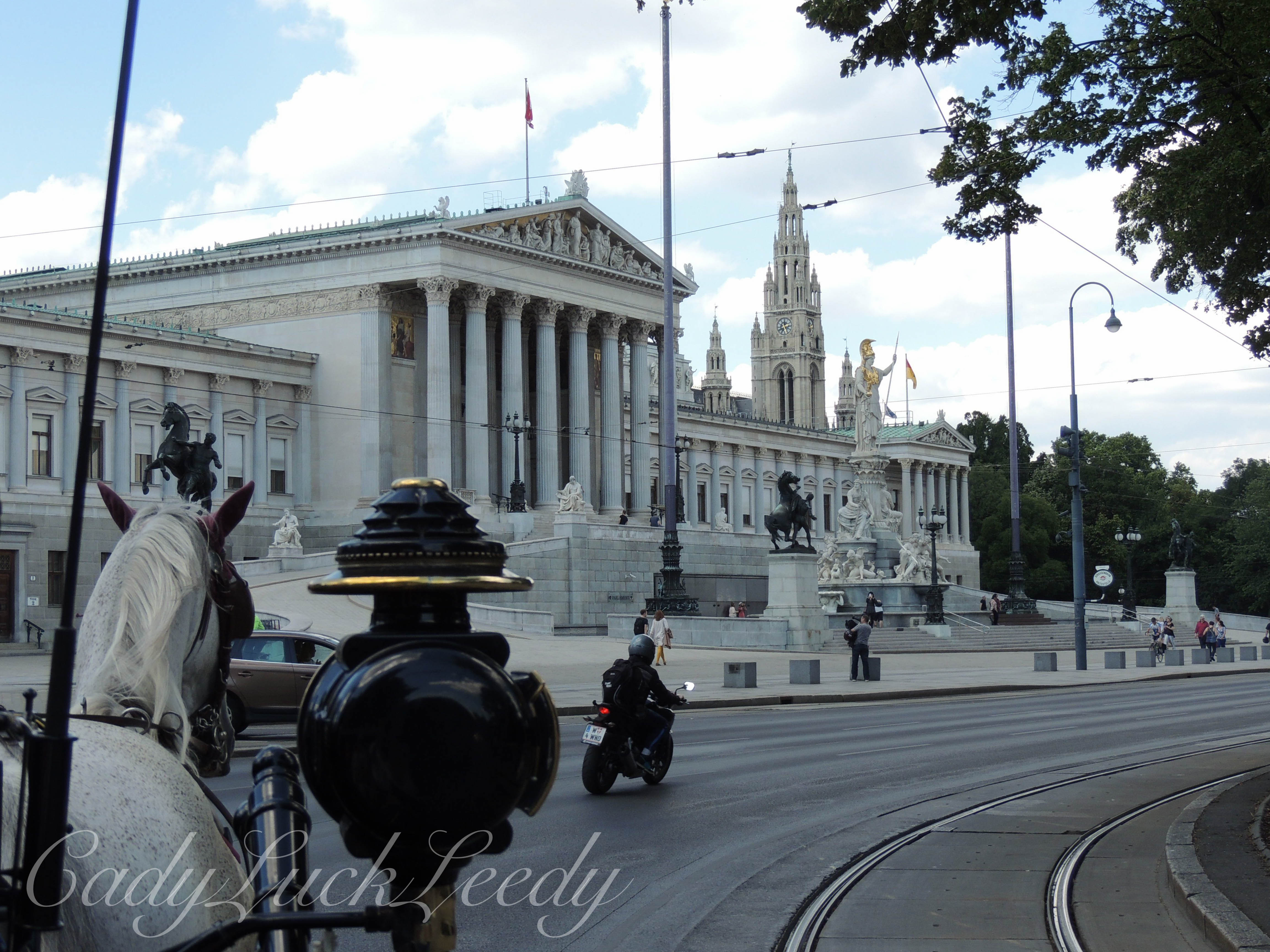
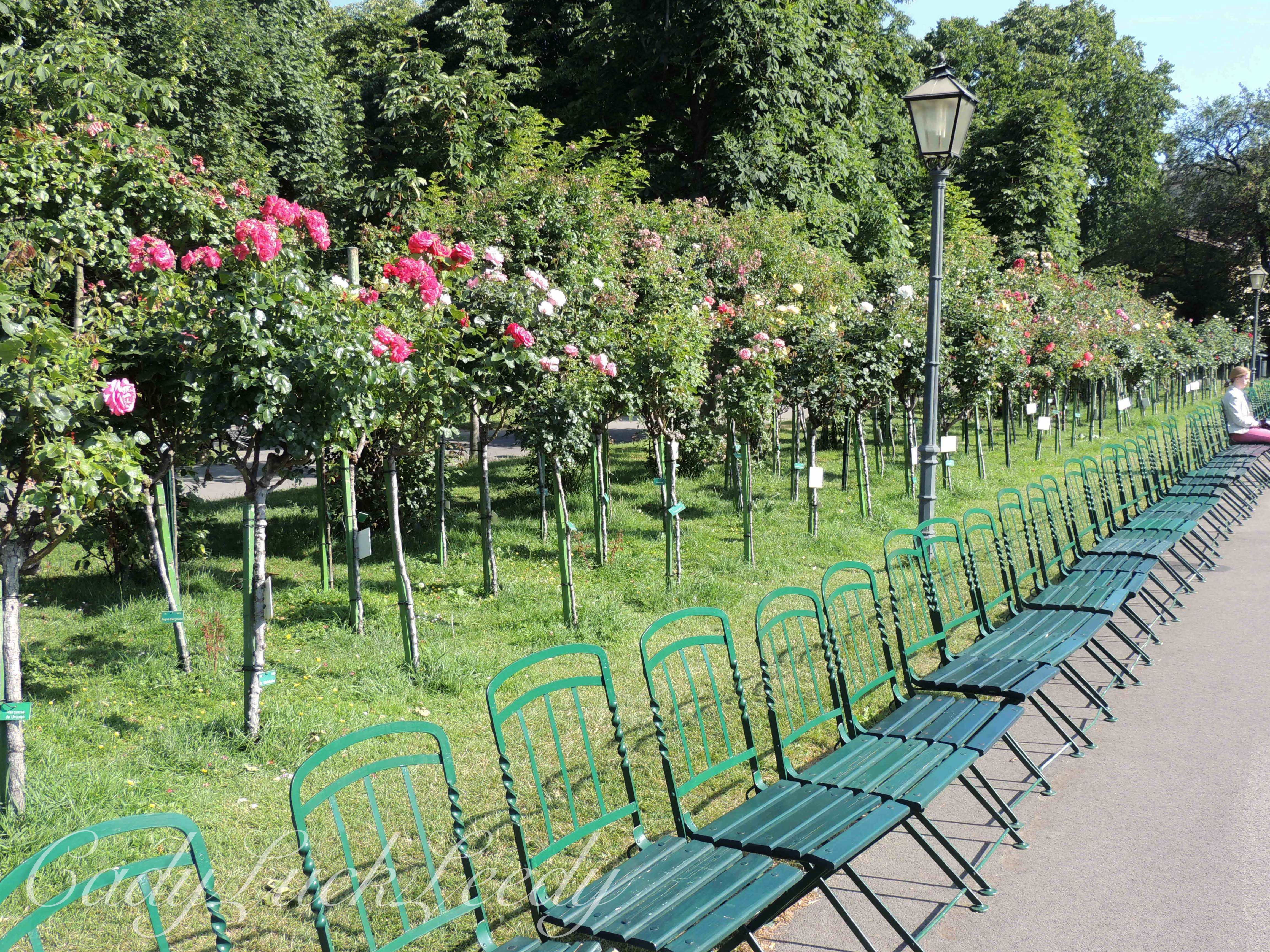
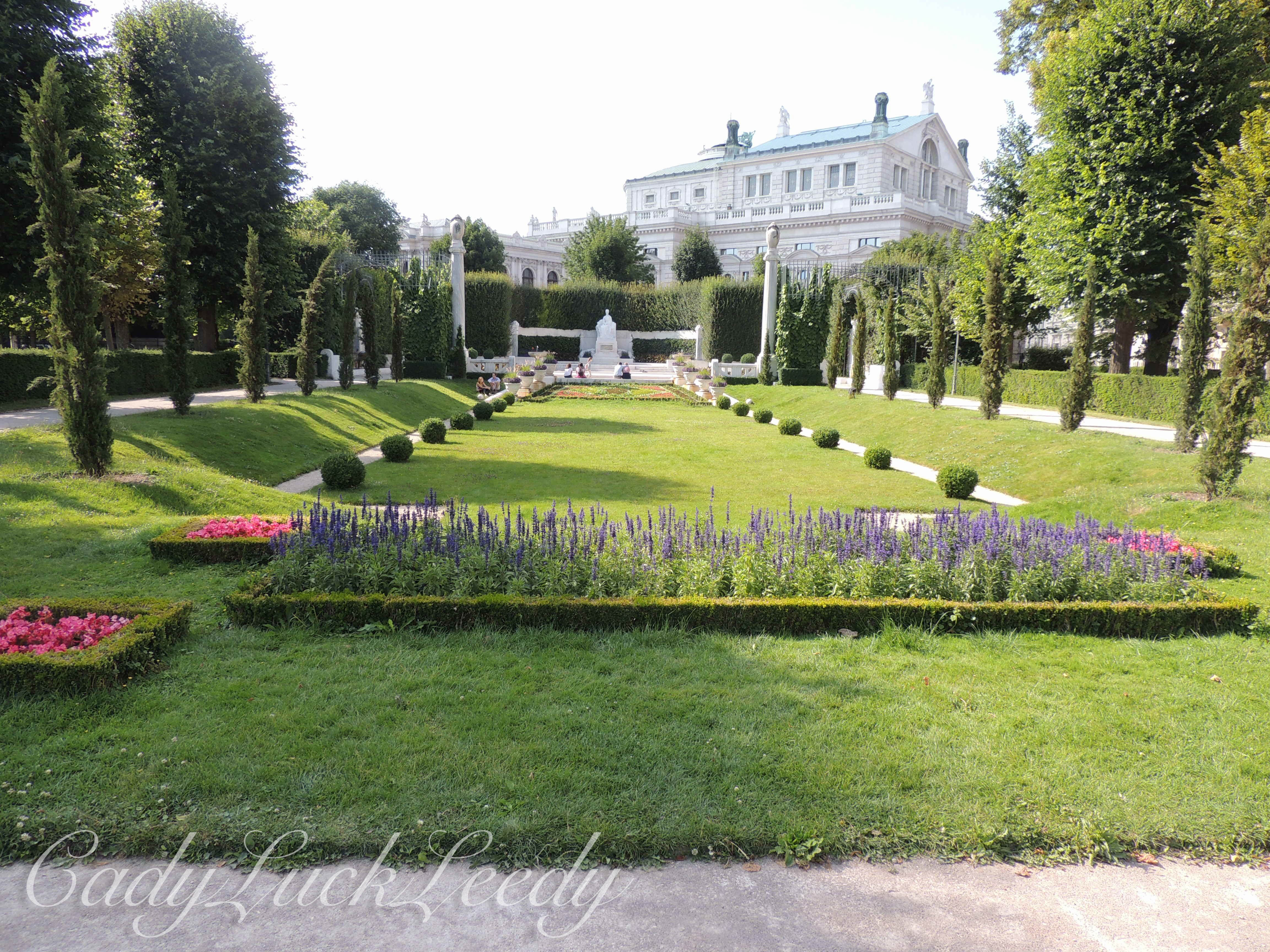
Taking a break from all the sadness at the Hofburg Castle we pass the horse and carriage stands and decide to take a ride around the city and see what else is inside the Ringstrasse. I love the look of  Volksgarten Park and make my way to the benches and find the BEAUTIFUL!

BENCHES! Volksgarten, Vienna, Austria

SEATS! Volksgarten, Vienna, Austria

 Volksgarten, Vienna, Austria

Volksgarten, Vienna, Austria

Volksgarten, Vienna, Austria

Volksgarten, Vienna, Austria

Volksgarten, Vienna, Austria

Volksgarten, Vienna, Austria

Volksgarten, Vienna, Austria

Volksgarten, Vienna, Austria

Volksgarten, Vienna, Austria

Volksgarten, Vienna, Austria

Volksgarten, Vienna, Austria

Volksgarten, Vienna, Austria

Volksgarten, Vienna, Austria

Volksgarten, Vienna, Austria

Volksgarten, Vienna, Austria

Volksgarten, Vienna, Austria

Volksgarten, Vienna, Austria

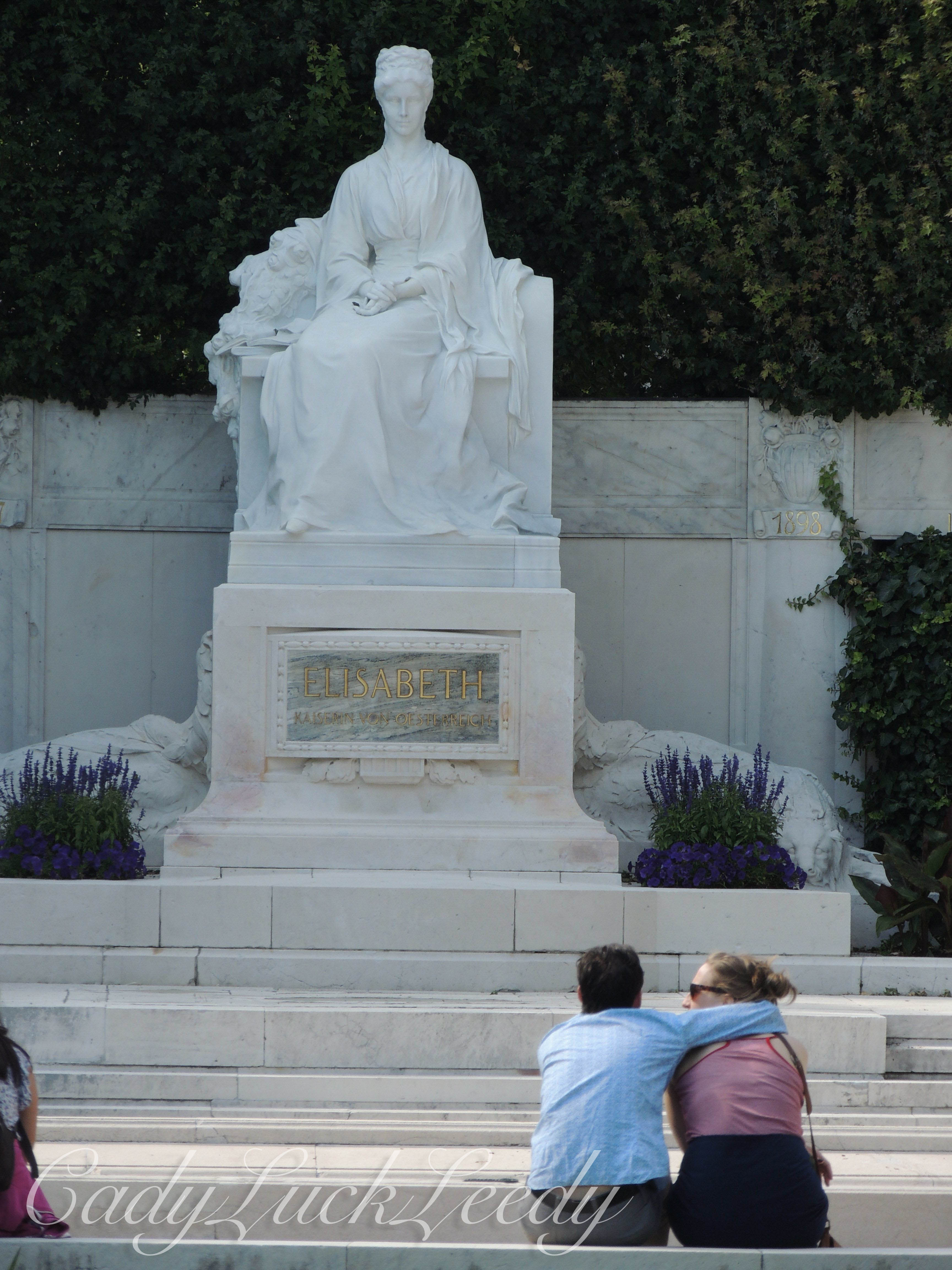
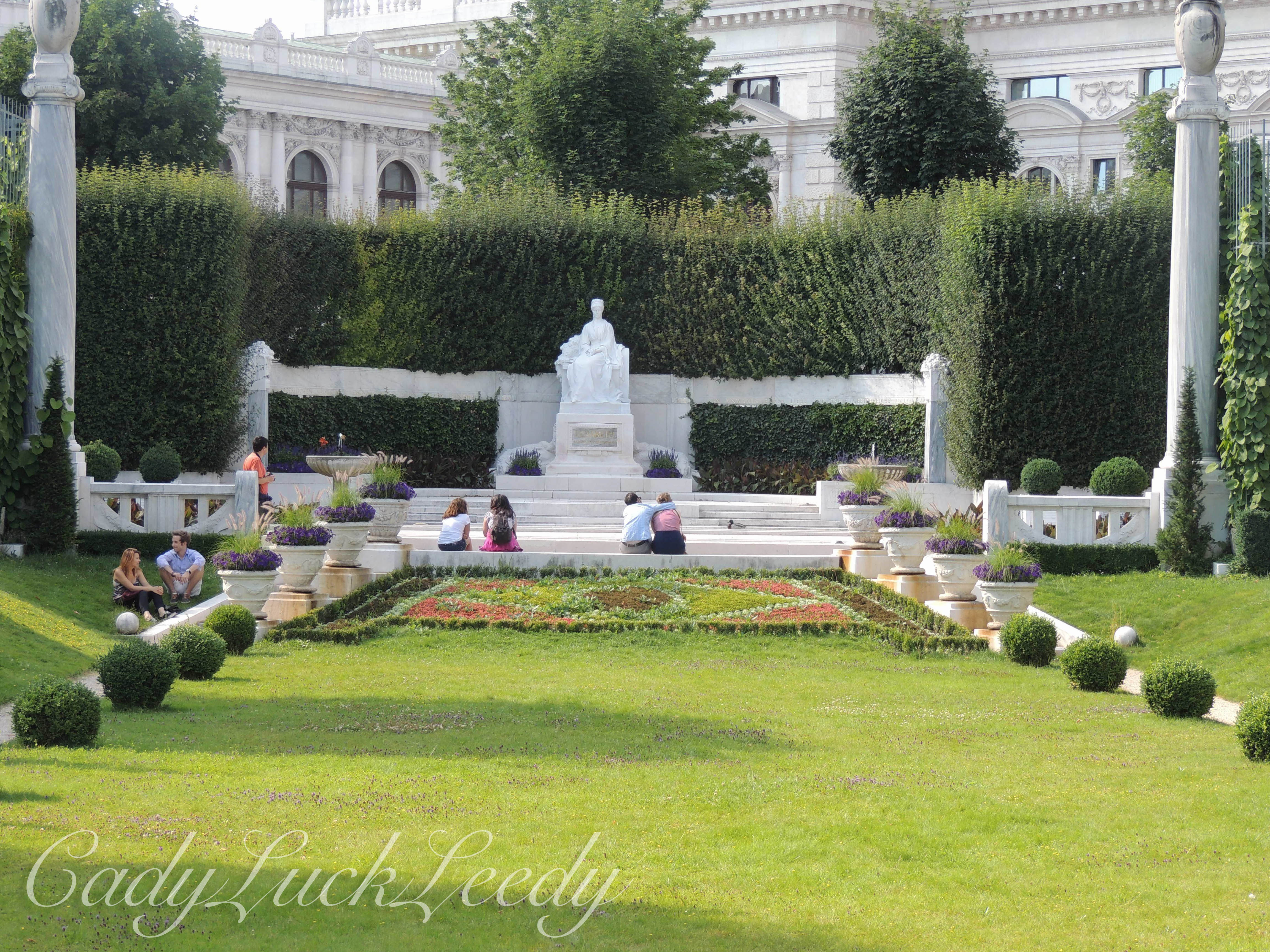
Sisi Monument, Volksgarten, Vienna, Austria

Volksgarten, Vienna, Austria

Sisi Monument, Volksgarten, Vienna, Austria

Volksgarten, Vienna, Austria

Volksgarten, Vienna, Austria

Here the children chase the pigeons, the women talk and try to keep up with the children, and the men read their newspapers while enjoying a fine summer day. The flowers are in bloom and the fountains are overflowing.  What contrast, what beauty! Enjoy!

One Word for Vienna: Spotless

Volksgarten, Vienna, Austria

Volksgarten, Vienna, Austria


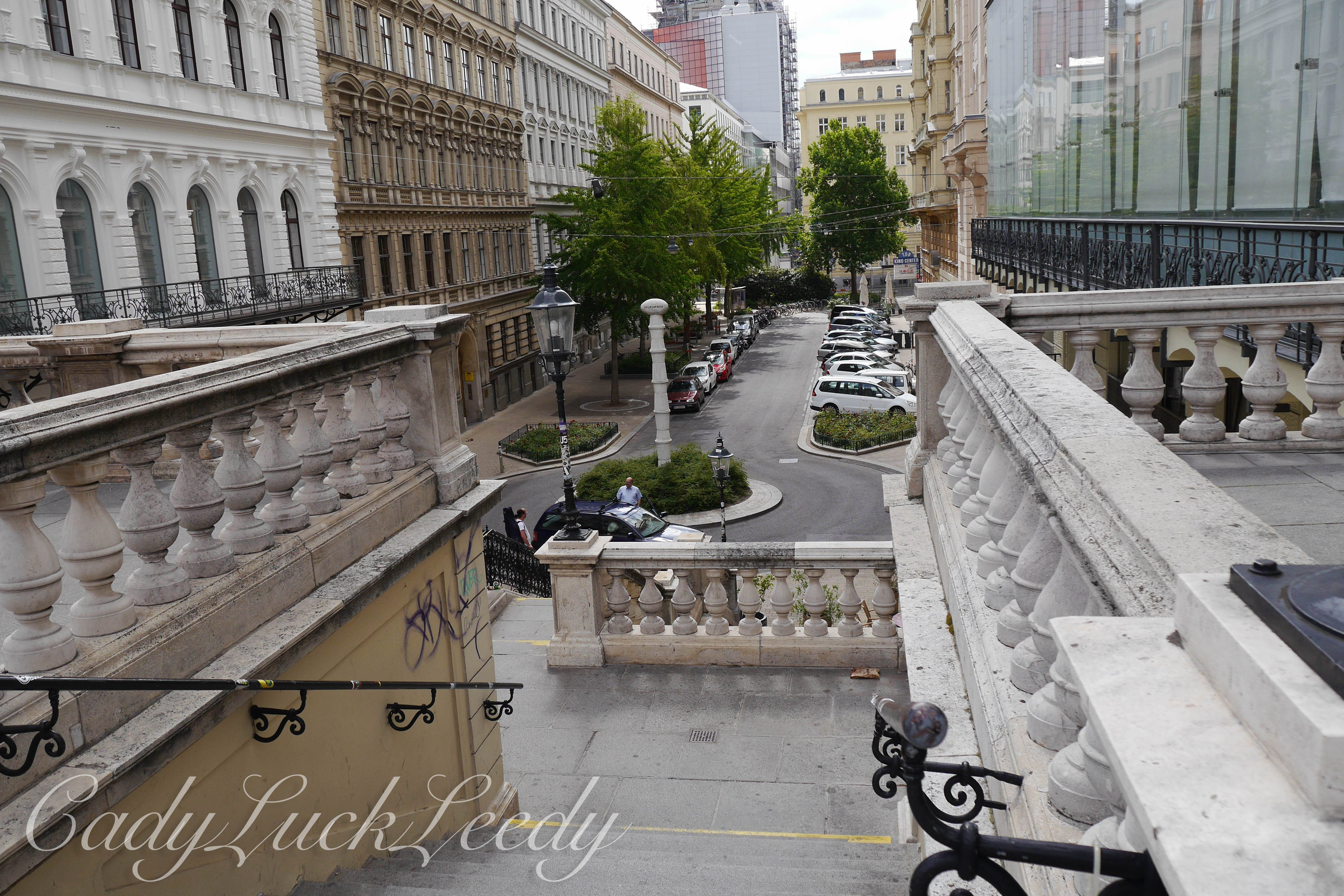
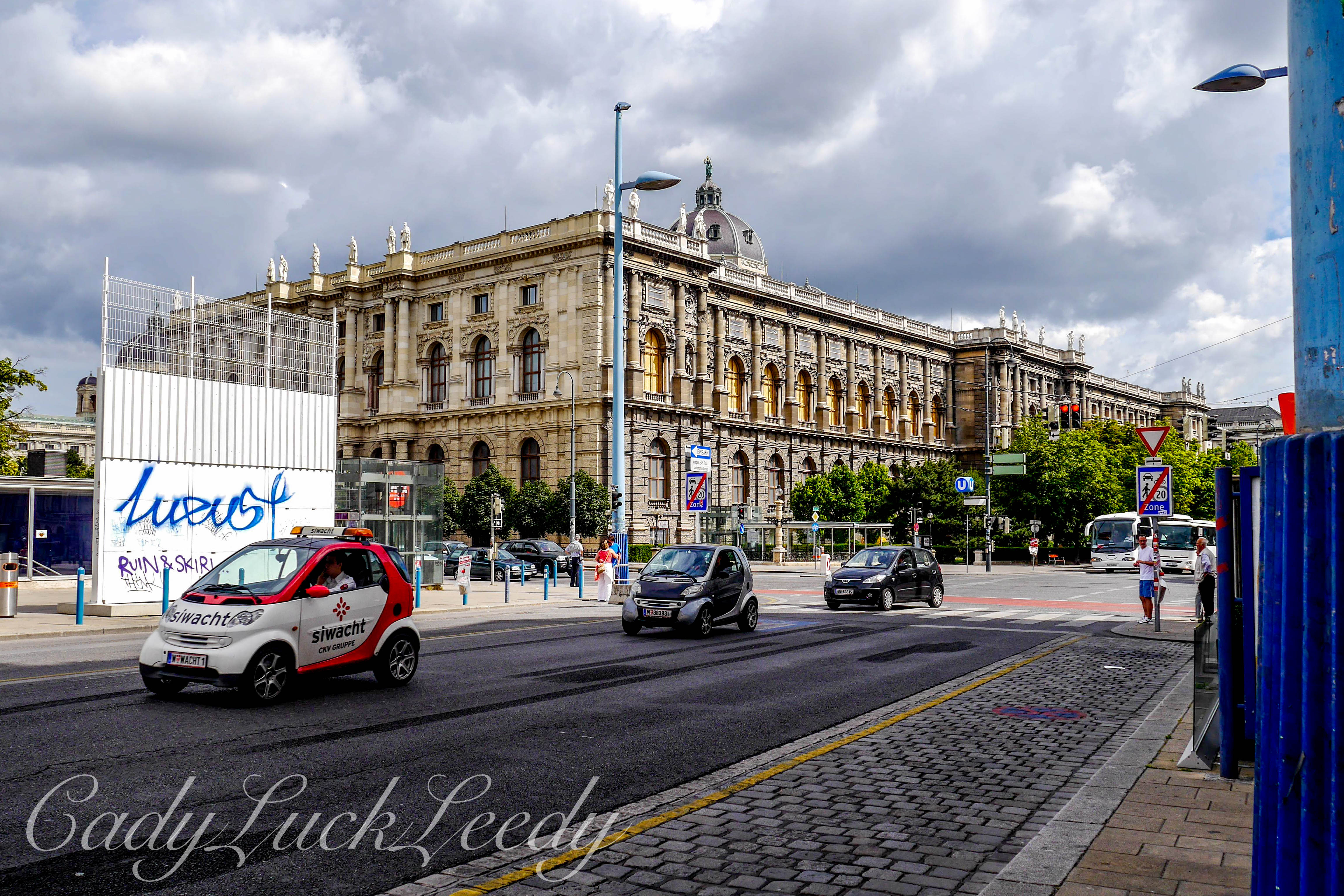
The Streets of Vienna, Austria

The Streets of Vienna, Austria

Walking around Vienna the first thing that I don’t see is trash, graffiti, cigarette stubs (although smoking in public places and restaurants is still allowed here), newspapers blowing around, signposts covered in a bazillion stickers, dog poop, or people begging on the streets. Vienna is spotless. The city is huge, there are tourists EVERYWHERE, and the city is spotless. Vienna does have large well maintained green areas, beautiful gardens and fountains, benches everywhere to rest, working elevators at public buildings, the metro, train station, and on the main thoroughfare sidewalks there  are raised patches of rippled walkway to guide the seeing impaired. What is there not to like?  

Pedestrian Strips, Vienna, Austria

Pedestrian Strips, Vienna, Austria

The Streets of Vienna, Austria

The Streets of Vienna, Austria

The Streets of Vienna, Austria

The Streets of Vienna, Austria

The Streets of Vienna, Austria

The Streets of Vienna, Austria

The Streets of Vienna, Austria

The Streets of Vienna, Austria

The Streets of Vienna, Austria

The Streets of Vienna, Austria

The Streets of Vienna, Austria

The Streets of Vienna, Austria

The Streets of Vienna, Austria

The Streets of Vienna, Austria

The Streets of Vienna, Austria

The Streets of Vienna, Austria

The Streets of Vienna, Austria

The Streets of Vienna, Austria

The Streets of Vienna, Austria

The Streets of Vienna, Austria

The Streets of Vienna, Austria

The Streets of Vienna, Austria

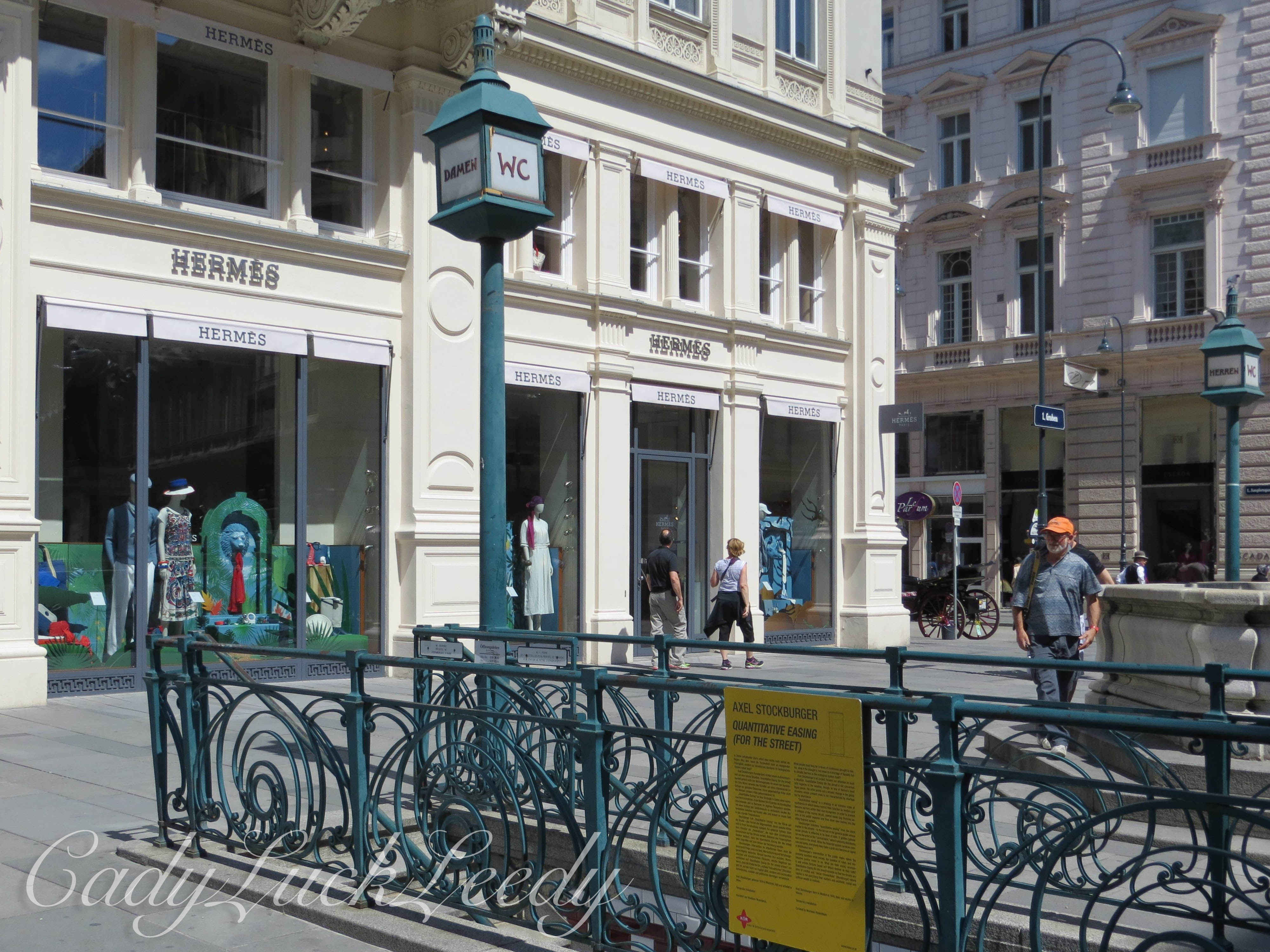
Vienna is a city of elegance. In 1900 a local chemical maker needed a publicity stunt to prove that his chemicals really got things clean. He purchased two wine cellars under Graben, a ditch or moat originally used by the Romans at their military camp, now a pedestrian-only thoroughfare of great architecture, fine cafes, and fountains. Adolf Loos (1870-1933), a modernist style architect, believed less was more. He was convinced that unnecessary ornamentation was a waste of worker’s time and energy so he designed perfectly geometrical grid buildings with matching windows. Unheard of at the time! No statues, no plastered fake columns for him. Loos was commissioned to take the two wine cellars and turn them into fancy and classy public water closets. He did, complete with chandeliers and finely crafted mahogany walls, creating a very appealing place. They are so inviting, today they are sometimes used for poetry readings! Now we know why bathrooms are sometimes referred to as loos, who knew?

Loos Loo, Vienna, Austria

Loos Loo, Vienna, Austria

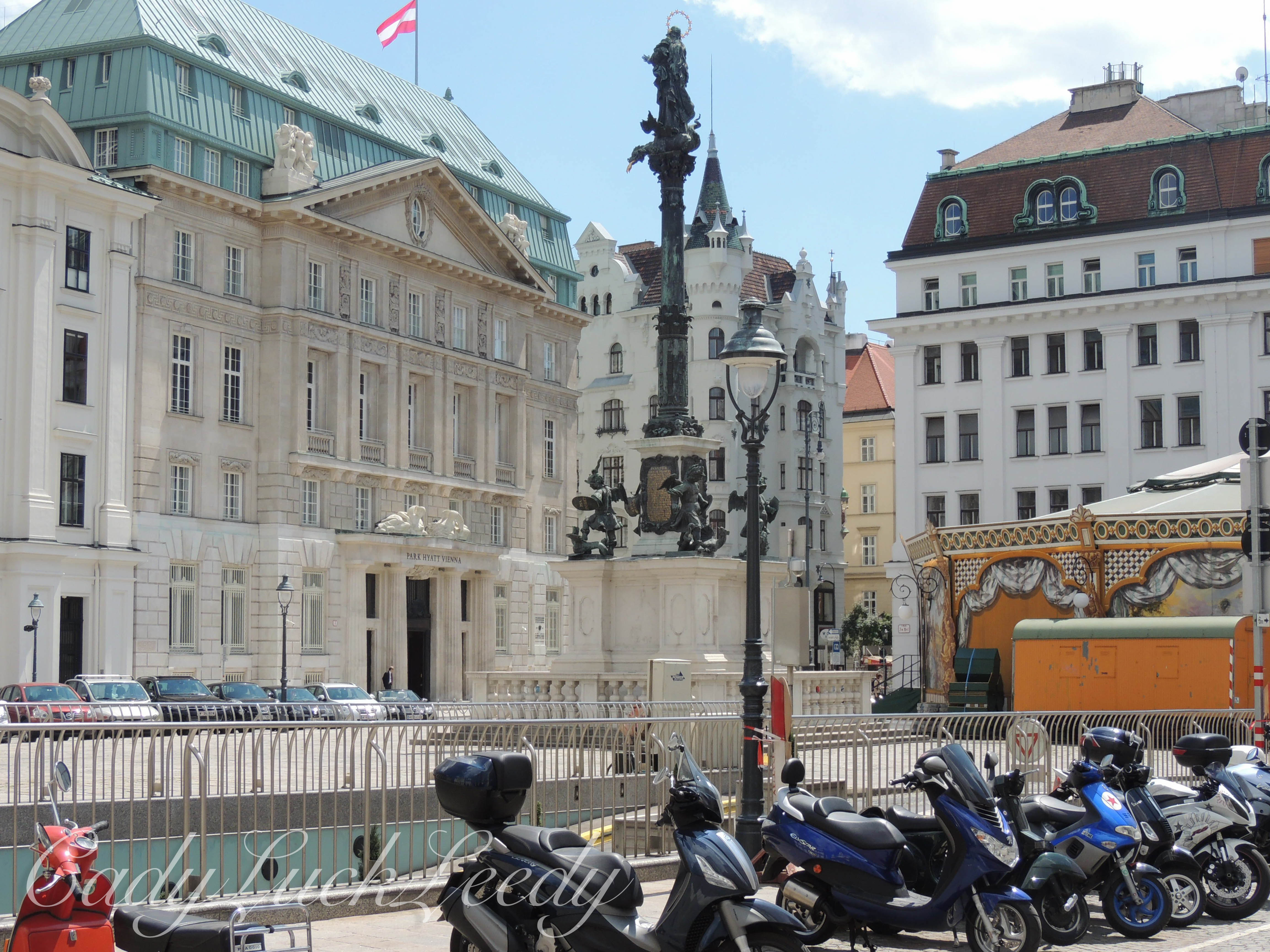
In the middle of the Graben is a 60 foot Holy Trinity Plague Column, (Pestsäule) a pillar of clouds sprouting angels and cherubs with the Father, Son and Holy Ghost at the top. in 1679 Vienna suffered from an epidemic of the bubonic plague, killing one third of the city. Leopold I (one quarter up the column), in public, begged God to save the city. His prayer was heard by Lady Faith, (the statue carrying the cross below Leopold) who with the help of the cherub tosses the old naked woman (the plague) into the wind and saves the city. Leopold erected the monument as a model for other cities ravaged by the same plague.  

Holy Trinity Plague Column, Vienna, Austria

Holy Trinity Plague Column, Vienna, Austria

Graben, Vienna, Austria

Graben, Vienna, Austria

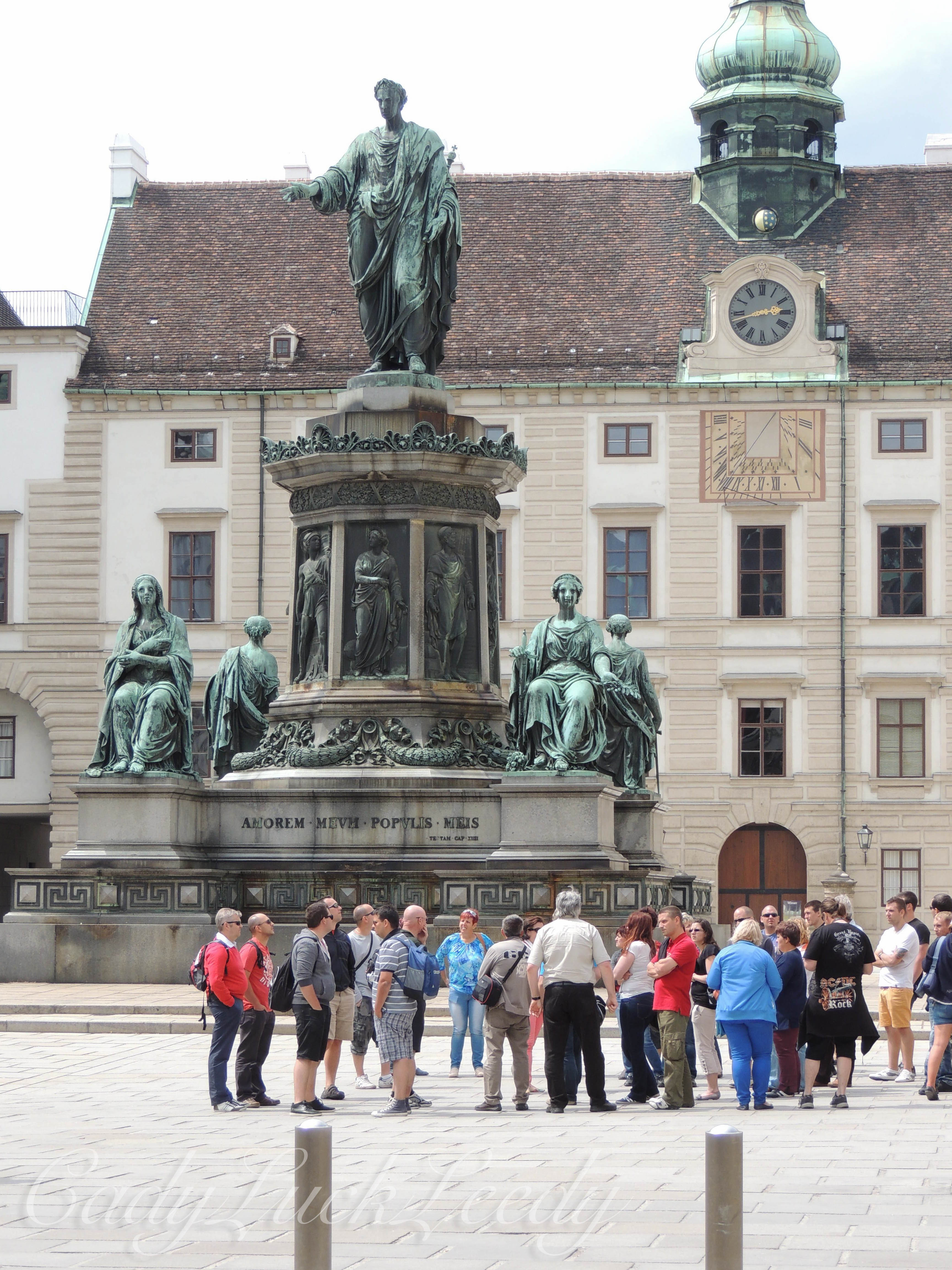
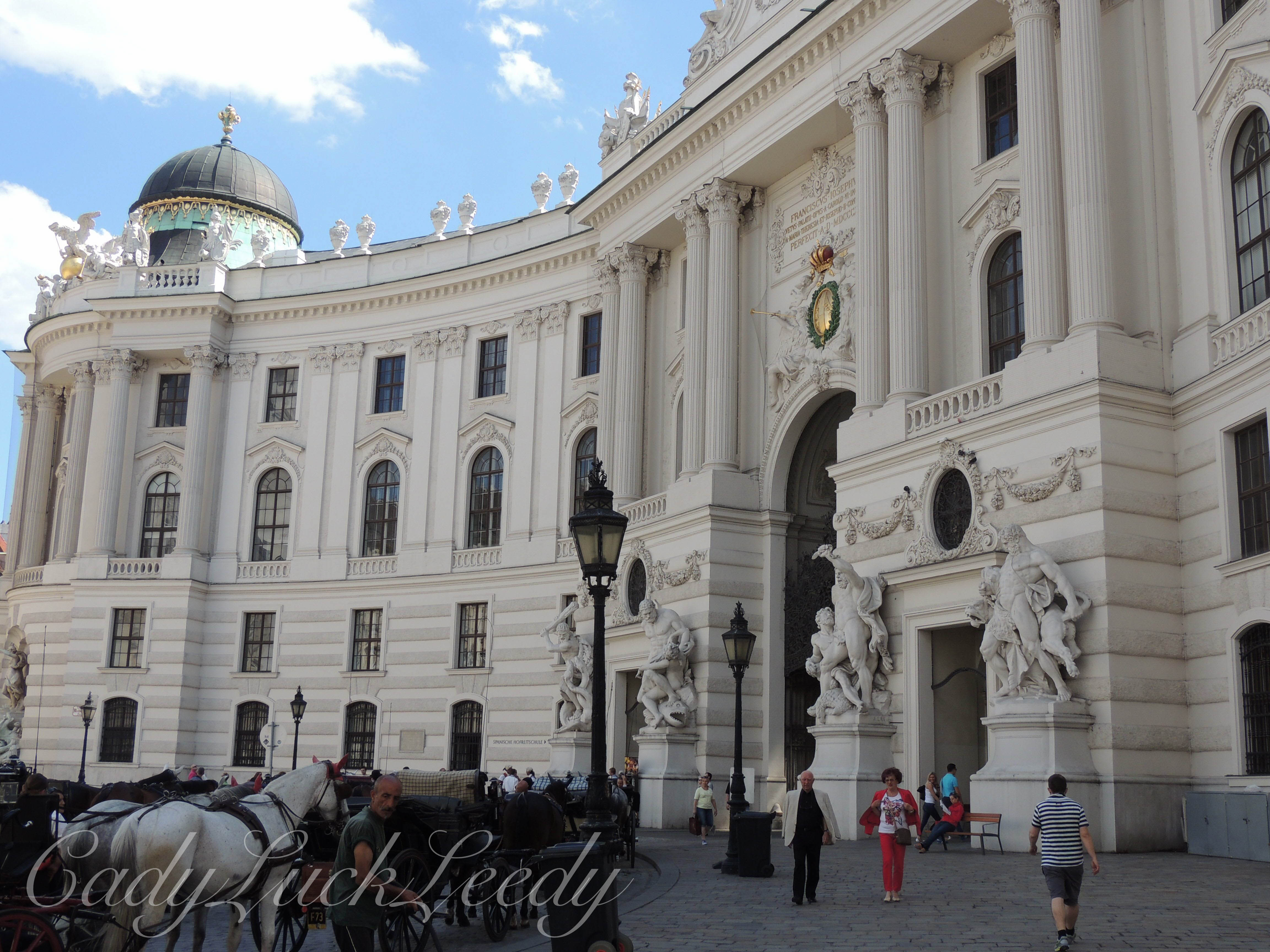
Michaelerplatz is the square dominated by the Hofburg Palace. In the fountain the four heroic giants illustrate Hercules wrestling with his great challenges.

Michaelerplatz, Vienna, Austria

Michaelerplatz, Vienna, Austria

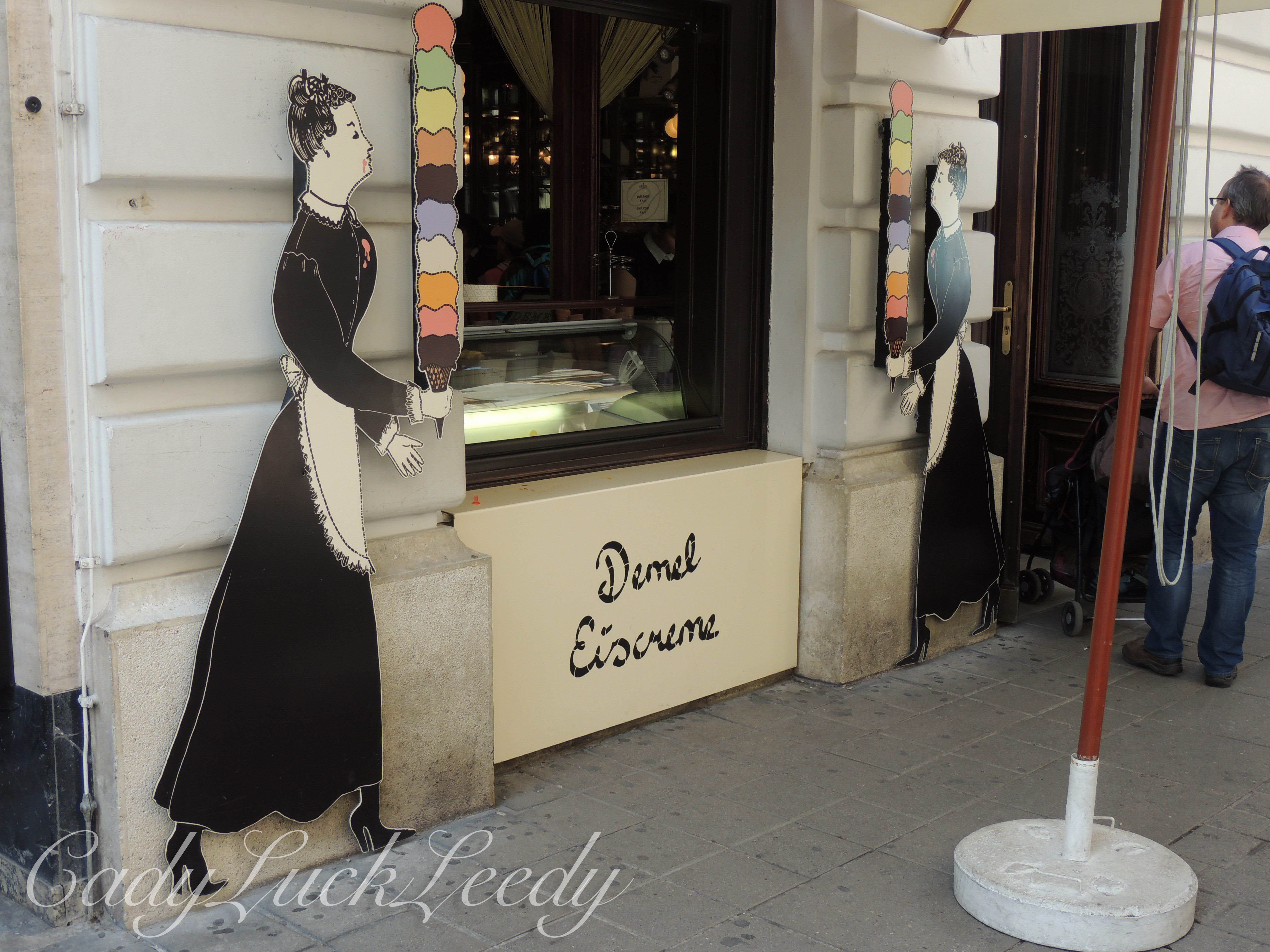
This is the complex where the Hofburg emperors lived except in the summer, when they lived in the Schönbrunn Palace a few miles away.  I can’t wait to see the Imperial Apartments and the museum for the Empress Sisi, but during our walk, we stopped for an ice cream at the famous Demel, (Hofzuckerbäckerei Demel) a famous pastry shop and chocolaterie on the Michaelerplatz, where it has been located since 1857. Yummy!

Demel, Vienna, Austria

Demel, Vienna, Austria

Demel, Michaelerplatz, Vienna, Austria

Demel, Michaelerplatz, Vienna, Austria

Having had a look at the fine architecture and the beautifully designed streets we have our itineraries marked for tomorrows museum tours.  We will start the day early with Mass and a concert in Augustinian Church,  and end the day,  enjoying the activity in the Volksgarten Park and beautiful gardens of flowers.   Meet you in the park tomorrow! Enjoy!

Hi, I’m C-A-D-Y and I have I-T-I-S

Mariahilfer Strasse Neighborhood

Mariahilfer Strasse Neighborhood


That would be arthr I-T-I-S. ( as in swelling of the arths or joints) You who follow me regularly know I have been hobbled (well I am always hobbled, but more so recently) especially the past few months due to increased travels and increased walking, so with the trip to AIT (Austria, Italy, and Turkey) coming up I sought the advice of my physician.  I am on the strongest medication, she told me. Next step corrective shoes. Corrective shoes? I already wear supportive, un-flattering, old fashioned, old lady shoes and have for some time. I was ten days out from my trip and had no time for new shoes. This trip was one of the most extensive and varied yet of our travels and included several flights, connecting flights, train trips, bus trips, boat trips, LOTS of walking, exploring, and new experiences. Shoes?  I would just have to suck it up! 

I came home with Pharyng I-T-I-S.   A sore throat, headache to beat all headaches, earache, cough, cough, cough, and complete lethargy. And over 3,000 pictures! So today I begin the tale of what we did in between the I-T-I-S’s. It was one of the best trips abroad!  And so we begin!

This week the list for the Best Airlines was released. # 5 on that list was Turkish Airlines.  There was no American airline in the top 20. We have never flown on Turkish Airlines, but booked it because the price was very reasonable and got us to our destination  with the fewest stops. I was immediately impressed upon boarding to be met my a chef (big hat and chef’s attire and all) and to get to my seat which had a pillow, blanket, earphones, and slippers already placed in my seat. Did I mention our seats were not changed one time in the six months prior to departure and we actually boarded on schedule? When we were all seated (and we were in regular folks seating) we received a travel kit (which I can use over and over it was so nice) with earplugs, sleeping mask, toothbrush, toothpaste, lip balm and knee high socks.  Right after they served the Turkish Delight candy and the hot wash cloths they passed out the food menu and the drinks menu. Need I say more?  I will. There were a bazillion channels for music, movies, news, kids shows and learning. There were plugs for all your electronic devices. And the seats were big enough for your fanny. Following a smooth ride, very tasty meals, lots of entertainment and excellent service we landed in Istanbul on time and ready to transfer to another Turkish Airlines plane to take us to Vienna. It was one of the best airline experiences to date!  Please, keep them in mind when booking your flights. You won’t be disappointed. 

Twenty four hours later (including time changes and connecting flight times) we landed in Vienna around 8pm. Tired and ready for bed we entered Das Tyrol, a small boutique-spa hotel located in a residential area on Mariahilfer Strasse just barely outside the old town’s RingStrasse.

Mariahilfer Strasse Neighborhood

Mariahilfer Strasse Neighborhood

The fresh invigorating spa fragrance as we entered the hotel quickly helped to rejuvenate us. What a relaxed feeling! Soon we had checked in, got a lay out of the land, ( including the spa area, breakfast area and lounge), and then  took the tiny two people elevator to the Donald Duck floor. What a great room we had! We collapsed into bed and were asleep within minutes! 

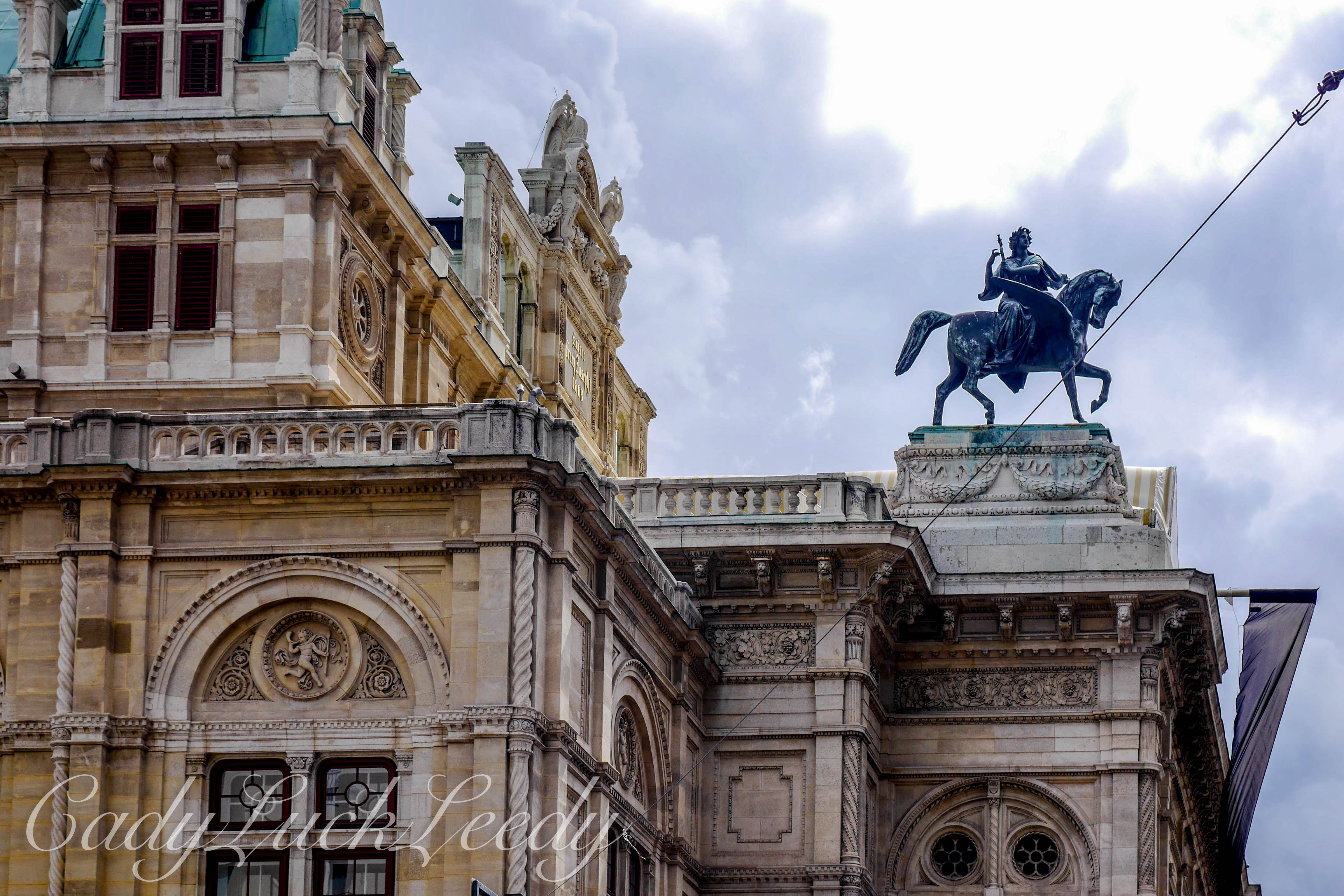
The next morning we were up early to the large buffet breakfast and then out the door to walk to the Old Town. The hotel’s location was perfect. Situated in the middle of a hill, at  the top was the train station and metro station (inside a huge mall with great shopping and eateries) and at the bottom of the hill the tram that circled historic Vienna. We decided to do a Vienna City Walk that SB had mapped out for us before we left home. This way we we could get an idea where the major museums were in the area, before we decided which ones to go in. So we walked down the hill, turned right and crossed the street to the Opera House and Gardens.

On the Way to Ringstrasse, Vienna, Austria
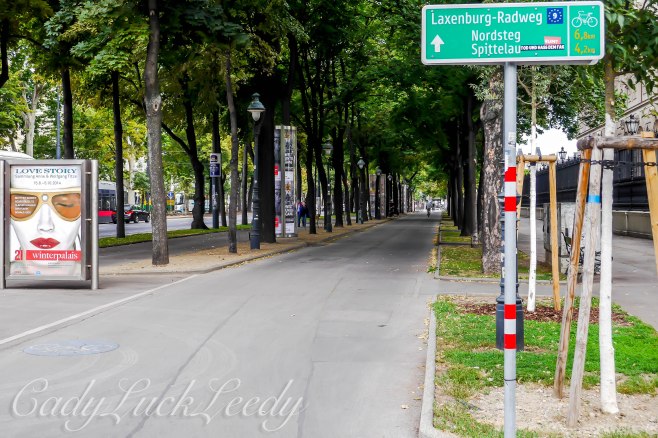
On the Way to Ringstrasse, Vienna, Austria

Ringstrasse, Vienna, Austria
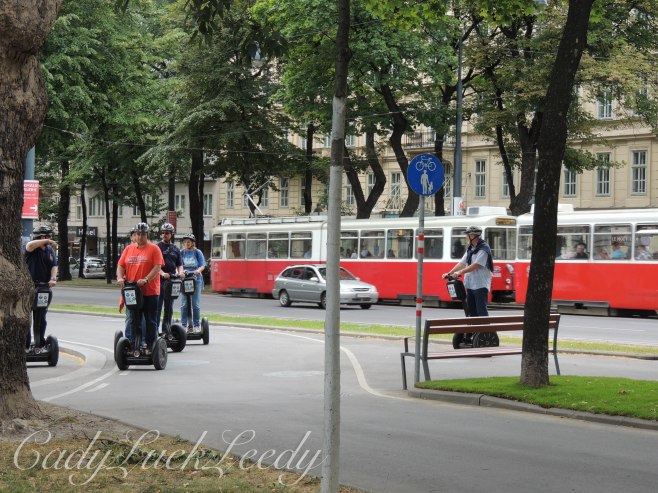
Ringstrasse, Vienna, Austria

Ringstrasse, Vienna, Austri

Ringstrasse, Vienna, Austria

Here there were many men dressed as Mozart encouraging you to buy tickets to a concert, every few feet.

Opera House, Vienna, Austria

Opera House, Vienna, Austria

Opera House, Vienna, Austria

Opera House, Vienna, Austria

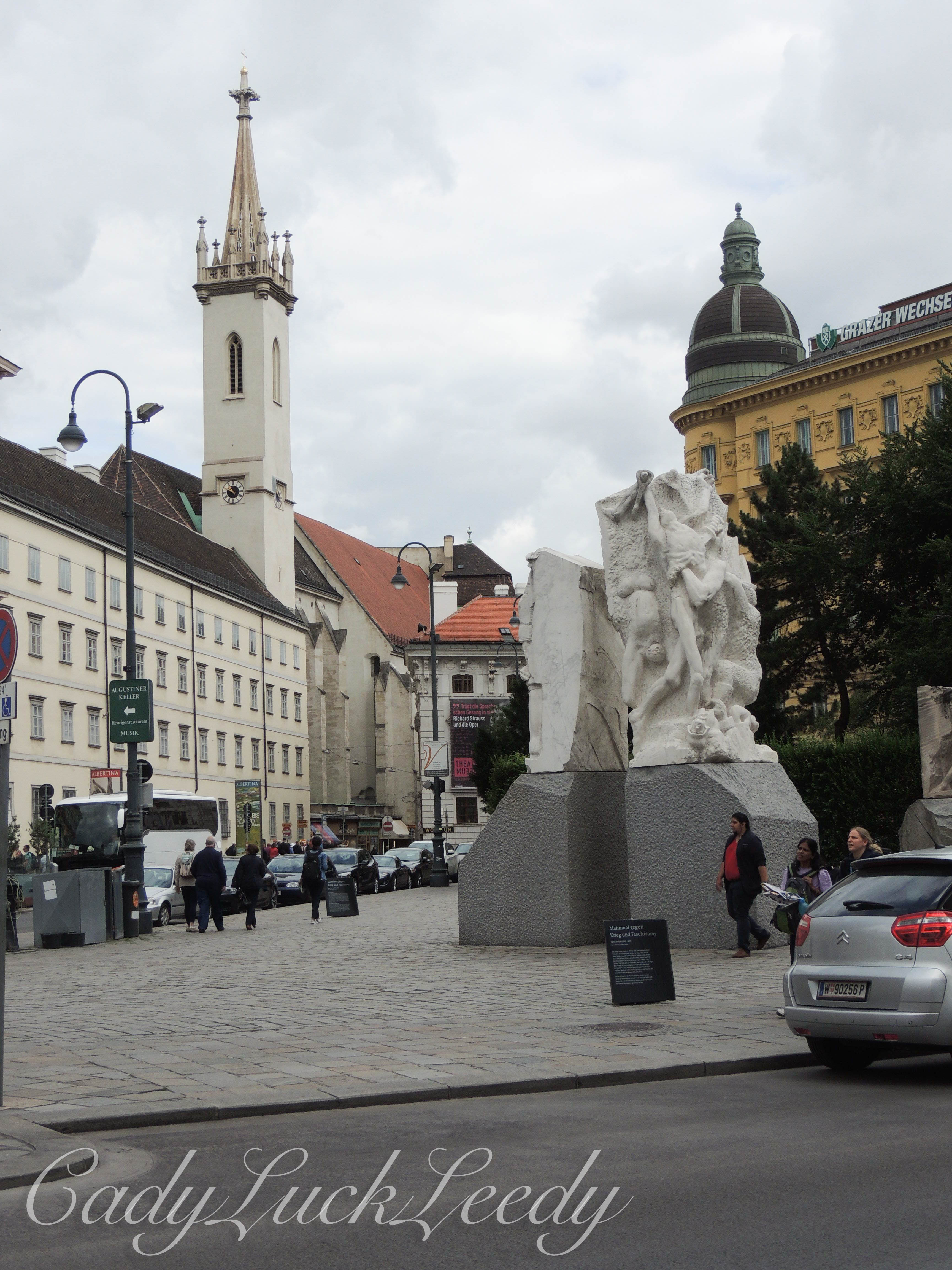
We walked on pass them through the gates and then backtracked past the Opera Museum and  the Albertinaplatz and the Monument Against War and Fascism.

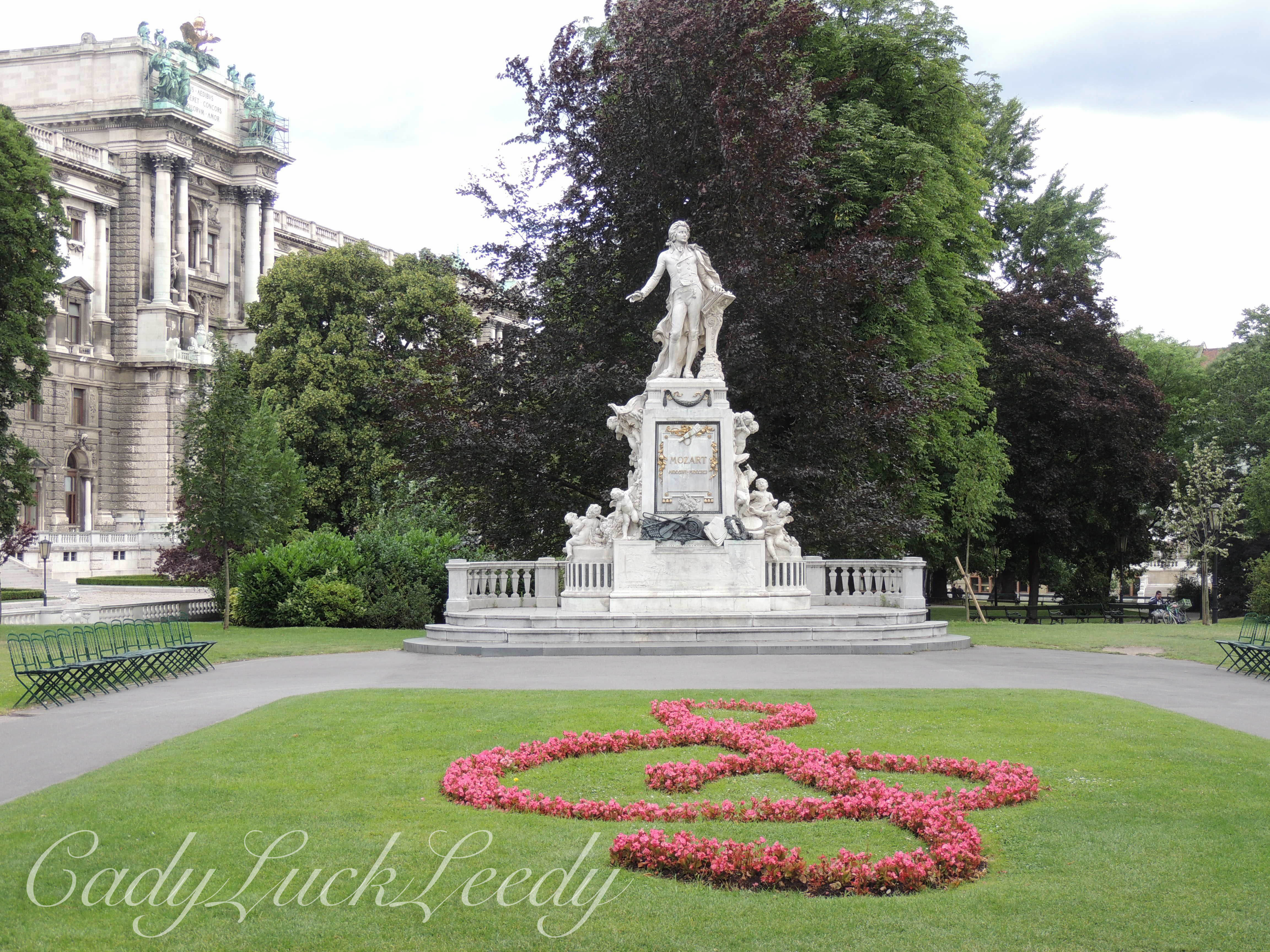
Mozart's Garden, Vienna, Austria

Mozart’s Garden, Vienna, Austria

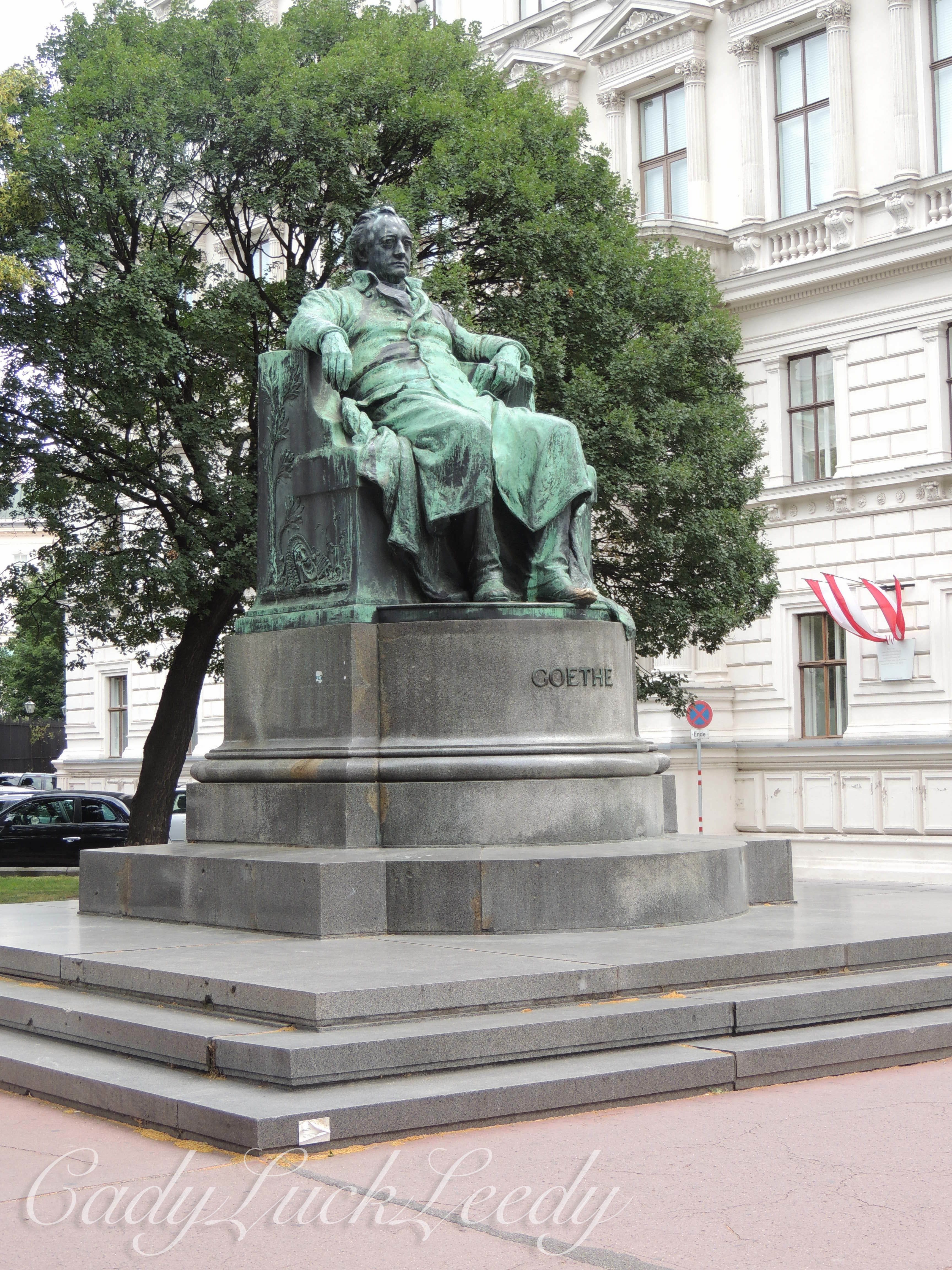
Historic District, Vienna, Austria
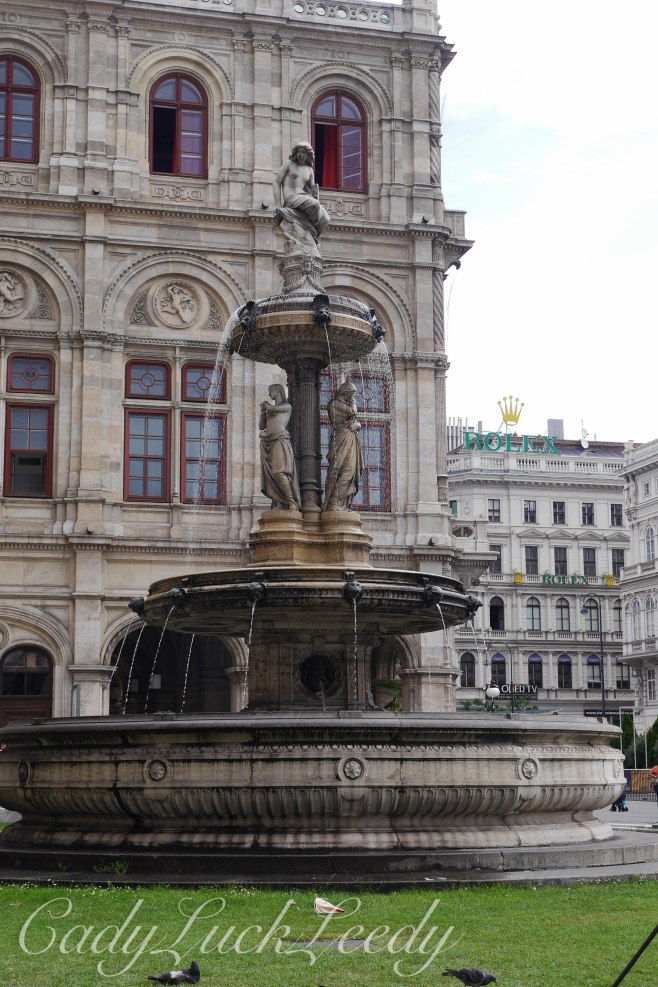
Historic District, Vienna, Austria

Historic District, Vienna, Austria

Historic District, Vienna, Austria

Historic District, Vienna, Austria

Historic District, Vienna, Austria

Monument Against War and Fascism, Vienna, Austria

Monument Against War and Fascism, Vienna, Austria

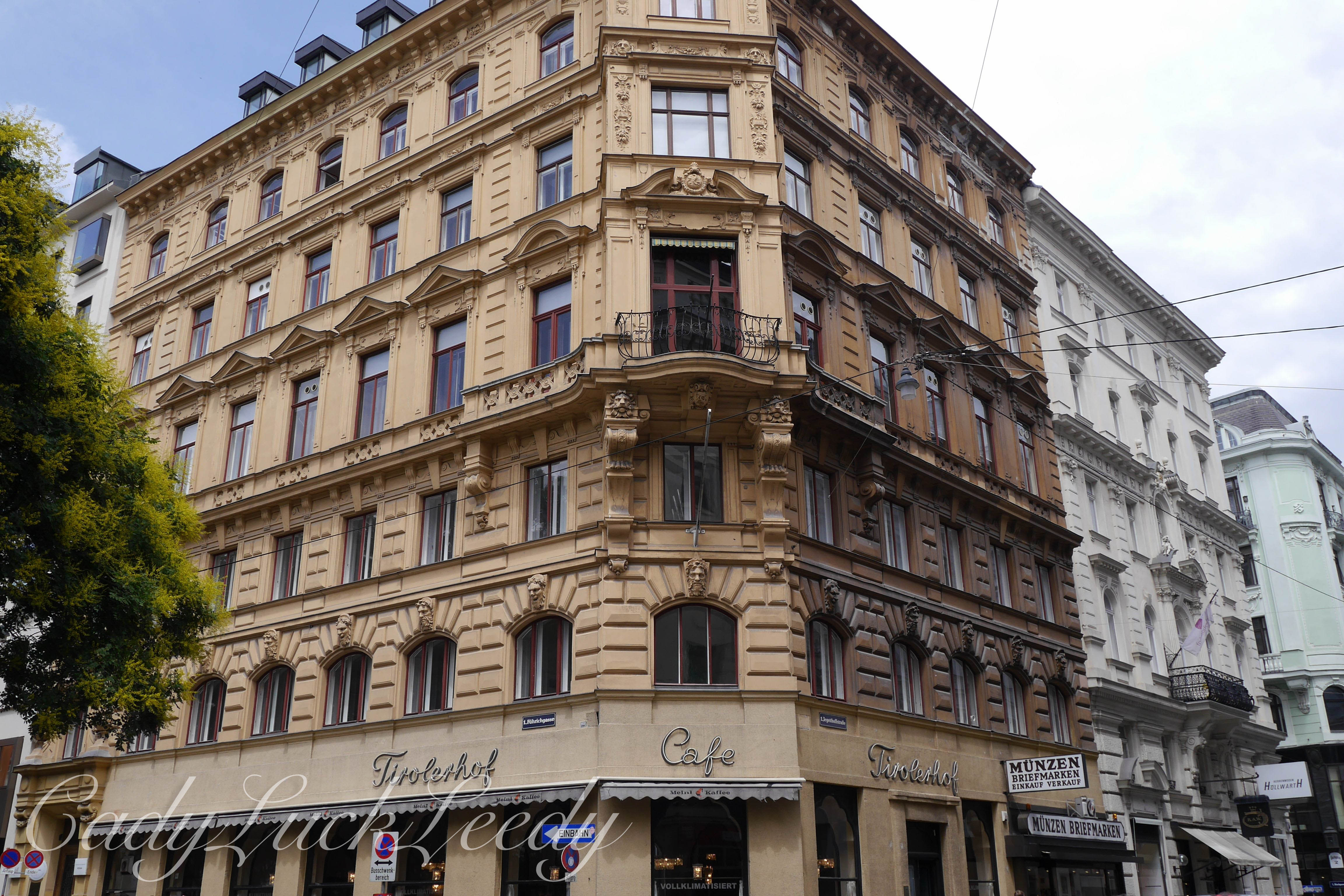
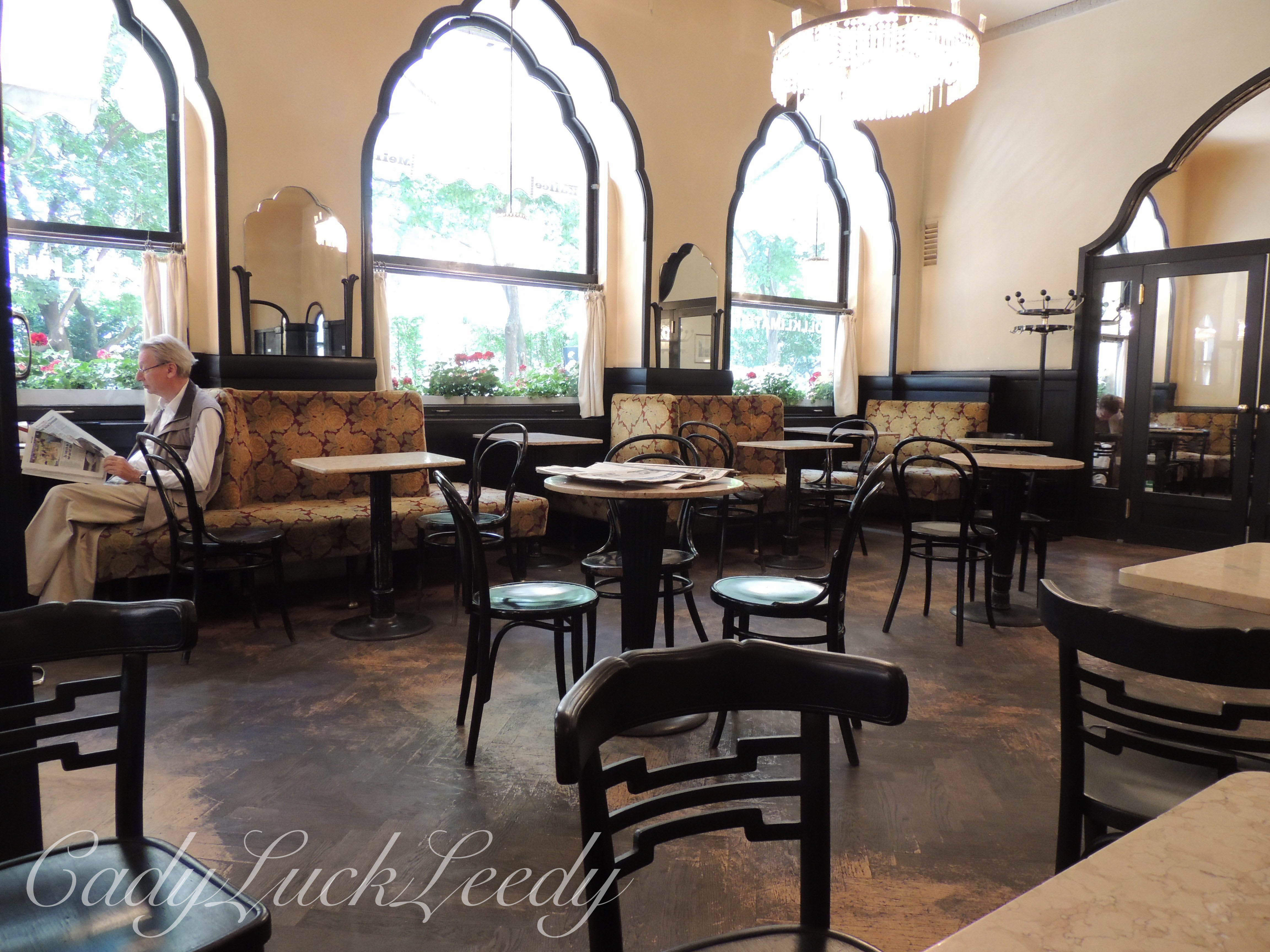
Finally we came to corner where the red tour buses were parked and decided we would see another part of the city from the bus on another day. Here also was the Cafe Tirolerhof, a classic Viennese cafe with chandeliers, marble tables, smoke stained upholstered booths and waiters in tuxes.  It’s was like stepping into an old movie and it was my first chance to taste the famous Viennese coffee.
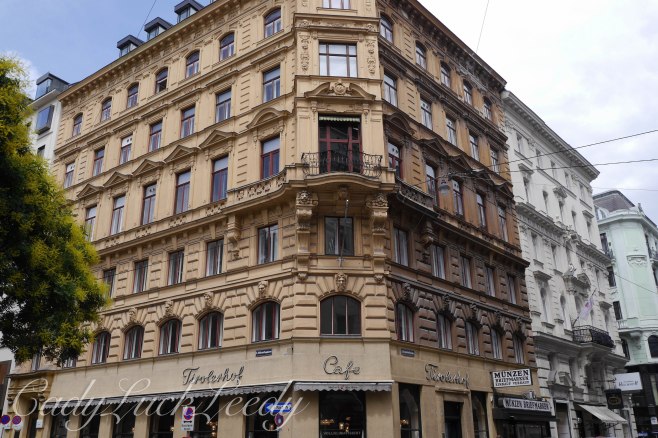
Cafe Tirolerhof, Vienna, Austria

Cafe Tirolerhof, Vienna, Austria

Cafe Tirolerhof, Vienna, Austria

Cafe Tirolerhof, Vienna, Austria

 Refreshed and relaxed we ventured on passing the Kaisergruft, a church filled with the crypts of Austria’s emperors, empresses and other Habsburg royalty, buried in pewter coffins. Check that for a come back to.

Kaisergruft, Vienna, Austria

Kaisergruft, Vienna, Austria

We make our way to Kärntner Strasse, a pedestrian only grand walkway, the same road that the Crusaders marched down as they left St Stephen’s Cathedral for the Holy Land in the 12th century. The street was bumper to bumper people, so many in fact that I could not see  anything but the back of the head in front of me. What I thought would be a lovely old cobbled street was now a pedestrian mob of shoppers slowly moving along the shops of Gucci and Prada! There were people everywhere! It was Saturday I realized and the shops would be closed on Sunday so the shopping was a must!
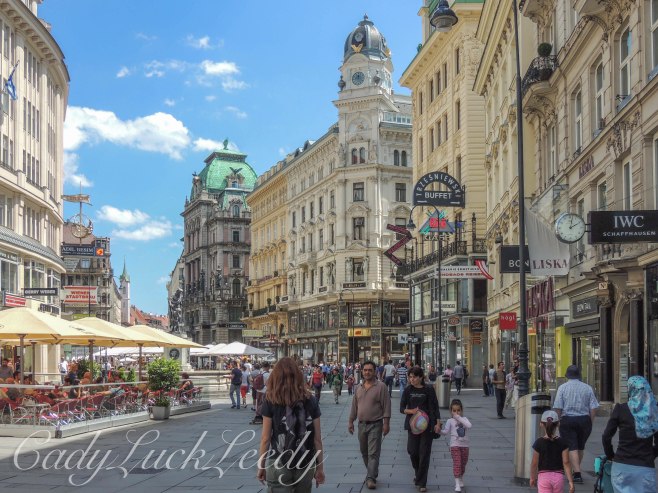
Karntner Strasse, Vienna, Austria

Karntner Strasse, Vienna, Austria

I couldn’t wait to reach St Stephen’s hoping the crowd would thin out. Reaching the cathedral we have also entered the center of Vienna.

The church, built from 1300 to 1450, has a 450-ft tower and a colorful roof and is Austria’s national church. During WWII the stained glass window behind the high altar was dismantled and packed away. The pulpit was encased in a shell of brick. When the Nazi’s were fleeing at the end of the war an order was given to destroy the church upon leaving. Gratefully, the order was ignored, but the church did catch fire during Allied bombings and the wooden roof collapsed on the stone vaults of the ceiling. After the war each region of Austria contributed to the rebuilding of St Stephen’s, replacing the bell, the entrance portal, the windows, the pews and the floor. Today there is scaffolding where they are continuing to restore. Leaving the church I want to get off the main drag and away from the crowds. We find Dorotheergasse and a small grouping of tables outside Reinthaler’s Beisl where we sit and taste our first gulasch meal and apfelstrudel for dessert. The street is quiet and it is nice to sit and watch the world go by. We’ll stop here for now, but return soon to continue our walk. Enjoy!


Weekly Photo Challenge: Relics


As part of of our three week adventure to Austria, Italy, and Turkey (the AIT Tour) we visited Melk Abbey in Melk, Austria. Relics always intrigue me and Melk’s relics were quite something! Thousands of skeletons were dug up from Roman catacombs in the 16th century and moved to churches in Germany, Austria and Switzerland on orders of the Vatican. The relics were sent there to replace the relics destroyed in the Protestant Reformation in the 1500’s. Mistaken for the remains of early Christian martyrs, the relics became known as the Catacomb Saints, becoming shrines, reminding the faithful of the spiritual treasures in heaven. Both St Clemens and St Friedrich were painstakingly decorated in thousands of pounds worth of gold, silver and gems, by devoted followers, before being displayed in the Melk Abbey niches. Won’t you join me as we adventure on the AIT Tour? Enjoy!

St Friedrich, Melk Abbey, Austria

St Friedrich, Melk Abbey, Austria

St Clemens, Melk Abbey, Austria

St Clemens, Melk Abbey, Austria

Cee’s Fun Photo Challenge: Circles and Curves

I have just returned from a three week adventure in Austria, Italy and Turkey! One day we explored Melk, home of the Melk Abbey. Walking down the cobbled hill from the Abbey we spotted this hotel sign. I believe it is for a Nature Hotel. I thought it was sooooo unusual! It was perfect for this challenge too! Won’t you join me in the upcoming days for more posts about the AIT Tour? Lots for show and tell! Enjoy! For more entries see Cee’s Fun Photo Challenge Here.

A Hotel Sign in Melk, Austria

A Hotel Sign in Melk, Austria

Absinthe, Pirates, History and the NOLA Charm

St Louis Cathedral

St Louis Cathedral

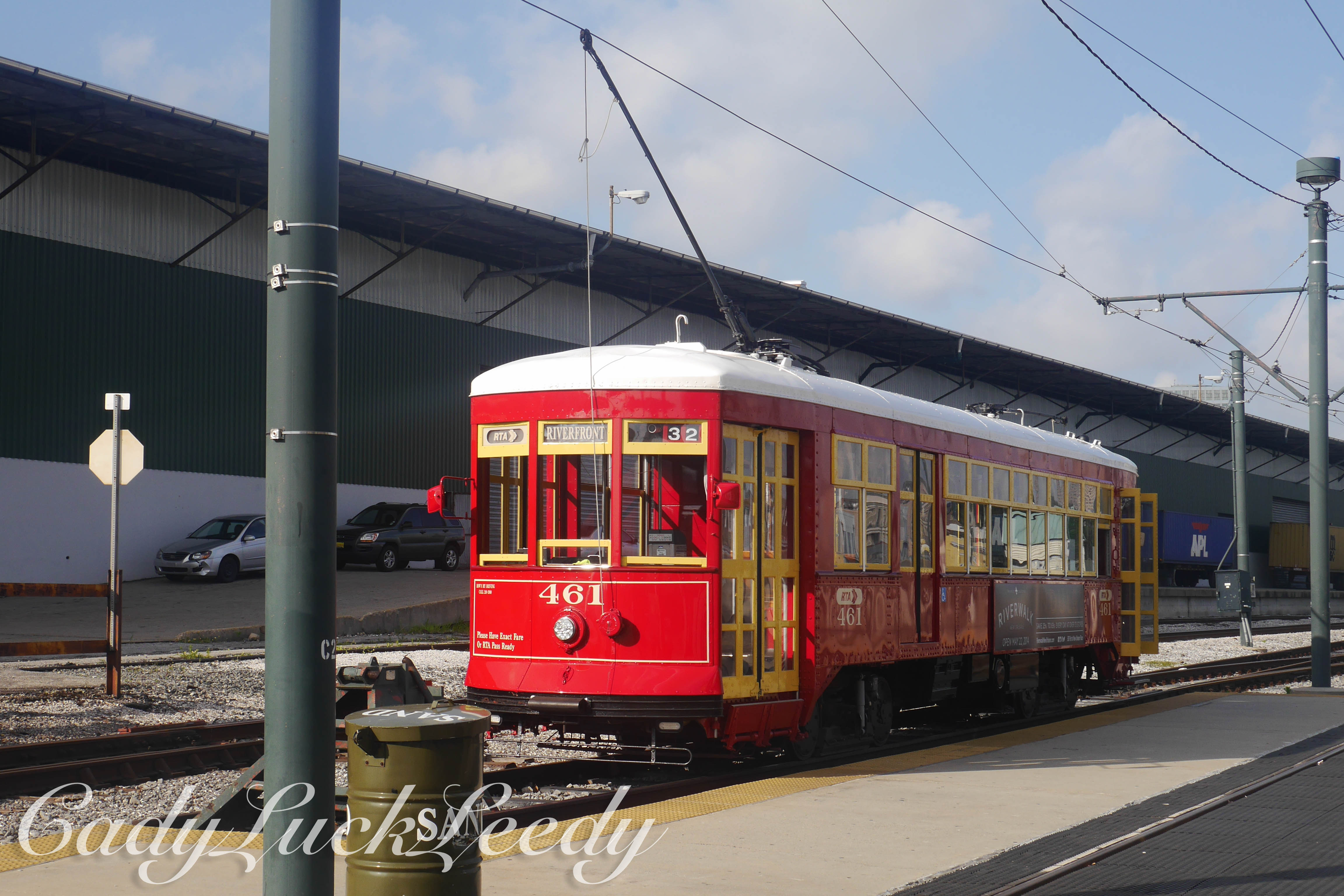
There are two ways to get to the center of  The French Quarter from our spot in Marigny; stroll the seven blocks on Chartres St to St Louis Cathedral or take the Loyola-UPT Streetcar that ends near us at the French Market.

The French Market Streetcar

The French Market Streetcar

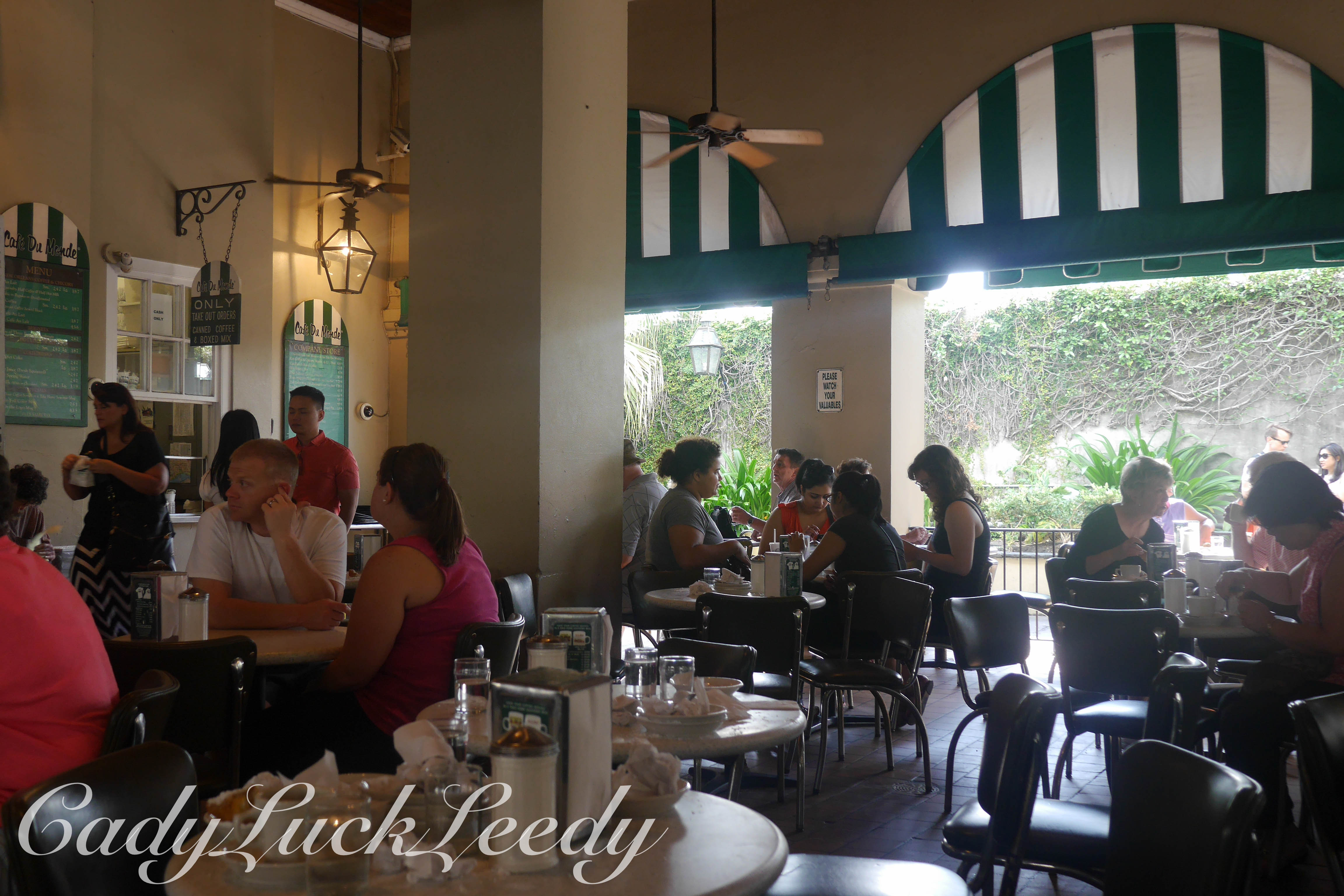
During our stay we do both. From the French Market  we get off the streetcar at Dumaine St and walk a couple of blocks to our first stop, the Cafe Du Monde, open 24 hours a day, seven days a week!

Cafe Du Monde

Cafe Du Monde

A large area of indoor/outdoor seating, the cafe is packed. The menus are imprinted on the napkin holders. The choices are coffee, soft drinks, orange juice and two sizes of beignets, either 3 or 6, smothered in powdered sugar. That’s it! I really can’t see what the hub-bub about the place is, but every time we passed by the cafe it was full. It’s been a landmark in New Orleans since 1862. 

Jackson Square

Jackson Square


Jackson Square, NOLA

Jackson Square, NOLA

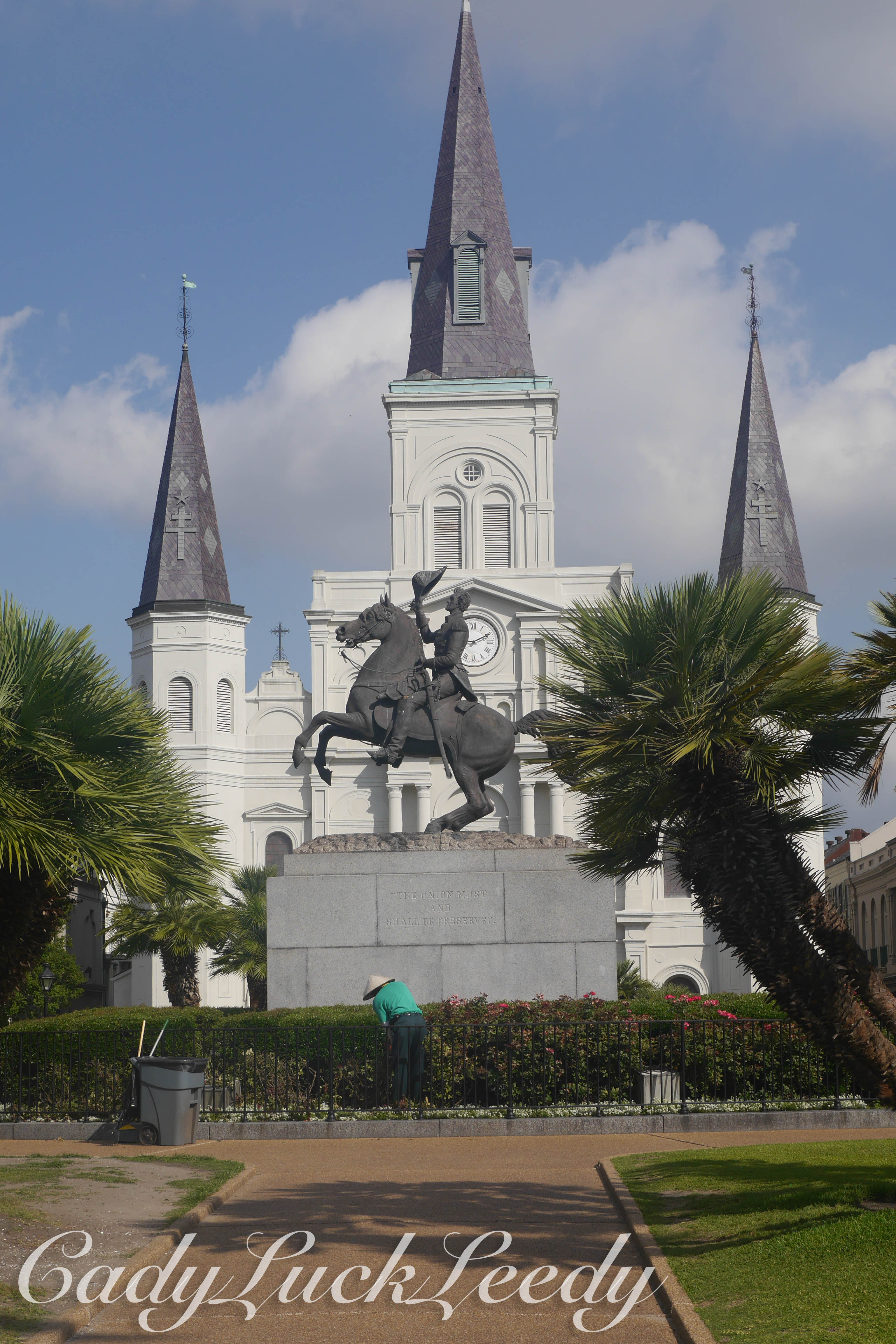
Continuing on we come to Jackson Square and behind that the beautiful St Louis Cathedral, the oldest continuously operating church in the US, built in 1720, rebuilt in 1789, becoming a cathedral in 1794.

St Louis Cathedral, NOLA

St Louis Cathedral, NOLA

St Louis Cathedral, NOLA

St Louis Cathedral, NOLA

In front of the church on a wide band of street there are small booths of fortune tellers, ice cream vendors and musicians. Stepping inside the church we get relief from the heat and humidity which is quickly rising.  Leaving the church and turning right  and then right again we are on a small cobblestoned alley with St Anthony’s Garden behind the church. This alley is known to the locals as Pirates Alley. 600 feet long and 16 feet wide it is not listed on many of the maps of the French Quarter. The smell of New Orleans is more intense here, a smell of damp vegetation and a faint woodiness lingering with the latin rhythms, salsa music and blues coming from the corner.  This corner was infamous for settling duels and debts of honor.  Jean Lafitte, the famous pirate, who provided services to any country at war against another by attacking their ships, brought the booty to town and the goods were sold in the alley. Eventually the Spanish Colonial Prison called the Calabozo was built on this corner in 1769. Lafitte and his men were jailed here by Governor Claiborne of New Orleans.  The prison was demolished in 1837, and the land was sold to make a long creole house which was the home of William Faulkner, where he wrote his first novel ”Soldiers Pay.”  The creole house is now home to the Faulkner House Books. Now at the intersection of Pirates Alley and Cabildo Alley, where the prison was, is the Pirates Alley Cafe, known for caribbean drinks and absinthe.

Pirates Alley Cafe

Pirates Alley Cafe

Traditional absinthe was made of anise, fennel and wormwood (a plant) with added herbs and flowers making it green in color. The herbs and spices were soaked in alcohol and then distilled. The drink called la fée verte, (Green fairy) in French, was thought to be highly hallucinative also. Yes, drinking a couple of those today one might see fairies and pirates! 

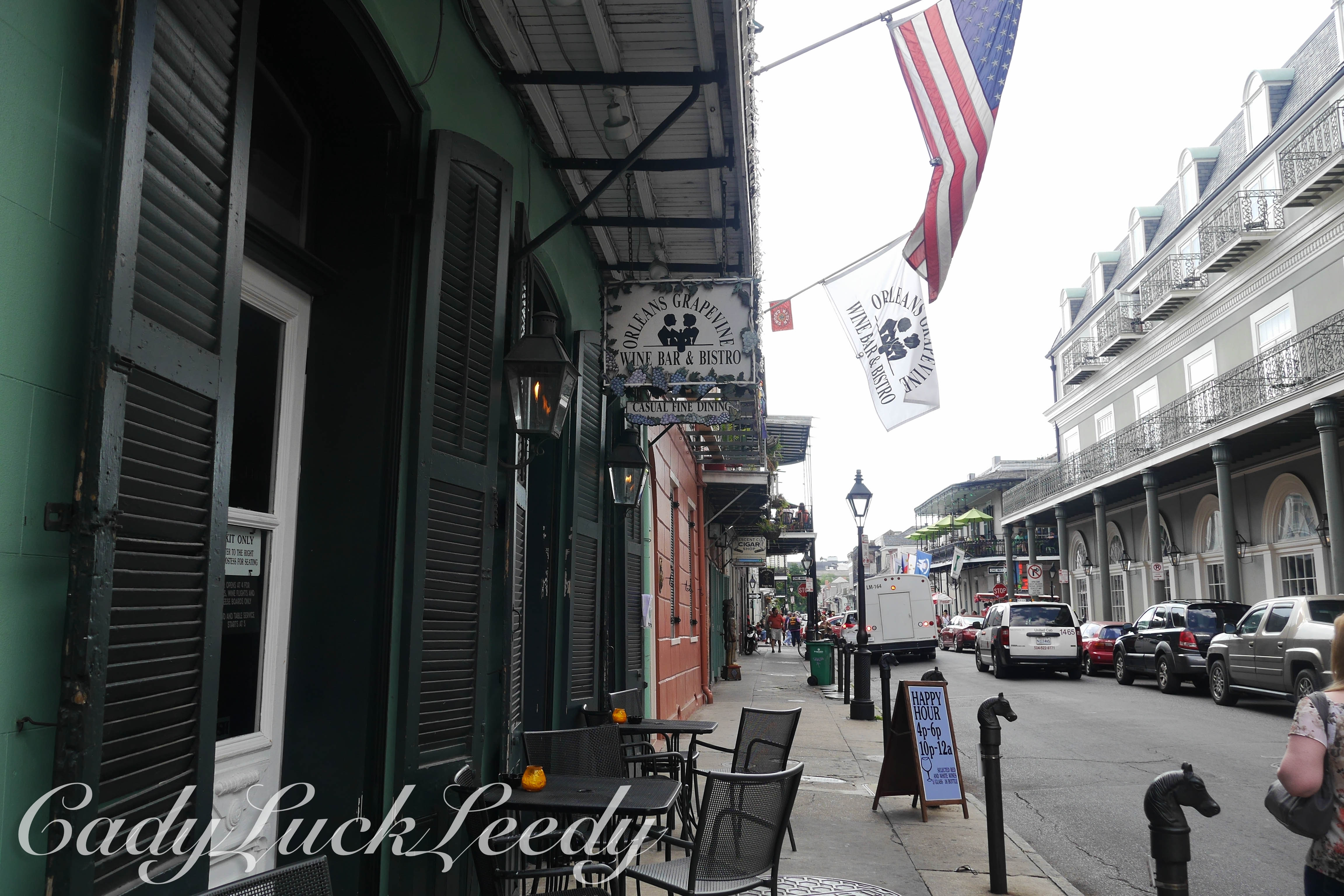
One afternoon, not far from Pirates Alley, we made our way to the Grape Vine Wine Bar and Bistro. We spent a lovely afternoon wine tasting and choosing cheeses from the cheese board. Then we were served large portions of appetizers. I had the crab cakes and they were fabulous. The ambience and service in this bistro is outstanding.  With seating indoors or out this was our favorite spot in the old French Quarter.


Grapevine Wine Bar and Bistro

Grapevine Wine Bar and Bistro

Grapevine Wine Bar and Bistro

Grapevine Wine Bar and Bistro

Another highlight of New Orleans is the WWII National War Museum. Traveling by way of the Canal Streetcar, switching to the St Charles Streetcar, we got off at Lee Circle and walked the rest of the way to the museum. The large museum is separated into different buildings and exhibits. Upon entering the ticket building in the Louisiana Memorial Pavilion we were greeted by veterans who are here every day and volunteer their services at all of the different venues. It was truly inspiring to see so many retired serviceman still giving of their time.  Our first stop was the “Train Car Experience” where we boarded a train re-creating the tearful farewells and bittersweet returns of the men and women who went to war. Then we went upstairs to see the “America Goes to War,” “D-Day Invasion of Normandy,” “The Landing Beaches,” and the “D-Day Invasions of the Pacific.” All the exhibits were interactive and very interesting. One of the highlights of the museum was the short movie, “Beyond All Boundaries” produced and narrated by Tom Hanks. The movie is a journey of words and stories of actual WWII participants. The Solomon Victory Theater, where the movie is shown, has a screen 120 feet wide, with 9 digital cinema DPL Projectors. (a regular theater has only one) There are 27 surround sound custom speakers and 250 special effects theater seats that shake when the tanks are rolling by! Many of the props used to make the movie come alive are authentic pieces of equipment. There are 305 archival photographs and 517 film clips of actual footage shot during the war. You will not want to miss this special attraction.

Going outside the exhibits we looked at a WWII Victory Garden complete with posters! 

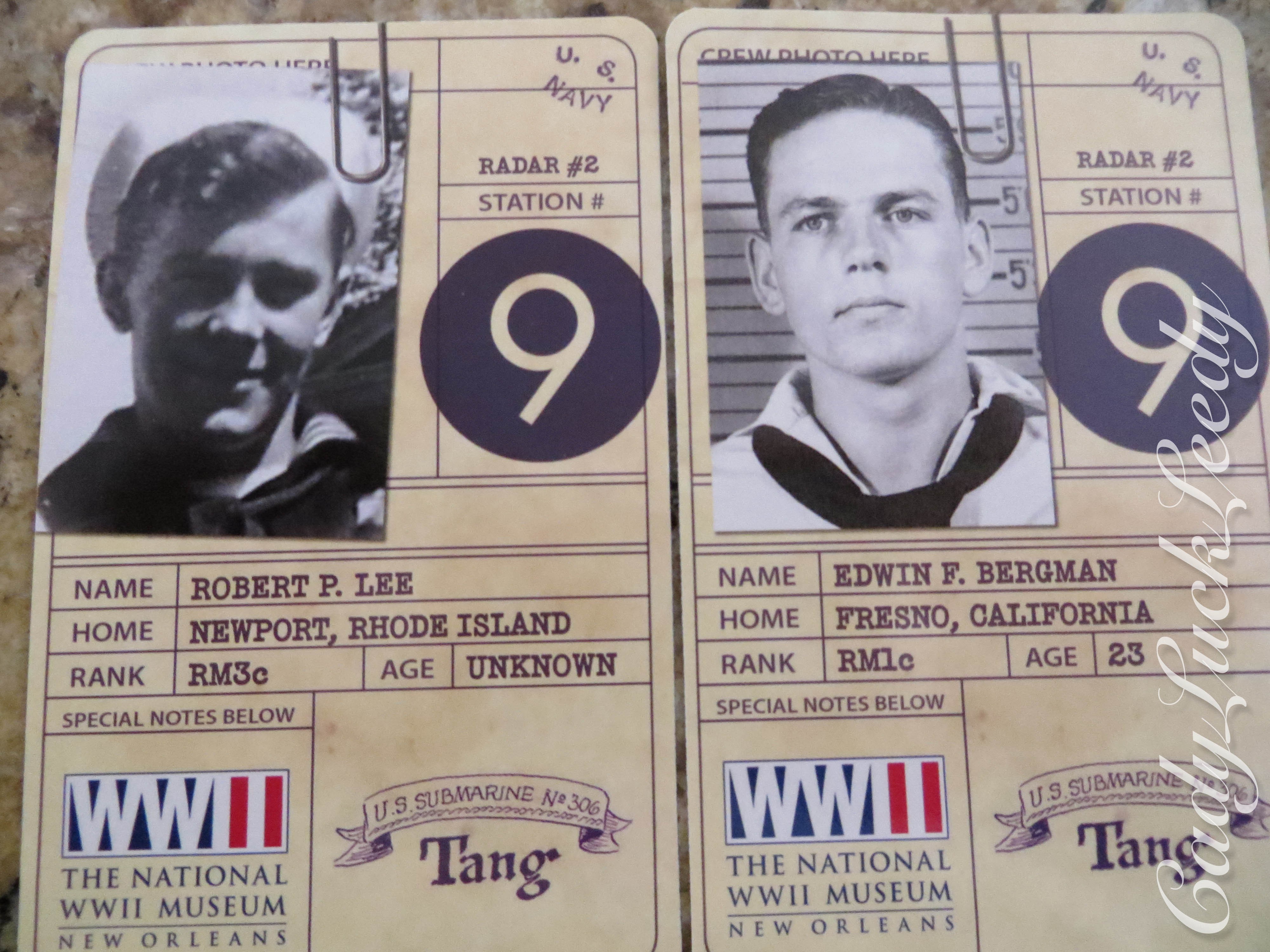
The other feature that I enjoyed was the “USS Tang” experience. Upon entering the submarine we are given actual sailors’ ID cards.  Using the ID of the sailor, we were assigned to his station and duty in the sub.

Submarine Sailor ID's

Submarine Sailor ID’s

We had an interactive encounter recreating the last war patrol of America’s most decorated submarine in WWII! What a great time we had visiting the museum! There is the Stage Door Canteen and the American Sector Restaurant to eat in and then to wrap up our day we were entertained by the Marine Corps Band of New Orleans, part of the Memorial Day Concert Series. New Orleans has so much to offer; great food and drink, stunning architecture, history and perseverance. I think you will enjoy including NOLA to your list of  “Not to Miss.” Enjoy!


The Wiltshire Gardener

A few weeks ago I wrote a post for the genealogy section of Dominic’s blog, Flibberatic Skreebles.  He also writes at A Wiltshire Garden. This is a post that he so thoughtfully wrote for me about gardening. Enjoy! Thank you Dominic!

Growing up in a small Wiltshire village amidst the rolling hills of south-western England, I had what most would call a typical childhood relationship with our garden. That is, the edges of the garden borders became havens for my various wild animal toys. The lawn was turned into prairie, savannah or – more prosaically – farmland. Camp outs, snail hunts, hedgehog spotting and somewhere to play and be free. I can’t say that I consciously took a great deal of notice of what was around me. 

I did, however, notice that not everybody had such a garden as mine, that not everybody’s mother spent hours in a greenhouse or would spend hours in a garden centre (or carried a small penknife with her when she went on trips to public gardens so she could ‘appropriate’ cuttings). I also noticed that not all of my friends ate vegetables fresh from the garden. I began to taste the difference between a tomato picked fresh from the vine not more than 10 minutes before and one that was taken from a plastic box out of the fridge. It was then that I realised I didn’t have what other people necessarily had: a constant and early exposure to horticulture.

“My Mother's Garden, 2005.

“My Mother’s Garden, 2005.

Of course, gardening isn’t something new. As soon as humans ear-marked permanent homes then the local environment was altered – beneficial plants collected and protected, undesirables eliminated and foreign species introduced. The enclosure of outdoor space began around 10,000 BCE – and the words garden and yard both come from the Old English term geard which means fence or enclosure.

The Romans may have imported their own views on gardening – a separation of the aesthetic beauty from the pragmatic fruit and vegetable (i.e. kitchen) garden – but I can’t imagine pre-Roman Britain devoid of domestic spaces that yielded produce for the household. This produce would’ve been primarily limited to plants with culinary, medicinal or other practical uses (violas were often strewn on the floor to release their aroma when stood upon, for example, as well as their leaves being used as a potherb to flavour soups and stews).

Whilst gardening trends came and went with the owners of large houses – Italian Renaissance, French Baroque, English Romantic – the general population, predominantly rural in nature, continued with their own home gardens. These were used to grow fruit and vegetables that weren’t available elsewhere – after all, there were no supermarkets and no greengrocers conveniently around the corner stocking all foods in all seasons! These spaces also included animals such as poultry and often a pig or two (my mother remembers quite clearly her grandparents fattening up a pig each year in a sty at the bottom of the garden and then sending it to slaughter).

Of course, as the Industrial Revolution and Enclosure movements* came about, more and more people were migrating into urban areas and these towns and cities exploded. There wasn’t the space for people to grow their own produce or the leisure time to dedicate to these pursuits. However, as the 19th century continued, the Victorian philanthropists realised that the poor would benefit both physically and spiritually from having outdoor areas in which to grow their own food. 

(*It’d be a bit outside of this post to discuss the Enclosure movement in England – but suffice to say that it changed the face of the British countryside by chopping up the open field system, and allowed the wealthy landowners to own more land and accumulate more wealth at the expense of their tenant farmers.)

“Allotments in Bath, England.

“Allotments in Bath, England.

Areas given over to growing produce for private use (as opposed to areas used for growing food to sell – market gardens) were nothing new in England. These allotments were parcels of land rented from a central local authority and each individual is responsible for his or her own patch – and often include a shed of some kind. (This aspect of one parcel of a much larger area being managed individually makes them different from community or victory gardens – more on which later!)

Allotments have gone in and out of fashion over the years – with the most recent peaks being during WWI (1,500,000 plots) and WWII (1,400,000 plots) – but over the last few decades the numbers have started to grow again with demand outstripping supply. This is seen to be a reaction against growing food prices and modern agricultural practices, as well as consumers demanding a greater awareness of where their food comes from. 

“Dig For Victory, UK WWII poster”

“Dig For Victory, UK WWII Poster”

Victory gardens sprang up on both sides of the Atlantic during WWI, with household yards, parks and public areas being turned into vegetable and fruit gardens in USA, UK, Canada and Germany. In America alone over 5 million gardens were created during WWI. In WWII England’s gardeners were exhorted through the “Dig For Victory” campaign – and waste ground, railway verges, lawns and sports grounds, even areas of Hyde Park in London, were requisitioned for the purpose. After WWII the majority of these English victory gardens reverted back to their pre-war state. In America it was common to see vacant lots and apartment building roofs as gardens – something that has come back into vogue with not only the guerilla gardening movement but also the rise of urban gardening and food production.

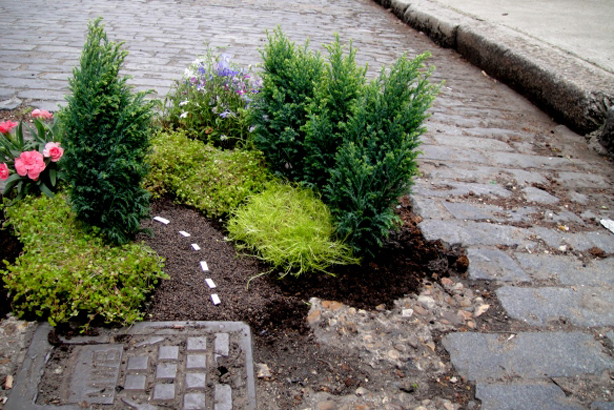
Guerilla gardening is a global movement, defined as “an act of gardening on land that the gardeners do not have the legal rights to utilize”. This includes such diverse areas as verges, roundabouts/traffic islands, tree pits, bus stops or even potholes in roads! This is often done to highlight the neglect of certain areas of land, but also to foster a sense of community or to raise a smile on passersby.

“The Work of UK Pothole Gardener Extraordinaire, Steve Wheen”

“The Work of UK Pothole Gardener Extraordinaire, Steve Wheen”

Of course, along side this guerilla gardening is the increase not only of urban greening but also of the regeneration of the community gardening movement used to change not only the inner city landscape but also the mental health of people using them – one community garden based in the UK is being used by local doctors to help patients with depression and anxiety disorders. 

One thing that the rise in the number of these activities highlights is that gardening isn’t going anywhere. Its been part of the British landscape for as long as there have been people around to pull up an unwanted plant and replace it with something else, and despite the rapid urbanisation of the country around us, the desire to plunge your fingers into some loam and watch the beauty that follows is still with us. And long may it last!

For more information on any of the in the UK, please visit some of the links below!

Guerilla Gardening – http://www.guerrillagardening.org/

Groundwork – community greening charity – http://www.groundwork.org.uk/

Project Dirt – social network for green communities – http://www.projectdirt.com/

The Edible Bus Stop – from one community garden to an entire scheme – http://www.theediblebusstop.org/

Landshare – social network connecting growers to those with land to share – http://www.landshare.net/

Federation of City Farms & Community Gardens – https://www.farmgarden.org.uk/home

National Society of Allotment & Leisure Gardeners – http://www.nsalg.org.uk/

Kabloom Seedboms – a mixture of compost and seeds – http://kabloomshop.co.uk/products


To B or Not to B: That was the Question


Marginy BnoB

Marginy BnoB

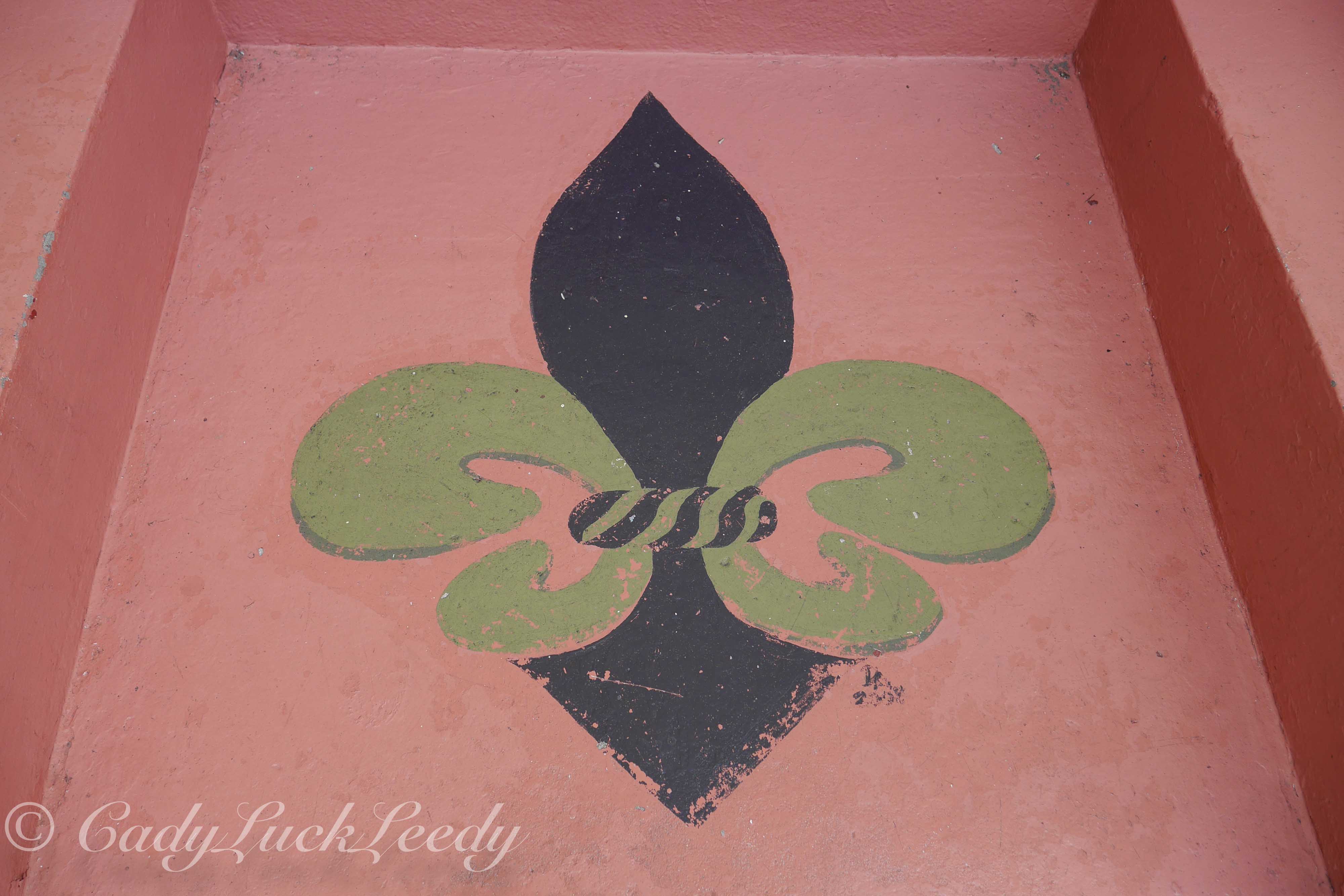
Fleur-de-Lis

Fleur-de-Lis

In the past week I returned from a 5 day stay in New Orleans. I have never been before. When I first mentioned going there, SB’s remarks were, “I went there in college, you won’t like it.” My daughter went this winter for a conference and texted me, “Mom, you won’t like it.” Really? “What’s there not to like, I asked?”  

“The drinking, that’s all anyone does there.” 

“You mean like during Mardi Gras?”

“Yep.”

Then I started to check out the hotels. Hmmmm…….. They were very expensive with more than the average reviews by unhappy campers. After spending many hours pouring over reviews I decided to look at a different venue. Hmmmm…..  What was the AIRB&B website?   Now this was interesting!  People rent out rooms in their house?   Hmmmmm… I felt uncomfortable about showing up in a strange town AND at somebody’s house, who I didn’t even know!  “Knock, knock, I’m here, glad to meet you, show me my room!” So I typed in “private apartments.”  One looked very promising, the  Marginy BnoB in the Frenchman Area.

The listing stated, “I am and have been a “New Orleans Public School Teacher” for 27 years. I have 3 children and 1 grandchild. I own a double shotgun house in New Orleans. I converted part of it as a bedroom for my daughter. When she moved out I converted to a Bed no Breakfast. I look forward to meeting new people ”

I liked her sense of humor and I liked the reviews I read about her place, so I booked it. The owner, Ginger, sounded responsible, the location in a residential neighborhood looked good, and the price was VERY REASONABLE. I looked forward to the trip!  

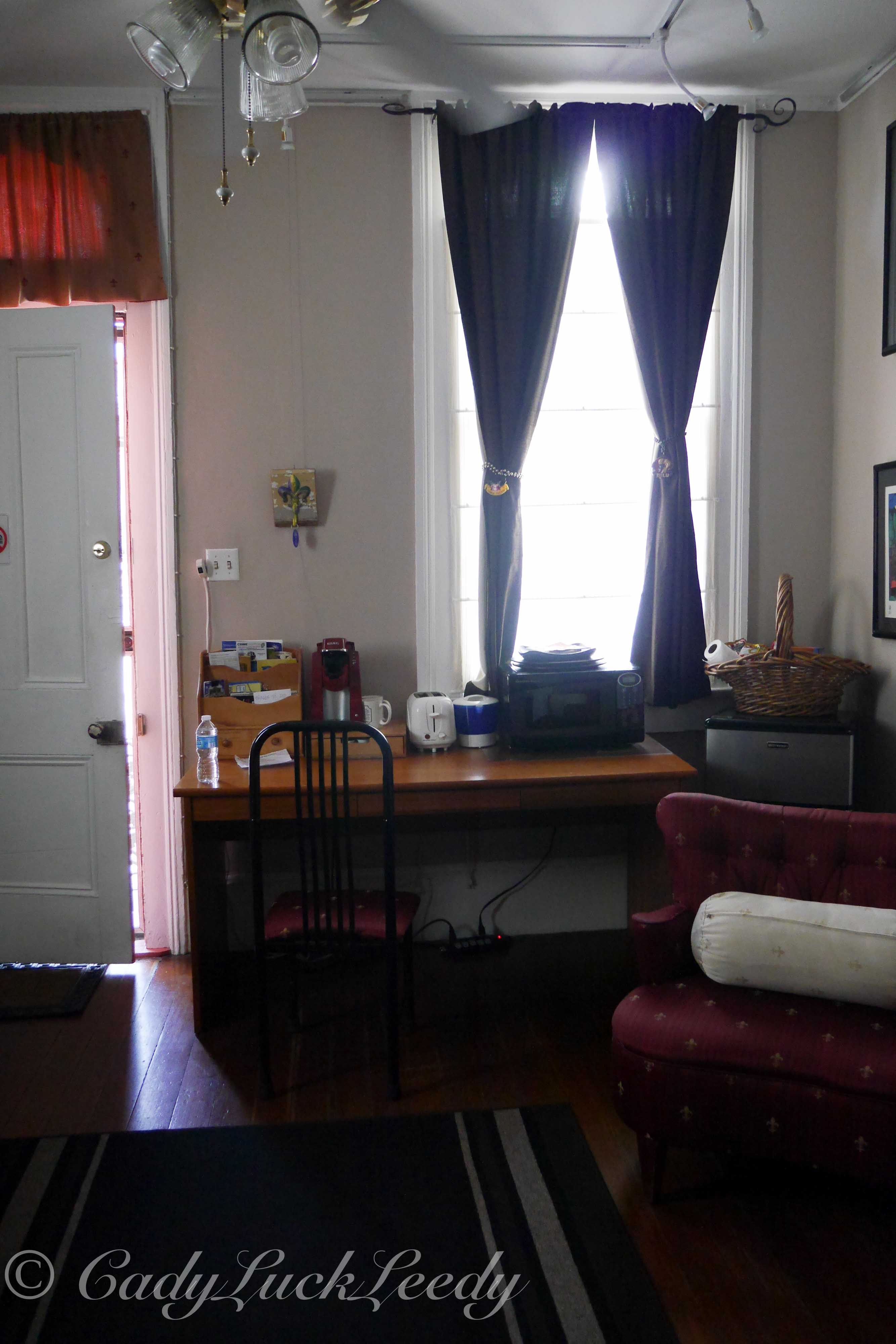
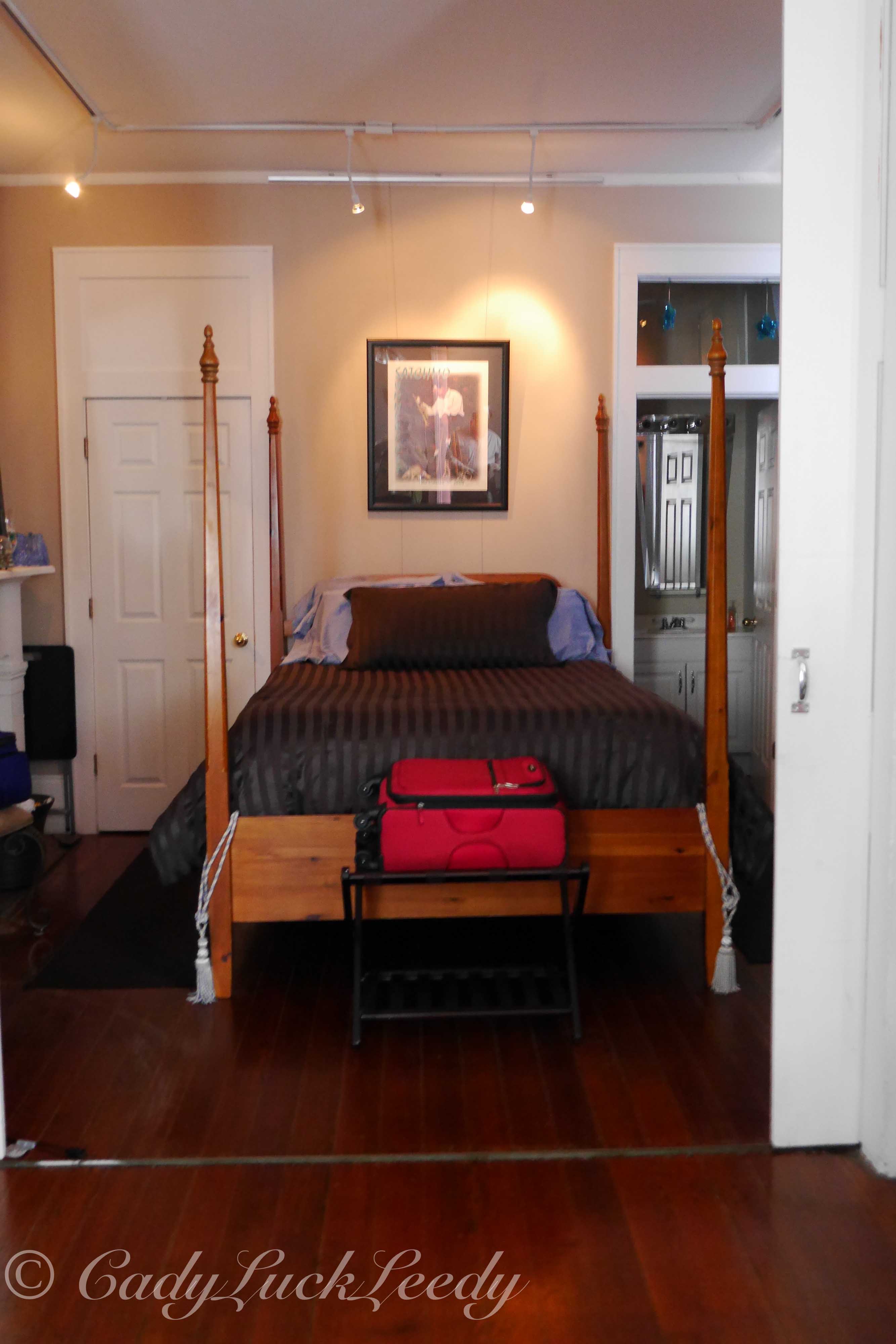
Marginy BnoB was perfect! It was a Double Shotgun House, a long narrow house with a door at each side of the rectangle, revealing twin houses, divided by a center wall, one of the very popular style homes here. Our side consisted of a private entrance,  large living area, with TV, microwave, coffee pot with tea/coffee and bottled water,  and  large bedroom area with a bathroom. Everything was spotless.

Marginy BnoB

Marginy BnoB

The Living Room

The Living Room

Marginy BnoB

Marginy BnoB

Showing us around and making sure we had everything we needed, we asked her if her house had been affected by Hurricane Katrina. She told us how the Marigny Neighborhood was the highest point of land in New Orleans, but she knew that so many others had not fared as well. She was very proud of her Cajun heritage and the recovery process of so many people, especially the children she taught. Then she showed us her fleur-de-lis tattoo on her arm and told me we would see many people with the tattoo.  The tattoo represented perseverance and solidarity after Katrina.  Talking with Ginger was like going to an old friend’s house, and after giving us the layout of the land she returned to her home next door. She was there if we needed anything. Perfect! For an interesting background on the Marigny Neighborhood read my photo narrative HERE!

Artwork in Marigny

Artwork in Marigny

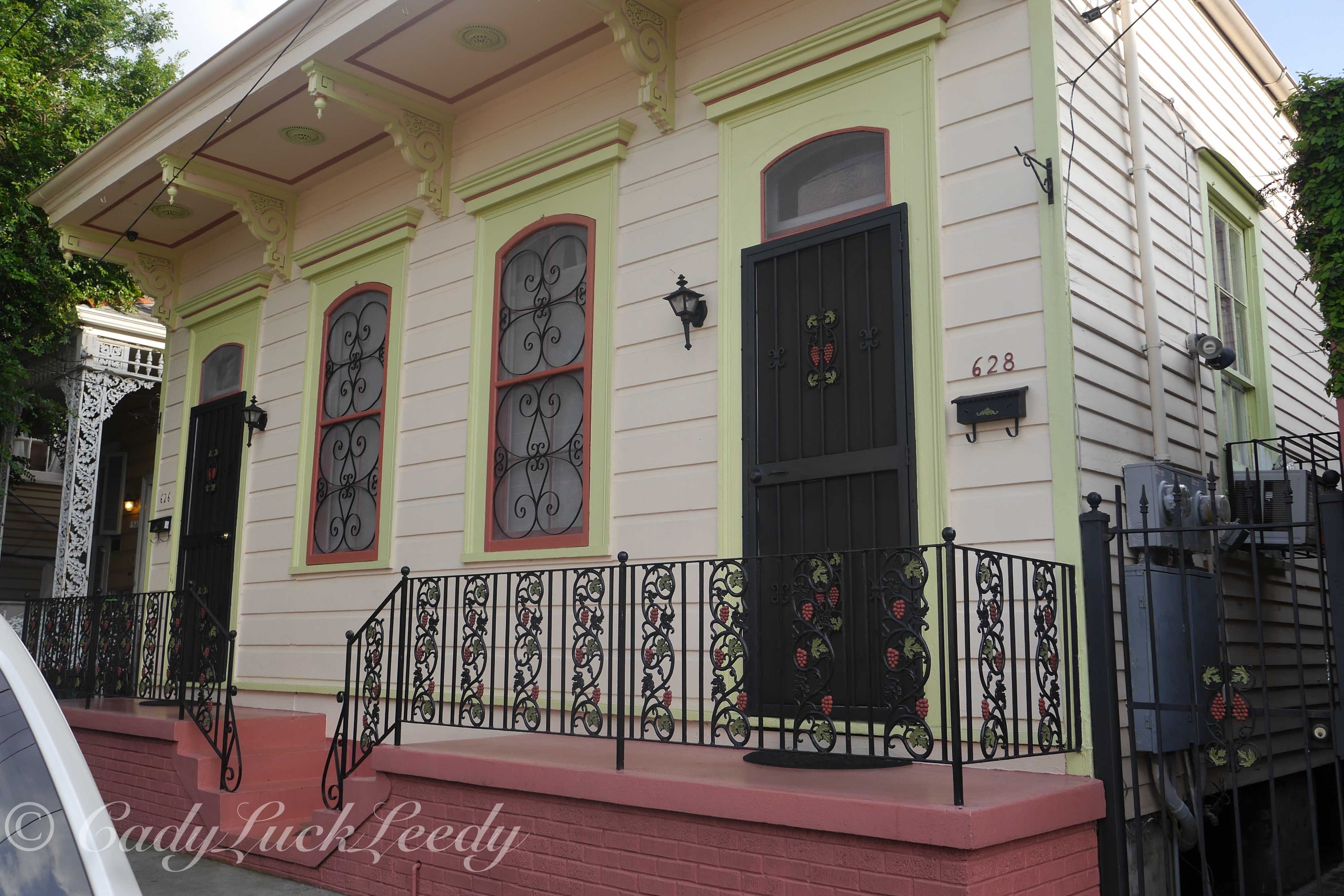
I was excited about exploring my new digs. I loved all the different styles of homes jumbled into long skinny lots. AND the color! It was a spilled paintbox of brightness!  It was like a box of chocolates, you never knew what to expect.

One of My Favorite Houses in NOLA

One of My Favorite Houses in NOLA

My Other favorite House

My Other favorite House

 We were close to some of the best rated restaurants in New Orleans.  One of our favorites, The Praline Connection, was one block from the apartment. Soul Food/Cajun at its finest! BBQ ribs, fried chicken, macaroni and cheese, meatloaf, catfish and one of the side dishes was my favorite, crowder peas and okra with rice, rice, rice! The restaurants were frequented by locals, standing room only, and the crowds (drink in hand) did not mind waiting in line to get in. New Orleans,  allows the possession and consumption on the street of any alcoholic beverage in an open plastic container. I want to think this started due in part to the intense heat and humidity.

 Another of our favorites was the Port of Call Restaurant.  Here they served their famous Monsoon Drinks (tropical juices, with or without booze) with their specialties of steaks, hamburgers and scrumptious huge baked potatoes with all the trimmings! It was very dark and cool in this restaurant, especially in the heat of the day. You will notice closed shutters on all the windows in New Orleans, even on the doors, which I though a bit odd at first. The shutters are kept closed to keep the cool air in because the heat and humidity are fierce here. We walked the neighborhood at night to get a peek at the chandelier ceilings and the tiny romantic interiors of these homes. It was the only time of day you could actually see inside. Many of the homes had outdoor gas lamps which also added to the charm.

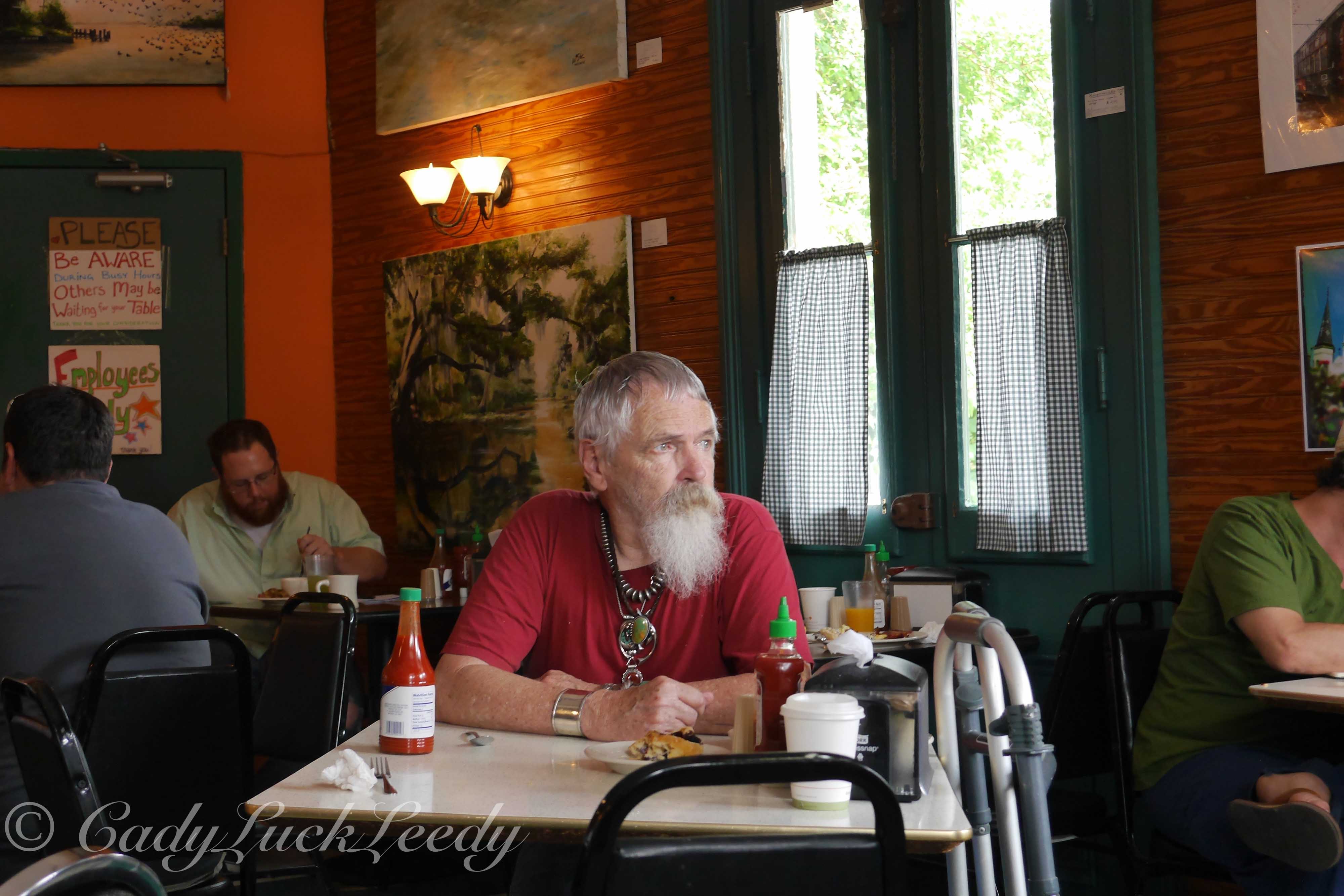
Our favorite morning spot was the Cake Cafe and Bakery. Further up the street we walked through the charming neighborhood to reach this icon on the corner for breakfast. Clearly a local favorite, I could have sat here all day (well until 3pm when they close) just to watch the people. One gentleman and his friend was here every time I was.  He walked with the assistance of a walker and his friend would park the car near the entrance whether there was room or not. When the servers saw them coming they went out of there way to open doors and help him into the restaurant and would quickly find him a seat.  He clearly was a favorite and well known. I was struck by his features, his style of dress, his jewelry, his soft spoken demeanor and the reverence the locals had for him. As I was snapping shots of the cafe, he watched me.  He knew I wanted to take his picture and was hesitant. Then he nodded and I clicked twice. I just love his picture and I bet he has a fleur-di-lis somewhere too! I can’t begin to tell you how many people would pass us on the street and start up a conversation. The people are clearly proud of New Orleans and wanted to make us welcome. 

Cake Cafe and Bakery

Cake Cafe and Bakery

Interspersed among the restaurants were the jazz clubs, crayfish boils, and a small neighborhood grocery that would have given the small Italian markets I love so much, a run for their money. 

So, I was very impressed with our first venture with AIRB&B. But, I was greatly moved by the people of New Orleans and their motivation to keep their lifestyle alive and well. Next…… What else did I do and see in New Orleans?   Yes, I reluctantly left Marigny to see other neighborhoods in the city. Part 3 NOLA is next to come! Enjoy!


A Word a Week Photo Challenge: Orange

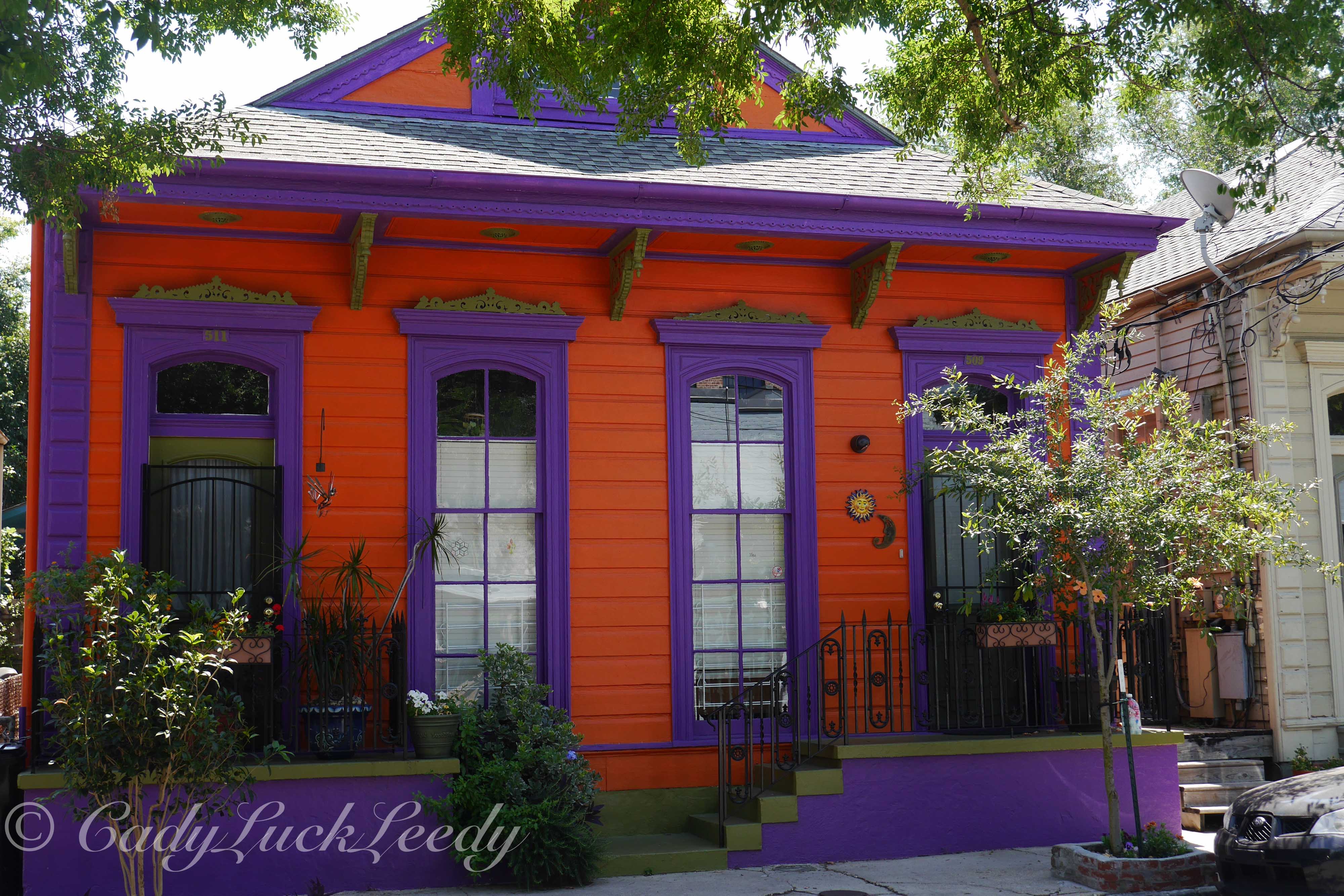
I’ve just returned from NOLA!  What a great time we had there! So here is my post for “A Word a Week Photo Challenge”: Orange! Check out the post I did on Exposure with more pictures of New Orleans! It’s Part 1 of a series!  Enjoy! I certainly had a fab time!


"Shotgun House" in Marigny District, NOLA

“Shotgun House” in Marigny District, NOLA

THE SPECTACLED BEAN

Tales, Thoughts + Tribulations of a Free Spirit in Suburbia

Walking Away

Travels on foot

Teacher nickname: The Three Hairs

Minding my mind, one thought at a time.

Tra Italia e Finlandia

Un lungo racconto fotografico.

seanbreslin.jp

Photography, hiking, walking, and cycling across central Japan — from quiet mountain paths to everyday life around Nagoya.

Lost in Translation

Looking for meanings in words, images and sounds

Journeys with Johnbo

Reflections on places traveled and photos taken.

M/VGratitude

Cruising with the Thyrre Family

Caroline's Travel Adventure Blog

Where my Travels and my Blog merge together.

Just Me, Nobody Special

The mental meandering that cross my keyboard

Jennifer's Journal

Website & Blog of J. Kelland Perry, Author

Slow Shutter Speed

A photographic journey.

Ann Mackay: Inspired by Nature

Photography celebrating flowers, plants, and the natural world

Still Restlessjo

Roaming, at home and abroad

Fine for Friday

The Corner Garden

Picture This

Photography, Travel and Retirement

World Traveller 73

Upgrade Your Travels. First Class Luxury Travel from all parts of the Globe. Business Class Airline, Lounge and Hotel Reviews, Stories and Adventures

Rachel Meets China

A China travel and lifestyle blog