Travel, Gardens, Food, Photography, Books, Shoes

Posts from the ‘Destinations’ category

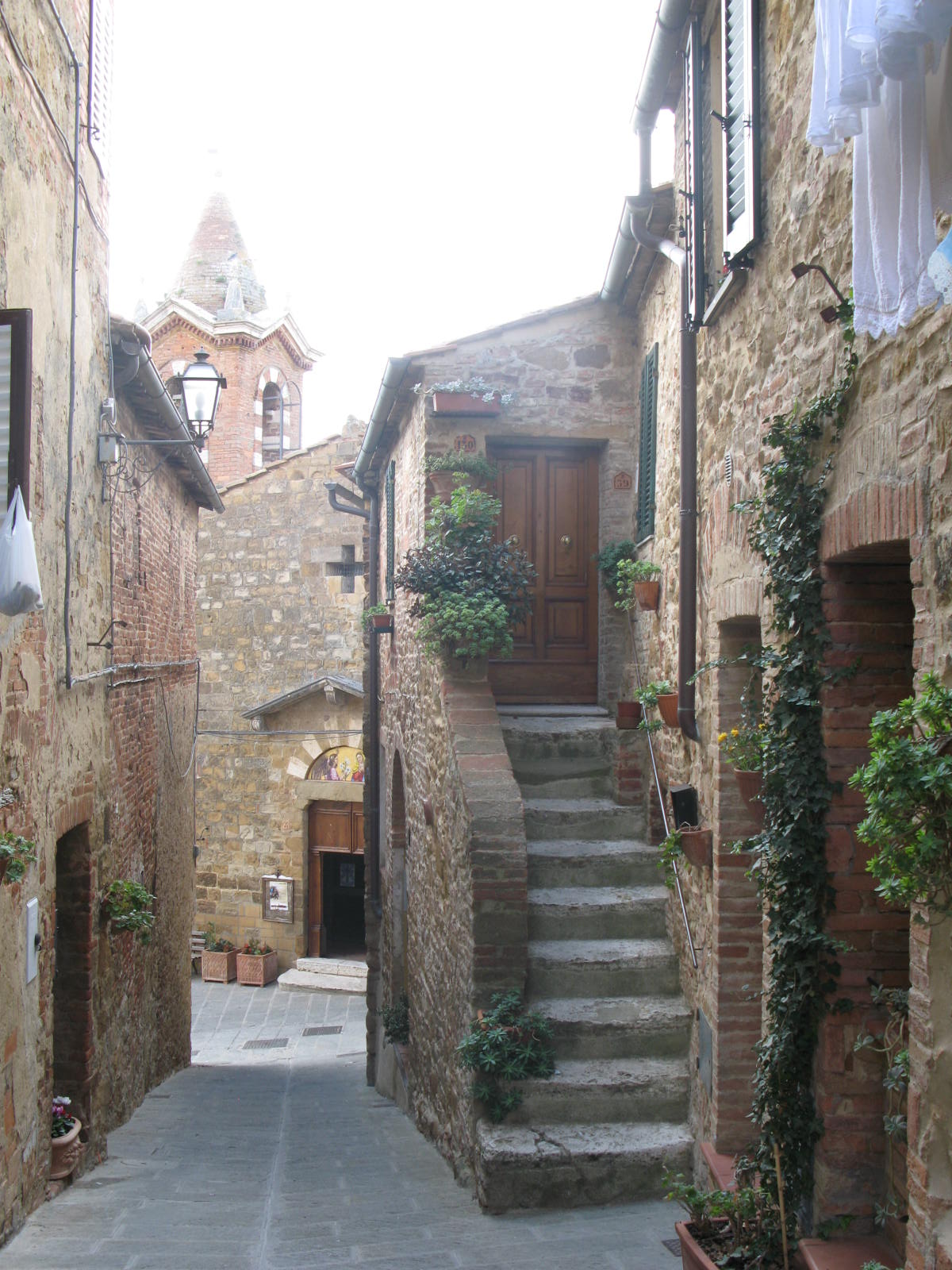
Traipsing Through Tuscany- Montisi

Montisi

Montisi

Montisi

The hill town, Montisi, population 500, is an ancient Etruscan necropolis.  As small as it may seem, the village is divided into four communities, each represented with their own flag. The Castello is the area of the medieval castle.  The Piazza, is the flat area located near the castle.  San Martino is in the northeastern part of the village and the Torre, takes the name of the Tower of the Grange of Santa Maria della Scalla (a farming estate owned by a monastery), which was destroyed by retreating German troops in 1944.

The Civic Tower and the Colonna, in Two Different Districts

The Civic Tower and the Colonna, in Two Different Communities

Civic Tower and the Colonna

Civic Tower and the Colonna

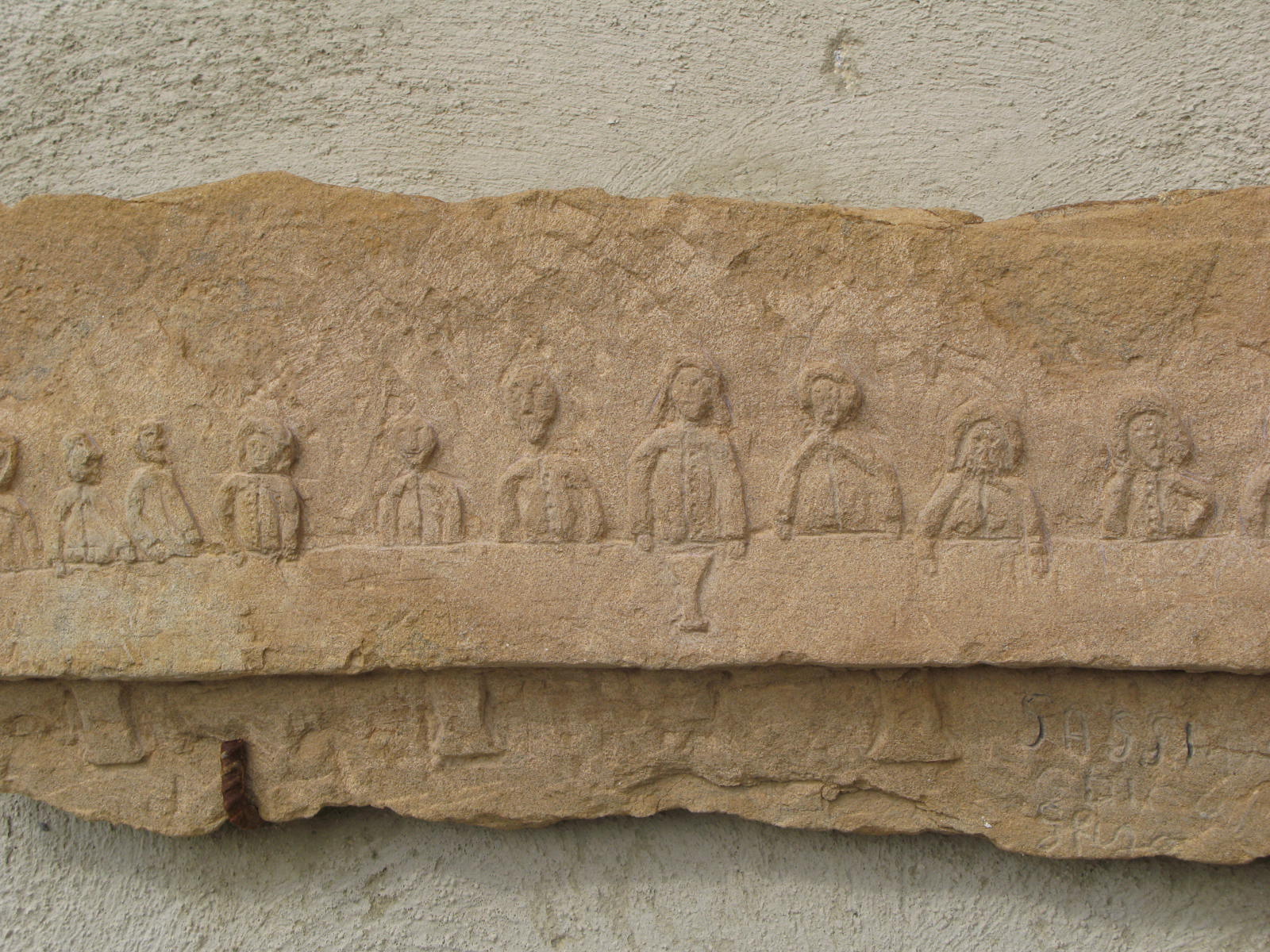
Walking up the small hill to the restored tower, currently, the Grange is a private home built around two main courtyards, with a small theatre used for shows and concerts.  It was here that a clay hand-made map was posted on the wall to point the way around the narrow streets in a circular fashion to locate all the sites on the hill.  It reminded me of a scavenger hunt map! See the chunks of terra cotta on the wall? Following the terra cotta signs, the lane reminded me of the Stations of the Cross along a beautiful garden walk!

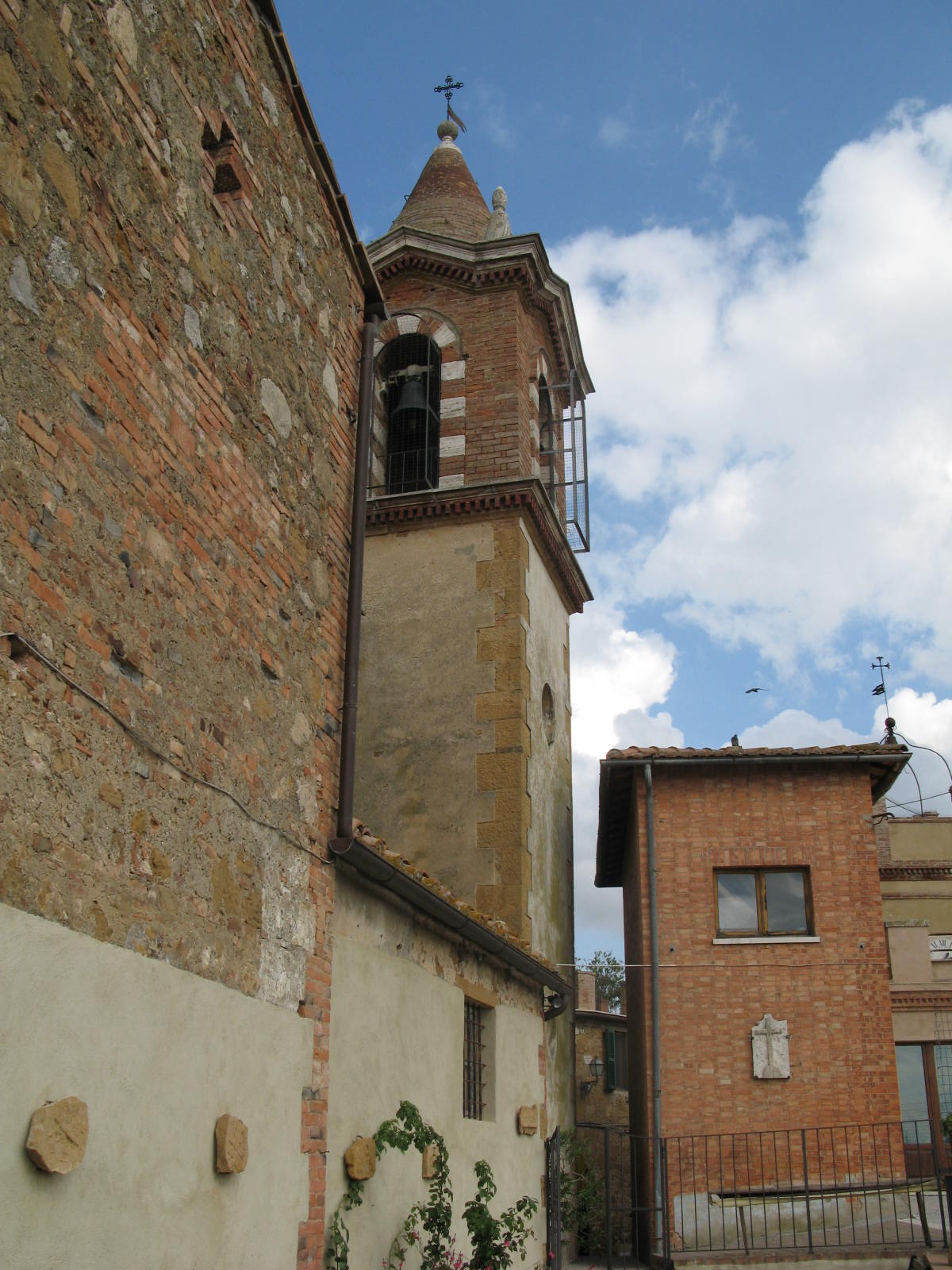
Pieve of the Santissima Annunziata

Pieve of the Santissima Annunziata

The Pieve of the Santissima Annunziata

The Pieve of the Santissima Annunziata

The Map

The Map

Markers on the Montisi Walk

Markers on the Montisi Walk

Markers on the Montisi Walk

Markers on the Montisi Walk

Markers on the Montisi Walk

Markers on the Montisi Walk

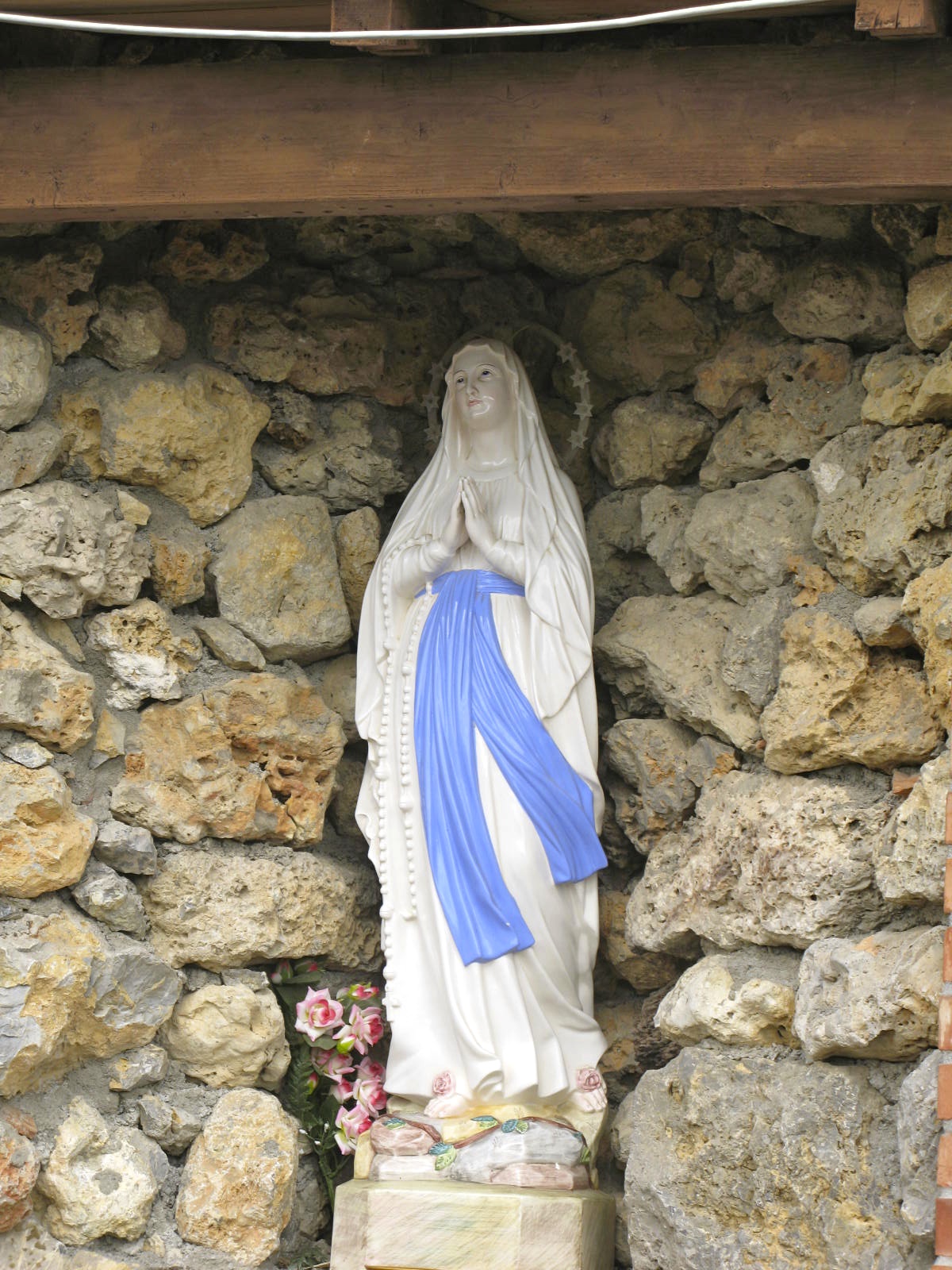
Mother Mary Pray for Us

Mother Mary Pray for Us

The Walk in Montisi

The Markers on the Walk in Montisi

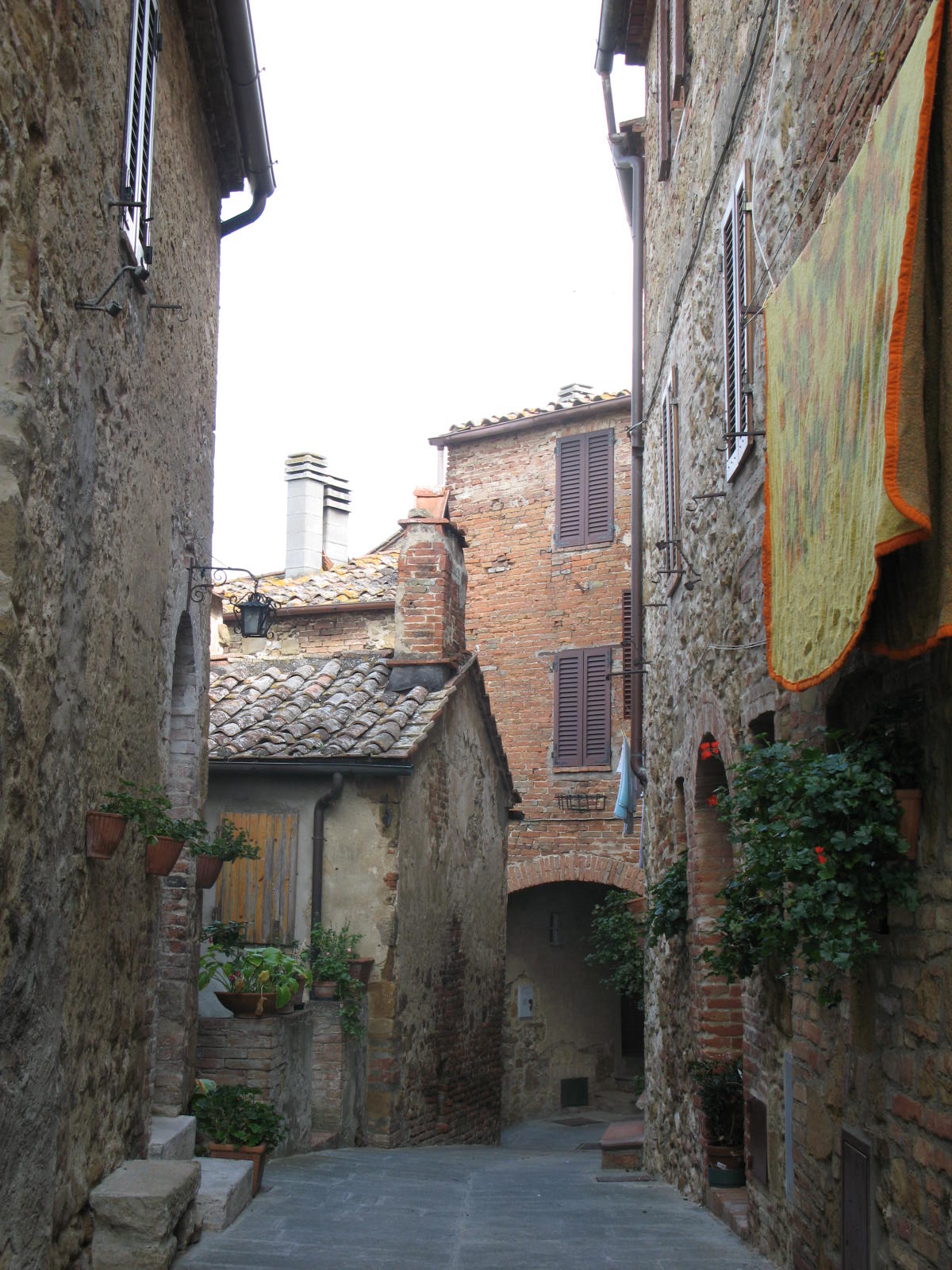
Streets of Montisi

Streets of Montisi

Main Walk Montisi

Main Walk Montisi

Walking Montisi

Walking Montisi

The Only Cat in Town!

The Only Cat in Town!

Returning to the lower ground of the village there is now a frescoed wall playground, the ruins of castle walls, and beautiful flowers, doors and windows. We spent a lovely afternoon in Montisi!

Traipsing Through Tuscany- The Piccolomini Pienza

On Our Way to Pienza

On Our Way to Pienza

From Monticchiello we are off to Pienza, a small town that we can see on the hill in the distance. Pienza, is on a hill, but after arriving in the town, walking here is on flat ground. Unlike Montepulciano,  which is all up hill, Pienza is flat. There is a parking lot outside of town, but since it is full, we drive closer to the school and find a spot there.  Walking to the Town Gate, Porta Prato, I stop and admire a beautiful lawn and garden.  Before I know it an older gentleman came from the porch of the house and down to his gate to talk to me. He speaks Italian and when he realizes I am an American, he thanks my husband and me for saving Italy in WWII!  Then he opens the garden gate and offers me a tour of his lovely flower garden.  It was beautiful and just one of the many flower gardens in this small village.  Directly in front of Porta Prato is a public garden and the fragrance here is unbelievable!  The lawn is surrounded in a small bush hedge covered in white blossoms that are so fragrant!  I tried asking everyone and no one knew what that bush was and even my elderly gentleman friend was gone when I went back by his house to ask him, as we made our way out of town.  Darn! That’s what I will always remember about Pienza, the flowers and the fragrances.

Enea Silvio Piccolomini (1405-1464) was born in Corsignano, the small town on a hill overlooking the Orcia and Asso Valley.  In 1458, Piccolomini became Pope Pius II and when he returned to his home town, he decided to transform the town with the first humanist concept of urban design, (Renaissance) with the aid of Bernardo di Matteo Gamberelli, known as Rossellino, ingenere di palazzo, of Pope Nicholas V in Rome. Rossellino was responsible for the overall layout of the town which consisted of a main street joining two town gates.  On this basic structure he planned the major buildings around a town square, which served as an outdoor room, called the Piazza Pio II. The Piazza is surrounded by the Duomo, the Piccolomini Family Palace, City Hall with the Bell Tower, and the Bishop’s Palace.  All were designed by Rossellino in five years time. In 1464 the work stopped because both Pope Pius II and Rossellino, the architect, were dead. What we see today was completed a century later.  The town was renamed, Pienza after the Pope.  What remains now is a mixture of old stone, potted plants, grand views and a fragrance not to be forgotten.

Traipsing Through Tuscany – Monticchiello

Monticchiello

Monticchiello

Under a Tuscan Sun Road

Under a Tuscan Sun Road

Monticchiello is a very small village on the way to Pienza. I love the zig-zag road with the tall skinny cypress trees, just like in the movie, Under a Tuscan Sun! Asking about these trees I found that the Cupressus Sempervirens are known in Italy as the Italian, Tuscan, or Graveyard Tree. The tree is known as a symbol for mourning and associated with death because it fails to regenerate when cut back too severely. It’s branches were also used to fumigate during cremation and were also suitable to making wreaths.  They are often planted around cemeteries because their roots go straight down rather than spreading out, so little damage is done to the graves sites. Arriving in the village I am surprised to find a new sub-division of homes being built on the outskirts of town. It looks out of place, but I can see why one would want to live here.  The beauty of the village is the landscape; soft, rolling hills, dotted with the cypress trees, under a bright lapis lazuli sky and the warmth of the sun.  It is exactly what you imagine an Italian landscape to be. You can relax and slow down. No one is in a hurry here.  The older village consists of pale ochre colored stone houses with pastel colored doors, surrounded by manicured gardens. The Church of Santi Leonardo and Chrisoforo dates back to the last half of the thirteenth century, with a structure of a single nave and three apses.  It has a Gothic facade adorned with an oval portal with a rosette. Going up the hill there is the ruins of the Cassero Tower, from days long past.  This is the place to be to get away from it all.

Montepulciano Revisited

Our Apartment, San't Antonio

Our Apartment, San’t Antonio

We are back in Montepulciano, making it our base camp for exploring the surrounding hill towns of Tuscany. After renting a car in Florence and driving to San Gimignano, now here we are on Saturday evening getting settled in at Sant’ Antonio, the restored apartments on the grounds of an old monastery, in the hills around the village of Montepulciano. Late afternoon is spent meeting other guests from all over the world, who will also be spending a week here in Tuscany exploring. After our brief introduction to each other, the local maps were passed out, and we all decided to head out to the grocery store in Montepulciano before the store closes at 6pm.  The store is not open on Sundays, so we must get in and get out if we want anything to eat or cook while we are at Sant’ Antonio.  It was a mad dash to the grocery store! Parking is limited, and the store very busy, so we parked in the church parking lot and walked down to the store. A hint in the grocery store; we had to put one euro in the grocery cart to use it in the store and when we brought it back in we got the euro back. Also, do not touch the fruit or vegetables without putting on the plastic gloves that are provided! We were warned by our hosts about this!  Although, when I shopped in the smaller shops up the hill in Montepulcinao, this did not seem to be the case. In the smaller shops the attendant was quick to help me with my selections.

We explored the hill towns during the day, all the guests going in different directions in their cars.  It was fun to sit on the veranda in the evenings and over a glass of wine and nibbles find out where everyone went during the day and what they liked about the places they went to. Our neighbors to the left of us were German and Spanish.  Our neighbors to the right Canadian, and in the family apartment a group, who came here every year from Hawaii.  There were other guests in apartments here as well, so we were a large group of 25 or so. On one evening, during the week, we all came together to share an evening meal, prepared and served by our hosts, in the large meeting room on the premises.  There was also a pool here in case you didn’t want to do a thing but relax. The other option is staying in the village of Montepulciano itself. Sant’ Antonio now offers apartments in town as well.

Another time I stayed in the Politian Apartments, when I came to Montepulciano to study Italian at the Il Sasso Language School.  At that time, I didn’t have a car.  The Politian Apartment was in the village.  It was a huge two bedroom apartment with all the amenities, (washer, dryer, microwave, big stove and oven) and tastefully decorated with antiques. There was a beautiful walled garden that I enjoyed sitting in to do my homework. The owners were on the premises and more than helpful.  There were other guests staying in other apartments, but I was up early and off to school so didn’t get to know them. We all seemed to have different agendas as they only stayed a few days and then were gone and replaced by new guests. The shops and restaurants are plentiful and the locals very friendly. Parking is LIMITED and outside of the village.  The streets are pedestrian-only, but a tiny, tiny bus goes through town from the bottom of the hill to the tippy top. It only stops at the bottom of the village, (the entrance), a designated place in the middle, and the very top of the village. If you stay in the village be prepared to haul your luggage up, up, up the hill at some point!  Pack light! For more highlights of Montipulciano see past blog posts about the Politian Apartments and the Il Sasso Language School. These are some reflections if you want to make Montepulciano your home base for visiting Tuscany.

Next we are off to the hill towns!

For More information about Sant’ Antonio Apartments see: http://www.santantonio.it

For more information about Politian Apartments see: http://www.politian.com

Traipsing Through Tuscany- Florence and San Gimignano

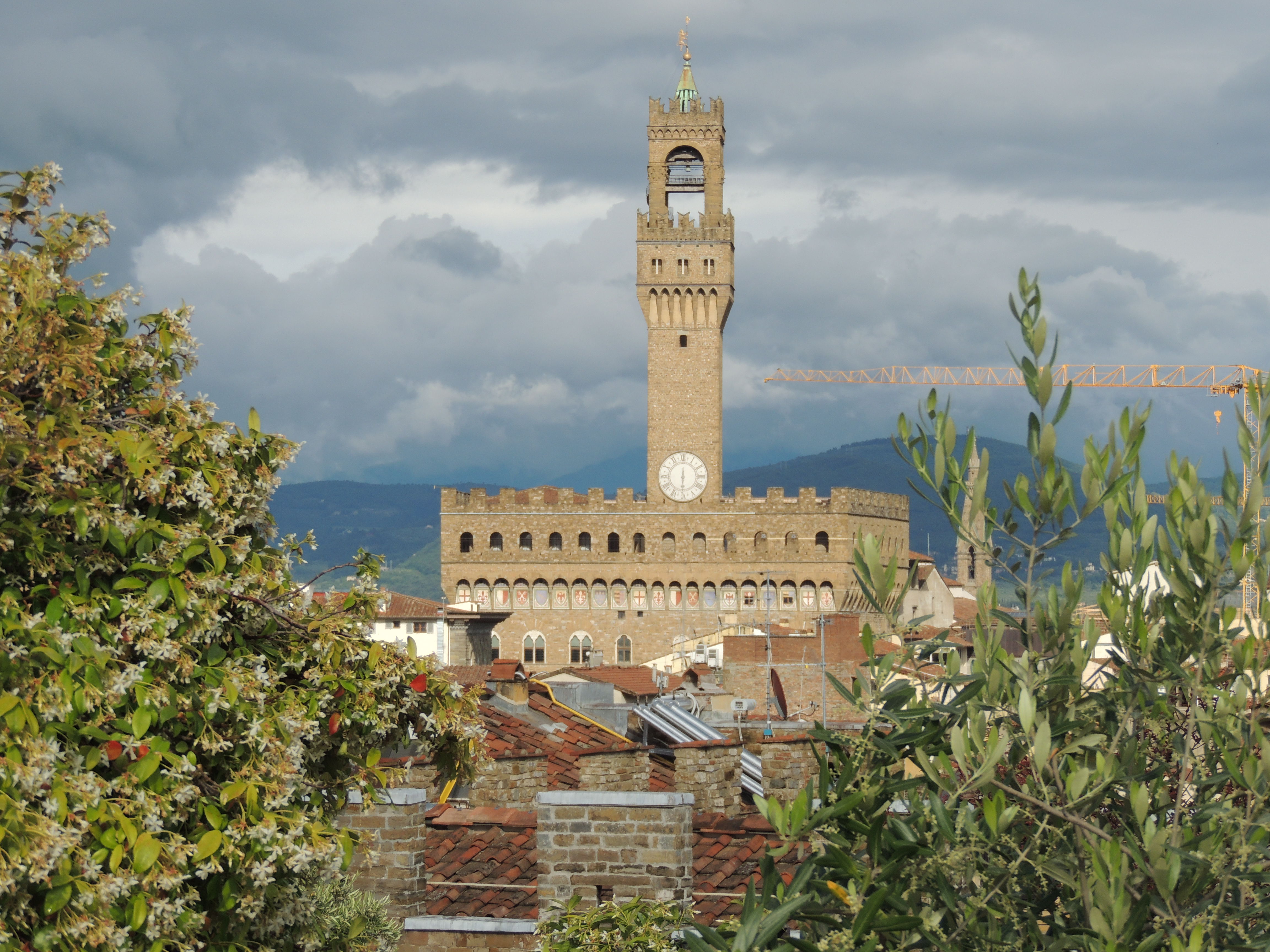
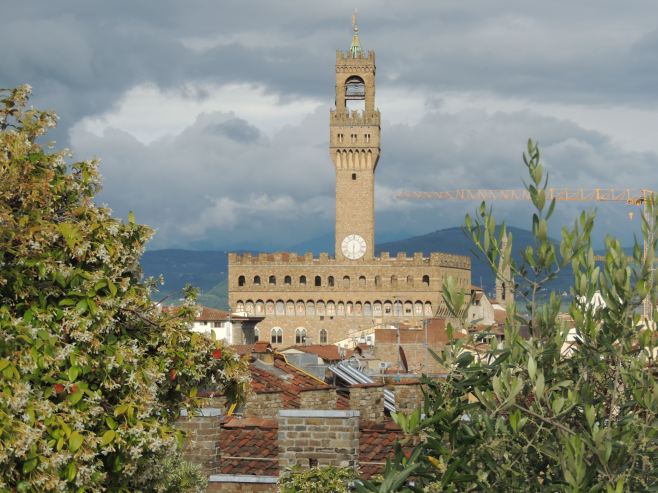
Palazzo Vecchio

Palazzo Vecchio

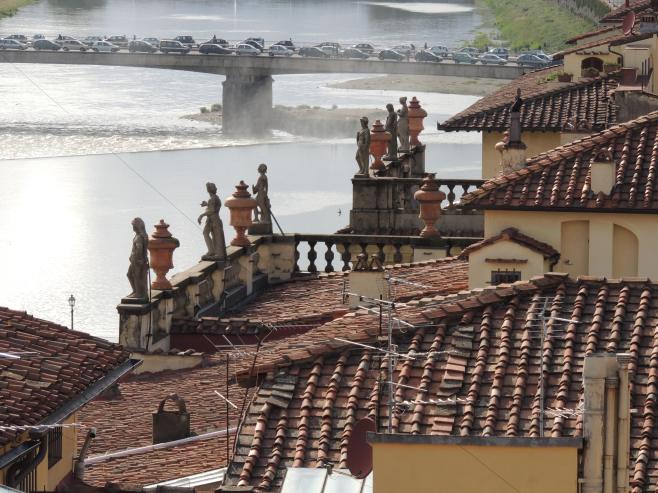
Sculpture

Rooftop Sculpture in Florenc

Tte Window of the World

The Window of the World

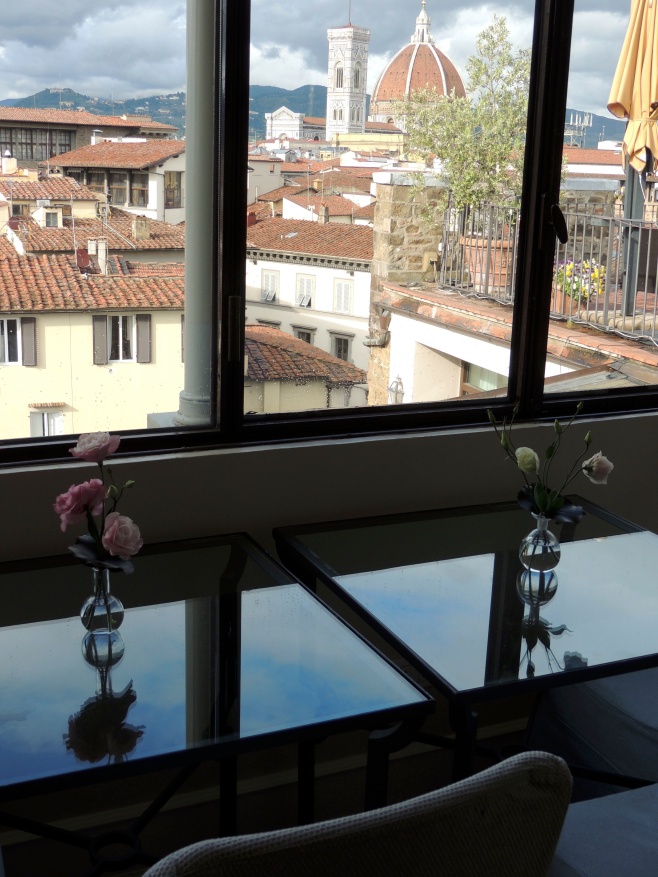
Thinking about our visit to Florence I can’t get over all the beautiful art we have seen in the Uffizi Gallery, the Pitti Palace, the Duomo Museum and the Accademia. I was especially excited over the artwork of Artemisia Gentileschi, (1593-1653) that SB pointed out to me in the Uffizi Gallery ( Judith Beheading Holofernes) and the Pitti Palace (The Conversion of Magdalena, Judith and Her Maidservant and David and Bathsheba). I first read about Artemisia Gentileschi in a book called, The Passion of Artemisia: a Novel, by Susan Vreeland. Delving into the themes of art, history and the lives of women, this is is a book that I thoroughly enjoyed.  Gentileschi painted many pictures of strong and suffering women from myth and the Bible. Her works include victims, suicides, warriors and especially, the Judith story. When you read the book and then see her paintings, her real life and her paintings intertwine and give you perspective of the times and how this woman lived and painted, and why she did so. Even her style of painting called chiaroscuro, which represents a strong contrast between light and dark, gives us a glimpse of her life.

One of Gentileschi’s works, David and Bathsheba, completed in 1635, had been found after centuries of deterioration, in a storage deposit area of the Pitti Palace, revealing decay, color flaking, due to improper storage conditions, and humidity damage. The re-evaluation of the Gentileschi’s courageous life and works were brought into focus with the attention of the Florence Committee of National Museum of Women in the Arts, who decided to fund the restoration of David and Bathsheba. Today, Gentileschi is regarded as the most progressive and expressionist painters of her generation.

Thinking of that book, brought to mind another book, called The Birth of Venus, by Sarah Dunant. This historical novel of Florence is a story of love, art, religion and power  as told by Allessandra Cecchi when her father brings a young painter to paint the chapel walls of the family’s pallazzo. This story is told while Florence is caught in a state of turmoil imposed by the fundamentalist monk Savonarola, who is seizing religious and political control and the Medici State, with it’s love of luxury, learning and art. On our walking tours of Florence we learned a great deal about the Medici family and Savonarola.  Recalling that book, brought to mind The Lord’s Supper, painted on the wall of the Santa Maria della Grazie Church in Milan, which I have been lucky enough to see.

I was curious to learn how all this beautiful artwork was saved during WWII. Now, I am currently reading, Saving Italy: The Race to Rescue a Nation’s Treasures from the Nazis, by Robert Edsel. In particular I am interested in, General Karl Wolff, a German officer, who risked his life to save the collections of the Uffizi Gallery and the Pitti Palace. Robert Edsel also wrote, The Monuments Men: Allied Heroes, Nazi Thieves, and  the  Greatest Treasure Hunt in History, now made into a motion picture of the name, The Monuments Men.

San Gimignano, twenty-five miles south of Florence, will be our first stop on our way to Montepulciano, where we will be making our home base for our Tuscany visit.

The parking lot outside the main gate, Porta San Giovanni, was very busy as we approached.  The village itself is pedestrian only. Getting in the car parking queue we had to wait for a car to come out before we could go in and take the spot. One in, one out.  San Gimignano gives you a glimpse of a real Italian countryside experience, but with just enough shops and restaurants added to make it interesting for tourists.  The towers are restored replicas of the original, but they look authentic.

San Gimignano is a small, walled, medieval hill town with fourteen towers of various heights, replicated of the original seventy-two. Before the walls were developed around the town, these towers were a refuge, when ruffians and rival city states were sacking the town.  If under attack, the tower owners would set fire to the external wooden staircase, leaving the sole entrance to the house and it’s strongholds, unreachable. Today you can see all these tiny slit entrances way up on the second story of the towers, minus stairs to get to them. Also, notice that the buildings are made of different colored stones and brick. Heavy stones were used for the bottom floors and lighter cheaper bricks for the upper floors. In the year 1300, about 13,000 people lived within the walls. In 1348, a six-month plague left the town with 4,000 survivors. Crushed and demoralized, the town came under Florence’s rule and was forced to tear down it’s towers, and the trade route was re-directed away from San Gimignano. The town never recovered and poverty drove the well-preserved city to be as it is today.

Our walk takes us through the Porta San Giovanni up to the Piazza del Duomo, and the church itself, which features Sienese Gothic art_ Old Testament to the left___New Testament to the right. Further up the hill is the is Sant’Agostino Church, built by the Augustinians, who arrived in 1260. Here there are English speaking friars, who are happy to tell you about the church and their way of life. We stop and have lunch at the Locanda di Sant’Agostino, right next door to the church on a beautiful small piazza. The restaurant serves typical Tuscan home cooked meals, which would be paninos, pizza, pasta and insalatas, served with a local fruity white wine.   Walking back down the hill, along the ramparts, there are superb views of the Tuscan countryside. Soon we are inside the Rocca, originally another walled defense area, now a small walled garden of olive trees, where a group of men are singing and playing instruments. I loved our time in San Gimignano, but it is time to move on to Montepulciano. For more interesting history and scenes of Sam Gimignano, view the movie, Tea With Mussolini, a 1999 drama of the plight of American and English expatriate women during WWII. Most of the scenes are of Florence and San Gimignano, where the movie was filmed. In particular it reveals the artworks inside the Duomo of San Gimignano and how the women came to be there and tried to save the art. For more readings about the war and art see my  blog postings on Milan,  https://cadyluckleedy.com/2014/02/14/one-day-in-milan/ and the War in Val  D’ Orcia, https://cadyluckleedy.com/2013/04/11/war-in-val-d-orcia near Montepulciano. See you next in Montepulciano!

TTT, Traipsing Through Tuscany

Today starts a new Series in Italy, called TTT, Traipsing Through Tuscany.  Traipsing through the hill towns to be exact. Getting off the beaten track has been some of our best excursions! A bit of advice, we flew into Florence where we took a cab into the city. So we will begin in Florence. After spending a week here we went back to the airport and got a rental car to drive on through Tuscany and the hill towns.  We spent  a week in Montepulciano. As a home base it was perfect.  We explored surrounding hill towns, always coming back to Montepulciano in the evenings, and then we drove on to Rome. We dropped the car off at the Rome Airport and took a cab into Rome, where we stayed another week.  Much easier!  You could not pay me enough to drive in the bigger cities and spend a great deal of time just looking for a place to park.  There aren’t any parking spaces to be found! Save yourself the headache!

Florence, by far is my favorite biggish city in Italy.  It is easily walkable, with museums, restaurants and shopping galore. If museums are not your thing, there is plenty of beautiful outdoor art such as sculptures, icons, buildings, bridges and churches to keep you interested. One of the rituals, near our hotel, was a woman artist who sketched daily with colored chalk on the pedestrian-only street. This was truly a street scene because her sketching would cover a large section of ground. She would work on it all day. It was beautiful!  Very early the next morning between 4am and 5am the street cleaners would come through with their brushing machines and  brooms and wash it all away. Around ten in the morning she would start again with a new scene. Unbelievable!

To see the highlights of Florence we took walking tours that also included the museums. We tried for months to get tickets for the major museums and there were none to be had online. They were available through tour groups. In the end it worked out well because we never had to stand in line to get in the museums, and there were long, long lines. The downside is WE could have spent more time IN the museums, hours and hours. The tour group went to the major and most appealing exhibits, and that would be fine for most. The four tours we took were offered by Art Viva. They were the Original Florence Walk, the Masterpieces of the Uffizi Gallery Tour, and the Original David Tour.   These walks are long, at least three hours each with additional time added for the museums! Wear comfortable shoes! The English speaking walk leaders are very knowledgable, and we stopped occasionally for a cuppa, (wine, coffee, tea) always at good locations for people watching! We took three tours in one day and I was pooped, but from then on we knew where everything was and went back to the areas we wanted to spend more time in on other days.  On another evening we took the Original Evening Walk in Oltrarno, which included a wine and olive oil tasting!  We had a wonderful time on these walks and there are many to choose from!

On this visit we stayed at the Hotel Davanzati, a small boutique hotel located near the Uffitzi Gallery and right across the street from where the Original Florence Walk started each morning. This was good because we didn’t have to walk a great deal before we started the walk. Entering a doorway in the historical area there are a number of stairs to climb to reach a tiny elevator that takes you to the reception area and then to the upper room floors of the Davanzati Hotel.  The owner and his son were there everyday to recommend restaurants and sights to see, provide maps and answer any questions we had.   The breakfasts and late afternoon wine/happy hour gatherings were a big hit. The rooms were tastefully decorated and immaculate. After a lovely week in Florence we were in a rental car and on our way to Montepulciano, to get a taste of the countryside, the hill towns, and the slower pace of Italian life. See you in San Gimignano!


For more information about Hotel Davanzati see: http://www.hoteldavanzati.it

For more information about the Art Viva walking Tours see: http://www.italy.artviva.com

Ring Around the Kerry

This is my last posting of 4, of the Going Green to Ireland Series.

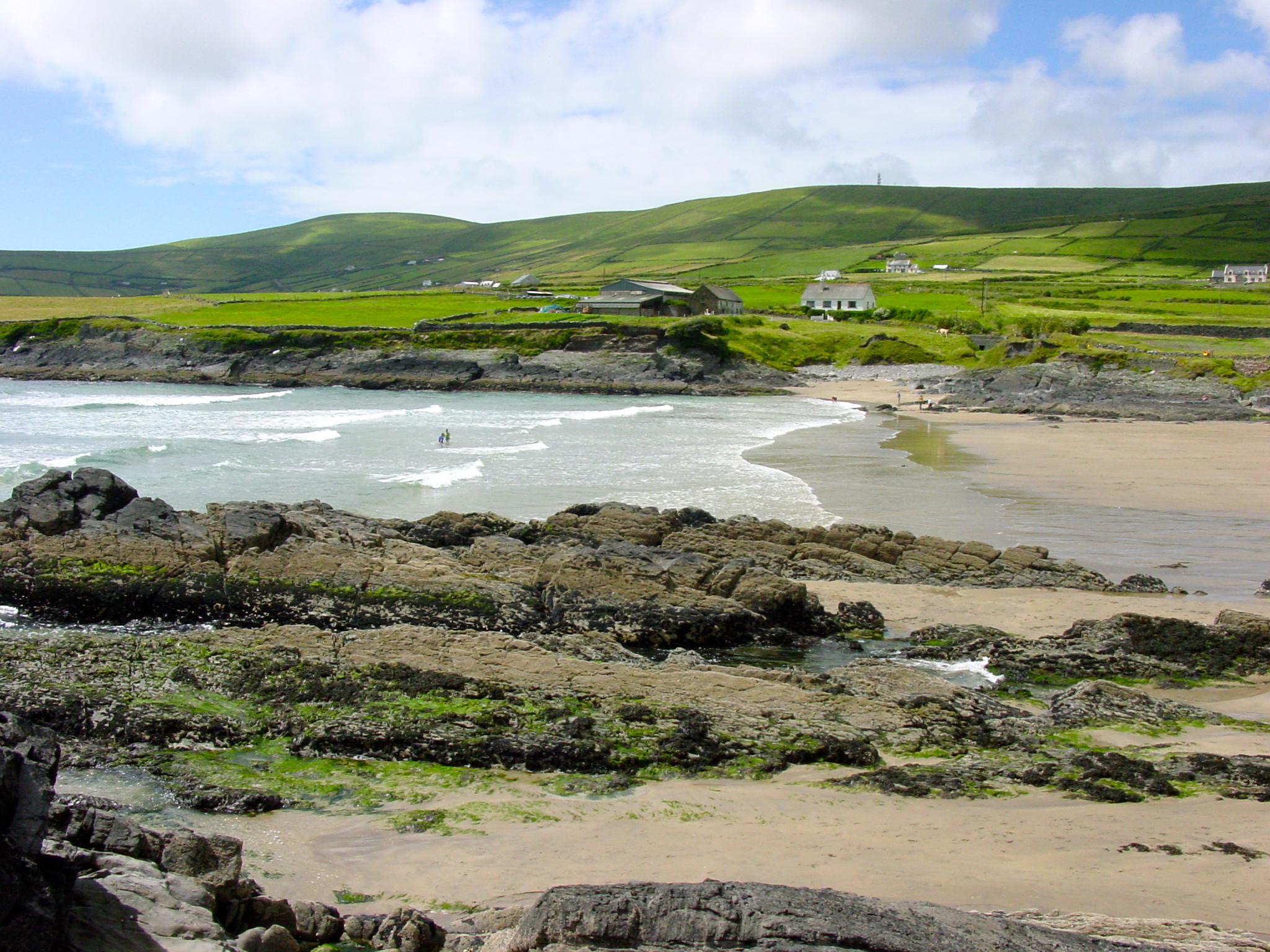
St Finian's Beach

St Finian’s Beach

We are on a long circular stretch of road called the Ring of Kerry from Killorglin to  Kenmare. We are adding in the Skellig Ring, a twenty mile, bus free ring road, traveling out to Portmagee. Here we reach St Finian’s Bay, where we will staying at the Beach Cove B&B, owned by Bridie O’Connor.

The Beach Cove B&B

The Beach Cove B&B

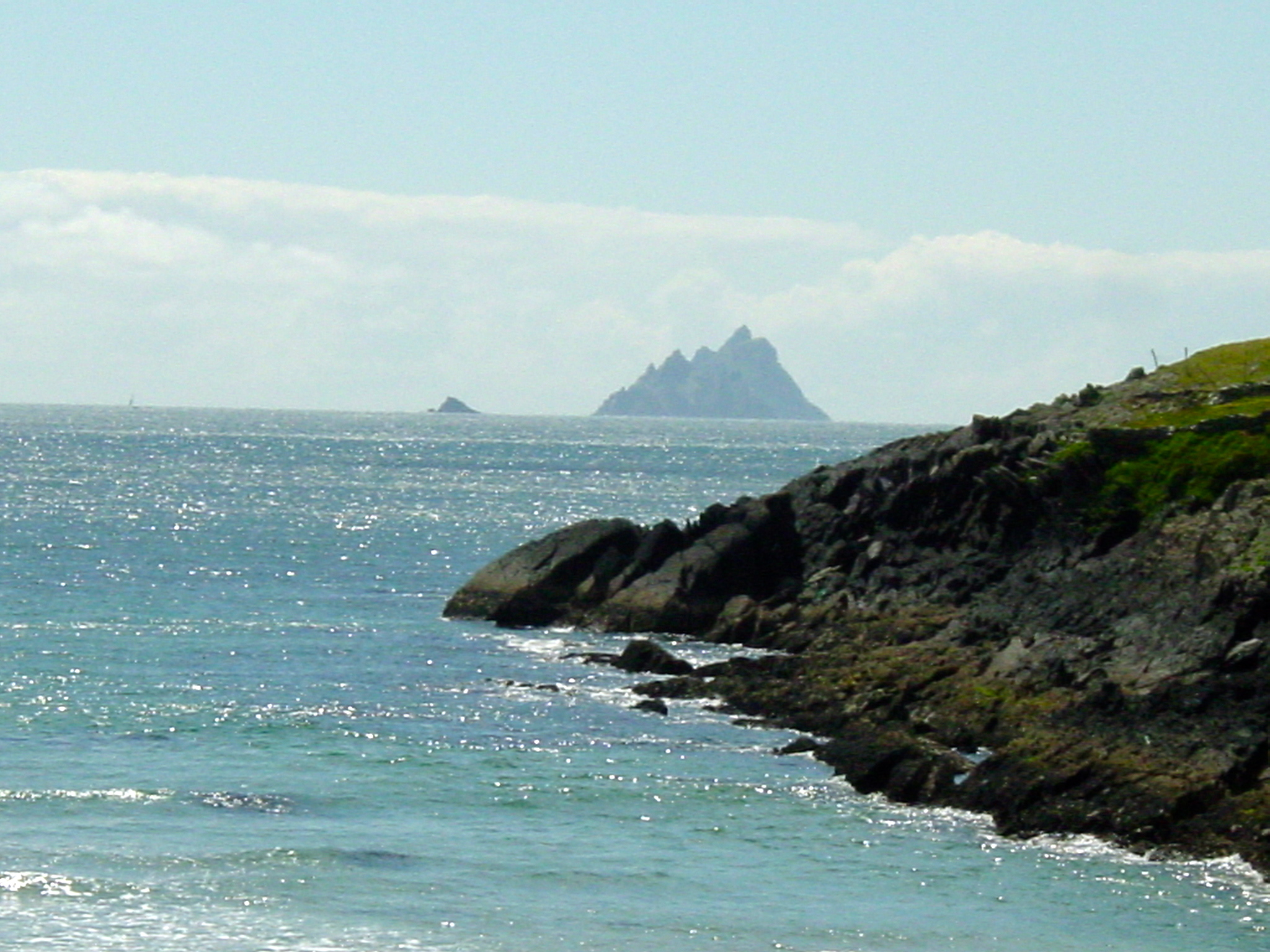
She offers four comfortable rooms on Coomanaspic Ridge, overlooking the beach at St Finian’s Bay. We are welcomed by bright sunshine, but cool temperatures, and as we sit on her lawn bundled up in our jackets and wool caps to watch the world go by, there are people in the bay swimming. I guess if the sun is shining make hay or swim!  Later we travel around the entire Skellig Ring, and I like the antics of the puffins as well as the views of the Skelligs, two huge slate and sandstone rocks, seven miles from the shore.

The Skelligs

The Skelligs

Skellig Michael, the larger of the two, has a tiny cluster of abandoned bee hive huts clinging near the summit. The island was originally inhabited by ultra-pious, sixth-century Christian monks seeking isolation to get nearer to God. The smaller island, Little Skellig, is home to a colony of gannets (a large sea gull) protected by law from visitors stepping foot on shore.

The Beach Cove B&B is perfectly situated on the bay and is just down the road from the Skelligs Chocolate Factory. Yes, a chocolate factory on the tiny road around the bay! Inviting visitors in for a sample they proclaim their chocolates are “ never boring, always gorgeous, and sometimes a little different…..just like the Irish!”  Where else can you find dark chocolate, lime zest and pepper chocolates, I think?  I buy several different varieties for our road trip. Fabulous! Spending only one night here we move on the next day following the ring along the shore and then back to the bigger Ring of Kerry to Kenmare, a lovely little town where we stop for a look see and lunch.

Muckross House

Muckross House

Muckcross House Garden

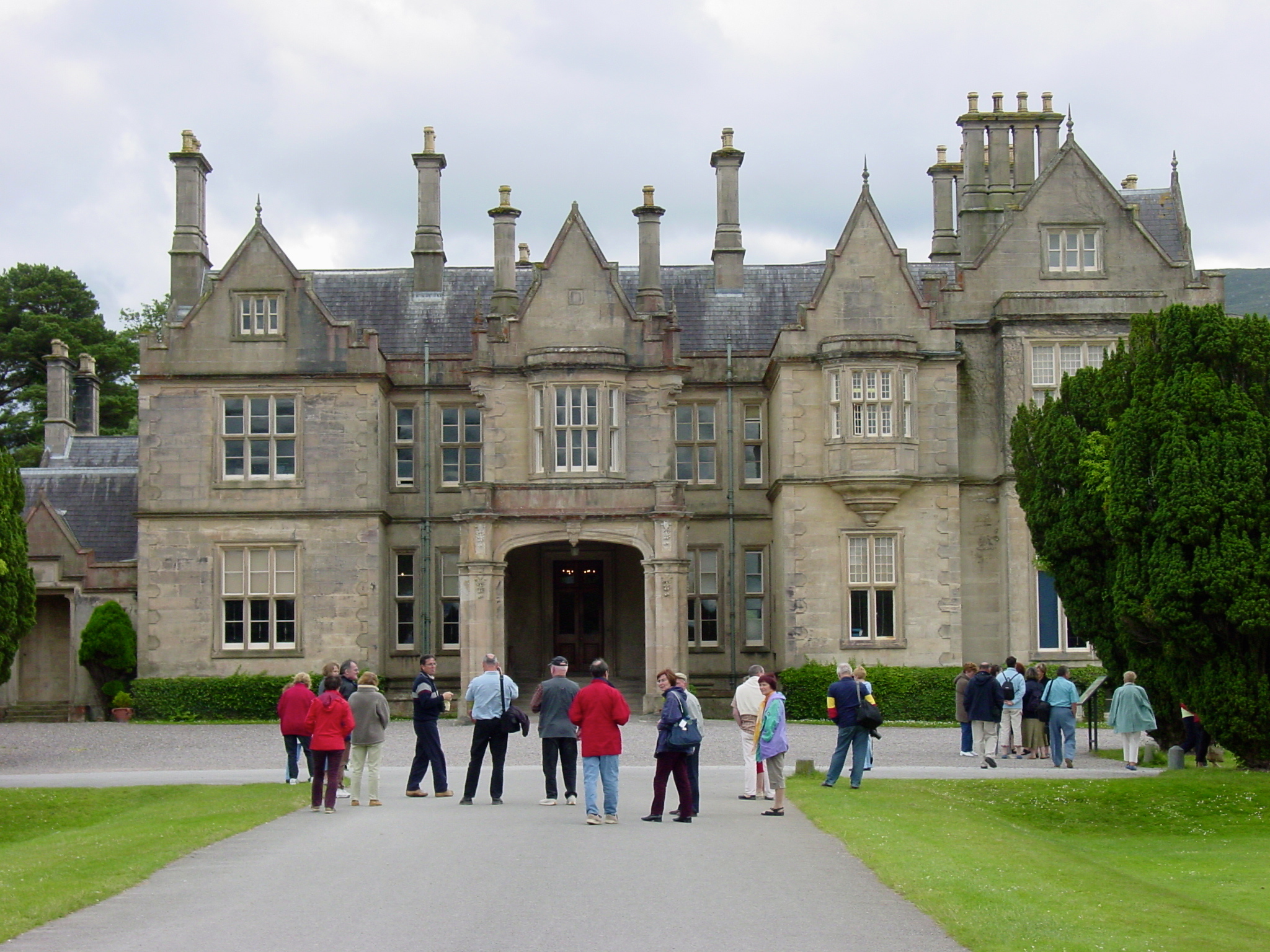
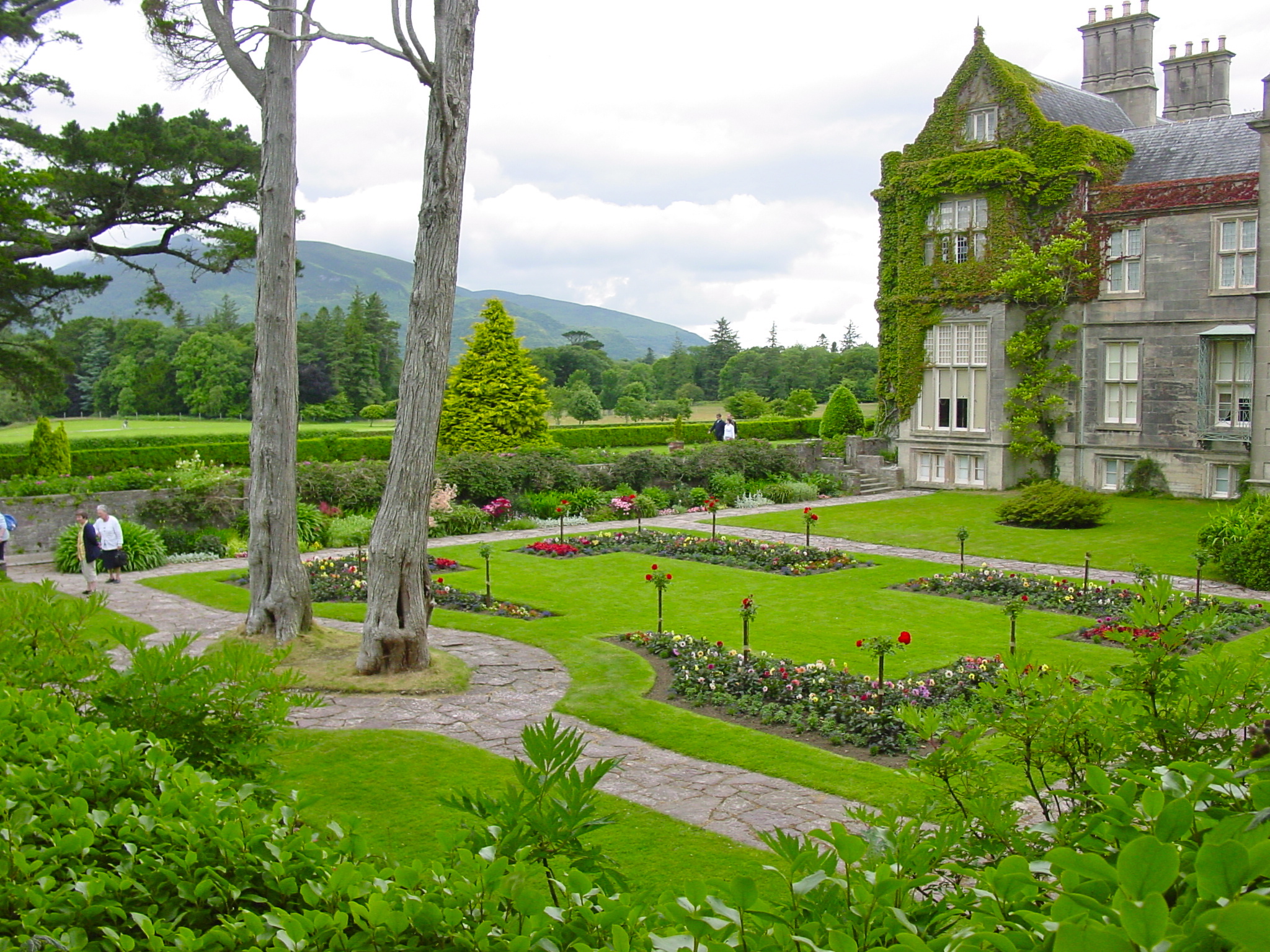
Our last stop is the Muckross House, located on the small Muckross Penisula, located between Muckross Lake and Lough Leanne. Muckross House is a mansion built in 1843 for Henry Arthur Herbert and his wife, watercolorist Mary Balfour Herbert. With sixty-five rooms, expansive improvements were made in the late 1850’s in preparation of the visit of Queen Victoria in 1861. It is said that these improvements for the queen’s visit resulted in financial difficulties for the Herberts’ resulting in the sale of the estate in 1899 to Arthur Guinness, who wanted to preserve the dramatic landscape. In 1911, the estate was sold to William Bowers Bourn, an American mining magnate. In 1932, Muckross House and the 11,000 acre estate was presented to the Irish nation, and became the first National Park in the Republic of Ireland and formed the basis for the present day Kilarney National Park. The house and grounds are beautiful!  Be sure to take the cart ride out to the falls!

Last, but not least, I want to mention my favorite author, Maeve Binchy.  I picked up my first “Maeve” book in an English bookstore in Quebec, Canada, mostly because I thought she had the most unusual name. I went on to read every book I could find.  A novelist, playwright, short story writer, columnist, and speaker, she is known for her humorous take on small-town life in Ireland and her descriptive characters. I am inspired by her. Her novels have been translated in 37 languages and sold more than 40 million copies worldwide. She finished third in a 2000 poll for World Book Day. Binchy was raised Catholic and attended convent schools, but a trip to Israel affected her life and her career.  To quote Maeve.

“In 1963, I worked in a Jewish school in Dublin, teaching French with an Irish accent to kids, primarily Lithuanians. The parents there gave me a trip to Israel as a present. I had no money, so I went and worked in a kibbutz– plucking chickens, picking oranges. My parents were very nervous; here I was going out to the Middle East by myself. I wrote to them regularly, telling them about the kibbutz. My father and mother sent my letters to a newspaper, which published them. So I thought, It’s not so hard to be a writer. Just write a letter home. After that, I started writing other travel articles.”

Maeve went on to write and write. I love all her books, but I re-read every year, The Lilac Bus and Evening Class. My inspiration, is her book, the Maeve Binchy Writer’s Club, words of encouragement in letters from Maeve. To read about the Irish culture, Maeve Binchy, is the author for you! Sadly, Maeve passed in 2012 and is missed by readers everywhere.

For more information about Beach Cove B&B see: http://www.stayatbeachcove.com

For more information about the Skellig Chocolate Factory see: http://www.skelligschocolate.com

For more information about Muchross House see:http://www.muckross-house.ie

For Information about Maeve Binchy see:http://www.maevebinchy.com

From Cong to Dingle

This is Part III in a series called Going Green to Ireland. We are driving along the western coast of Ireland.

Saying goodbye to Ashford Castle today we are driving to Kinvara, where we will be staying in the Cois Cuain B&B. Mary Walsh greets us into her three bedroom cottage with  a garden overlooking the square and harbor close to the Dunguaire Castle, a 16th-century tower house on the southeastern shore of Galway Bay.

Dunguaire Castle

Dunguaire Castle

Dunguaire Castle is one of the most visited castles in Ireland. Tonight we will be attending a medieval feast of food, folk music and storytelling at the castle. Greeted by the butler, who gives us a brief history of the castle and a goblet of mead, we are led up the stairs to the Banquet Hall and seated on benches at long oak tables. I have learned another thing here this evening, even in the summer it is very cold in a stone castle. Bundle up!   We enjoyed our evening meeting other travelers and participating in the feast.

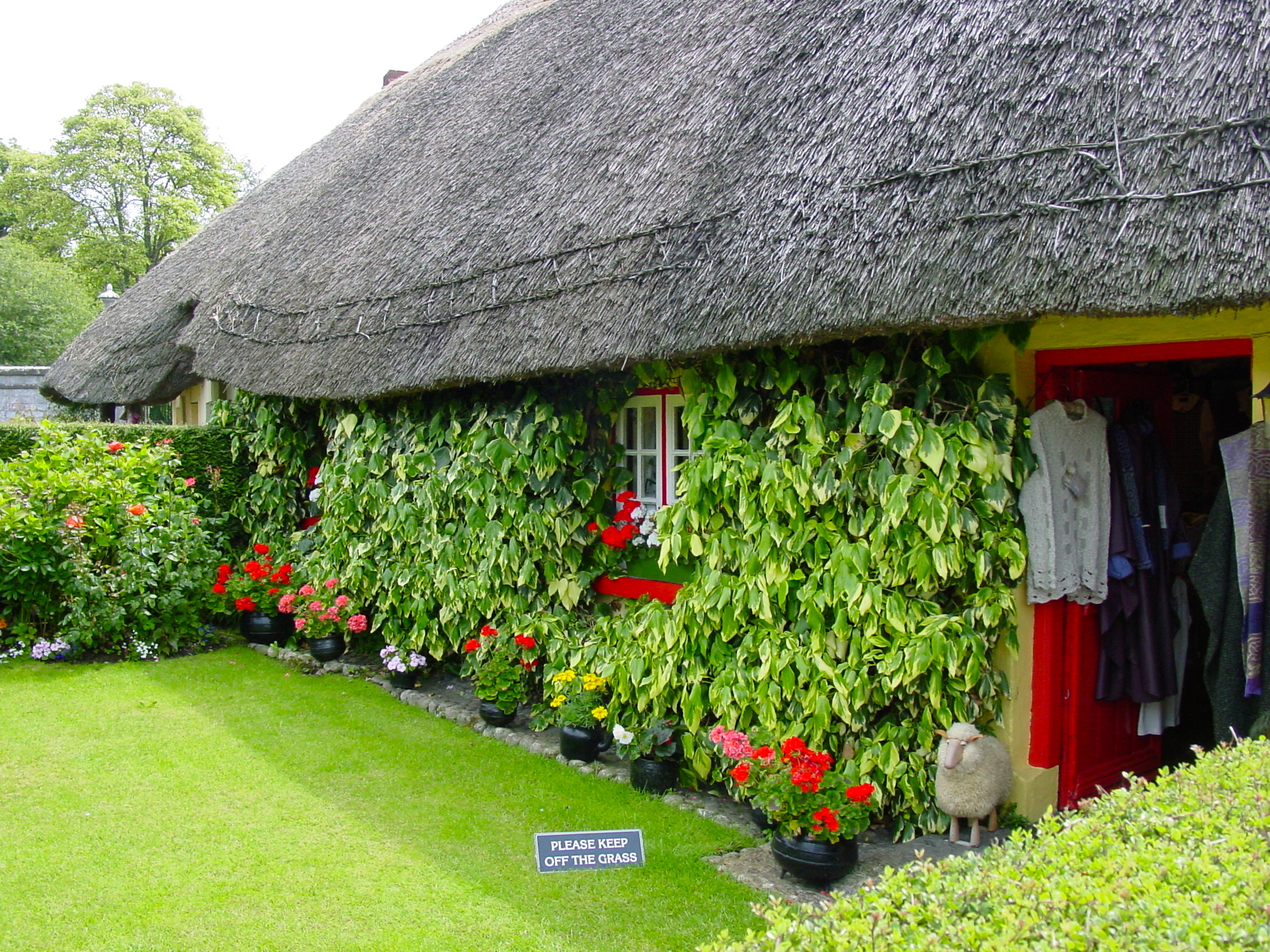
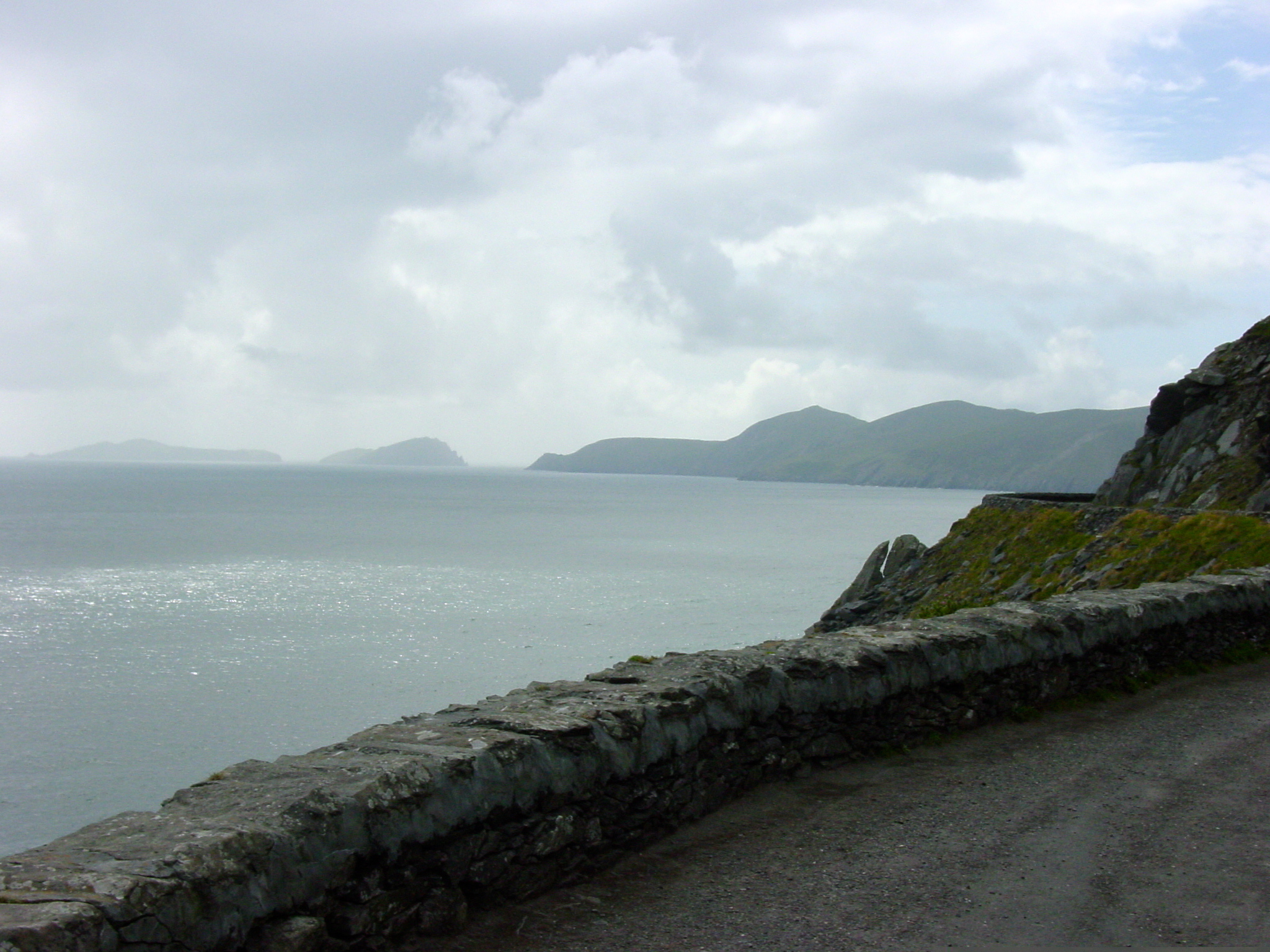
The next day, after Mary’s terrific breakfast, we head to the Cliffs of Moher. Facing gale winds and a torrential downpour we walk to the edge of the cliffs. On the way back to the car we stop to have hot chocolate in the tiny cliff restaurant to warm up!  Making our way to Dingle we enjoy the peacefulness of the drive, just looking at the scenery; the potato fields separated by stone walls and fields of cows. Going through Adare we stop and look in the old thatched cottages that are now shops.

Adare  Thatched Cottages

Adare Thatched Cottages

Adare Gift Shop

Adare Gift Shop

Rainbow in Dingle

Rainbow in Dingle

Dingle, is a fishing village on the mountainous finger of land that juts into the Atlantic Ocean that has supported various tribes and populations for almost 6,000 years. Because of the remote location and lack of specialized agriculture there is a large preservation of over 2,000 monuments from the Mesolithic Age onward. On our first full day in Dingle we signed up for a tour with Sciuird Archaeological Tours. (Screw-id)  The tour is offered by Tim Collins (a retired Dingle police officer) and Michael, his son. A group of six ventured off in his van. We were transported down tiny farm roads, (formerly cow paths) and over hedges and ridges to view mysterious stone tombs, sweeping seasides and long forgotten castles, all while Tim offered a commentary on the history of Dingle.

Dingle Loop

Dingle Loop

Puffin

Puffin

Two tours are offered: west to Gallus Oratory and east to Minard Castle.  We enjoyed both tours. Returning to Dingle, after the tours, we were delighted to find that St Mary’s Church was having a folk music concert that evening. Enthusiastic guests were toe-taping to Irish jigs and teary eyed with the slow haunting melodies. Afterwards, everyone to the pub!

For more information about the Cois Cuain B&B see: Several listings are on the internet under Ireland B&B’s

For more information about the Dunguaire Castle see: Several listings are on the internet under Dunguaire Castle.

For more information on the Sciuird Archaeological Tours see: http://www.dingle-peninsula.ie/tours.html

Be sure to watch my video to explore Ireland!

The King of Cong

A Look at Ashford Castle

A Look at Ashford Castle

This is Part II in the Going Green to Ireland series.  Today we have made our way to Cong!

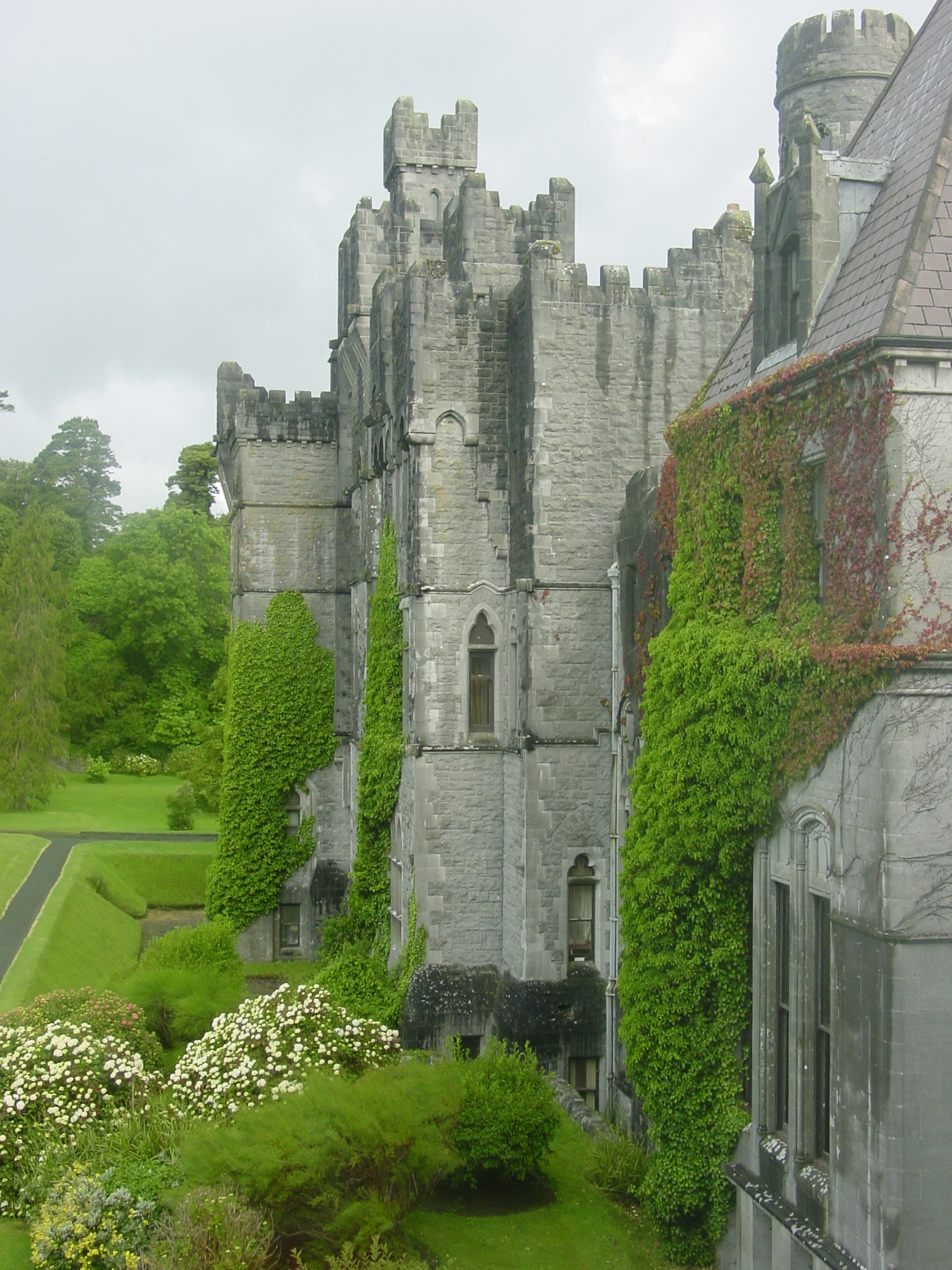
Ashford Castle is a medieval castle built in 1228 by the Anglo-Norman de Burgo family. Over the centuries the castle has been expanded and turned into a five star luxury hotel near Cong on the Mayo/Galway border in Ireland, on the shore of Lake Corrib. In 2012 the hotel was voted the best resort in Ireland and the third best in Europe by Condé Nast Traveler. We arrived at the expansive wrought gates and drove down the long driveway to the castle at early dusk. In the shadows I felt just like a maiden returning to the manor. We were shown to a beautiful corner room of the hotel with views of the garden and Lake Carrib.

King George Ding Room at Ashford Castle

King George Dining Room at Ashford Castle

The dining room was our next stop, just like something out of Downton Abbey, but on a much larger scale. It was tuxedos and white gloves for all the servers. Later, we topped off the evening in the castle pub, where the singing was about to begin. The Irish music was so captivating, and I had had just enough drink.  The result: I was coerced to go onstage and sing. It was so much fun! However, there was a group in the rear of the pub who would rather talk than listen and/or sing. Before I got up for the sing-along with the entertainer, he had warned the inattentive group to keep it down. We began our song, reading the lyrics from a tele-prompter. Of course he had a beautiful voice with an Irish brogue, and I was happily trying to sing along and not make a fool of myself.  During one of our subsequent songs, suddenly the entertainer stopped singing and the music stopped. He determined the guests at the rear table were not paying any attention and asked them to leave. So that was my stage debut and my last. But, it was great fun while it lasted!

Guest with Harris Hawk

Guest with Harris Hawk

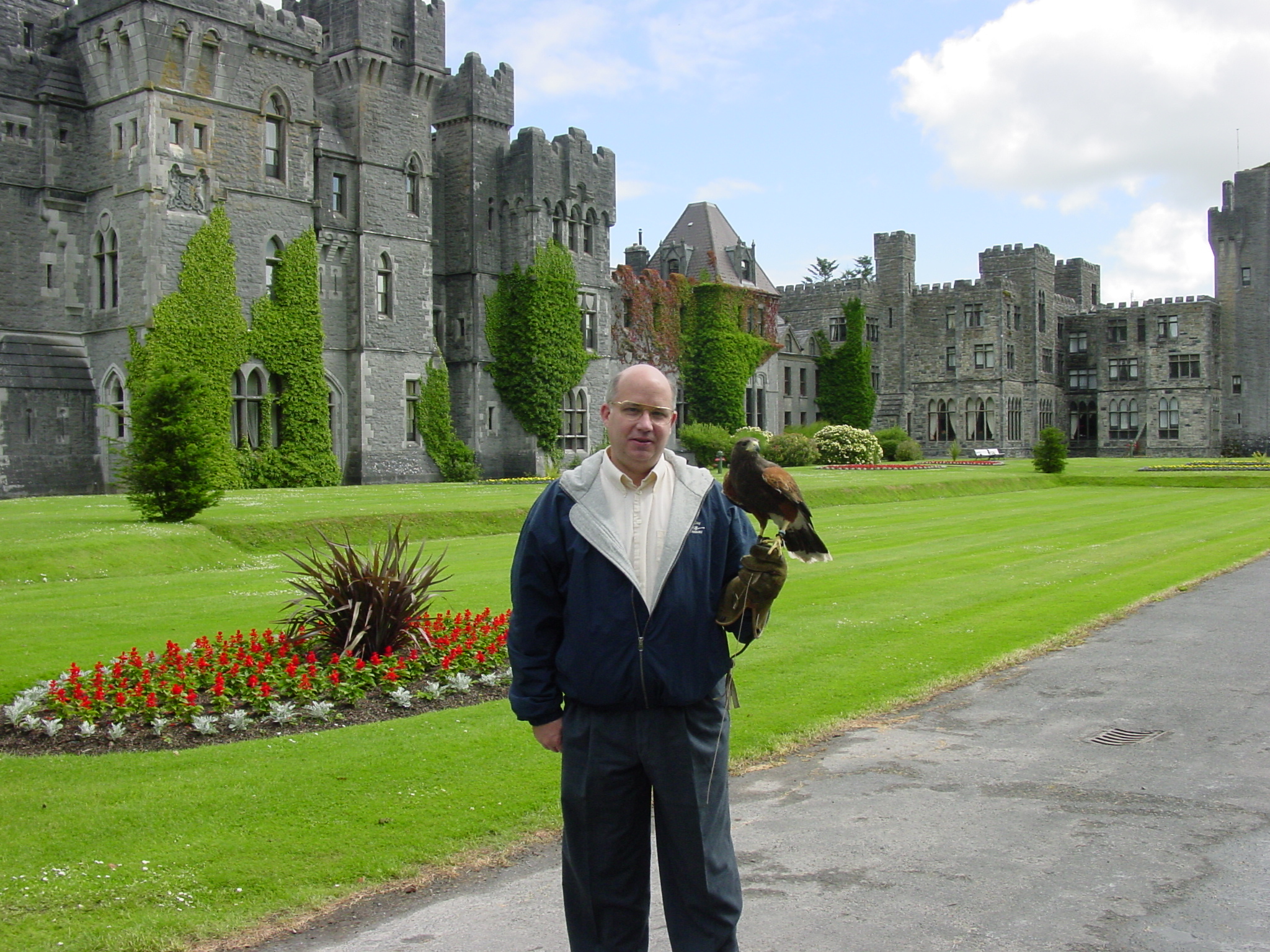
The next day we toured the Falconry School training area where falconry classes are taught at Ashford Castle, the oldest established falconry school in Ireland. A young American girl led the class and I watched and some participated in a session with a falcon and an owl, known as the Hawk Walk. Falconry is an ancient art and said to be the oldest sport in the world. It was used as a way to catch food for yourself and your family.  Harris Hawks, owls and falcons are brought from their cages and within minutes, with the bird sitting on your gloved hand you are ready for the walk and his performance. Our teacher explains the birds’ exceptional eyesight, speed and agility and how the bird will follow you from tree to tree and at the end return to your gloved hand. Everyone truly enjoyed the falconry class.

The Cong River

The Cong River 

 Later in the day we walked more of the grounds of Ashford Castle. I was particularly interested in seeing the cottages and land marks filmed in the 1951 movie, The Quiet Man, with John Wayne and Maureen O’Hara. The grounds of Ashford Castle and nearby village of Cong, formed the backdrop for much of the action in the film. It’s March, time to watch The Quiet Man and listen to Bing!

For information about Ashford Castle see:http://www.ashford.ie/irish-castles.html

Going Green to Ireland

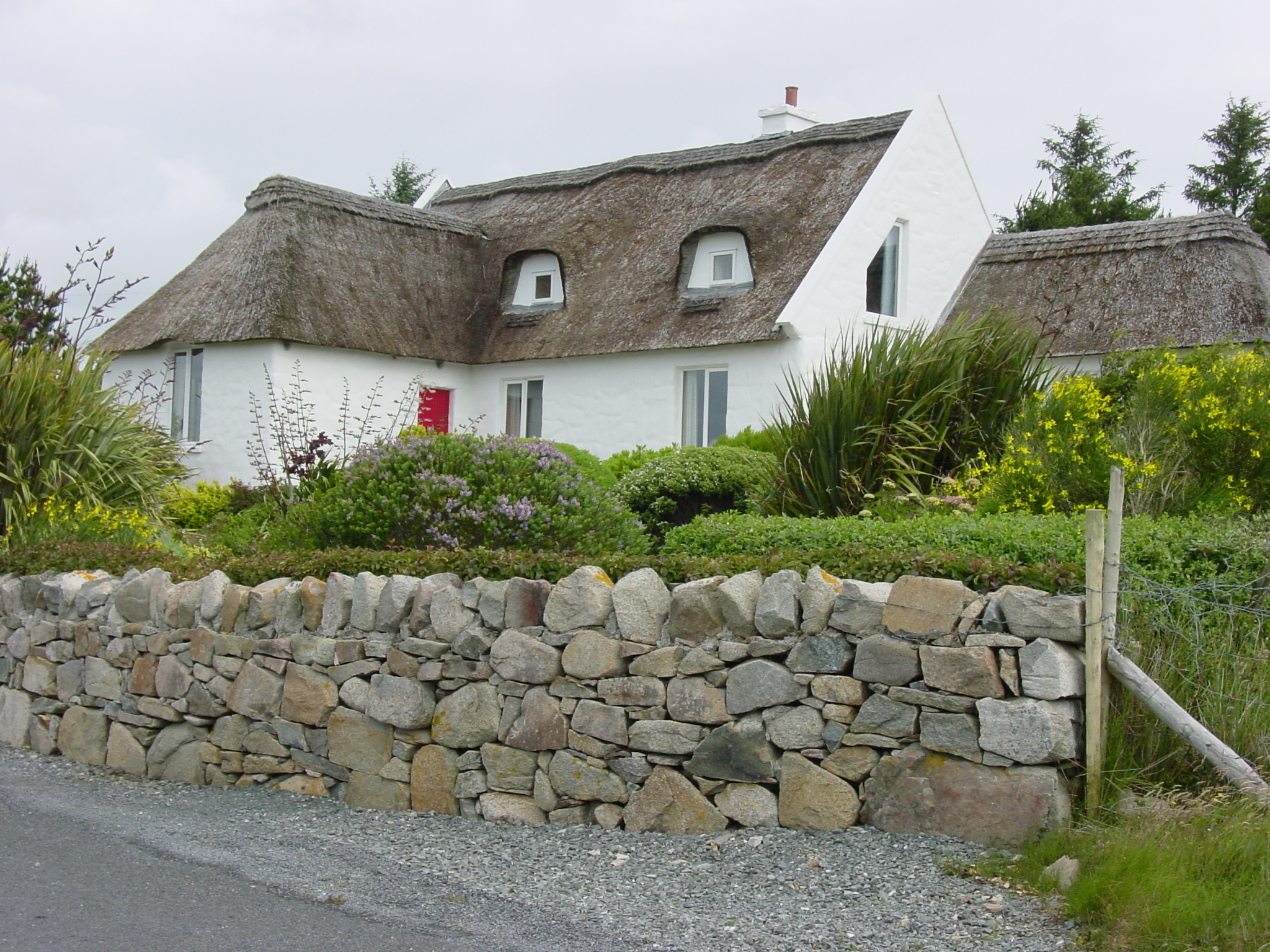
Thatched Roof Cottage Connemara, Ireland

Thatched Roof Cottage Connemara, Ireland

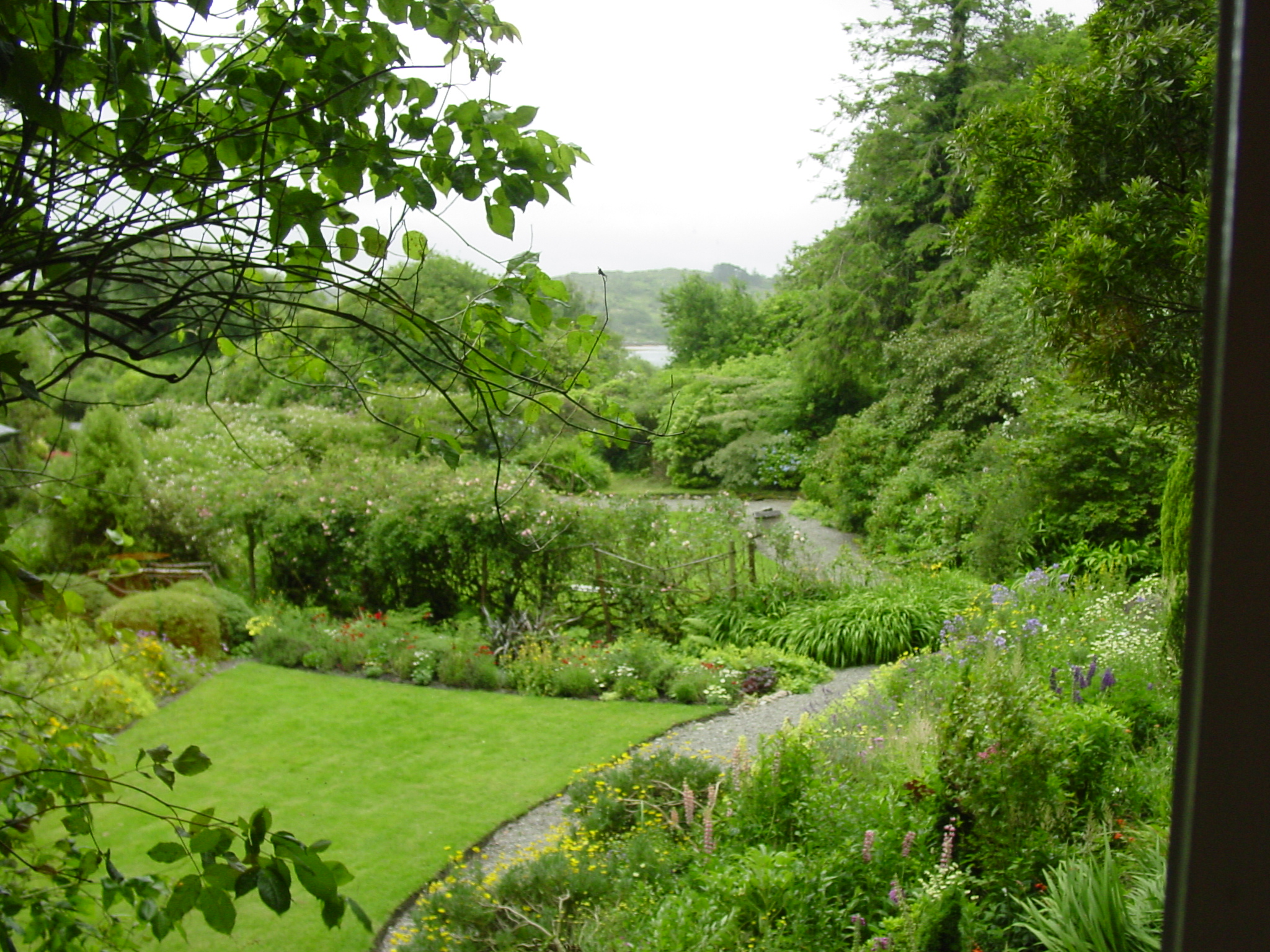
Cashel House Gardens

Cashel House Garden

Wild Rhubarb

Wild Rhubarb

March is all about green so we are off to Ireland! On this adventure we want to see the Ireland we have seen in the movies.

During this excursion we are renting a car to get around. I am driving……on the left side of the road…….. shifting gears with my left hand………the driving seat on the ride side of the car.  Hmmmmm……this will be interesting.  During car inspection in the Shannon Airport we notice the side-view mirror of the rental car is askew.  Not to worry, it just seems loose and the attendant is not concerned. The road out of Shannon is a divided two lane highway that soon narrows to a smaller road, which narrows to a smaller road, which narrows to a smaller road……  At the tight spots, we face cars head on and inch by each other, very slowly, since there are no places to pull over.

Traffic on west coast of Ireland

Traffic on west coast of Ireland

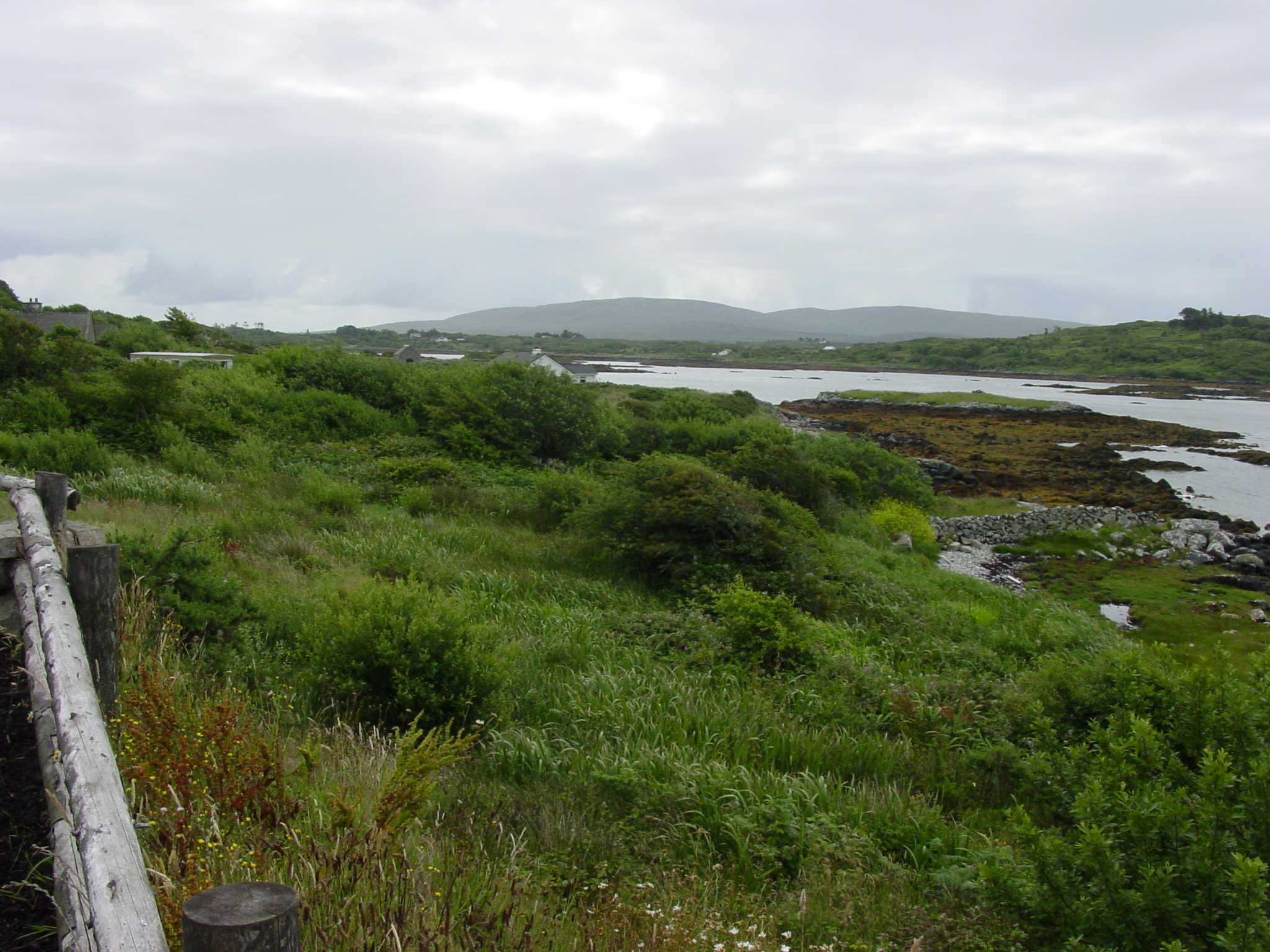
We are surrounded by trees or stone walls. Now I know why the side view mirrors are loose! They kiss as we pass each other! Before we know it we are on gravel roads surrounded by peat bogs or sheep grazing on the knolls. I have never seen a peat bog; a marsh without cattails, a wetland made up of dead and decaying vegetation.

Peat Bog in Connemara

Peat Bog in Connemara

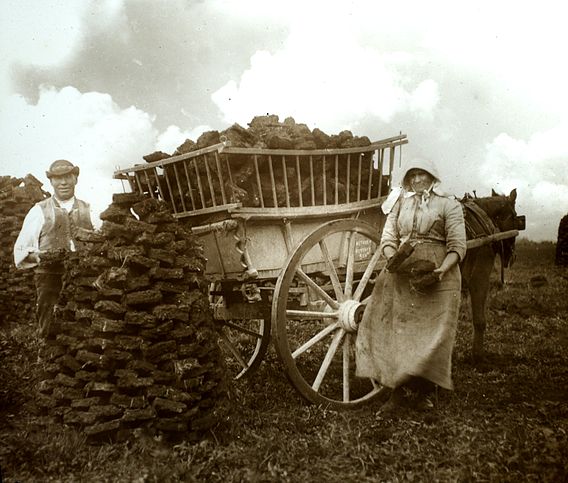
Moss, mud and an earth mixture are dug up and made into little bricks. Peat bricks are piled high along the gravel road to dry out. I have to get out and look at the bog closely. Stepping on it is like stepping on a sponge. How to they get those peat bricks so uniform and perfect in size? It is getting dark with a drizzle of rain as we pull into our first stop, Cashel House in Connemara.

Bay from Cashel House

Bay from Cashel House

Cashel House overlooks the Cashel Bay on the west coast of Ireland. Designed by Geoffrey Emerson, the house was built in 1840 for Captain Thomas Hazell.  Geoffrey Emerson is the great, great grandfather of the present owner. The country home was converted to a family run four star hotel in 1968 by the McEvilly family. Situated in the heart of Connemara and nestled in 50 acres of gardens and woodland walks, it is perfect for artists or naturalists. Each of the 30 bedrooms and suites are decorated and furnished in antique furnishings presenting a charming chintzy country house style.  The turf fires give a relaxing homey atmosphere. Here are those peat bricks again! There is a sweet smoky smell wafting from the chimneys and fireplaces. I learn that a single brick-shaped piece of peat turf burns for 1 hour. Bogs are sometimes called fens, mires or quagmires.  Who knew?  There are hundreds of bog bricks placed next to the entry fireplace at Cashel House. The glass conservatory overlooking the gardens is now an elegant dining room. It is so romantic! Unfortunately, we only spend one night here and we are up and off early the next morning to a quick visit through Clifden, then on past the Kylemore Abbey and on into Cong, our next stop.

Clifden, Connemera

Clifden, Connemera

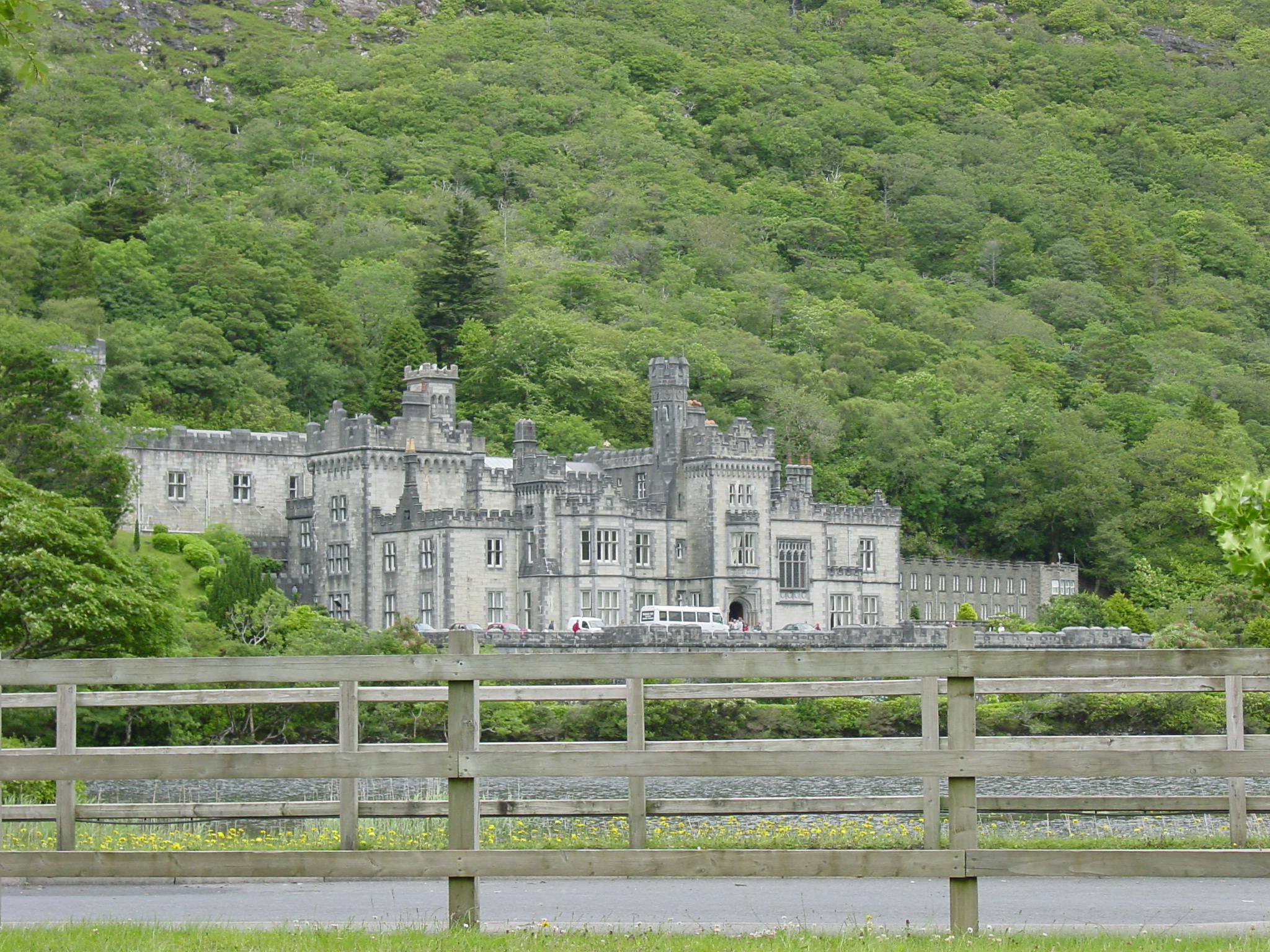
Kylemore Abbey, Connemera

Kylemore Abbey, Connemera

Kylemore Abbey and Castle, is home to a community of Benedictine nuns who came here in 1920 after the abby in Ypres, Belgium was destroyed in World War I.  (I have also been to the battlefields around Ypres, so will talk more about that in the Belgium post) At Kylemore the nuns opened a world renowned boarding school for girls and began restoring the Abbey, Gothic Church and Victorian Walled Garden. It was pouring today so we drove on to Cong.

The Irish in the Peat Bogs

My Peat Spade

My Peat  Spade

PS: A few years after the first trip to Ireland SB was in an antique shop in Northern England when he came across this item. A Peat Spade!!!!!  That’s how they get those bricks so perfect!  What a gift for me!

For more information on Cashel House and Gardens see: http://cashel-house-hotel.com/

For more information on the Kylemore Abbey, Castle and Gardens see: http://www.kylemoreabbeytourism.com

THE SPECTACLED BEAN

Tales, Thoughts + Tribulations of a Free Spirit in Suburbia

Walking Away

Travels on foot

Teacher nickname: The Three Hairs

Minding my mind, one thought at a time.

Tra Italia e Finlandia

Un lungo racconto fotografico.

seanbreslin.jp

Photography, hiking, walking, and cycling across central Japan — from quiet mountain paths to everyday life around Nagoya.

Lost in Translation

Looking for meanings in words, images and sounds

Journeys with Johnbo

Reflections on places traveled and photos taken.

M/VGratitude

Cruising with the Thyrre Family

Caroline's Travel Adventure Blog

Where my Travels and my Blog merge together.

Just Me, Nobody Special

The mental meandering that cross my keyboard

Jennifer's Journal

Website & Blog of J. Kelland Perry, Author

Slow Shutter Speed

A photographic journey.

Ann Mackay: Inspired by Nature

Photography celebrating flowers, plants, and the natural world

Still Restlessjo

Roaming, at home and abroad

Fine for Friday

The Corner Garden

Picture This

Photography, Travel and Retirement

World Traveller 73

Upgrade Your Travels. First Class Luxury Travel from all parts of the Globe. Business Class Airline, Lounge and Hotel Reviews, Stories and Adventures

Rachel Meets China

A China travel and lifestyle blog