Travel, Gardens, Food, Photography, Books, Shoes

Posts from the ‘Destinations’ category

The Wow in Wengen

Wengen

Wengen

This is my final posting of my favorite small villages in Switzerland. Interlaken, between Lake Thun and Lake Brienz, is touristy with lots of diverse restaurants and hotels.  Mürren sits high on a ledge and overlooks the Lauterbrunnen Valley.  Traffic-free, it is quaint and picturesque with shops, eateries and hotels.  Gimmelwald is traffic-free,  the smallest of the villages and one of a kind. There are great walks and hikes from Gimmelwald, which makes it very popular with the hiking crowd. But, my favorite of all the villages is Wengen.  Wengen, population 1,300, swells to 5,000 in the summer months and 10,000 in the winter. It too is traffic-free and to get there from Interlaken you take the train to Lauterbrunnen, and switch trains to go further to Wengen. Arriving on the train we see women getting off and unloading large trolleys of groceries and staples to pull up to the chalets and hotels.

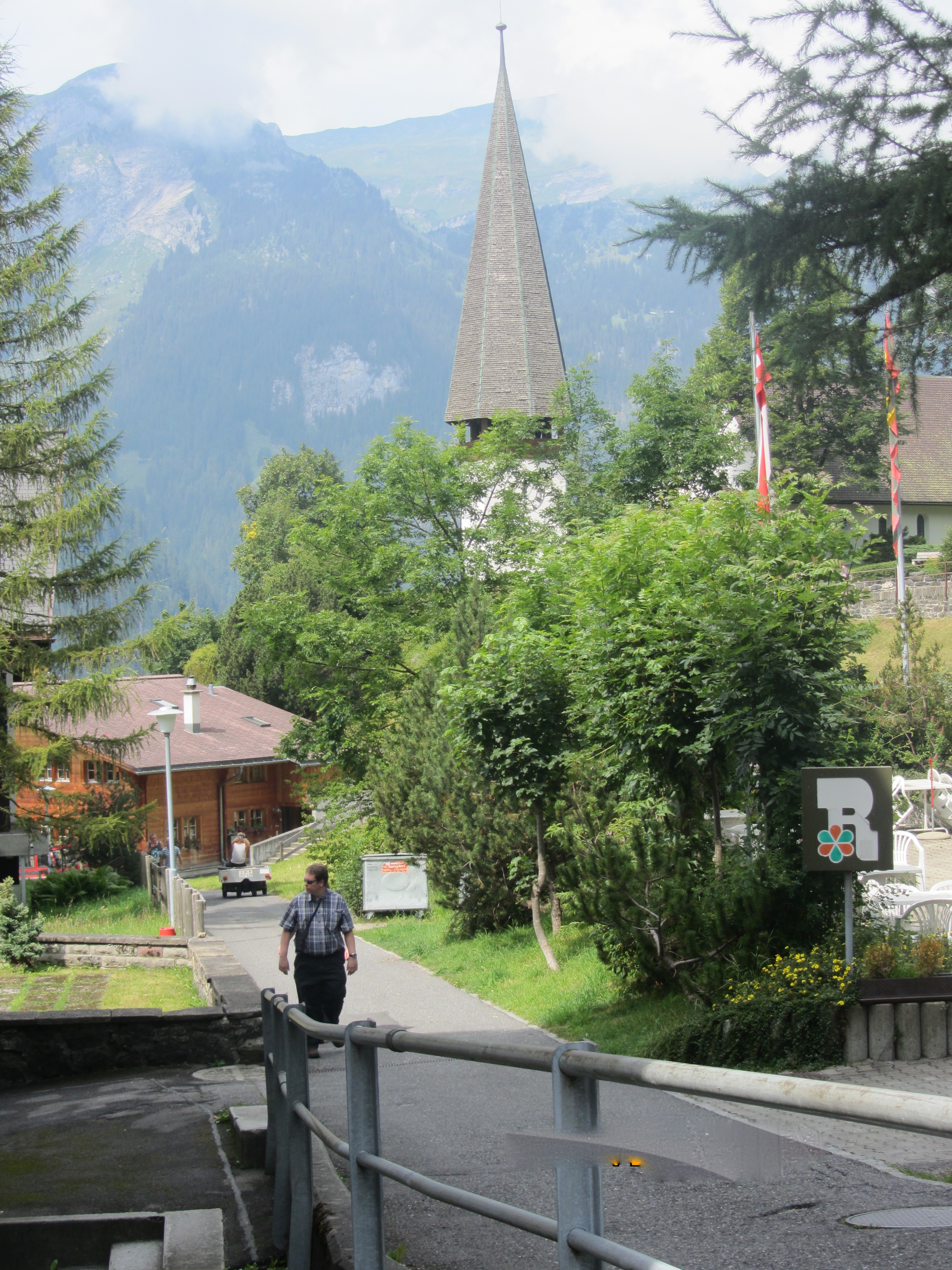
The Walk into Wengen

The Walk into Wengen

There is a small grocery shop in Wengen, but for supplies it must be easier to cart them from Interlaken.  I took a tour of the Victoria-Lauberhorn Hotel and Spa.

The Victoria-Lauberhorn Hotel and Spa

The Victoria-Lauberhorn Hotel and Spa

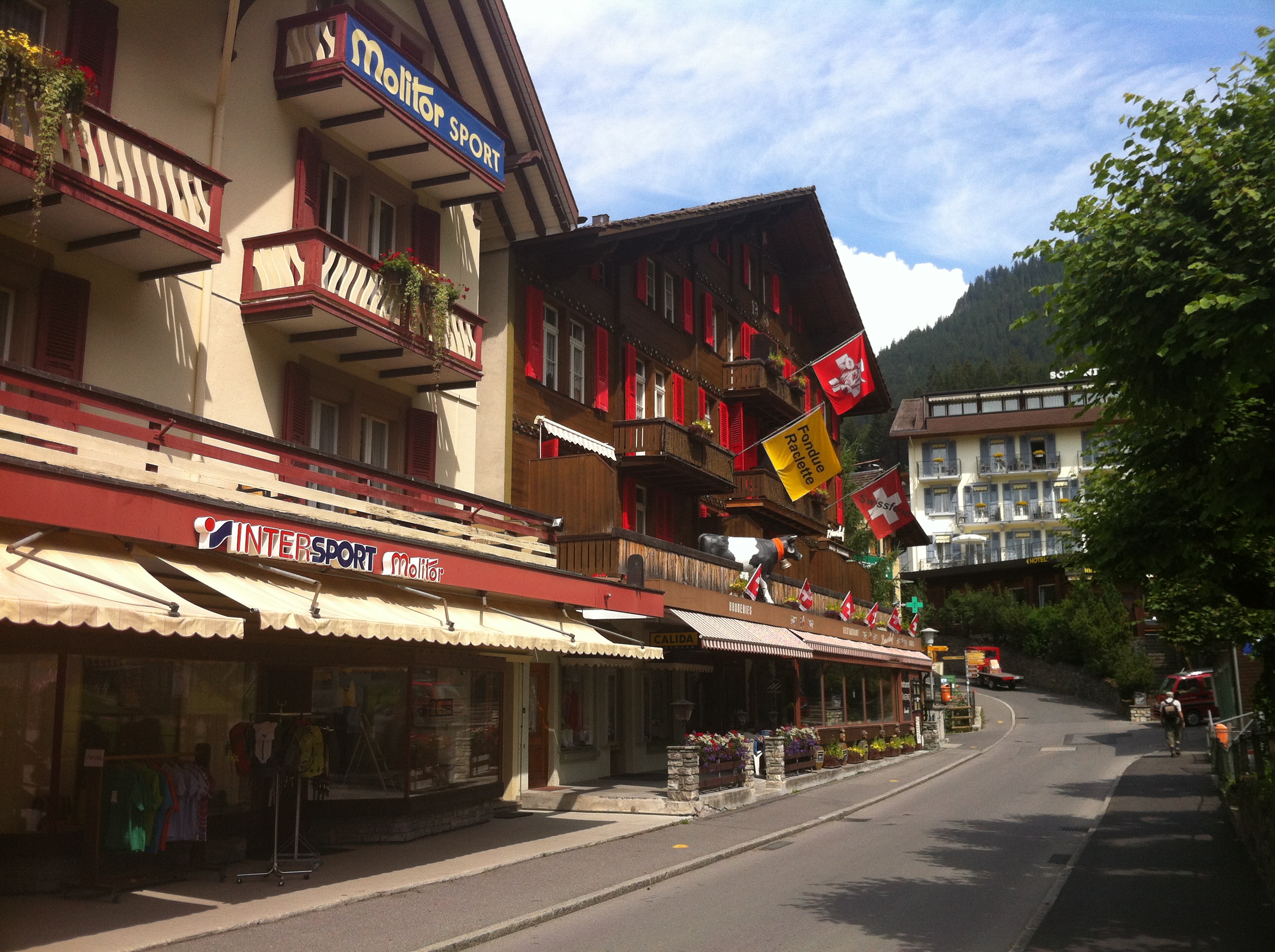
The rooms at the Victoria-Lauberhorn are on the small side, but have a fantastic view of the mountains and the spa facilities were relaxing and calming. There is a one street shopping area, with fine specialty shops for the nicer souvenirs.

Main Shopping Area of Wengen

Main Shopping Area of Wengen

One shop features, crafted in Switzerland gifts only, and I bought a handmade coo-coo clock here and had it shipped home. There is also a very nice jewelry shop.

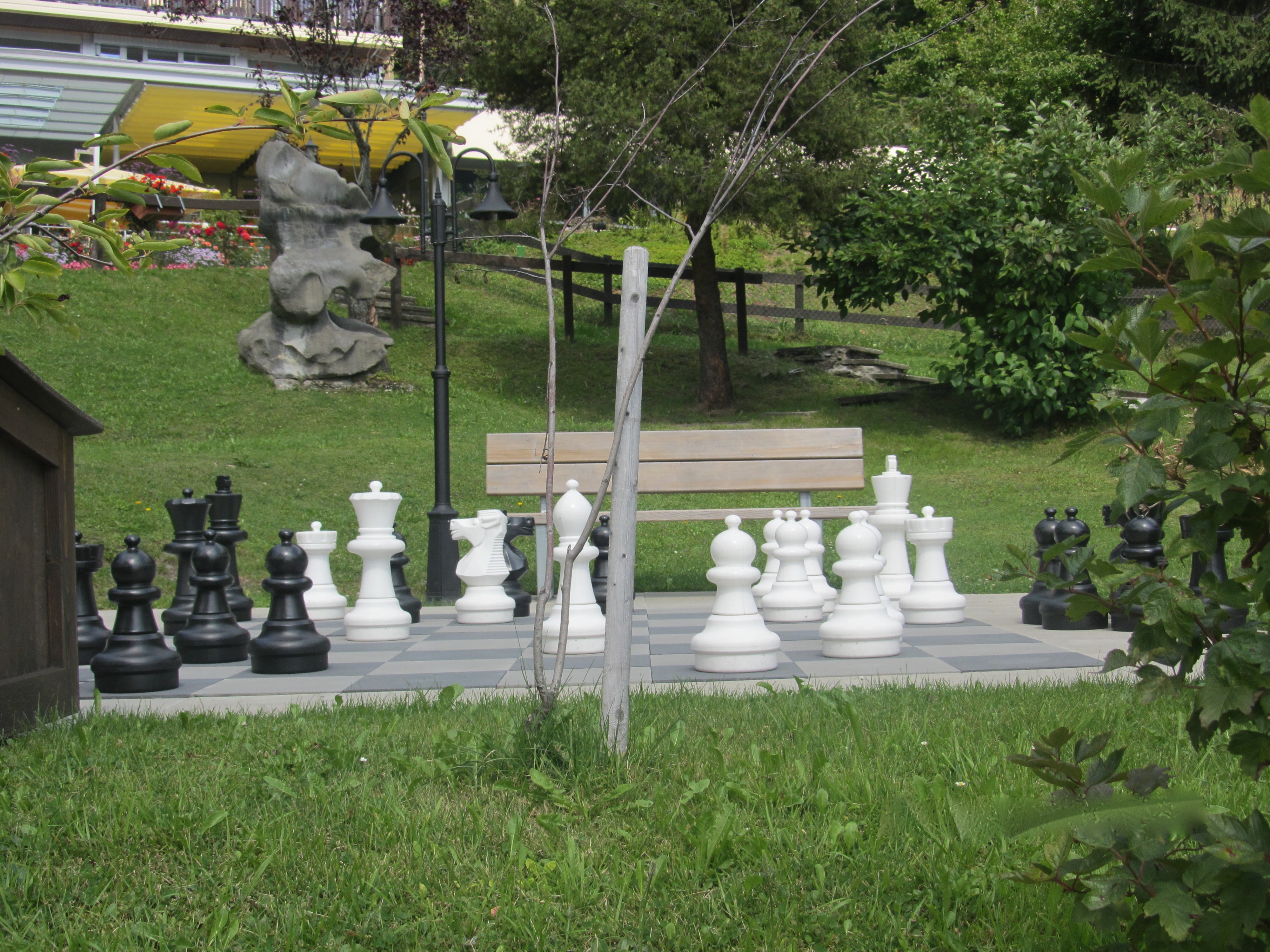
The Chess Pieces

The Chess Pieces

Walking through town there are large parks and huge chess sets. Benches are placed along side the sets so you watch how the match is going. There are also tennis courts and a pool in the upper park area past St Bernards English Church. The priest is available only in the summer months, since it is a rotating ministry.  He was on sabbatical from the UK, but said the church was supported by the parish and held services most of the year, but sometimes without the priest.  It was the same for the local Catholic Church as well. My highlight was the conversation I carried on with a German speaking woman, who invited me into her beautiful abundant flower garden. We got along just fine, mostly pointing and smiling.

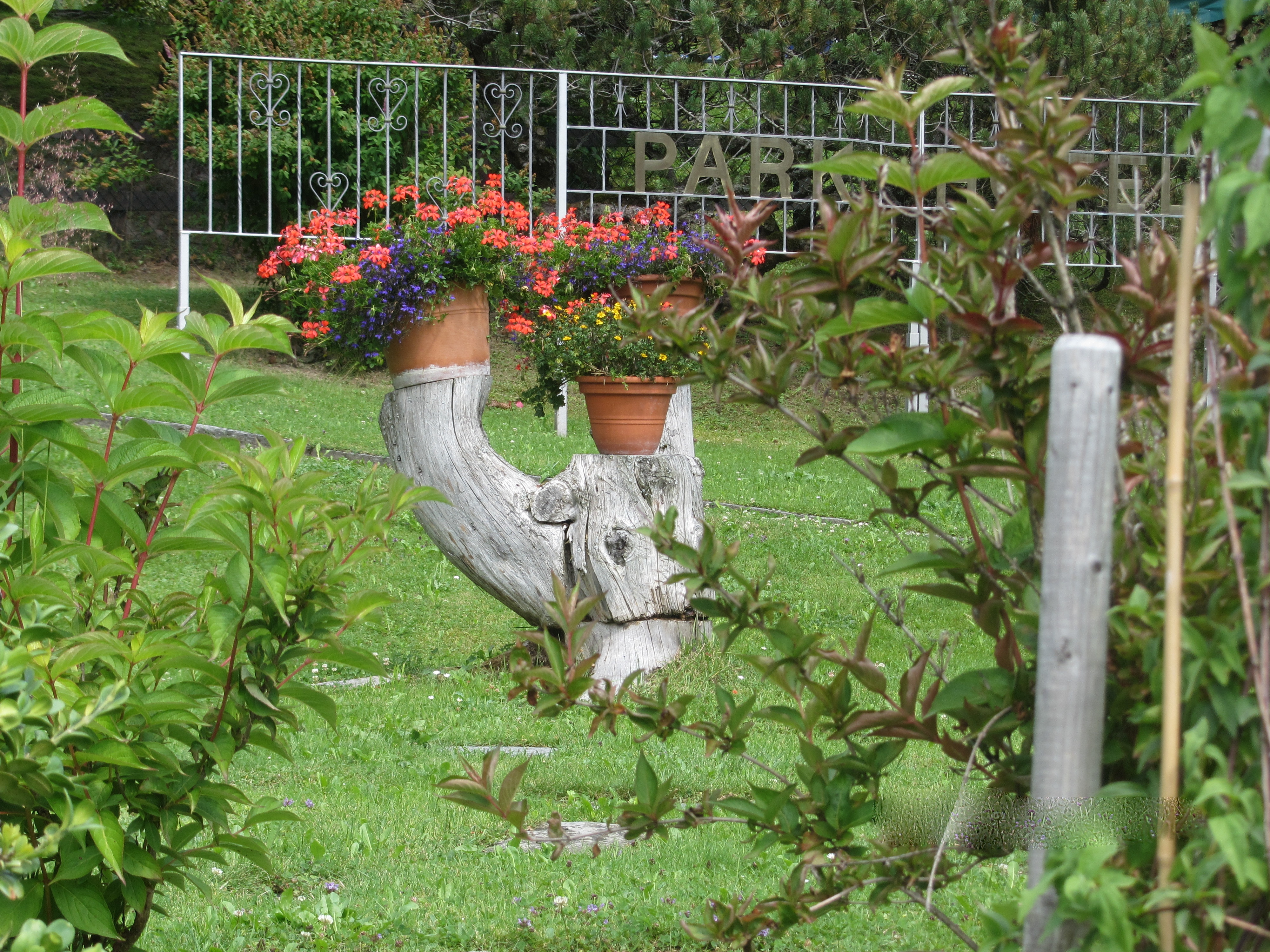
Wengen Flowers

Wengen Flowers

The loop walk through Wengen is just long enough to stretch your legs, mingle with the locals and enjoy every minute of your stay. My choice for a vacation in Switzerland would be Wengen.  It is perfect!  Be sure to watch the video to get an idea how beautiful it truly is!

For more information on the Victoria Lauberhorn Hotel and Spa see: http://www.hotel-victoria-lauberhorn.ch

Around and Down to Gimmelwald

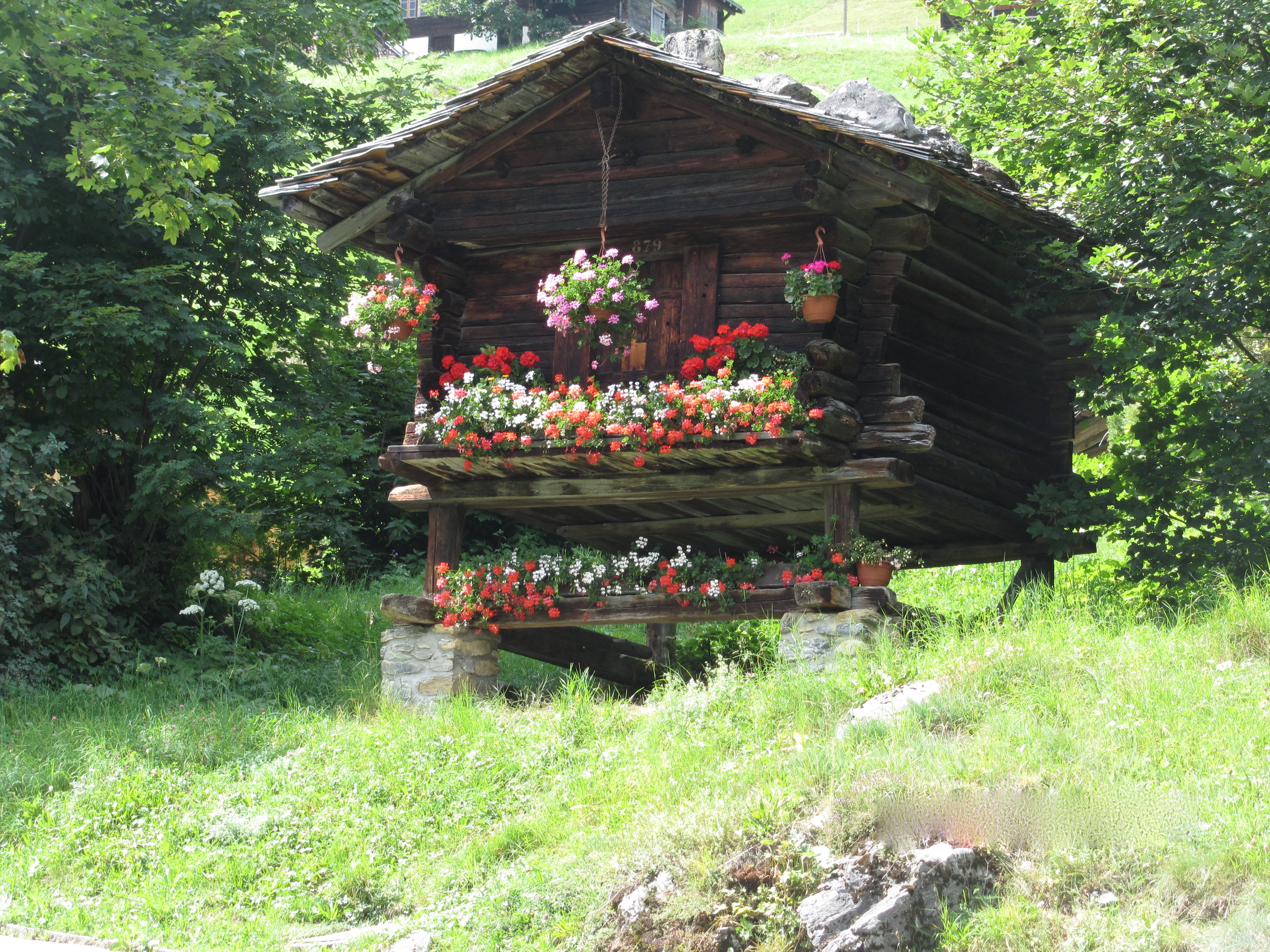
 Chalet in Gimmelwald

An Alp

I’ve decided smaller is better. The smaller a village is the better I like it.  Gimmelwald, population 100, is ideal. We are walking the switchback paved path from Mürren to Gimmelwald and it is a glorious day! We part from the upper lane to the lower lane at the end of Mürren and make our way through the burbs (the last chalets before the smaller path to Gimmelwald). Looking down, down, down, Gimmelwald is just a speck at the bottom, but only a 30 minute walk, all downhill. The only people we pass are the bikers (bless their hearts) that are biking the trail up.  Good for them!  Meadows are filled with beautiful summer blooms and the cows are busy grazing.  It takes me a few minutes to get Bluebell to look up for a picture.  That grass must really be good! We hear the bells on the goats long before we see them and when we do they are in a hurry to move on. We walk a few hundred feet, turn back, walk a few hundred feet turn back.  This is the way to Gimmelwald.

The Walk to Gimmelwald

The Walk to Gimmelwald

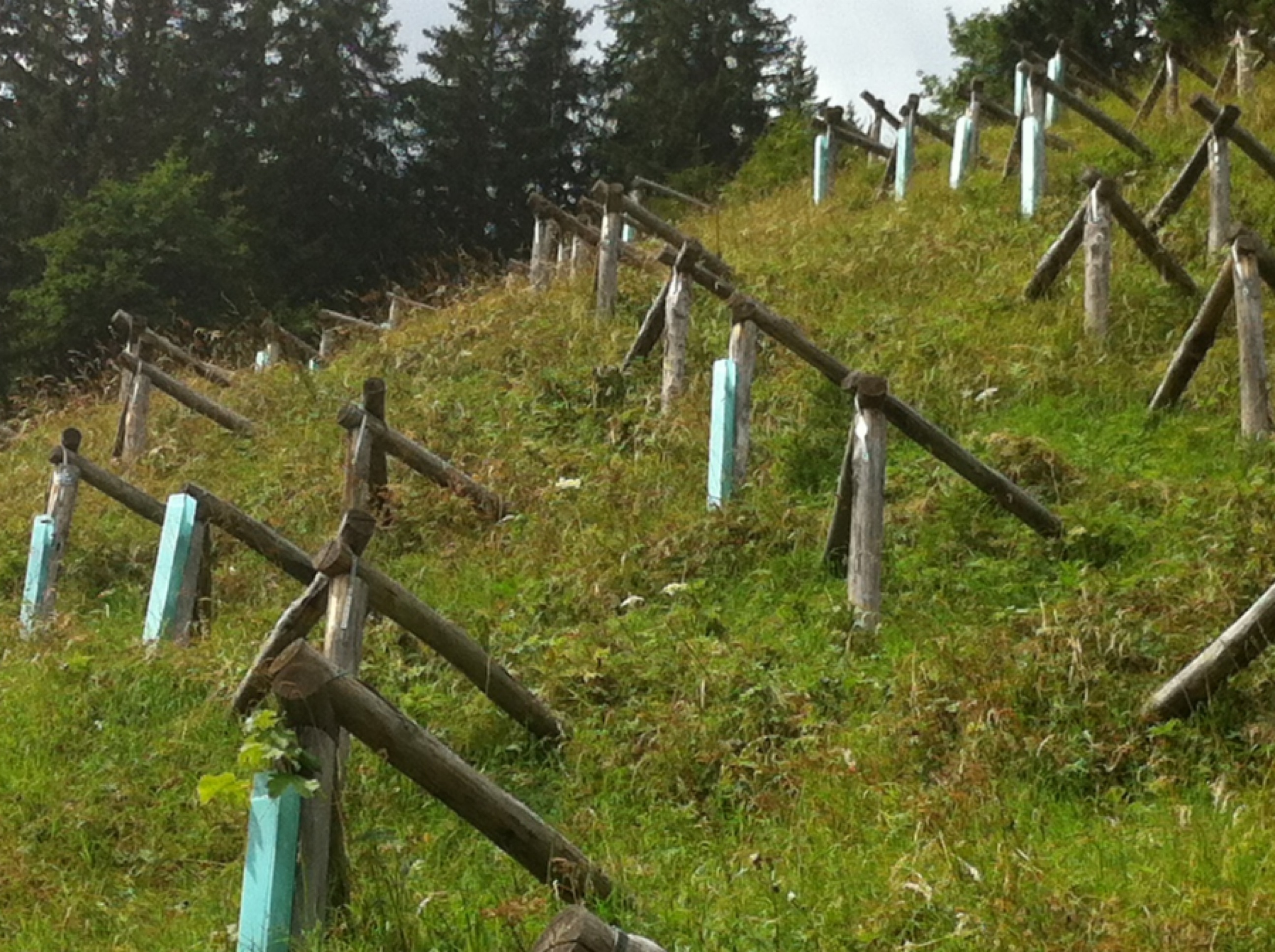
Saved from developers, who wanted to turn Gimmelwald into a village of 1000, the village was determined to save itself by declaring the village was in an avalanche zone. On the hills we see the angled wooden sticks designed to help prevent the snow from barreling down the mountain.

The Avalange Sticks

The Avalanche Sticks

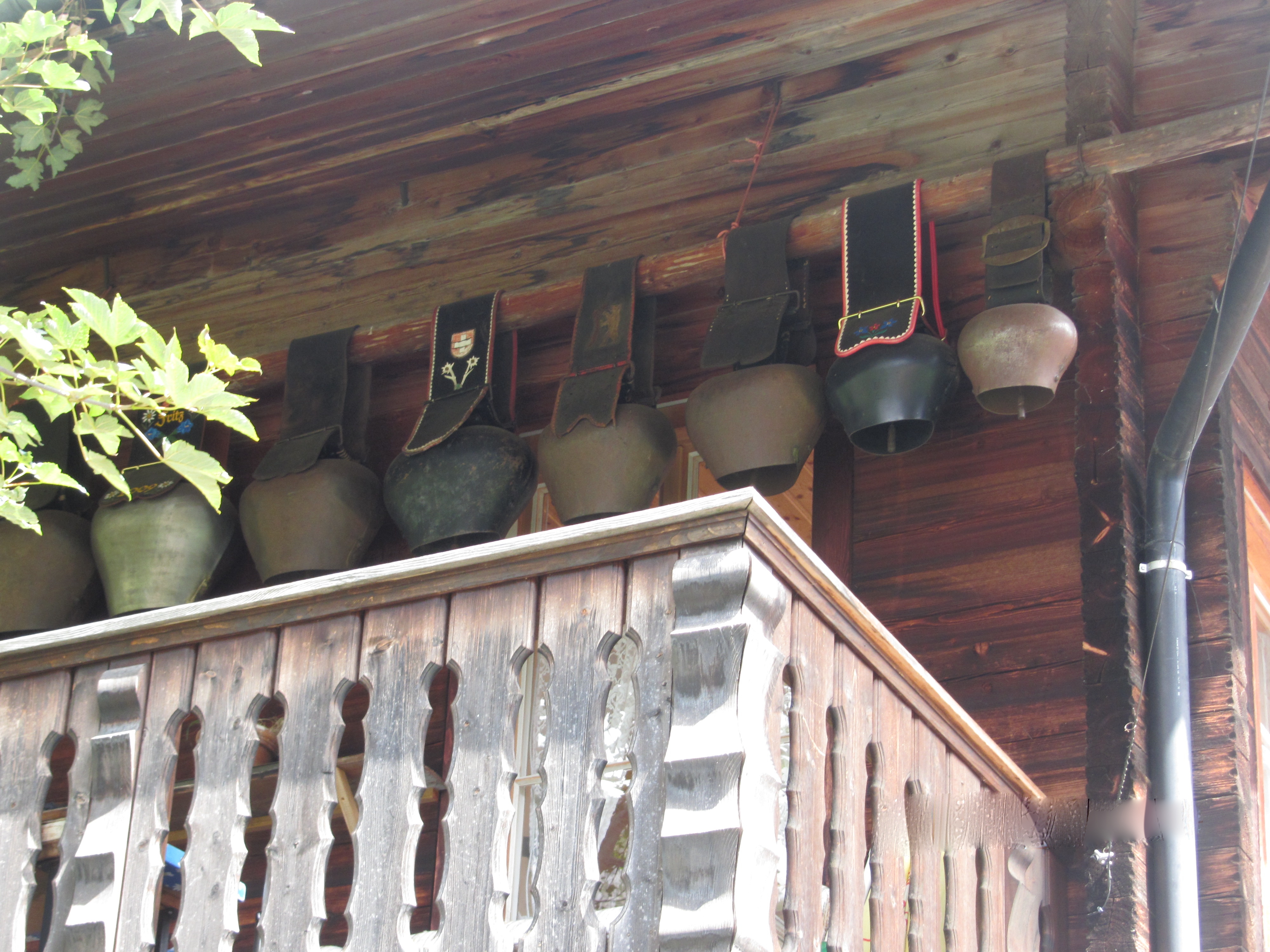
They had to do something in order to get the avalanche zone building code! The code would keep developers out. The village is a community of farmers who make hay while the sun shines and cares for their cows. In mid-summer the farmer straps elaborate ceremonial bells on the cows and takes them up to a hut at high elevations. When the cows arrive at their summer home the bells are removed and hung under the eaves of the hut, called alps.

The Cow Bells

The Cow Bells

The farmer hires a team of cheese makers, mostly students and city slickers who want to spend a summer in the mountains, to work at each alp. Now there’s a summer job for you! It’s up at 5am to milk, take the cows to pasture, make cheese, and then milk again in the evening. In the summer all milk is made into cheese and in the winter the fresh milk is sold as milk. While the cows are higher up on the mountain the farmers are busy making hay. As the cows come down the mountain in late summer they stop and eat the hay that has been stored up in small huts along the path by the farmer, who has spent the summer preparing the hay for them.

The Cheese Hut

The Cheese Hut

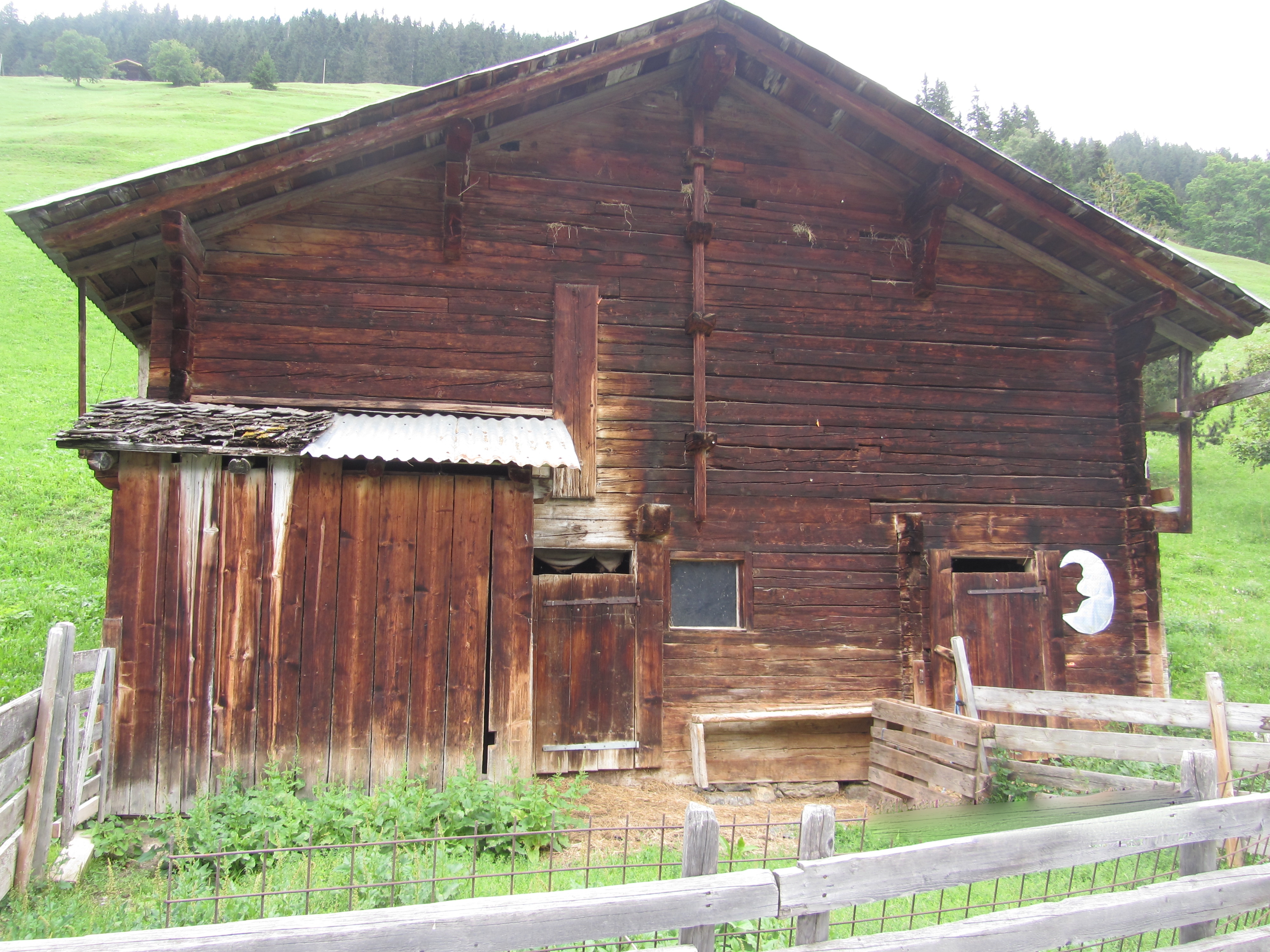
The first lodging you come to when walking down from Mürren is the Hotel Mittaghorn, ran by Walter Mittler. The hotel features a loft of 10 beds, several sinks, one shower and a fire ladder out the back window. This location would be great for a group of hard core hikers. Dinner consists of salad, main course and dessert served at 19:30 by reservation only. If this place seems to0 frilly for you the next stop is the Schlaf im Stroh, (Sleep in Straw) an actual barn. After the cows head for higher ground in the summer the von Allman family hoses down the barn and fills it with straw. Blankets are free, but bring your own sleeping bag. They fluff up the hay each night before bed. The fee includes breakfast, a modern bathroom and showers.  The kids would love it!

Schlaf im Stroh

Schlaf im Stroh

Gimmelwald has a strict building code. All shutters must be natural, green or white. The main shopping area, one tiny room of farmers goods, operates on the honor system. An announcement board reveals the news; one side for tourists and the other for the locals.

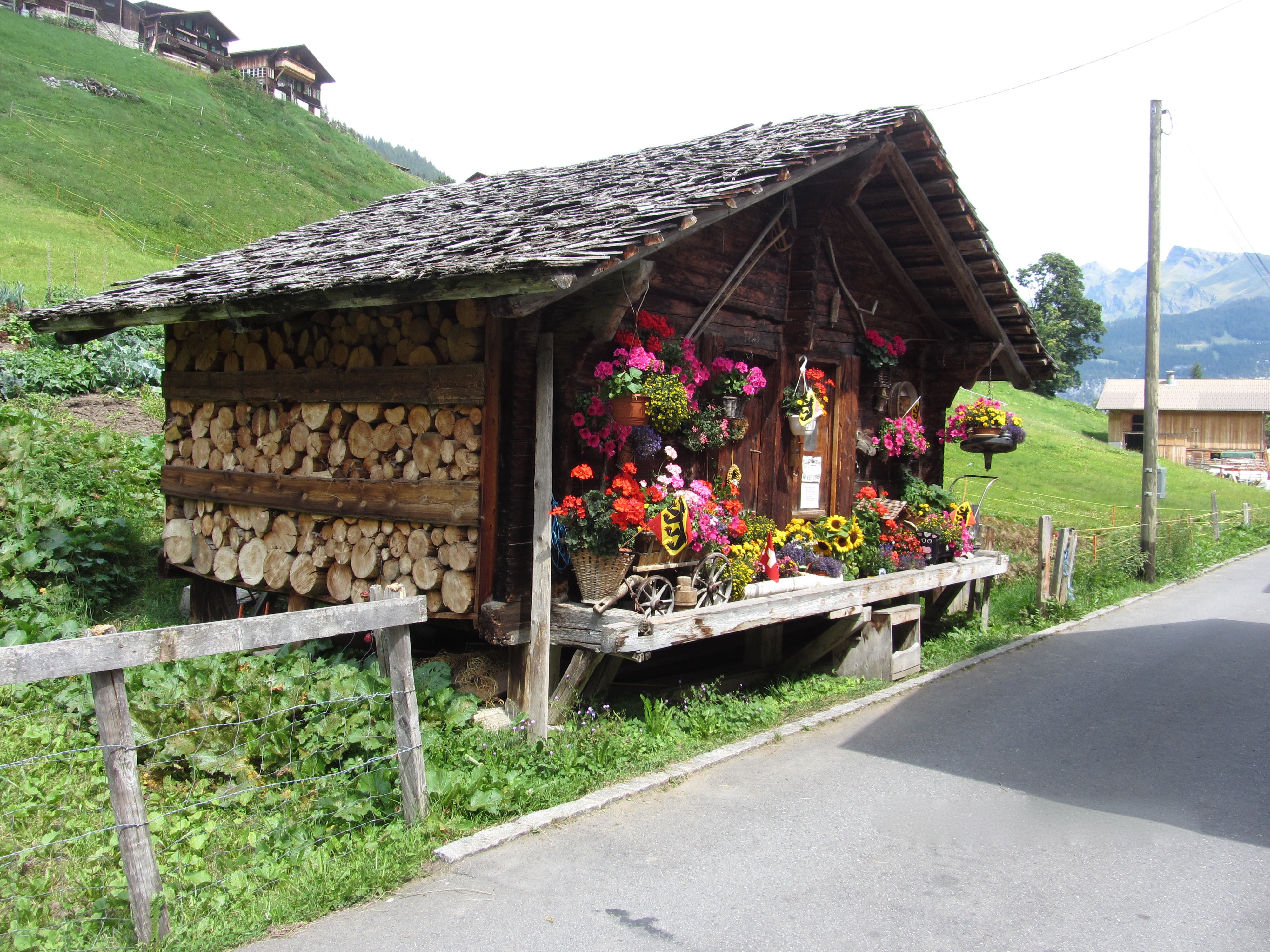
Villagers heat their homes with wood, so every house is surrounded in cut logs, since the wood needs to be aged a couple of years to burn well. There are also covered stacks of wood all through the village.

Gimmelwald House Surrounded by Cut Wood

Gimmelwald House Surrounded by Cut Wood

Next we stop at the house of the school teachers, Olle and Maria Eggimann. They rent out two rooms in their house, the most comfortable place in town. We ring a bell and Olle comes down the stairs to a small room called the Lilliput Shop, where we buy sugar coated almonds.

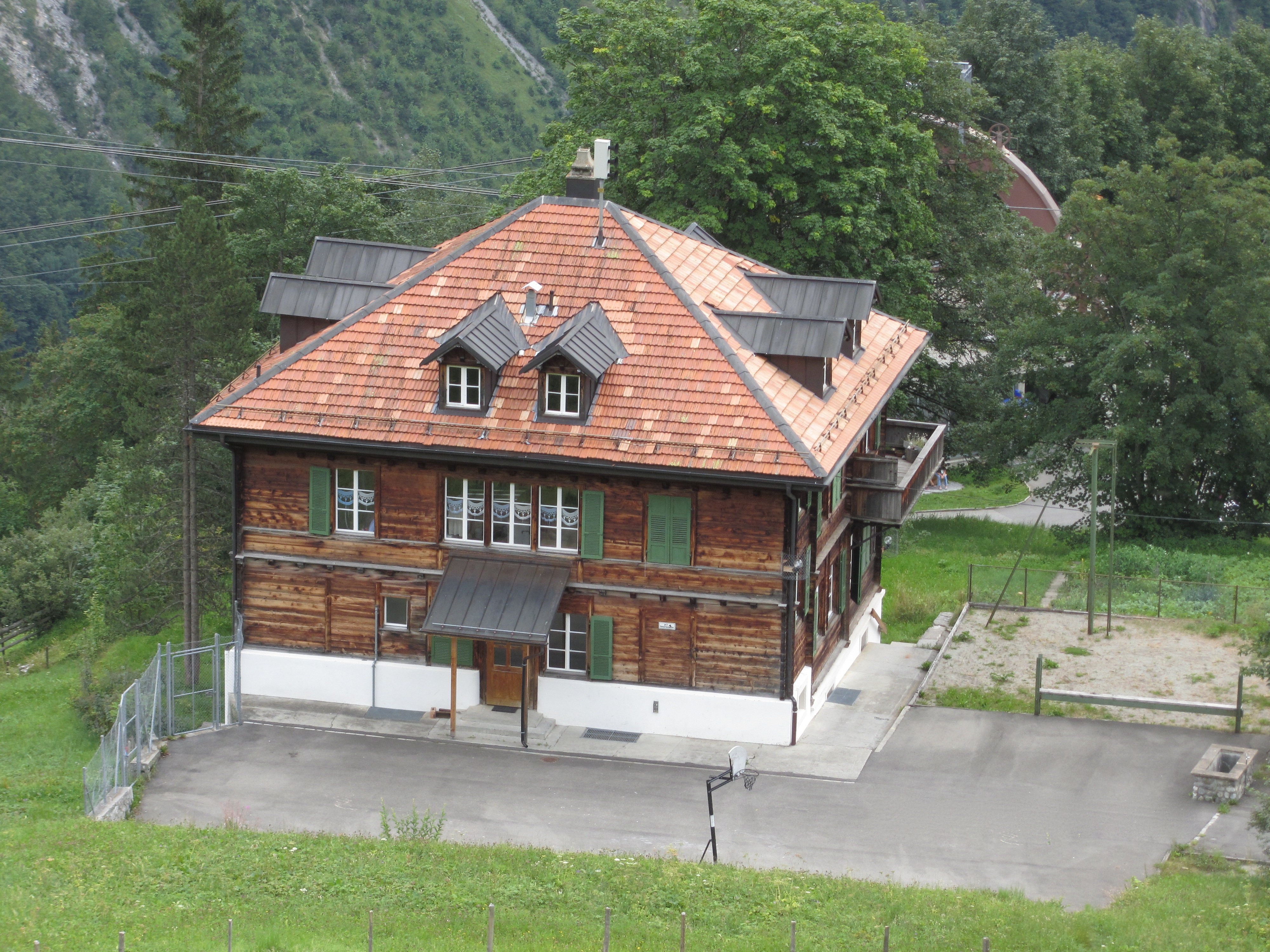
The Alpenrose is the old school house with the big cow bells hanging under the eaves. The new school house is a huge building. There is a computer for each of its 17 students, two teachers, and a large playground outside.

The New Schoolhouse

The New Schoolhouse

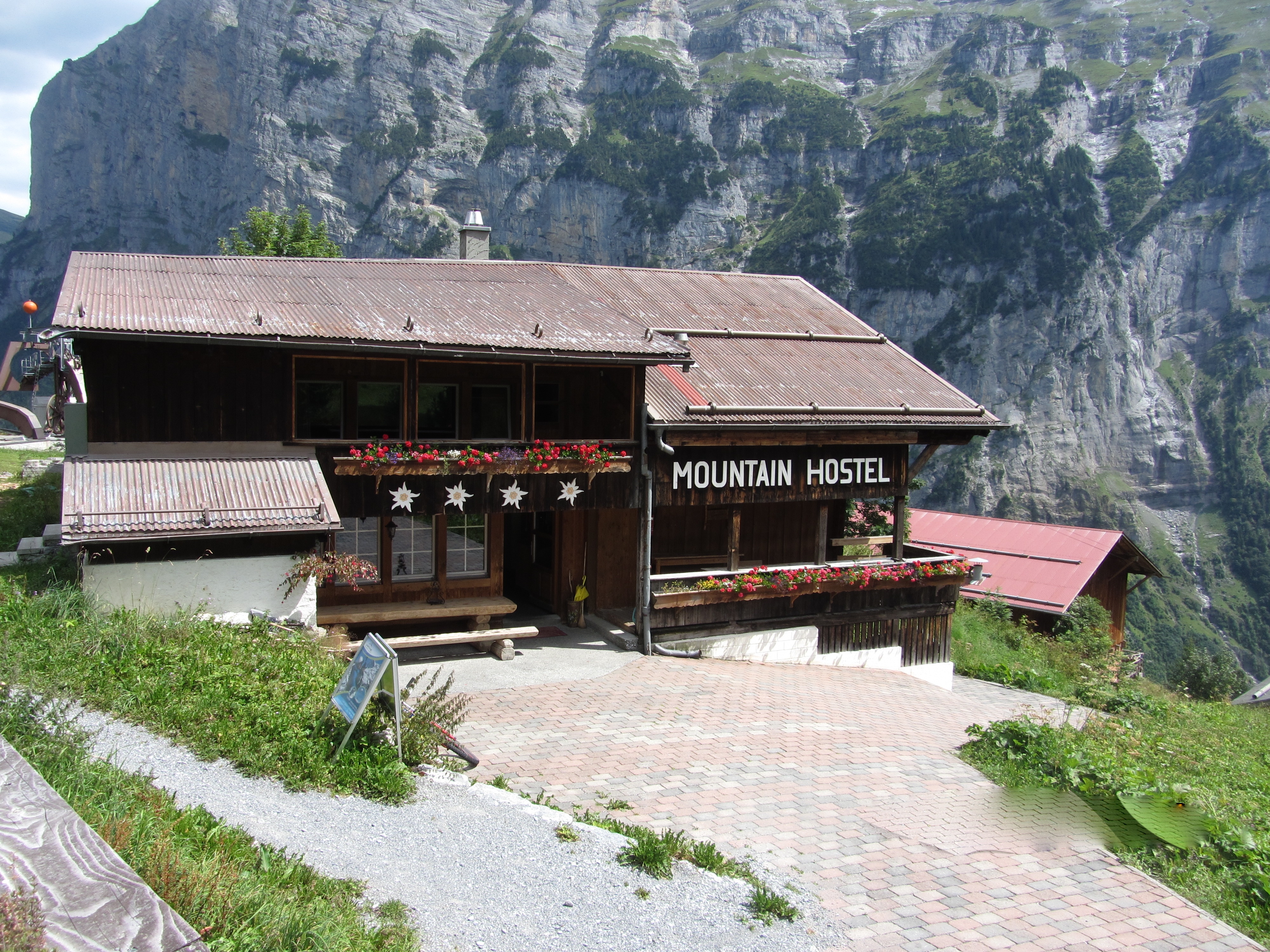
The Mountain Hostel is the center of activity in the village. With 50 dorm beds, a self-serve kitchen, a mini grocery, and pool table, it is lively with the college age crowd.

Mountain Hostel

Mountain Hostel

The Pension Restaurant has 13 basic rooms to let and Gimmelwald’s only restaurant. With breathtaking views it is right next to the gondola station. We stop and enjoy a plentiful lunch.

Pension Gimmelwald

Pension Gimmelwald

We end our day in Gimmelwald with a gondola ride (the only way in or out of town other than walking down from Mürren) to the valley below where we catch a train back to Interlaken. A day in Gimmelwald is a step back in time. It’s good to know there are still places to be found like this. Definitely, Gimmelwald is my kind of place! Watch my video to get an idea what it is like to walk to Gimmelwald!

For more information about the B&B ran by Olle and Maria Eggimann, email them at oeggimann@bluewin.ch

For information about the Gimmelwald Pension see: http://www.pensiongimmelwald.ch

For information about the Mountain Hostel see: http://www.mountainhostel.com

For the other lodging accommodations show up in the village and talk with them.

Mürren and the Alphorns

Mürren

Mürren

We are at the train station, Interlaken Ost, (East) early this morning to go to Lauterbrunnen. From Lauterbrunnen we take the funicular to Mürren.  Mürren, population 450, is a pleasant alpine resort filled with bakeries, cafés, chalets and no public road access. There are over 2000 beds available here in chalet looking hotels. Perched on a ledge overlooking the Lauterbrunnen Valley and surrounded by mountains (the Eiger, Mönch and the Jungfrau) Mürren is definitely “Heidi” like. Mürren is the highest continually inhabited village in the Canton of Bern. It is recognized by the design of the chalets and the pronunciation of the Mürren dialect.  In 1911 the first British winter tourists arrived. In the village there is no full time doctor, no police officer, and no resident priest or pastor, but keep your eye open for the “Milch Express,” a tiny cart that delivers fresh milk and eggs to the hotels and homes throughout the village. Getting off the train the hikers go in one direction, to the Gondola Station taking skiers and hikers up to the Schilthorn and down to Stechelberg via Gimmelwald, and the Japanese tourists with cameras bigger than they are, head off into another direction, to set up their tripods.  We follow the sound of music, literally. On a flat terrace of earth is a group of musicians providing a concert playing long, long, long horns called Alphorns. How much breath does it take just to blow one of those things? Alphorns, alpenhorns or alpine horns are used by the mountain dwellers for communication or signal instruments, substituting them for the lack of church bells. They are carved from solid softwood either spruce or pine. In former times the alphorn maker would use a bent tree to create the curved shape of the base, but modern woodmakers piece the wood together at the base.  The cup shaped mouthpiece is carved from a solid block of wood and added last to the instrument. The sound is similar to blowing through a long tube, but they do have music designed for the alphorn. After a café we walk to the paved utility road (wide enough for a small tractor with hay) and begin our descent to Gimmelwald.  Be sure to watch the video!  Scenery is fantastic!

The Hills are Alive, but the Town is Touristville

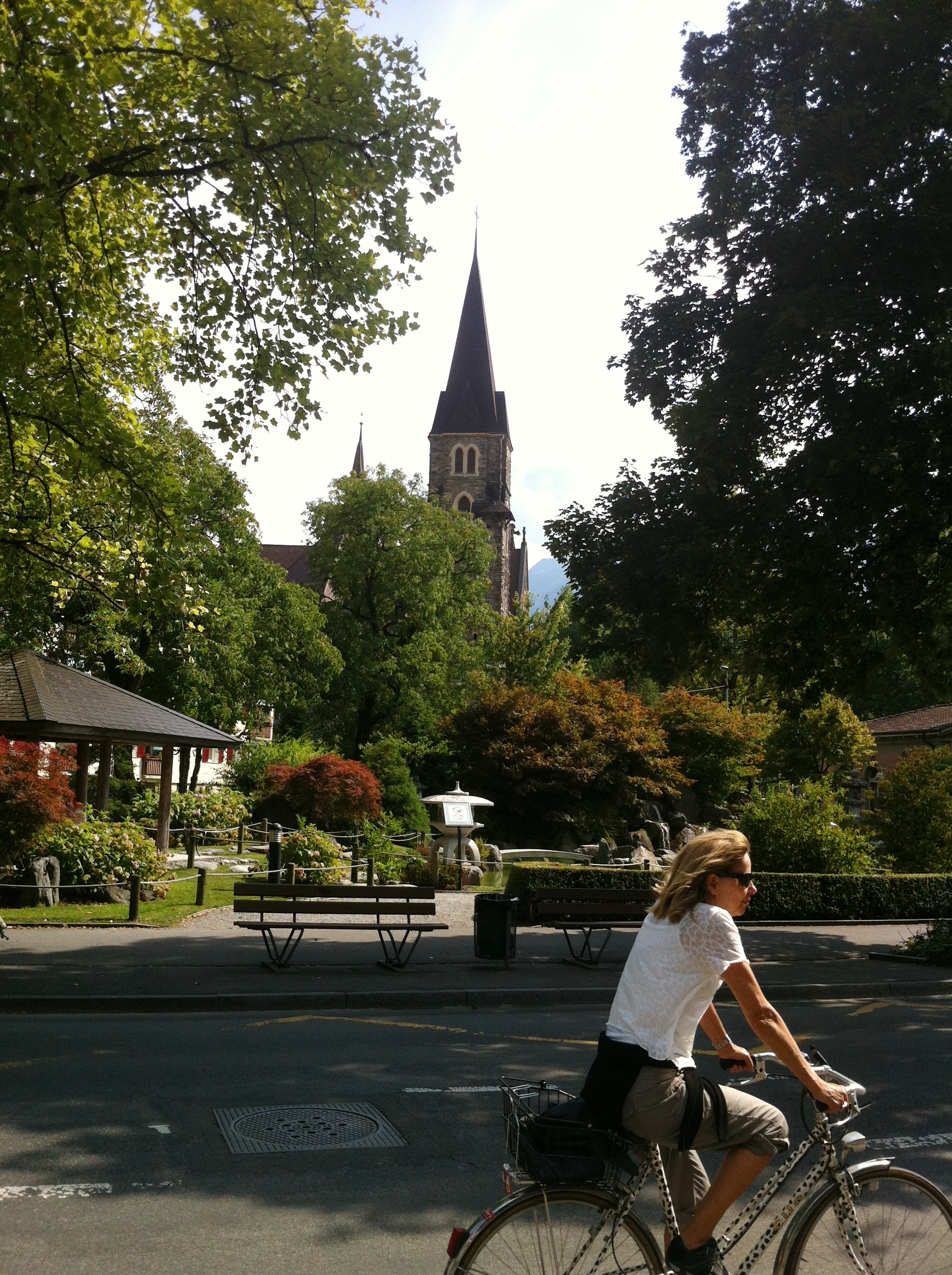
Biking in Interlaken

Biking in Interlaken

We are saying goodbye to Lake Como today as we travel by car to Lugano, Switzerland to catch a train to Interlaken, Switzerland.  The best part of the train ride is the home stretch on the tiny train into our destination.  The train advertised a scenic zoo along the way and indeed it was.  When we got to the slow mountain climbs through the forest, looking to the left and right at specific intervals, we would see a sculpture of some kind of creature. Bears, wolves, birds, anything indigenous to the area was revealed along the way. It was fun to keep our eyes peeled for the artwork placed along the rail route.  A great deal of work was put into the “ZOO.”

Arriving in Interlaken there are two train stations, east and west.  Getting off at the East Station you find yourself in the mist of luxury, turn of the century hotels. Walking along the Banhof Strasse there is a “high meadow” or park and here are beautiful flower gardens and the landing area for the tandem parasails. The end of the “high meadow” turns into crowded, very touristy shopping areas.  I was so shocked. I thought Interlaken would be a “Heidi” kind of place. It is over-run with tourists and it seems even the tourists own the restaurants and shops. Clearly Interlaken has been sold to the highest bidder and the Swiss have moved on. I am glad we have made this a springboard stop to other alpine areas. Reaching our destination, the Lotschberg Hotel & B&B, we find it is not run by a Swiss family, but has been turned over to caretakers.  Small and clean, the hotel was conveniently located in the old town area, but the only time we saw anyone here was when we would ring the bell at the check in area and eventually someone would come from one of the upper floors to see what we wanted.  The other disappointment was the lower level of the hotel had been turned into a kabab restaurant! So we were up and early everyday to go up the mountain! Maybe that was a blessing after all. We added more alpine villages to our itinerary, only returning to Interlaken at the end of a long day. It turned out perfectly.

One Day in Milan

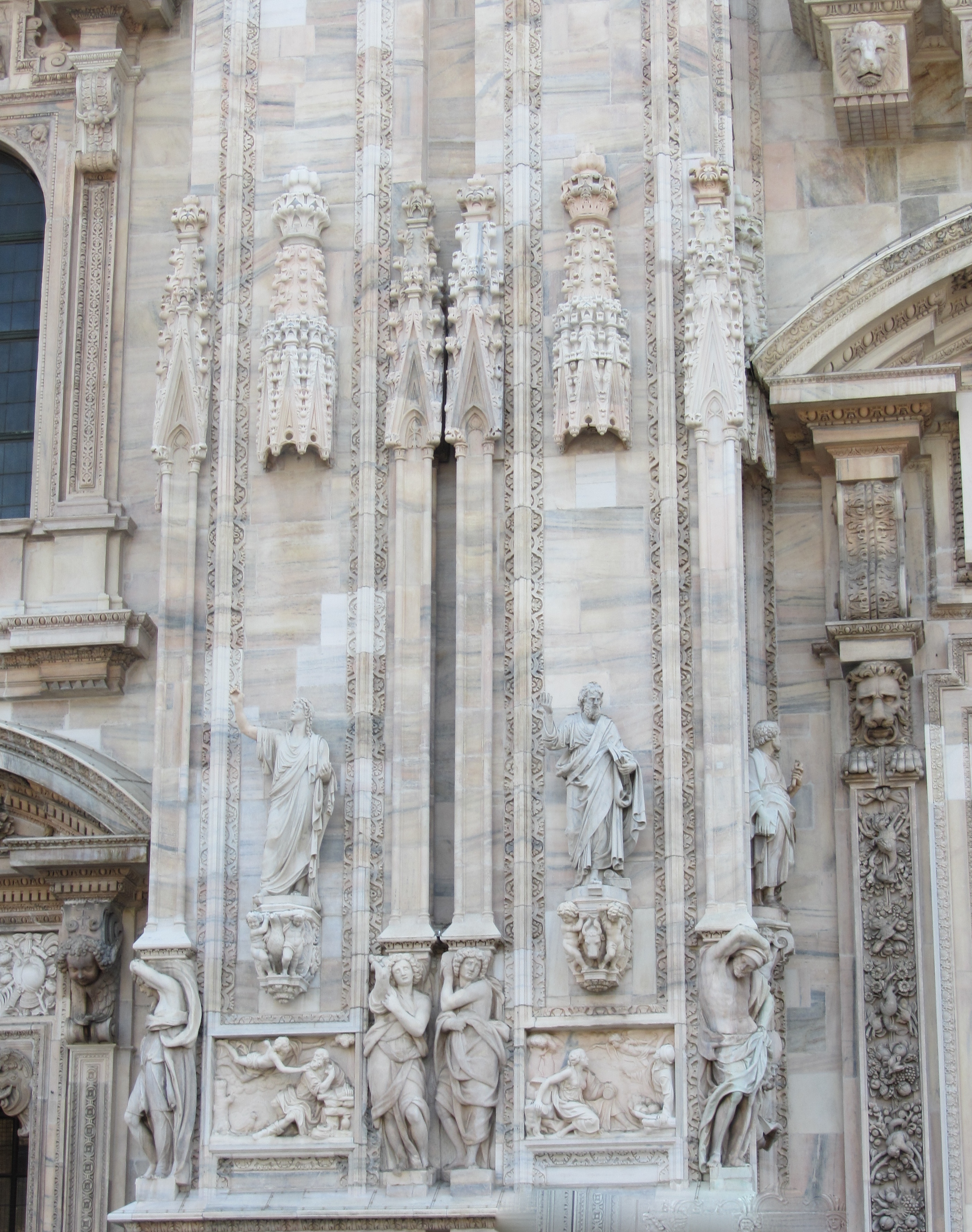
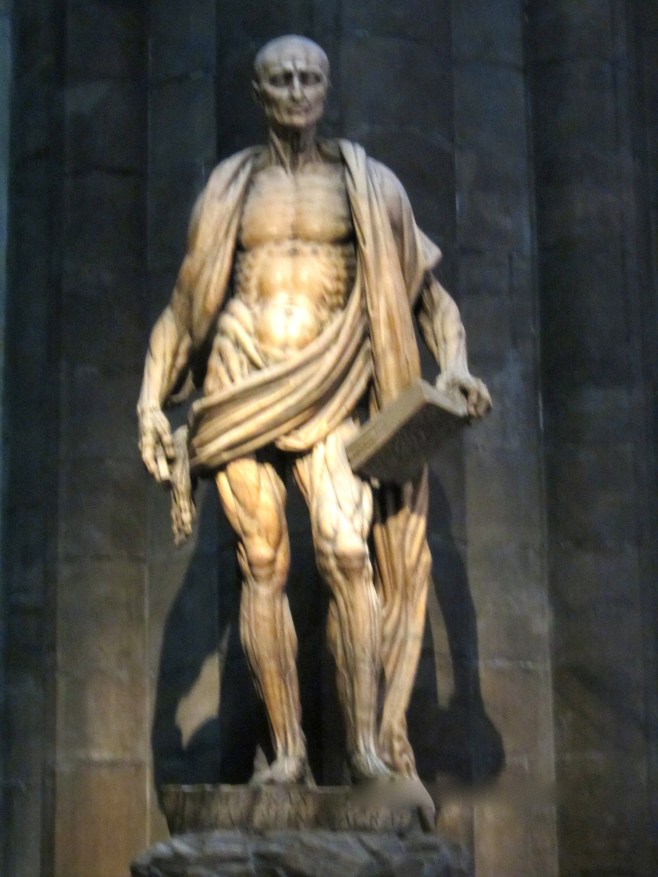
San Bartolomeo by Marco d'Agrate

San Bartolomeo by Marco d’Agrate

IMG_1783

We are on the early morning commuter train from Varenna to Milan. We are meeting up with a private local guide, Lorenza Scorti, who knows the city’s history well. We have marked off certain sights we would like to see. We are hoping Lorenza has been able to get us tickets to get into the Church of Santa Maria delle Grazie, where Leonardo da Vinci’s masterpiece, the Last Supper, is housed. One of the leading families of Italy during the Renaissance, the Sforza Family of Milan, hired da Vinci to decorate the dining hall of the Dominican monastery that adjoins the church. Ultimately, the Sforza family was bribing the monks with this gift so the monks would allow their family tomb to be placed in the church.(Which never happened) The fresco began deteriorating within six years of it’s completion due to the experimental technique used by Leonardo.  Bombing during WWII left only one wall standing in the church.  The wall of the Last Supper. Truly a miracle! In 1999 a 21-year restoration project was completed peeling away 500 years of touch-ups, leaving the masterpiece intact.

Lorenza meets us at the central train station and after going up several escalators in the fashionable shopping area of the train station, Lorenza buys tickets for the metro and we are off! It is early morning and the streets are quiet. First stop, the Duomo, with a forest of spires on its roof, is the fourth largest church in Europe, after the Vatican’s, London’s, and Seville’s. The church was built with Pink Candoglia marble, rafted in from a quarry 60 miles away. We went past this quarry on the train when we went to Cinque Terre. Marble is still extracted from the sight. Inside the church is a beautiful marble mosaic floor and looking up we see The Quadroni, (large paintings on canvas, each about 20 by 26 feet) depicting the life of St Charles Borremeo. The paintings have been brought out and displayed for a special anniversary in the church. The 1st cycle of paintings (starting in 1602), The Facts of Life of Blessed Charles, consists of 28 paintings depicting his life, and were painted by seven different artists. The 2nd cycle, The Miracles of St Charles, consisting of 24 smaller paintings of his miraculous works and healings, were all painted between December 1609 and November 1, 1610, when Charles was canonized. These paintings were displayed for the first time together on November 4, 1610, when the paintings of his miracles could be shown after he had been declared a saint. Now they are only displayed on special days in the church and we were fortunate to be able to see them.

The Duomo
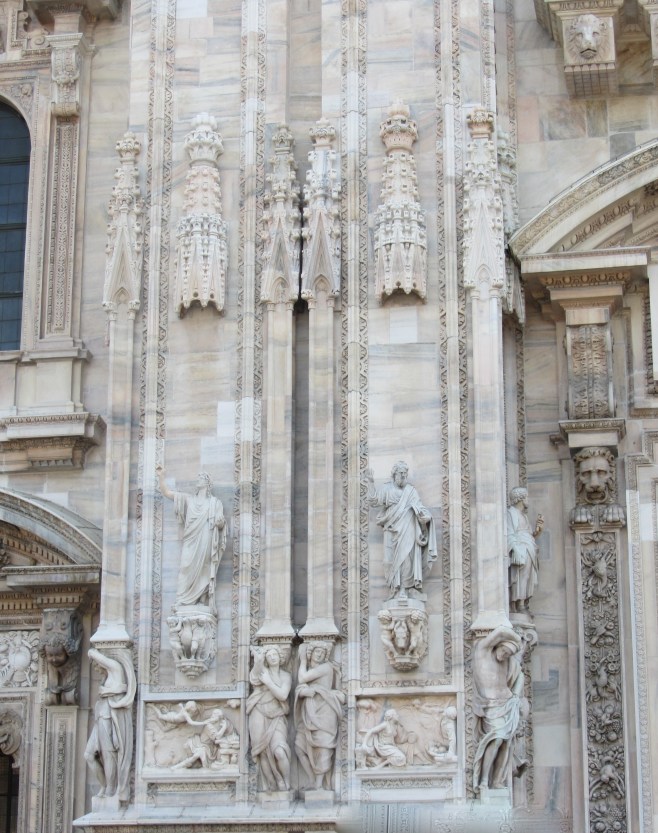
The Duomo

IMG_1765

An impressive, detailed statue of San Bartolomeo Flayed (1562), by Marco d’ Agrate, is upfront and center in the church. That is his skin draped over his shoulder!

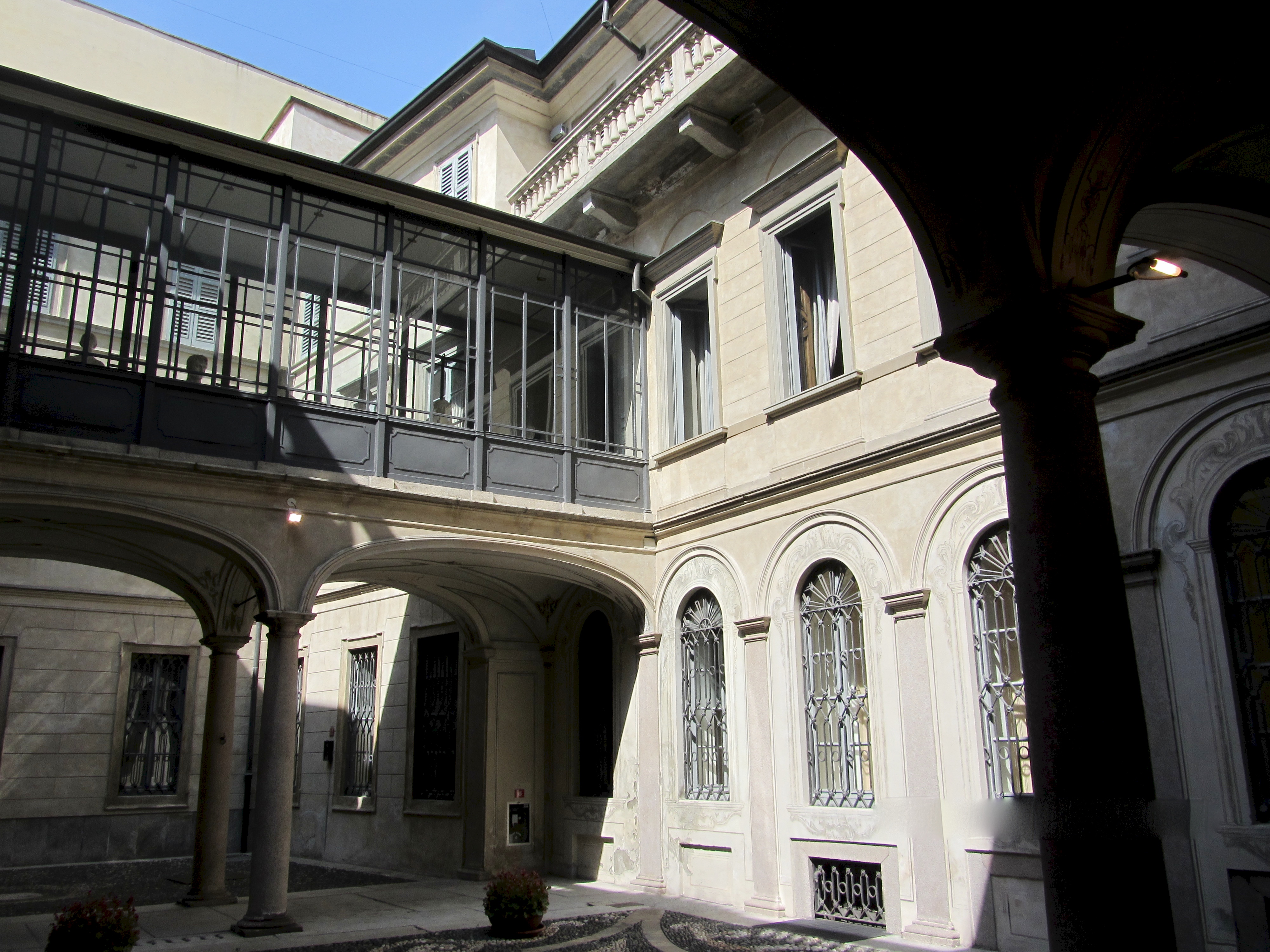
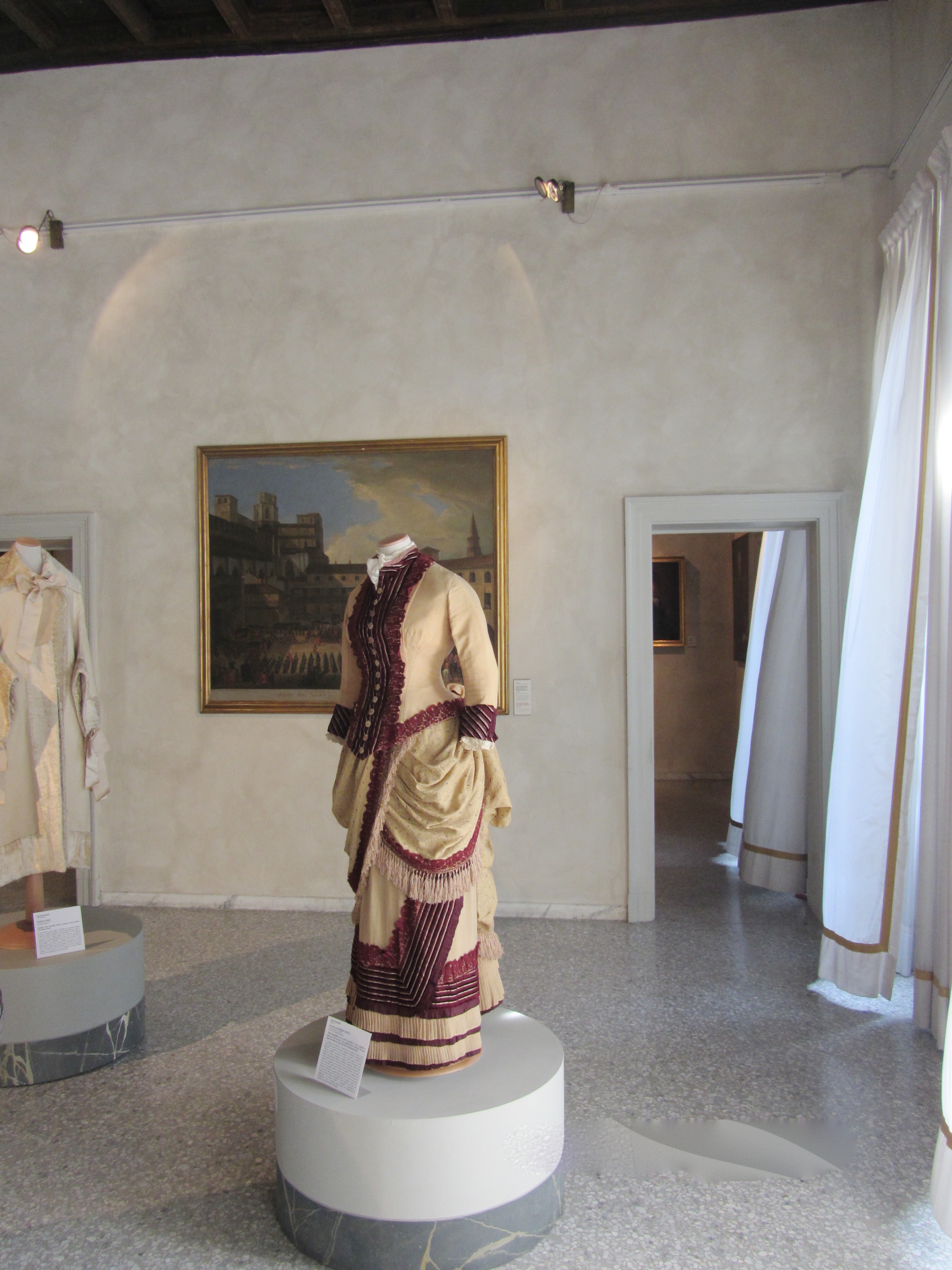
After the church, we are delighted to be shown a small museum in a private palazzo. I have wanted to see what was behind those big oak doors! Following Lorenza, we are lead through an intricate laid marble entryway and up the stairs to the private apartments.  Today there are collections of clothing, shoes and those little bitty one woman carriage/carriers that were lifted on the shoulders of servants to whisk one about town and prevent your dress and shoes from being soiled. Boy were those women TINY! On the outside of the palazzo is a beautiful fresco above the rim of the windows.  (See the video I made)
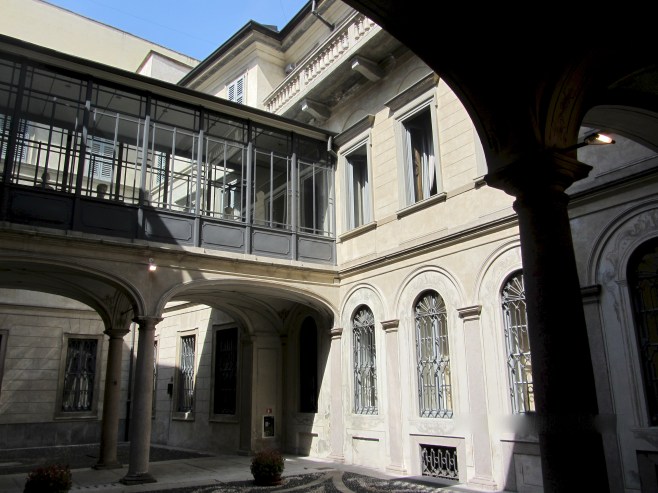
The Palazzo

The Palazzo

The Dress

Inside the Palazzo

Next, we walk to the La Scala Opera House and museum, the world’s most prestigious opera house!  All that red velvet! Following that we head to the Galleria Vittorio Emanuele, a four story glass domed arcade on the main square, featuring all the Italian high end shopping stores and great for people watching as well. It was the first building in Milan to have electric lighting! Oh how Italians love fashion!  Around the center dome patriotic mosaics symbolize the four major continents and the mosaic marbled floor reveals the city’s symbol, a torino. (little bull) Here locals step and twirl on the bull for good luck.
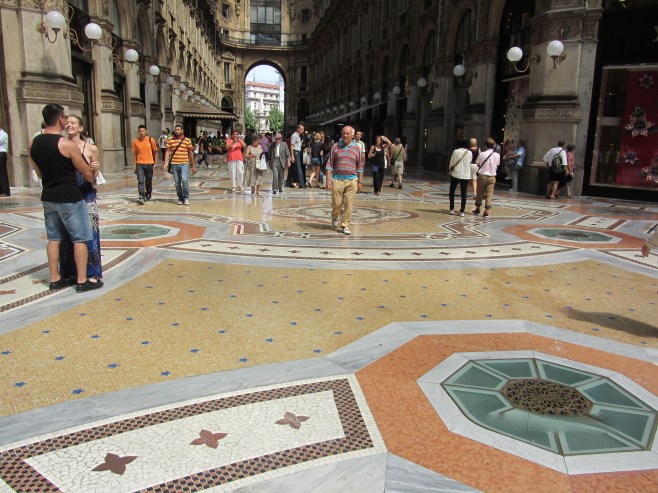
Inside the Galleria

Inside the Galleria

Il Torino

Il Torino

We go to a local pizza restaurant and I am so glad to sit.  The one person pizzas are HUGE (enough for three people) and we wash it down with good red wine.

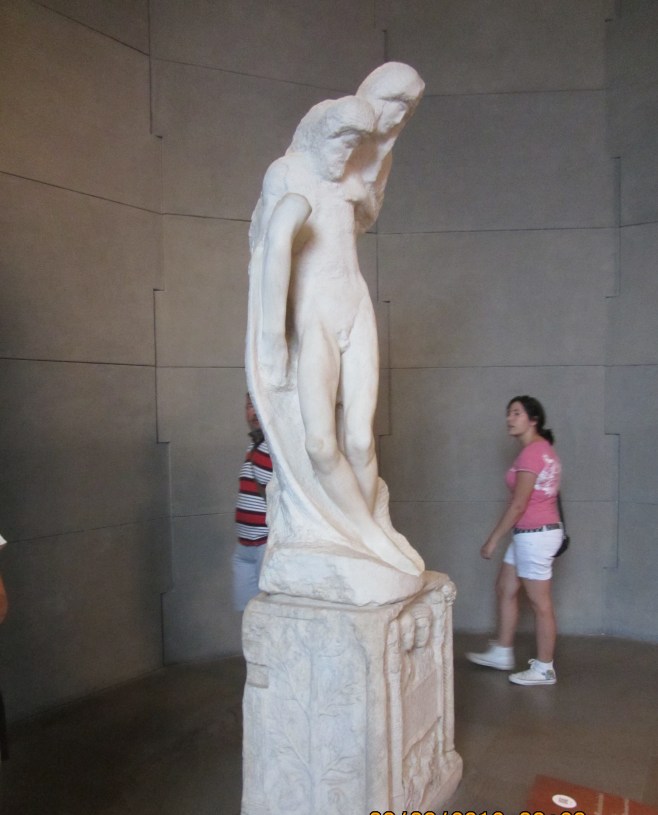
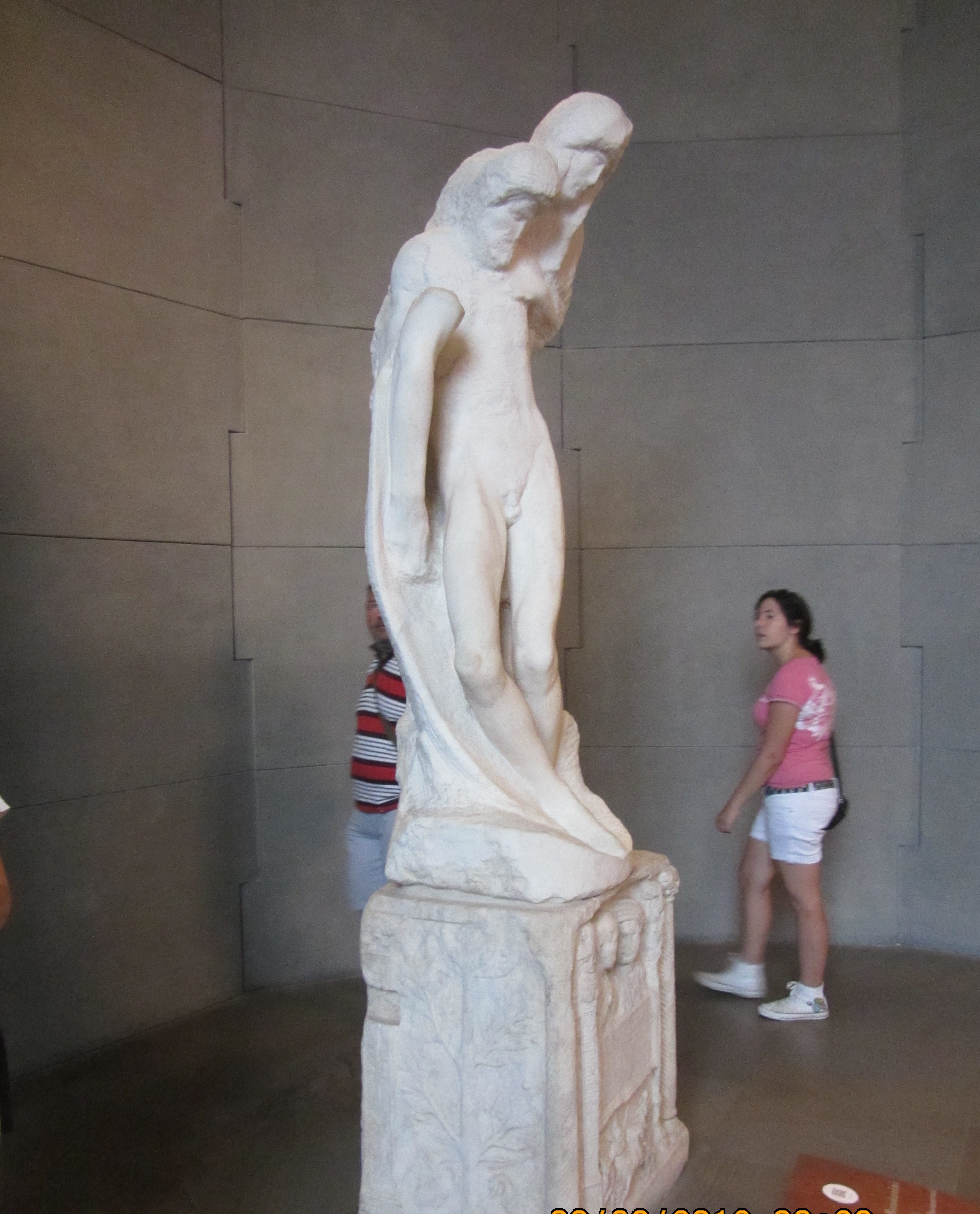
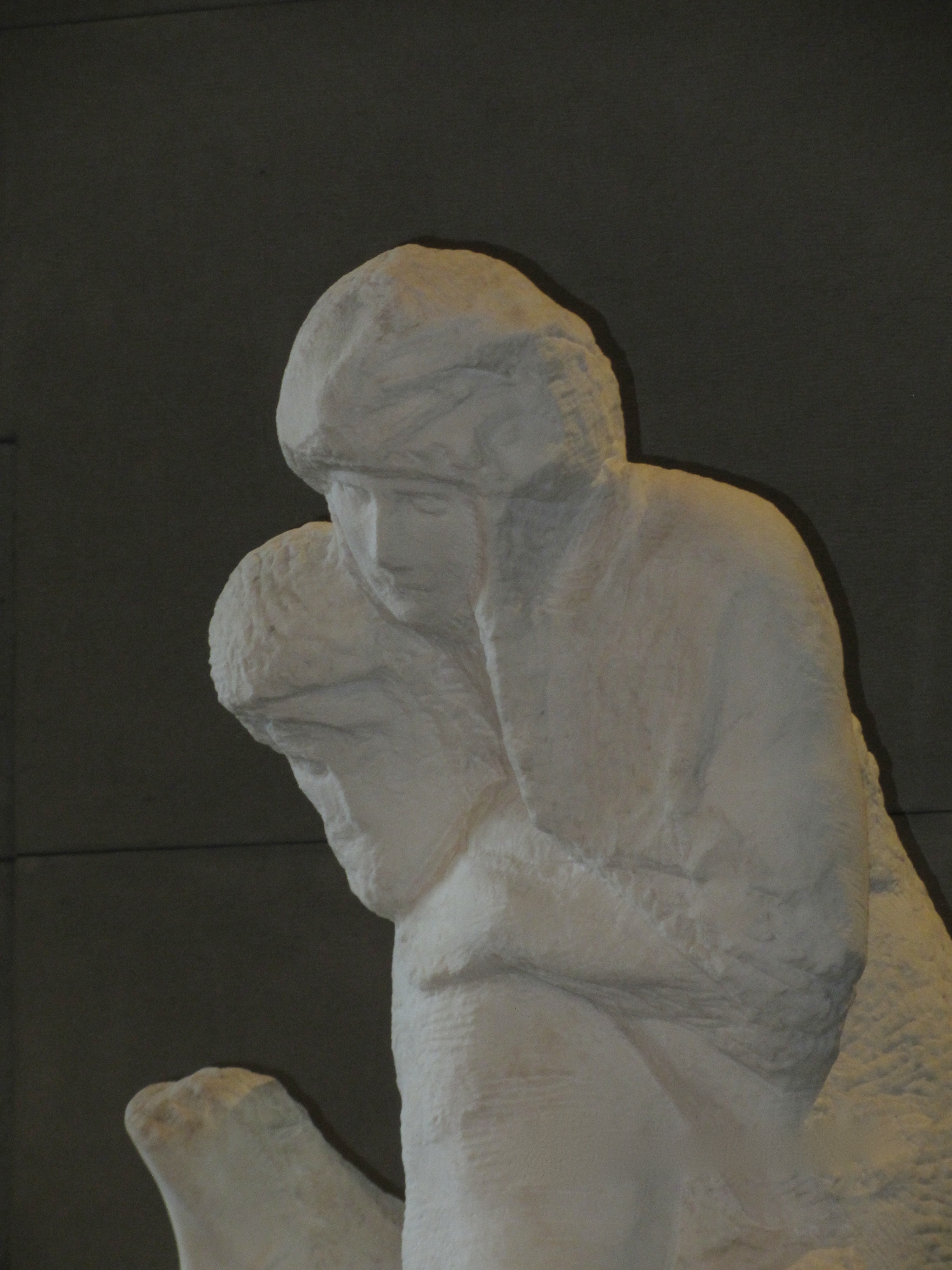
Afterwards, we make our way to the Sforza Castle, previously the residence of the Sforza family. It is now a museum of ancient art which features the last and unfinished Pietà, by Michelangelo and the Sala della Asse, frescoed by Leonardo da Vinci, who worked for the Sforza family as a painter, sculptor, and hydrologic engineer. Seventeen layers of whitewash are slowing being removed to reveal the entire mural by da Vinci, sections having been discovered on the walls as late as 2013.
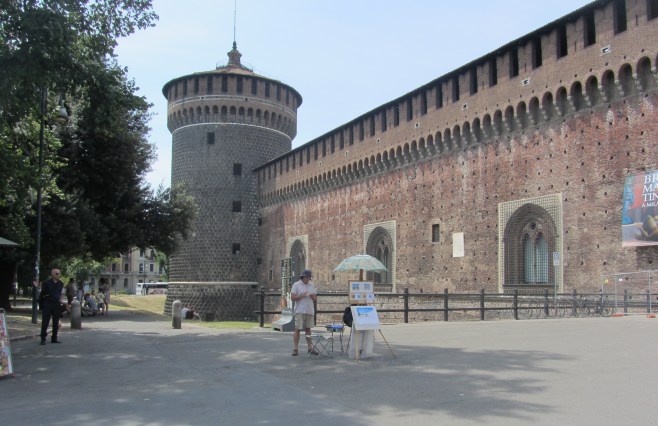
The Sforza Castle
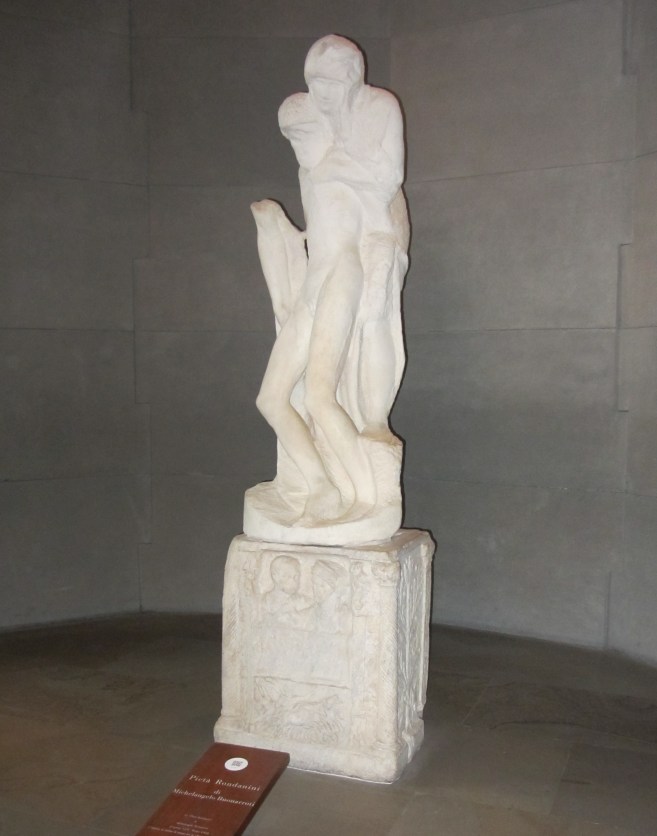
The Sforza Castle

The Pietà

The Last Pietà

The Pietà

The Last Pietà

IMG_1834

Our last stop of the day is Santa Maria della Grazie Church and we are thrilled to find admittance tickets waiting for us! The church is now hermetically sealed, so you go through sections of air filter stations, filtering the air from the outside, until it is deemed pollutant free and we are admitted.  At last, a group of twenty, is turned out into the refectory for 15 minutes at a time. In the Convent, where the work on the end wall was started in 1495, the mural, measuring 180 inches by 350 inches, represents the scene of the Last Supper of Jesus with his disciples. Completed in 1498, the mural specifically portrays the reaction given by each apostle when Jesus said one of them would betray Him. Working a new technique, dry plaster rather than wet, and choosing to seal the stone wall with a layer of pitch, gesso and mastic, da Vinci painted the sealing layer with tempera. Due to this method the piece began to deteriorate a few years after he finished it. As early as 1517, the painting was starting to flake and by 1556 it was deemed “ruined” and so deteriorated, the figures were unrecognizable.  In 1652, a doorway was cut through the painting, so the monks could get to the kitchens easier.  This door was later bricked up, but can still be seen as an irregular arch shaped structure near the center base of the painting.  In 1768, a curtain was hung over the painting to protect it; but instead it trapped moisture on the painting’s surface and whenever the curtain was pulled back, it scratched the flaking paint. In 1821, Stefano Barezzi, an expert in removing whole frescoes from their walls intact, badly damaged the center section of the mural before realizing the work was not a fresco.(Painted on wet walls) He then attempted to reattach the damaged sections with GLUE.  From 1901 to 1908, Luigi Cavenaghi completed a thorough study of the structure of the painting, then began cleaning it. On August 15, 1943, the refectory was struck by a bomb, but a protective structure of sandbags and an additional wall in front of the painting protected it from bomb splinters. Pictures of the damage to the church line the walls upon leaving.  It was the only wall left standing. We leave Milan and return to Menaggio by train and then ferry, weary but so thankful we have been able to see some of the greatest art in the world.

For more information on a private tour of Milan contact Lorenza Scorti at lorenza.scorti@libero.it

A Boat in Bellagio

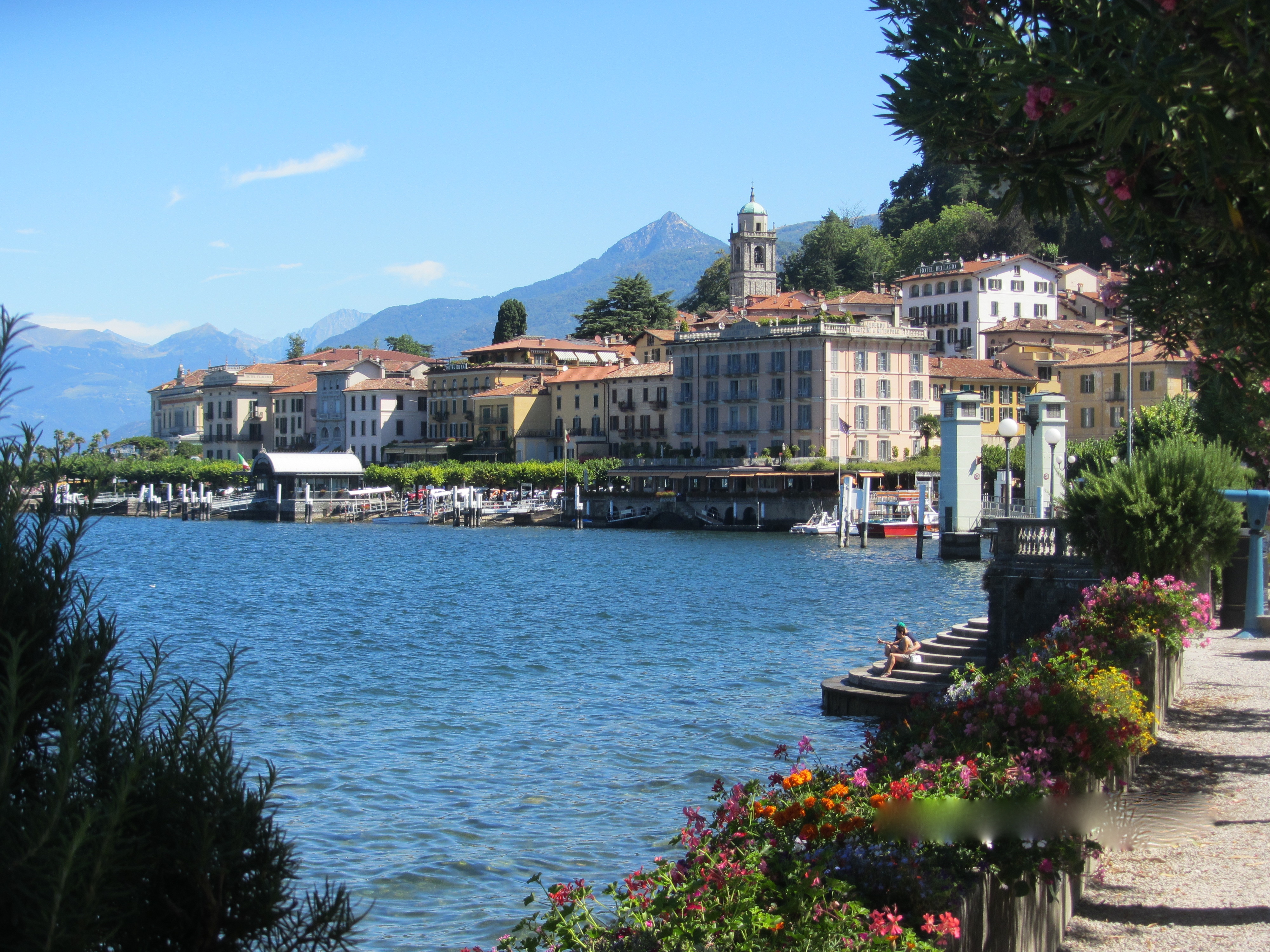
Bellagio Water Front

Bellagio Water Front

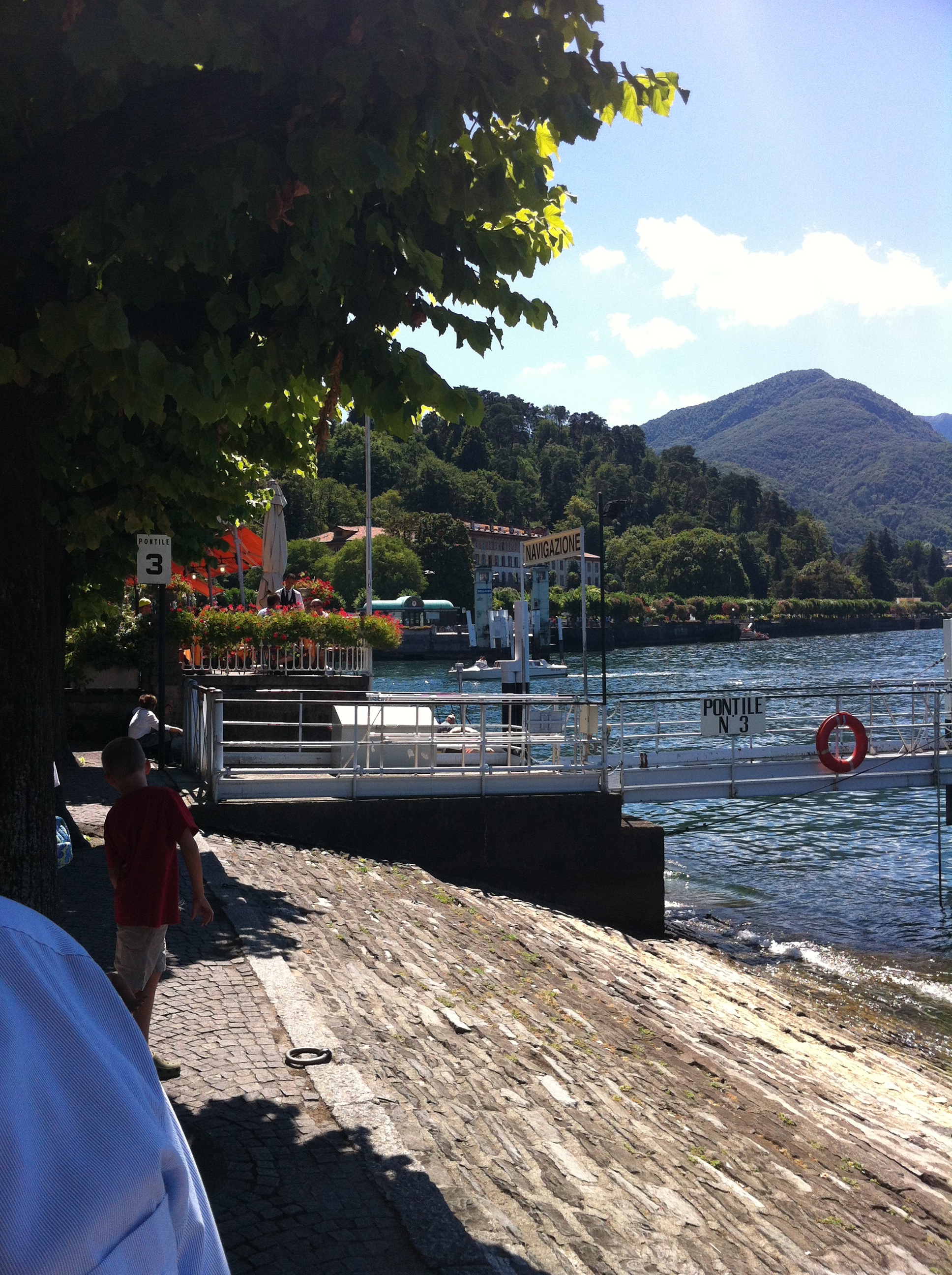
Bellagio Ferry Dock

Bellagio Ferry Dock

Bellagio Waterfront

Bellagio Waterfront

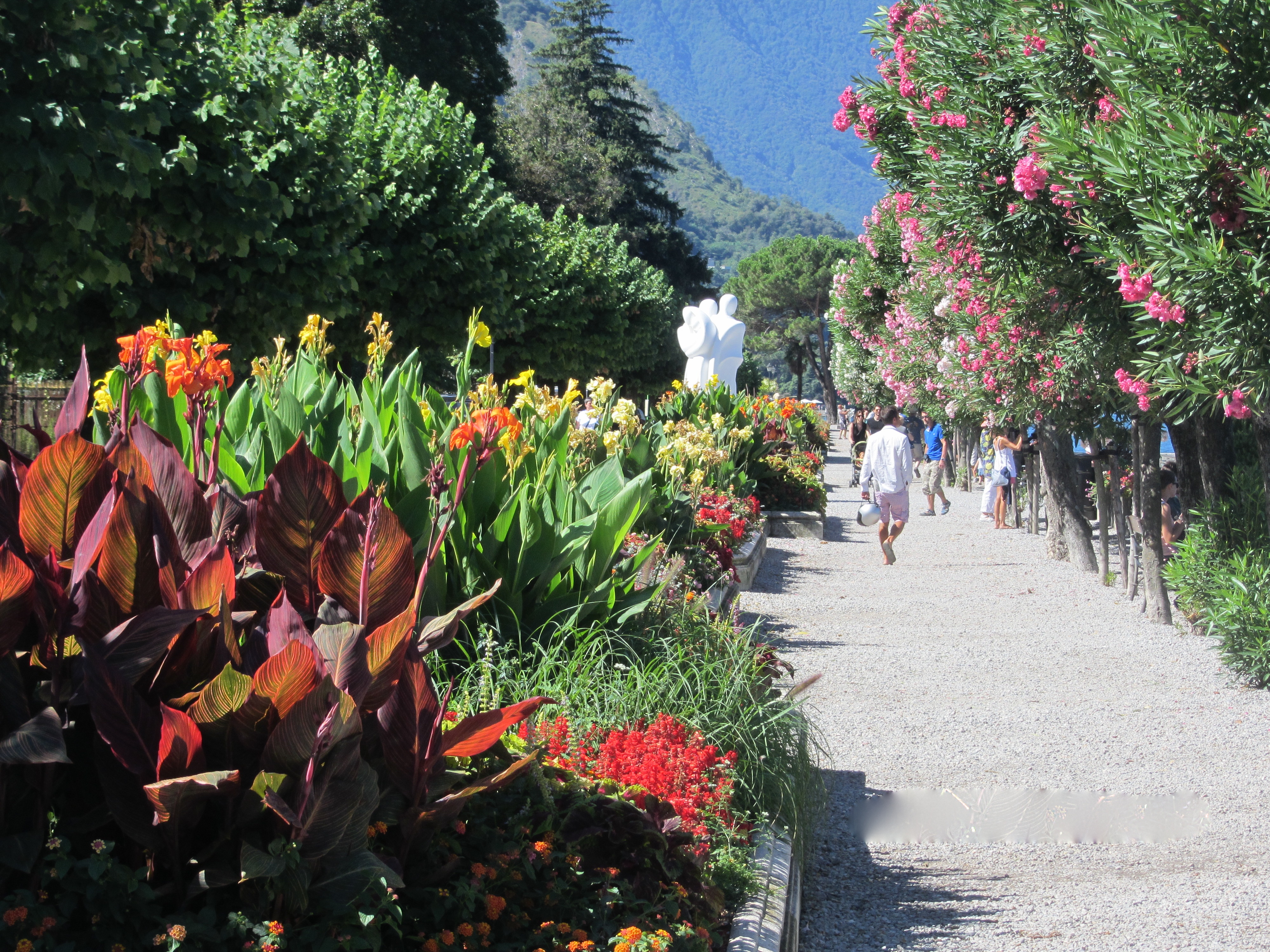
Today we are off to Bellagio for a day of boating fun. Bellagio is by far the most touristy of the three villages we have spent time in. Walking to the right from the ferry, we find souvenir shops and tourist traps galore. These shops are not so much my cup of tea so we walk on to the beautiful Villa Melzi Gardens, filled with exotic plants and flowers and Neoclassical sculpture right along the lake front. We walk the entire length of the garden, to the concrete pool that now sits empty. The walk along the white pebbled garden path is outstanding!

Villa Melzi Gardens

Villa Melzi Gardens

Villa Melzi Gardens

Villa Melzi Gardens

Villa Melzi Gardens

Villa Melzi Gardens

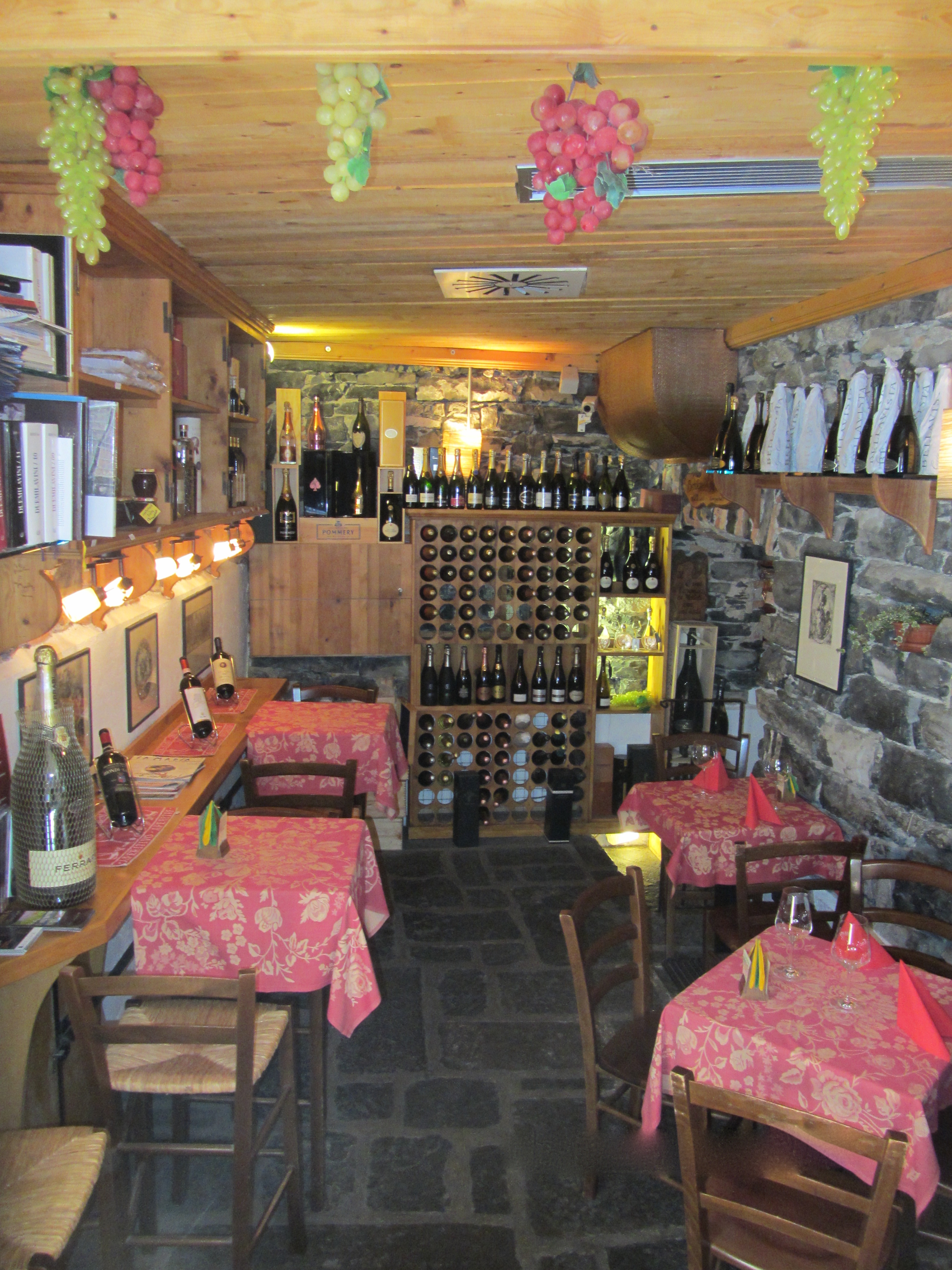
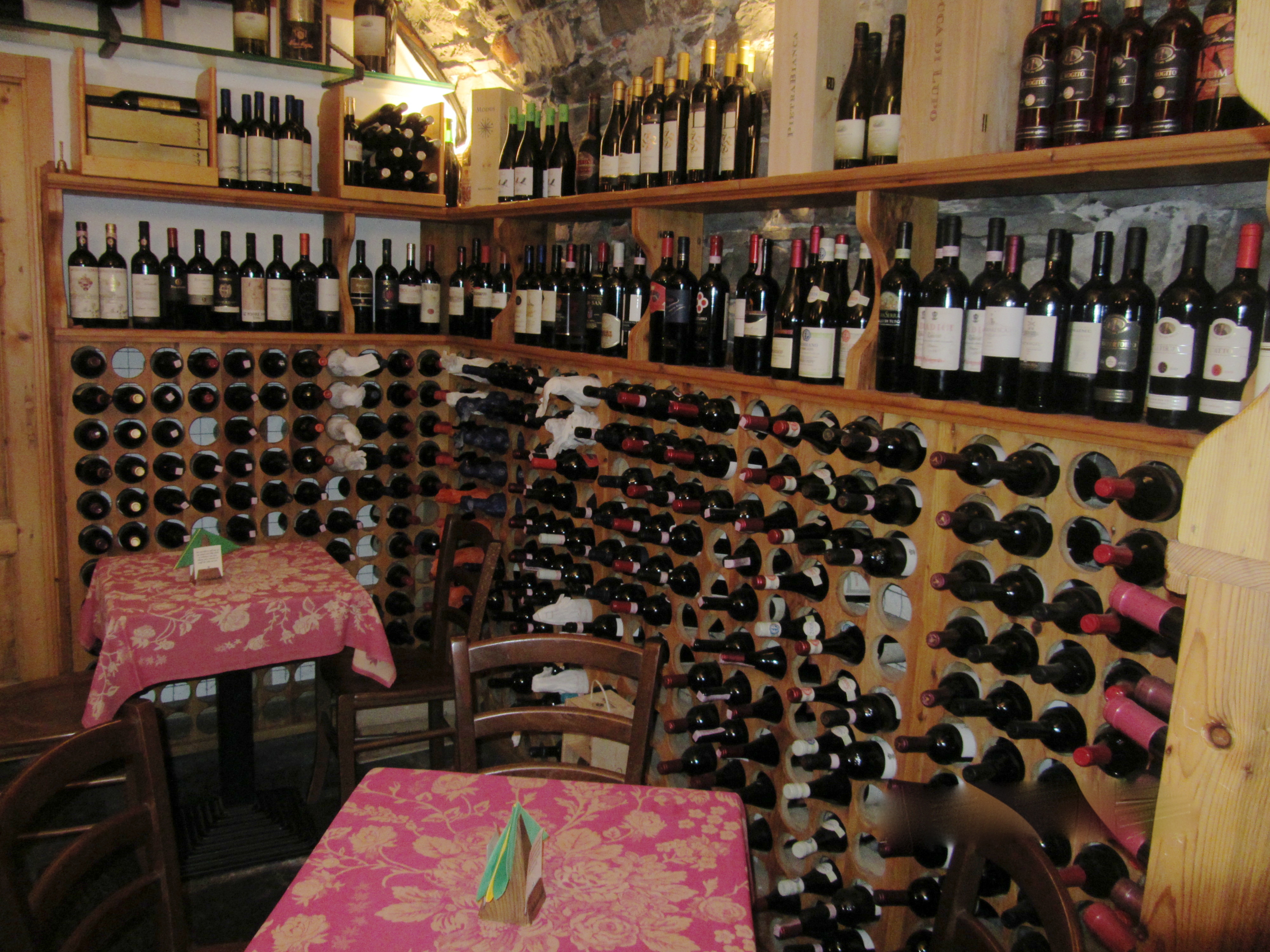
Our next stop is the Enotecha Cava Turacciolo, for a wine tasting. (to boost my nerve to get on the speed boat you see)

Enoteca Cava Turacciolo

Enoteca Cava Turacciolo

The Wine of Enoteca Cava Turacciolo

The Wine of Enoteca Cava Turacciolo

The Food at the Cave

The Food at the Cave

At the Piazza Mazzini dock, where the wooden boats of the Bellagio Water Taxi are docked, we check in with Jennine and Luca.

Luca's Boat

Luca’s Boat

Luca’s boat is immaculate and gorgeous. Take off those spiky-heeled shoes please, do not mar the brilliantly restored mahogany wood! We zoom to the villas along the lake; past Richard Branson’s villa, (Virgin Airlines owner) past a huge sign in front of a villa that reads “No George”, meaning this is not the villa of George Cluny, as some believe. Villa L’Oleandra, George’s villa is located in Laglio, Italy, on the western shore of Lake Como.

We depart our speed boat at Villa del Balbianello, for an English speaking tour of the villa and grounds.  Situated on a romantic promontory overlooking Lake Como, the villa, built for Cardinal Angelo Maria Durini, at the end of the 18th century, sits on the property of a former old Franciscan Church. Be sure to see the inconspicuous door inside the villa that leads to an underground tunnel, an escape route for the Cardinal, that ended up in the hills above the villa. After passing through the hands of many owners, who each placed their own personal touch to the villa and gardens, it was bought by Guido Monzino.  Today the villa consists of his vision, and art collection of landscapes painted on glass (utterly unbelievable) and his mementos of his expedition to the North Pole and Mount Everest. Monzino was the leader of the first Italian expedition to climb Mt Everest and has dedicated an entire floor of the villa to this collection. In 1988 he died, leaving the villa as it was when he owned it, to the Italian National Trust. I found especially interesting the lower floor apartment, designed for his mother, who lived with him, and the modern kitchen on the ground floor. Also, his gardeners were left stipends for the rest of their lives, with the directions to maintain the grounds as they were when he lived there. Note the tree that is so large, the gardeners must climb inside it to prune it and keep it in it’s lovely shape. The villa and grounds have also been the choice for movie directors. It was filmed for movie scenes for Casino Royale, a James Bond thriller, and Star Wars: Episode II. Truly, a must see at Lake Como!  Enjoy my video of the boat trip from Bellagio!

For Information about Villa del Balbianello and Enoteca Cava Turacciolo see:  TripAdvisor

For more info about the Water Taxi Tours see: http://www.bellagiowatertaxis.com

For more info about the Villa Melzi Gardens see: http://www.giardinidivillamelzi.it


Romancing the Stone Part II, Menaggio

Menaggio

Menaggio

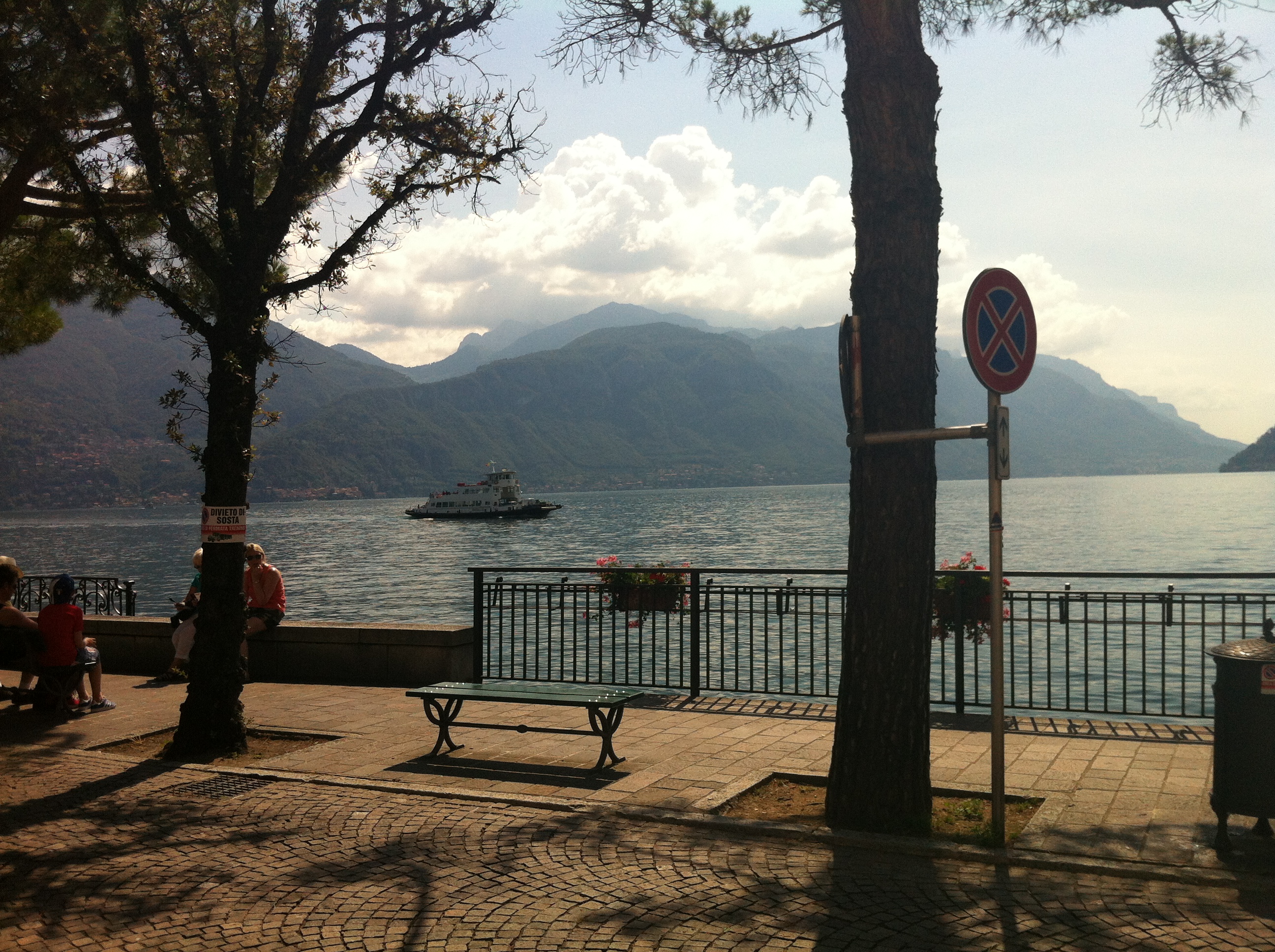
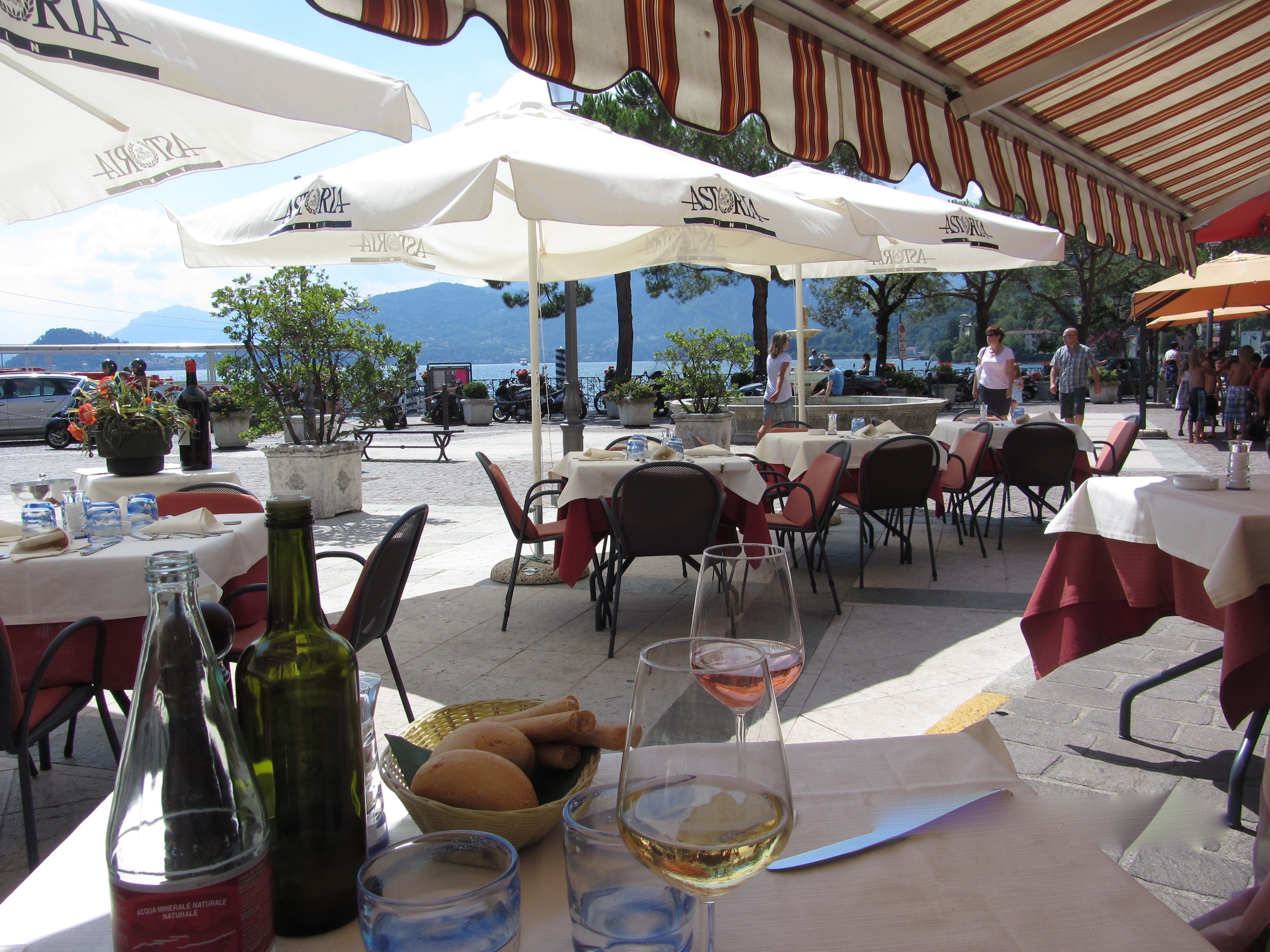
What a wonderful first night we had! Our apartemento, Le Eriche, is perfect.  With the bedroom shutters and the salon shutters open, a lovely perfumed breeze fills the air.  What a way to wake up to the beautiful sunshine! Today we are headed down to Menaggio, via the local bus. It will pick us up early right outside our retreat or if we want to go later in the day we will walk down the road to the big curve. See (La Bella Lingua post for more info on that) Menaggio is picturesque and quaint with buildings of soft colored patinas of ocher, watermelon, cantaloupe and sage that seem to float in the sunlight. Menaggio is also the place to stay to avoid the hot, hot, hot afternoon sun rays.  Of our three favorite villages, Bellagio, Menaggio and Varenna, it is the only village draped in shade late in the afternoon. We enjoyed walking the promenade and eating at the outdoor restaurants along the beach. There is also a boat rental shop here, in case you want to rent your own boat to  motor to the other villages and sights, without taking the ferry. Here are some of my favorite pictures of Menaggio!

Menaggio

Menaggio

My Favorite!

My Favorite!

Heaven!

Heaven!

The Shore Square

The Shore Square

Shore Square

Shore Square

Fun Along the Shoreline

Fun Along the Shoreline

Fun for Everyone!

Fun for Everyone!

The Promenade

The Promenade

The Restaurant

The Restaurant

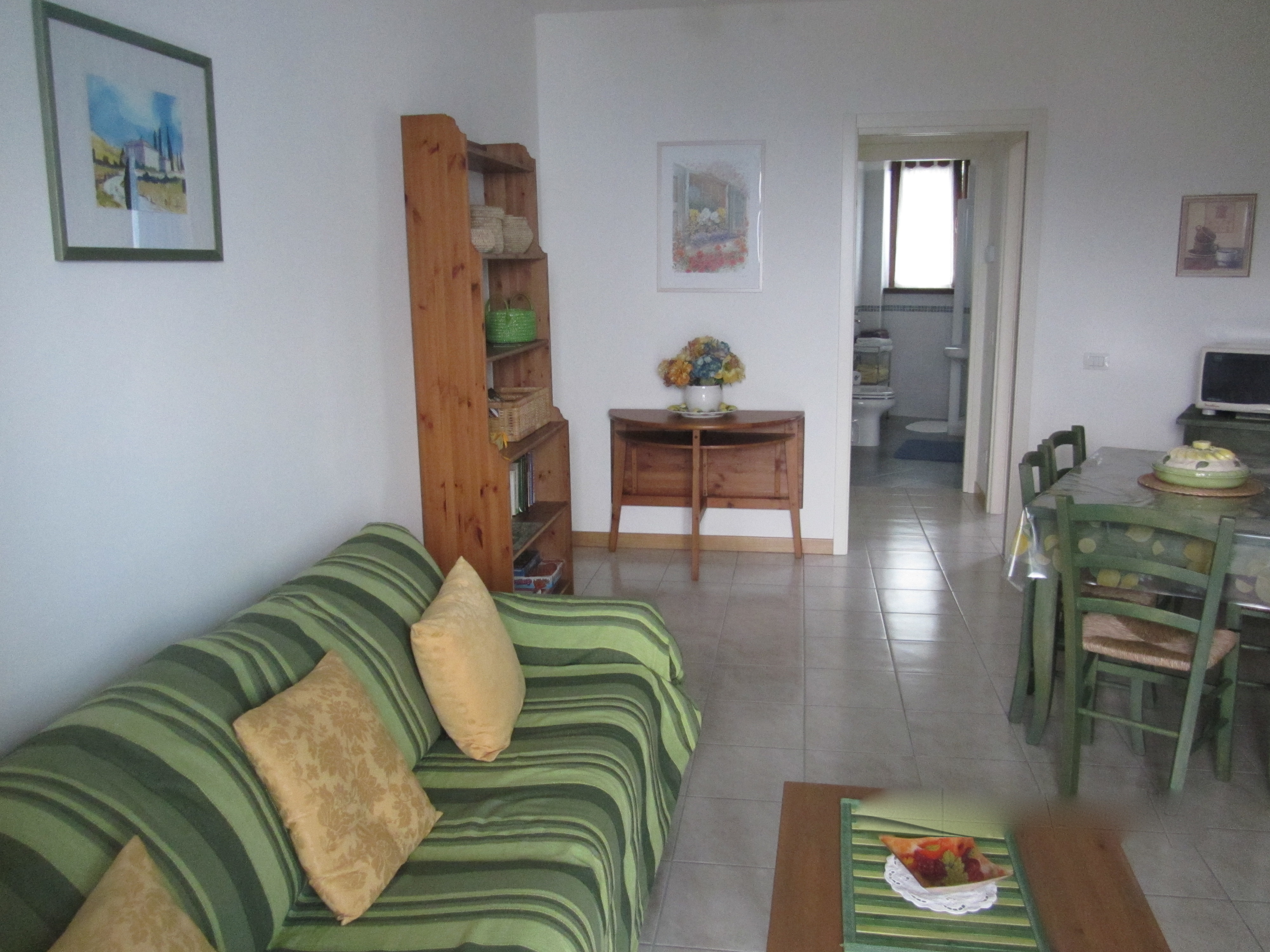
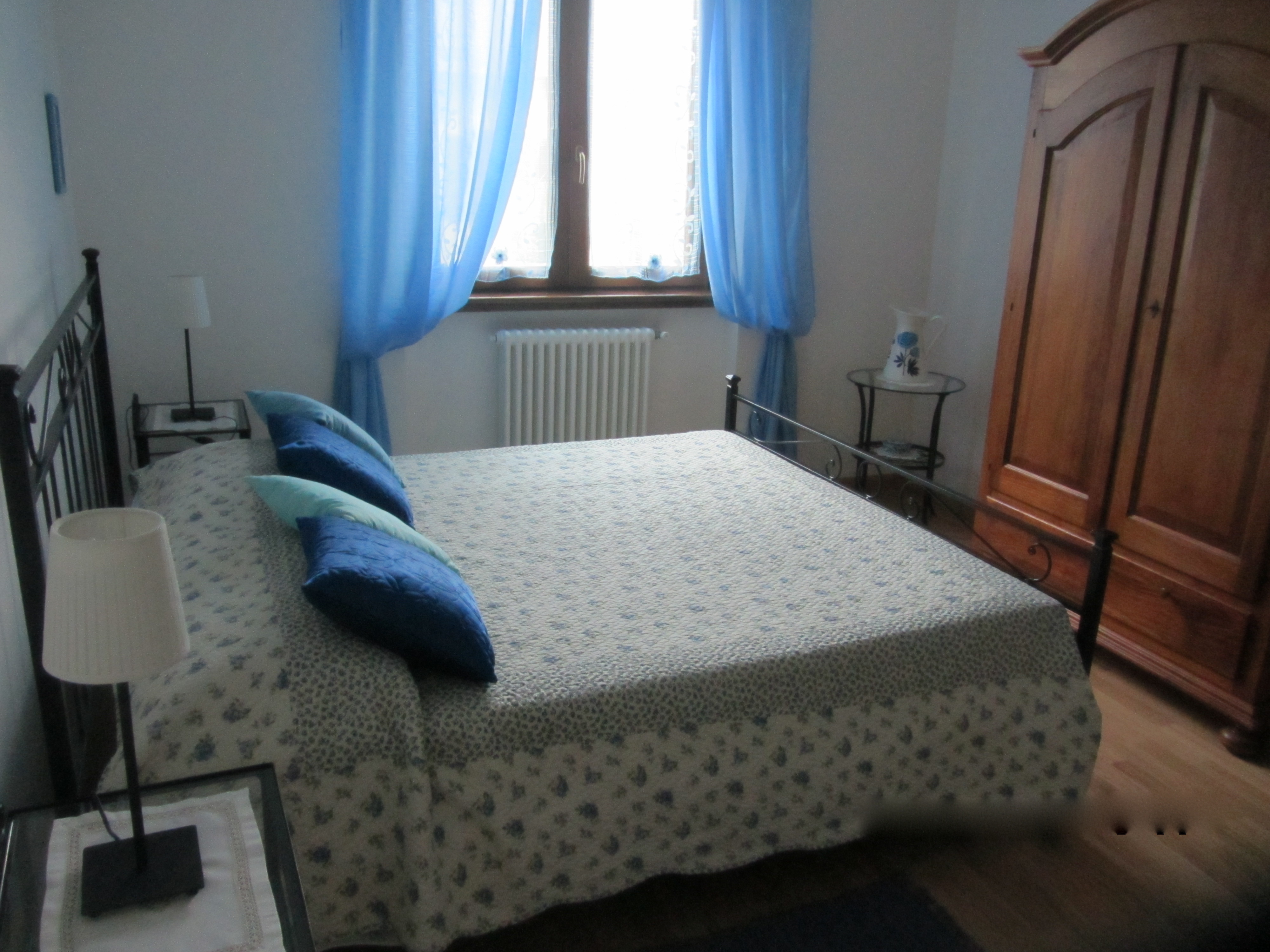
Here is what we came home to every night!  I can not say enough wonderful words to describe the stay we experienced at the Apartment Le Eriche ! Thank you Piero and Fiametta!

Il Salotto

Il Salotto

La Camera da Letto

La Camera da Letto

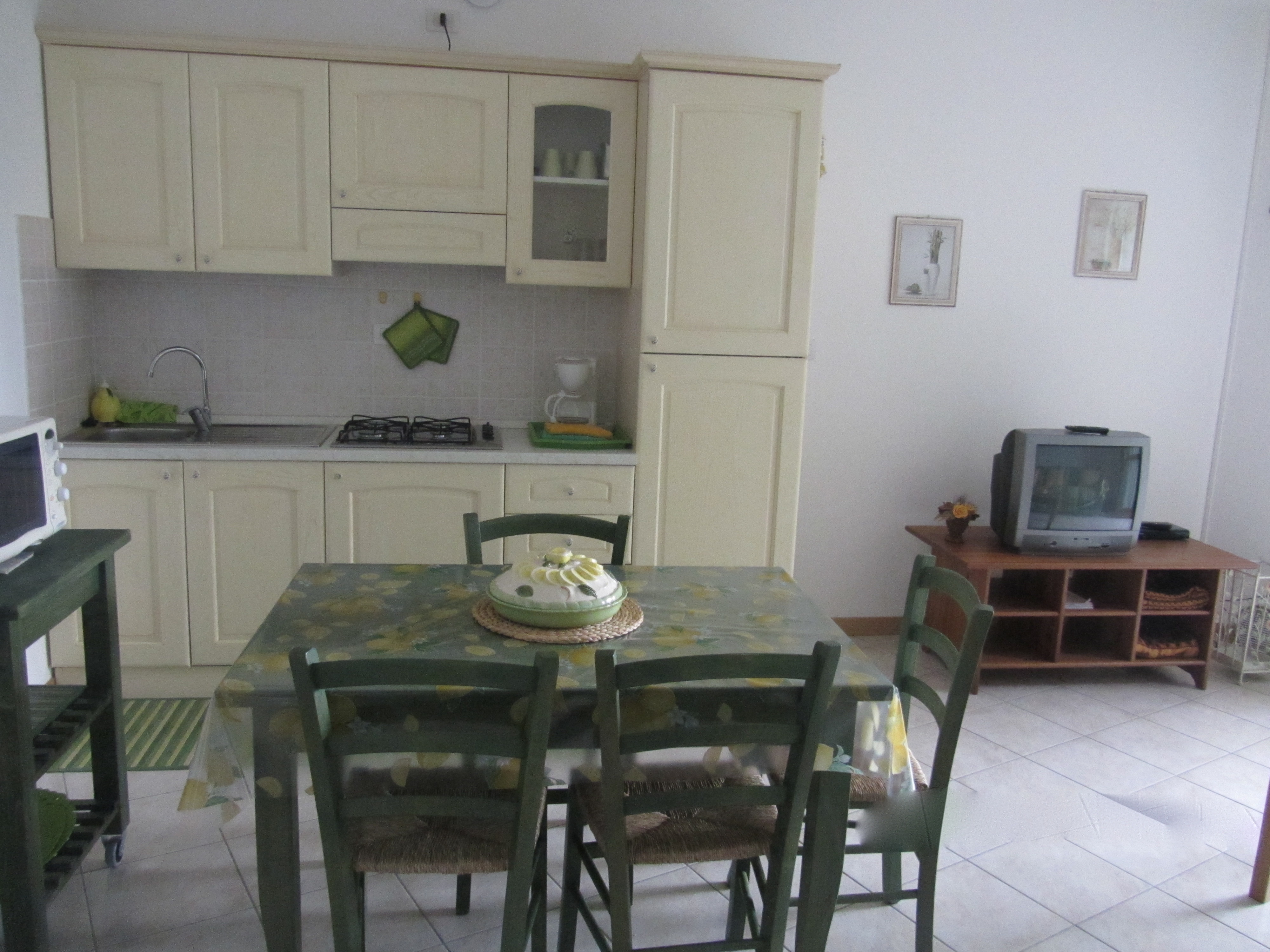
La Cucina

La Cucina

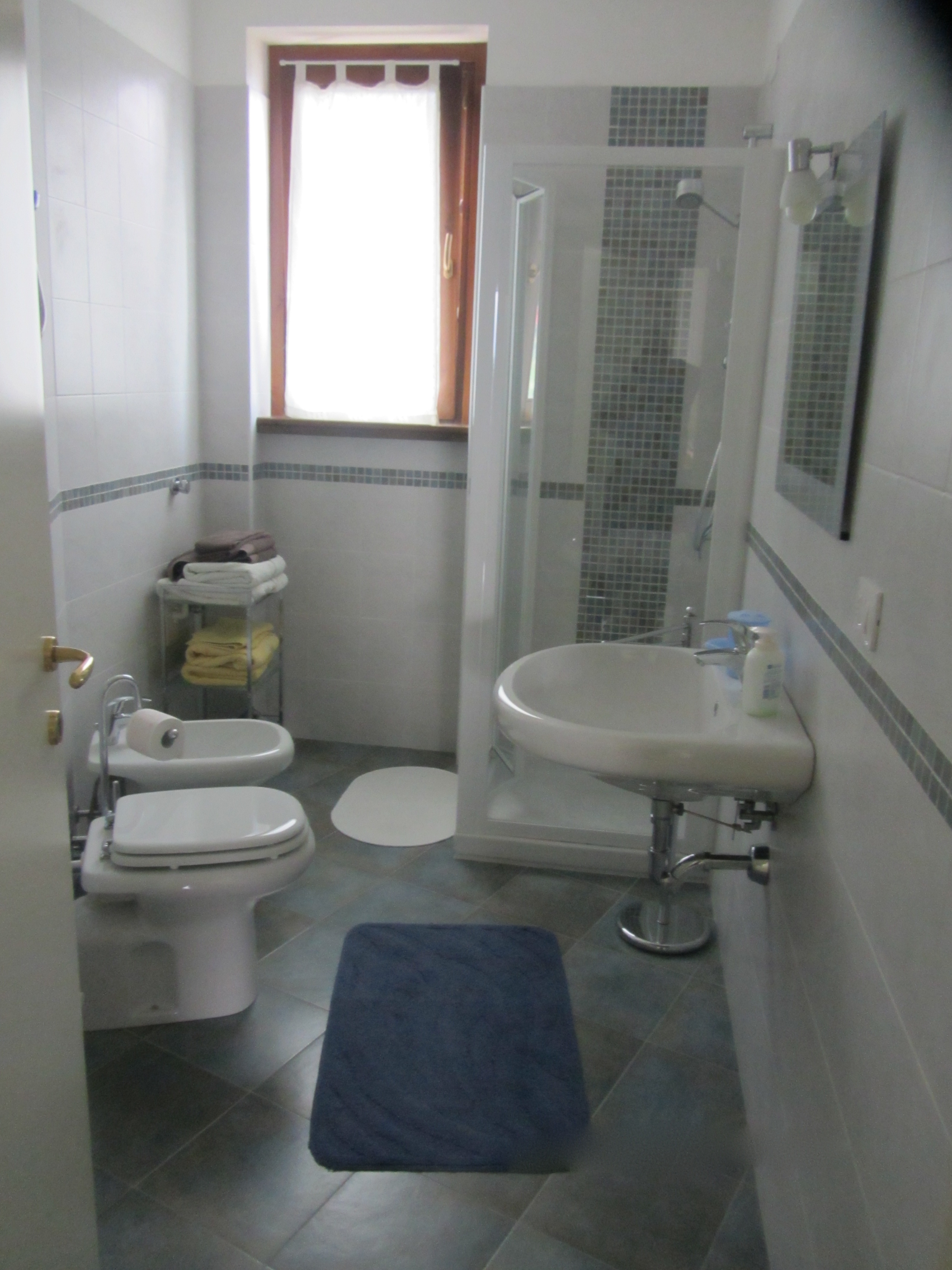
Il Bagno

Il Bagno

Apartment Le Eriche, Via Per Barna, Plesio, Italy or see TripAdvisor under their B&B of the same name.

Romancing the Pizza Stone III: The Cooking Class

The Wharf at Varenna

The Wharf at Varenna

I have a pasta maker/roller/flatener (my made-up word) that has been stashed under one of my cabinets and as yet, has never been used.  Making pasta looked so easy when I saw it demonstrated at the local Saturday market in my hometown!  I thought if I took an Italian cooking class that I would finally get the hang of pasta making. On this beautiful Italian day we (SB is manly enough for this) are headed to Varenna, (population 800) to a cooking class with Chef Moreno at Ristorante Il Caminetto in Perledo. He teaches the basics of Italian cooking including pasta and regional specialties. The ferry has become our friend.  Every morning we are up and out the door to the bus, chatting with the Italian nannies as we all head down to Menaggio.  Then at the dock we sip more latte, espresso or Coke (for SB) and watch the world go by as we wait for the ferry to arrive.  I could really get used to this lifestyle!

Varenna is even more laid back then Menaggio. I love the grand yellow hotel at this dock location too.  It seems very large, but when you look at it from the side, how narrow it is!  Check out the video I made! There are several groups of people mulling about the dock and soon we see a man in a chef’s apron, who has come to reign us all in. His son’s have arrived in various vehicles from the mountain village to retrieve us and take us to the restaurant. I can see why on the trip up.  I thought the drive to Menaggio was twists and turns, but this road comes in first place.

At the Restaurant Caminetto we are greeted with wine and home made cookies as we wait for everyone to make it up the mountain. Chef Moreno washes up (his hands and arms) and washes down the wooden table ( a good 20 minute scrub) while chatting along the entire time about his life in the village and life as a chef here. Then he begins to prepare the dough: flour, scant water, eggs, flour, knead, eggs, flour, knead, roooooooooll! Repeat! And repeat! Rooooooooooooll every which way with the longest, skiniest rolling pin I have ever seen! What no pasta maker?  He would never consider it!  We started at 10 am in the morning. We laughed, we roooooolled, we pinched, we patted, we made sauce with tomatoes from his garden, and we ate several servings of our makings and drank a lot of wine in between! We had the best time and then finished up with a stroll through the petite mountain village.  It was 4pm! Taxis have been dispatched to return us to Varenna. We have a woman cab driver. She  looks like a housewife who got the call to come fetch us. I can’t believe they have cab service here!

Back in Varenna, we stroll to the left of the dock, into the neighborhoods, to find the local train station.  How about that tree? Then we back track and go to the right of the dock into the village shopping and main restaurant areas. Eventually on another day in Varenna we would go to the tippy top of town and visit the local church and eat pizza under giant smooth barked trees. This is HEAVEN!

For information about Chef Moreno and Ristorante il Caminetto visit: http://www.ilcaminettoonline.com  Price includes transportation to and from the Varenna dock landing, the lesson, and lunch including wine, cookies and coffee. A must do!

Romancing the Water and Stone

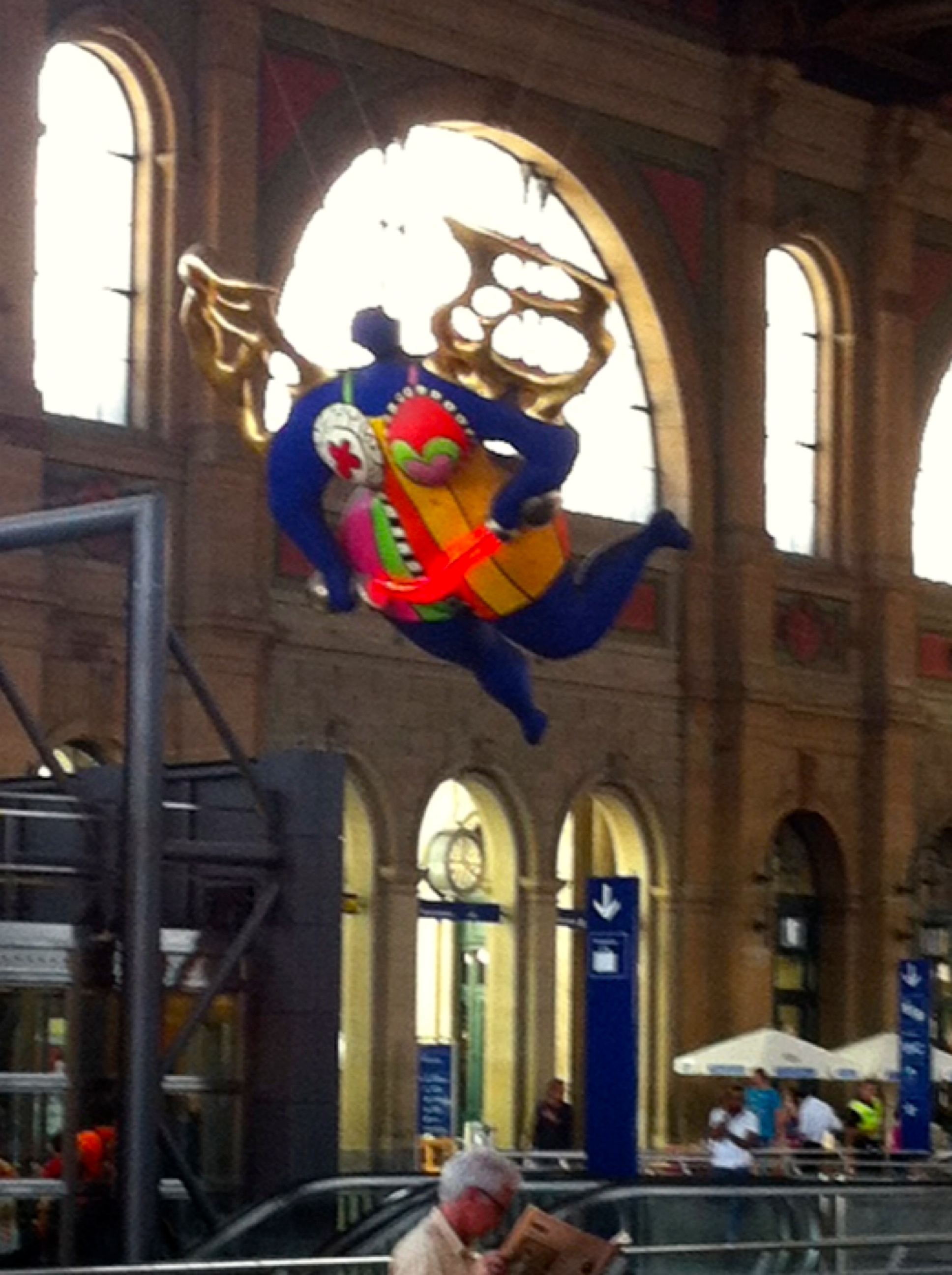
The Angel in the Train Depot

The Angel in the Train Depot

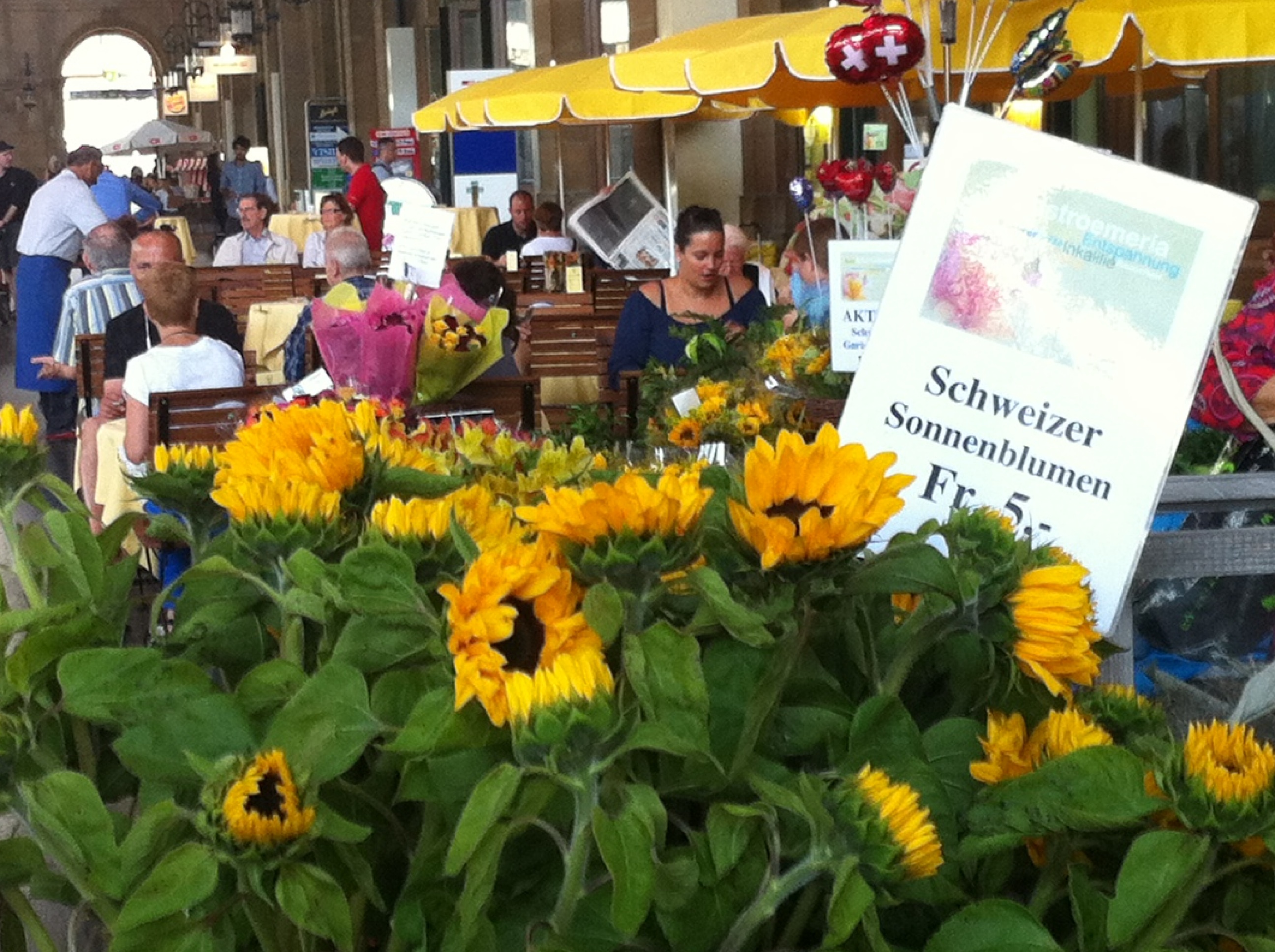
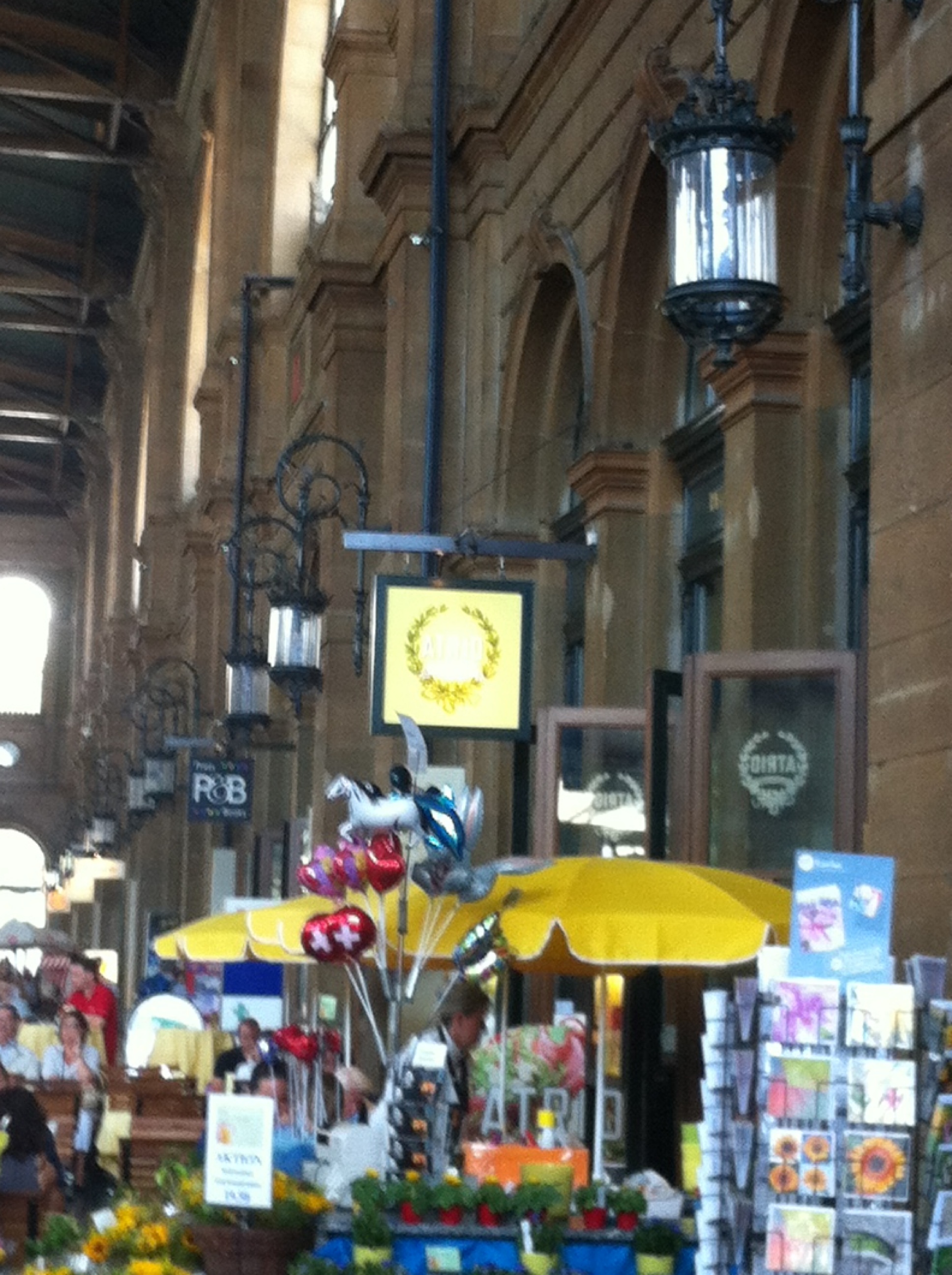
For a Valentine’s posting I was thinking of the most romantic spot I have journeyed to.  For me it would be Lake Como, Italy. The romance begins on the journey to get there. This vacation offered everything I consider romantic, a lake and the mountains. The Zurich train depot set the tone for our vacation.  It was one of the most artistically pleasing train stations I have ever been in. The compact green Italian train departed from a lively open warehouse-looking building filled with shops and restaurants and a large flower stall.

Sunflowers

Sunflowers

The Shops in the Warehouse at Zurich Train Station

The Shops in the Warehouse at Zurich Train Station

The train ride through tiny mountain villages and lakes in the Alps from Zurich to Como went by very quickly because the scenery was breathtaking. We arrived in Como just in time for an afternoon glass of wine before embarking a Rapido-Hydrofoil to go from the bottom left leg of Lake Como up to the split in the lake, to one of the triangular points of the lake, Menaggio.

The Walk from Como Giovanni Train Station to the Dock in Como

The Walk from Como Giovanni Train Station to the Dock in Como

The Hydrofoil Dock in Como

The Hydrofoil Dock in Como

Como Lakeside

Como Lakeside

During our stay on Lake Como we would be exploring Bellagio and Varenna also. The hydrofoil stopped at several small villages along the lake and it was exciting to see what the other villages looked like from the waters edge.  Villas, surrounded with immaculate gardens and landscaping, were most impressive!  After each stop, to let passengers off, I would tick the villages off in my head. Well we didn’t pick that one. Next…..

When we got to the dock at Menaggio, I knew I had picked the right place. Near the shore and the landing area for the hydrofoil and the ferries, was a hip coffee/pizza/breakfast restaurant with outdoor seating.  This spot would be our favorite spot for morning cappuccino, espresso or latte while we waited for the ferry to take us on various excursions. We would just sit and watch the seagulls and the early strollers.  Nearby was a beautiful yellow villa, Hotel du Lac, and across from that the grocery store.  Perfect! (For more insight into grocery shopping in Menaggio see the post, Il Negozio di Alimentari)

Soon after arriving at the dock in Menaggio, about 4 hours behind schedule, but right on time following Italian time, we were met at the wharf by our host, Piero. Six months previous, I had asked to rent one of his rooms in his B&B, but it was full.  He had suggested an apartment, that he and his wife also rented out, since were staying over a week, and we agreed. We were not exactly sure what we would be getting. Piero had a tiny hatchback car, so we piled the luggage in as best as we could, but SB still had to scrunch up and fold himself over the luggage (and we travel light) that had to be squeezed in the back hatch seat. With Piero and I buckled in the front seats, we set off up the hill.  We went up and up, curve, up, up, curve, tight curve, back up and take a second go at the curve-turn combo. Up, Up, past San Marco, past Ligomena, another tight curve.  Stop. Here we are and the rest is history!

For a week we lived in an outstanding apartment on the mountainside of Menaggio with a heavenly pool and a dream view of Lake Como.  Our neighbors, who stayed in other apartments, came from all over the world.  We had the best time getting together in the evenings by the pool and trying to figure out what everybody was saying! It was fantastic! Enjoy the view!

PS. We traveled from Zurich, Switzerland to Como, Italy because after leaving Lake Como we would be spending a week in Interlaken, Switzerland.  You could fly into Milan and take a train from there to Como to get a hydrofoil to the other villages along Lake Como.

For information about the apartment see: Apartment le Eriche, Via per Barna, Plesio, Italy.

For the B&B see: B&B Eriche, Villa alla Grona, Menaggio, Italy or view on TripAdvisor

How to Make Friends When Traveling

Christmas Lights are Everywhere

Christmas Lights are Everywhere

Reflecting on our trip to Paris, I must tell you it was one of our best vacations, although it was not our first time there.  I think there are several explanations why we had such an enjoyable time. Because it wasn’t our first visit, we could focus on things that we had missed on previous stays. We were, for the most part, out of the tourist mode and more into the relaxing/really get to know you mode. We rented an apartment, we shopped locally in our neighborhood and ate most of our meals in restaurants in the neighborhood too. There were not many Americans, if any, to be found in the places we liked best. The French people were most polite, helpful and actually acted like they enjoyed us as much as we were enjoying them. This was especially noticeable in the restaurants. The key to starting off on the right foot, for me, is trying to fit in. I start with the language.  Knowing some words in their language can go a long way. Trying to carry on a conversation in their language takes you even further. Learning words to be polite, like please, thank you, and your welcome should be the bare bone basics in any language.  Where is, also comes in very helpful along with the word for bathroom. Ha! Another good reminder: things are not going to be the same way as I am accustomed to in my home, in a different country.  Isn’t that the reason I travel? If my new surroundings were not going to be different, I might as well stay at home.  So be prepared for different.  Look for new ways of doing things.  Try new foods. Go with the flow, but be prepared. I study every day on Duolingo, sometimes for as little as an hour sometimes more.  It is a free App and internet sight, that is fun, and can be studied with as little or as much time as you want to take for it. I am on my 110th day studying French and before that I studied Italian on Duolingo, after I came back from Italy where I took a full immersion language course at Il Sasso. I didn’t want to lose my skills. Through Duolingo I have met friends, asked a bazillion questions to French speakers and others, learned something about their culture and translated articles. It has been so valuable to me. So to me this was a stepping stone that made my time more enjoyable on my vacation. I think it also made a huge difference to the people I interacted with. With that said, here are my four favorite eating spots in Paris during our stay this time. Practice those language skills!

Camille, right around the corner from our apartment in Paris, was the closest and had the most delicious traditional french food and pastries. It was packed with locals at all hours. I would highly recommend it. Like any great Parisian food spot the tables were small, very close together and you had to move the table or climb over other guests to get to the table.  A great conversation starter!

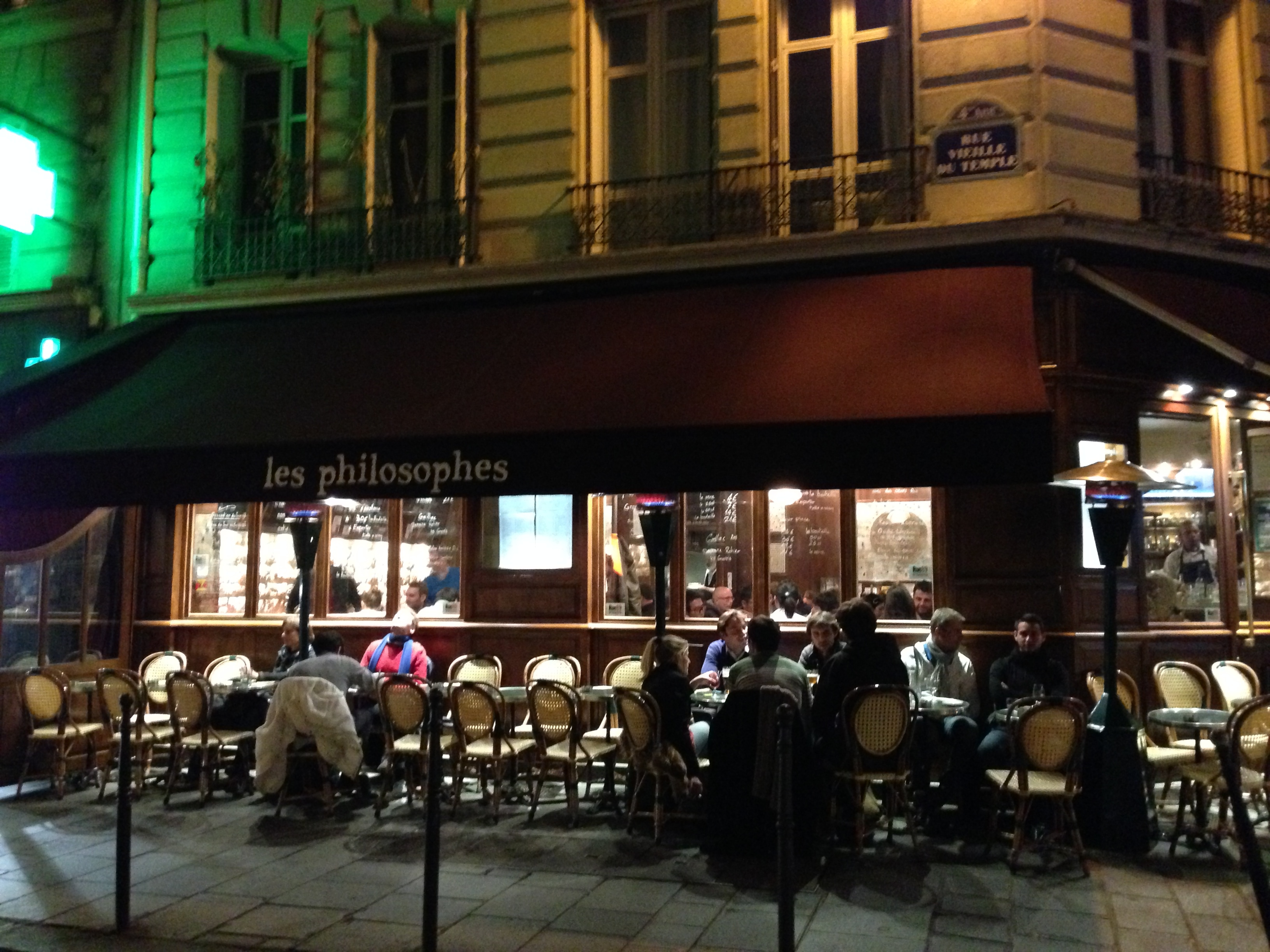
Les Philosophes, was the restaurant wine bar, coveted by locals and especially young people. Located on a very busy walking lane, the people watching was excellent.  Sitting outside under the big umbrella heaters, enjoying a wine and salad for hours, made me feel like I was part of the neighborhood. Everyone talked with everyone! We spent one enjoyable evening in conversation with a couple from Hong Kong.

Les Philosophes

Les Philosophes

Sorza Restaurant and Bar, on Saint Louis-en-L‘ile, was one of the most romantic and charming spots with a fabulous selection of food. We had the best pasta dishes here, but what set it apart from the other restaurants was the sorbet! The best I have ever eaten!  The lime was so fresh and fruity with bits of lime peel. Other flavors were raved about too.  I crave that sorbet now that I am at home!

King Falafel Palace in the Jewish Quarter, is an Israeli restaurant famous for their falafels.  There were long long long lines daily just to get a carry out. I had never tasted a falafel and had never even heard of one, but I couldn’t wait to try it. One evening we got into the tiny tiny restaurant and were seated under the Israeli flag draped on the wall. I had the biggest pita sandwich ever! I am not sure what the contents were, but it was meat and sausages with fresh vegetables and some kind of sauce, all plumped and over flowing in that pita. It was delicious and well worth the wait. Also I had the best pomme frites in all of Paris I am sure! I sat and watched a server/helper slice pitas, hundreds of pitas. Each individual pita  was slit open with a box cutter and stacked to be prepared for the falafels. That was his only job and he had a hard time keeping up!

The Falafel

The Falafel

Finally, as one of my blogger friends pointed out, http://www.delightfullyitaly.com, it is also good to know hand gestures ( a form of communication) and what they might mean in another country.  I think you will find this video most helpful when planning to visit Italy. Something to be aware of before you make that hand sign!

For more interest see:
Duolingo, Language Studies, http://www.duolingo.com
Il Sasso, Premier Italian Language School, Montepulciano, Italy.  http://www.ilsasso.com
Camille, 24 Rue de Francs-Bourgeois, Paris, France.  See TripAdvisor
Les Philosophes, 28 rue Vieille du Temple, Paris, France.  See TripAdvisor
Sorza Restaurant and Bar, 51 Rue Saint Louis-en-L’ile, Paris, France, http://www.sorza.fr
King Falafel Palace, Specialités Israéliennes, 26 Rue des Rosiers, Paris, France, See TripAdvisor.

THE SPECTACLED BEAN

Tales, Thoughts + Tribulations of a Free Spirit in Suburbia

Walking Away

Travels on foot

Teacher nickname: The Three Hairs

Minding my mind, one thought at a time.

Tra Italia e Finlandia

Un lungo racconto fotografico.

seanbreslin.jp

Photography, hiking, walking, and cycling across central Japan — from quiet mountain paths to everyday life around Nagoya.

Lost in Translation

Looking for meanings in words, images and sounds

Journeys with Johnbo

Reflections on places traveled and photos taken.

M/VGratitude

Cruising with the Thyrre Family

Caroline's Travel Adventure Blog

Where my Travels and my Blog merge together.

Just Me, Nobody Special

The mental meandering that cross my keyboard

Jennifer's Journal

Website & Blog of J. Kelland Perry, Author

Slow Shutter Speed

A photographic journey.

Ann Mackay: Inspired by Nature

Photography celebrating flowers, plants, and the natural world

Still Restlessjo

Roaming, at home and abroad

Fine for Friday

The Corner Garden

Picture This

Photography, Travel and Retirement

World Traveller 73

Upgrade Your Travels. First Class Luxury Travel from all parts of the Globe. Business Class Airline, Lounge and Hotel Reviews, Stories and Adventures

Rachel Meets China

A China travel and lifestyle blog