Travel, Gardens, Food, Photography, Books, Shoes

Posts tagged ‘UK’

A Day With Agatha Christie at Greenway: Getting There

Agatha Christie's Tour Bus, Greenway

Agatha Christie’s Tour Bus, (a 1947 Leyland Tiger PS1/1 single decker with Barnaby bodywork)

Agatha Christie's Tour Bus, Greenway

Agatha Christie’s Tour Bus, Greenway

I am so excited to be visiting Greenway House, the holiday home of Agatha Christie. It is the first private residence of the famous author to be opened to the public. Greenway House is situated on a 278 acre estate on the Dart River in Devon. I will be dividing the posts into several sections since there is so much to talk about and it is all so very interesting! Now let’s get on the tour bus, so to speak!

Agatha Mary Clarissa Miller was born September 15, 1890 into a wealthy, upper middle-class family in Ashfield, Torquay, Devon. Agatha described her childhood as “very happy”, but that her childhood was over when her father died when she was eleven. She was surrounded by strong and independent women, (her mother and her grandmother especially) believing her mother was a psychic with the ability of second sight. She described her grandmother and her cronies as “always expecting the worst of everyone and everything, and were, with almost frightening accuracy, usually proved right.” Her mother insisted that Agatha be educated at home, so her parents were responsible for teaching her to read (which she loved) and write, and basic arithmetic, which she also enjoyed. In 1905 she was sent to Paris to further her education, but returned in 1910 when her mother was ill. They decided to go to Egypt, (a popular tourist destination for wealthy Brits at that time) to spend time in a warmer climate, and stayed three months at the Gezirah Palace Hotel, attending social functions with her mother. They were on the prowl for a husband for Agatha! 

Upon return to England Agatha met Archibald Christie at a dance given by Lord and Lady Clifford at Ugbrooke, near Torquay. Archie was born in India, the son of a judge in the Indian Civil Service. By 1913 he was an army officer in the Royal Flying Corps. The couple married on Christmas Eve in 1914, while Archie was home on leave.

Agatha involved herself in the war effort, joining the Voluntary Aid Detachment (VAD) in 1914, and assisted with wounded soldiers at a hospital in Torquay as an unpaid VAD nurse. She was responsible for aiding the doctors and maintaining morale; she performed 3,400 hours of unpaid work between October 1914 and December 1916. She qualified as an “apothecaries’ assistant” (or dispenser) in 1917 and, as a dispenser, she earned £16 a year until the end of her service in September 1918. In her spare time she wrote.

She was initially unsuccessful at getting her work published, but in 1920 The Bodley Head press published her novel The Mysterious Affair at Styles, featuring the character of Hercule Poirot. This launched her literary career.

Agatha Christie created several series’ characters during her writing career, but her best known was Hercule Poirot. Christie, was a fan of detective novels, having enjoyed Sir Arthur Conan Doyle’s early Sherlock Holmes stories. In her detective novel, Poirot was a former Belgian policeman noted for his twirly large magnificent moustaches and egg-shaped head. Christie’s inspiration for this stemmed from real Belgian refugees who were living in Torquay. He appeared in 33 novels, one theatrical play, and more than 50 short stories He first appeared in The Mysterious Affair at Styles (1920) and last appeared in Curtain: Poirot’s Last Case (1975) which famously features his death. While her fans loved Hercule Poirot, Agatha Christie herself was increasingly fed up with her creation. Late in her career, she described him as “an egocentric creep.”

In 1926, Archie Christie wanted to marry his mistress, Nancy Neele, and asked Agatha for a divorce. Agatha, totally overwrought, left her home and then abandoned her car at a chalk quarry, before disappearing for ten days. There has been a lot of speculation as to what exactly went on during this time. It has been suggested that Agatha disappeared to embarrass her husband, and call him out on the divorce, (mistress and all) or that it had possibly been a publicity stunt to promote her next book. However, when she was found at the Old Swan Hotel in Harrogate having registered under a false name, two doctors diagnosed her as suffering from amnesia and a depressed state from literary overwork, her mother’s death earlier that year and her husband’s infidelity. Agatha never spoke of the incident again.

A quote from Agatha; “I have sometimes been wildly, despairingly, acutely miserable, racked with sorrow, but through it all I still know quite certainly that just to be alive is a grand thing.”

Life goes on………. and Miss (Jane) Marple was introduced in the short stories called The Thirteen Problems in 1927 and was based on Christie’s grandmother and her cronies.

In 1930 Agatha married Sir Max Mallowen, (14 years her junior) having met him during an archaeological dig. Her travels with him contributed backgrounds for several of her novels set in the Middle East.

Agatha Quote; An archaelogist is the best husband a women can have. The older she gets the more interested he is in her.

In 1938, Agatha Christie, now independently wealthy from her writing, returned to Torbay and purchased a Georgian Manor, named Greenway. Greenway would be the setting for several of her books.

She also wrote six romances under the name Mary Westmacott, but she is best known for the 66 detective novels and 14 short story collections that she wrote under her own name, most of which revolve around the investigative work of such characters as Hercule Poirot, and Jane Marple.

Agatha Quote; I specialize in murders of quiet, domestic interest.

She returned to Greenway again and again in her fiction, setting many of her classic murder mysteries at the beach, cove and island. Hercule Poirot and Miss Marple both ventured to Torbay to solve heinous crimes. While Greenway was never Agatha’s primary residence, it was for a generation the family holiday retreat—where the family gathered for Christmas and Easter, and where she spent her summers. In 1950 Christie turned the house over to her daughter Rosalind Christie Hicks and in 2000 Greenway was transferred to The National Trust. Today, Greenway is restored and furnished as Christie and Max Mallowen would have known it in the 1950s.


Christie Mysteries Set Locally

  • Peril at End House
  • Sleeping Murder
  • The ABC Murders
  • The Body in the Library
  • And Then There Were None
  • Evil Under the Sun
  • Dead Man’s Folly
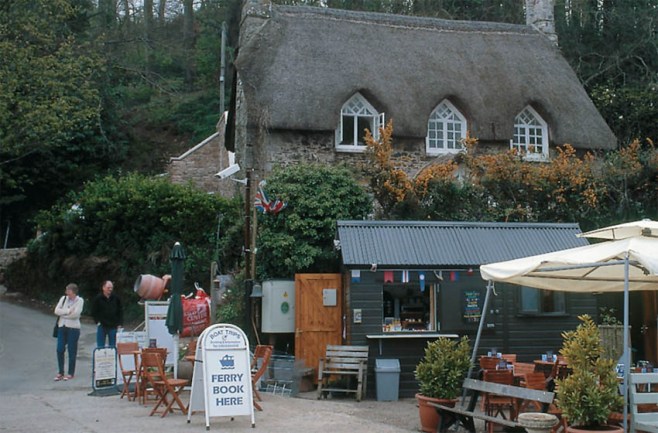
The Ferry Stop at Greenway

The Ferry Stop at Greenway

Greenway is not easy to get to. The preferred and recommended method of arrival is by boat—passenger ferry from Torbay, Dartmouth, or across the river from Dittisham. Any way you arrive at the quay, it is a 400-yard climb up hill to the house and gardens. This is not a trip for those with limited mobility.
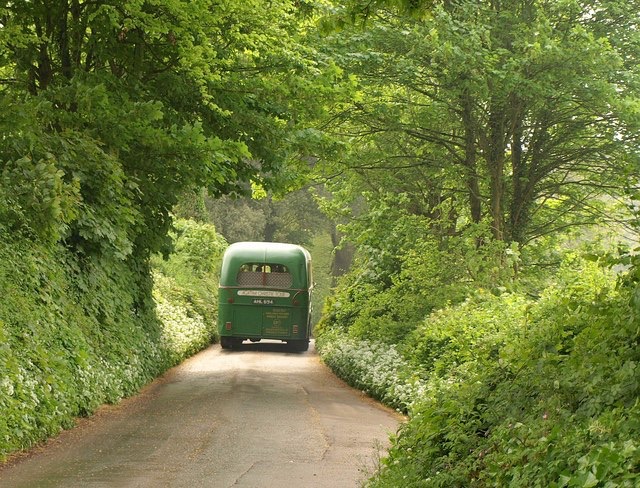
The Lane to Greenway, Devon, UK

The Lane to Greenway, Devon, UK

Now that we have had a little background on Agatha let’s continue to make our way to Greenway! Take a good look at that narrow country lane! It is the Green Way, aptly named!  Arriving by car and getting closer to our destination, we first meandered through a neighborhood of Galmpton and then came upon this mile or so of narrow lane to Greenway. See that little extra pavement to the right in the photo? That is how much room you have to pull over if another car or bus approaches! Add to that the idiots that do not read the details of visiting Greenway. You MUST reserve a parking space that is available in 3 hour increments at Greenway House. If you don’t have a permit, pre- arranged, you will be turning your car around and heading home! Now some think it is OK to just park your car in this tiny strip and walk on to Greenway! Now how do the cars pull over when another car approaches???? This is an adventure all in itself. Once you reach the parking lot there is another extended hike up to the house. Golf carts are available to pick you up, but you must register for assistance and the wait can be lengthy as there are over 900 visitors a day.

But, we got here, Leon (the car) was all in one piece and I had my reservation to park, so what’s another walk? The house itself is surrounded by walled gardens, orchards and woodland gardens, so the walk was pleasant.

The Walled Gardens of Greenway
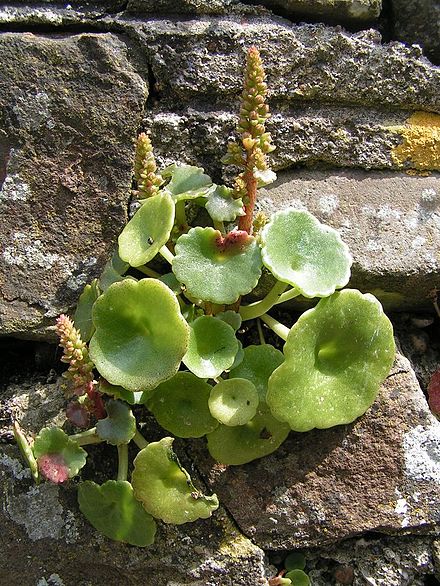
The Walled Gardens of Greenway

Navelwort in Walled Garden at Greenway

Navelwort in Walled Garden at Greenway

The stables and other out buildings have been converted to a gift shop and an eatery, so you can stop and enjoy this area before going on up to the house. What a beautiful view of the river and grounds from the front of the house!
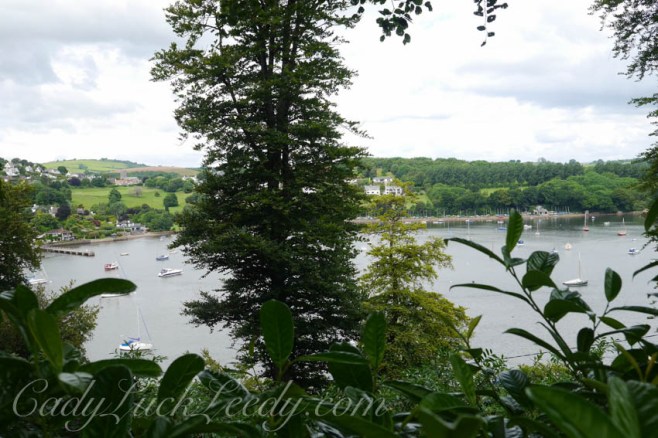
A View of the River Dart at Greenway
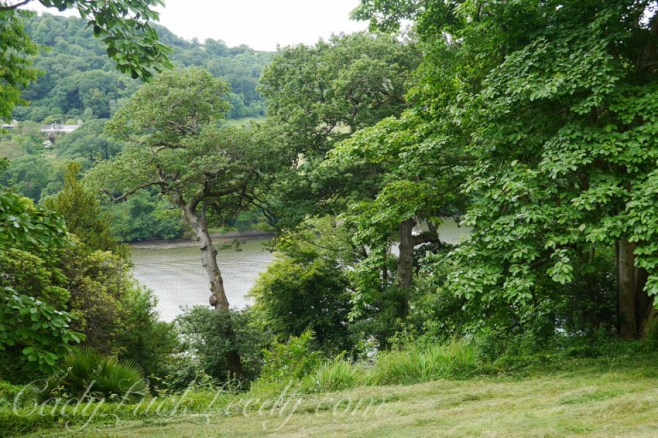
A View of the River Dart at Greenway

A View of the River Dart at Greenway

A View of the River Dart at Greenway

There are lawn chairs to sit and enjoy this view either before or after visiting the house.
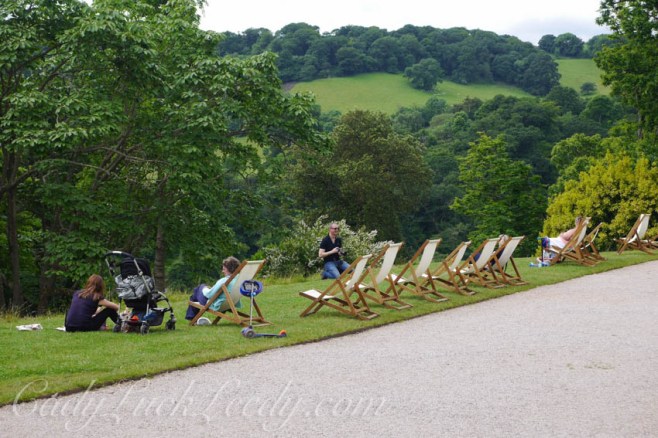
The Lawn Chairs at Greenway
The Lawn Chairs at Greenway

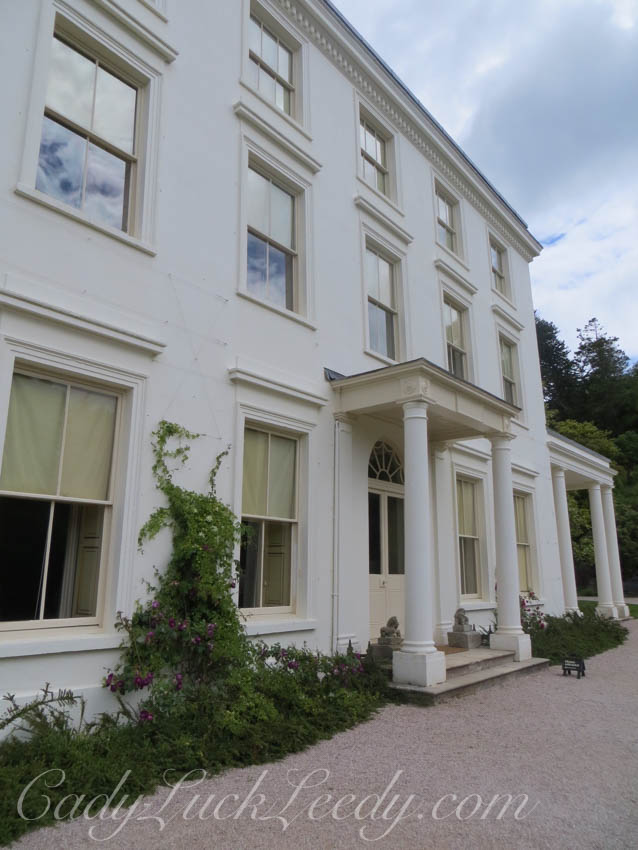
Greenway, Holiday Home of Agatha Christie

Greenway, Holiday Home of Agatha Christie

Greenway, Holiday Home of Agatha Christie

Greenway, Holiday Home of Agatha Christie

Greenway, Holiday Home of Agatha Christie

Greenway, Holiday Home of Agatha Christie

Agatha Christie at Greenway

Agatha Christie at Greenway

Let’s go in! See you tomorrow!

Getting from Point A to Point B; Don’t Forget the a’s, b’s and little c’s!

Ash Manor House, Yeovil, UK

Ash Manor House, Yeovil, UK

What an Inviting Entryway and Checkout the Flowers!

What an Inviting Entryway and Check Out the Flowers!

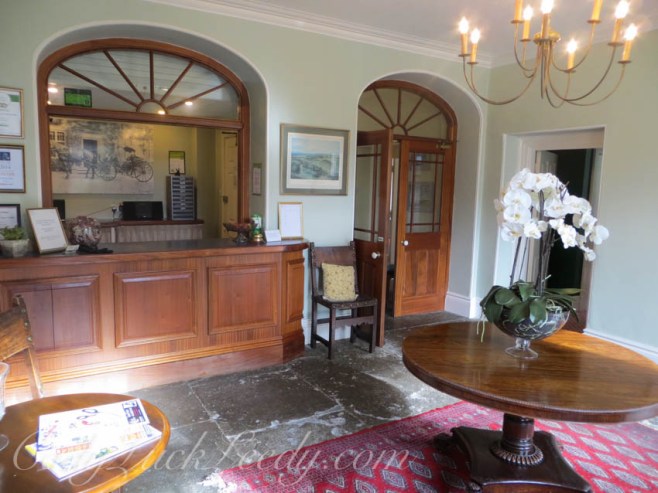
To get from Point A to Point B is more fun if you have shorter driving times and lots of smaller a’s, b’s and c’s along the route. After all we are on vacation! When you have been up all night, or at least not sleeping well on an international flight, it is easier to have small stops to look forward to rather than a long jaunt across the countryside in unfamiliar territory! So, those were the conditions I set for my “2016 English Garden Tour” starting at Heathrow Airport and beginning the “Official” part of the tour in Cornwall. But, I made a few stops along the way and they turned out to be lovely! As you have read in previous blog posts we stopped at two National Trust properties on the journey to Cornwall, Stourhead and Tintinhull. Oh, and we drove past Stonehenge, so we can say we’ve seen that too! And then we planned to stop for the night in Yeovil, and stay at the Ash Manor House. What a delightful stay between Point A and Point B! It was easy to find, there was plenty of parking on the premises, it was spotless and there is a restaurant on site! So if you are making your way to Cornwall this also may be a good option for you! Let’s see some photos!

The Lobby Area at Ash House Manor, Yeovil, UK

The Lobby Area at Ash House Manor, Yeovil, UK

The Lady of the Manor House in Her Time! I Wouldn't Mess With Her!

The Lady of the Manor House in Her Time! I Wouldn’t Mess With Her!

Notice looking at the “now” pictures of the house and the “original” picture, that the ivy has been removed from the house. I liked the ivy look better, but that’s just me! The ivy softens the stones and gives it a romantic cottage-y look!

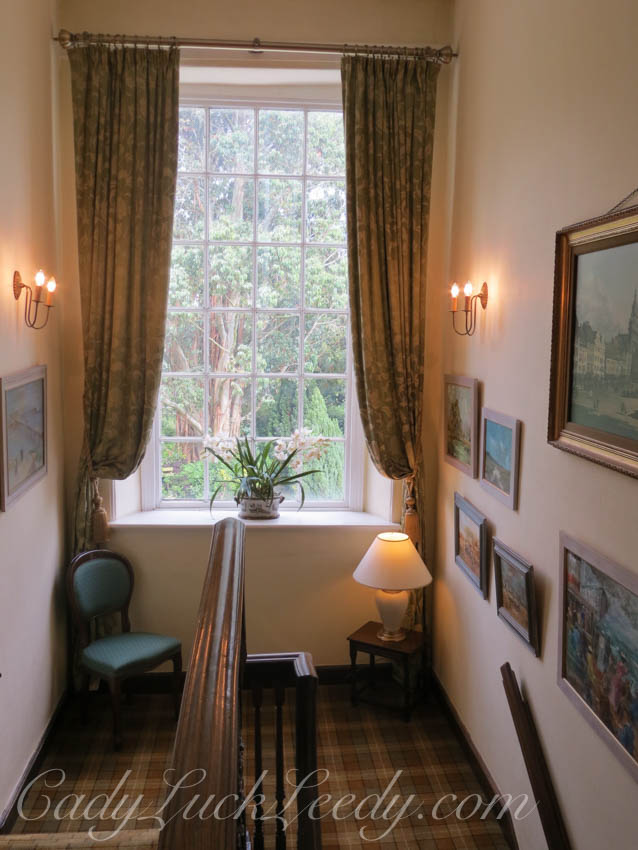
Up the Stairs We Go!

Up the Stairs We Go!

A Beautiful Transomed Doorway at the Top of the Landing

A Beautiful Transomed Doorway at the Top of the Landing

Aww To Drop Into Bed!

Ahh, To Drop Into Bed!

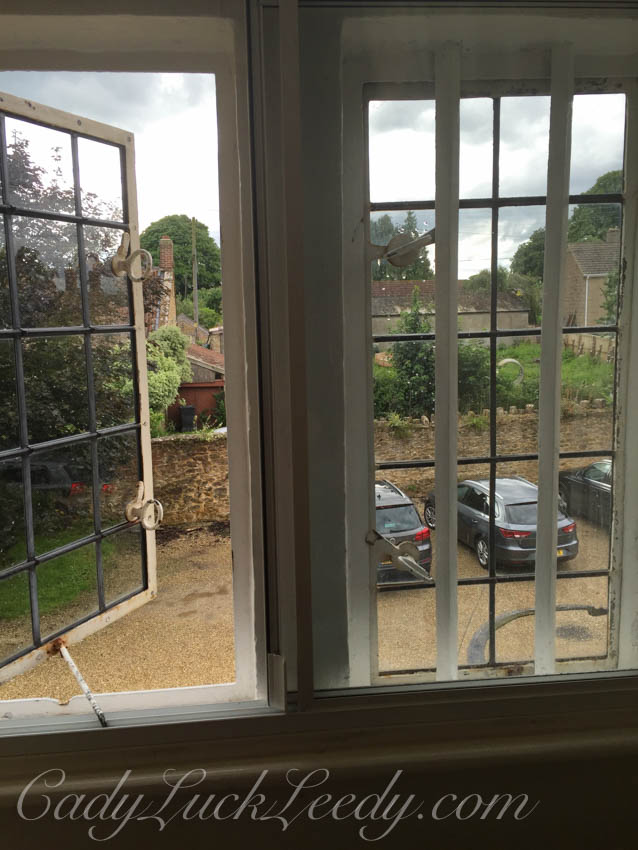
A Quick Peek at LEON

A Quick Peek at LEON and the Village

From Heathrow to Ash Manor House I was trying to adjust to a rental car called LEON. Leon is a diesel engine vehicle that turns off whenever the brake is on for any period of time to save gas.  It is like they do in Nascar to save gas when they think they will not make it until the end of the race and try to conserve fuel. The only difference is Leon does it automatically and it is sooooo scary! I was always concerned it wouldn’t start up again just as we got to the tricky round about or stuck in heavy traffic and then needed to go! Just one more thing to add to the adventure! Who would name a car LEON anyway? I learned one more thing early on in my adventure; never let them stick me wth a LEON at the car rental! Maybe I just need a relaxing drink and something to eat! So let’s go to the bar!

The Bar at Ash Manor House, Yeovil, UK

The Bar at Ash Manor House, Yeovil, UK

The Dining Room at Ash Manor House, Yeovil, UK

The Dining Room at Ash Manor House, Yeovil, UK

My Yummy Evening Meal at Ash Manor House, Yeovil, UK

My Yummy Evening Meal at Ash Manor House, Yeovil, UK

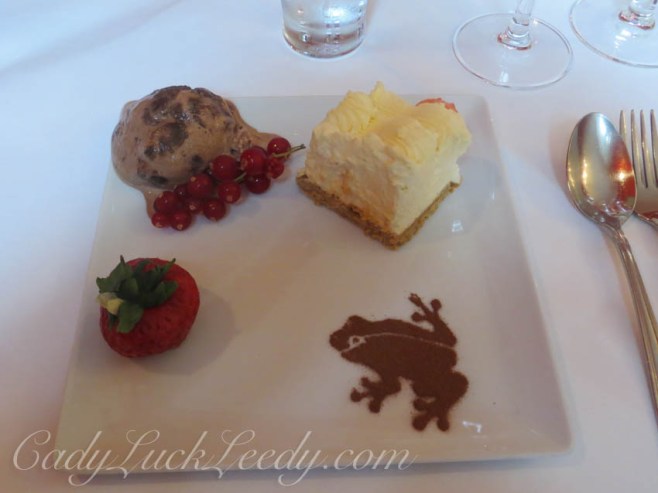
And Then Dessert! The Frog is a Cinnamon Dip!

And Then Dessert! The Frog is a Cinnamon Dip!

And then the next morning, a scrumptious breakfast in the Morning Room overlooking the back garden.

The Morning Room at Ash Manor House, Yeovil, UK

The Morning Room at Ash Manor House, Yeovil, UK

The Back Garden at Ash Manor House, Yeovil, UK

The Back Garden at Ash Manor House, Yeovil, UK

If you are traveling from London to Cornwall you might consider a rest stop at Ash Manor House. All my boxes for the perfect stay were ticked off!

Well, it’s a brand new day and we are off to another National Trust Property! See you next time at Greenway, home of Agatha Christie! I can hardly wait!


Thursday Doors at Tintinhull

Tintinhull, A National Trust Property in Somerset, UK

Tintinhull, A National Trust Property in Somerset, UK

Main Entrance at Tintinhull

Main Entrance at Tintinhull

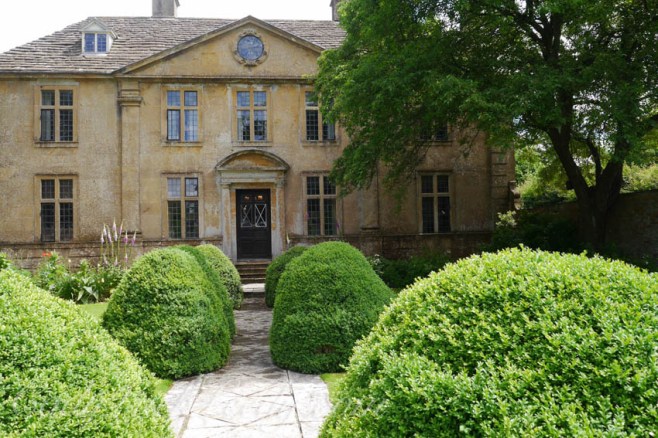
The Boxwood Entrance at Tintinhull

The Boxwood Entrance at Tintinhull, Notice the Diamond Shaped Stone Walkway

Tintinhull, a National Trust property in Somerset, was our second stop of the day on our way to Cornwall.

Keep in mind that finding a particular National Trust property makes some of the best adventures! They are usually off the beaten path and although are addressed in small villages many times I never find the small village!

Tintinhull, is a small, tidy property that just fits the bill. By 1630 the Napper family had constructed the east side of the present house, and this was extended by Andrew Napper in 1722 when the classical west facade and forecourt were built. In about 1900 Tintinhull was sold to Dr S J M Price. He developed the west forecourt as a garden, laying the distinctive diamond-patterned flagged walk and planting the flanking clipped domes of boxwood. Notice the big eagles on the wall too! In 1933 Tintinhull was sold to Captain and Mrs P.E. Reiss, who developed garden enclosures linked by carefully designed vistas and rich planting. Phyllis Emily Reiss created a garden around the 17th century manor house, with six compartments, each room having it’s own character and identity, divided by clipped hedges and walls. She designed the Pool Garden as a memorial to a nephew killed in WWII. The house, gardens and woodland walk create all the charm at Tintinhull!

In July 1939 Reiss made two broadcasts for the BBC entitled ‘In my Garden.’ In 1959 she gave Tintinhull to the National Trust although she lived there until her death on the 18th September 1961.   

Penelope Hobhouse and her husband, Professor John Malins lived at Tintinhull for fourteen years and was in charge of the gardens there from 1980 until 1993. With a name like Penelope Hobhouse, (my auto spelling corrector wants to name her Penelope Hothouse) it’s a given that she was a garden writer, garden historian, self taught gardener and lecturer. She went on to design many gardens in England, Scotland, France, Italy, Spain, Germany and the United States. I especially like her name and I think it is perfect for a gardener! She has written several garden books, and Penelope Hobhouse on Gardening, written in 1994, describes her gardening experiences at Tintinhull.  You can find a video of her Here.

Now let’s take a look at Tintinhull!

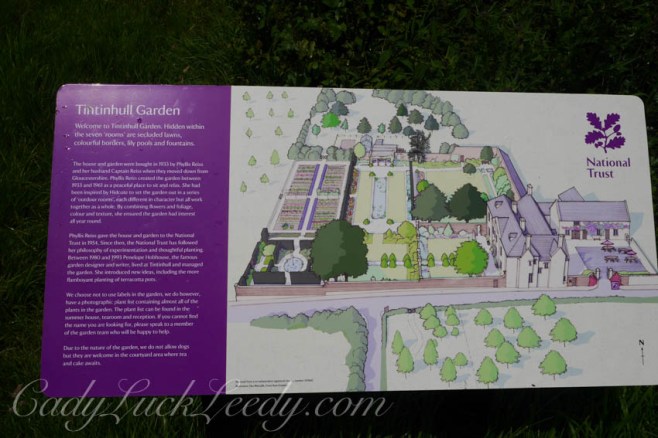
The Garden Map at Tintinhull

The Garden Map at Tintinhull

Birds on the Wall Is Always Good!

Birds on the Wall Is Always Good!

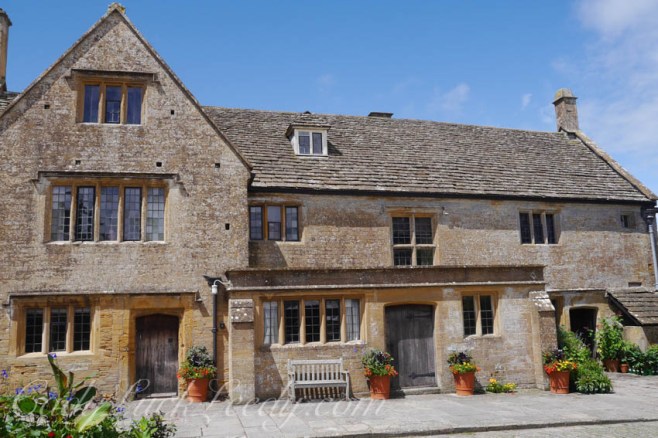
Another Entrance to Tintinhull

Another Entrance to Tintinhull

A Very Small Door at Tintinhull

A Very Small Door at Tintinhull

How about this very small door! Was it an opening to a guard shack? Did you drop off the mail here? What was it used for?

A Few Doors to be Seen Here!

A Few Doors to be Seen Here!

i LOVE the Color of the Stone Too!

I LOVE the Color of the Stone Too!

Penelope Hobhouse was noted for her Terra Cotta planters! And I don’t want to miss the windows either!

Somme Window Treatment at Tintinhull

Some Window Treatment at Tintinhull

Another Door and Some More Pots!

Another Door, More Windows and Some More Pots!

Inside Tintinhull

Inside Tintinhull

Only two rooms are open for viewing at Tintinhull. Short, sweet, and modest!

Inside Tintinhull

Inside Tintinhull, with Very Deep Doorways!

Inside Tintinhull

Inside Tintinhull

Inside Tintinhull

Inside Tintinhull

The Barn Tea Room Entrance Doors at Tintinhull

The Barn Tea Room Entrance Doors at Tintinhull

Inside the Tearoom at Tintinhull

Inside the Tearoom at Tintinhull

A Few Garden Photos at Tintinhull

A Few Garden Photos at Tintinhull

A Few Garden Photos at Tintinhul

A Few Garden Photos at Tintinhull


A Few Garden Photos at Tintinhul

A Few Garden Photos at Tintinhull

Did you find the doorways in the garden?

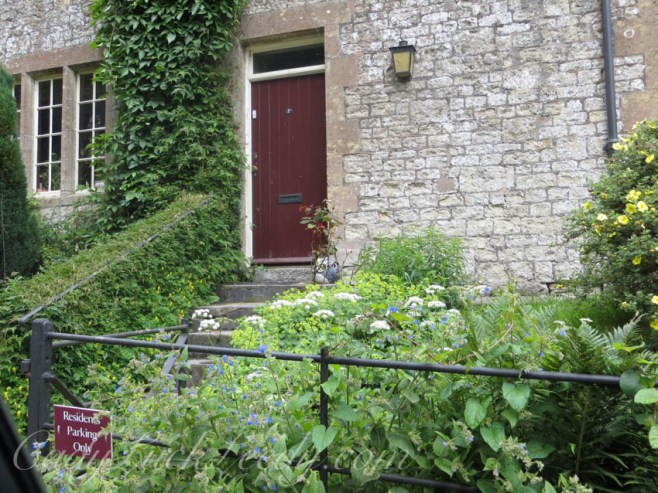
Row Houses at Tintinhull

Row Houses at Tintinhull

This section of Row Houses must refer to the village at Tintinhull! This is the only “village” I saw! Loved their cottage gardens and what else? More Red Doors!

Row Houses at Tintinhull

Row Houses at Tintinhull

Row Houses at Tintinhull

Row Houses at Tintinhull


This is just one of many photos in the Thursday Door Collection featured by Norm2.0!   Won’t you join in or take a peak at all the doors? See you next week!


It’s a Sign!

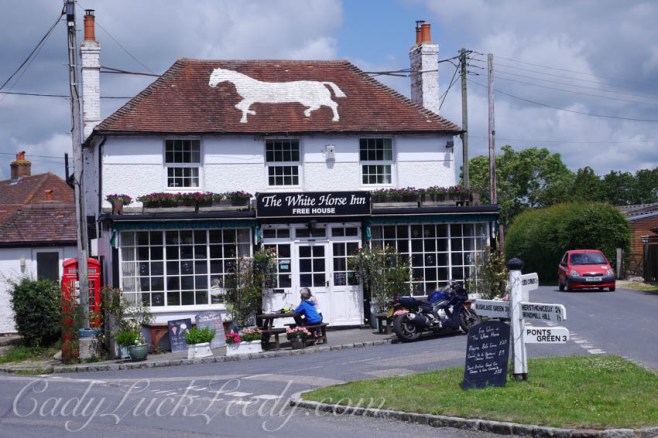
The White Horse Pub

The White Horse Inn, Hailsham, UK

Posting one last time about the Hoare Family, Stourhead and interesting tidbits………….that led from one thing to another!

When Richard Hoare, Goldsmith, moved his shop from Cheapside to Fleet Street he took his trading sign with him, that of the Golden Bottle, which was a gilded leather bottle that hung outside the shop. This sign was used to distinguish his business from another.

I am fascinated with the signs in the UK. Everyone has a sign!  Cottages in the villages have signs rather than numbered addresses and looking for cottage signs and pub signs while visiting there is very enjoyable!

But how did all this sign business start?  Well, with the Romans! In 43 AD, it was traditional for landlords, in Rome, to hang branches of vine leaves outside their premises to promote the drinking of wine within. People could not read, so an image that made sense was needed. When one saw the grape vines, one thought of grapes and then wine! Voila a sign! However, when the Romans got to the UK, they were lacking the customary vine leaf and hung any kind of evergreen plant over the door instead. The Romans built an extensive road network and with large numbers of troop movements, inns opened at suitable stopping points. Hence the beginnings of the local pub!

By the 12th century people were doing pilgrimages to cathedral towns, such as to the shrine of Thomas Beckett in Canterbury. As Chaucer’s pilgrims in the Canterbury Tales reveal, the pilgrims started their journey at the Tabard Inn in London. Other inns and taverns welcomed pilgrims and knights on their way to the Crusades in the Holy Land.

Pub signs as we know them today were originated with the Royal Act of 1393 when Richard II declared that anyone brewing ale in a town, with the intention of selling it, must hang out a sign or forfeit his ale.

It was Charles I who gave people the right to hang out signs as they pleased.  Prior to that signs were for innkeepers only. So an elaborate language of symbols began with a common understanding. Most common was a dragon for an apothecary, a sugar loaf for a grocer, a wheatsheaf for a baker, a frying pan for a confectioner and a spool for a silk weaver, or in the case of goldsmith, Hoare, the leather sack of gems.

By the 18th Century heavy wrought iron brackets with their sign hung outside every single establishment in Cheapside. During bad weather or a strong wind, these huge signs groaned and creaked and in 1718 a huge sign collapsed killing four people and took out much of the shop front. There was such a problem of hanging signs crowding the streets and knocking people from their horses, that a commission was formed in 1762 to take them all down and fix them to the store fronts. So that became the standard system to identify properties.

But, the British like their traditions and I am glad many, many shops, pubs and cottages use the hanging of signs to identify their property, albeit with lighter, smaller signs!

Here are some of my pub signs collected during my “Garden Tours of England.”

The Bucket of Blood, Cornwall, UK

The Bucket of Blood, Cornwall, UK

According to local folklore, the Bucket of Blood got its name many years ago when the landlord went to the well to get a bucket of water, but found a bucket of blood.  Investigating  further he found there was the badly mutilated corpse of a local smuggler at the bottom of the well! An alternative theory is that the well on the grounds would provide red water due to run off from local tin mining.

Downlong Cottage, St Ives, Cornwall, UK

Downlong Cottage, St Ives, Cornwall, UK

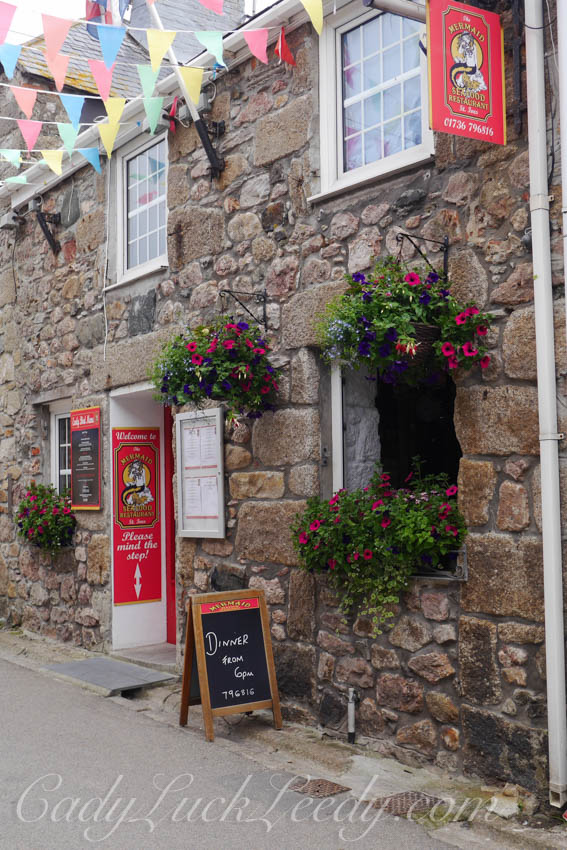
The Mermaid Restaurant, St Ives

The Mermaid Restaurant, St Ives

The Golden Lion, St Ives

The Golden Lion, St Ives

Warninglid Village Sign, UK

Warninglid Village Sign, UK

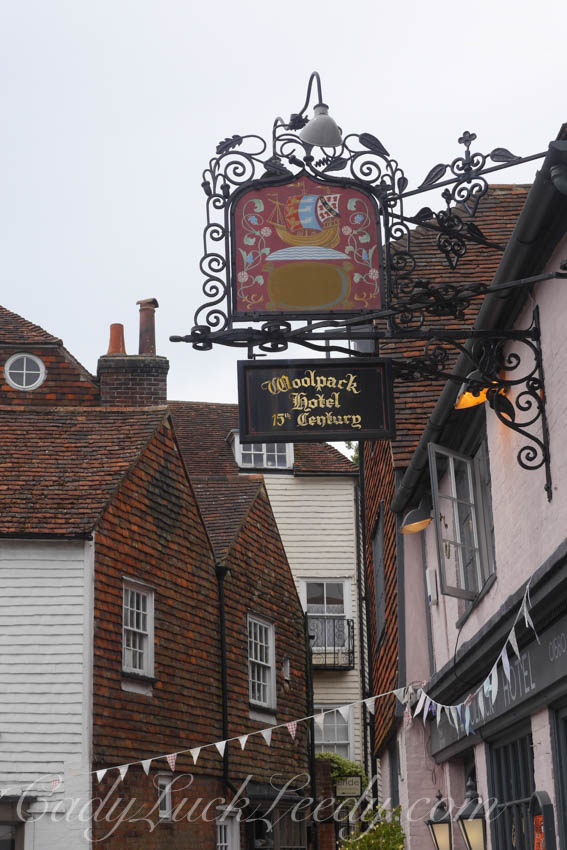
The Wolfpack Inn, Tenterden, UK

The Woolpack Inn, Tenterden, UK

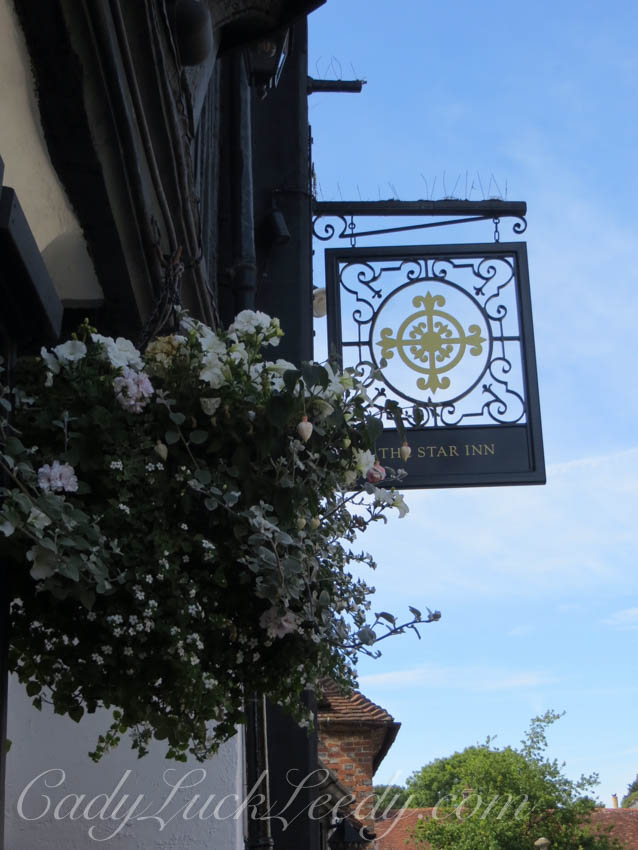
The Star Inn, Alfriston, UK

The Star Inn, Alfriston, UK

The George Inn, Alfriston, UK

The George Inn, Alfriston, UK

The Bull Inn , Benenden

The Bull Inn, Benenden, Uk

These were a few of my favorite signs! I hope you enjoyed learning about them! See you soon!

More Interesting Tidbits I Discovered about the Hoare Family of Stourhead

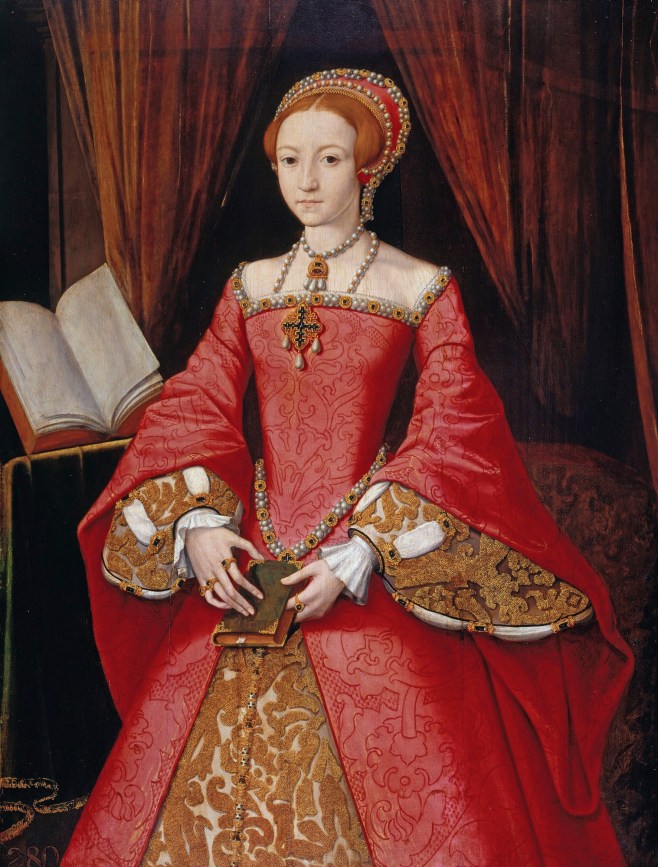
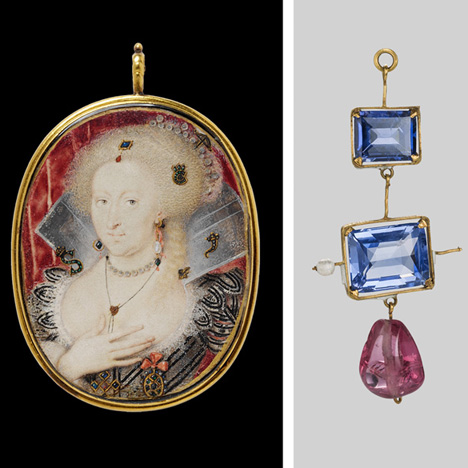
Young Elizabeth I Wearing Exquisite Jewelery

Young Elizabeth I Wearing Exquisite Jewelry

 Elizabeth I Wearing Exquisite Jewelry

Elizabeth I Wearing Exquisite Jewelry

 Elizabeth I Wearing Exquisite Jewelry

Elizabeth I Wearing Exquisite Jewelry

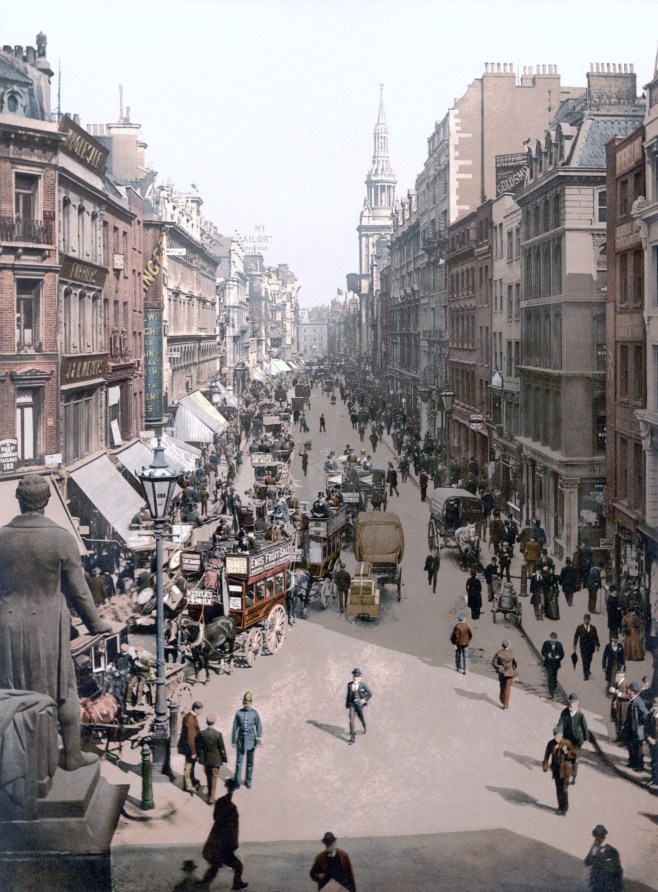
Just a few days ago I wrote a blog post about the Hoare family and how I had visited their fabulous estate called Stourhead, which is one of the National Trust properties in the UK.  I wrote how Richard Hoare, in 1672 had a goldsmith’s business at Cheapside and set up a system of banking because goldsmiths had secure premises and had always been the storehouses for cash and valuables. The shops on Cheapside were the commercial heart of London with shops for the sale of luxury goods and was known as Goldsmith’s Row, the center for the manufacture and sale of golden jewelry in medieval London.

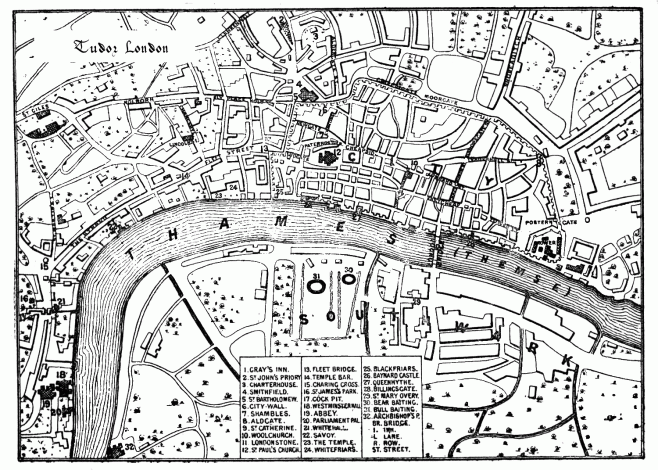
Elizibethan London Map

Elizibethan London Map

Richard Hoare, knighted by Queen Anne in 1702, the same year she became queen, prospered, and he not only made precious jewelry for the queen and others, he became Lord Mayor of London in 1712, and took his goldsmith venture into the banking industry. He soon moved his banking facilities to Fleet Street, the main thoroughfare halfway between the City of Westminster and the City of London.

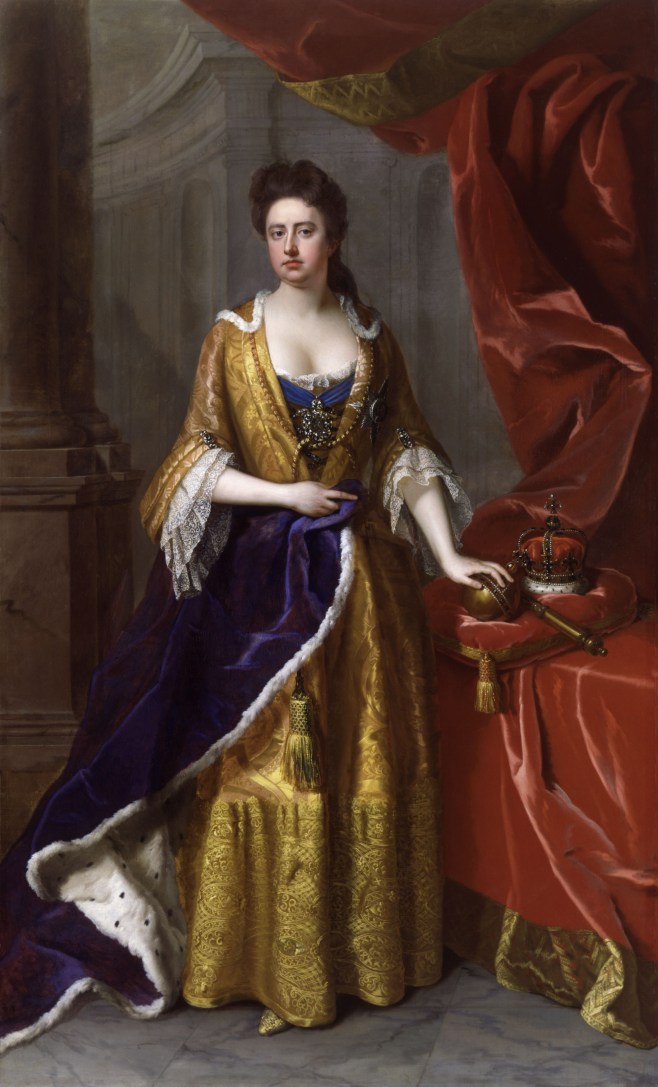
by Michael Dahl,painting,1705

Queen Anne by Michael Dahl, painting,1705

Hoare introduced many aspects of modern banking, including issuing printed checks and the C.Hoare and Co Bank is the oldest private bank in the United Kingdom to this day. It is family owned and run by the 11th generation of Hoares’ descendants.

Well I got to thinking, is this where the word hoard came from? According to the Dictionary, the word, hoard, has it’s origins from the Old English noun, hord, which was a secret stock or store for something. Hmmmm….. sounds very familiar to our story of goldsmith, Richard Hoare.

Then I read another fascinating tale; that of the Cheapside Hoard, which was discovered in 1912, when a workman’s pickax smashed through the brick cellar in an old house being demolished at 30-32 Cheapside in London! Found in a buried, wooden coffin-styled box, was 500 pieces of 17th century goldsmith’s stock, including rings, brooches and chains with bright gem stones and enameled gold settings, along with cameos, scent bottles and crystal tankards.  Well that fits nice and tidy with our Hoare family name and background doesn’t it? What was so incredible about this stash of jewelry, with huge rubies, pearls the size of acorns, emeralds, diamonds and sapphires, is that it was left as designed and not altered as other pieces from this period tended to be; broken up, re-fashioned and reworked over the centuries and therefore didn’t survive.

Jewels from the Cheapside Hoard

Jewels from the Cheapside Hoard

Jewels from the Cheapside Hoard

Jewels from the Cheapside Hoard

Now who hid the stash and what was done with it after it was found? More to the story…….

In 1637, a gem dealer named Gerrard Pulman paid the East India Company 100 pounds for the safe passage on the ship, Discovery, from the Orient back to England. With him was a crate that took three men to lift, a great sea-chest, and smaller boxes full of diamonds and other gems worth many millions today. He lost a walnut-sized diamond from a purse around his neck when bathing on the voyage, and two weeks later he was dead….. poisoned by the ship’s surgeon, an inquiry found. Pulman’s body was stripped and thrown overboard. By the time the  treasure chests were opened in London upon arrival, they were half empty. The missing gems, stolen by crew and officers, were sold to jewelers across London. One crewman pulled a pocket full of loot out at the Three Tun Tavern in Fleet Street and dropped an enormous pearl through a crack in the floorboards. Many believe these gems ended up in the Cheapside Hoard. But, who buried the treasure and why was it not discovered until 1912? One theory was that the jeweler buying up the gems very likely buried it below the cellar floor to keep them safe. This was also a time of great upheaval as many jewelers were soon to became soldiers in the Civil War of 1642. From 1645 to 1646, fifteen percent of the population of London was killed by the Great Plague, so many people fled the city to avoid the war and then to avoid the plague.    

Then in 1666, a fire that started in a bakery, spread quickly through the city. In less than three days it consumed more than 13,000 buildings, including St. Paul’s Cathedral, about a block away from the hoard. The Great Fire of London, as it came to be known, destroyed most of the city’s wooden structures, including those above the site of the treasure. Evidence of fire damage found during the Cheapside excavations led experts to conclude that the jewels were buried no later than 1666. It is unlikely that the owner of the hoard perished in the fire, as very few casualties were actually recorded.    

Following the Great Fire of London and the rebuilding of the city, new structures were erected in the Cheapside district around 1670. This time, brick and mortar structures rose above the forgotten cellars, sealing the Cheapside Hoard for two and a half centuries.

Cheapside, London

Cheapside, London

So more than likely, whoever buried the hoard died and the stash was never discovered until the workmen started demolishing the old jewelry premise in 1912. The workmen stuffed the loot, some dating back 1500 years to the Byzantium period, into their hats, pockets and knotted handkerchiefs and took them to “Stoney Jack,” an antiques dealer and pawn shop owner, who literally went on pub crawls offering men work, giving them a shilling or “half a pint” for any interesting finds that were brought to him! “Stoney Jack,” who was George Fabian Lawrence sold all the treasure given to him to the new London Museum. The Cheapside Treasure was an epic success when the London Museum opened in 1914, revealing some of the treasure, including a watch set in a single emerald the size of a small apple!

During WWI the treasure went into bank vault storage and came out when the entire collection went on display at the Museum of London in 2013. 

Oh my, what a person can discover from just one visit to a National Trust property and an inquiring mind! What an adventure! More to follow!
The Gardens at Stourhead, a National Trust Property

A Garden Gate at Stourhead

A Garden Gate at Stourhead

One of the many lovely things about the Gardens at Stourhead is the Estate Walk and many other seasonal walks on the grounds. Many of the paths lead around the big lake that is framed by the hilly terrain. When we did the tour of the manor house a gentle, but steady rain was coming down, but after the manor tour was over and we headed out to the garden paths it was pouring! That did not deter a group of scheduled ramblers, who departed from their buses and vans prepared for the weather, in walking boots and rain gear, and carrying one or two walking sticks. I was not as prepared and had been up all night on an overseas flight so we took as many pictures as we could before getting drenched and then headed out to our next National Trust destination that morning, hoping the weather would turn for the best. Here is a LIST of some of the upcoming walking events and future highlights at Stourhead.

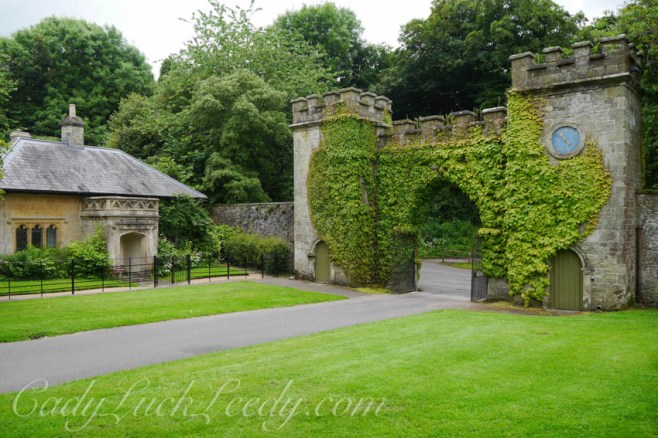
First let’s take a look at the entry into Stourhead. It sets the mood, your home is your castle! And Stourhead has the gates and crenelations to prove it! Loved that clock too!

Entry into Stourhead, a National Trust Propert

Entry into Stourhead, a National Trust Property

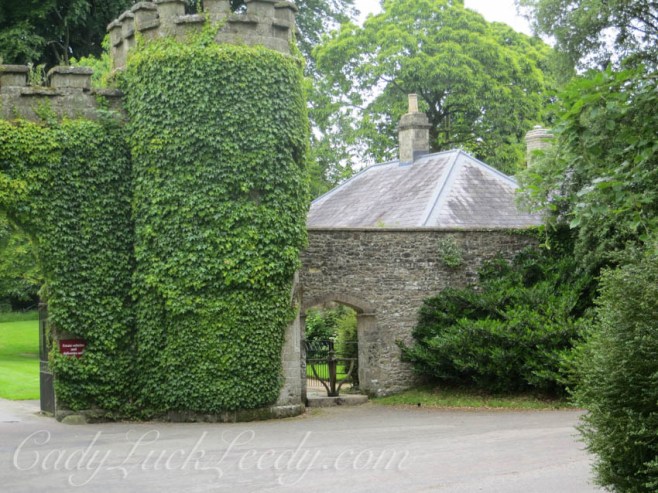
Entry into Stourhead, a National Trust Property with Lots of Ivy!

Entry into Stourhead, a National Trust Property with Lots of Ivy!

Gated Walls and Meadows at Stourhead

Gated Walls and Meadows at Stourhead

Now let’s look at those gardens!

Another Gate to the Gardens at Stourhead

Another Gate to the Gardens at Stourhead!

Notice the meadow look? We’ve noticed a lot of the National Trust gardens and others are turning part of their land back to meadows, with natural flowers and habitats for birds aplenty!

The Front Meadow at Stourhea

The Front Meadow at Stourhead

The Gardens at Stourhead

The Formal Gardens at Stourhead, Framed by the Woodlands

The Gardens at Stourhead

The Formal Gardens at Stourhead

The Gardens at Stourhead

The Formal Gardens at Stourhead

The Gardens at Stourhead

The Gardens at Stourhead, Inside the Walls

The Gardens at Siourhead, Inside the Walls

The Gardens at Stourhead, Inside the Walls

The Gardens at Stourhead, Inside the Walls

The Gardens at Stourhead, Inside the Walls, all Neat and Tidy and Wet!

The Flowers of Stourhead

The Flowers of Stourhead

The Flowers of Stourhead

The Flowers of Stourhead

The Flowers of Stourhead

The Flowers of Stourhead

The Flowers of Stourhead

The Flowers of Stourhead

The Flowers of Stourhead

The Flowers of Stourhead

The Flowers of Stourhead

The Flowers of Stourhead

P1020868

Which Way to Go? Choices, Choices!

Which Way to Go? Choices, Choices!

Well I hope you enjoyed a very abbreviated and wet tour through the gardens!  Were you carrying an umbrella? We would definitely place Stourhead on our Return Garden List!

Off to another National Trust Property, see you there!


Thursday’s Doors, Stourhead

The Gate Keepers Cottage, Stourhead

The Gate Keepers Cottage, Stourhead

Today’s Doors come from the gardens at Stourhead, a National Trust estate in Devon, UK. This summer as part of my “English Garden Tour” I again explored many fine estates and gardens, both public and private, as I toured along my path to Cornwall and then back to Sussex and Kent.

These are photos of the fabulous doors I found at Stourhead! If you would like to know more about the estate look HERE in the previous post about it!

When you arrive at Stourhead, you pass the gate keepers cottage. I loved the door, and the look of the cottage was just my style.

I can’t imagine living in the estate house with all those pictures to dust and all those rooms to clean. Of course, the owners of Stourhead didn’t have to do any of that either! They had plenty of servants, housemaids, butlers, farm workers, gardeners, and ground keepers to maintain their 2600 acre estate. But, I am glad the National Trust preserves not only the manor house, but all the out buildings as well. It gives you a proper prospective of things, although I imagine the estate cottages and out buildings are nicer today than they were back in the day!

Stourhead, of course, has the estate house and this was the door that welcomed you in! There are lots of rooms to tour here and a very interesting family history.

The Main Entry Door at Stourhead

The Main Entry Door at Stourhead Manor House

Stourhead

The Manor House at Stourhead, (Notice the Main Entrance and the Servants Entrance!)

Then there are the out buildings and these doors were some of my favorites!

The Limey Green Door at Stourhead

The Mossy Green Door at Stourhead

A Close Up of the Limey Green Door, Stourhead

A Close Up of the Mossy Green Door, Stourhead

I love that stonework too and the door defines the mossiness of it!

A Thursday Window That I Liked Too, Ha Ha

A Thursday Window That I Liked Too, Ha Ha

Another Outbuilding with Limey Green Door and Fantastic Windows

Another Outbuilding with Mossy Green Door and Fantastic Windows

Workers Cottages at Stourhead

Workers Cottages at Stourhead

Workers Cottages at Stourhead

Workers Cottages at Stourhead

The Workers Cottages at Stourhead

The Row of Workers Cottages at Stourhead

Of course the connected worker’s cottages were my very favorite! And they all had Red Doors!

The Red Cottage Doors!

The Red Cottage Doors!

This is just one of many photos in the Thursday Door Collection featured by Norm2.0!   Won’t you join in or take a peak at all the doors? See you next week!

The Hoare House, aka Stourhead, a National Trust Estate

Stourhead

Stourhead

Stourhead

Stourhead

Stourhead

Stourhead

I’m back from my “Garden Tour of England” and as you have learned from the previous post, written by the garden fairies here at The End Cottage, we are caught up with my own garden chores and all the guests are back home! Hence the delay in sharing my adventure!

It takes me months to plan which National Trust properties I will visit. After I decide on the properties I determine as many public and private gardens as I can in close proximity to the National Trust sights that I have picked out, and voila, my schedule of touring is complete! There is so much to see and do! So, let’s take a walk through the grounds and home of the Hoare family, here at Stourhead. It is the first of many delights this year on my Garden Tour of England. I have separated the posts into the house and to follow, the gardens.

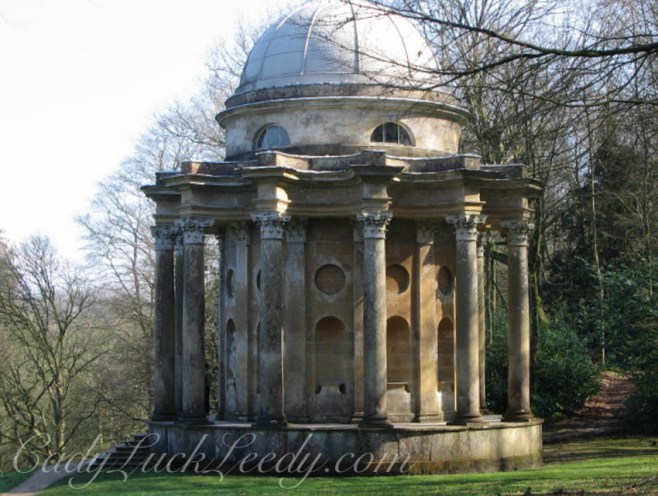
The Story of Harry……… really it starts with all those Henrys and Richards in the Hoare family, who had nicknames of “good,” “magnificent,” and “naughty” to tell them apart. Sir Richard Hoare, was a goldsmith, in 1673, in London. Goldsmiths had secure premises and were the storehouses for cash and valuables so they were in a unique position to start a system of banking: lending their customers money for interest. He was granted the Freedom of the Goldsmith’s Company on July 5th, 1672 and this marked the foundation of the Hoare’s Bank. He was knighted by Queen Anne in 1702 and then became Lord Mayor of London in 1712. His son, Good Henry, was a partner in the family bank, Hoare and Co. Henry the Good, lived at the bank during the week and wanted a country estate for holidays and leisure. In 1717 he bought the medieval Stourton estate for 14,000 pounds and renamed it Stourhead after the source of the Stour River. He built Stourhead House based on a 16th century Venetian villa, but died before his grand design was completed.  Henry Hoare, “the Magnificent,” grandson of Richard, and son of Henry the Good, dominated the family with his wealth and personal charisma and was a great patron of the arts. He expanded the estate and the gardens that were considered a showcase. The garden was completed in 1770 and it’s fame spread quickly and became a must see destination with the breathtaking landscape and classical temples set around the lake. The grounds included a Grotto, a Gothic Cottage, the Pantheon, the Temple of Apollo, and the Temple of Flora.

Temple of Apollo, Stourhead

Temple of Apollo, Stourhead

Sir Henry Ainslie Hoare (perhaps the naughty) and his wife Augusta inherited Stourhead in 1883, but it soon spiraled into decay when costs grew impossible to manage, because she loved living in the country and he preferred city life. Ainslie’s flamboyant lifestyle forced him to leave the bank and auction Stourhead paintings, furniture and books. He left Stourhead in 1885.

In 1894, after the death of his cousin, Henry Hugh Arthur Hoare and his wife Alda, inherited the unoccupied house that had sat empty for 10 years and the 2,650 acre estate with the run down, neglected and overgrown gardens. They decided to pack up and leave their home, Wavendom in Buckinghamshire, and move with their son, Harry Hoare, to Stourhead, to create a special home for their only son. Harry and his parents loved the estate and worked hard to make it the beauty it once had been.

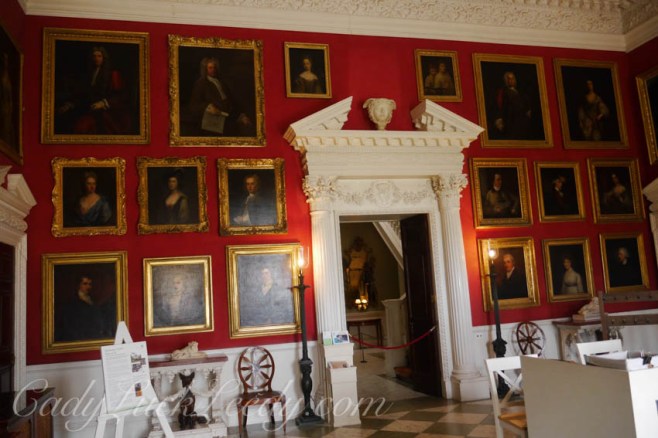
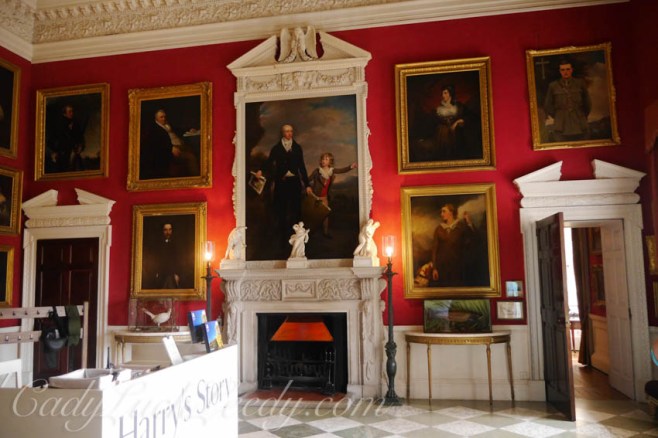
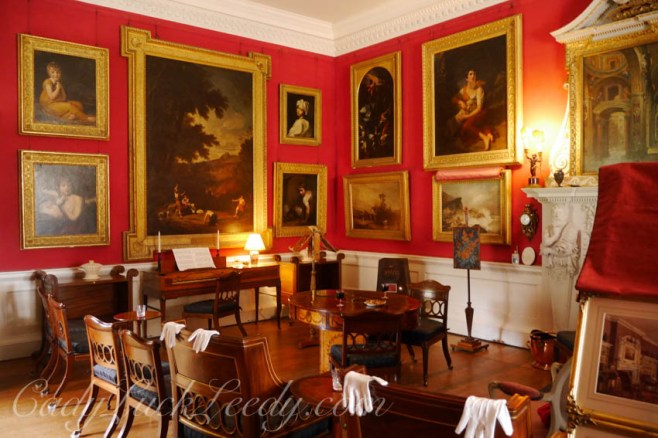
The Picture Gallery at Stourhead

The Entrance Hall at Stourhead

The Picture Gallery at Stourhead

The Entrance Hall at Stourhead

The Picture Gallery at Stourhead

The Entrance Hall at Stourhead

The Picture Gallery at Stourhead

The Entrance Hall at Stourhead

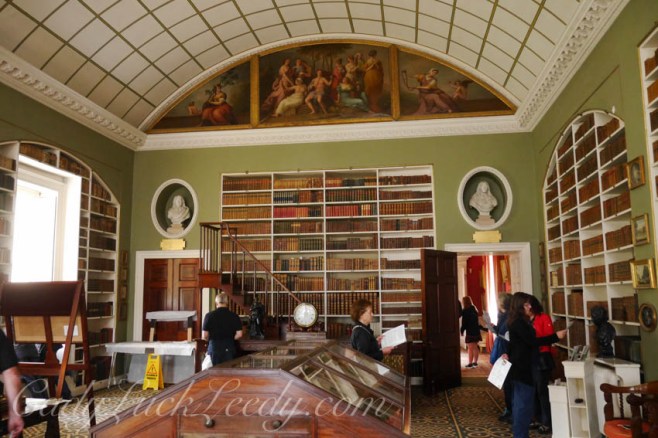
The Library at Stourhead

The Library at Stourhead

The Library at Stourhead

The Library at Stourhead

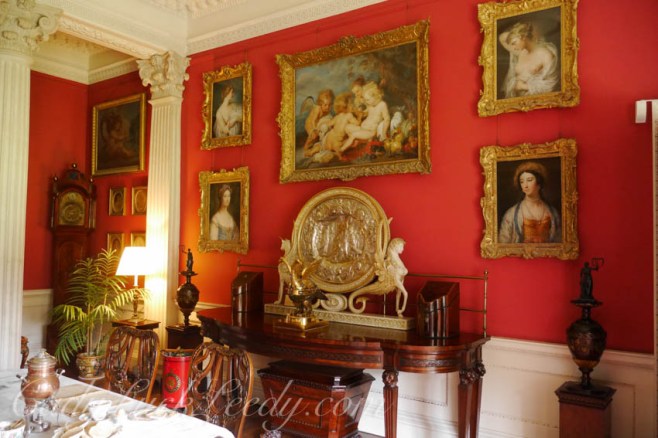
Little Dining Room at Stourhead

Little Dining Room at Stourhead

Little Dining Room at Stourhead

Little Dining Room at Stourhead

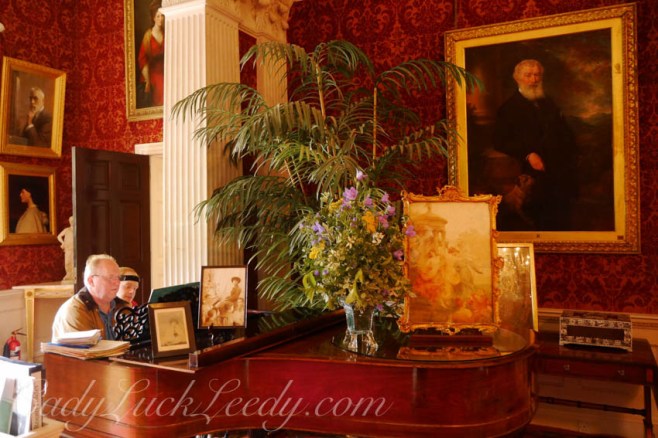
The Italian Room at Stourhead

The Column Room at Stourhead

The Italian Room at Stourhead

The Column Room at Stourhead

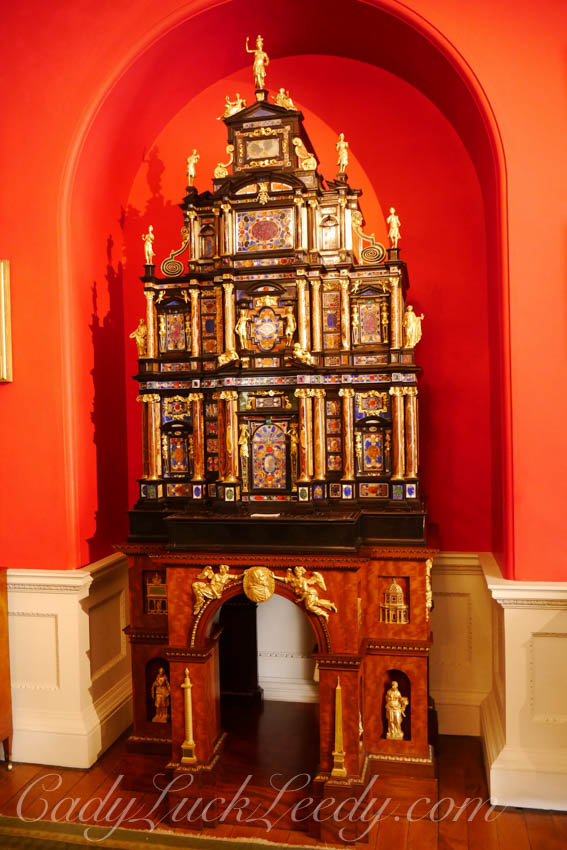
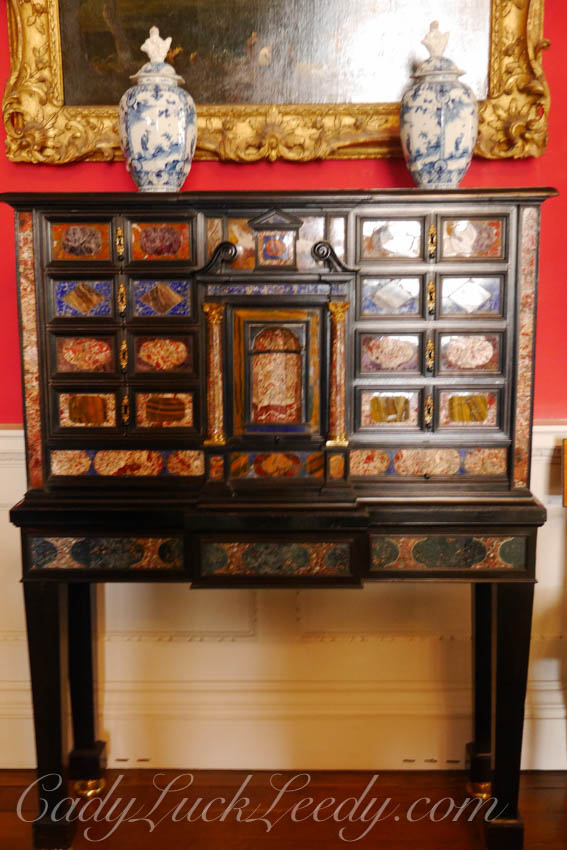
Ornate Cabinet in the Column Room, Stourhead

Ornate Cabinet in the Cabinet Room, Stourhead

I love that Poppy Red Color!

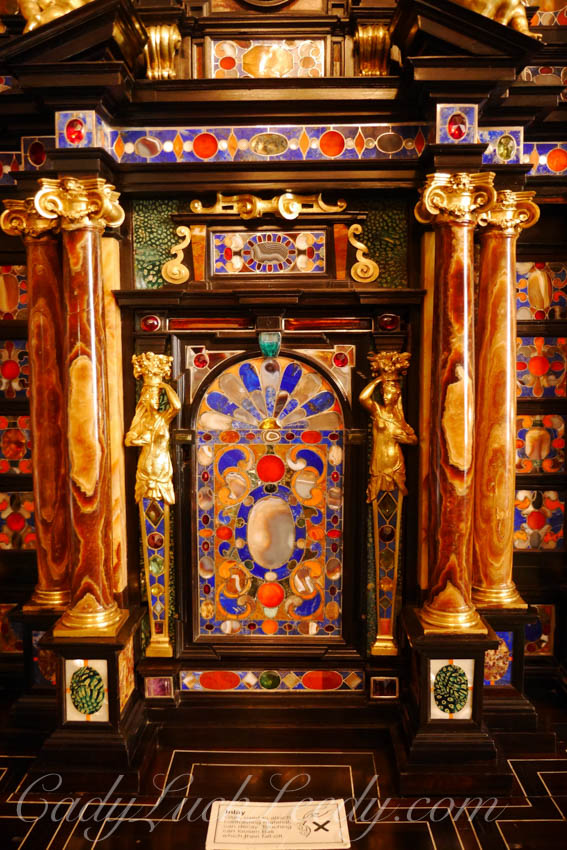
Detail of Ornate Cabinet in the Column Room, Stourhead

Detail of Ornate Cabinet in the Cabinet Room, Stourhead

An Ornate Cabinet in the Cabinet Room at Stourhead

An Ornate Cabinet in the Cabinet Room at Stourhead

The Italian Room at Stourhead

The Italian Room at Stourhead

The Italian Room at Stourhead

The Italian Room at Stourhead

The Picture Gallery at Stourhead

The Picture Gallery at Stourhead

The Picture Gallery at Stourhead

The Picture Gallery at Stourhead

Fancy Way of Saying, DO NOT SIT at Stourhead

Fancy Way of Saying, DO NOT SIT at Stourhead

In 1902, a fire broke out in a chimney and burned for hours. The center of the house collapsed from the attic down to the cellars. The family, servants, gardeners, estate workers and farm hands worked to salvage as much as possible from the burning building. Paintings were cut from their frames and furniture was thrown out of windows. The Hoares worked again to restore the house they so loved, especially  for Harry, since he had grown up here and loved every inch of the place and this would always be his home. As you can see from the many rooms of Stourhead, saving everything would have been quite a challenge! It was vast with huge collections of Everything!

On August 1, 1914, Harry joined the Dorset Yeomanry and within a week he was no longer the estate manager, working for his father, but a soldier fighting for his country. His military career was plagued with injury and ill health and every time he was taken ill he would return to Stourhead to be cared for by his parents. After each recovery Harry returned to the battlefield.

During WWI the house and grounds were opened to the “Tommies” from the nearby Red Cross Hospital at Mere. Alda made arrangement for the soldiers to have outings on the property. Especially popular with the men was  fishing in the Flora Bay and afterwards Alda would serve tea to all the boys at The Flora Temple. Flowers, grapes and vegetables were also sent to support the troops at the hospital.

On December 19, 1917, Captain Henry Holt Arthur Hoare (Harry), was shot in the lungs at the Battle of El Mugher in Palestine and died of his wounds in Raseltin Hospital in Alexandria. He was buried in the Hadra Military Cemetery there. Harry’s parents were devastated after his untimely death and made plans to bequeath the home and grounds to charity, opening the estate to visitors. On show days visitors were shown around by the butler or the head housemaid, following strict rules. In 1946, one year before the death of Harry’s father, the estate was split and half was gifted to the National Trust and half remains in family ownership.

Visiting this extraordinary house and gardens was made that much more interesting by learning about the family, the house and grounds. That’s what makes the estates in the National Trust so interesting, they are preserving History! Particularly fun was the large display of 19th century women’s hats found in the estate ticket office! Women and children spent a lot of time trying on the hats and primping in front of the mirrors! A first for me in a National Trust property!

Hoare and Co. is the oldest private bank in the United Kingdom. As the business prospered it was moved to 37 Fleet Street, where it still is today and run by the 11th generation of Hoare’s direct descendants.

Next we’ll visit the Gardens at Stourhead! See you there!

Some Things Are Never Easy!

The Dreaded Airport!

The Dreaded Airport!

I’m back from vacation!

As one gets older things are not so easy! I put this post under the Travel Tips category, but maybe it would be better under Travel Warning!

My observations:

The long term parking lot gets farther and farther away from the airport. At our airport the only solution was to walk from the new LONG TERM lot to the departure Terminal!  A good 30 minutes and pulling/carrying luggage to boot! Are you kidding me?

There is a great deal of distance to walk in the airports now to get on or get off a plane! You know you are in trouble when the signs are posted to let you know how much time is needed to get from A to B! 20 minutes? Are you kidding me?

At the Departure Gate, a good hour is spent notifying passengers to MAKE SURE their wheeled carry-on luggage fits in the bin used to measure said luggage. No one pays any attention to said notifications, but the passengers begin to eye up everyone’s carry-on luggage. When the announcement to board plane is made the boarding attendant personally asks, as she takes your boarding pass, that each passenger place their carry-on luggage in measuring bin to see that indeed your carry-on is the proper size. Most fail, and passengers get to leave their luggage, to be properly stored in the baggage section on the plane. Results: Over 1 1/2hours to board plane and plane is an hour late taking off!  Check YOUR Baggage in the first place!

The seats on airplanes are getting smaller and smaller and I sit in business class!

After arrival at destination, to get to the Car Rental Station, one does the required 20 minutes from Landing station to terminal, including 3 sets of escalators, and more walking to wait in line at Passport Control. Following Passport Control, you are off to claim baggage in another section of the terminal. From there you exit the terminal, walk over the sky bridge to another building and take a set of elevators to the ground floor and a large bus terminal. Now you wait in the proper bus line that it took you 20 minutes to figure out, because there are lots of buses going everywhere and you must wait on a particular brand of Car Rental Bus that finally picks you up and takes you to the hinterland where the said Car Rental Station is. At the Car Rental facility there is another line and although you have pre-booked everything there still is a line and finally after a thorough car examination, by the attendant, you can escape the airport. Now the fun begins because you are driving on the opposite side of the road and on the opposite side of the car than you are used to! There is always an adjustment period, and lots of driving reminders from your better half!  There, now didn’t I make that sound more civil than it actually was?  But, who cares you are out of the Airport!

Moving on…………………now to return home.

On final arrival at destination, at the end of the trip, new adventures await. There are now new computer kiosks to check your passport, take your picture, and get your fingerprints. This all has been added since you departed the same airport three weeks prior. You still get to talk to the agent, who asks if you have any food with you, or plants before he welcomes you back to the US.

Waiting at the baggage claim, you wait and wait and wait, because this time your plane arrived early and it seems every other plane has arrived at the same time too. TWO hours later you have your luggage, (this is the reason no one wants to check their bags) as you watch the Customs Line get longer and longer and six lines deep. Once in line with the throng of other people, the beagle sniffing drug dog is the only thing one finds remotely amusing! Who knew they used little beagles for this job? When you finally get to Customs (after another 1 1/2 hour wait) I am again asked about any food or plants and after 2 seconds of questioning I am allowed to pass. I want to Run out of that airport Screaming, but I don’t. There is probably another line for that!

Believe me when I say ONE NEEDS a Vacation from the Vacation upon return! My front porch may be my next vacation spot!

PS OK, My ranting is over! I did have a lovely time in England doing my annual garden tour. As always, there were some setbacks and some new unplanned adventures. Read all about it in future posts, now that I have re-couped from the air travel! Have you had similar experiences? I have traveled to Europe at least once a year for over 15 years and I have never experienced “Airport Situations” as this years! And I get to experience it again in September!

PSS…….If one is looking for gainful, steady employment I think the drivers of the small shuttles that Beep, Beep, Beep along while taking passengers from one spot to another, may be a good prospect with job security to boot! I can’t see the “Airport Situation” getting any better any time soon! There, all is off my chest!


Great Expectations


A Young Daphne du Maurier

A Young Daphne du Maurier

No this is not about the Charles Dicken’s classic novel. It’a about how I always have such “Great Expectations” before I set off on a new adventure (vacation)!

My new adventure is Cornwall in the United Kingdom and I am really looking forward to it. So I have been doing some research (as always) and this time was led to books by Daphne du Maurier, an English novelist who wrote between 1931 and 1989. She was born in Cornwall in 1907 and died in Cornwall in 1989. So I think she would know about Cornwall! Three of her books were written specifically about life in Cornwall; Rebecca, Jamaica Inn, and Frenchman’s Creek. So I ordered a book from the UK that contained all three books. It was published in 1939 and the book itself was a treasure. The binding was like new, so someone cherished this book. There was that musty smell that old books have, with the pages yellowed on the edges. I felt the book had just left the library of Miss Jane Marple’s cottage in St Mary Mead! I have a good imagination, don’t I? Agatha Christie is another author I enjoy! Imagine my surprise to find out that the sweet looking, Daphne du Maurier, who wrote these fantastic romantic novels, also wrote The Birds, which was made into an equally famous movie by Alfred Hitchcock!

I read all three novels (they were romance) and I did get a good perspective of the sea, coves, bogs, moors, smugglers and inns in Cornwall. I got a good idea of the Cornish people as well; very sturdy those folks! So now in my mind I have “Great Expectations” for Cornwall. I googled Jamaica Inn with the plan of going there, since it still is a working inn. The reviews, however, were very dismal. The location is off a very busy road (as it was in the old days) but the Inn is more like a rest stop on a toll road. Very touristy. It did not meet my expectations, so rather than ruin my dream I’ll think of Jamaica Inn as written in the book.

Another book I read before my vacation was The Lost Gardens of Heligan by Tim Smit. Wow, this garden has been in Cornwall since the 1600’s and there is quite a story here! Heligan is on my “List of Gardens” to see during my Second UK Garden Tour. I won’t spoil it for you, but I must say, I think it will be the first garden I’ve ever visited that had an exorcism by a priest in the 20th century! Now that should interest you, it did me!

One of The Lost Garden of Heligan Sculptures

One of The Lost Garden of Heligan Sculptures

I was also inspired by all the documentaries, mysteries, and great TV programs to be found on the Acorn App (all British TV) that is streamed to my TV! I hardly watch anything else now! No sex, no violence, no filthy language here! How refreshing! I especially like all the Agatha Christie, Miss Marple series, with my favorite Miss Marple being Geraldine McEwan, who was the sleuth from 2004 to 2009. What a darling old lady she was! I am glad I got to peek into her cottage at St Mary Mead (on TV) because I know I will see small villages that are very similar on my Garden Tour and I just know my book came from one of those cottages! Hopefully, I’ve offered some inspiration for your pre-travels, it’s good to know something about the place you’re visiting, so you get a feel of it before you arrive! Great Expectations To You!
Geraldine McEwan as Miss Marple

Geraldine McEwan as Miss Marple


THE SPECTACLED BEAN

Tales, Thoughts + Tribulations of a Free Spirit in Suburbia

Walking Away

Travels on foot

Teacher nickname: The Three Hairs

Minding my mind, one thought at a time.

Tra Italia e Finlandia

Un lungo racconto fotografico.

seanbreslin.jp

Photography, hiking, walking, and cycling across central Japan — from quiet mountain paths to everyday life around Nagoya.

Lost in Translation

Looking for meanings in words, images and sounds

Journeys with Johnbo

Reflections on places traveled and photos taken.

M/VGratitude

Cruising with the Thyrre Family

Caroline's Travel Adventure Blog

Where my Travels and my Blog merge together.

Just Me, Nobody Special

The mental meandering that cross my keyboard

Jennifer's Journal

Website & Blog of J. Kelland Perry, Author

Slow Shutter Speed

A photographic journey.

Ann Mackay: Inspired by Nature

Photography celebrating flowers, plants, and the natural world

Still Restlessjo

Roaming, at home and abroad

Fine for Friday

The Corner Garden

Picture This

Photography, Travel and Retirement

World Traveller 73

Upgrade Your Travels. First Class Luxury Travel from all parts of the Globe. Business Class Airline, Lounge and Hotel Reviews, Stories and Adventures

Rachel Meets China

A China travel and lifestyle blog